
Presented by:
Devarshi Ranjan
M.F.Sc. 1st Yr
Department of Aquaculture
(College of Fisheries,Dholi)
Roll.No.2002201006
ENVIRONMENTAL ISSUES IN
AQUACULTURE
Course Code - AQC 501
Course Name - Sustainable
Aquaculture
Introduction
 Environmental issues are defined as problems with the planet's
systems (air, water, soil, etc.) that have developed as a result of human
interference or mistreatment of the planet.
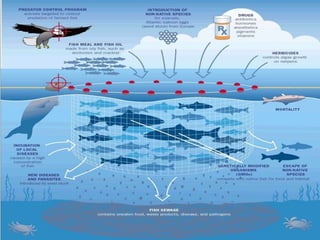
 The foremost environmental effects of aquaculture occur because of
obstacle of water flows, waste releases, nitrification and
eutrophication, altering wetlands into aquaculture farm etc..
 The indiscriminate introduction of exotic species with native varieties
into the identical environment can have divergent consequence.
Exotic Species Introduction in India
 Exotic animals are defined as “species occurring outside of its natural
range”.
 International Union for Conservation of Nature and Natural Resources
(IUCN) defines “Alien Invasive Species as an alien species which
becomes established in natural or semi natural ecosystems or habitat,
an agent of change, and threatens native biological diversity.”
 These may lead to potential dominance of the introduced species,
diseases transmission or contamination of local genetic pools. All these
will subsequently lead to the loss of precious biodiversity (Nyman,
1991).
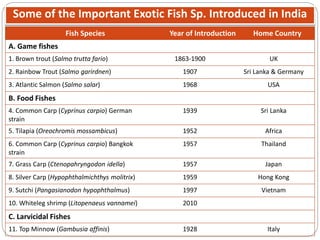
Some of the Important Exotic Fish Sp. Introduced in India
Fish Species Year of Introduction Home Country
A. Game fishes
1. Brown trout (Salmo trutta fario) 1863-1900 UK
2. Rainbow Trout (Salmo garirdnen) 1907 Sri Lanka & Germany
3. Atlantic Salmon (Salmo salar) 1968 USA
B. Food Fishes
4. Common Carp (Cyprinus carpio) German
strain
1939 Sri Lanka
5. Tilapia (Oreochromis mossambicus) 1952 Africa
6. Common Carp (Cyprinus carpio) Bangkok
strain
1957 Thailand
7. Grass Carp (Ctenopahryngodon idella) 1957 Japan
8. Silver Carp (Hypophthalmichthys molitrix) 1959 Hong Kong
9. Sutchi (Pangasianodon hypophthalmus) 1997 Vietnam
10. Whiteleg shrimp (Litopenaeus vannamei) 2010
C. Larvicidal Fishes
11. Top Minnow (Gambusia affinis) 1928 Italy
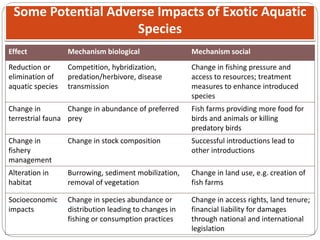
Some Potential Adverse Impacts of Exotic Aquatic
Species
Effect Mechanism biological Mechanism social
Reduction or
elimination of
aquatic species
Competition, hybridization,
predation/herbivore, disease
transmission
Change in fishing pressure and
access to resources; treatment
measures to enhance introduced
species
Change in
terrestrial fauna
Change in abundance of preferred
prey
Fish farms providing more food for
birds and animals or killing
predatory birds
Change in
fishery
management
Change in stock composition Successful introductions lead to
other introductions
Alteration in
habitat
Burrowing, sediment mobilization,
removal of vegetation
Change in land use, e.g. creation of
fish farms
Socioeconomic
impacts
Change in species abundance or
distribution leading to changes in
fishing or consumption practices
Change in access rights, land tenure;
financial liability for damages
through national and international
legislation
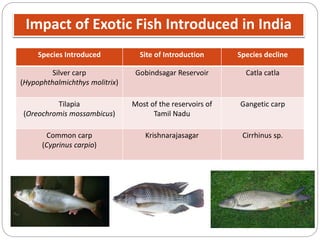
Impact of Exotic Fish Introduced in India
Species Introduced Site of Introduction Species decline
Silver carp
(Hypophthalmichthys molitrix)
Gobindsagar Reservoir Catla catla
Tilapia
(Oreochromis mossambicus)
Most of the reservoirs of
Tamil Nadu
Gangetic carp
Common carp
(Cyprinus carpio)
Krishnarajasagar Cirrhinus sp.
Management of Introductions
 For effective management of alien species, knowledge about their
ecology, morphology,phenology, reproductive biology and physiology is
essential.
 Major intergovernmental agencies like FAO, NACA, World Fish Centre,
ICES, EIFAC etc. to coordinate, monitor and manage the transfers and
introduction of species on international level.
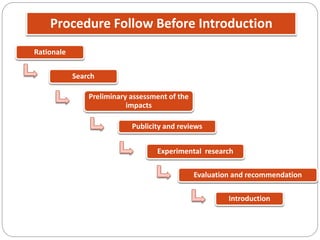
Procedure Follow Before Introduction
Rationale
Search
Preliminary assessment of the
impacts
Publicity and reviews
Experimental research
Evaluation and recommendation
Introduction
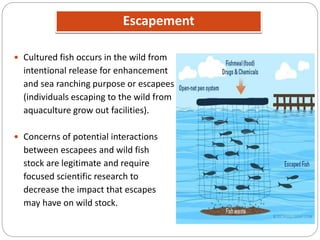
Escapement
 Cultured fish occurs in the wild from
intentional release for enhancement
and sea ranching purpose or escapees
(individuals escaping to the wild from
aquaculture grow out facilities).
 Concerns of potential interactions
between escapees and wild fish
stock are legitimate and require
focused scientific research to
decrease the impact that escapes
may have on wild stock.
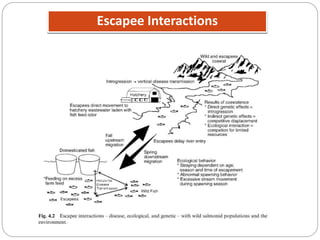
Escapee Interactions
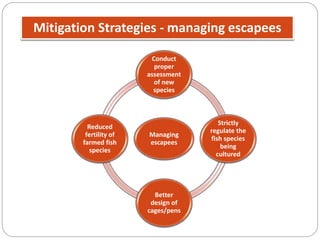
Mitigation Strategies - managing escapees
Managing
escapees
Conduct
proper
assessment
of new
species
Strictly
regulate the
fish species
being
cultured
Better
design of
cages/pens
Reduced
fertility of
farmed fish
species
Contamination of Indigenous Gene Pool
 It is defined as “the dispersal of contaminated altered genes from
genetically engineered organisms to natural organisms or uncontrolled
gene flow in the wild populations.
 It is related to the population genetics concept of gene flow,
and genetic rescue, which is genetic material intentionally introduced to
increase the fitness of a population.
 It is called genetic pollution when it negatively impacts on the fitness of
a population, such as through out breeding depression and the
introduction of unwanted phenotypes which can lead to extinction.
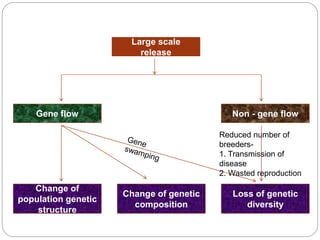
Large scale
release
Non - gene flow
Gene flow
Loss of genetic
diversity
Change of genetic
composition
Change of
population genetic
structure
Reduced number of
breeders-
1. Transmission of
disease
2. Wasted reproduction
Thank you
Conclusion
 Nearly 20% of the world’s freshwater fish fauna is already extinct or is
on the verge of extinction (Moyle and Leidy, 1992).
 In the long run introduction of species may turn out to be a highly
deleterious problem.
 The need of the hour is to protect the existing indigenous fish fauna
and take steps for enhancing the quality of the cultivable species rather
than go in for indiscriminate introduction of exotic species.
 Suitable and judicious measures should be employed to sustain the
indigenous fish diversity.
ENVIRONMENTAL  ISSUES IN AQUACULTURE.pptx

ENVIRONMENTAL ISSUES IN AQUACULTURE.pptx

  • 1.
    Presented by: Devarshi Ranjan M.F.Sc.1st Yr Department of Aquaculture (College of Fisheries,Dholi) Roll.No.2002201006 ENVIRONMENTAL ISSUES IN AQUACULTURE Course Code - AQC 501 Course Name - Sustainable Aquaculture
  • 3.
    Introduction  Environmental issuesare defined as problems with the planet's systems (air, water, soil, etc.) that have developed as a result of human interference or mistreatment of the planet.  The foremost environmental effects of aquaculture occur because of obstacle of water flows, waste releases, nitrification and eutrophication, altering wetlands into aquaculture farm etc..  The indiscriminate introduction of exotic species with native varieties into the identical environment can have divergent consequence.
  • 4.
    Exotic Species Introductionin India  Exotic animals are defined as “species occurring outside of its natural range”.  International Union for Conservation of Nature and Natural Resources (IUCN) defines “Alien Invasive Species as an alien species which becomes established in natural or semi natural ecosystems or habitat, an agent of change, and threatens native biological diversity.”  These may lead to potential dominance of the introduced species, diseases transmission or contamination of local genetic pools. All these will subsequently lead to the loss of precious biodiversity (Nyman, 1991).
  • 5.
    Some of theImportant Exotic Fish Sp. Introduced in India Fish Species Year of Introduction Home Country A. Game fishes 1. Brown trout (Salmo trutta fario) 1863-1900 UK 2. Rainbow Trout (Salmo garirdnen) 1907 Sri Lanka & Germany 3. Atlantic Salmon (Salmo salar) 1968 USA B. Food Fishes 4. Common Carp (Cyprinus carpio) German strain 1939 Sri Lanka 5. Tilapia (Oreochromis mossambicus) 1952 Africa 6. Common Carp (Cyprinus carpio) Bangkok strain 1957 Thailand 7. Grass Carp (Ctenopahryngodon idella) 1957 Japan 8. Silver Carp (Hypophthalmichthys molitrix) 1959 Hong Kong 9. Sutchi (Pangasianodon hypophthalmus) 1997 Vietnam 10. Whiteleg shrimp (Litopenaeus vannamei) 2010 C. Larvicidal Fishes 11. Top Minnow (Gambusia affinis) 1928 Italy
  • 6.
    Some Potential AdverseImpacts of Exotic Aquatic Species Effect Mechanism biological Mechanism social Reduction or elimination of aquatic species Competition, hybridization, predation/herbivore, disease transmission Change in fishing pressure and access to resources; treatment measures to enhance introduced species Change in terrestrial fauna Change in abundance of preferred prey Fish farms providing more food for birds and animals or killing predatory birds Change in fishery management Change in stock composition Successful introductions lead to other introductions Alteration in habitat Burrowing, sediment mobilization, removal of vegetation Change in land use, e.g. creation of fish farms Socioeconomic impacts Change in species abundance or distribution leading to changes in fishing or consumption practices Change in access rights, land tenure; financial liability for damages through national and international legislation
  • 7.
    Impact of ExoticFish Introduced in India Species Introduced Site of Introduction Species decline Silver carp (Hypophthalmichthys molitrix) Gobindsagar Reservoir Catla catla Tilapia (Oreochromis mossambicus) Most of the reservoirs of Tamil Nadu Gangetic carp Common carp (Cyprinus carpio) Krishnarajasagar Cirrhinus sp.
  • 8.
    Management of Introductions For effective management of alien species, knowledge about their ecology, morphology,phenology, reproductive biology and physiology is essential.  Major intergovernmental agencies like FAO, NACA, World Fish Centre, ICES, EIFAC etc. to coordinate, monitor and manage the transfers and introduction of species on international level.
  • 9.
    Procedure Follow BeforeIntroduction Rationale Search Preliminary assessment of the impacts Publicity and reviews Experimental research Evaluation and recommendation Introduction
  • 10.
    Escapement  Cultured fishoccurs in the wild from intentional release for enhancement and sea ranching purpose or escapees (individuals escaping to the wild from aquaculture grow out facilities).  Concerns of potential interactions between escapees and wild fish stock are legitimate and require focused scientific research to decrease the impact that escapes may have on wild stock.
  • 11.
  • 13.
    Mitigation Strategies -managing escapees Managing escapees Conduct proper assessment of new species Strictly regulate the fish species being cultured Better design of cages/pens Reduced fertility of farmed fish species
  • 14.
    Contamination of IndigenousGene Pool  It is defined as “the dispersal of contaminated altered genes from genetically engineered organisms to natural organisms or uncontrolled gene flow in the wild populations.  It is related to the population genetics concept of gene flow, and genetic rescue, which is genetic material intentionally introduced to increase the fitness of a population.  It is called genetic pollution when it negatively impacts on the fitness of a population, such as through out breeding depression and the introduction of unwanted phenotypes which can lead to extinction.
  • 16.
    Large scale release Non -gene flow Gene flow Loss of genetic diversity Change of genetic composition Change of population genetic structure Reduced number of breeders- 1. Transmission of disease 2. Wasted reproduction
  • 17.
  • 19.
    Conclusion  Nearly 20%of the world’s freshwater fish fauna is already extinct or is on the verge of extinction (Moyle and Leidy, 1992).  In the long run introduction of species may turn out to be a highly deleterious problem.  The need of the hour is to protect the existing indigenous fish fauna and take steps for enhancing the quality of the cultivable species rather than go in for indiscriminate introduction of exotic species.  Suitable and judicious measures should be employed to sustain the indigenous fish diversity.