University of Agronomical Sciences and Veterinary
Medicine – Bucharest
Faculty of Management, Economical Engineering in
Agriculture and Rural Development
Management and Rural Development
Student: Danciulescu Marius
Professor:Mihai Frumuselu
January, 2015
Bucharest
Environmentprotection
 Environment protection - definition
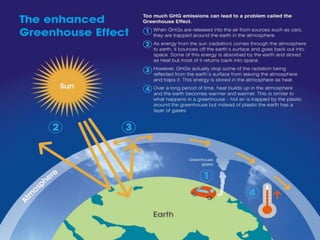
 Greenhouse effect
 Acid rain
 Wildlife extinction
 Selective collection and recycling
 Deforestation
 Pollution
 Ecology
 Bibliography
Contents
Selective collection and recycling
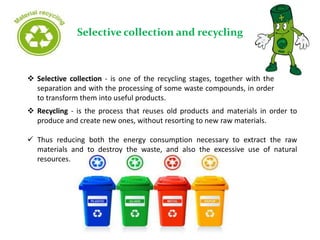
 Selective collection - is one of the recycling stages, together with the
separation and with the processing of some waste compounds, in order
to transform them into useful products.
 Recycling - is the process that reuses old products and materials in order to
produce and create new ones, without resorting to new raw materials.
 Thus reducing both the energy consumption necessary to extract the raw
materials and to destroy the waste, and also the excessive use of natural
resources.
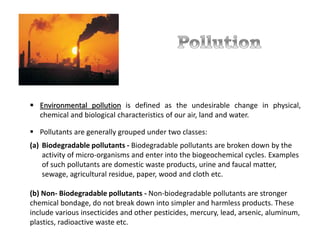
 Environmental pollution is defined as the undesirable change in physical,
chemical and biological characteristics of our air, land and water.
 Pollutants are generally grouped under two classes:
(a) Biodegradable pollutants - Biodegradable pollutants are broken down by the
activity of micro-organisms and enter into the biogeochemical cycles. Examples
of such pollutants are domestic waste products, urine and faucal matter,
sewage, agricultural residue, paper, wood and cloth etc.
(b) Non- Biodegradable pollutants - Non-biodegradable pollutants are stronger
chemical bondage, do not break down into simpler and harmless products. These
include various insecticides and other pesticides, mercury, lead, arsenic, aluminum,
plastics, radioactive waste etc.
 http://en.wikipedia.org/wiki/Environmental_protection
 http://www.epa.gov/climatestudents/basics/today/greenhouse-effect.html
 http://www.recolamp.ro/en/colectare-si-reciclare
Bibliography
Thank You for your attention !!!

Environment protection

  • 1.
    University of AgronomicalSciences and Veterinary Medicine – Bucharest Faculty of Management, Economical Engineering in Agriculture and Rural Development Management and Rural Development Student: Danciulescu Marius Professor:Mihai Frumuselu January, 2015 Bucharest Environmentprotection
  • 2.
     Environment protection- definition  Greenhouse effect  Acid rain  Wildlife extinction  Selective collection and recycling  Deforestation  Pollution  Ecology  Bibliography Contents
  • 8.
    Selective collection andrecycling  Selective collection - is one of the recycling stages, together with the separation and with the processing of some waste compounds, in order to transform them into useful products.  Recycling - is the process that reuses old products and materials in order to produce and create new ones, without resorting to new raw materials.  Thus reducing both the energy consumption necessary to extract the raw materials and to destroy the waste, and also the excessive use of natural resources.
  • 10.
     Environmental pollutionis defined as the undesirable change in physical, chemical and biological characteristics of our air, land and water.  Pollutants are generally grouped under two classes: (a) Biodegradable pollutants - Biodegradable pollutants are broken down by the activity of micro-organisms and enter into the biogeochemical cycles. Examples of such pollutants are domestic waste products, urine and faucal matter, sewage, agricultural residue, paper, wood and cloth etc. (b) Non- Biodegradable pollutants - Non-biodegradable pollutants are stronger chemical bondage, do not break down into simpler and harmless products. These include various insecticides and other pesticides, mercury, lead, arsenic, aluminum, plastics, radioactive waste etc.
  • 14.
  • 15.
    Thank You foryour attention !!!