Lesson Objectives
By theend of this lesson, pupils should be able to:
1. Define pollution and identify its types.
2. Explain the causes and effects of pollution.
3. Suggest solutions to reduce pollution.
4. Define recycling and explain its importance.
5. Identify materials that can be recycled.
6. Engage in simple recycling activities within the school.
3.
Keywords and Definitions
1.Pollution – The introduction of harmful substances into the environment, making it
unsafe or unhealthy.
2. Recycling – The process of converting waste materials into new, reusable
products to reduce environmental damage.
3. Waste – Unwanted materials that are no longer useful and are discarded.
4. Biodegradable – Materials that can break down naturally and decompose over
time.
5. Non-Biodegradable – Materials that do not break down easily and can remain in
the environment for a long time.
6. Composting – A natural process of recycling organic waste into nutrient-rich soil.
7. Greenhouse Gases – Gases like carbon dioxide (CO ) and methane (CH ) that trap
₂ ₄
heat in the Earth’s atmosphere and contribute to global warming.
8. Global Warming – The rise in Earth’s temperature due to pollution and excessive
greenhouse gases.
9. Deforestation – The clearing of trees and forests, leading to loss of biodiversity
and increased carbon dioxide in the air.
10. Eco-friendly – Actions and products that do not harm the environment.
11. Landfill – A site where waste is buried under the ground.
12. Sustainability – The practice of using resources in a way that does not harm the
environment for future generations.
13. E-Waste (Electronic Waste) – Discarded electronic devices like phones,
computers, and batteries that can release toxic chemicals.
14. Hazardous Waste – Waste materials that are dangerous to health or the
4.
Definition of Pollution
Pollutionis the introduction of harmful
substances or contaminants into the
environment, making it unhealthy for humans,
animals, and plants.
These contaminants, called pollutants, can
come from human activities or natural sources.
5.
Air Pollution
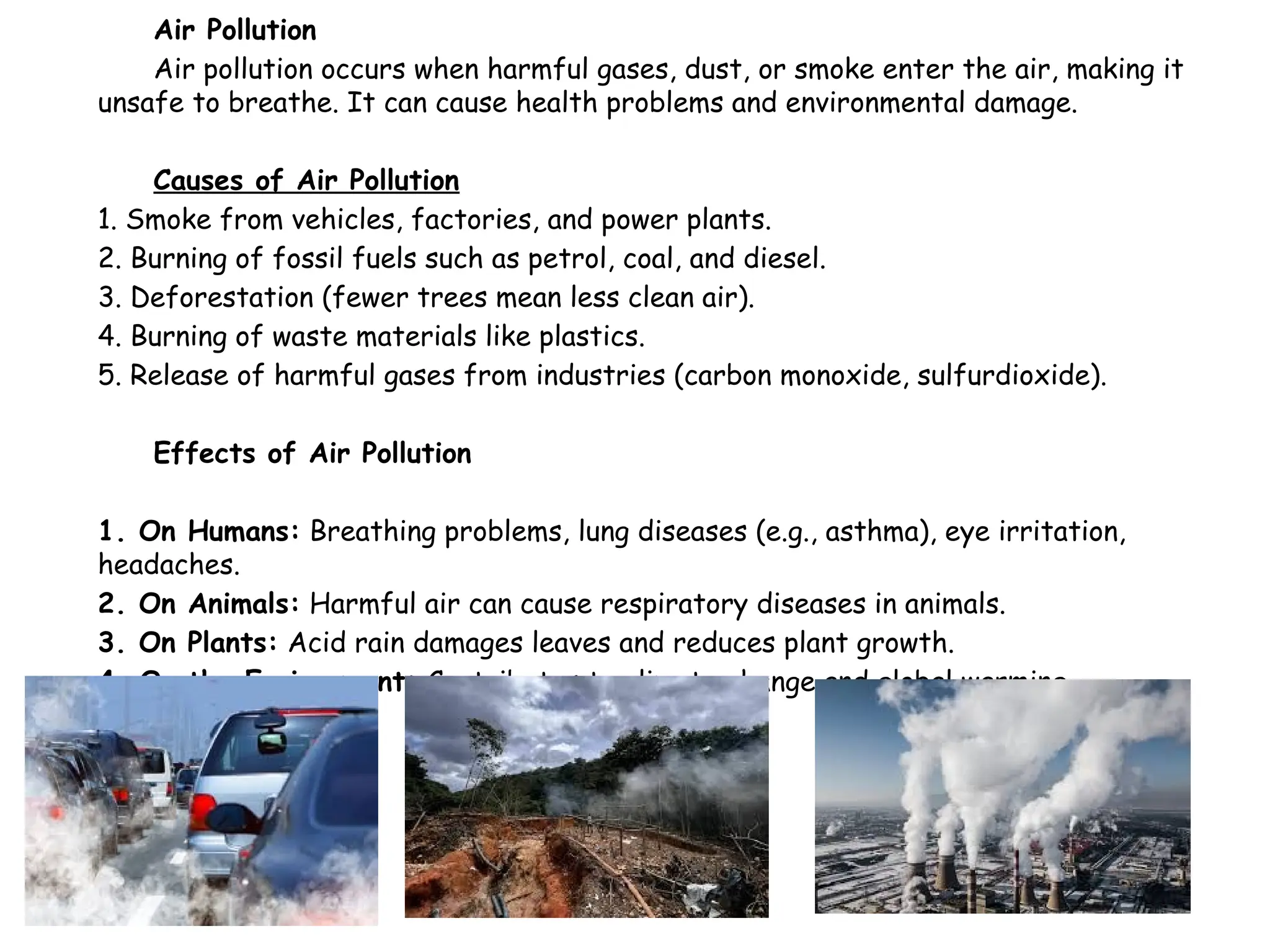
Air pollutionoccurs when harmful gases, dust, or smoke enter the air, making it
unsafe to breathe. It can cause health problems and environmental damage.
Causes of Air Pollution
1. Smoke from vehicles, factories, and power plants.
2. Burning of fossil fuels such as petrol, coal, and diesel.
3. Deforestation (fewer trees mean less clean air).
4. Burning of waste materials like plastics.
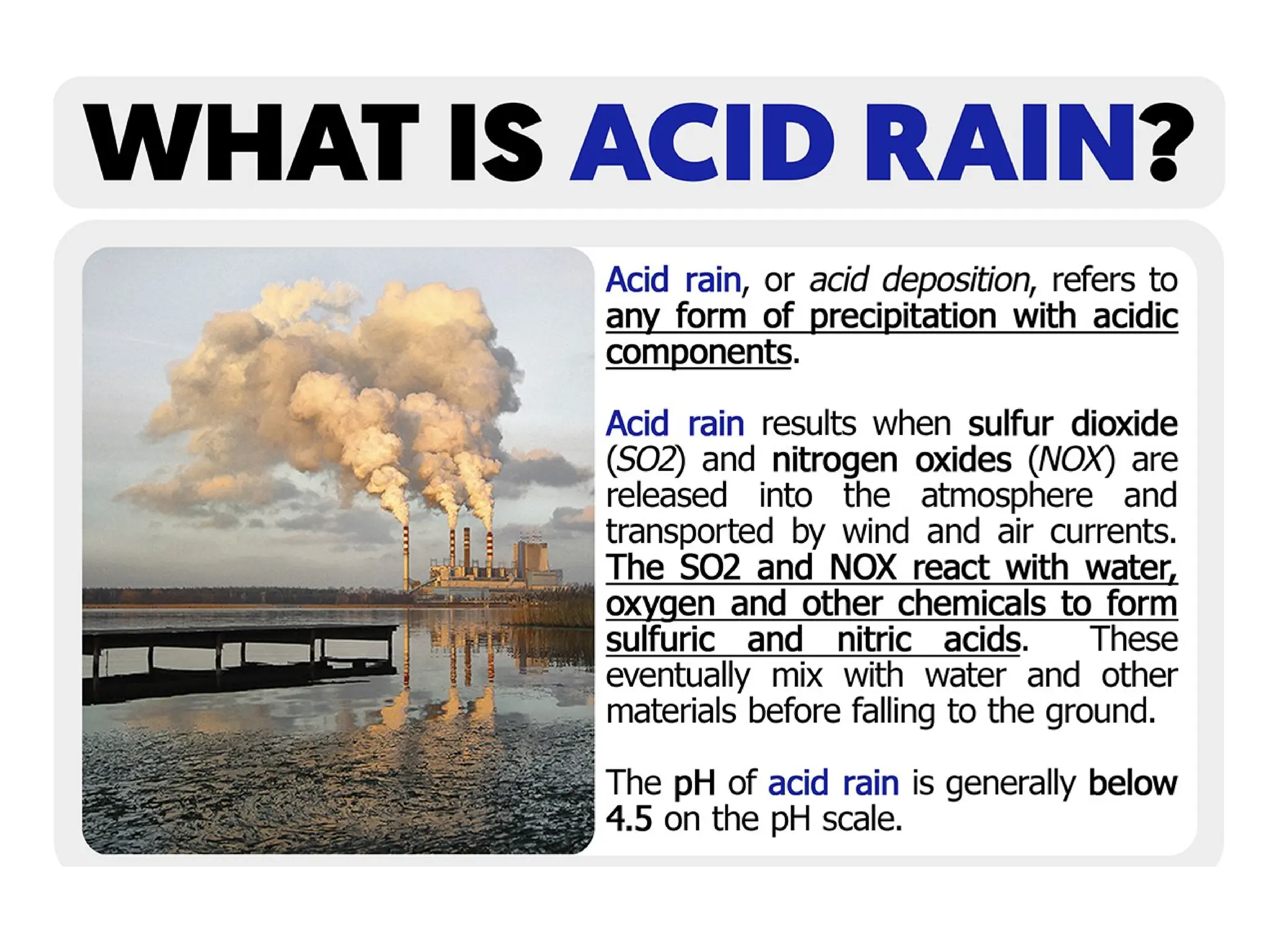
5. Release of harmful gases from industries (carbon monoxide, sulfurdioxide).
Effects of Air Pollution
1. On Humans: Breathing problems, lung diseases (e.g., asthma), eye irritation,
headaches.
2. On Animals: Harmful air can cause respiratory diseases in animals.
3. On Plants: Acid rain damages leaves and reduces plant growth.
4. On the Environment: Contributes to climate change and global warming.
7.
Solutions to AirPollution
1. Use public transport, bicycles, or walk instead of driving.
2. Plant more trees to absorb carbon dioxide.
3. Use clean energy sources like solar or wind power.
4. Reduce the burning of waste materials like plastic.
5. Factories should use filters to reduce harmful emissions.
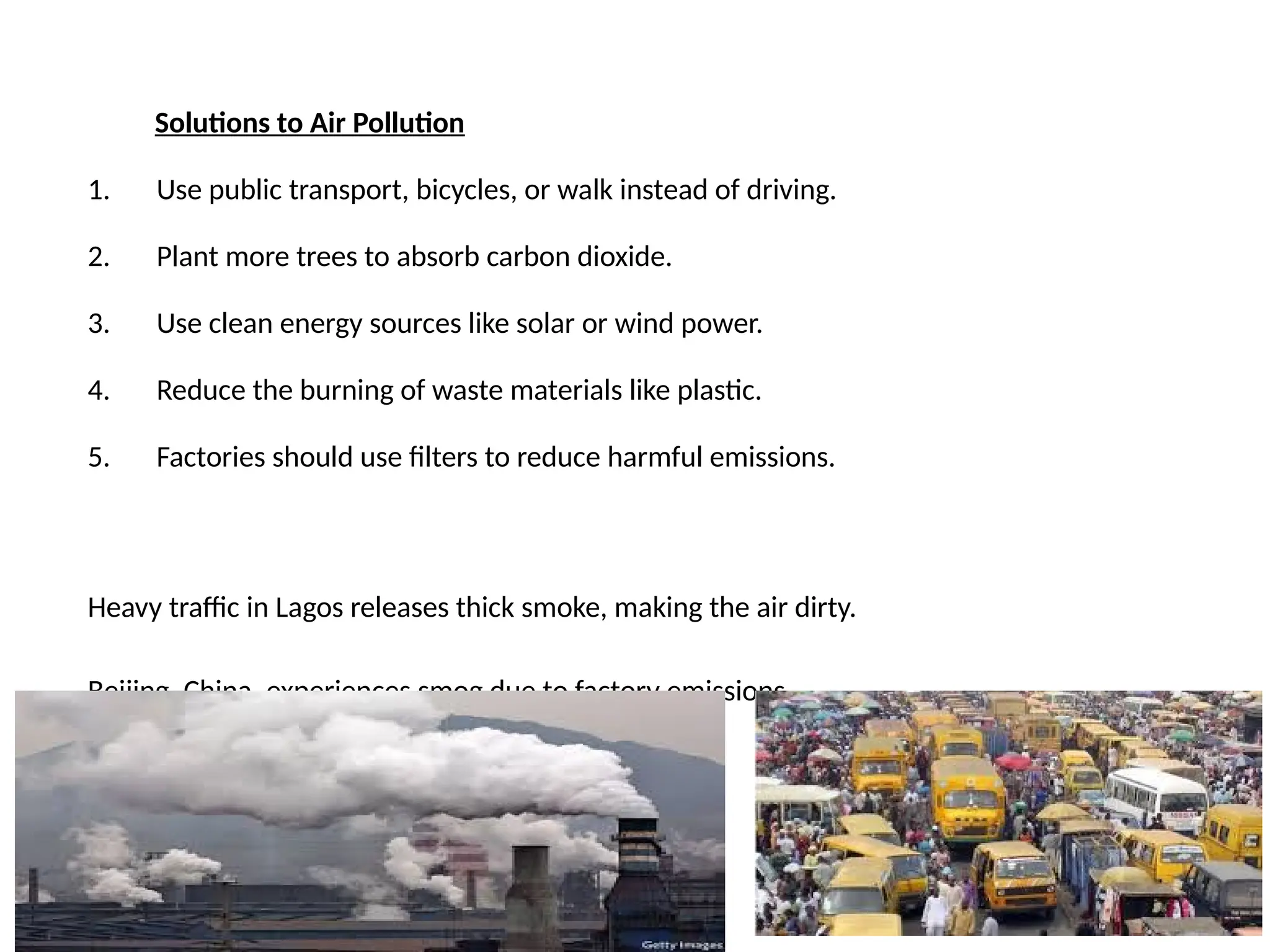
Heavy traffic in Lagos releases thick smoke, making the air dirty.
Beijing, China, experiences smog due to factory emissions.
8.
Water Pollution
Water pollutionhappens when harmful substances such as
plastic waste, oil spills, and chemicals contaminate rivers, lakes,
and oceans, making the water unsafe for drinking, cooking, and
fishing.
Causes of Water Pollution:
1. Dumping waste and plastics into water bodies.
2. Oil spills from ships and pipelines.
3. Industrial waste and chemicals being released into rivers.
4. Sewage and untreated human waste entering water supplies.
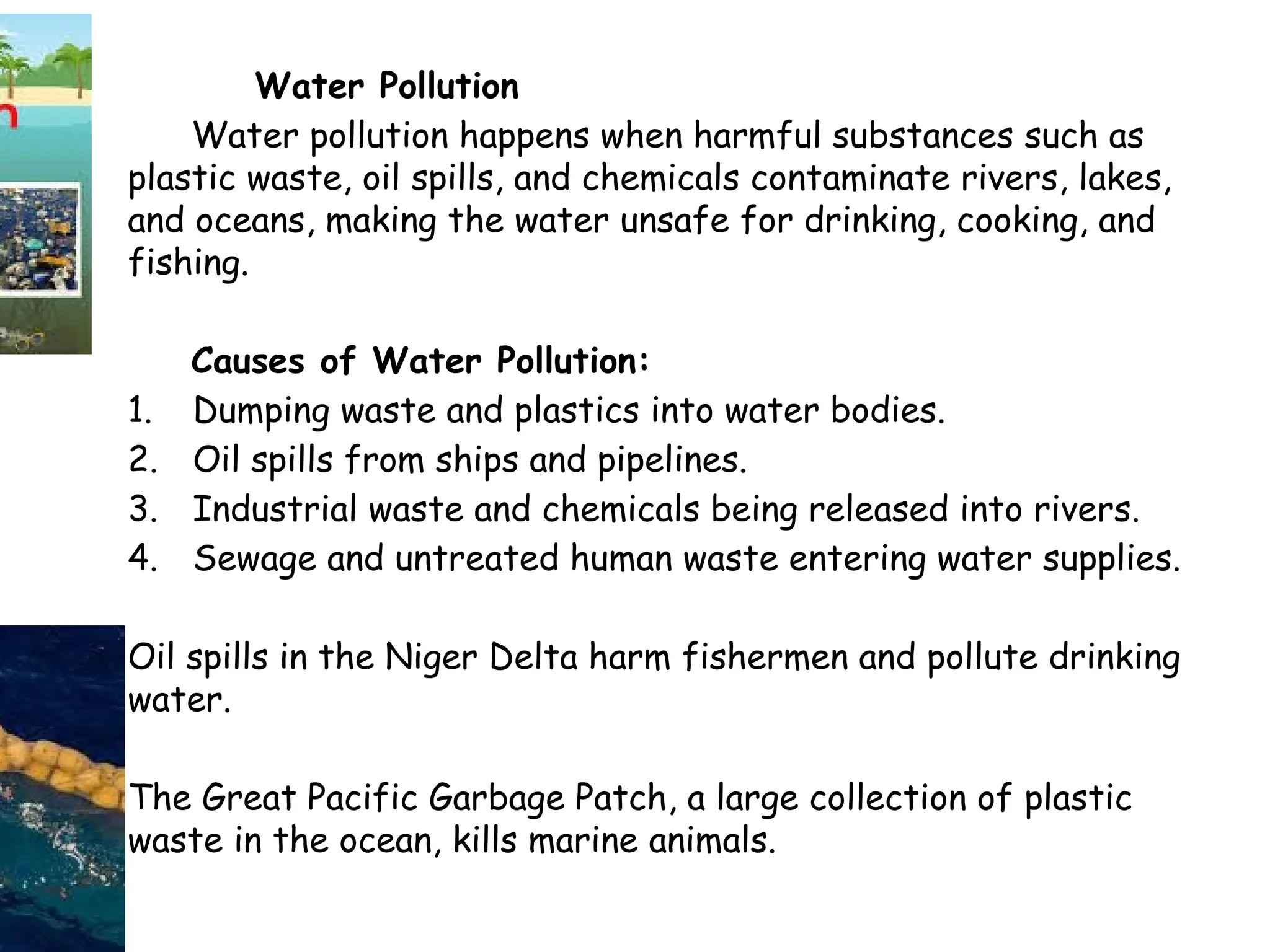
Oil spills in the Niger Delta harm fishermen and pollute drinking
water.
The Great Pacific Garbage Patch, a large collection of plastic
waste in the ocean, kills marine animals.
9.
Effects of WaterPollution:
1. On Humans: Dirty water can cause water borne diseases like cholera, typhoid, and diarrhea.
2. On Animals: Fish and other aquatic life die from polluted water.
3. On Plants: Toxic water damages crops and affects irrigation.
4. On the Environment: Polluted water can destroy entire ecosystems and harm biodiversity.
Solutions to Water Pollution:
5. Avoid dumping waste and plastics into rivers and oceans.
6. Treat sewage water before releasing it into the environment.
7. Factories should properly treat chemical waste before disposal.
8. Clean up oil spills quickly to prevent damage.
9. Reduce the use of harmful fertilizers and pesticides.
10.
Land Pollution
• Definition:Land pollution occurs when harmful waste, chemicals, or litter make
the land dirty and unfit for farming, building, or living.
Causes of Land Pollution:
1. Improper waste disposal, like throwing plastic bags and bottles on the ground.
2. Illegal dumping of industrial waste.
3. Use of harmful pesticides and fertilizers in farming.
4. Deforestation, which leads to soil erosion and land degradation.
Examples:
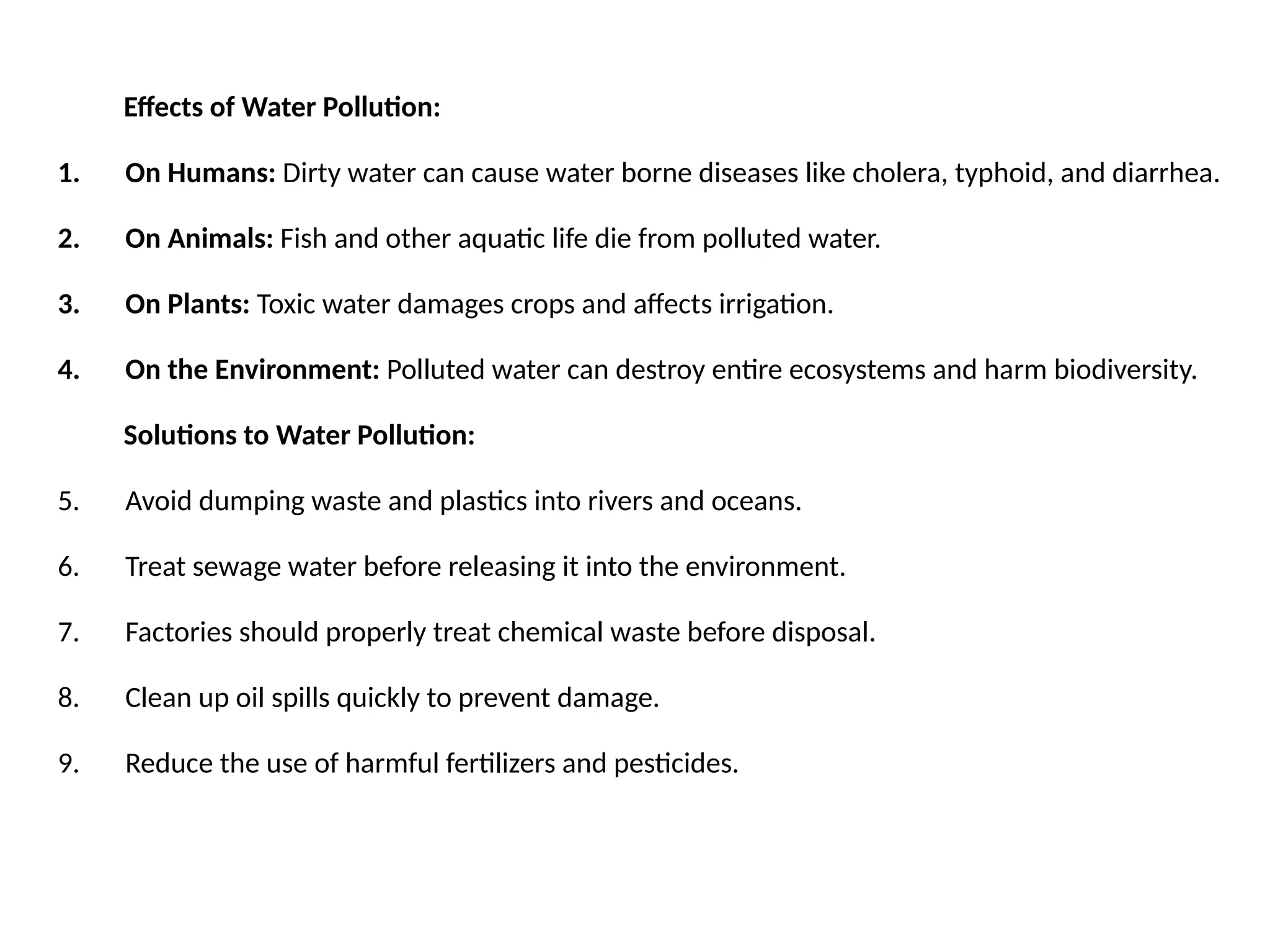
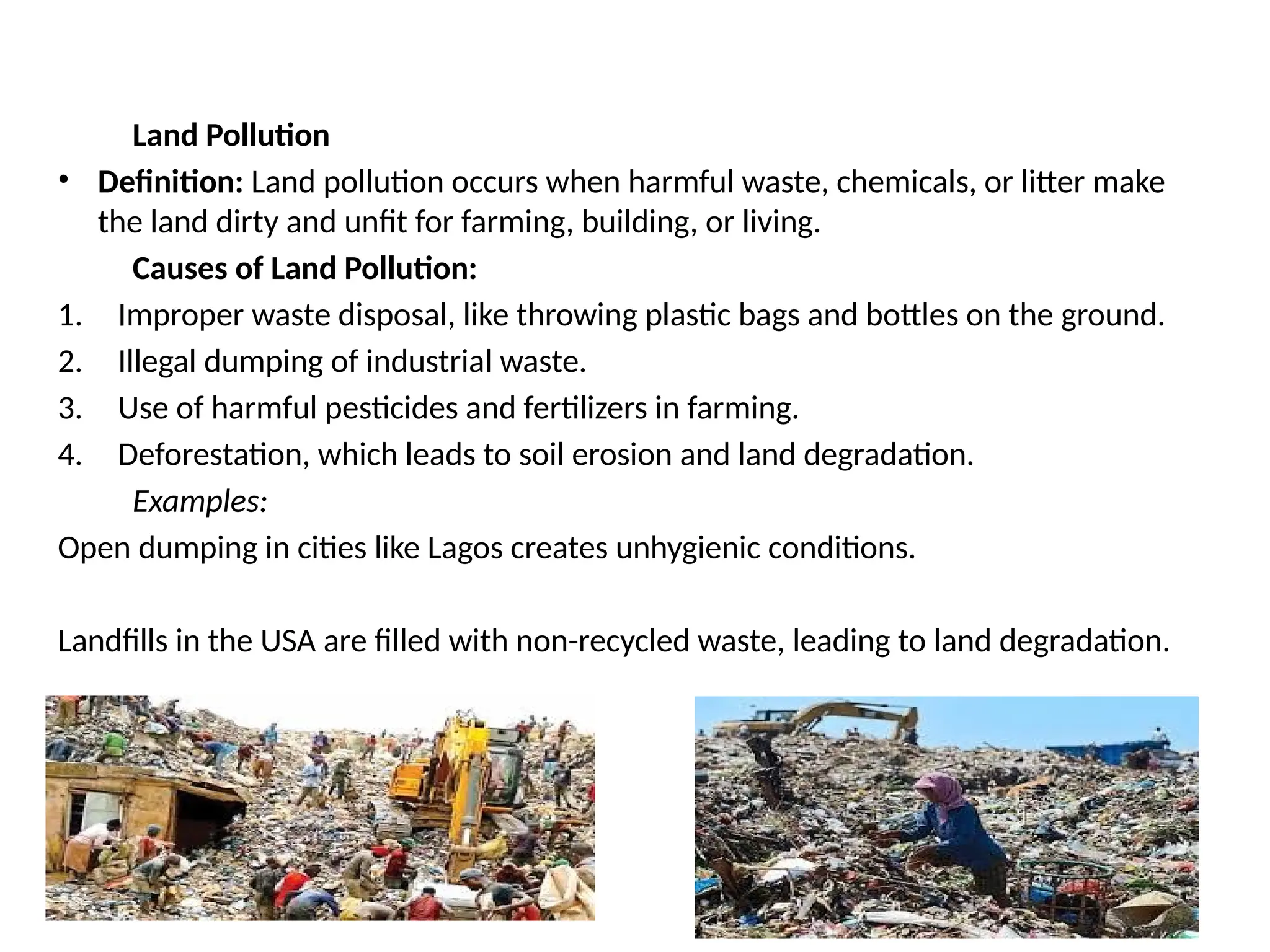
Open dumping in cities like Lagos creates unhygienic conditions.
Landfills in the USA are filled with non-recycled waste, leading to land degradation.
11.
Effects of LandPollution
1. On Humans: Dirty environments can cause infections and diseases.
2. On Animals: Land pollution can destroy habitats, making it difficult
for animals to survive.
3. On Plants: Polluted soil makes it difficult for plants to grow.
4. On the Environment: Leads to desertification (land turning into
desert) and loss of biodiversity.
Solutions to Land Pollution
5. Reduce, reuse, and recycle waste to avoid littering.
6. Dispose of waste properly in bins and landfills.
7. Use organic fertilizers instead of harmful chemicals.
8. Plant trees to prevent soil erosion.
9. Factories should follow proper waste management policies.
12.
Noise Pollution
Noise pollutionoccurs when there is too much loud noise in the
environment, disturbing humans and animals.
It is caused by human activities such as traffic, factories, and loud music.
Causes of Noise Pollution:
1. Loudspeakers, music, and street noise.
2. Heavy traffic from cars, buses, and motorcycles.
3. Industrial machinery and construction work.
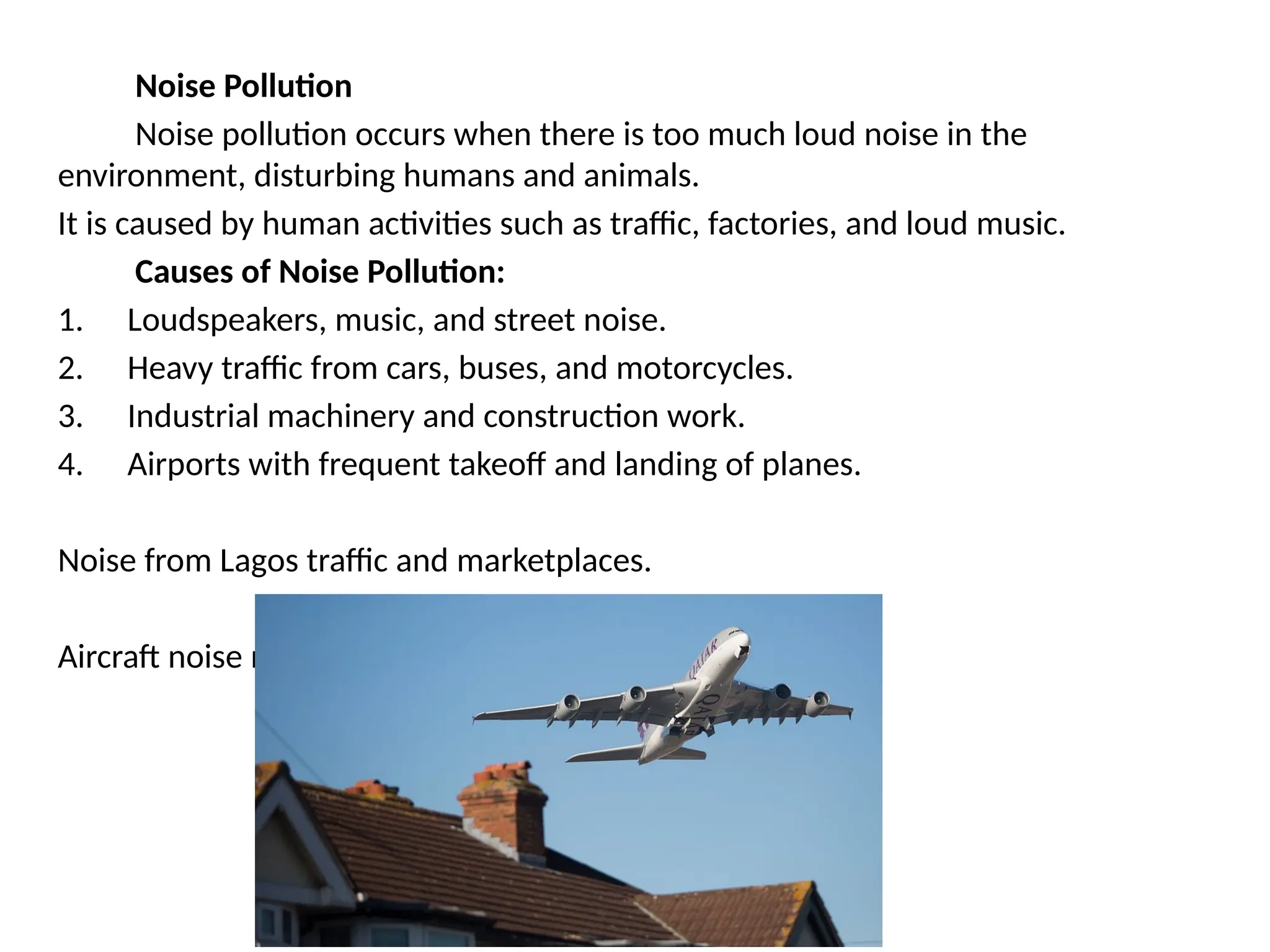
4. Airports with frequent takeoff and landing of planes.
Noise from Lagos traffic and marketplaces.
Aircraft noise near Heathrow Airport in London.
13.
Effects of NoisePollution:
1. On Humans: Can cause stress, hearing loss, and difficulty sleeping.
2. On Animals: Loud noise can disturb and scare away animals, affecting their
natural habitat.
3. On the Environment: Disturbs peaceful areas like parks and forests.
Solutions to Noise Pollution
4. Use soundproof materials in buildings.
5. Reduce vehicle and industrial noise through regulations.
6. Avoid playing loud music in residential areas.
7. Construct airports away from residential areas.
8. Plant trees to act as sound barriers.
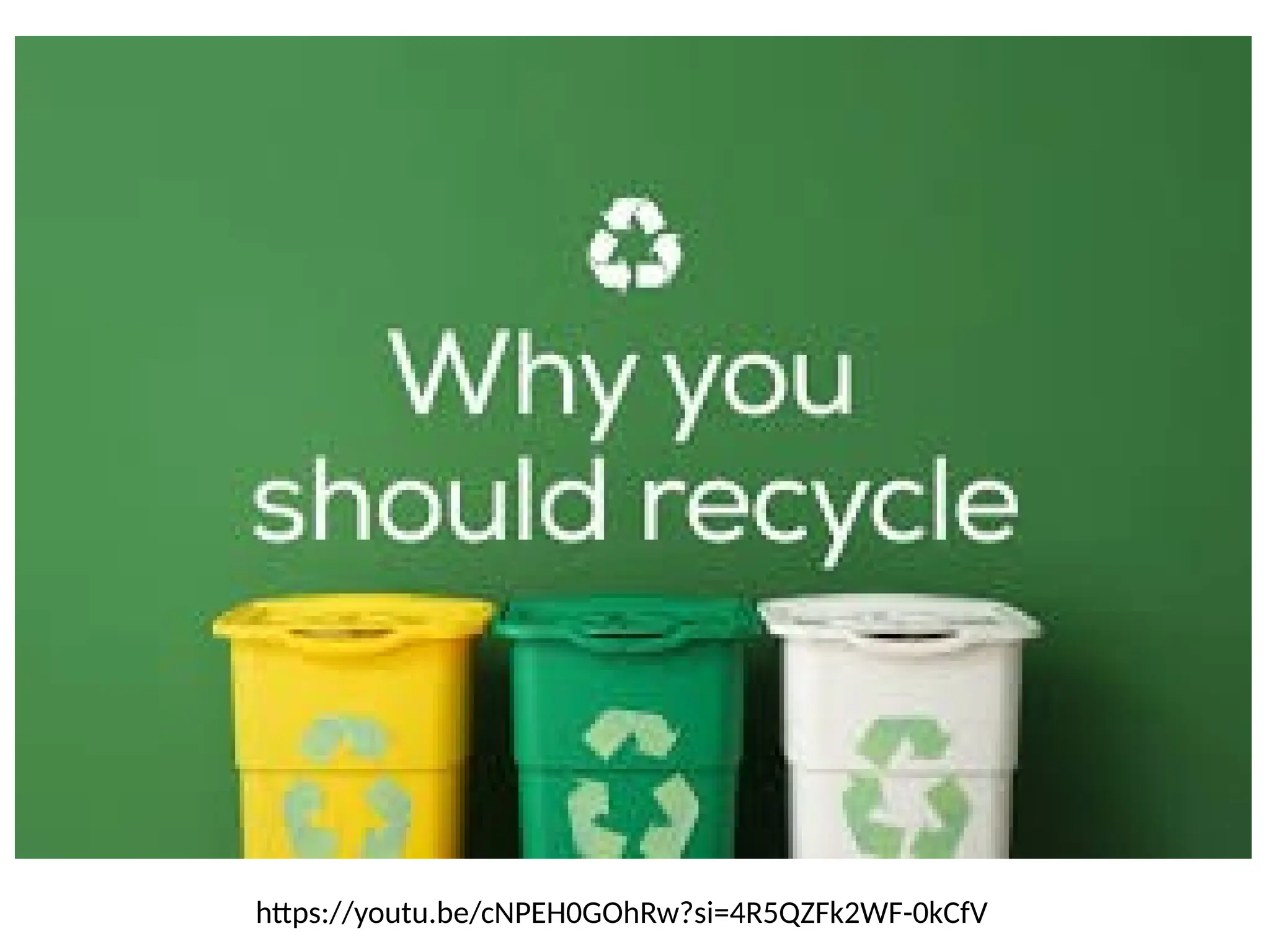
Recycling is theprocess of converting waste materials into new products instead of
throwing them away.
It helps to conserve natural resources, reduce pollution, and save energy.
Types of Recycling
1. Mechanical Recycling: This involves grinding or melting materials to create
new products.
Example: Plastic bottles are melted and reshaped into new plastic containers.
2. Chemical Recycling: This process breaks down waste into its original chemical
components, which can be used to make new materials.
Example: Old tires are chemically broken down to produce fuel.
3. Organic Recycling (Composting): Organic waste like food scraps and garden waste
decompose into compost, which can be used as fertilizer for plants.
16.
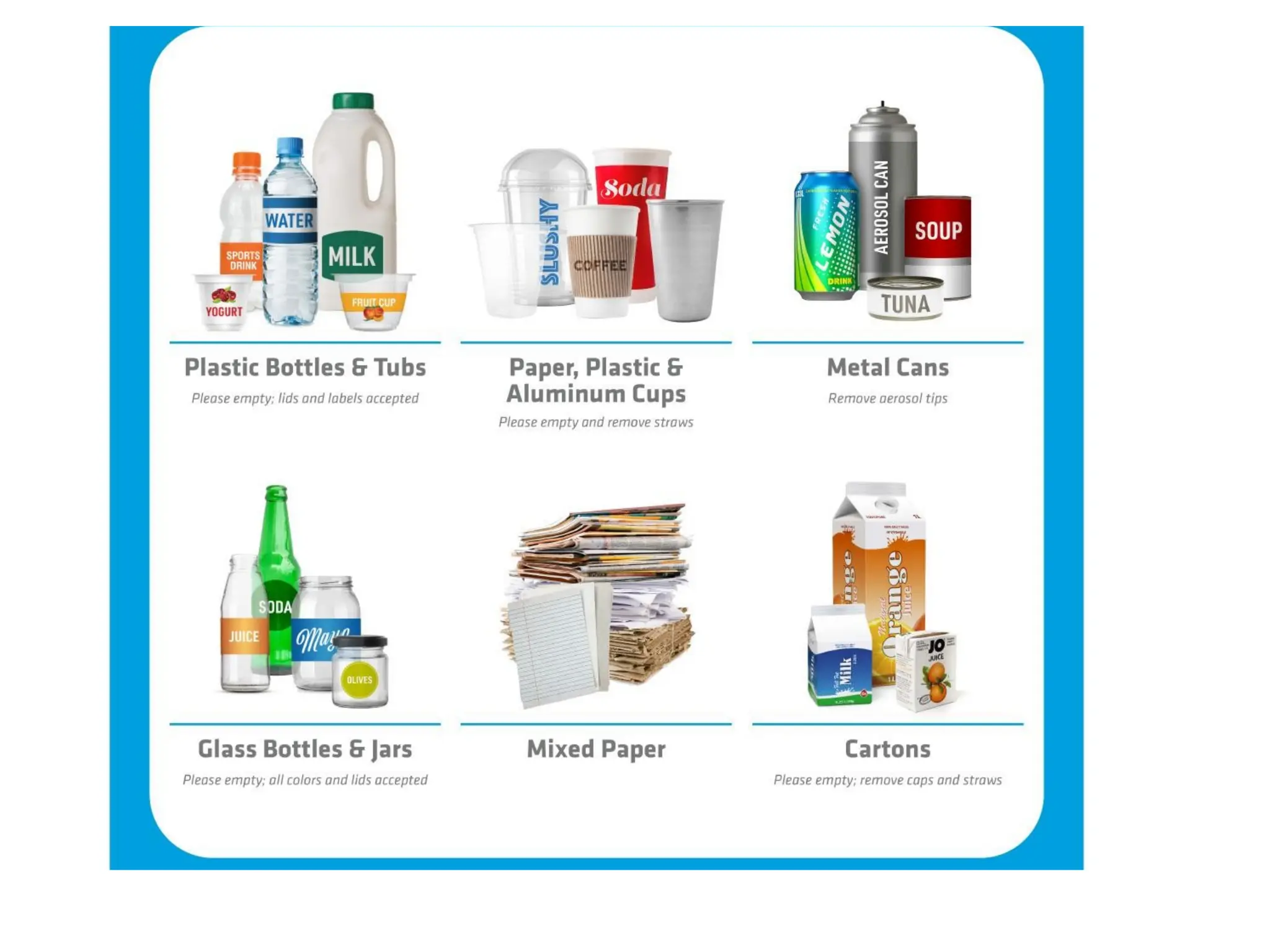
Materials That CanBe Recycled
1. Paper and Cardboard: Includes newspapers,
magazines, books, and boxes.
Recycling Process: Paper is shredded, turned into pulp,
cleaned, and then dried into new sheets.
New Products Made: New paper, tissue, and cardboard.
2. Plastic: Includes bottles, containers, and bags.
Recycling Process: Plastics are sorted, melted, and
reshaped.
New Products Made: Plastic chairs, bags, and clothes.
3. Glass: Includes bottles, jars, and windows.
Recycling Process: Glass is melted and reshaped.
New Products Made: New glass bottles and fiberglass.
17.
4. Metals: Includesaluminum cans, steel, and copper.
Recycling Process: Metals are melted and reshaped.
New Products Made: New cans, car parts, and metal sheets.
5. Electronics (E-Waste): Includes old phones, computers, and batteries.
Recycling Process: Metals and plastic are extracted and reused.
New Products Made: New electronics, batteries, and wires.
6. Organic Waste: Includes food scraps and garden waste.
Recycling Process: Organic waste is decomposed into compost.
New Products Made: Fertilizer for farming.
19.
Why Is RecyclingImportant?
Recycling is essential because it:
1. Reduces Landfill Waste: Less garbage is dumped in landfills, keeping
the environment cleaner.
2. Saves Natural Resources: Recycling reduces the need for new raw
materials, such as trees for paper or metals for cans.
3. Saves Energy: Manufacturing products from recycled materials uses
less energy than creating them from new materials.
4. Protects Wildlife: Less waste in the environment means animals are
less likely to eat harmful materials like plastic.
5. Reduces Pollution: Recycling reduces air, land, and water pollution
caused by waste disposal and production.
20.
The 3Rs: Reduce,Reuse, and Recycle
1. Reduce
Reducing means using fewer resources to create less waste.
Example: Buying only the food and clothes you need.
How to reduce waste:
a. Avoid single-use plastics.
b. Use cloth bags instead of plastic bags.
c. Print only when necessary.
2. Reuse
Reusing means using items multiple times instead of throwing them away.
Example: Using an old jar as a flower vase.
How to reuse items:
a. Donate clothes instead of throwing them away.
b. Refill water bottles instead of buying new ones.
c. Repair broken items instead of replacing them.
• 3. Recycle
Recycling means converting waste into new materials.
Example: Recycling old paper to make new books.
21.
How Recycling Works(Step-by-Step Process)
1. Collection – Waste is collected from homes, schools, and offices.
2. Sorting – Waste is separated into different materials like plastic, metal, and
paper.
3. Processing – The materials are cleaned and broken down.
4. Manufacturing – The recycled materials are made into new products.
5. Selling and Buying – The new products are sold and reused.
Challenges of Recycling
1. Improper Sorting: When waste is not properly separated, it makes
recycling difficult.
2. Contaminated Waste: Dirty materials, like food-stained paper, cannot be
recycled.
3. Lack of Awareness: Many people do not understand the importance of
recycling.
4. Cost of Recycling: Some recycling processes require expensive technology.
22.
Ways to EncourageRecycling in Schools
and Homes
1. Provide Recycling Bins: Have different bins
for paper, plastic, and metal.
2. Educate People: Teach friends and family
about the importance of recycling.
3. Organize Recycling Campaigns: Encourage
students to collect and recycle waste.
4. Support Companies That Use Recycled
Materials: Buy products made from recycled
items.
23.
Evaluation Questions
1. Mentiontwo causes, two effect s and two
possible solutions to land, Water and Air pollution
2. What is recycling?
3. Why is recycling important? Give three reasons.
4. Name three materials that can be recycled
5. What are the 3Rs? Explain each one.
6. Mention two challenges of recycling.
7. Give one example of how you can reuse an old
item.
8. How does recycling help the environment?