
Entrepreneurship Development and
Communication Skills
Unit 1
Prepared By: Prof. Devrshi
Upadhayay
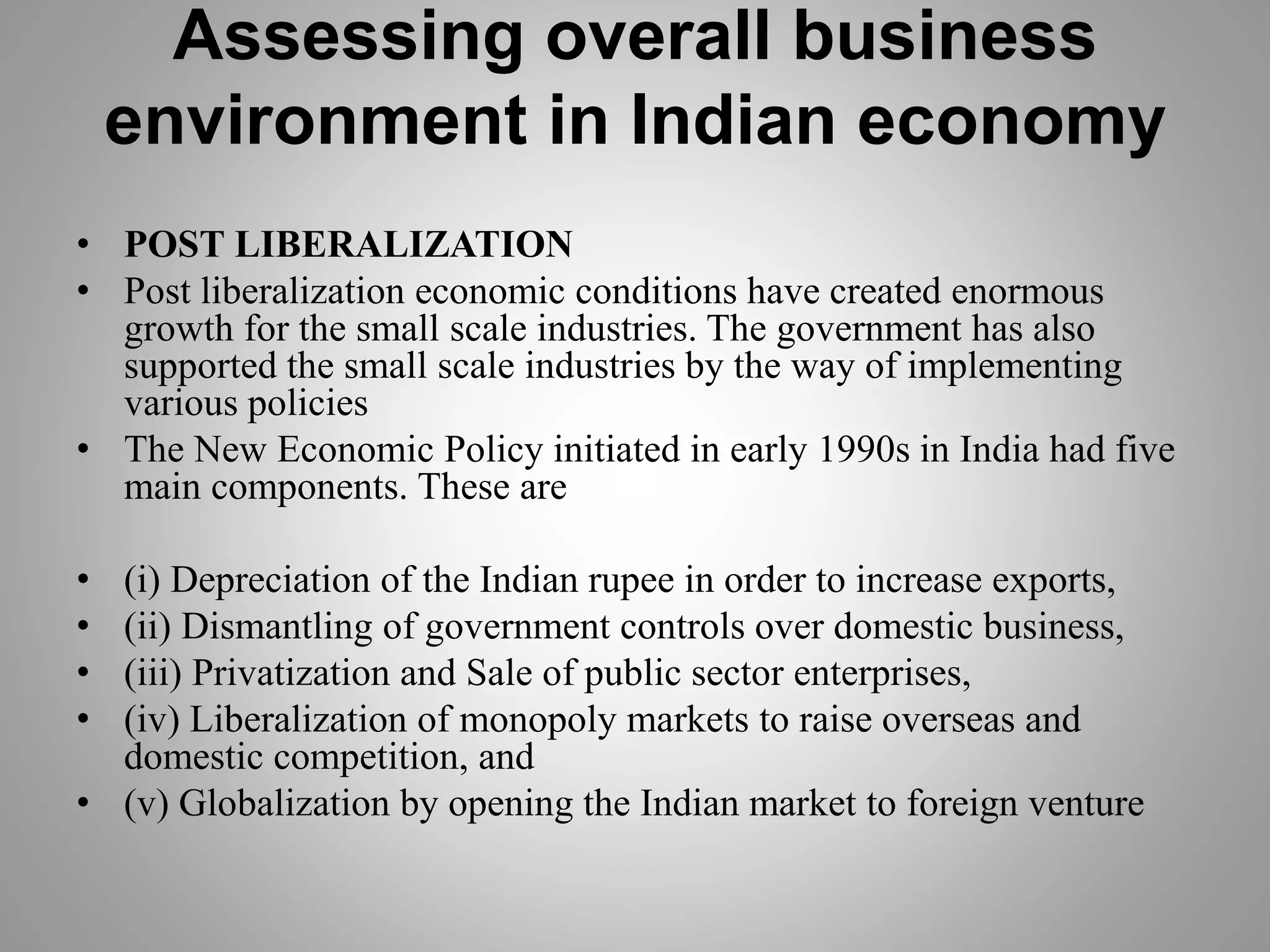
Assessing overall business
environment in Indian economy
• POST LIBERALIZATION
• Post liberalization economic conditions have created enormous
growth for the small scale industries. The government has also
supported the small scale industries by the way of implementing
various policies
• The New Economic Policy initiated in early 1990s in India had five
main components. These are
• (i) Depreciation of the Indian rupee in order to increase exports,
• (ii) Dismantling of government controls over domestic business,
• (iii) Privatization and Sale of public sector enterprises,
• (iv) Liberalization of monopoly markets to raise overseas and
domestic competition, and
• (v) Globalization by opening the Indian market to foreign venture
BUSINESS ENVIRONMENT IN
INDIAN ECONOMY
• Strong growth momentum
• Opportunity
• Growth constraints
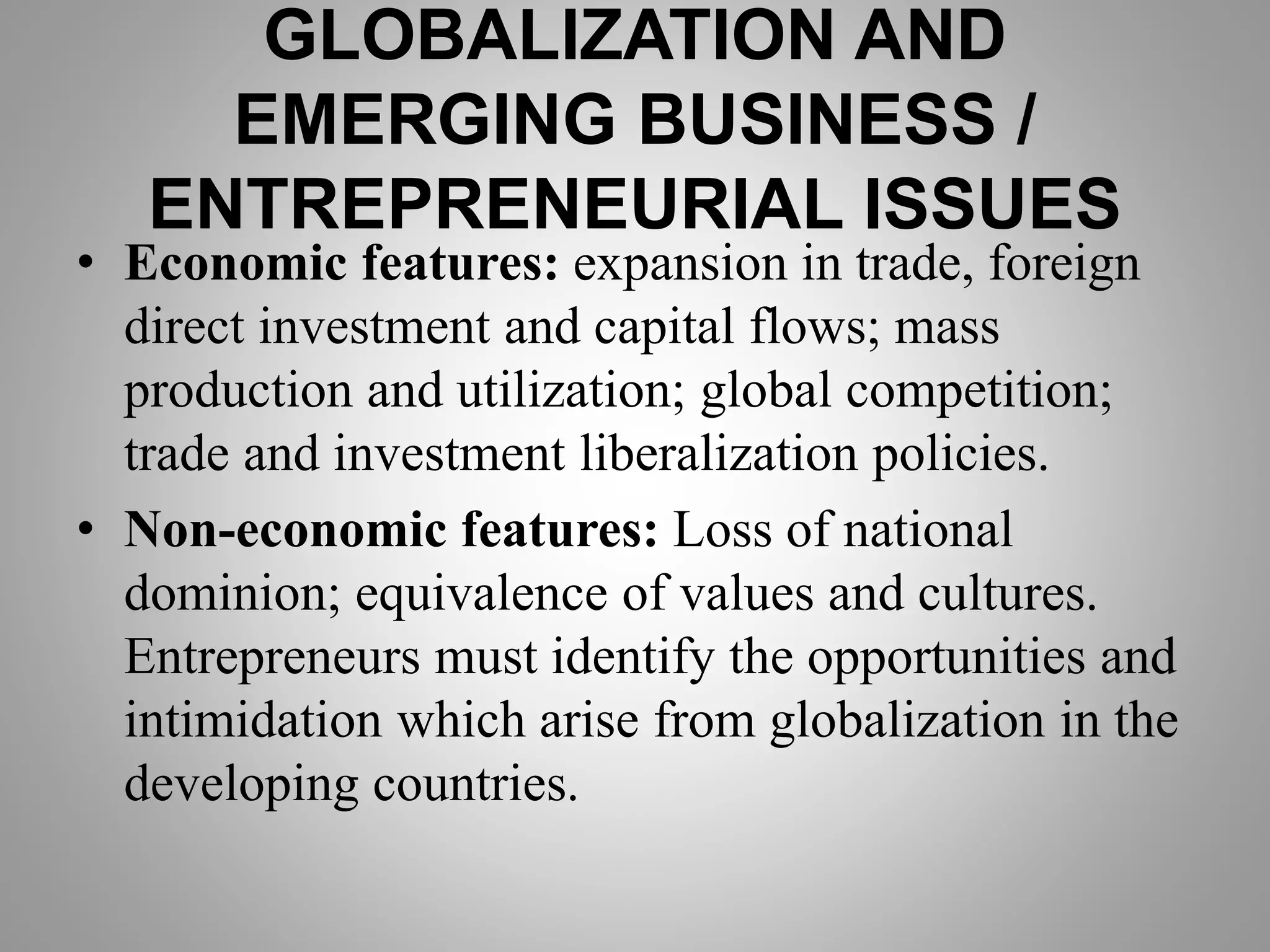
GLOBALIZATION AND
EMERGING BUSINESS /
ENTREPRENEURIAL ISSUES
• Economic features: expansion in trade, foreign
direct investment and capital flows; mass
production and utilization; global competition;
trade and investment liberalization policies.
• Non-economic features: Loss of national
dominion; equivalence of values and cultures.
Entrepreneurs must identify the opportunities and
intimidation which arise from globalization in the
developing countries.
Entrepreneurship
• What is Entrepreneurship ?
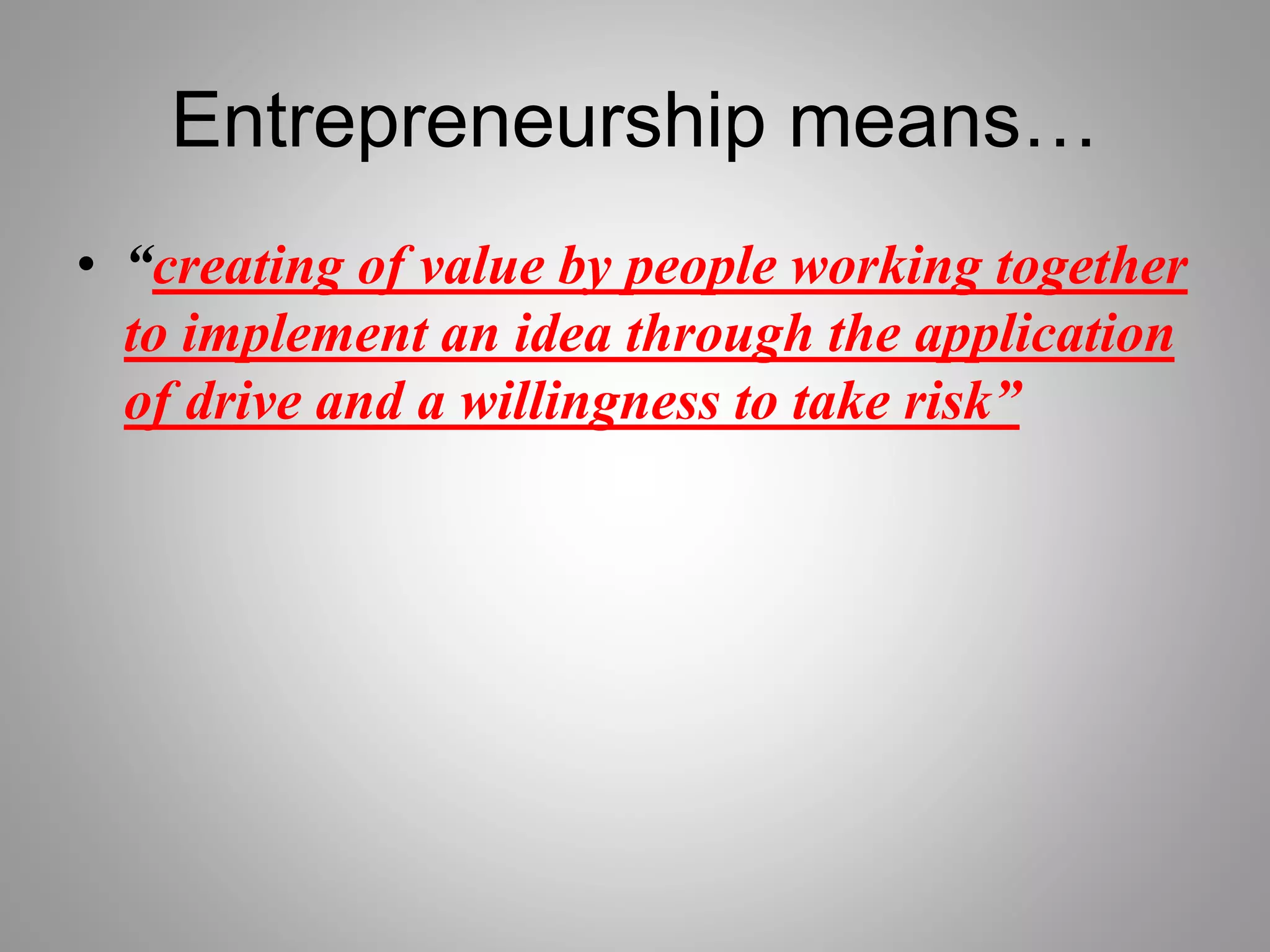
Entrepreneurship means…
• “creating of value by people working together
to implement an idea through the application
of drive and a willingness to take risk”
Phases in Entrepreneurship
– Initial entrepreneurial phase or inception phase
which is related to perception of an opportunity to
establish the business.
•
– Operational phase which includes the theory and
practice of management functions in the
organization of a business unit.
•
– Managerial phase which includes the profitable
application of the mental executive health in taking
relevant managerial decisions to run the business
unit as a profitable, going and growing concern.
Difference between Entrepreneur
and Manager
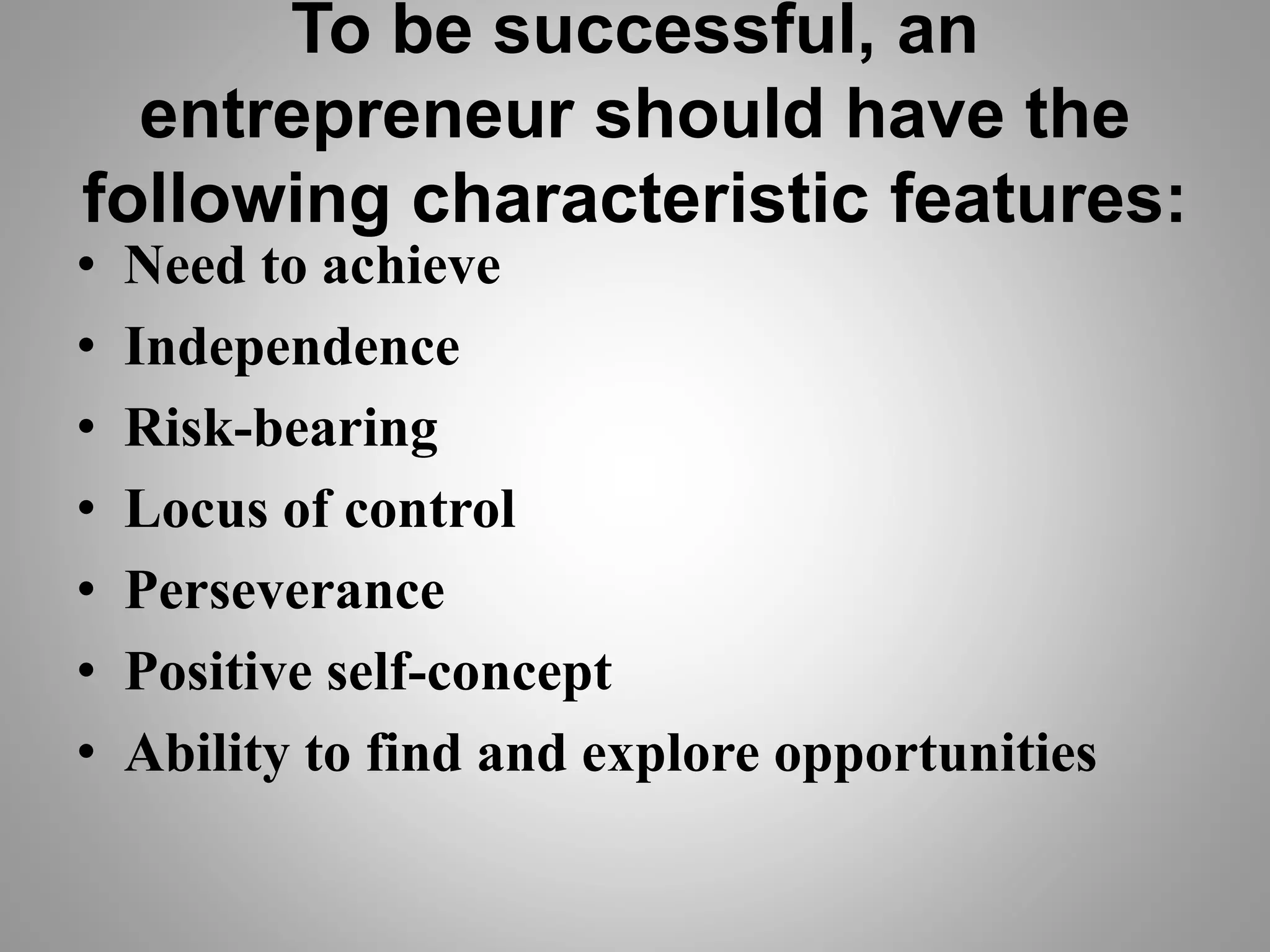
To be successful, an
entrepreneur should have the
following characteristic features:
• Need to achieve
• Independence
• Risk-bearing
• Locus of control
• Perseverance
• Positive self-concept
• Ability to find and explore opportunities
• Flexibility
• Openness to feedback and learning from
experience
• Confronting uncertainty
• Interpersonal skills
• Need to influence others
• Innovators
• Business communication skill
MANAGING AN ENTERPRISE
• Planning the enterprise involves selecting
objectives and strategies, policies, programmes
and procedures for achieving them. Planning
also includes decision making on production,
pricing and marketing of products. Market
survey is essential to get an idea of the market.
Market survey may be conducted with
reference to the availability of raw materials
equipments, marketing and distribution, and
consumer bahaviour etc.
• Which are the steps OF RUNNING A
SUCCESSFUL ENTERPRISE ?
steps OF RUNNING A
SUCCESSFUL ENTERPRISE ?
– Planning.
– Budgeting.
– Monitoring and evaluation of an enterprise.
– Follow up in running an enterprise.
• What is meaning of Motivation ?-Describe and
relate it with Entrepreneurship
Motivation means
• Motivation means movement or motion, an
inner state that energizes, activates or
moves and directs human behavior towards
goals. It is a need satisfying and goal seeking
behaviour
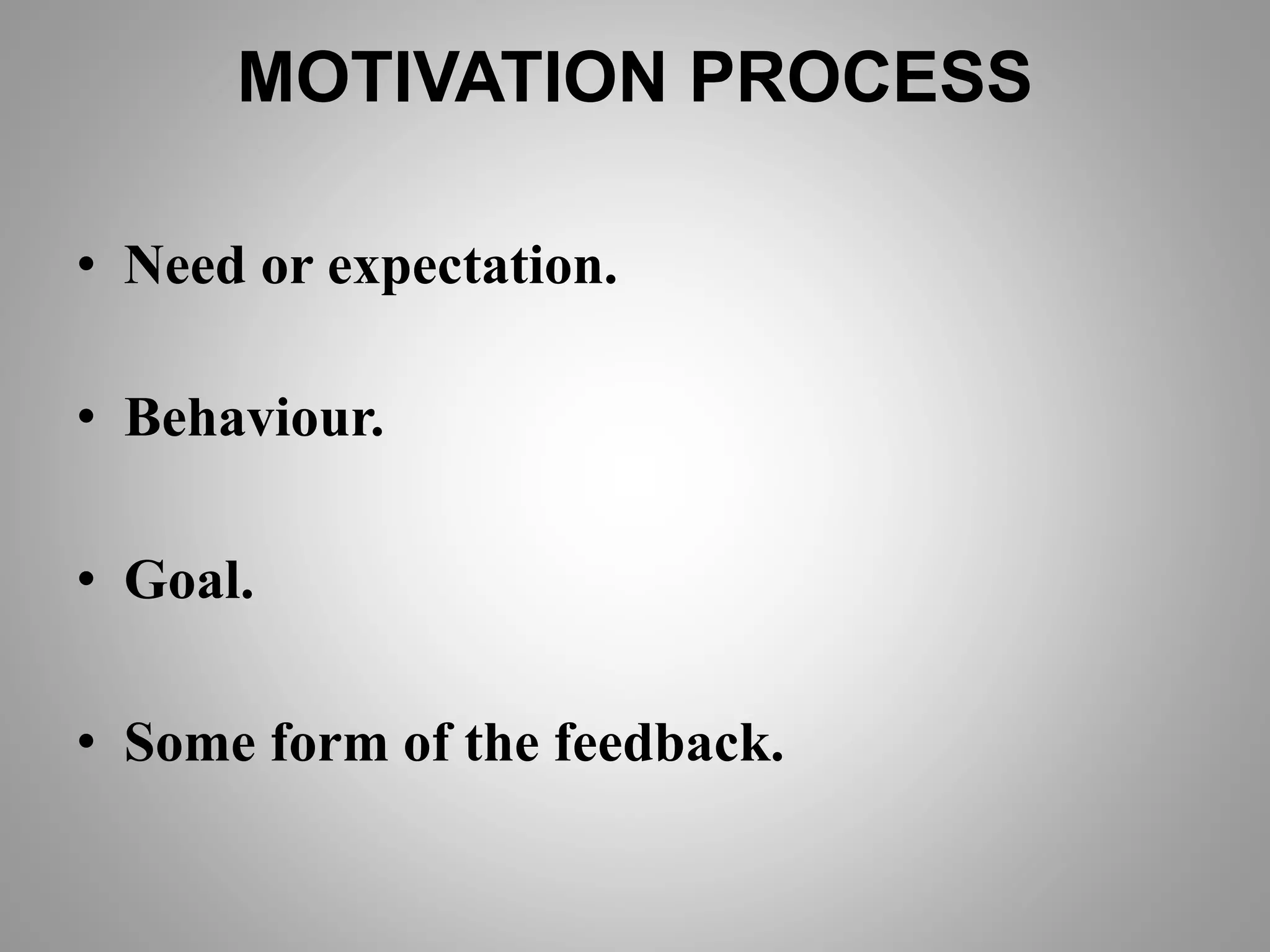
MOTIVATION PROCESS
• Need or expectation.
• Behaviour.
• Goal.
• Some form of the feedback.
FACTORS FOR
ENTREPRENEURAL
MOTIVATION
• Entrepreneurial Ambitions
• Competency Reason
• Facilitating Factors
People become industrial
entrepreneurs because of three
main reasons
• Desire to do something independently in life.
• Availability of technical/manufacturing or
trade knowledge and skill with prospective
entrepreneur.
• Support from government and other agencies
Importance of Planning
• Discuss
Monitoring focuses in……
• Clarifies program objectives.
• Links activities and their resources to objectives.
• Translates objectives into performance indicators and sets
targets.
• Routinely collects data on these indicators, compares actual
results with targets.
• Reports progress to managers and alerts them to problems.
Monitoring Of An Enterprise
• Clarifies program objectives.
• Links activities and their resources to objectives.
• Translates objectives into performance indicators and
sets targets.
• Routinely collects data on these indicators, compares
actual results with targets.
• Reports progress to managers and alerts them to
problems.
Evaluation Of An Enterprise
• Analyzes why intended results were or were not achieved.
• Assesses specific casual contributions of activities to results.
• Examines implementation process.
• Explores unintended results.
• Provides lessons, highlights significant accomplishments or
program potential and offers
• recommendations for improvement.
ENTREPRENEURSHIP
DEVELOPMENT PROGRAMMES
(EDPs)
• The objectives laid down for the above
programmes were as follows:
• To set up small scale ventures.
• To manage them effectively.
• To earn adequate profit from these ventures.
OBJECTIVES OF EDPS
• Accelerating industrial development by enlarging the supply of entrepreneurs.
• Developing entrepreneurial qualities and motivating the prospective
entrepreneurs to achieve the goal.
• Enhancing the growth of small-and medium-scale enterprise sectors which
offer better potential for employment generation and dispersal of industrial
unit.
• Providing productive self-employment avenues to a large number of educated
and low educated young men and women coming out of schools and colleges.
• Improving performance of small-and medium-scale industries by the supply of
carefully-selected and trained entrepreneurs and diversifying sources of
entrepreneurship.
• Enterprise development in rural and no-industry areas where local
entrepreneurship is not really available and entrepreneurs from nearby towns
are not easily lured.
THE INDIAN EDP MODEL
• PHASES OF EDPs
• The EDPs normally pass through following
three important phases:
– Pre-training phase.
– Training phase.
• Post-training or follow-up phase
SWOT ANALYSIS
• S - Strengths of the organization.
• W - Weaknesses.
• O - Opportunities of the environment.
• T - Threats.
• Generation of an Agri Business Idea
• Incubation of an Idea
• commercialization of ideas and innovations
• Prepared By :Prof.Devrshi Upadhayay
• 9724256662
• devrshiupadhayay@gmail.com

Entrepreneurship Development PPT

  • 1.
    Entrepreneurship Development and CommunicationSkills Unit 1 Prepared By: Prof. Devrshi Upadhayay
  • 2.
    Assessing overall business environmentin Indian economy • POST LIBERALIZATION • Post liberalization economic conditions have created enormous growth for the small scale industries. The government has also supported the small scale industries by the way of implementing various policies • The New Economic Policy initiated in early 1990s in India had five main components. These are • (i) Depreciation of the Indian rupee in order to increase exports, • (ii) Dismantling of government controls over domestic business, • (iii) Privatization and Sale of public sector enterprises, • (iv) Liberalization of monopoly markets to raise overseas and domestic competition, and • (v) Globalization by opening the Indian market to foreign venture
  • 3.
    BUSINESS ENVIRONMENT IN INDIANECONOMY • Strong growth momentum • Opportunity • Growth constraints
  • 4.
    GLOBALIZATION AND EMERGING BUSINESS/ ENTREPRENEURIAL ISSUES • Economic features: expansion in trade, foreign direct investment and capital flows; mass production and utilization; global competition; trade and investment liberalization policies. • Non-economic features: Loss of national dominion; equivalence of values and cultures. Entrepreneurs must identify the opportunities and intimidation which arise from globalization in the developing countries.
  • 5.
    Entrepreneurship • What isEntrepreneurship ?
  • 6.
    Entrepreneurship means… • “creatingof value by people working together to implement an idea through the application of drive and a willingness to take risk”
  • 7.
    Phases in Entrepreneurship –Initial entrepreneurial phase or inception phase which is related to perception of an opportunity to establish the business. • – Operational phase which includes the theory and practice of management functions in the organization of a business unit. • – Managerial phase which includes the profitable application of the mental executive health in taking relevant managerial decisions to run the business unit as a profitable, going and growing concern.
  • 8.
  • 9.
    To be successful,an entrepreneur should have the following characteristic features: • Need to achieve • Independence • Risk-bearing • Locus of control • Perseverance • Positive self-concept • Ability to find and explore opportunities
  • 10.
    • Flexibility • Opennessto feedback and learning from experience • Confronting uncertainty • Interpersonal skills • Need to influence others • Innovators • Business communication skill
  • 11.
    MANAGING AN ENTERPRISE •Planning the enterprise involves selecting objectives and strategies, policies, programmes and procedures for achieving them. Planning also includes decision making on production, pricing and marketing of products. Market survey is essential to get an idea of the market. Market survey may be conducted with reference to the availability of raw materials equipments, marketing and distribution, and consumer bahaviour etc.
  • 12.
    • Which arethe steps OF RUNNING A SUCCESSFUL ENTERPRISE ?
  • 13.
    steps OF RUNNINGA SUCCESSFUL ENTERPRISE ? – Planning. – Budgeting. – Monitoring and evaluation of an enterprise. – Follow up in running an enterprise.
  • 14.
    • What ismeaning of Motivation ?-Describe and relate it with Entrepreneurship
  • 15.
    Motivation means • Motivationmeans movement or motion, an inner state that energizes, activates or moves and directs human behavior towards goals. It is a need satisfying and goal seeking behaviour
  • 16.
    MOTIVATION PROCESS • Needor expectation. • Behaviour. • Goal. • Some form of the feedback.
  • 17.
    FACTORS FOR ENTREPRENEURAL MOTIVATION • EntrepreneurialAmbitions • Competency Reason • Facilitating Factors
  • 18.
    People become industrial entrepreneursbecause of three main reasons • Desire to do something independently in life. • Availability of technical/manufacturing or trade knowledge and skill with prospective entrepreneur. • Support from government and other agencies
  • 19.
  • 20.
    Monitoring focuses in…… •Clarifies program objectives. • Links activities and their resources to objectives. • Translates objectives into performance indicators and sets targets. • Routinely collects data on these indicators, compares actual results with targets. • Reports progress to managers and alerts them to problems.
  • 21.
    Monitoring Of AnEnterprise • Clarifies program objectives. • Links activities and their resources to objectives. • Translates objectives into performance indicators and sets targets. • Routinely collects data on these indicators, compares actual results with targets. • Reports progress to managers and alerts them to problems.
  • 22.
    Evaluation Of AnEnterprise • Analyzes why intended results were or were not achieved. • Assesses specific casual contributions of activities to results. • Examines implementation process. • Explores unintended results. • Provides lessons, highlights significant accomplishments or program potential and offers • recommendations for improvement.
  • 23.
    ENTREPRENEURSHIP DEVELOPMENT PROGRAMMES (EDPs) • Theobjectives laid down for the above programmes were as follows: • To set up small scale ventures. • To manage them effectively. • To earn adequate profit from these ventures.
  • 24.
    OBJECTIVES OF EDPS •Accelerating industrial development by enlarging the supply of entrepreneurs. • Developing entrepreneurial qualities and motivating the prospective entrepreneurs to achieve the goal. • Enhancing the growth of small-and medium-scale enterprise sectors which offer better potential for employment generation and dispersal of industrial unit. • Providing productive self-employment avenues to a large number of educated and low educated young men and women coming out of schools and colleges. • Improving performance of small-and medium-scale industries by the supply of carefully-selected and trained entrepreneurs and diversifying sources of entrepreneurship. • Enterprise development in rural and no-industry areas where local entrepreneurship is not really available and entrepreneurs from nearby towns are not easily lured.
  • 25.
    THE INDIAN EDPMODEL • PHASES OF EDPs • The EDPs normally pass through following three important phases: – Pre-training phase. – Training phase. • Post-training or follow-up phase
  • 26.
    SWOT ANALYSIS • S- Strengths of the organization. • W - Weaknesses. • O - Opportunities of the environment. • T - Threats.
  • 27.
    • Generation ofan Agri Business Idea • Incubation of an Idea • commercialization of ideas and innovations
  • 28.
    • Prepared By:Prof.Devrshi Upadhayay • 9724256662 • devrshiupadhayay@gmail.com