Dr. VIKRANT AKULWAR
Introduction
 Fistula is derived from Latin word that means “PIPE”.
 A Fistula is an abnormal connection between two epithelised surfaces.
 Fistulas that involve Gut and Skin are called ENTEROCUTANEOUS
FISTULA.
 Most GI Fistula (75 % - 85 %) occur as a complication of abdominal
surgery . However 15 – 25 % of fistula evolve spontaneously [1].
1. www.emedicine.medscape.com/article/intestinalfistula
Introduction
 Even with recent advances in management & critical care
enterocutaneous fistulas remain great challenges to the
surgeon.
 Mortality remains high, between 10–30% in recent series,
largely due to the frequent complications of sepsis and
malnutrition.[1]
1.Ann Surg 1960;152:445
CLASSIFICATION
Classification
 Several classification systems for fistulas exist , none of which
are used exclusively .
 The 3 most commonly used classification systems are
 Etiologic classification
 Anatomic classification
 Physiologic classification
 Used in combination ,these classification can help to provide
an integrated understanding and optimal management
scheme for fistula.
Etiologic Classification
 Enterocutaneous fistulas result from several processes:
 (1) diseased bowel extending to surrounding structures;
 (2) extra intestinal disease involving otherwise normal bowel;
 (3) trauma to normal bowel including inadvertent or missed
enterotomies.
 (4) anastomotic disruption following surgery for a variety of
conditions.
 Fistulas between the alimentary tract and skin may be
classified as postoperative or spontaneous.
Etiologic Classification
 Approximately ¾ of fistulas occur following an operation
(most commonly performed for malignancy, inflammatory bowel
disease, or adhesions)
 Postoperative fistulas result from either disruption of anastomosis
or inadverant bowel injury during dissection or abdominal
closure.
 Patient factors that increase the likelihood of developing a
postoperative fistula include
 Malnutrition,
 Infection,
 Emergency operations (with concomitant hypotension, anemia,
hypothermia)
Etiologic Classification
 The remaining 25 percent of fistulas are spontaneous fistulas.
 These spontaneous fistulas often develop in patients with cancer
or following radiation therapy.
 Fistulas occurring in the setting of malignancy or irradiation are
unlikely to close without operative intervention.
 A second major group of patients with spontaneous fistulas are
 Inflamatory bowel disease
 diverticular disease &
 ischemic bowel.
Anatomic Classification
 Anatomically fistulas are named
according to their participating
anatomic componants.
 Fistula can be divided into
internal and external fistulas .
 External fistula
(ENTEROCUTANEOUS FISTULA)
are abnormal connection between
the GI tract and skin .
Anatomic Classification
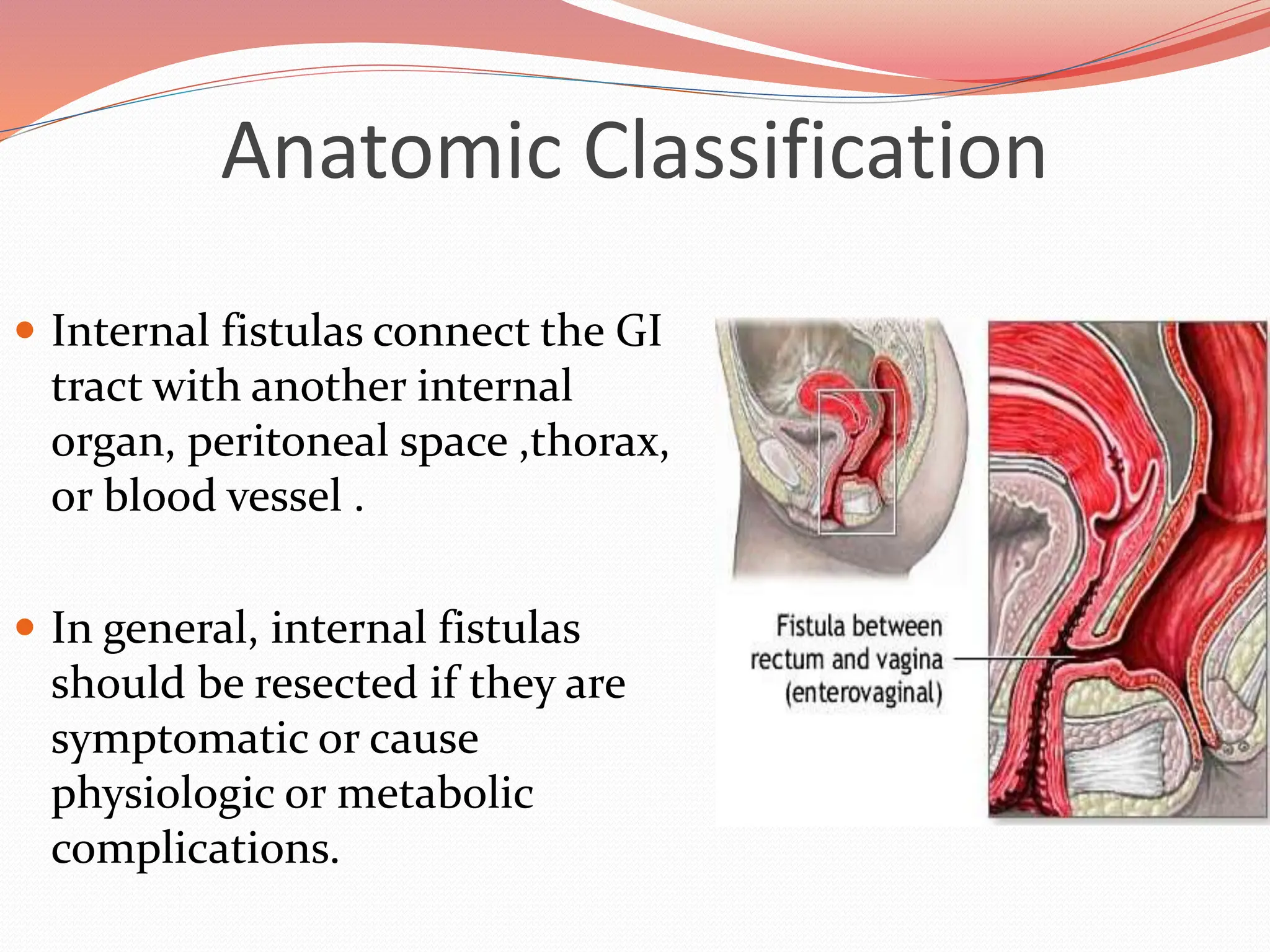
 Internal fistulas connect the GI
tract with another internal
organ, peritoneal space ,thorax,
or blood vessel .
 In general, internal fistulas
should be resected if they are
symptomatic or cause
physiologic or metabolic
complications.
Anatomic Classification
 Identification of the anatomic site of origin of external fistulas
may provide further information on the etiology and likelihood of
closure of the fistula.
Esophageal Fistulas
 Most esophagocutaneous fistulas result from either breakdown of
cervical anastomosis following resection of esophageal
malignancy or following esophageal trauma .
 The principles of drainage of sepsis, debridment of devitalised
tissue , and primary layered closure results in successful closure
of these fistula .
Anatomic Classification
Gastric Fistulas
 The most common cause gastrocutaneous fistula formation is the
removal of a gastrostomy feeding tube.
 Nearly 90% of patients develop fistula when the tube had been in situ
for more than 9 months.
 There are numerous reports of resolution of these fistulas with fibrin-
glue injection rather than operative closure.
 The rate of gastrocutaneous fistula following operations for
nonmalignant processes such as ulcer disease, reflux disease, and obesity
is between 0.5% and 3.9%.
Gastrointest Endosc 2004;59:296 [PubMed: 14745411]
Anatomic Classification
 Fistula formation following resection for gastric cancer remains a
dreaded complication with significant mortality rates.
 Spontaneous gastrocutaneous fistulas are uncommon, but can
result from inflammation, ischemia, cancer and radiation.
Duodenal Fistulas
 The majority of duodenocutaneous fistulas develop after gastric
resections or surgery involving the duodenum, pancreas, colon,
aorta, kidney, or biliary tract.
 Spontaneous cases resulting from trauma & malignancy.
Anatomic Classification
 Edmunds and associates reported a decreased spontaneous
closure rate with lateral duodenal fistulas when compared to
duodenal stump fistulas.[1]
Small Bowel Fistulas
 The majority of gastrointestinal cutaneous fistulas arise from the
small intestine.
 Seventy to ninety percent of enterocutaneous fistulas occur in
postoperative period.
1.theAnn Surg 1960;152:445 [PubMed: 13725742]
Anatomic Classification
 Postoperative small bowel fistulas result from either disruption of
anastomosis or injury to the bowel during dissection or closure of
the abdomen.
 Spontaneous small bowel fistulas arise from inflammatory bowel
disease, cancer, peptic ulcer disease, or pancreatitis.
Anatomic Classification
 Crohn's disease is the most common cause of spontaneous small
bowel fistula.
 The transmural inflammation underlying Crohn's disease may
lead to adhesion of the small bowel to the abdominal wall or other
abdominal structures.
 Microperforation may then cause abscess formation and erosion
into adjacent structures or the skin.
 Roughly half of Crohn's fistulas are internal and half are external.
Anatomic Classification
Colonic Fistula
 Spontaneous fistulas of the colon result from
 diverticulitis,
 malignancy,
 inflammatory bowel disease,
 appendicitis,
 T/t of these conditions accounts for the majority of postoperative
colocutaneous fistulas.
 Colocutaneous fistulas are known to occur following percutaneous
gastrostomy placement due to injuries at the time of this procedure.
 Appendiceal fistulas may result from drainage of an appendiceal abscess
or appendectomy in a patient with Crohn's disease.
Anatomic Classification
 The inflamed bowel adheres to the abdominal wall closure and
subsequently results in fistula formation.
 Erosion of a percutaneous drain for spontaneous right lower
quadrant abscess is also an increasing cause of gastrointestinal
cutaneous fistula in Crohn's disease.
 Proximal diverting colostomy or ileostomy may allow sufficient
anastomotic healing prior to suture-line challenge with luminal
contents.
Physiologic Classification
 Enterocutaneous fistulas cause
 the loss of fluid,
 minerals,
 trace elements,
 and protein,
 allow the release of irritating and caustic substances onto the skin.
 Accurate measurement of both the amount and nature of enterocutaneous effluent
allows for accurate replacement.
 Fistulas may be divided into 3 types :-
 high-output (>500 mL per day),
 moderate-output (200–500 mL/day),
 low-output (<200 mL/day) groups.
 Classification of enterocutaneous fistulas by the amount of daily output provides
information regarding mortality and in recent series may predict spontaneous
closure.[1,2]
1.British J Surg 1989;76:676 [PubMed: 2504436]
2.J Am Coll Surg 1999;188:483 [PubMed: 10235575]
Physiologic Classification
 More recently, Levy and colleagues reported
 50% mortality rate in patients with high-output fistulas
 26% mortality with low-output fistulas
 Campos and associates suggested that patients with low-output
fistulas were three times more likely to achieve closure without
operative intervention.
 The reason for these different rates of closure is that,
 high-output fistulas are likely to be of small-bowel origin,
 low-output fistulas are likely to be of colonic origin [1].
1.Br J Surg 1989;76:676 [PubMed: 2504436]
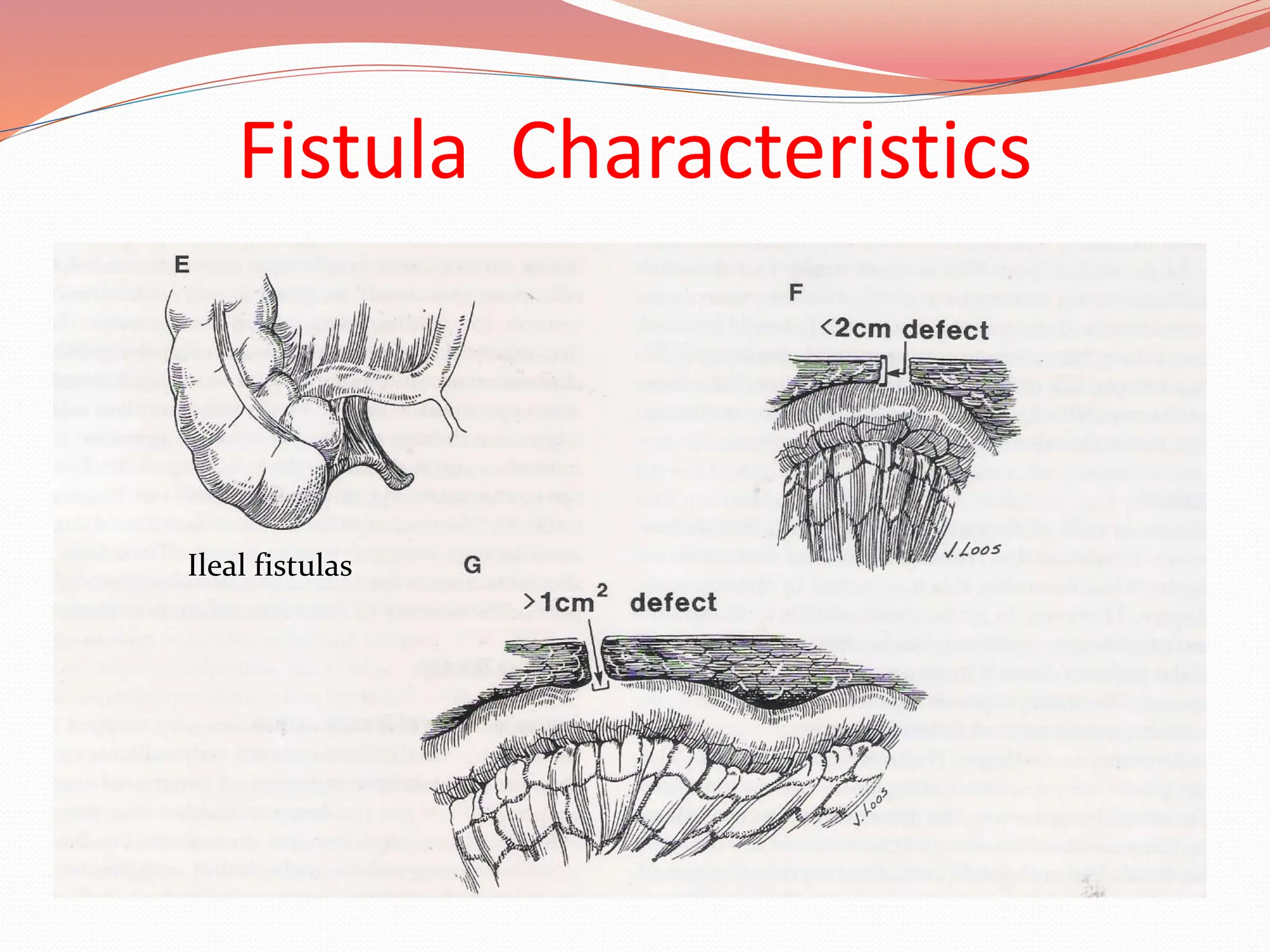
Fistula Characteristics
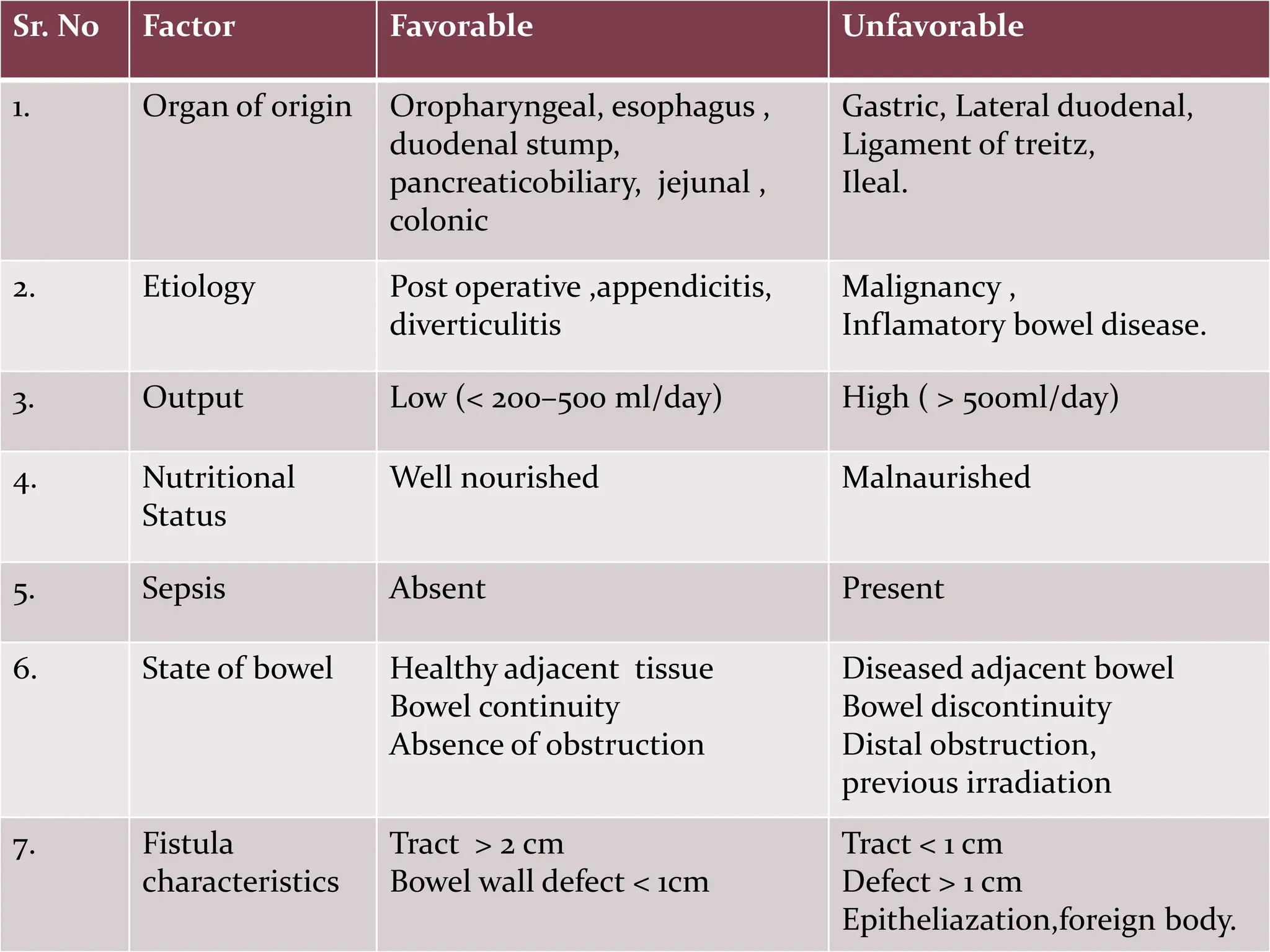
Sr. No Factor Favorable Unfavorable
1. Organ of origin Oropharyngeal, esophagus ,
duodenal stump,
pancreaticobiliary, jejunal ,
colonic
Gastric, Lateral duodenal,
Ligament of treitz,
Ileal.
2. Etiology Post operative ,appendicitis,
diverticulitis
Malignancy ,
Inflamatory bowel disease.
3. Output Low (< 200–500 ml/day) High ( > 500ml/day)
4. Nutritional
Status
Well nourished Malnaurished
5. Sepsis Absent Present
6. State of bowel Healthy adjacent tissue
Bowel continuity
Absence of obstruction
Diseased adjacent bowel
Bowel discontinuity
Distal obstruction,
previous irradiation
7. Fistula
characteristics
Tract > 2 cm
Bowel wall defect < 1cm
Tract < 1 cm
Defect > 1 cm
Epitheliazation,foreign body.
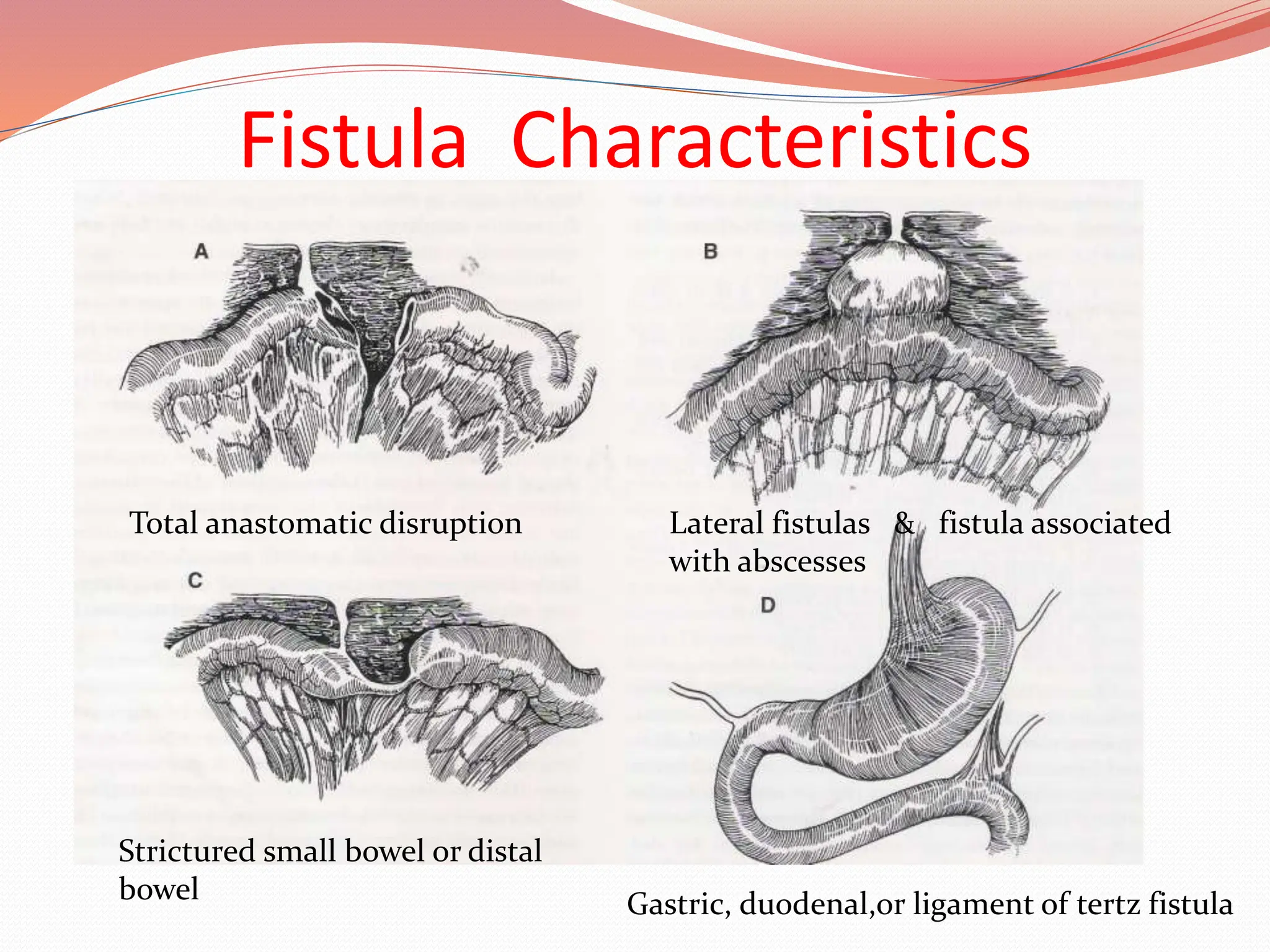
Fistula Characteristics
Total anastomatic disruption Lateral fistulas & fistula associated
with abscesses
Strictured small bowel or distal
bowel Gastric, duodenal,or ligament of tertz fistula
Fistula Characteristics
Ileal fistulas
Prevention
Prevention
 Proper preoperative patient preparation and meticulous surgical
technique will lessen the risk of postoperative fistula formation.
 In the elective setting, operation may be delayed to allow for
normalization of nutritional parameters, thus optimizing wound
healing and immune function.
 Several nutritional characteristics have been suggested to increase
the risk of anastomotic breakdown:
 1. Weight loss of 10–15% of total body weight over 3–4 months;
 2. Serum albumin less than 3 mg/dL;
 3. Serum transferrin less than 220 mg/dL;
 4. Inability to perform activities of daily living due to weakness or
fatigue.
Prevention
 Mechanical and antibiotic bowel preparation reduce the amount
of particulate fecal material as well as colonic bacterial counts and
thus decrease the risk of fistula formation.
 A recent meta-analysis of studies examining mechanical and
antibiotic bowel preparation suggests that bowel prep, may
increase the risk of anastomotic leakage, but confirmatory studies
are required before omission of preparation would be recommended
in practice.[1]
1.Slin K, Vicaut E, Panis Y et al. Meta-analysis of randomized clinical trials of colorectal surgery with or without
mechanical bowel preparation. Br J Surg 2004;91:1125
Prevention
 In emergency operations, delays for optimization of nutritional
status and bowel preparation are not possible.
 Instead, emphasis should be on adequate resuscitation and
restoration of circulating volume, normalization of
hemodynamics, provision of appropriate antibiotic therapy, and
meticulous surgical technique.
 Performance of anastomoses in a healthy, well-perfused bowel
without tension provides the best chance for healing, especially
when one can easily see the performance of the anastomosis
clearly.
Prevention
 Careful hemostasis to avoid postoperative hematoma
formation will decrease the risk of abscess, while inadvertent
enterotomies and serosal injuries should be identified and
repaired.
 If possible, an omental flap should be used to separate the
anastomosis from the abdominal incision.
 In the postoperative period, further resuscitation may be
required to ensure hemodynamic stability and avoid
inadequate tissue oxygenation.
Pathophysiology
Pathophysiology
 Edmunds recognized the role of sepsis, malnutrition, and
electrolyte abnormalities in contributing to the morbidity and
mortality of enterocutaneous fistulas.
 Leakage of intestinal contents results in the loss of electrolyte-
and protein-rich fluid.
 Patients with postoperative fistulas had limited enteral intake
before and after surgery.
Pathophysiology
 Depending on the level of the fistula, more or less bowel is
available for absorption of oral feeds.
 Finally, the hypercatabolic state induced by the presence of
infection increases the nutritional challenge.
 Most recent series suggest that sepsis remains the leading
cause of mortality in enterocutaneous fistula patients.
Pathophysiology
 The presence of infection adds to the stress on these patients and
limits the ability to achieve positive nitrogen balance.
 Series of Hill and colleagues suggest that, until sepsis is
controlled, it is almost impossible to put patients into positive
nitrogen balance, even with any level of nutritional support.[1]
World J Surg 1988;12:191 [PubMed: 3134764]
Pathophysiology
 Recent work on the mucosal immune hypothesis suggests
that both the route and type of nutrition affect the
maintenance of intestinal and respiratory integrity.
 Hypoalbuminemia has also been suggested to limit wound
healing and lead to bowel dysfunction .
Pathophysiology
 It is suggested that enteral feeding are superior to TPN, by
increasing immunity and controlling sepsis.
 Sepsis results in a vicious cycle must be broken to
successfully treat these patients.
 Sepsis hypercatabolism malnutrition decreased
immunity sepsis
Pathophysiology
 The social and psychological impact of enterocutaneous
fistula cannot be overlooked.
 These patients have a difficult, draining, foul-smelling
wound which has the major impact on psychological status.
Management
Phase 1: Recognition and Stabilization
Identification and Resuscitation
 The patient presenting with a postoperative enterocutaneous
fistula may do well initially for the first few days after operation.
 Within the first week, however, the patient may suffer delayed
return of bowel function and fever.
 Erythema of the wound develops and opening the wound reveals
purulent drainage that is soon followed by enteric contents.
Identification and Resuscitation
 The diagnosis is now
clear [enterocutaneus
fistula ] and
management shifts
from routine
postoperative care to
the management of a
potentially critically ill
patient.
Phase 1: Recognition and Stabilization
 Several liters of crystalloid are usually required to replace fluid
lost into the bowel and bowel wall.
 Albumin may aid in wound healing and intestinal function and is
involved in the transport of certain nutrients and medications.
Phase 1: Recognition and Stabilization
 The combined insults of the preoperative disease process, a
bowel preparation, a week of minimal nutritional support,
and a septic state often results in a profoundly volume-
depleted patient.
 The first stage in management of the fistula patient,
therefore, is the restoration of volume using crystalloid and
colloid products as appropriate to restore oxygen-carrying
capacity .
Phase 1: Recognition and Stabilization
Control of Sepsis
 The leakage of enteric contents outside of the bowel lumen
may lead to generalized peritonitis or abscess and fistula
formation.
 Frankly septic patients should be explored to drain abscesses
and proper antibiotics should be administered.
Phase 1: Recognition and Stabilization
 Placement of central venous catheters for parenteral
nutrition should be delayed for 24 hours following drainage
of septic foci.
 Because bacteremia following these procedures may seed
catheters, leading to line sepsis and further physiologic insult
in these fragile patients.
Phase 1: Recognition and Stabilization
Control of Fistula Drainage and Skin Care
 Plan to control fistula drainage and provide local skin care will
prevent continued irritation of the surrounding skin and
abdominal wall structures.
 Should operation be required, an intact abdominal wall will allow
for secure closure.
 Very-low-output fistulas may appear to be adequately managed
with dry dressings
Phase 1: Recognition and Stabilization
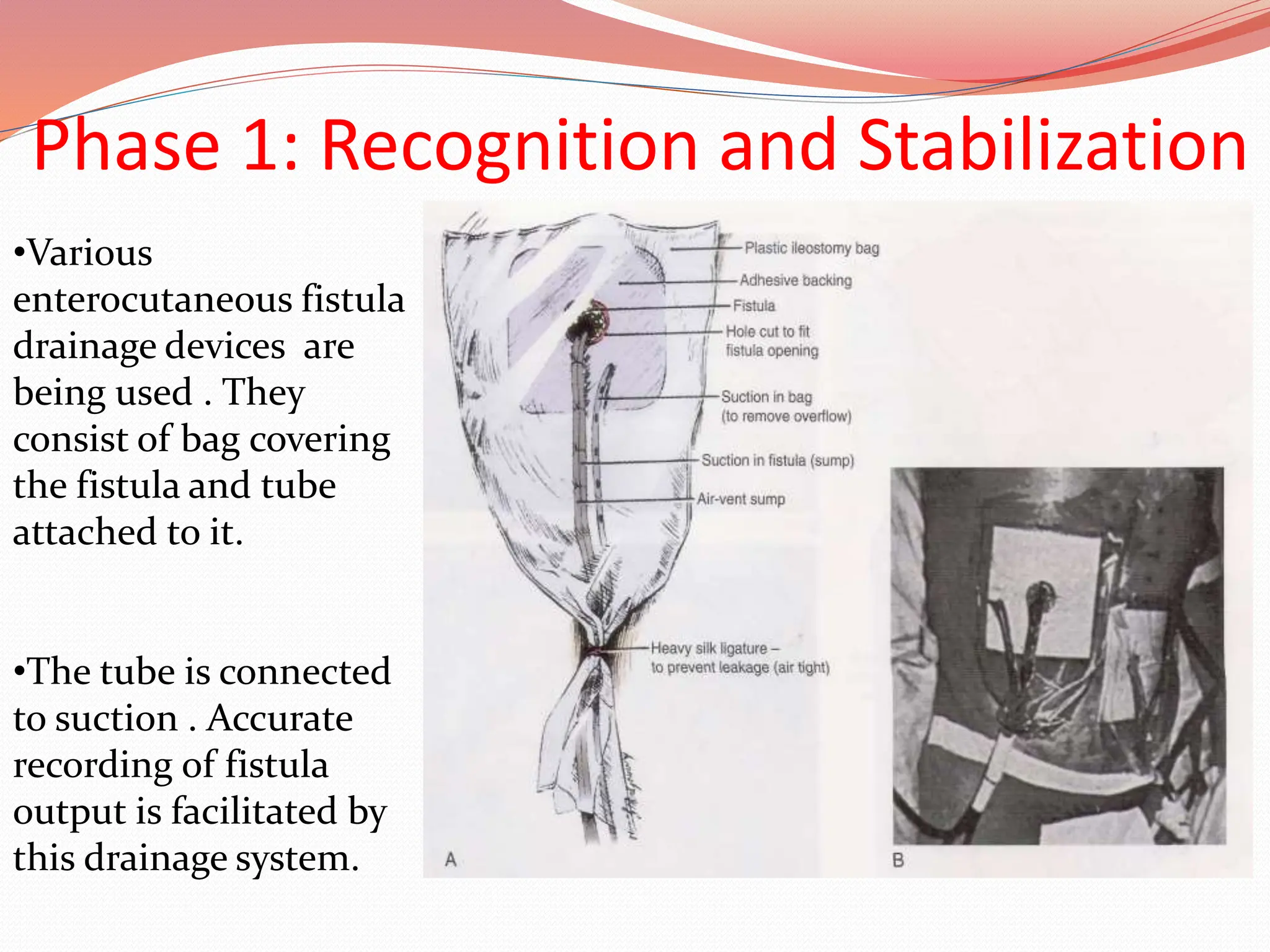
•Various
enterocutaneous fistula
drainage devices are
being used . They
consist of bag covering
the fistula and tube
attached to it.
•The tube is connected
to suction . Accurate
recording of fistula
output is facilitated by
this drainage system.
Phase 1: Recognition and Stabilization
 More recently, vacuum-assisted closure (VAC) devices have been
reported to both aid in the care of these complicated wounds and
promote nonoperative closure.
 The disadvantage of VAC dressings is the amount of time
necessary to change these dressings, often 2–2.5 hours.
 However, these dressings need only be changed every 5 or so days
Phase 1: Recognition and Stabilization
Reduction of Fistula Output
 While fistula output does not correlate with the rate of
spontaneous closure, reduction of fistula drainage may facilitate
wound management and decrease the time to closure.
 In the absence of obstruction, prolonged nasogastric drainage is
not indicated as it leads to
 patient discomfort,
 impaired pulmonary toilet,
 alar necrosis,
 sinusitis or otitis media,
 late esophageal stricture.
Phase 1: Recognition and Stabilization
 Should obstruction be present, operative intervention to relieve
the obstruction may be required.
 Measures to decrease the volume of enteric secretions include
administration of histamine antagonists or proton pump
inhibitors.
 Reduction in acid secretion will also aid in the prevention of
gastric and duodenal ulceration as well as decrease the
stimulation of pancreatic secretion.
Phase 1: Recognition and Stabilization
 Somatostatin and octreotide may reduce time to closure and
promote nonoperative closure of enterocutaneous fistulas.
 Somatostatin and its analogue octreotide may be used to reduce
gastrointestinal secretions, fistula output, and time to closure.
 Infliximab, a monoclonal antibody to tumor necrosis factor-alpha,
has been shown to be beneficial in fistulizing inflammatory bowel
disease.
Phase 1: Recognition and Stabilization
 In a study of 100 patients with fistulizing Crohn's disease,
infliximab infusion resulted in complete response in 50 patients,
partial response in 22 patients, and no response in 28 patients.[1]
 Whether this agent will be of use in patients without Crohn's
disease or ulcerative colitis remains to be determined
1.Am J Gastroenterol 2001;96:722 [PubMed: 11280541]
Phase 1: Recognition and Stabilization
Nutritional Support
 Provision of nutritional support may be all that is necessary for
spontaneous healing of enterocutaneous fistulas.
 Alternatively, should operative intervention be required,
normalization of nutritional parameters will provide the patient
with the best chance for successful fistula resolution.
Phase 1: Recognition and Stabilization
 As a general guideline, 25–32 kilocalories per kilogram per day and
at least 1.5 grams per kilogram per day of protein should be
provided.
 Parenteral nutrition has long been the cornerstone of support for
patients with enterocutaneous fistulas.
 Transition to partial or total enteral nutrition has been advocated
in recent reports to prevent atrophy of gastrointestinal mucosa as
well as support the immunologic and hormonal functions of the
gut and liver.
Phase 1: Recognition and Stabilization
 Additionally, parenteral nutrition is
 expensive
 requires dedicated nursing care
 has risk of catheter sepsis,
 metabolic complications.
 morbidity and mortality from line insertion
 Enteral feeding may occur per os, via feeding tubes placed
nasogastrically or nasoenterically, or via the fistula itself (i.e.,
fistuloclysis).
Phase 1: Recognition and Stabilization
 Enteral support typically requires 4 feet of small intestine
and is contraindicated in the presence of distal obstruction.
 Drainage from the fistula may be expected to increase with
the commencement of enteral feeding; however,
spontaneous closure may still occur.
Phase 2: Investigation
 Investigations should be
done 7–10 days after the
identification of the
fistula as this allows
time for the fistula tract
to mature to the point
where catheters can be
placed in all orifices.
Phase 2: Investigation
 Careful fistulography with water-soluble contrast provides
information not obtainable through any other means.
 Particular attention should be paid on
 length, course, and relationships of the fistula tract,
 absence or presence of bowel continuity or distal obstruction,
 the nature of the bowel adjacent to the fistula,
 the absence or presence of an abscess cavity in communication with the
fistula.
Phase 2: Investigation
FISTULOGRAM
Injection of a cutaneous
fistula demonstrate several
tract leading to ileum. Crohn’s
disease is present in one loop
 fistulogram demonstrating
an enterocutaneous fistula in a
patient after appendectomy for
acute perforated appendicitis
Phase 2: Investigation
 Computed tomography is most useful in the early management of
patients with fistulas to identify abscesses and guide percutaneous
interventions.
 Fistula tracts are not usually visible on axial CT imaging, although
sagittal or reconstructed images may provide useful information.
Phase 2: Investigation
Phase 3: Decision
 Ideally, provision of a period of sepsis-free nutrition will result in
closure of enterocutaneous fistulas within 4–6 weeks.
 Spontaneous closure of fistulas restores intestinal continuity and
allows resumption of oral nutrition.
 Therefore, once resuscitation, wound care, and nutritional
support are assured, a decision must be made regarding the
likelihood of spontaneous closure of a specific fistula.
Phase 3: Decision
 Information obtained from imaging investigations provides
prognostic details.
 Failure of enterocutaneous fistula to close spontaneously is
associated with no. of factors (FRIENDS)
 F – Foreign body
 R –Radiation
 I – Inflamation / infection
 E – Epitheliazation
 N – Neoplasm
 D – Distal intestinal obstruction
 S – Steroids
Phase 3: Decision
 The timing of operative intervention for fistulas that are unlikely
to or fail to close is important.
 Early operation is indicated to control sepsis not amenable to
percutaneous intervention.
 First, 90–95% of fistulas that will spontaneous close typically do
so within 5 weeks of the original operation.
 Furthermore, operation during the first 10 days to 6 weeks from
diagnosis of postoperative fistulas is made more difficult by the
"obliterative peritonitis" described by Fazio and associates.[1]
1.World J Surg 1983;7:481 [PubMed: 6624123]
Phase 3: Decision
 Optimally, if operation is required, 4 months should elapse from
the last operative procedure because the adhesions will have
matured and will be easier to deal with after that interval.
Phase 4: Definitive Management
 The definitive operative reconstruction of these complicated
patients requires the commitment of significant time and
resources.
 The surgical team should expect to be in the operating room for
up to 7 or 8 hours.
 A well-healed abdominal wall without inflammation should be
present before definitive surgery.
Phase 4: Definitive Management
 Prophylactic antibiotics should be administered based on the
patient's previous microbiological data.
 Tube feedings should be tapered in the days preceding operation
to allow mechanical and antibiotic preparation of the bowel.
 The operation should commence through a new incision distant
from any potential sources of inflammation or infection.
 Often, a transverse incision offers the best opportunity to enter
the abdomen in an area free of adhesions.
Phase 4: Definitive Management
 Towels dipped in antibiotic solution should be used to prevent
contamination of the abdominal wall tissues.
 Dissection to free the entire length of the bowel from the ligament
of Treitz to the rectum is termed bowel refunctionalization.
 Refunctionalization identifies and allows resection of all areas of
abscess and all sources of obstruction, thus ensuring the best
possible chance of avoiding failure of the present operation.
Phase 4: Definitive Management
 Dissection commences in the areas of least dense adhesions.
 Use of the scalpel and scissors to sharply dissect adhesions
prevents inadvertent damage to the bowel.
 Bowel anastomosis should be performed using
 two-layer
 interrupted
 end-to-end anastomosis
 nonabsorbable sutures
 healthy bowel.
Phase 4: Definitive Management
 Avoiding tension and ensuring adequate blood supply are
principles of sound surgical practice .
 Frequent irrigation of the abdominal cavity with antibiotic
solution should be performed.
 Placement of a flap of omentum between the fresh anastomosis
and the abdominal wall closure may prevent recurrence of
fistulization.
 Use of Seprafilm may be an adjuvant therapy to aid in prevention
of complications from future adhesions.
Phase 4: Definitive Management
 If a difficult closure of abdominal wall is anticipated, a complex
myocutaneous flap procedure may be required.
 The involvement of the plastic and reconstructive surgical service
and the use of a fresh team will maximize the likelihood of a good
outcome for the patient.
Phase 4: Definitive Management
Specimen of resected bowel with fistula
Phase 5: Healing
 Whether closure of fistulas occurs spontaneously or through
operative management, continuation of support is necessary to
avoid recurrence.
 Nutritional support via tube feedings should be continued until
the patient is consistently tolerating at least 1500 kilocalories per
day orally.
 Healing of the surgical wound and anastomoses requires a positive
nitrogen balance to avoid breakdown of newly formed proteins.
 Oral feeding typically commences 1 week postoperatively
Phase 5: Healing
 Zinc supplementation may improve patients' sense of taste ,
increase oral intake & improve wound healing .
 Physical and occupational therapists efforts become even more
important during the healing phase .
 One complication not widely reported is the inability of these
patients to think clearly and have appropriate decision making.
 This is likely due to protein depletion in the brain & normally
takes 12–18 months to resolve.
Conclusions
 Gastrointestinal cutaneous fistulas remain dreaded
complications of cancer, inflammatory bowel disease and
general surgical operations.
 An understanding of the pathophysiology and risk factors for
development of these fistulas may minimize their creation as
well as provide a sound plan for their management.
Enterocutaneous Fistula (general surg).pptx

Enterocutaneous Fistula (general surg).pptx

  • 1.
  • 2.
    Introduction  Fistula isderived from Latin word that means “PIPE”.  A Fistula is an abnormal connection between two epithelised surfaces.  Fistulas that involve Gut and Skin are called ENTEROCUTANEOUS FISTULA.  Most GI Fistula (75 % - 85 %) occur as a complication of abdominal surgery . However 15 – 25 % of fistula evolve spontaneously [1]. 1. www.emedicine.medscape.com/article/intestinalfistula
  • 3.
    Introduction  Even withrecent advances in management & critical care enterocutaneous fistulas remain great challenges to the surgeon.  Mortality remains high, between 10–30% in recent series, largely due to the frequent complications of sepsis and malnutrition.[1] 1.Ann Surg 1960;152:445
  • 4.
  • 5.
    Classification  Several classificationsystems for fistulas exist , none of which are used exclusively .  The 3 most commonly used classification systems are  Etiologic classification  Anatomic classification  Physiologic classification  Used in combination ,these classification can help to provide an integrated understanding and optimal management scheme for fistula.
  • 6.
    Etiologic Classification  Enterocutaneousfistulas result from several processes:  (1) diseased bowel extending to surrounding structures;  (2) extra intestinal disease involving otherwise normal bowel;  (3) trauma to normal bowel including inadvertent or missed enterotomies.  (4) anastomotic disruption following surgery for a variety of conditions.  Fistulas between the alimentary tract and skin may be classified as postoperative or spontaneous.
  • 7.
    Etiologic Classification  Approximately¾ of fistulas occur following an operation (most commonly performed for malignancy, inflammatory bowel disease, or adhesions)  Postoperative fistulas result from either disruption of anastomosis or inadverant bowel injury during dissection or abdominal closure.  Patient factors that increase the likelihood of developing a postoperative fistula include  Malnutrition,  Infection,  Emergency operations (with concomitant hypotension, anemia, hypothermia)
  • 8.
    Etiologic Classification  Theremaining 25 percent of fistulas are spontaneous fistulas.  These spontaneous fistulas often develop in patients with cancer or following radiation therapy.  Fistulas occurring in the setting of malignancy or irradiation are unlikely to close without operative intervention.  A second major group of patients with spontaneous fistulas are  Inflamatory bowel disease  diverticular disease &  ischemic bowel.
  • 9.
    Anatomic Classification  Anatomicallyfistulas are named according to their participating anatomic componants.  Fistula can be divided into internal and external fistulas .  External fistula (ENTEROCUTANEOUS FISTULA) are abnormal connection between the GI tract and skin .
  • 10.
    Anatomic Classification  Internalfistulas connect the GI tract with another internal organ, peritoneal space ,thorax, or blood vessel .  In general, internal fistulas should be resected if they are symptomatic or cause physiologic or metabolic complications.
  • 11.
    Anatomic Classification  Identificationof the anatomic site of origin of external fistulas may provide further information on the etiology and likelihood of closure of the fistula. Esophageal Fistulas  Most esophagocutaneous fistulas result from either breakdown of cervical anastomosis following resection of esophageal malignancy or following esophageal trauma .  The principles of drainage of sepsis, debridment of devitalised tissue , and primary layered closure results in successful closure of these fistula .
  • 12.
    Anatomic Classification Gastric Fistulas The most common cause gastrocutaneous fistula formation is the removal of a gastrostomy feeding tube.  Nearly 90% of patients develop fistula when the tube had been in situ for more than 9 months.  There are numerous reports of resolution of these fistulas with fibrin- glue injection rather than operative closure.  The rate of gastrocutaneous fistula following operations for nonmalignant processes such as ulcer disease, reflux disease, and obesity is between 0.5% and 3.9%. Gastrointest Endosc 2004;59:296 [PubMed: 14745411]
  • 13.
    Anatomic Classification  Fistulaformation following resection for gastric cancer remains a dreaded complication with significant mortality rates.  Spontaneous gastrocutaneous fistulas are uncommon, but can result from inflammation, ischemia, cancer and radiation. Duodenal Fistulas  The majority of duodenocutaneous fistulas develop after gastric resections or surgery involving the duodenum, pancreas, colon, aorta, kidney, or biliary tract.  Spontaneous cases resulting from trauma & malignancy.
  • 14.
    Anatomic Classification  Edmundsand associates reported a decreased spontaneous closure rate with lateral duodenal fistulas when compared to duodenal stump fistulas.[1] Small Bowel Fistulas  The majority of gastrointestinal cutaneous fistulas arise from the small intestine.  Seventy to ninety percent of enterocutaneous fistulas occur in postoperative period. 1.theAnn Surg 1960;152:445 [PubMed: 13725742]
  • 15.
    Anatomic Classification  Postoperativesmall bowel fistulas result from either disruption of anastomosis or injury to the bowel during dissection or closure of the abdomen.  Spontaneous small bowel fistulas arise from inflammatory bowel disease, cancer, peptic ulcer disease, or pancreatitis.
  • 16.
    Anatomic Classification  Crohn'sdisease is the most common cause of spontaneous small bowel fistula.  The transmural inflammation underlying Crohn's disease may lead to adhesion of the small bowel to the abdominal wall or other abdominal structures.  Microperforation may then cause abscess formation and erosion into adjacent structures or the skin.  Roughly half of Crohn's fistulas are internal and half are external.
  • 17.
    Anatomic Classification Colonic Fistula Spontaneous fistulas of the colon result from  diverticulitis,  malignancy,  inflammatory bowel disease,  appendicitis,  T/t of these conditions accounts for the majority of postoperative colocutaneous fistulas.  Colocutaneous fistulas are known to occur following percutaneous gastrostomy placement due to injuries at the time of this procedure.  Appendiceal fistulas may result from drainage of an appendiceal abscess or appendectomy in a patient with Crohn's disease.
  • 18.
    Anatomic Classification  Theinflamed bowel adheres to the abdominal wall closure and subsequently results in fistula formation.  Erosion of a percutaneous drain for spontaneous right lower quadrant abscess is also an increasing cause of gastrointestinal cutaneous fistula in Crohn's disease.  Proximal diverting colostomy or ileostomy may allow sufficient anastomotic healing prior to suture-line challenge with luminal contents.
  • 19.
    Physiologic Classification  Enterocutaneousfistulas cause  the loss of fluid,  minerals,  trace elements,  and protein,  allow the release of irritating and caustic substances onto the skin.  Accurate measurement of both the amount and nature of enterocutaneous effluent allows for accurate replacement.  Fistulas may be divided into 3 types :-  high-output (>500 mL per day),  moderate-output (200–500 mL/day),  low-output (<200 mL/day) groups.  Classification of enterocutaneous fistulas by the amount of daily output provides information regarding mortality and in recent series may predict spontaneous closure.[1,2] 1.British J Surg 1989;76:676 [PubMed: 2504436] 2.J Am Coll Surg 1999;188:483 [PubMed: 10235575]
  • 20.
    Physiologic Classification  Morerecently, Levy and colleagues reported  50% mortality rate in patients with high-output fistulas  26% mortality with low-output fistulas  Campos and associates suggested that patients with low-output fistulas were three times more likely to achieve closure without operative intervention.  The reason for these different rates of closure is that,  high-output fistulas are likely to be of small-bowel origin,  low-output fistulas are likely to be of colonic origin [1]. 1.Br J Surg 1989;76:676 [PubMed: 2504436]
  • 21.
  • 22.
    Sr. No FactorFavorable Unfavorable 1. Organ of origin Oropharyngeal, esophagus , duodenal stump, pancreaticobiliary, jejunal , colonic Gastric, Lateral duodenal, Ligament of treitz, Ileal. 2. Etiology Post operative ,appendicitis, diverticulitis Malignancy , Inflamatory bowel disease. 3. Output Low (< 200–500 ml/day) High ( > 500ml/day) 4. Nutritional Status Well nourished Malnaurished 5. Sepsis Absent Present 6. State of bowel Healthy adjacent tissue Bowel continuity Absence of obstruction Diseased adjacent bowel Bowel discontinuity Distal obstruction, previous irradiation 7. Fistula characteristics Tract > 2 cm Bowel wall defect < 1cm Tract < 1 cm Defect > 1 cm Epitheliazation,foreign body.
  • 23.
    Fistula Characteristics Total anastomaticdisruption Lateral fistulas & fistula associated with abscesses Strictured small bowel or distal bowel Gastric, duodenal,or ligament of tertz fistula
  • 24.
  • 25.
  • 26.
    Prevention  Proper preoperativepatient preparation and meticulous surgical technique will lessen the risk of postoperative fistula formation.  In the elective setting, operation may be delayed to allow for normalization of nutritional parameters, thus optimizing wound healing and immune function.  Several nutritional characteristics have been suggested to increase the risk of anastomotic breakdown:  1. Weight loss of 10–15% of total body weight over 3–4 months;  2. Serum albumin less than 3 mg/dL;  3. Serum transferrin less than 220 mg/dL;  4. Inability to perform activities of daily living due to weakness or fatigue.
  • 27.
    Prevention  Mechanical andantibiotic bowel preparation reduce the amount of particulate fecal material as well as colonic bacterial counts and thus decrease the risk of fistula formation.  A recent meta-analysis of studies examining mechanical and antibiotic bowel preparation suggests that bowel prep, may increase the risk of anastomotic leakage, but confirmatory studies are required before omission of preparation would be recommended in practice.[1] 1.Slin K, Vicaut E, Panis Y et al. Meta-analysis of randomized clinical trials of colorectal surgery with or without mechanical bowel preparation. Br J Surg 2004;91:1125
  • 28.
    Prevention  In emergencyoperations, delays for optimization of nutritional status and bowel preparation are not possible.  Instead, emphasis should be on adequate resuscitation and restoration of circulating volume, normalization of hemodynamics, provision of appropriate antibiotic therapy, and meticulous surgical technique.  Performance of anastomoses in a healthy, well-perfused bowel without tension provides the best chance for healing, especially when one can easily see the performance of the anastomosis clearly.
  • 29.
    Prevention  Careful hemostasisto avoid postoperative hematoma formation will decrease the risk of abscess, while inadvertent enterotomies and serosal injuries should be identified and repaired.  If possible, an omental flap should be used to separate the anastomosis from the abdominal incision.  In the postoperative period, further resuscitation may be required to ensure hemodynamic stability and avoid inadequate tissue oxygenation.
  • 30.
  • 31.
    Pathophysiology  Edmunds recognizedthe role of sepsis, malnutrition, and electrolyte abnormalities in contributing to the morbidity and mortality of enterocutaneous fistulas.  Leakage of intestinal contents results in the loss of electrolyte- and protein-rich fluid.  Patients with postoperative fistulas had limited enteral intake before and after surgery.
  • 32.
    Pathophysiology  Depending onthe level of the fistula, more or less bowel is available for absorption of oral feeds.  Finally, the hypercatabolic state induced by the presence of infection increases the nutritional challenge.  Most recent series suggest that sepsis remains the leading cause of mortality in enterocutaneous fistula patients.
  • 33.
    Pathophysiology  The presenceof infection adds to the stress on these patients and limits the ability to achieve positive nitrogen balance.  Series of Hill and colleagues suggest that, until sepsis is controlled, it is almost impossible to put patients into positive nitrogen balance, even with any level of nutritional support.[1] World J Surg 1988;12:191 [PubMed: 3134764]
  • 34.
    Pathophysiology  Recent workon the mucosal immune hypothesis suggests that both the route and type of nutrition affect the maintenance of intestinal and respiratory integrity.  Hypoalbuminemia has also been suggested to limit wound healing and lead to bowel dysfunction .
  • 35.
    Pathophysiology  It issuggested that enteral feeding are superior to TPN, by increasing immunity and controlling sepsis.  Sepsis results in a vicious cycle must be broken to successfully treat these patients.  Sepsis hypercatabolism malnutrition decreased immunity sepsis
  • 36.
    Pathophysiology  The socialand psychological impact of enterocutaneous fistula cannot be overlooked.  These patients have a difficult, draining, foul-smelling wound which has the major impact on psychological status.
  • 37.
  • 38.
    Phase 1: Recognitionand Stabilization Identification and Resuscitation  The patient presenting with a postoperative enterocutaneous fistula may do well initially for the first few days after operation.  Within the first week, however, the patient may suffer delayed return of bowel function and fever.  Erythema of the wound develops and opening the wound reveals purulent drainage that is soon followed by enteric contents.
  • 39.
    Identification and Resuscitation The diagnosis is now clear [enterocutaneus fistula ] and management shifts from routine postoperative care to the management of a potentially critically ill patient.
  • 40.
    Phase 1: Recognitionand Stabilization  Several liters of crystalloid are usually required to replace fluid lost into the bowel and bowel wall.  Albumin may aid in wound healing and intestinal function and is involved in the transport of certain nutrients and medications.
  • 41.
    Phase 1: Recognitionand Stabilization  The combined insults of the preoperative disease process, a bowel preparation, a week of minimal nutritional support, and a septic state often results in a profoundly volume- depleted patient.  The first stage in management of the fistula patient, therefore, is the restoration of volume using crystalloid and colloid products as appropriate to restore oxygen-carrying capacity .
  • 42.
    Phase 1: Recognitionand Stabilization Control of Sepsis  The leakage of enteric contents outside of the bowel lumen may lead to generalized peritonitis or abscess and fistula formation.  Frankly septic patients should be explored to drain abscesses and proper antibiotics should be administered.
  • 43.
    Phase 1: Recognitionand Stabilization  Placement of central venous catheters for parenteral nutrition should be delayed for 24 hours following drainage of septic foci.  Because bacteremia following these procedures may seed catheters, leading to line sepsis and further physiologic insult in these fragile patients.
  • 44.
    Phase 1: Recognitionand Stabilization Control of Fistula Drainage and Skin Care  Plan to control fistula drainage and provide local skin care will prevent continued irritation of the surrounding skin and abdominal wall structures.  Should operation be required, an intact abdominal wall will allow for secure closure.  Very-low-output fistulas may appear to be adequately managed with dry dressings
  • 45.
    Phase 1: Recognitionand Stabilization •Various enterocutaneous fistula drainage devices are being used . They consist of bag covering the fistula and tube attached to it. •The tube is connected to suction . Accurate recording of fistula output is facilitated by this drainage system.
  • 46.
    Phase 1: Recognitionand Stabilization  More recently, vacuum-assisted closure (VAC) devices have been reported to both aid in the care of these complicated wounds and promote nonoperative closure.  The disadvantage of VAC dressings is the amount of time necessary to change these dressings, often 2–2.5 hours.  However, these dressings need only be changed every 5 or so days
  • 47.
    Phase 1: Recognitionand Stabilization
  • 48.
    Phase 1: Recognitionand Stabilization Reduction of Fistula Output  While fistula output does not correlate with the rate of spontaneous closure, reduction of fistula drainage may facilitate wound management and decrease the time to closure.  In the absence of obstruction, prolonged nasogastric drainage is not indicated as it leads to  patient discomfort,  impaired pulmonary toilet,  alar necrosis,  sinusitis or otitis media,  late esophageal stricture.
  • 49.
    Phase 1: Recognitionand Stabilization  Should obstruction be present, operative intervention to relieve the obstruction may be required.  Measures to decrease the volume of enteric secretions include administration of histamine antagonists or proton pump inhibitors.  Reduction in acid secretion will also aid in the prevention of gastric and duodenal ulceration as well as decrease the stimulation of pancreatic secretion.
  • 50.
    Phase 1: Recognitionand Stabilization  Somatostatin and octreotide may reduce time to closure and promote nonoperative closure of enterocutaneous fistulas.  Somatostatin and its analogue octreotide may be used to reduce gastrointestinal secretions, fistula output, and time to closure.  Infliximab, a monoclonal antibody to tumor necrosis factor-alpha, has been shown to be beneficial in fistulizing inflammatory bowel disease.
  • 51.
    Phase 1: Recognitionand Stabilization  In a study of 100 patients with fistulizing Crohn's disease, infliximab infusion resulted in complete response in 50 patients, partial response in 22 patients, and no response in 28 patients.[1]  Whether this agent will be of use in patients without Crohn's disease or ulcerative colitis remains to be determined 1.Am J Gastroenterol 2001;96:722 [PubMed: 11280541]
  • 52.
    Phase 1: Recognitionand Stabilization Nutritional Support  Provision of nutritional support may be all that is necessary for spontaneous healing of enterocutaneous fistulas.  Alternatively, should operative intervention be required, normalization of nutritional parameters will provide the patient with the best chance for successful fistula resolution.
  • 53.
    Phase 1: Recognitionand Stabilization  As a general guideline, 25–32 kilocalories per kilogram per day and at least 1.5 grams per kilogram per day of protein should be provided.  Parenteral nutrition has long been the cornerstone of support for patients with enterocutaneous fistulas.  Transition to partial or total enteral nutrition has been advocated in recent reports to prevent atrophy of gastrointestinal mucosa as well as support the immunologic and hormonal functions of the gut and liver.
  • 54.
    Phase 1: Recognitionand Stabilization  Additionally, parenteral nutrition is  expensive  requires dedicated nursing care  has risk of catheter sepsis,  metabolic complications.  morbidity and mortality from line insertion  Enteral feeding may occur per os, via feeding tubes placed nasogastrically or nasoenterically, or via the fistula itself (i.e., fistuloclysis).
  • 55.
    Phase 1: Recognitionand Stabilization  Enteral support typically requires 4 feet of small intestine and is contraindicated in the presence of distal obstruction.  Drainage from the fistula may be expected to increase with the commencement of enteral feeding; however, spontaneous closure may still occur.
  • 56.
    Phase 2: Investigation Investigations should be done 7–10 days after the identification of the fistula as this allows time for the fistula tract to mature to the point where catheters can be placed in all orifices.
  • 57.
    Phase 2: Investigation Careful fistulography with water-soluble contrast provides information not obtainable through any other means.  Particular attention should be paid on  length, course, and relationships of the fistula tract,  absence or presence of bowel continuity or distal obstruction,  the nature of the bowel adjacent to the fistula,  the absence or presence of an abscess cavity in communication with the fistula.
  • 58.
    Phase 2: Investigation FISTULOGRAM Injectionof a cutaneous fistula demonstrate several tract leading to ileum. Crohn’s disease is present in one loop  fistulogram demonstrating an enterocutaneous fistula in a patient after appendectomy for acute perforated appendicitis
  • 59.
    Phase 2: Investigation Computed tomography is most useful in the early management of patients with fistulas to identify abscesses and guide percutaneous interventions.  Fistula tracts are not usually visible on axial CT imaging, although sagittal or reconstructed images may provide useful information.
  • 60.
  • 61.
    Phase 3: Decision Ideally, provision of a period of sepsis-free nutrition will result in closure of enterocutaneous fistulas within 4–6 weeks.  Spontaneous closure of fistulas restores intestinal continuity and allows resumption of oral nutrition.  Therefore, once resuscitation, wound care, and nutritional support are assured, a decision must be made regarding the likelihood of spontaneous closure of a specific fistula.
  • 62.
    Phase 3: Decision Information obtained from imaging investigations provides prognostic details.  Failure of enterocutaneous fistula to close spontaneously is associated with no. of factors (FRIENDS)  F – Foreign body  R –Radiation  I – Inflamation / infection  E – Epitheliazation  N – Neoplasm  D – Distal intestinal obstruction  S – Steroids
  • 63.
    Phase 3: Decision The timing of operative intervention for fistulas that are unlikely to or fail to close is important.  Early operation is indicated to control sepsis not amenable to percutaneous intervention.  First, 90–95% of fistulas that will spontaneous close typically do so within 5 weeks of the original operation.  Furthermore, operation during the first 10 days to 6 weeks from diagnosis of postoperative fistulas is made more difficult by the "obliterative peritonitis" described by Fazio and associates.[1] 1.World J Surg 1983;7:481 [PubMed: 6624123]
  • 64.
    Phase 3: Decision Optimally, if operation is required, 4 months should elapse from the last operative procedure because the adhesions will have matured and will be easier to deal with after that interval.
  • 65.
    Phase 4: DefinitiveManagement  The definitive operative reconstruction of these complicated patients requires the commitment of significant time and resources.  The surgical team should expect to be in the operating room for up to 7 or 8 hours.  A well-healed abdominal wall without inflammation should be present before definitive surgery.
  • 66.
    Phase 4: DefinitiveManagement  Prophylactic antibiotics should be administered based on the patient's previous microbiological data.  Tube feedings should be tapered in the days preceding operation to allow mechanical and antibiotic preparation of the bowel.  The operation should commence through a new incision distant from any potential sources of inflammation or infection.  Often, a transverse incision offers the best opportunity to enter the abdomen in an area free of adhesions.
  • 67.
    Phase 4: DefinitiveManagement  Towels dipped in antibiotic solution should be used to prevent contamination of the abdominal wall tissues.  Dissection to free the entire length of the bowel from the ligament of Treitz to the rectum is termed bowel refunctionalization.  Refunctionalization identifies and allows resection of all areas of abscess and all sources of obstruction, thus ensuring the best possible chance of avoiding failure of the present operation.
  • 68.
    Phase 4: DefinitiveManagement  Dissection commences in the areas of least dense adhesions.  Use of the scalpel and scissors to sharply dissect adhesions prevents inadvertent damage to the bowel.  Bowel anastomosis should be performed using  two-layer  interrupted  end-to-end anastomosis  nonabsorbable sutures  healthy bowel.
  • 69.
    Phase 4: DefinitiveManagement  Avoiding tension and ensuring adequate blood supply are principles of sound surgical practice .  Frequent irrigation of the abdominal cavity with antibiotic solution should be performed.  Placement of a flap of omentum between the fresh anastomosis and the abdominal wall closure may prevent recurrence of fistulization.  Use of Seprafilm may be an adjuvant therapy to aid in prevention of complications from future adhesions.
  • 70.
    Phase 4: DefinitiveManagement  If a difficult closure of abdominal wall is anticipated, a complex myocutaneous flap procedure may be required.  The involvement of the plastic and reconstructive surgical service and the use of a fresh team will maximize the likelihood of a good outcome for the patient.
  • 71.
  • 72.
    Phase 4: DefinitiveManagement Specimen of resected bowel with fistula
  • 73.
    Phase 5: Healing Whether closure of fistulas occurs spontaneously or through operative management, continuation of support is necessary to avoid recurrence.  Nutritional support via tube feedings should be continued until the patient is consistently tolerating at least 1500 kilocalories per day orally.  Healing of the surgical wound and anastomoses requires a positive nitrogen balance to avoid breakdown of newly formed proteins.  Oral feeding typically commences 1 week postoperatively
  • 74.
    Phase 5: Healing Zinc supplementation may improve patients' sense of taste , increase oral intake & improve wound healing .  Physical and occupational therapists efforts become even more important during the healing phase .  One complication not widely reported is the inability of these patients to think clearly and have appropriate decision making.  This is likely due to protein depletion in the brain & normally takes 12–18 months to resolve.
  • 75.
    Conclusions  Gastrointestinal cutaneousfistulas remain dreaded complications of cancer, inflammatory bowel disease and general surgical operations.  An understanding of the pathophysiology and risk factors for development of these fistulas may minimize their creation as well as provide a sound plan for their management.