Intestinal Fistulas
Yonas ademe
Jan 2017
Introduction
• A fistula is defined as an abnormal
communication between two epithelialized
surfaces
• 2 types
– Internal fistula: the communication occurs between
two parts of the GIT or adjacent organs
• e.g., enterocolonic fistula or colovesicular fistula
– External fistula: involves the skin or another external
surface epithelium
• e.g., enterocutaneous fistula or rectovaginal fistula
Cont.
• Types of enterocutaneous fistulas
– Low-output
• Enterocutaneous fistulas that drain less than 200 mL of
fluid per day
– High-output fistulas
• Enterocutaneous fistulas that drain more than 500 mL
of fluid per day
Cont.
• More than 80% of enterocutaneous fistulas
represent iatrogenic complications that occur
as the result of enterotomies or intestinal
anastomotic dehiscences
• Fistulas that arise spontaneously without
antecedent iatrogenic injury are usually
manifestations of progression of underlying
Crohn's disease or cancer
Clinical Presentation
• Iatrogenic enterocutaneous fistulas usually become
clinically evident between the 5th and 10th postop
days
• Fever, prolonged ileus, abdominal tenderness,
wound infection, and leukocytosis are the initial
signs
• The diagnosis becomes obvious when drainage of
enteric material through the abdominal wound or
through existing drains occurs
• These fistulas are often associated with intra-
abdominal abscesses
Cont.
• Fistulas have the potential to close spontaneously
• Factors inhibiting spontaneous closure
– Fistula related
• High output fistulas
• Epithelialization of the fistula tract
– Systemic factors
• Malnutrition
• Sepsis
– Bowel related
• Inflammatory bowel disease
• Cancer
• Radiation
• Obstruction of the intestine distal to the origin of the fistula
• Foreign bodies
Complications
• Dehydration
• Electrolyte abnormalities
• Malnutrition
• Skin excoriation
• Reccurrent UTIs
(Enterovesicular fistulas)
The loss of enteric luminal
contents, particularly from
high-output fistulas
originating from the
proximal small intestine
Diagnosis
• CT scan (with enteral contrast) is the most useful initial
test
– Leakage of contrast material from the intestinal lumen can
be observed
– Intra-abdominal abscesses can also be seen and drained
percutaneously
• Small-bowel series or enteroclysis
– If the anatomy of the fistula is not clear on CT scanning
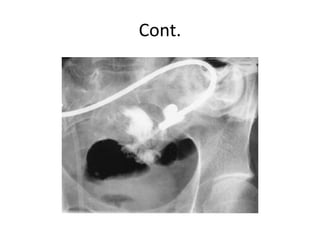
• Fistulography
– A contrast is injected under pressure through a catheter
placed percutaneously into the fistula tract
– It may offer greater sensitivity in localizing the fistula origin
Cont.
Treatment
• The treatment of enterocutaneous fistulas
should proceed through an orderly sequence
of steps
Cont.
• Step 1: Stabilization
– Fluid and electrolyte resuscitation
– Nutritional rehabilitation
• Usually through the parenteral route initially
– Control of epsis
• Antibiotics and drainage of abscesses
– Protection of skin from the fistula effluent
• Ostomy appliances or fistula drains
Cont.
• Step 2: Investigation
– The anatomy of the fistula is defined using the
studies
• Step 3: Rehabilitation
– Probability of spontaneous closure is maximized
– Nutrition and time are the key components of this
phase
• Most patients will require TPN; however, a trial of oral or
enteral nutrition should be attempted in patients with low-
output fistulas originating from the distal intestine
• 2 to 3 months are allowed for spontaneous closure
– Fistulas that do not close during this period are unlikely to do so
– ?The somatostatin analogue octreotide
Cont.
• Surgery
– Procedure
• Resection of the fistula tract, together with the segment of
intestine from which it originates
• Simple closure of the opening in the intestine from which
the fistula originates is associated with high recurrence
rates
– Patients with intestinal fistulas typically have
extensive and dense intra-abdominal adhesions
• As a result, operations performed for nonhealing fistulas
can present formidable challenges
Prognosis
• Enterocutaneous fistulas are associated with a
10 to 15% mortality rate, mostly related to
sepsis or underlying disease
• Overall, 50% of intestinal fistulas close
spontaneously
End!

5.Intestinal Fistulas.pptx

  • 1.
  • 2.
    Introduction • A fistulais defined as an abnormal communication between two epithelialized surfaces • 2 types – Internal fistula: the communication occurs between two parts of the GIT or adjacent organs • e.g., enterocolonic fistula or colovesicular fistula – External fistula: involves the skin or another external surface epithelium • e.g., enterocutaneous fistula or rectovaginal fistula
  • 3.
    Cont. • Types ofenterocutaneous fistulas – Low-output • Enterocutaneous fistulas that drain less than 200 mL of fluid per day – High-output fistulas • Enterocutaneous fistulas that drain more than 500 mL of fluid per day
  • 4.
    Cont. • More than80% of enterocutaneous fistulas represent iatrogenic complications that occur as the result of enterotomies or intestinal anastomotic dehiscences • Fistulas that arise spontaneously without antecedent iatrogenic injury are usually manifestations of progression of underlying Crohn's disease or cancer
  • 5.
    Clinical Presentation • Iatrogenicenterocutaneous fistulas usually become clinically evident between the 5th and 10th postop days • Fever, prolonged ileus, abdominal tenderness, wound infection, and leukocytosis are the initial signs • The diagnosis becomes obvious when drainage of enteric material through the abdominal wound or through existing drains occurs • These fistulas are often associated with intra- abdominal abscesses
  • 6.
    Cont. • Fistulas havethe potential to close spontaneously • Factors inhibiting spontaneous closure – Fistula related • High output fistulas • Epithelialization of the fistula tract – Systemic factors • Malnutrition • Sepsis – Bowel related • Inflammatory bowel disease • Cancer • Radiation • Obstruction of the intestine distal to the origin of the fistula • Foreign bodies
  • 7.
    Complications • Dehydration • Electrolyteabnormalities • Malnutrition • Skin excoriation • Reccurrent UTIs (Enterovesicular fistulas) The loss of enteric luminal contents, particularly from high-output fistulas originating from the proximal small intestine
  • 8.
    Diagnosis • CT scan(with enteral contrast) is the most useful initial test – Leakage of contrast material from the intestinal lumen can be observed – Intra-abdominal abscesses can also be seen and drained percutaneously • Small-bowel series or enteroclysis – If the anatomy of the fistula is not clear on CT scanning • Fistulography – A contrast is injected under pressure through a catheter placed percutaneously into the fistula tract – It may offer greater sensitivity in localizing the fistula origin
  • 9.
  • 10.
    Treatment • The treatmentof enterocutaneous fistulas should proceed through an orderly sequence of steps
  • 11.
    Cont. • Step 1:Stabilization – Fluid and electrolyte resuscitation – Nutritional rehabilitation • Usually through the parenteral route initially – Control of epsis • Antibiotics and drainage of abscesses – Protection of skin from the fistula effluent • Ostomy appliances or fistula drains
  • 12.
    Cont. • Step 2:Investigation – The anatomy of the fistula is defined using the studies
  • 13.
    • Step 3:Rehabilitation – Probability of spontaneous closure is maximized – Nutrition and time are the key components of this phase • Most patients will require TPN; however, a trial of oral or enteral nutrition should be attempted in patients with low- output fistulas originating from the distal intestine • 2 to 3 months are allowed for spontaneous closure – Fistulas that do not close during this period are unlikely to do so – ?The somatostatin analogue octreotide
  • 14.
    Cont. • Surgery – Procedure •Resection of the fistula tract, together with the segment of intestine from which it originates • Simple closure of the opening in the intestine from which the fistula originates is associated with high recurrence rates – Patients with intestinal fistulas typically have extensive and dense intra-abdominal adhesions • As a result, operations performed for nonhealing fistulas can present formidable challenges
  • 15.
    Prognosis • Enterocutaneous fistulasare associated with a 10 to 15% mortality rate, mostly related to sepsis or underlying disease • Overall, 50% of intestinal fistulas close spontaneously
  • 16.

Editor's Notes

  • #7 A useful mnemonic designates factors that inhibit spontaneous closure of intestinal fistulas: FRIEND (foreign body within the fistula tract; radiation enteritis; infection/inflammation at the fistula origin; epithelialization of the fistula tract; neoplasm at the fistula origin; distal obstruction of the intestine)