Mr Derrick Siau
Consultant ENT Surgeon
ECT &UHSM
Mr Derrick Siau
Introduction
 Limited ENT exposure during medical training
 ENT conditions are ubiquitous, up to 30% of primary
care presentations ENT related
 Brief overview of common acute ENT conditions you
are likely to encounter in casualty
 Best way to learn – come and sit in in clinic
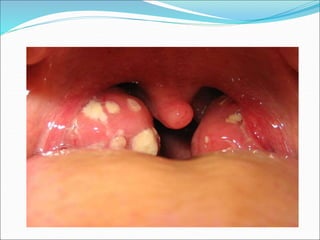
Tonsillitis
Mostly Viral as part of URTI
5-30% caused by bacteria
 Grp A β haemolytic strep (most common)
 H.influenzae
 Staph aureus
 Strep Pneumoniae
Management
 IV antibiotics – benzyl-pen +/- metronidazole
 IV fluids
 Adequate analgesia
Epistaxis
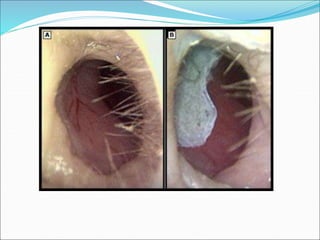
Epistaxis
 Most common acute ENT admission
 Most settle conservatively – Ice pack + pinching
 ABC – resuscitation
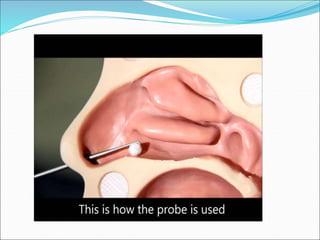
 Topical anaesthetic/decongestant spray– silver nitrate
cautery
 Anterior – younger, nasal tampons, balloon. BIPP pack
 Posterior – Elderly requires Foley’s, posterior packs
 FLOSEAL – Human Thrombin
Anterior Packing
Posterior Packing
Rhinitis causes
 Infection : Viruses – common cold, self-limiting. Last for
a week
Rhinovirus, corona virus, RSV etc
 Allergies – very common, half of all rhinitis in clinic
 Occupational – air-borne irritants e.g. Cooks,
swimming-pools, chemical workers
 Drug induced – decongestant abuse !!! Damage lining of
nose, very difficult to treat
 Others drugs : anti-inflammatory drugs, ACE-
inhibitors, B-Blockers , anti-depressants
 Smoking !!
Rhinitis in elderly (senile rhinitis/Old man’s drip)
 Dry nose
 Watery discharge- cold air, eating, exercise etc
 Due to hyperactive autonomic nerves – stimulating
watery secretions
 RINATEC - Ipratropium bromide can be helpful
Idiopathic rhinitis
 No causes found
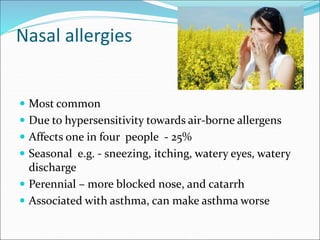
Nasal allergies
 Most common
 Due to hypersensitivity towards air-borne allergens
 Affects one in four people - 25%
 Seasonal e.g. - sneezing, itching, watery eyes, watery
discharge
 Perennial – more blocked nose, and catarrh
 Associated with asthma, can make asthma worse
Common triggers
Tests
 Bloods test – expensive, 2 weeks for results
 Skin prick test – quick, instant result
Treatment
 AVOIDANCE
 Anti-histamines e.g. Piriton, cetirizine, loratidine
 Anti-leukotrines – Monteleukast esp asthma
 Nasal steroid spray –Nasonex, Flixonase, Avamys
 Drops – Flixonase nasules, betnesol
If severe –one week course of steroid tablets
New agents - DYMISTA spay – combination anti-histamine
and steroid spray in one
Nasal decongestants – no more than 1 week at a time
Sinusitis
 Inflammation of lining of nose and sinuses
ACUTE –
 usually follows viral cold. Bacterial super-infection
 Last for a few weeks to months (cold not improving)
 Temperature, unwell, green thick nasal discharge,
facial pain
 Treatment : steam, salt water douching , nasal
decongestants. Antibiotics if severe ( co-amoxyclav)
Urgent Ophthalmology/ENT opinion
IV ABX – co-amocyclav or clindamycin + ciprofloxacin. Nasal steroid, saline
deuching
CT Scan – WITH CONTRAST ?
Oesophagus- foreign bodies
? Airway FB – always AP and Lateral views
Oesophagus - foreign bodies
Treatment –
 If caustic i.e. battery remove ASAP
 Otherwise can observe for 24hrs (most will pass in a
24hr period) IV Buscopan
 Endoscopy with direct visualisation
 BONY FB = SURGICAL EMERGENCY (risk of
perforation)
Stridor
 Stridor = audible wheeze, vibratory sound produced by
turbulent airflow across a partially obstructed airway.
 ENT EMERGENCY!
 Poiseuille's Equation
 At least 75% narrowing of airway
 Case should be discussed with SpR +/- Anaesthetist
EARLY
 History and Examination including Fibreoptic
Nasoendoscopy to try to visualise cause of stridor.
Strategy
 Acute obstruction :
High flow O2
Adrenaline neubliser 5mls 1:1000
Corticosteroids IV – if oedema present
Iv Abx – in infective cases
Surgical airway considered as Plan B
Heliox 21% O2 79% He
Imaging useful in establishing cause but not in
unstable pt
10/22/2023 37
Laryngeal Ca – risk factors
Laryngeal Ca- risk factors
 Prolonged use of tobacco and excessive ETOH use
primary risk factors
 The two substances together have a synergistic effect
on laryngeal tissues
 90% of patients with laryngeal cancer have a history of
both
 HPV 16+ 18 – young patients with oropharyngeal CA
 Gardasil – vaccine HPV 6/11/16/18
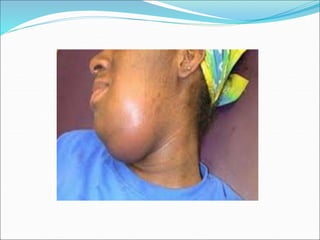
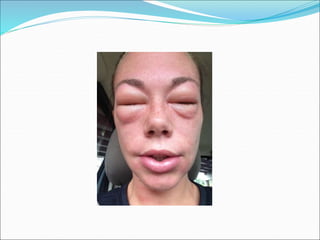
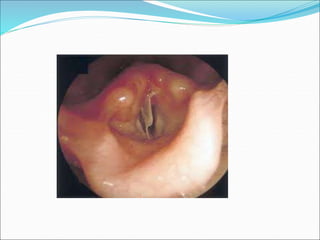
Angioedema
 Causes:
 ACE inhibitors - 0.68% of patients treated with the
ACE inhibitor enalapril developed angioedema ( due
to C1 esterase inhibitor deficiency)
 Shell fish
 Peanut allergy
 Tx – IV steroids, nebulised adrenaline if airway
compromise, antihistamines. HDU observation
 Icatibant - peptide which blocks bradykinin-receptors.
What if things don’t go to plan?
 Always have back-up plan
 Surgical airway!
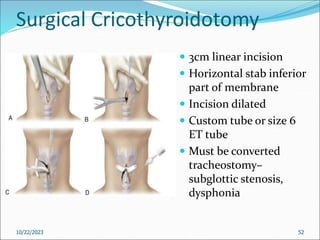
Surgical Cricothyroidotomy
 3cm linear incision
 Horizontal stab inferior
part of membrane
 Incision dilated
 Custom tube or size 6
ET tube
 Must be converted
tracheostomy–
subglottic stenosis,
dysphonia
10/22/2023 52
Tracheotomy
 Emergency surgical- If in extremis, cricothyrodotomy
cannot be established(not officially in guidelines)
10/22/2023 53
 Percutaneous Tracheostomy can be considered if
ventilation not critical
10/22/2023 54
Summary
 Ask for help if unsure, pop in to discuss anything
 Needless to say – PRIORITIZE emergencies ABC ,
AIRWAY comes first
 ENT is good fun – once you know what to do!
 Come observe in our clinic, theatre. More than
welcome

ENT Emergency 2020.pptx

  • 1.
    Mr Derrick Siau ConsultantENT Surgeon ECT &UHSM
  • 2.
  • 3.
    Introduction  Limited ENTexposure during medical training  ENT conditions are ubiquitous, up to 30% of primary care presentations ENT related  Brief overview of common acute ENT conditions you are likely to encounter in casualty  Best way to learn – come and sit in in clinic
  • 5.
    Tonsillitis Mostly Viral aspart of URTI 5-30% caused by bacteria  Grp A β haemolytic strep (most common)  H.influenzae  Staph aureus  Strep Pneumoniae Management  IV antibiotics – benzyl-pen +/- metronidazole  IV fluids  Adequate analgesia
  • 13.
  • 14.
    Epistaxis  Most commonacute ENT admission  Most settle conservatively – Ice pack + pinching  ABC – resuscitation  Topical anaesthetic/decongestant spray– silver nitrate cautery  Anterior – younger, nasal tampons, balloon. BIPP pack  Posterior – Elderly requires Foley’s, posterior packs  FLOSEAL – Human Thrombin
  • 16.
  • 17.
  • 21.
    Rhinitis causes  Infection: Viruses – common cold, self-limiting. Last for a week Rhinovirus, corona virus, RSV etc  Allergies – very common, half of all rhinitis in clinic  Occupational – air-borne irritants e.g. Cooks, swimming-pools, chemical workers  Drug induced – decongestant abuse !!! Damage lining of nose, very difficult to treat  Others drugs : anti-inflammatory drugs, ACE- inhibitors, B-Blockers , anti-depressants  Smoking !!
  • 22.
    Rhinitis in elderly(senile rhinitis/Old man’s drip)  Dry nose  Watery discharge- cold air, eating, exercise etc  Due to hyperactive autonomic nerves – stimulating watery secretions  RINATEC - Ipratropium bromide can be helpful Idiopathic rhinitis  No causes found
  • 23.
    Nasal allergies  Mostcommon  Due to hypersensitivity towards air-borne allergens  Affects one in four people - 25%  Seasonal e.g. - sneezing, itching, watery eyes, watery discharge  Perennial – more blocked nose, and catarrh  Associated with asthma, can make asthma worse
  • 24.
  • 27.
    Tests  Bloods test– expensive, 2 weeks for results  Skin prick test – quick, instant result
  • 28.
    Treatment  AVOIDANCE  Anti-histaminese.g. Piriton, cetirizine, loratidine  Anti-leukotrines – Monteleukast esp asthma  Nasal steroid spray –Nasonex, Flixonase, Avamys  Drops – Flixonase nasules, betnesol If severe –one week course of steroid tablets New agents - DYMISTA spay – combination anti-histamine and steroid spray in one Nasal decongestants – no more than 1 week at a time
  • 29.
    Sinusitis  Inflammation oflining of nose and sinuses ACUTE –  usually follows viral cold. Bacterial super-infection  Last for a few weeks to months (cold not improving)  Temperature, unwell, green thick nasal discharge, facial pain  Treatment : steam, salt water douching , nasal decongestants. Antibiotics if severe ( co-amoxyclav)
  • 31.
    Urgent Ophthalmology/ENT opinion IVABX – co-amocyclav or clindamycin + ciprofloxacin. Nasal steroid, saline deuching CT Scan – WITH CONTRAST ?
  • 34.
    Oesophagus- foreign bodies ?Airway FB – always AP and Lateral views
  • 35.
    Oesophagus - foreignbodies Treatment –  If caustic i.e. battery remove ASAP  Otherwise can observe for 24hrs (most will pass in a 24hr period) IV Buscopan  Endoscopy with direct visualisation  BONY FB = SURGICAL EMERGENCY (risk of perforation)
  • 36.
    Stridor  Stridor =audible wheeze, vibratory sound produced by turbulent airflow across a partially obstructed airway.  ENT EMERGENCY!  Poiseuille's Equation  At least 75% narrowing of airway  Case should be discussed with SpR +/- Anaesthetist EARLY  History and Examination including Fibreoptic Nasoendoscopy to try to visualise cause of stridor.
  • 37.
    Strategy  Acute obstruction: High flow O2 Adrenaline neubliser 5mls 1:1000 Corticosteroids IV – if oedema present Iv Abx – in infective cases Surgical airway considered as Plan B Heliox 21% O2 79% He Imaging useful in establishing cause but not in unstable pt 10/22/2023 37
  • 42.
    Laryngeal Ca –risk factors
  • 43.
    Laryngeal Ca- riskfactors  Prolonged use of tobacco and excessive ETOH use primary risk factors  The two substances together have a synergistic effect on laryngeal tissues  90% of patients with laryngeal cancer have a history of both  HPV 16+ 18 – young patients with oropharyngeal CA  Gardasil – vaccine HPV 6/11/16/18
  • 46.
    Angioedema  Causes:  ACEinhibitors - 0.68% of patients treated with the ACE inhibitor enalapril developed angioedema ( due to C1 esterase inhibitor deficiency)  Shell fish  Peanut allergy  Tx – IV steroids, nebulised adrenaline if airway compromise, antihistamines. HDU observation  Icatibant - peptide which blocks bradykinin-receptors.
  • 51.
    What if thingsdon’t go to plan?  Always have back-up plan  Surgical airway!
  • 52.
    Surgical Cricothyroidotomy  3cmlinear incision  Horizontal stab inferior part of membrane  Incision dilated  Custom tube or size 6 ET tube  Must be converted tracheostomy– subglottic stenosis, dysphonia 10/22/2023 52
  • 53.
    Tracheotomy  Emergency surgical-If in extremis, cricothyrodotomy cannot be established(not officially in guidelines) 10/22/2023 53
  • 54.
     Percutaneous Tracheostomycan be considered if ventilation not critical 10/22/2023 54
  • 55.
    Summary  Ask forhelp if unsure, pop in to discuss anything  Needless to say – PRIORITIZE emergencies ABC , AIRWAY comes first  ENT is good fun – once you know what to do!  Come observe in our clinic, theatre. More than welcome