DPP4 Inhibitors:
How early is appropriate?
Diabetics with early vascular risk
Case 1: Case 2:
Newly diagnosed diabetics
Cases from Linagliptin
DCCT / EDIC & UKPDS follow up studies underscore
the fact that good control of diabetes achieved
early in the natural history of diabetes has a long
lasting effect in improving long term outcomes–
“Metabolic memory”/ “Legacy effect”
Why legacy effect?
Initial oral combination therapy in
newly diagnosed: can we achieve a
good legacy effect?
Case 1:
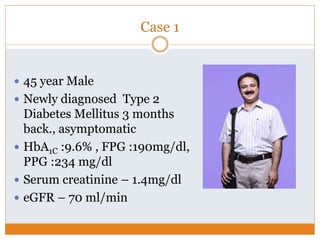
Case 1
 45 year Male
 Newly diagnosed Type 2
Diabetes Mellitus 3 months
back., asymptomatic
 HbA1C :9.6% , FPG :190mg/dl,
PPG :234 mg/dl
 Serum creatinine – 1.4mg/dl
 eGFR – 70 ml/min
What should be the glycemic target?
ADA Recommends:
Lowering HbA1c to <7.0% to reduce the incidence of
micro-vascular disease
 Stringent target: 6-6.5%
 Young patients, high life expectancy, short duration of disease, no CV
events.
 Less stringent target: 7.5-8%
 Elderly, less life expectancy, long duration of disease, advanced
complications, co-morbidities, past history of severe hypoglycemia.
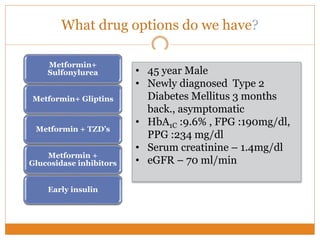
What drug options do we have?
• Pros: Fast A1c reduction
• Cons: secondary failure; non-beta cell sparing, risk of
hypo and weight gain, ? CV risk
Metformin+
Sulfonylurea
• Pros: Complementary mechanism , low risk of hypo or
weight gain; low CV risk
• Cons: Less long term data
Metformin+ Gliptins
• Pros: Complementary mechanism, low risk of
hypoglycemia
• Cons: Fluid retention, exacerbation of HF, ? Cancer
Metformin + TZD’s
• Pros : complimentary mechanism, low hypo, weight
gain; low CV risk
• Cons: lower efficacy
Metformin +
Glucosidase inhibitors
• Pros: Fast A1c reduction
• Cons: weight gain, hypo risk
Early insulin
• 45 year Male
• Newly diagnosed Type 2
Diabetes Mellitus 3 months
back., asymptomatic
• HbA1C :9.6% , FPG :190mg/dl,
PPG :234 mg/dl
• Serum creatinine – 1.4mg/dl
• eGFR – 70 ml/min
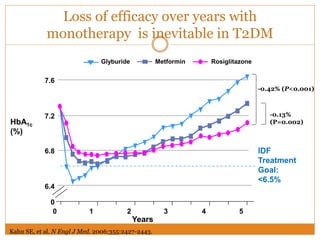
Loss of efficacy over years with
monotherapy is inevitable in T2DM
HbA1c
(%)
Years
IDF
Treatment
Goal:
<6.5%
7.6
7.2
6.8
6.4
0
0 1 2 3 4 5
-0.13%
(P=0.002)
-0.42% (P<0.001)
Glyburide Metformin Rosiglitazone
Kahn SE, et al. N Engl J Med. 2006;355:2427-2443.
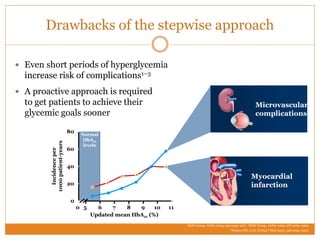
Drawbacks of the stepwise approach
 Even short periods of hyperglycemia
increase risk of complications1–3
 A proactive approach is required
to get patients to achieve their
glycemic goals sooner
Microvascular
complications
Myocardial
infarction
Incidenceper
1000patient-years
Updated mean HbA1c (%)
20
40
60
80
5 6 7 8 9 10 11
0
0
Normal
HbA1c
levels
1EDIC Group. JAMA 2003; 290:2159–2167. 2EDIC Group. JAMA 2002; 287:2563–2569.
3Nathan DM, et al. N Engl J Med 2003; 348:2294–2303.
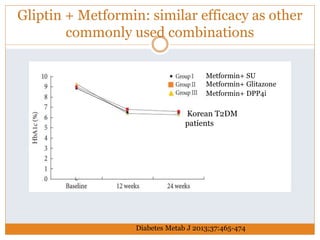
Gliptin + Metformin: similar efficacy as other
commonly used combinations
Metformin+ SU
Metformin+ Glitazone
Metformin+ DPP4i
Diabetes Metab J 2013;37:465-474
Korean T2DM
patients
Linagliptin and Glimepiride
Variables Linagliptin Glimepiride
HbA1C
FPG, PPG
PP Glucagon No change
Pro-Insulin
(marker of decreasing
Beta cell function)
PAI-1 (procoagulant &
marker of endothelial
dysfunction)
Forst T et al. Diabetes Metab Res Rev. 2014 Jan 23. doi: 10.1002/dmrr.2525. [Epub ahead of print]
GLP-1 based therapies improve the conversion of intact pro-
insulin into insulin and c-peptide
2014 Forst et al
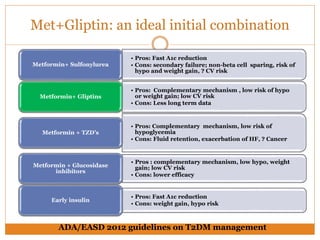
Met+Gliptin: an ideal initial combination
• Pros: Fast A1c reduction
• Cons: secondary failure; non-beta cell sparing, risk of
hypo and weight gain, ? CV risk
Metformin+ Sulfonylurea
• Pros: Complementary mechanism , low risk of hypo
or weight gain; low CV risk
• Cons: Less long term data
Metformin+ Gliptins
• Pros: Complementary mechanism, low risk of
hypoglycemia
• Cons: Fluid retention, exacerbation of HF, ? Cancer
Metformin + TZD’s
• Pros : complementary mechanism, low hypo, weight
gain; low CV risk
• Cons: lower efficacy
Metformin + Glucosidase
inhibitors
• Pros: Fast A1c reduction
• Cons: weight gain, hypo risk
Early insulin
ADA/EASD 2012 guidelines on T2DM management
Oral Glucose Lowering With Linagliptin Plus
Metformin is a Viable Initial Treatment Strategy in
Patients With Newly Diagnosed Type 2 Diabetes and
Marked Hyperglycemia
The first RCT (double bilnd) in newly diagnosed patients
with marked hyperglycemia
Source: Ross S, et al. American Diabetes Association Congress 2014. Oral 150-OR
ADA 2014 Ross et al
Oral presentation
Why initial combination?
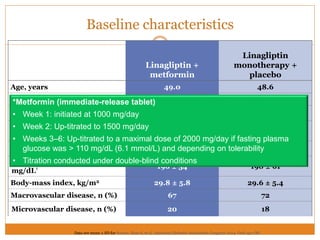
Baseline characteristics
Data are mean ± SD for Source: Ross S, et al. American Diabetes Association Congress 2014. Oral 150-OR.
Linagliptin +
metformin
Linagliptin
monotherapy +
placebo
Age, years 49.0 48.6
Male, n (%) 69 77
Asian 57 64
Diabetes duration <1 year, n
(%)
159 (100) 155 (98.7)*
HbA1c, % (mmol/mol)† 9.8 ± 1.2 (83 ± 13) 9.9 ± 1.1 (84 ± 12)
Fasting plasma glucose,
mg/dL† 196 ± 54 198 ± 61
Body-mass index, kg/m2 29.8 ± 5.8 29.6 ± 5.4
Macrovascular disease, n (%) 67 72
Microvascular disease, n (%) 20 18
*Metformin (immediate-release tablet)
• Week 1: initiated at 1000 mg/day
• Week 2: Up-titrated to 1500 mg/day
• Weeks 3–6: Up-titrated to a maximal dose of 2000 mg/day if fasting plasma
glucose was > 110 mg/dL (6.1 mmol/L) and depending on tolerability
• Titration conducted under double-blind conditions
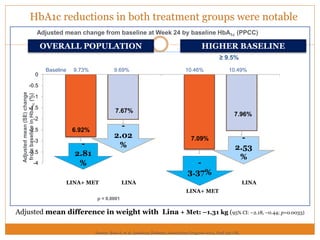
HbA1c reductions in both treatment groups were notable
Source: Ross S, et al. American Diabetes Association Congress 2014. Oral 150-OR.
6.92%
7.09%
7.67%
7.96%
-4
-3.5
-3
-2.5
-2
-1.5
-1
-0.5
0
LINA+ MET LINA
LINA+ MET
LINA
Adjusted mean change from baseline at Week 24 by baseline HbA1c (PPCC)
Adjustedmean(SE)change
frombaselineinHbA1c(%)
≥ 9.5%
Baseline 9.73% 9.69% 10.46% 10.49%
OVERALL POPULATION HIGHER BASELINE
p < 0.0001
Adjusted mean difference in weight with Lina + Met: –1.31 kg (95% CI: –2.18, –0.44; p=0.0033)
-
2.81
% -
3.37%
-
2.02
%
-
2.53
%
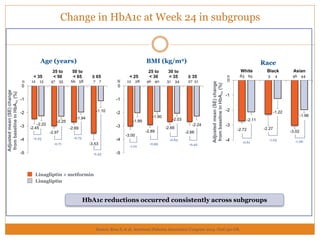
Change in HbA1c at Week 24 in subgroups
Source: Ross S, et al. American Diabetes Association Congress 2014. Oral 150-OR.
HbA1c reductions occurred consistently across subgroups
Age (years) BMI (kg/m2) Race
-2.45
-2.97
-2.69
-3.53
-2.22
-2.25
-1.94
-1.10
-5
-4
-3
-2
-1
0
< 35
35 to
< 50
50 to
< 65 ≥ 65
-0.23
-0.71
-0.75
-2.43
Adjustedmean(SE)change
frombaselineinHbA1c(%)
Linagliptin + metformin
Linagliptin
n 12 13 47 35 66 58 7 7
-3.00
-2.89
-2.66
-2.66
-1.99
-1.90
-2.03
-2.24
-5
-4
-3
-2
-1
0
< 25
25 to
< 30
30 to
< 35 ≥ 35
-1.01
-0.99
-0.63
-0.42
N 12 28 46 40 31 34 27 21
-2.72 -2.27
-3.02
-2.11
-1.22
-1.96
-4
-3
-2
-1
0
White Black Asian
-0.61
-1.05 -1.06
n 83 65 3 4 46 44
Adjustedmean(SE)change
frombaselineinHbA1c(%)
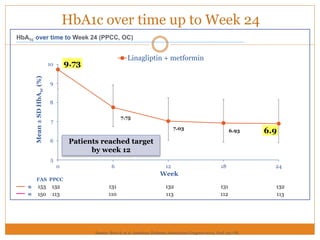
HbA1c over time up to Week 24
Source: Ross S, et al. American Diabetes Association Congress 2014. Oral 150-OR.
HbA1c over time to Week 24 (PPCC, OC)
9.73
7.75
7.03 6.93 6.9
5
6
7
8
9
10
0 6 12 18 24
Linagliptin + metformin
153 132 131 132 131 132
150 113 110 113 112 113
FAS PPCC
n
n
Mean±SDHbA1c(%)
Week
Patients reached target
by week 12
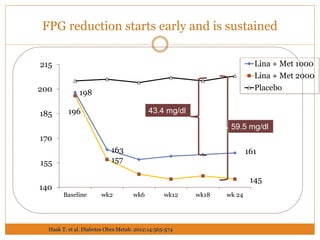
FPG reduction starts early and is sustained
198
163 161
196
157
145
140
155
170
185
200
215
Baseline wk2 wk6 wk12 wk18 wk 24
Lina + Met 1000
Lina + Met 2000
Placebo
43.4 mg/dl
59.5 mg/dl
Haak T, et al. Diabetes Obes Metab. 2012;14:565-574
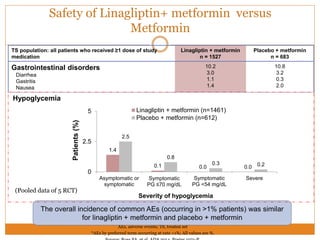
Safety of Linagliptin+ metformin versus
Metformin
1.4
0.1 0.0 0.0
2.5
0.8
0.3 0.2
0
2.5
5
Asymptomatic or
symptomatic
Symptomatic
PG ≤70 mg/dL
Symptomatic
PG <54 mg/dL
Severe
Linagliptin + metformin (n=1461)
Placebo + metformin (n=612)
AEs, adverse events; TS, treated set
*AEs by preferred term occurring at rate >1%; All values are %.
TS population: all patients who received ≥1 dose of study
medication
Linagliptin + metformin
n = 1527
Placebo + metformin
n = 683
Gastrointestinal disorders
Diarrhea
Gastritis
Nausea
10.2
3.0
1.1
1.4
10.8
3.2
0.3
2.0
The overall incidence of common AEs (occurring in >1% patients) was similar
for linagliptin + metformin and placebo + metformin
Patients(%)
Severity of hypoglycemia
Hypoglycemia
(Pooled data of 5 RCT)
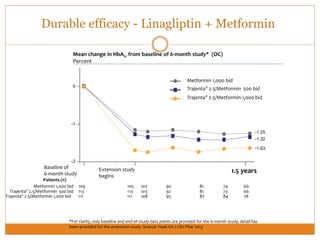
*For clarity, only baseline and end-of-study data points are provided for the 6-month study; detail has
been provided for the extension study. Source: Haak Int J Clin Phar 2013
Mean change in HbA1c from baseline of 6-month study* (OC)
Percent
Baseline of
6-month study
Extension study
begins
1.5 years
Patients (n)
Metformin 1,000 bid
Trajenta® 2.5/Metformin 500 bid
Trajenta® 2.5/Metformin 1,000 bid
109
113
111
105
113
111
102
103
108
90
92
95
81
81
87
74
73
84
66
66
78
0
-1
-2
-1.25
-1.32
-1.63
Metformin 1,000 bid
Trajenta® 2.5/Metformin 500 bid
Trajenta® 2.5/Metformin 1,000 bid
Durable efficacy - Linagliptin + Metformin
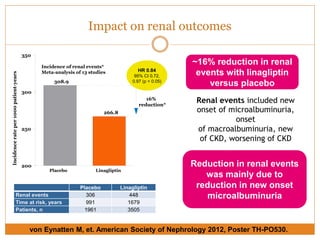
Impact on renal outcomes
von Eynatten M, et. American Society of Nephrology 2012, Poster TH-PO530.
Incidence of renal events*
Meta-analysis of 13 studies
~16% reduction in renal
events with linagliptin
versus placebo
Placebo Linagliptin
Renal events 306 448
Time at risk, years 991 1679
Patients, n 1961 3505
Placebo Linagliptin
200
250
300
350
308.9
266.8
16%
reduction*
Incidencerateper1000patient-years
HR 0.84
95% CI 0.72,
0.97 (p < 0.05)
Renal events included new
onset of microalbuminuria,
onset
of macroalbuminuria, new
of CKD, worsening of CKD
Reduction in renal events
was mainly due to
reduction in new onset
microalbuminuria
54% significant relative risk reduction in CV events
for Trajenta® compared with glimepiride
Source: Gallwitz B, et al. Lancet. 2012;380:475–483
Composite
endpoint
(patients)1
SU
Add on MET
N=775
Relative risk3
Trajenta® better SU better
x
11/21/41/8 2 4 8
Trajenta®
Add on MET
N= 776
12 26 0.46 [0.23, 0.91]
p-value2
0.02
Note: All events independently adjudicated by CEC, all endpointsprespecified (also for individual studies) from CV meta-analysis statistical plan.
Individual events may not add up to total of the composite endpoint, because one patient could have experienced more than one CV event
Overall
CV events
No increase in CV risk
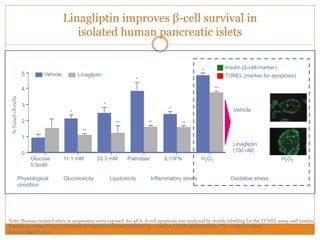
Linagliptin improves β-cell survival in
isolated human pancreatic islets
Note: Human isolated islets in suspension were exposed for 48 h. ß-cell apoptosis was analyzed by double labelling for the TUNEL assay and insulin.
Results are means from 3 independent experiments from 3 donors *p < 0.05 to 5.5 mM glucose alone, **p < 0.05 to vehicle.
Source: Shah P, et al.
Lipotoxicity Inflammatory stressPhysiological
condition
Oxidative stress
Vehicle
Linagliptin
(100 nM)
Insulin (ß-cell marker)
TUNEL (marker for apoptosis)
H2O2
Glucotoxicity
Glucose
5.5mM
11.1 mM 33.3 mM Palmitate IL1/IFN H2O2
**
*
*
****
*
**
*
**
*
4
3
2
1
0
5 LinagliptinVehicle
%Tunel+ß-cells
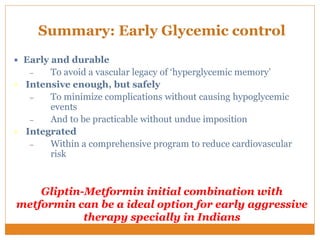
Summary: Early Glycemic control
 Early and durable
– To avoid a vascular legacy of ‘hyperglycemic memory’
 Intensive enough, but safely
– To minimize complications without causing hypoglycemic
events
– And to be practicable without undue imposition
 Integrated
– Within a comprehensive program to reduce cardiovascular
risk
Gliptin-Metformin initial combination with
metformin can be a ideal option for early aggressive
therapy specially in Indians
Case 2:
Diabetics with vascular risk in early
stage: can we achieve a good legacy
effect?
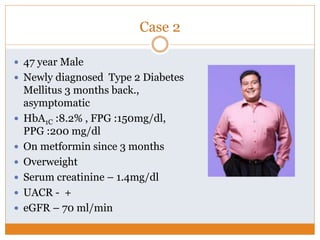
Case 2
 47 year Male
 Newly diagnosed Type 2 Diabetes
Mellitus 3 months back.,
asymptomatic
 HbA1C :8.2% , FPG :150mg/dl,
PPG :200 mg/dl
 On metformin since 3 months
 Overweight
 Serum creatinine – 1.4mg/dl
 UACR - +
 eGFR – 70 ml/min
What are the vascular risks?
 Overweight
 Declining renal function
 Serum creatinine – 1.4mg/dl; UACR - +; eGFR – 70
ml/min
Inzucchi et al. Diabetes Care 2012;35:1364–1379
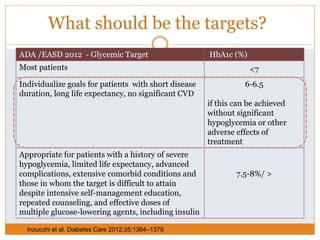
What should be the targets?
ADA /EASD 2012 - Glycemic Target HbA1c (%)
Most patients <7
Individualize goals for patients with short disease
duration, long life expectancy, no significant CVD
6-6.5
if this can be achieved
without significant
hypoglycemia or other
adverse effects of
treatment
Appropriate for patients with a history of severe
hypoglycemia, limited life expectancy, advanced
complications, extensive comorbid conditions and
those in whom the target is difficult to attain
despite intensive self-management education,
repeated counseling, and effective doses of
multiple glucose-lowering agents, including insulin
7.5-8%/ >
Inzucchi et al. Diabetes Care 2012;35:1364–1379
0
5
10
15
20
25
Metformin only
n = 513
14.5 months
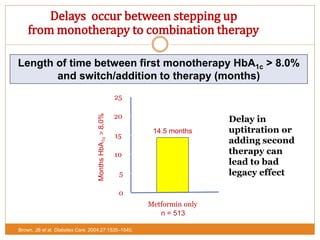
Length of time between first monotherapy HbA1c > 8.0%
and switch/addition to therapy (months)
Brown, JB et al. Diabetes Care. 2004;27:1535–1540.
MonthsHbA1c>8.0%
Delays occur between stepping up
from monotherapy to combination therapy
Delay in
uptitration or
adding second
therapy can
lead to bad
legacy effect
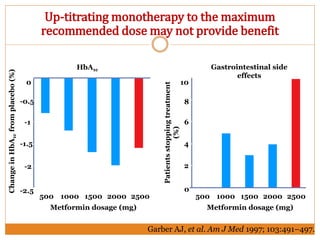
Up-titrating monotherapy to the maximum
recommended dose may not provide benefit
Gastrointestinal side
effects
Patientsstoppingtreatment
(%)
0
2
4
6
8
10
500 1000 1500 2000 2500
Metformin dosage (mg)
HbA1c
-2.5
-2
-1.5
-1
-0.5
500 1000 1500 2000 2500
ChangeinHbA1cfromplacebo(%)
0
Metformin dosage (mg)
Garber AJ, et al. Am J Med 1997; 103:491–497.
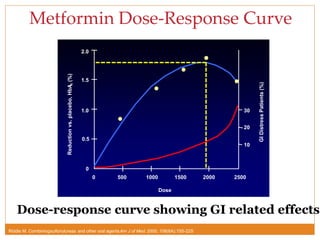
Metformin Dose-Response Curve
Riddle M. Combiningsulfonylureas and other oral agents.Am J of Med. 2000; 108(6A):15S-22S.
Dose-response curve showing GI related effects
30
20
10
0 500 1000 1500 2000 2500
0
0.5
1.0
1.5
2.0
Dose
GIDistressPatients(%)
Reductionvs.placebo,HbA1c(%)
Metformin
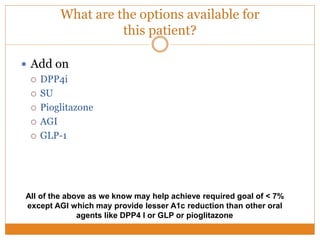
What are the options available for
this patient?
 Add on
 DPP4i
 SU
 Pioglitazone
 AGI
 GLP-1
All of the above as we know may help achieve required goal of < 7%
except AGI which may provide lesser A1c reduction than other oral
agents like DPP4 I or GLP or pioglitazone
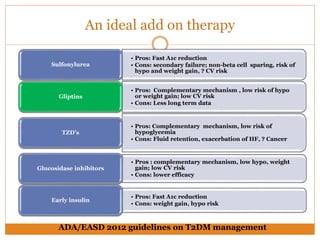
An ideal add on therapy
• Pros: Fast A1c reduction
• Cons: secondary failure; non-beta cell sparing, risk of
hypo and weight gain, ? CV risk
Sulfonylurea
• Pros: Complementary mechanism , low risk of hypo
or weight gain; low CV risk
• Cons: Less long term data
Gliptins
• Pros: Complementary mechanism, low risk of
hypoglycemia
• Cons: Fluid retention, exacerbation of HF, ? Cancer
TZD’s
• Pros : complementary mechanism, low hypo, weight
gain; low CV risk
• Cons: lower efficacy
Glucosidase inhibitors
• Pros: Fast A1c reduction
• Cons: weight gain, hypo risk
Early insulin
ADA/EASD 2012 guidelines on T2DM management
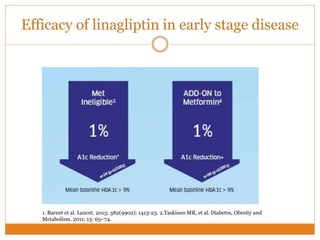
Efficacy of linagliptin in early stage disease
1. Barnet et al. Lancet. 2013; 382(9902): 1413-23. 2.Taskinen MR, et al. Diabetes, Obesity and
Metabolism. 2011; 13: 65–74.
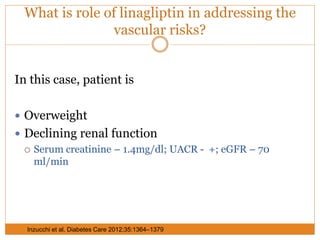
What is role of linagliptin in addressing the
vascular risks?
In this case, patient is
 Overweight
 Declining renal function
 Serum creatinine – 1.4mg/dl; UACR - +; eGFR – 70
ml/min
Inzucchi et al. Diabetes Care 2012;35:1364–1379
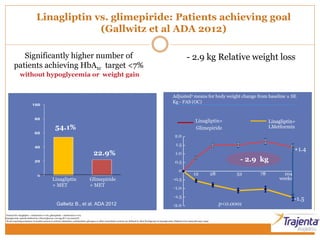
Linagliptin vs. glimepiride: Patients achieving goal
(Gallwitz et al ADA 2012)
† Treated Set: linagliptin + metformin n=776; glimepiride + metformin n=775
Hypoglycemic episode defined by a blood glucose ≤70 mg/dl (<3.9 mmol/l)
* Event requiring assistance of another person to actively administer carbohydrate, glucagon or other resuscitative actions (as defined by ADA Workgroup on hypoglycemia. Diabetes Care 2005;28:1245-1249)
Significantly higher number of
patients achieving HbA1c target <7%
without hypoglycemia or weight gain
0
20
40
60
80
100
54.1%
22.9%
Linagliptin
+ MET
Glimepiride
+ MET
Gallwitz B., et al. ADA 2012
Adjusted2 means for body weight change from baseline ± SE
Kg - FAS (OC)
2.0
1.5
1.0
0.5
0
-0.5
-1.0
-1.5
-2.0
Glimepiride
Linagliptin+
p<0.0001
28 104
weeks
52 7812
- 2.9 kg
+1.4
-1.5
- 2.9 kg Relative weight loss
Linagliptin+ Linagliptin
LMetformin
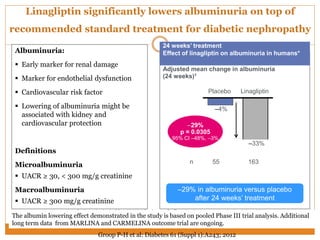
Linagliptin significantly lowers albuminuria on top of
recommended standard treatment for diabetic nephropathy
1. Inclusion criteria: Stable ACE/ARB background; albuminuria 30–3000 mg/g creatinine; GFR >
30.
*MARLINA (1218.89) will aim to demonstrate albuminuria-lowering evidence for linagliptin.
Adjusted mean change in albuminuria
(24 weeks)1
24 weeks’ treatment
Effect of linagliptin on albuminuria in humans*
n 55 163
Placebo Linagliptin
–4%
–33%
–29%
p = 0.0305
95% CI –48%, –3%
Albuminuria:
 Early marker for renal damage
 Marker for endothelial dysfunction
 Cardiovascular risk factor
 Lowering of albuminuria might be
associated with kidney and
cardiovascular protection
Definitions
Microalbuminuria
 UACR ≥ 30, < 300 mg/g creatinine
Macroalbuminuria
 UACR ≥ 300 mg/g creatinine
–29% in albuminuria versus placebo
after 24 weeks’ treatment
Groop P-H et al: Diabetes 61 (Suppl 1):A243; 2012
The albumin lowering effect demonstrated in the study is based on pooled Phase III trial analysis. Additional
long term data from MARLINA and CARMELINA outcome trial are ongoing.
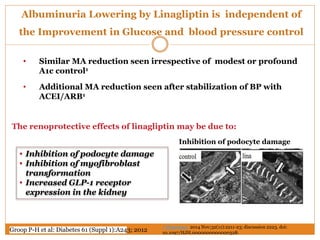
Albuminuria Lowering by Linagliptin is independent of
the Improvement in Glucose and blood pressure control
Groop P-H et al: Diabetes 61 (Suppl 1):A243; 2012
• Inhibition of podocyte damage
• Inhibition of myofibroblast
transformation
• Increased GLP-1 receptor
expression in the kidney
• Similar MA reduction seen irrespective of modest or profound
A1c control1
• Additional MA reduction seen after stabilization of BP with
ACEI/ARB1
J Hypertens. 2014 Nov;32(11):2211-23; discussion 2223. doi:
10.1097/HJH.0000000000000328.
Inhibition of podocyte damage
The renoprotective effects of linagliptin may be due to:
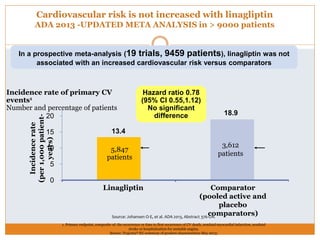
Cardiovascular risk is not increased with linagliptin
ADA 2013 -UPDATED META ANALYSIS in > 9000 patients
1. Primary endpoint, composite of: the occurrence or time to first occurrence of CV death, nonfatal myocardial infarction, nonfatal
stroke or hospitalization for unstable angina.
Source: Trajenta® EU summary of product characteristics May 2013;
Incidence rate of primary CV
events1
Number and percentage of patients
13.4
18.9
0
5
10
15
20
Incidencerate
(per1,000patient-
years)
Comparator
(pooled active and
placebo
comparators)
Linagliptin
5,847
patients
3,612
patients
Hazard ratio 0.78
(95% CI 0.55,1.12)
No significant
difference
In a prospective meta-analysis (19 trials, 9459 patients), linagliptin was not
associated with an increased cardiovascular risk versus comparators
Source: Johansen O-E, et al. ADA 2013, Abstract 376-OR.
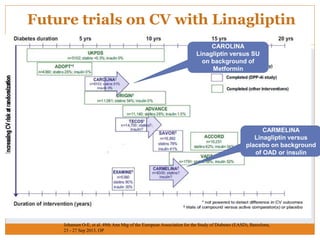
Future trials on CV with Linagliptin
Johansen O-E, et al. 49th Ann Mtg of the European Association for the Study of Diabetes (EASD), Barcelona,
23 - 27 Sep 2013, OP
CAROLINA
Linagliptin versus SU
on background of
Metformin
CARMELINA
Linagliptin versus
placebo on background
of OAD or insulin
Back to the Case
What are the other factors to be considered?
 Creatinine
 Liver enzymes
Would there by any change in treatment if
patient had higher creatinine levels or
elevated liver enzymes?
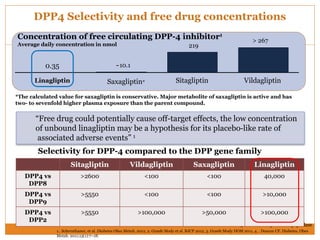
DPP4 Selectivity and free drug concentrations
Concentration of free circulating DPP-4 inhibitor1
Average daily concentration in nmol
Vildagliptin
> 267
Sitagliptin
219
Saxagliptin*
~10.1
Linagliptin
0.35
1.. Schernthaner, et al. Diabetes Obes Metab. 2012, 2. Graefe Mody et al. BJCP 2012, 3. Graefe Mody DOM 2011, 4. . Deacon CF. Diabetes, Obes
Metab. 2011;13(1):7–18.
*The calculated value for saxagliptin is conservative. Major metabolite of saxagliptin is active and has
two- to sevenfold higher plasma exposure than the parent compound.
Selectivity for DPP-4 compared to the DPP gene family
* Quiescent cell proline dipeptidase
Sitagliptin Vildagliptin Saxagliptin Linagliptin
DPP4 vs
DPP8
>2600 <100 <100 40,000
DPP4 vs
DPP9
>5550 <100 <100 >10,000
DPP4 vs
DPP2
>5550 >100,000 >50,000 >100,000
“Free drug could potentially cause off-target effects, the low concentration
of unbound linagliptin may be a hypothesis for its placebo-like rate of
associated adverse events” 1
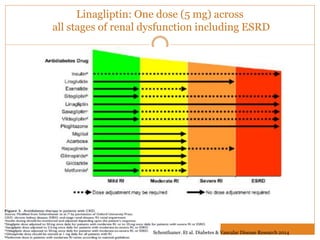
Linagliptin: One dose (5 mg) across
all stages of renal dysfunction including ESRD
Schenthaner. Et al. Diabetes & Vascular Disease Research 2014
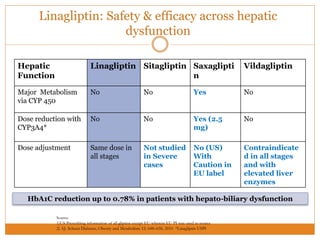
Linagliptin: Safety & efficacy across hepatic
dysfunction
Hepatic
Function
Linagliptin Sitagliptin Saxaglipti
n
Vildagliptin
Major Metabolism
via CYP 450
No No Yes No
Dose reduction with
CYP3A4*
No No Yes (2.5
mg)
No
Dose adjustment Same dose in
all stages
Not studied
in Severe
cases
No (US)
With
Caution in
EU label
Contraindicate
d in all stages
and with
elevated liver
enzymes
Source
1)US Prescribing information of all gliptins except EU wherein EU PI was used as source
2) AJ. Scheen Diabetes, Obesity and Metabolism 12: 648–658, 2010 *Linagliptin USPI
HbA1C reduction up to 0.78% in patients with hepato-biliary dysfunction
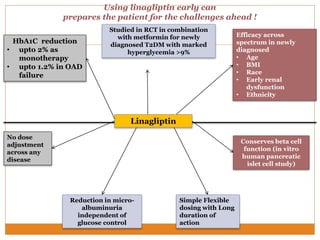
Using linagliptin early can
prepares the patient for the challenges ahead !
HbA1C reduction
• upto 2% as
monotherapy
• upto 1.2% in OAD
failure
Studied in RCT in combination
with metformin for newly
diagnosed T2DM with marked
hyperglycemia >9%
Efficacy across
spectrum in newly
diagnosed
• Age
• BMI
• Race
• Early renal
dysfunction
• Ethnicity
Simple Flexible
dosing with Long
duration of
action
No dose
adjustment
across any
disease
Reduction in micro-
albuminuria
independent of
glucose control
Conserves beta cell
function (in vitro
human pancreatic
islet cell study)
Linagliptin
Thank you

Enrich Programme

  • 1.
    DPP4 Inhibitors: How earlyis appropriate? Diabetics with early vascular risk Case 1: Case 2: Newly diagnosed diabetics Cases from Linagliptin
  • 2.
    DCCT / EDIC& UKPDS follow up studies underscore the fact that good control of diabetes achieved early in the natural history of diabetes has a long lasting effect in improving long term outcomes– “Metabolic memory”/ “Legacy effect” Why legacy effect?
  • 3.
    Initial oral combinationtherapy in newly diagnosed: can we achieve a good legacy effect? Case 1:
  • 4.
    Case 1  45year Male  Newly diagnosed Type 2 Diabetes Mellitus 3 months back., asymptomatic  HbA1C :9.6% , FPG :190mg/dl, PPG :234 mg/dl  Serum creatinine – 1.4mg/dl  eGFR – 70 ml/min
  • 5.
    What should bethe glycemic target? ADA Recommends: Lowering HbA1c to <7.0% to reduce the incidence of micro-vascular disease  Stringent target: 6-6.5%  Young patients, high life expectancy, short duration of disease, no CV events.  Less stringent target: 7.5-8%  Elderly, less life expectancy, long duration of disease, advanced complications, co-morbidities, past history of severe hypoglycemia.
  • 6.
    What drug optionsdo we have? • Pros: Fast A1c reduction • Cons: secondary failure; non-beta cell sparing, risk of hypo and weight gain, ? CV risk Metformin+ Sulfonylurea • Pros: Complementary mechanism , low risk of hypo or weight gain; low CV risk • Cons: Less long term data Metformin+ Gliptins • Pros: Complementary mechanism, low risk of hypoglycemia • Cons: Fluid retention, exacerbation of HF, ? Cancer Metformin + TZD’s • Pros : complimentary mechanism, low hypo, weight gain; low CV risk • Cons: lower efficacy Metformin + Glucosidase inhibitors • Pros: Fast A1c reduction • Cons: weight gain, hypo risk Early insulin • 45 year Male • Newly diagnosed Type 2 Diabetes Mellitus 3 months back., asymptomatic • HbA1C :9.6% , FPG :190mg/dl, PPG :234 mg/dl • Serum creatinine – 1.4mg/dl • eGFR – 70 ml/min
  • 7.
    Loss of efficacyover years with monotherapy is inevitable in T2DM HbA1c (%) Years IDF Treatment Goal: <6.5% 7.6 7.2 6.8 6.4 0 0 1 2 3 4 5 -0.13% (P=0.002) -0.42% (P<0.001) Glyburide Metformin Rosiglitazone Kahn SE, et al. N Engl J Med. 2006;355:2427-2443.
  • 8.
    Drawbacks of thestepwise approach  Even short periods of hyperglycemia increase risk of complications1–3  A proactive approach is required to get patients to achieve their glycemic goals sooner Microvascular complications Myocardial infarction Incidenceper 1000patient-years Updated mean HbA1c (%) 20 40 60 80 5 6 7 8 9 10 11 0 0 Normal HbA1c levels 1EDIC Group. JAMA 2003; 290:2159–2167. 2EDIC Group. JAMA 2002; 287:2563–2569. 3Nathan DM, et al. N Engl J Med 2003; 348:2294–2303.
  • 9.
    Gliptin + Metformin:similar efficacy as other commonly used combinations Metformin+ SU Metformin+ Glitazone Metformin+ DPP4i Diabetes Metab J 2013;37:465-474 Korean T2DM patients
  • 10.
    Linagliptin and Glimepiride VariablesLinagliptin Glimepiride HbA1C FPG, PPG PP Glucagon No change Pro-Insulin (marker of decreasing Beta cell function) PAI-1 (procoagulant & marker of endothelial dysfunction) Forst T et al. Diabetes Metab Res Rev. 2014 Jan 23. doi: 10.1002/dmrr.2525. [Epub ahead of print] GLP-1 based therapies improve the conversion of intact pro- insulin into insulin and c-peptide 2014 Forst et al
  • 11.
    Met+Gliptin: an idealinitial combination • Pros: Fast A1c reduction • Cons: secondary failure; non-beta cell sparing, risk of hypo and weight gain, ? CV risk Metformin+ Sulfonylurea • Pros: Complementary mechanism , low risk of hypo or weight gain; low CV risk • Cons: Less long term data Metformin+ Gliptins • Pros: Complementary mechanism, low risk of hypoglycemia • Cons: Fluid retention, exacerbation of HF, ? Cancer Metformin + TZD’s • Pros : complementary mechanism, low hypo, weight gain; low CV risk • Cons: lower efficacy Metformin + Glucosidase inhibitors • Pros: Fast A1c reduction • Cons: weight gain, hypo risk Early insulin ADA/EASD 2012 guidelines on T2DM management
  • 12.
    Oral Glucose LoweringWith Linagliptin Plus Metformin is a Viable Initial Treatment Strategy in Patients With Newly Diagnosed Type 2 Diabetes and Marked Hyperglycemia The first RCT (double bilnd) in newly diagnosed patients with marked hyperglycemia Source: Ross S, et al. American Diabetes Association Congress 2014. Oral 150-OR ADA 2014 Ross et al Oral presentation Why initial combination?
  • 13.
    Baseline characteristics Data aremean ± SD for Source: Ross S, et al. American Diabetes Association Congress 2014. Oral 150-OR. Linagliptin + metformin Linagliptin monotherapy + placebo Age, years 49.0 48.6 Male, n (%) 69 77 Asian 57 64 Diabetes duration <1 year, n (%) 159 (100) 155 (98.7)* HbA1c, % (mmol/mol)† 9.8 ± 1.2 (83 ± 13) 9.9 ± 1.1 (84 ± 12) Fasting plasma glucose, mg/dL† 196 ± 54 198 ± 61 Body-mass index, kg/m2 29.8 ± 5.8 29.6 ± 5.4 Macrovascular disease, n (%) 67 72 Microvascular disease, n (%) 20 18 *Metformin (immediate-release tablet) • Week 1: initiated at 1000 mg/day • Week 2: Up-titrated to 1500 mg/day • Weeks 3–6: Up-titrated to a maximal dose of 2000 mg/day if fasting plasma glucose was > 110 mg/dL (6.1 mmol/L) and depending on tolerability • Titration conducted under double-blind conditions
  • 14.
    HbA1c reductions inboth treatment groups were notable Source: Ross S, et al. American Diabetes Association Congress 2014. Oral 150-OR. 6.92% 7.09% 7.67% 7.96% -4 -3.5 -3 -2.5 -2 -1.5 -1 -0.5 0 LINA+ MET LINA LINA+ MET LINA Adjusted mean change from baseline at Week 24 by baseline HbA1c (PPCC) Adjustedmean(SE)change frombaselineinHbA1c(%) ≥ 9.5% Baseline 9.73% 9.69% 10.46% 10.49% OVERALL POPULATION HIGHER BASELINE p < 0.0001 Adjusted mean difference in weight with Lina + Met: –1.31 kg (95% CI: –2.18, –0.44; p=0.0033) - 2.81 % - 3.37% - 2.02 % - 2.53 %
  • 15.
    Change in HbA1cat Week 24 in subgroups Source: Ross S, et al. American Diabetes Association Congress 2014. Oral 150-OR. HbA1c reductions occurred consistently across subgroups Age (years) BMI (kg/m2) Race -2.45 -2.97 -2.69 -3.53 -2.22 -2.25 -1.94 -1.10 -5 -4 -3 -2 -1 0 < 35 35 to < 50 50 to < 65 ≥ 65 -0.23 -0.71 -0.75 -2.43 Adjustedmean(SE)change frombaselineinHbA1c(%) Linagliptin + metformin Linagliptin n 12 13 47 35 66 58 7 7 -3.00 -2.89 -2.66 -2.66 -1.99 -1.90 -2.03 -2.24 -5 -4 -3 -2 -1 0 < 25 25 to < 30 30 to < 35 ≥ 35 -1.01 -0.99 -0.63 -0.42 N 12 28 46 40 31 34 27 21 -2.72 -2.27 -3.02 -2.11 -1.22 -1.96 -4 -3 -2 -1 0 White Black Asian -0.61 -1.05 -1.06 n 83 65 3 4 46 44 Adjustedmean(SE)change frombaselineinHbA1c(%)
  • 16.
    HbA1c over timeup to Week 24 Source: Ross S, et al. American Diabetes Association Congress 2014. Oral 150-OR. HbA1c over time to Week 24 (PPCC, OC) 9.73 7.75 7.03 6.93 6.9 5 6 7 8 9 10 0 6 12 18 24 Linagliptin + metformin 153 132 131 132 131 132 150 113 110 113 112 113 FAS PPCC n n Mean±SDHbA1c(%) Week Patients reached target by week 12
  • 17.
    FPG reduction startsearly and is sustained 198 163 161 196 157 145 140 155 170 185 200 215 Baseline wk2 wk6 wk12 wk18 wk 24 Lina + Met 1000 Lina + Met 2000 Placebo 43.4 mg/dl 59.5 mg/dl Haak T, et al. Diabetes Obes Metab. 2012;14:565-574
  • 18.
    Safety of Linagliptin+metformin versus Metformin 1.4 0.1 0.0 0.0 2.5 0.8 0.3 0.2 0 2.5 5 Asymptomatic or symptomatic Symptomatic PG ≤70 mg/dL Symptomatic PG <54 mg/dL Severe Linagliptin + metformin (n=1461) Placebo + metformin (n=612) AEs, adverse events; TS, treated set *AEs by preferred term occurring at rate >1%; All values are %. TS population: all patients who received ≥1 dose of study medication Linagliptin + metformin n = 1527 Placebo + metformin n = 683 Gastrointestinal disorders Diarrhea Gastritis Nausea 10.2 3.0 1.1 1.4 10.8 3.2 0.3 2.0 The overall incidence of common AEs (occurring in >1% patients) was similar for linagliptin + metformin and placebo + metformin Patients(%) Severity of hypoglycemia Hypoglycemia (Pooled data of 5 RCT)
  • 19.
    *For clarity, onlybaseline and end-of-study data points are provided for the 6-month study; detail has been provided for the extension study. Source: Haak Int J Clin Phar 2013 Mean change in HbA1c from baseline of 6-month study* (OC) Percent Baseline of 6-month study Extension study begins 1.5 years Patients (n) Metformin 1,000 bid Trajenta® 2.5/Metformin 500 bid Trajenta® 2.5/Metformin 1,000 bid 109 113 111 105 113 111 102 103 108 90 92 95 81 81 87 74 73 84 66 66 78 0 -1 -2 -1.25 -1.32 -1.63 Metformin 1,000 bid Trajenta® 2.5/Metformin 500 bid Trajenta® 2.5/Metformin 1,000 bid Durable efficacy - Linagliptin + Metformin
  • 20.
    Impact on renaloutcomes von Eynatten M, et. American Society of Nephrology 2012, Poster TH-PO530. Incidence of renal events* Meta-analysis of 13 studies ~16% reduction in renal events with linagliptin versus placebo Placebo Linagliptin Renal events 306 448 Time at risk, years 991 1679 Patients, n 1961 3505 Placebo Linagliptin 200 250 300 350 308.9 266.8 16% reduction* Incidencerateper1000patient-years HR 0.84 95% CI 0.72, 0.97 (p < 0.05) Renal events included new onset of microalbuminuria, onset of macroalbuminuria, new of CKD, worsening of CKD Reduction in renal events was mainly due to reduction in new onset microalbuminuria
  • 21.
    54% significant relativerisk reduction in CV events for Trajenta® compared with glimepiride Source: Gallwitz B, et al. Lancet. 2012;380:475–483 Composite endpoint (patients)1 SU Add on MET N=775 Relative risk3 Trajenta® better SU better x 11/21/41/8 2 4 8 Trajenta® Add on MET N= 776 12 26 0.46 [0.23, 0.91] p-value2 0.02 Note: All events independently adjudicated by CEC, all endpointsprespecified (also for individual studies) from CV meta-analysis statistical plan. Individual events may not add up to total of the composite endpoint, because one patient could have experienced more than one CV event Overall CV events No increase in CV risk
  • 22.
    Linagliptin improves β-cellsurvival in isolated human pancreatic islets Note: Human isolated islets in suspension were exposed for 48 h. ß-cell apoptosis was analyzed by double labelling for the TUNEL assay and insulin. Results are means from 3 independent experiments from 3 donors *p < 0.05 to 5.5 mM glucose alone, **p < 0.05 to vehicle. Source: Shah P, et al. Lipotoxicity Inflammatory stressPhysiological condition Oxidative stress Vehicle Linagliptin (100 nM) Insulin (ß-cell marker) TUNEL (marker for apoptosis) H2O2 Glucotoxicity Glucose 5.5mM 11.1 mM 33.3 mM Palmitate IL1/IFN H2O2 ** * * **** * ** * ** * 4 3 2 1 0 5 LinagliptinVehicle %Tunel+ß-cells
  • 23.
    Summary: Early Glycemiccontrol  Early and durable – To avoid a vascular legacy of ‘hyperglycemic memory’  Intensive enough, but safely – To minimize complications without causing hypoglycemic events – And to be practicable without undue imposition  Integrated – Within a comprehensive program to reduce cardiovascular risk Gliptin-Metformin initial combination with metformin can be a ideal option for early aggressive therapy specially in Indians
  • 24.
    Case 2: Diabetics withvascular risk in early stage: can we achieve a good legacy effect?
  • 25.
    Case 2  47year Male  Newly diagnosed Type 2 Diabetes Mellitus 3 months back., asymptomatic  HbA1C :8.2% , FPG :150mg/dl, PPG :200 mg/dl  On metformin since 3 months  Overweight  Serum creatinine – 1.4mg/dl  UACR - +  eGFR – 70 ml/min
  • 26.
    What are thevascular risks?  Overweight  Declining renal function  Serum creatinine – 1.4mg/dl; UACR - +; eGFR – 70 ml/min Inzucchi et al. Diabetes Care 2012;35:1364–1379
  • 27.
    What should bethe targets? ADA /EASD 2012 - Glycemic Target HbA1c (%) Most patients <7 Individualize goals for patients with short disease duration, long life expectancy, no significant CVD 6-6.5 if this can be achieved without significant hypoglycemia or other adverse effects of treatment Appropriate for patients with a history of severe hypoglycemia, limited life expectancy, advanced complications, extensive comorbid conditions and those in whom the target is difficult to attain despite intensive self-management education, repeated counseling, and effective doses of multiple glucose-lowering agents, including insulin 7.5-8%/ > Inzucchi et al. Diabetes Care 2012;35:1364–1379
  • 28.
    0 5 10 15 20 25 Metformin only n =513 14.5 months Length of time between first monotherapy HbA1c > 8.0% and switch/addition to therapy (months) Brown, JB et al. Diabetes Care. 2004;27:1535–1540. MonthsHbA1c>8.0% Delays occur between stepping up from monotherapy to combination therapy Delay in uptitration or adding second therapy can lead to bad legacy effect
  • 29.
    Up-titrating monotherapy tothe maximum recommended dose may not provide benefit Gastrointestinal side effects Patientsstoppingtreatment (%) 0 2 4 6 8 10 500 1000 1500 2000 2500 Metformin dosage (mg) HbA1c -2.5 -2 -1.5 -1 -0.5 500 1000 1500 2000 2500 ChangeinHbA1cfromplacebo(%) 0 Metformin dosage (mg) Garber AJ, et al. Am J Med 1997; 103:491–497.
  • 30.
    Metformin Dose-Response Curve RiddleM. Combiningsulfonylureas and other oral agents.Am J of Med. 2000; 108(6A):15S-22S. Dose-response curve showing GI related effects 30 20 10 0 500 1000 1500 2000 2500 0 0.5 1.0 1.5 2.0 Dose GIDistressPatients(%) Reductionvs.placebo,HbA1c(%) Metformin
  • 31.
    What are theoptions available for this patient?  Add on  DPP4i  SU  Pioglitazone  AGI  GLP-1 All of the above as we know may help achieve required goal of < 7% except AGI which may provide lesser A1c reduction than other oral agents like DPP4 I or GLP or pioglitazone
  • 32.
    An ideal addon therapy • Pros: Fast A1c reduction • Cons: secondary failure; non-beta cell sparing, risk of hypo and weight gain, ? CV risk Sulfonylurea • Pros: Complementary mechanism , low risk of hypo or weight gain; low CV risk • Cons: Less long term data Gliptins • Pros: Complementary mechanism, low risk of hypoglycemia • Cons: Fluid retention, exacerbation of HF, ? Cancer TZD’s • Pros : complementary mechanism, low hypo, weight gain; low CV risk • Cons: lower efficacy Glucosidase inhibitors • Pros: Fast A1c reduction • Cons: weight gain, hypo risk Early insulin ADA/EASD 2012 guidelines on T2DM management
  • 33.
    Efficacy of linagliptinin early stage disease 1. Barnet et al. Lancet. 2013; 382(9902): 1413-23. 2.Taskinen MR, et al. Diabetes, Obesity and Metabolism. 2011; 13: 65–74.
  • 34.
    What is roleof linagliptin in addressing the vascular risks? In this case, patient is  Overweight  Declining renal function  Serum creatinine – 1.4mg/dl; UACR - +; eGFR – 70 ml/min Inzucchi et al. Diabetes Care 2012;35:1364–1379
  • 35.
    Linagliptin vs. glimepiride:Patients achieving goal (Gallwitz et al ADA 2012) † Treated Set: linagliptin + metformin n=776; glimepiride + metformin n=775 Hypoglycemic episode defined by a blood glucose ≤70 mg/dl (<3.9 mmol/l) * Event requiring assistance of another person to actively administer carbohydrate, glucagon or other resuscitative actions (as defined by ADA Workgroup on hypoglycemia. Diabetes Care 2005;28:1245-1249) Significantly higher number of patients achieving HbA1c target <7% without hypoglycemia or weight gain 0 20 40 60 80 100 54.1% 22.9% Linagliptin + MET Glimepiride + MET Gallwitz B., et al. ADA 2012 Adjusted2 means for body weight change from baseline ± SE Kg - FAS (OC) 2.0 1.5 1.0 0.5 0 -0.5 -1.0 -1.5 -2.0 Glimepiride Linagliptin+ p<0.0001 28 104 weeks 52 7812 - 2.9 kg +1.4 -1.5 - 2.9 kg Relative weight loss Linagliptin+ Linagliptin LMetformin
  • 36.
    Linagliptin significantly lowersalbuminuria on top of recommended standard treatment for diabetic nephropathy 1. Inclusion criteria: Stable ACE/ARB background; albuminuria 30–3000 mg/g creatinine; GFR > 30. *MARLINA (1218.89) will aim to demonstrate albuminuria-lowering evidence for linagliptin. Adjusted mean change in albuminuria (24 weeks)1 24 weeks’ treatment Effect of linagliptin on albuminuria in humans* n 55 163 Placebo Linagliptin –4% –33% –29% p = 0.0305 95% CI –48%, –3% Albuminuria:  Early marker for renal damage  Marker for endothelial dysfunction  Cardiovascular risk factor  Lowering of albuminuria might be associated with kidney and cardiovascular protection Definitions Microalbuminuria  UACR ≥ 30, < 300 mg/g creatinine Macroalbuminuria  UACR ≥ 300 mg/g creatinine –29% in albuminuria versus placebo after 24 weeks’ treatment Groop P-H et al: Diabetes 61 (Suppl 1):A243; 2012 The albumin lowering effect demonstrated in the study is based on pooled Phase III trial analysis. Additional long term data from MARLINA and CARMELINA outcome trial are ongoing.
  • 37.
    Albuminuria Lowering byLinagliptin is independent of the Improvement in Glucose and blood pressure control Groop P-H et al: Diabetes 61 (Suppl 1):A243; 2012 • Inhibition of podocyte damage • Inhibition of myofibroblast transformation • Increased GLP-1 receptor expression in the kidney • Similar MA reduction seen irrespective of modest or profound A1c control1 • Additional MA reduction seen after stabilization of BP with ACEI/ARB1 J Hypertens. 2014 Nov;32(11):2211-23; discussion 2223. doi: 10.1097/HJH.0000000000000328. Inhibition of podocyte damage The renoprotective effects of linagliptin may be due to:
  • 38.
    Cardiovascular risk isnot increased with linagliptin ADA 2013 -UPDATED META ANALYSIS in > 9000 patients 1. Primary endpoint, composite of: the occurrence or time to first occurrence of CV death, nonfatal myocardial infarction, nonfatal stroke or hospitalization for unstable angina. Source: Trajenta® EU summary of product characteristics May 2013; Incidence rate of primary CV events1 Number and percentage of patients 13.4 18.9 0 5 10 15 20 Incidencerate (per1,000patient- years) Comparator (pooled active and placebo comparators) Linagliptin 5,847 patients 3,612 patients Hazard ratio 0.78 (95% CI 0.55,1.12) No significant difference In a prospective meta-analysis (19 trials, 9459 patients), linagliptin was not associated with an increased cardiovascular risk versus comparators Source: Johansen O-E, et al. ADA 2013, Abstract 376-OR.
  • 39.
    Future trials onCV with Linagliptin Johansen O-E, et al. 49th Ann Mtg of the European Association for the Study of Diabetes (EASD), Barcelona, 23 - 27 Sep 2013, OP CAROLINA Linagliptin versus SU on background of Metformin CARMELINA Linagliptin versus placebo on background of OAD or insulin
  • 40.
    Back to theCase What are the other factors to be considered?  Creatinine  Liver enzymes Would there by any change in treatment if patient had higher creatinine levels or elevated liver enzymes?
  • 41.
    DPP4 Selectivity andfree drug concentrations Concentration of free circulating DPP-4 inhibitor1 Average daily concentration in nmol Vildagliptin > 267 Sitagliptin 219 Saxagliptin* ~10.1 Linagliptin 0.35 1.. Schernthaner, et al. Diabetes Obes Metab. 2012, 2. Graefe Mody et al. BJCP 2012, 3. Graefe Mody DOM 2011, 4. . Deacon CF. Diabetes, Obes Metab. 2011;13(1):7–18. *The calculated value for saxagliptin is conservative. Major metabolite of saxagliptin is active and has two- to sevenfold higher plasma exposure than the parent compound. Selectivity for DPP-4 compared to the DPP gene family * Quiescent cell proline dipeptidase Sitagliptin Vildagliptin Saxagliptin Linagliptin DPP4 vs DPP8 >2600 <100 <100 40,000 DPP4 vs DPP9 >5550 <100 <100 >10,000 DPP4 vs DPP2 >5550 >100,000 >50,000 >100,000 “Free drug could potentially cause off-target effects, the low concentration of unbound linagliptin may be a hypothesis for its placebo-like rate of associated adverse events” 1
  • 42.
    Linagliptin: One dose(5 mg) across all stages of renal dysfunction including ESRD Schenthaner. Et al. Diabetes & Vascular Disease Research 2014
  • 43.
    Linagliptin: Safety &efficacy across hepatic dysfunction Hepatic Function Linagliptin Sitagliptin Saxaglipti n Vildagliptin Major Metabolism via CYP 450 No No Yes No Dose reduction with CYP3A4* No No Yes (2.5 mg) No Dose adjustment Same dose in all stages Not studied in Severe cases No (US) With Caution in EU label Contraindicate d in all stages and with elevated liver enzymes Source 1)US Prescribing information of all gliptins except EU wherein EU PI was used as source 2) AJ. Scheen Diabetes, Obesity and Metabolism 12: 648–658, 2010 *Linagliptin USPI HbA1C reduction up to 0.78% in patients with hepato-biliary dysfunction
  • 44.
    Using linagliptin earlycan prepares the patient for the challenges ahead ! HbA1C reduction • upto 2% as monotherapy • upto 1.2% in OAD failure Studied in RCT in combination with metformin for newly diagnosed T2DM with marked hyperglycemia >9% Efficacy across spectrum in newly diagnosed • Age • BMI • Race • Early renal dysfunction • Ethnicity Simple Flexible dosing with Long duration of action No dose adjustment across any disease Reduction in micro- albuminuria independent of glucose control Conserves beta cell function (in vitro human pancreatic islet cell study) Linagliptin
  • 45.