V A M ( V O G E L ’ S A P R O X I M A T I O N M E T H O D )
English Mathematic
VAM (Vogel’s Approximation Method)
 The more easy and faster method for use in allocate
resources from multiple sources to multiple
destinations (market area)
For Example...
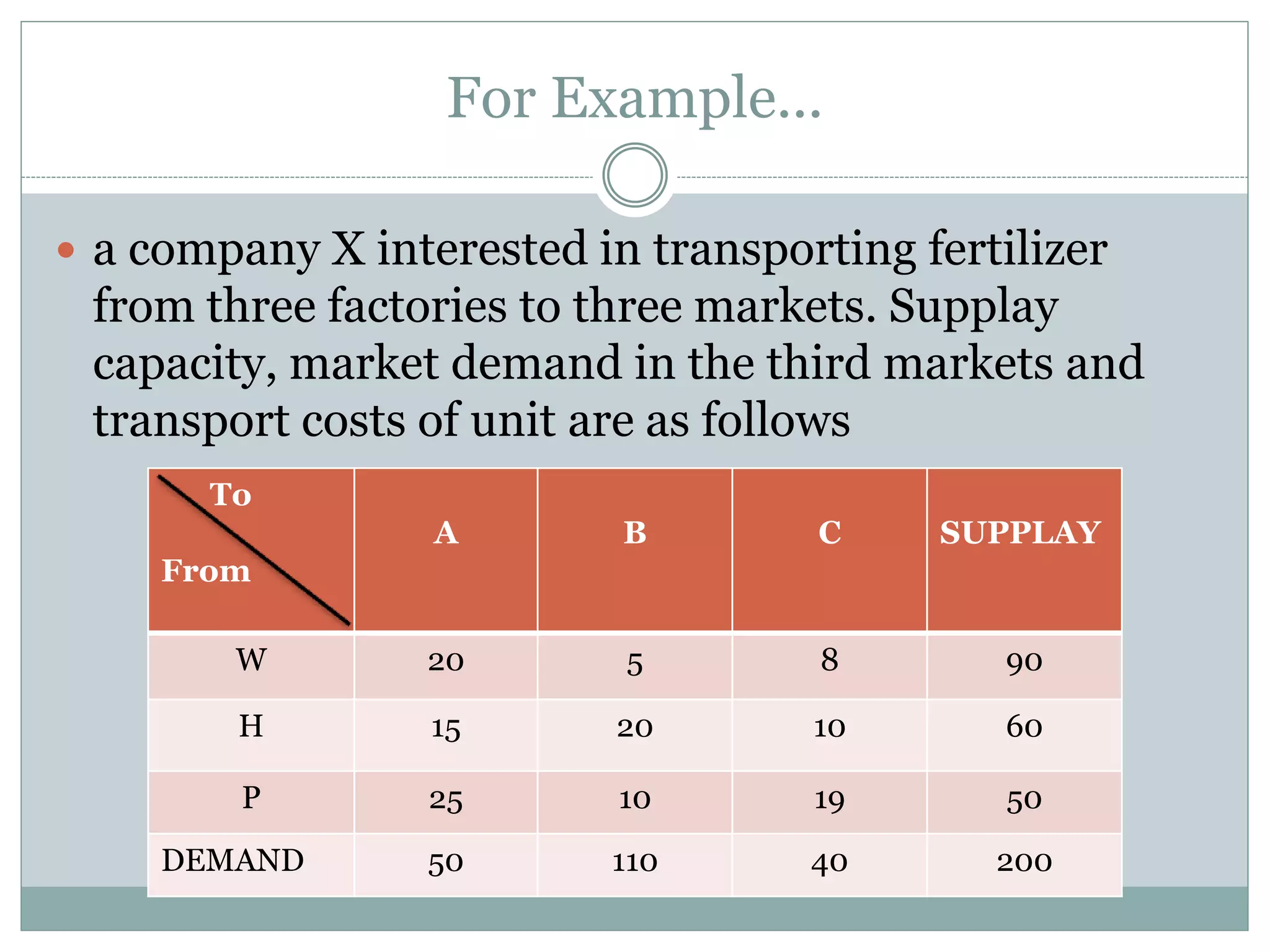
 a company X interested in transporting fertilizer
from three factories to three markets. Supplay
capacity, market demand in the third markets and
transport costs of unit are as follows
To
From
A B C SUPPLAY
W 20 5 8 90
H 15 20 10 60
P 25 10 19 50
DEMAND 50 110 40 200
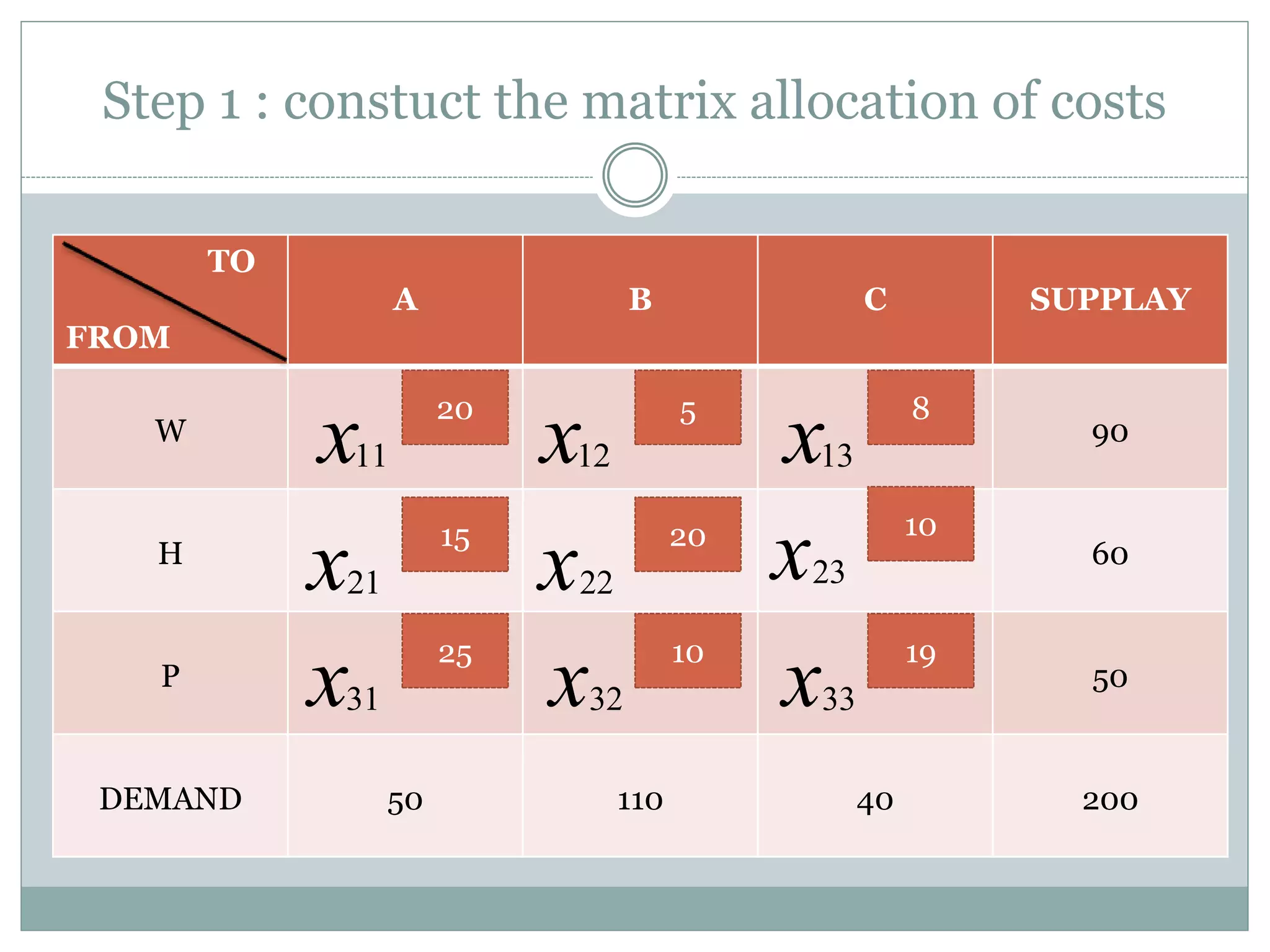
Step 1 : constuct the matrix allocation of costs
TO
FROM
A B C SUPPLAY
W 90
H 60
P 50
DEMAND 50 110 40 200
20 5
15 20
25 10
8
10
19
x11
x21
x31 x32
x22
x12 x13
x23
x33
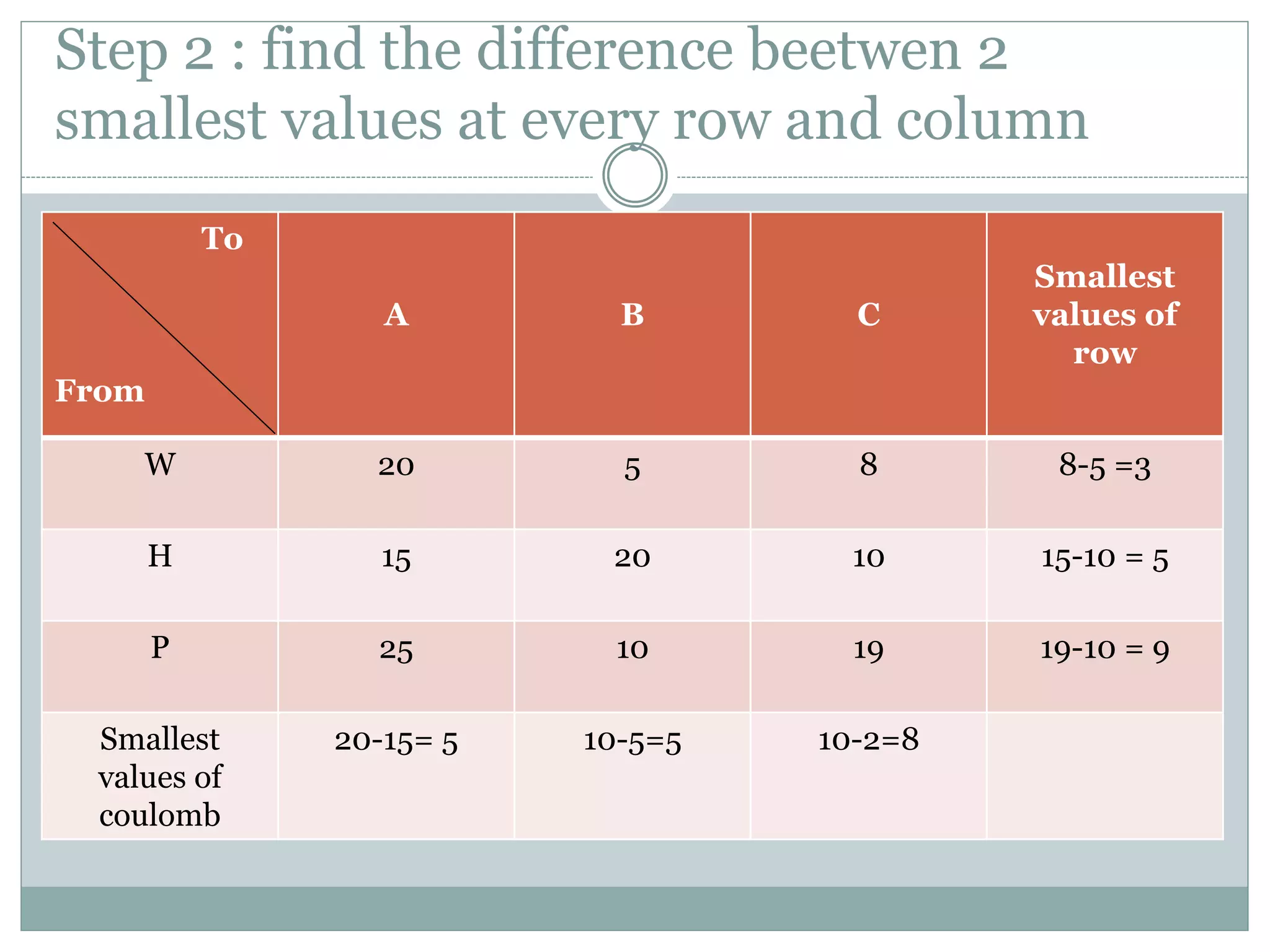
Step 2 : find the difference beetwen 2
smallest values at every row and column
To
From
A B C
Smallest
values of
row
W 20 5 8 8-5 =3
H 15 20 10 15-10 = 5
P 25 10 19 19-10 = 9
Smallest
values of
coulomb
20-15= 5 10-5=5 10-2=8
Step 3: choose the biggest difference
To
From
A B C
Smallest
values of
row
W 20 5 8 8-5 =3
H 15 20 10 15-10 = 5
P 25 10 19 19-10 = 9
Smallest
values of
coulomb
20-15= 5 10-5=5 10-2=8
Execution of value that was choosen (P row)
Step 4 : choose the square with lowest cost then
put it as much as you can
TO
FROM
A B C SUPPLAY
P
25 10 19
50
DEMAND 50 110 40 200
After that remove the row from table
5032
x
60
Step 5 : find the different again + execution again
To
From
A B C
Smallest
values of
row
W 20 5 8 8-5 =3
H 15 20 10 15-10 = 5
Smallest
values of
coulomb
20-15= 5 20-5=15 10-2=8
Remove this coulomb
Step 6 : find again....
To
From
A B C
Smallest
value of
row
Supplay
W 20 5 8 12 90
H 15 20 10 5 60
Smallest
value of
coulomb
5 8
Demand 50 60 40
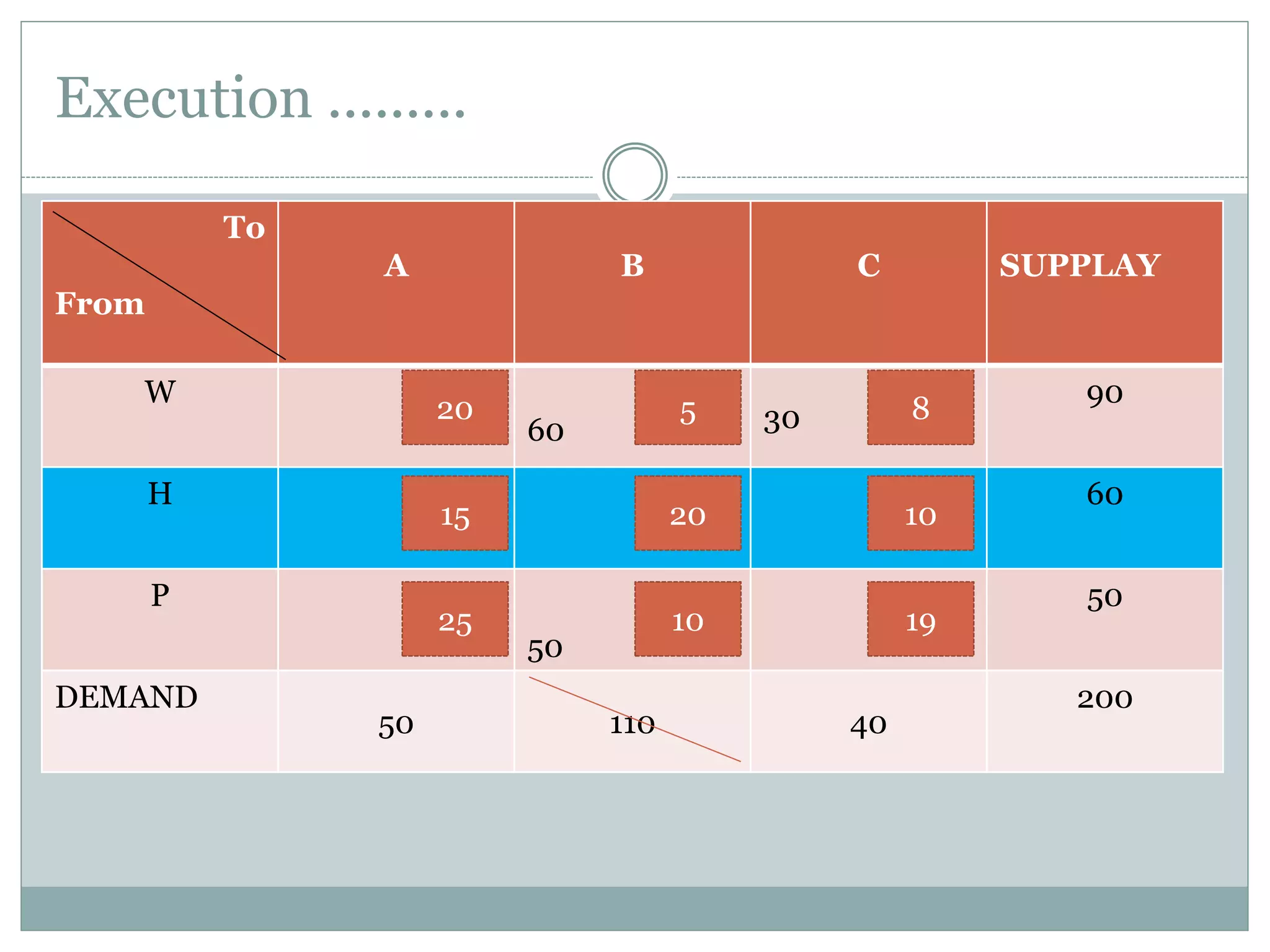
Execution .........
To
From
A B C SUPPLAY
W
60 30
90
H 60
P
50
50
DEMAND
50 110 40
200
20 5
15 20
25 10
8
10
19
Finaalllllll.............
TO
FROM
A B C SUPPLAY
W 60 30
90
H 50 10
60
P 50
50
DEMAND 50 110 40
200
20 5
15 20
25 10
8
10
19
So the transportation cost = 60*5+30*8 + 50*15 + 10*10 + 50*10 = 1890
English mathematic VAM Method

English mathematic VAM Method

  • 1.
    V A M( V O G E L ’ S A P R O X I M A T I O N M E T H O D ) English Mathematic
  • 2.
    VAM (Vogel’s ApproximationMethod)  The more easy and faster method for use in allocate resources from multiple sources to multiple destinations (market area)
  • 3.
    For Example...  acompany X interested in transporting fertilizer from three factories to three markets. Supplay capacity, market demand in the third markets and transport costs of unit are as follows To From A B C SUPPLAY W 20 5 8 90 H 15 20 10 60 P 25 10 19 50 DEMAND 50 110 40 200
  • 4.
    Step 1 :constuct the matrix allocation of costs TO FROM A B C SUPPLAY W 90 H 60 P 50 DEMAND 50 110 40 200 20 5 15 20 25 10 8 10 19 x11 x21 x31 x32 x22 x12 x13 x23 x33
  • 5.
    Step 2 :find the difference beetwen 2 smallest values at every row and column To From A B C Smallest values of row W 20 5 8 8-5 =3 H 15 20 10 15-10 = 5 P 25 10 19 19-10 = 9 Smallest values of coulomb 20-15= 5 10-5=5 10-2=8
  • 6.
    Step 3: choosethe biggest difference To From A B C Smallest values of row W 20 5 8 8-5 =3 H 15 20 10 15-10 = 5 P 25 10 19 19-10 = 9 Smallest values of coulomb 20-15= 5 10-5=5 10-2=8 Execution of value that was choosen (P row)
  • 7.
    Step 4 :choose the square with lowest cost then put it as much as you can TO FROM A B C SUPPLAY P 25 10 19 50 DEMAND 50 110 40 200 After that remove the row from table 5032 x 60
  • 8.
    Step 5 :find the different again + execution again To From A B C Smallest values of row W 20 5 8 8-5 =3 H 15 20 10 15-10 = 5 Smallest values of coulomb 20-15= 5 20-5=15 10-2=8 Remove this coulomb
  • 9.
    Step 6 :find again.... To From A B C Smallest value of row Supplay W 20 5 8 12 90 H 15 20 10 5 60 Smallest value of coulomb 5 8 Demand 50 60 40
  • 10.
    Execution ......... To From A BC SUPPLAY W 60 30 90 H 60 P 50 50 DEMAND 50 110 40 200 20 5 15 20 25 10 8 10 19
  • 11.
    Finaalllllll............. TO FROM A B CSUPPLAY W 60 30 90 H 50 10 60 P 50 50 DEMAND 50 110 40 200 20 5 15 20 25 10 8 10 19 So the transportation cost = 60*5+30*8 + 50*15 + 10*10 + 50*10 = 1890