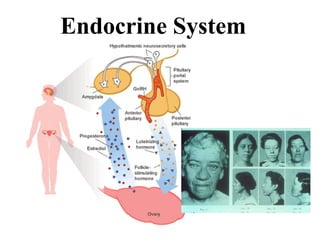
Endocrine System
 
Outline of major players
Endocrine System
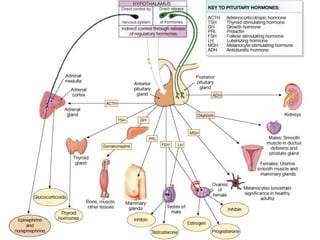
• Pituitary gland “Master Gland”
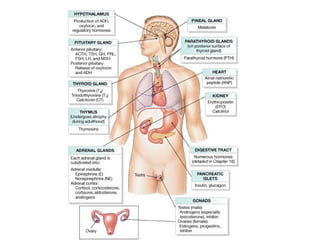
• Organs of the Endocrine system
• Thyroid
• Parathyroid
• Adrenals
• Pancreas
11.1 Introduction Endocrine
Objectives-
– Describe the components of the endocrine
system.
– Definition of a hormone and distinguish
between endocrine and exocrine secretions.
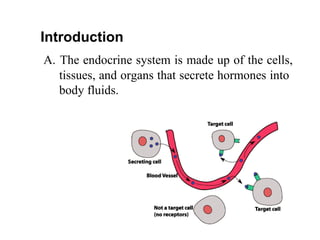
A. The endocrine system is made up of the cells, 
tissues, and organs that secrete hormones into  
    body fluids.
 
Introduction
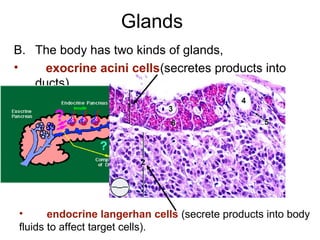
Glands
B. The body has two kinds of glands,
• exocrine acini cells(secretes products into
ducts)
• endocrine langerhan cells (secrete products into body
fluids to affect target cells).
11.2 General Characteristics of the
Endocrine system
Objective-
- Compare the similarities and differences
between the endocrine and nervous
system.
- Describe the specificity of the endocrine
system.
- Location of the major endocrine glands
and list some functions of the endocrine
system.
A. The endocrine system’s function is to 
• communicate with cells using chemicals called 
hormones.
B. Endocrine glands and their hormones 
• regulate a number of metabolic processes within 
cells, and the whole body.  
General Characteristics
Endocrine System
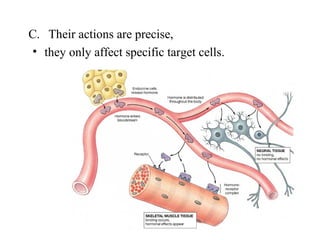
C. Their actions are precise, 
• they only affect specific target cells.
D. Endocrine glands include the
– pituitary gland,
– thyroid gland,
– parathyroid glands,
– adrenal glands,
– pancreas, and other hormone-secreting
glands and tissues.
Hormones can
• Alter cellular operations by changing the
identities, activities, or quantities of import
enzymes and structural proteins in various
target cells.
• influence target cells even if they are
present only in minute concentrations.
11.3 Hormone action
• Objective-
– Explain how steroid and nonsteroid hormones
affect target cells.
– Be able to give examples of each and their
mechanism of action.
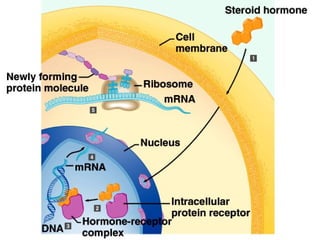
A. Hormones are can be divided into two major 
groups Steroid and Nonsteroid Hormones.
B. three subgroups on the basis of chemical 
structure: 
1) lipid derivatives (steroids).  
Hormone Action
Nonsteroid hormones
2. amino acid derivatives (Epinephrine,
Norepinephrine, thyroid hormones,
melatonin).
3. peptide hormones ( Anitdiurentic Hormone
ADH, Oxytocin, Growth hormone GH,
Prolactin).
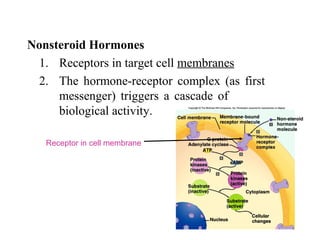
Nonsteroid Hormones
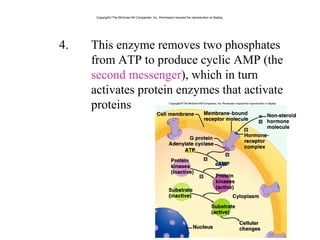
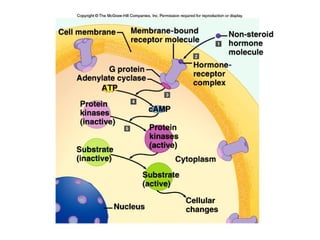
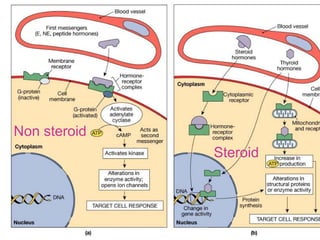
1. Receptors in target cell membranes
2. The  hormone-receptor  complex  (as  first 
messenger)  triggers  a  cascade  of 
biological activity.
Receptor in cell membrane
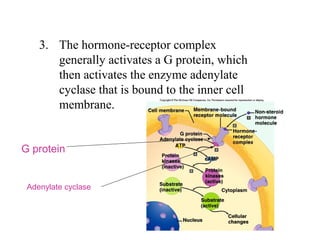
3. The hormone-receptor complex 
generally activates a G protein, which 
then activates the enzyme adenylate 
cyclase that is bound to the inner cell 
membrane.
G protein
Adenylate cyclase
4. This enzyme removes two phosphates 
from ATP to produce cyclic AMP (the 
second messenger), which in turn 
activates protein enzymes that activate 
proteins.
Copyright©The McGraw-Hill Companies, Inc. Permission required for reproduction or display.
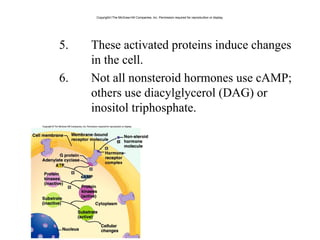
5. These activated proteins induce changes 
in the cell.
6. Not all nonsteroid hormones use cAMP; 
others use diacylglycerol (DAG) or 
inositol triphosphate. 
Copyright©The McGraw-Hill Companies, Inc. Permission required for reproduction or display.
Non steroid
Steroid
D. Prostaglandins
1. Prostaglandins are locally-produced 
lipids that affect usually don’t make it to 
the bloodstream and affect neighboring 
tissue or the organ in which they are 
produced.
Inflammatory prostaglandins are inhibited by 
NonSteroid Anti Inflammatory Drugs (NSAIDs) 
been marketed as a ‘safe’ alernative to aspirin.
Prostaglandins
2. Prostaglandins produce a variety of
effects: some relax smooth muscle,
others contract smooth muscle, some
stimulate secretion of other hormones,
and others influence blood pressure
and inflammation.
Examples are found in the liver, kidney, heart,
lungs, pancreas, brain and reproductive organs
11.4 Control of Hormonal
Secretions
• Objective
– Discuss how negative feedback mechanisms
regulate hormonal secretions.
– And explain how the nervous system
regulates those secretions.
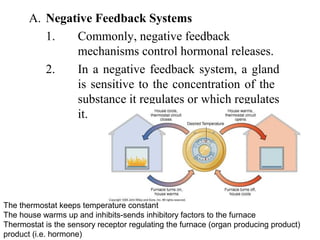
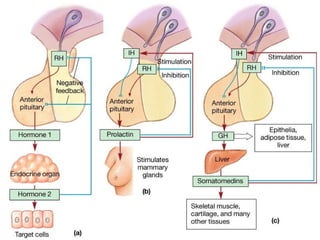
 A. Negative Feedback Systems 
1. Commonly, negative feedback 
mechanisms control hormonal releases.
2. In a negative feedback system, a gland 
is sensitive to the concentration of the 
substance it regulates or which regulates 
it.
The thermostat keeps temperature constant
The house warms up and inhibits-sends inhibitory factors to the furnace
Thermostat is the sensory receptor regulating the furnace (organ producing product)
product (i.e. hormone)
B. Hormone levels are very precisely regulated. 
C. Control Mechanisms 
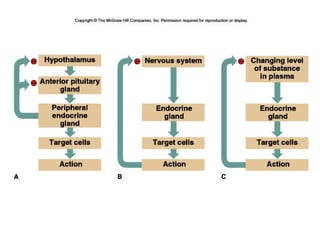
1. Release  of  hormones  from  the 
hypothalamus  controls  secretions  of 
the  anterior pituitary.
2. The nervous system influences certain 
endocrine glands directly.
3. Other  glands  respond  directly  to 
changes  in  the  internal  fluid 
composition.
Control of Hormonal Secretions
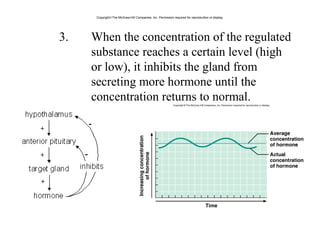
3. When the concentration of the regulated
substance reaches a certain level (high
or low), it inhibits the gland from
secreting more hormone until the
concentration returns to normal.
Copyright©The McGraw-Hill Companies, Inc. Permission required for reproduction or display.
11.5- 11.10 Pituitary gland- other
endocrine glands
• Objective
– Name and describe the locations of the major
endocrine glands, and list the hormones they
secrete
– Describe the functions and target tissue and
their major affect of the hormones that
endocrine glands secrete.
– Explain how the secretion of each hormone is
regulated by the body.
11.5 Pituitary gland
1. Compare the similarities between the
Anterior Pituitary Gland and the Posterior
Pituitary Gland.
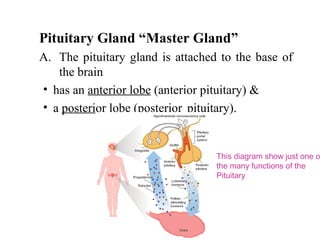
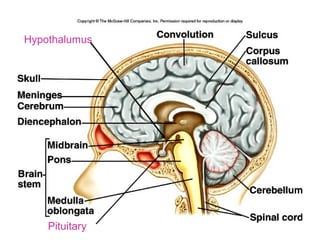
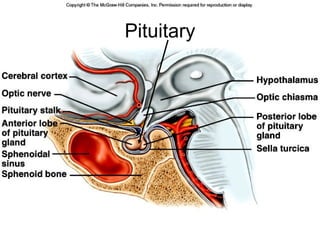
Pituitary Gland “Master Gland”
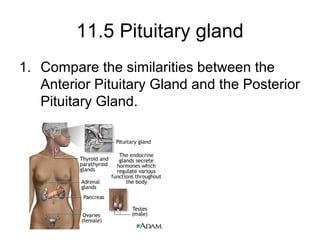
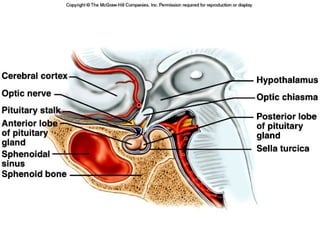
A. The pituitary gland is attached to the base of
the brain
• has an anterior lobe (anterior pituitary) &
• a posterior lobe (posterior pituitary).
This diagram show just one o
the many functions of the
Pituitary
Hypothalumus
Pituitary
Pituitary
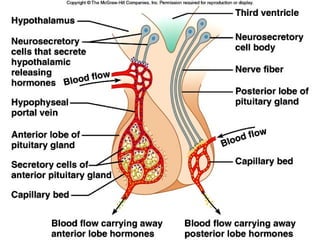
B. The brain controls the activity of the pituitary
gland.
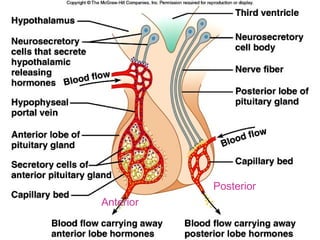
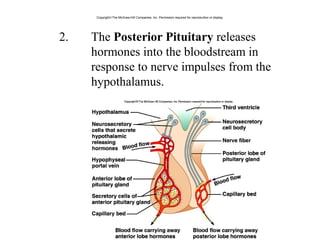
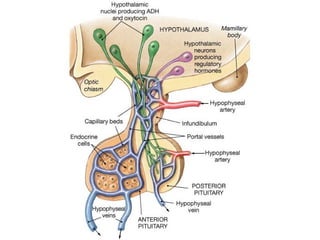
1. Releasing hormones from the
hypothalamus control the secretions of
the Anterior Pituitary.
a. The releasing hormones (cause
the release of Hormones!) are
carried in the bloodstream
directly to the Anterior Pituitary
by hypophyseal portal veins.
Copyright©The McGraw-Hill Companies, Inc. Permission required for reproduction or display.
Anterior
Posterior
2. The Posterior Pituitary releases
hormones into the bloodstream in
response to nerve impulses from the
hypothalamus.
Copyright©The McGraw-Hill Companies, Inc. Permission required for reproduction or display.
C. Anterior Pituitary Hormones
1. The anterior pituitary consists mostly of
epithelial tissue arranged around blood
vessels and enclosed in a capsule of
collagenous connective tissue.
I. Growth hormone (GH)
II. Prolactin (PRL)
III. Thyroid-stimulating hormone (TSH)
IV. Adrenocorticotropic hormone (ACTH)
V. Follicle-stimulating hormone (FSH) and
VI. Luteinizing hormone (LH)
2. Growth hormone (GH) stimulates body
cells to grow and reproduce; it also
speeds the rate at which cells use
carbohydrates and fats.
a. Growth hormone-releasing
hormone from the hypothalamus
increases the amount of GH
released, GH release-inhibiting
hormone inhibits its release.
b. Nutritional status affects the
release of GH
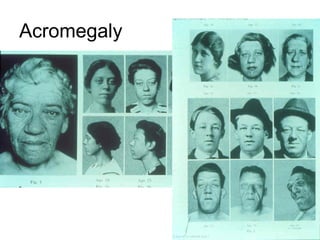
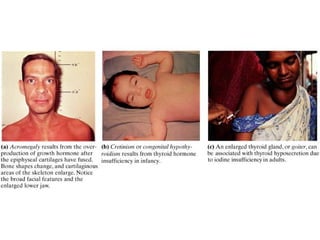
Acromegaly- excess GH causes an enlargement
of hands and feet, facial features
Acromegaly
3. Prolactin (PRL) promotes milk
production following the birth of an
infant.
a. The effect of PRL in males is
less-well understood, although it
may cause a deficiency of male
sex hormones.
Prolactinoma- menstral changes,
infertility, in men impotence, loss of
sexual drive
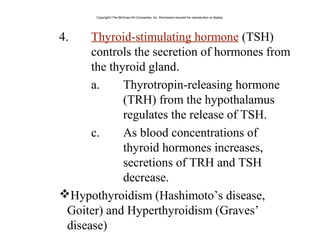
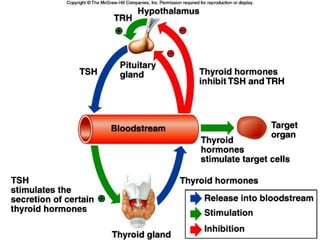
4. Thyroid-stimulating hormone (TSH)
controls the secretion of hormones from
the thyroid gland.
a. Thyrotropin-releasing hormone
(TRH) from the hypothalamus
regulates the release of TSH.
c. As blood concentrations of
thyroid hormones increases,
secretions of TRH and TSH
decrease.
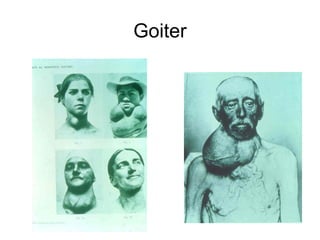
Hypothyroidism (Hashimoto’s disease,
Goiter) and Hyperthyroidism (Graves’
disease)
Copyright©The McGraw-Hill Companies, Inc. Permission required for reproduction or display.
Goiter
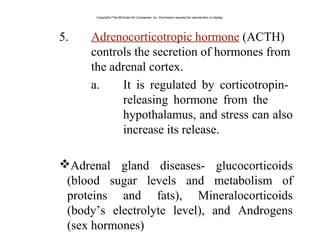
5. Adrenocorticotropic hormone (ACTH)
controls the secretion of hormones from
the adrenal cortex.
a. It is regulated by corticotropin-
releasing hormone from the
hypothalamus, and stress can also
increase its release.
Adrenal gland diseases- glucocorticoids
(blood sugar levels and metabolism of
proteins and fats), Mineralocorticoids
(body’s electrolyte level), and Androgens
(sex hormones)
Copyright©The McGraw-Hill Companies, Inc. Permission required for reproduction or display.
6. Follicle-stimulating hormone (FSH) and
luteinizing hormine (LH) are
gonadotropins affecting the male and
female sex organs.
Infertility
Copyright©The McGraw-Hill Companies, Inc. Permission required for reproduction or display.
D. Posterior Pituitary Hormones
1. The posterior lobe consists of nerve
fibers and neuroglial cells that support
nerve fibers arising in the
hypothalamus.
2. Neurons in the hypothalamus produce
antidiuretic hormone and oxytocin,
which are stored in the posterior
pituitary.
Copyright©The McGraw-Hill Companies, Inc. Permission required for reproduction or display.
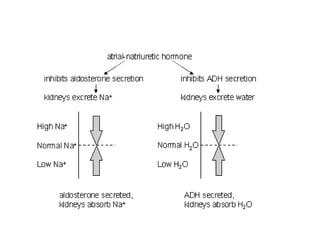
3. Antidiuretic hormone (ADH) produces
its effect by causing the kidneys to
conserve water.
a. The hypothalamus regulates the
secretion of ADH based on the
amount of water in body fluids.
Diabetes Insipidus- insufficient ADH loss of water
balance
Copyright©The McGraw-Hill Companies, Inc. Permission required for reproduction or display.
4. Oxytocin plays a role in childbirth by
contracting muscles in the uterine wall,
and in milk-letdown by forcing milk
into ducts from the milk glands.
a. Stretching of the uterus in the
latter stages of pregnancy
stimulates release of oxytocin.
b. Suckling of an infant at the breast
stimulates release of oxytocin
after childbirth.
Inducing Labor- synthetic oxytocin
Copyright©The McGraw-Hill Companies, Inc. Permission required for reproduction or display.
Glands (Hormone Target
Tissue)
• Thyroid
• Parathyroid
• Adrenal
• Pancreas
11.6 Thyroid
• Objectives-
– Locate the thyroid gland and identify which
hormones affect carbohydrate metabolism.
– How does the thyroid gland influence the
concentration of blood calcium
Thyroid Gland
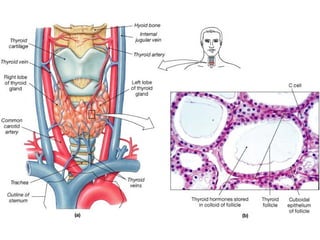
A. The thyroid gland is located below the larynx
and consists of two broad lobes connected by
an isthmus.
B. Structure of the Gland
1. The thyroid consists of secretory parts
called follicles filled with hormone-
storing colloid.
11.6
Copyright©The McGraw-Hill Companies, Inc. Permission required for reproduction or display.
C. Thyroid Hormones
1. The follicular cells produce two iodine-
containing hormones, thyroxine (T4
)
(tetraiodothyronine) and
triiodothyronine (T3
), that together
regulate energy metabolism.
a. These two hormones increase the
rate at which cells release energy
from carbohydrates, enhance
protein synthesis, and stimulate
the breakdown and mobilization
of lipids.
Copyright©The McGraw-Hill Companies, Inc. Permission required for reproduction or display.
b. These hormones are essential for
normal growth and development.
c. The hypothalamus and pituitary
gland control release of thyroid
hormones.
Copyright©The McGraw-Hill Companies, Inc. Permission required for reproduction or display.
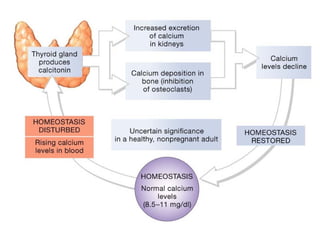
2. Extrafollicular cells of the thyroid
secrete calcitonin, which lowers blood
levels of calcium and phosphate ions
when they are too high.
a. Calcitonin increases the rate at
which calcium is stored in bones
and excreted in the urine.
b. Calcitonin secretion is regulated
by negative feedback involving
blood concentrations of calcium.
Copyright©The McGraw-Hill Companies, Inc. Permission required for reproduction or display.
11.7 Parathyroid
• Objective-
– Locate the parathyroids and be able to
describe how they help regulate
concentrations of blood calcium and
phosphate ions.
Parathyroid Glands
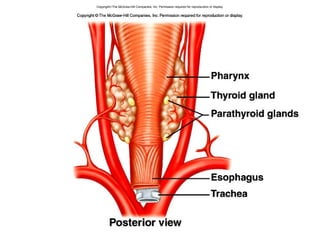
A. The four, tiny parathyroids are located on the
posterior of the thyroid.
B. Structure of the Glands
1. Parathyroid glands consist of tightly
packed secretory cells covered by a thin
capsule of connective tissue.
Copyright©The McGraw-Hill Companies, Inc. Permission required for reproduction or display.
C. Parathyroid Hormone
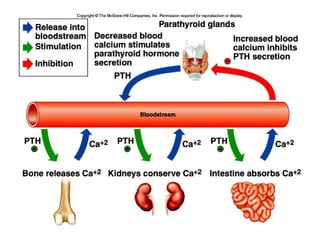
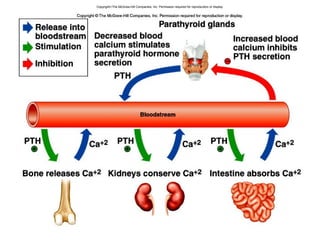
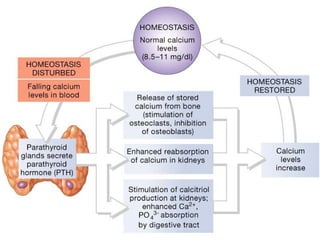
1. Parathyroid hormone (PTH) increases
blood calcium ion concentration and
decreases phosphate ion concentration.
2. PTH stimulates bone resorption by
osteoclasts, which releases calcium into
the blood.
3. PTH also influences the kidneys to
conserve calcium and causes increased
absorption of calcium in the intestines.
4. A negative feedback mechanism
involving blood calcium levels
regulates release of PTH.
D. Calcitonin and PTH exert opposite effects in
regulating calcium ion levels in the blood.
Copyright©The McGraw-Hill Companies, Inc. Permission required for reproduction or display.
• Pancreas
• Pineal Gland
• Thymus
• Reproductive
• Digestive glands
• Stress and Health
11.8 Adrenals
• Objective-
– Locate the adrenals, identify the layers of the adrenal
glands and the hormones they produce.
– What stimulates the release of medullary hormones
(hormones released from the adrenal medulla).
– What causes the release of hormones released from
the Adrenal cortex (aldosterone, cortisol and sex
hormones).
– Whats the function of aldosterone, cortisol and how
are the blood concentration regulated/
– Know the ‘fight or flight’ response
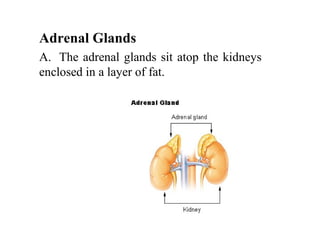
Adrenal Glands
A. The adrenal glands sit atop the kidneys
enclosed in a layer of fat.
Copyright©The McGraw-Hill Companies, Inc. Permission required for reproduction or display.
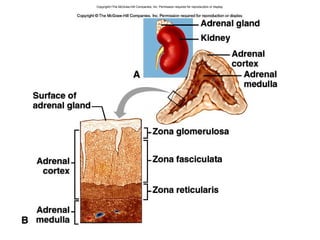
B. Structure of the Glands
1. The pyramid-shaped glands consist of
an inner adrenal medulla and an outer
adrenal cortex.
2. The adrenal medulla is made up of
modified postganglionic neurons that
are connected to the sympathetic
nervous system.
Copyright©The McGraw-Hill Companies, Inc. Permission required for reproduction or display.
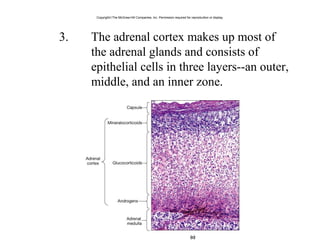
3. The adrenal cortex makes up most of
the adrenal glands and consists of
epithelial cells in three layers--an outer,
middle, and an inner zone.
Copyright©The McGraw-Hill Companies, Inc. Permission required for reproduction or display.
C. Hormones of the Adrenal Medulla
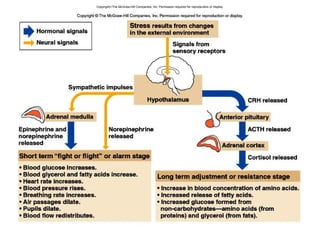
1. The adrenal medulla secretes
epinephrine and norepinephrine into the
blood stream.
2. The effects of these hormones resemble
those of the sympathetic division
neurotransmitters of the same name,
except that they last up to 10 times
longer when they are secreted as
hormones.
Copyright©The McGraw-Hill Companies, Inc. Permission required for reproduction or display.
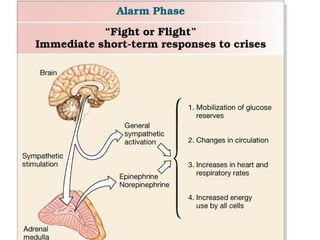
3. The are used in times of stress and for
“fight or flight.”
4. Release of medullary hormones is
regulated by nervous impulses from the
central nervous system.
Copyright©The McGraw-Hill Companies, Inc. Permission required for reproduction or display.
D. Hormones of the Adrenal Cortex
1. The cells of the adrenal cortex produce
over 30 different steroids, some of
which are vital to survival, the most
important of which are aldosterone
(mineralocorticoid), cortisol
(Glucocorticoid), and the sex hormones
(Androgens).
Copyright©The McGraw-Hill Companies, Inc. Permission required for reproduction or display.
2. Aldosterone
a. Aldosterone, a mineralocorticoid,
causes the kidneys to conserve
sodium ions and thus water, and
to excrete potassium ions.
b. Aldosterone is secreted in
response to decreasing blood
volume and blood pressure as a
result of changes in the kidney.
Copyright©The McGraw-Hill Companies, Inc. Permission required for reproduction or display.
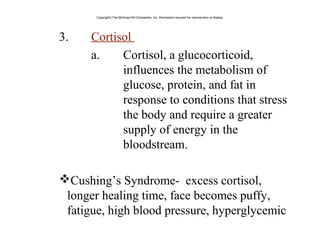
3. Cortisol
a. Cortisol, a glucocorticoid,
influences the metabolism of
glucose, protein, and fat in
response to conditions that stress
the body and require a greater
supply of energy in the
bloodstream.
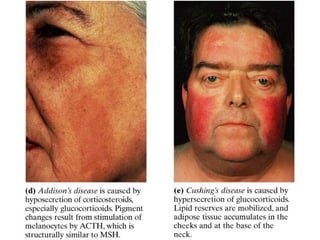
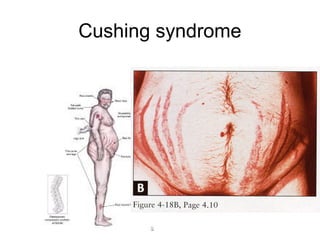
Cushing’s Syndrome- excess cortisol,
longer healing time, face becomes puffy,
fatigue, high blood pressure, hyperglycemic
Copyright©The McGraw-Hill Companies, Inc. Permission required for reproduction or display.
Cushing syndrome
Copyright©The McGraw-Hill Companies, Inc. Permission required for reproduction or display.
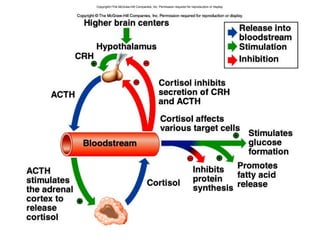
b. A negative feedback mechanism
involving CRH from the
hypothalamus and ACTH from
the anterior pituitary controls the
release of cortisol.
c. Stress, injury, or disease can also
trigger increased release of
cortisol.
Copyright©The McGraw-Hill Companies, Inc. Permission required for reproduction or display.
4. Adrenal Sex Hormones
a. Sex hormones, produced in the
inner zone, are mostly of the male
type, but can be converted to
female hormones in the skin,
liver, and adipose tissues.
b. These hormones supplement
those released by the gonads and
may stimulate early development
of reproductive organs.
Copyright©The McGraw-Hill Companies, Inc. Permission required for reproduction or display.
11.9 Pancreas
Pancreas
A. The pancreas secretes hormones as an
endocrine gland, and digestive juices to the
digestive tract as an exocrine gland.
Copyright©The McGraw-Hill Companies, Inc. Permission required for reproduction or display.
B. Structure of the Gland
1. The pancreas is an elongated organ
posterior to the stomach.
2. Its endocrine portions are the islets of
Langerhans that include two cell types--
alpha cells that secrete glucagon, and
beta cells that secrete insulin.
Copyright©The McGraw-Hill Companies, Inc. Permission required for reproduction or display.
C. Hormones of the Islets of Langerhans
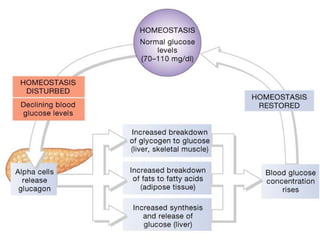
1. Glucagon increases the blood levels of
glucose by stimulating the breakdown
of glycogen and the conversion of
noncarbohydrates into glucose.
a. The release of glucagon is
controlled by a negative
feedback system involving
low blood glucose levels.
Copyright©The McGraw-Hill Companies, Inc. Permission required for reproduction or display.
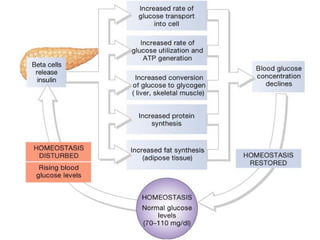
2. Insulin decreases the blood levels of
glucose by stimulating the liver to form
glycogen, increasing protein synthesis,
and stimulating adipose cells to store
fat.
a. The release of insulin is
controlled by a negative
feedback system involving
high blood glucose levels.
Copyright©The McGraw-Hill Companies, Inc. Permission required for reproduction or display.
3. Insulin and glucagon coordinate to
maintain a relatively stable blood
glucose concentration.
Copyright©The McGraw-Hill Companies, Inc. Permission required for reproduction or display.
A. Pineal Gland
1. The pineal gland, near the upper portion
of the thalamus, secretes melatonin,
which is involved in the regulation of
circadian rhythms of the body.
11.10 Other Endocrine glands
B. Thymus Gland
1. The thymus gland, lying between the
lungs under the sternum, secretes
thymosins that affect production and
differentiation of T lymphocytes that
are important in immunity.
Copyright©The McGraw-Hill Companies, Inc. Permission required for reproduction or display.
C. Reproductive Glands
1. The ovaries produce estrogen and
progesterone.
2. The placenta produces estrogen,
progesterone, and a gonadotropin.
3. The testes produce testosterone.
Copyright©The McGraw-Hill Companies, Inc. Permission required for reproduction or display.
D. Digestive Glands
1. The digestive glands secrete hormones
associated with the processes of
digestion.
E. Other Hormone Producing Organs
1. The heart secretes atrial natriuretic
peptide affecting sodium and the
kidneys secrete erythropoietin for blood
cell production.
Copyright©The McGraw-Hill Companies, Inc. Permission required for reproduction or display.
A. Factors that serve as stressors to the body
produce stress and threaten homeostasis.
11.11 Stress and Health
B. Types of Stress
1. Stress may be physical, psychological,
or some combination of the two.
Copyright©The McGraw-Hill Companies, Inc. Permission required for reproduction or display.
2. Physical stress threatens the survival of
tissues, such as extreme cold, prolonged
exercise, or infections.
3. Psychological stress results from real or
perceived dangers, and includes feelings
of anger, depression, fear, and grief;
sometimes even pleasant stimuli cause
stress.
Copyright©The McGraw-Hill Companies, Inc. Permission required for reproduction or display.
C. Response to Stress
1. Responses to stress are designed to
maintain homeostasis.
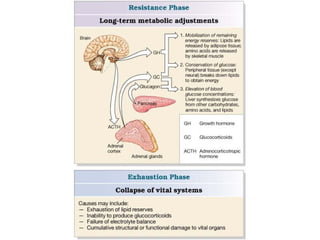
2. The hypothalamus controls the general
stress syndrome, which involves
increased sympathetic activity and
increased secretion of cortisol,
glucagon, growth hormone, and
antidiuretic hormone.
Copyright©The McGraw-Hill Companies, Inc. Permission required for reproduction or display.
Endocrine system-outline-of-major-players1556

Endocrine system-outline-of-major-players1556

  • 1.
  • 2.
    Outline of majorplayers Endocrine System • Pituitary gland “Master Gland” • Organs of the Endocrine system • Thyroid • Parathyroid • Adrenals • Pancreas
  • 3.
    11.1 Introduction Endocrine Objectives- –Describe the components of the endocrine system. – Definition of a hormone and distinguish between endocrine and exocrine secretions.
  • 4.
  • 5.
    Glands B. The bodyhas two kinds of glands, • exocrine acini cells(secretes products into ducts) • endocrine langerhan cells (secrete products into body fluids to affect target cells).
  • 6.
    11.2 General Characteristicsof the Endocrine system Objective- - Compare the similarities and differences between the endocrine and nervous system. - Describe the specificity of the endocrine system. - Location of the major endocrine glands and list some functions of the endocrine system.
  • 7.
    A. The endocrine system’s function is to  • communicate with cells using chemicals called  hormones. B.Endocrine glands and their hormones  • regulate a number of metabolic processes within  cells, and the whole body.   General Characteristics Endocrine System
  • 8.
  • 9.
    D. Endocrine glandsinclude the – pituitary gland, – thyroid gland, – parathyroid glands, – adrenal glands, – pancreas, and other hormone-secreting glands and tissues.
  • 11.
    Hormones can • Altercellular operations by changing the identities, activities, or quantities of import enzymes and structural proteins in various target cells. • influence target cells even if they are present only in minute concentrations.
  • 12.
    11.3 Hormone action •Objective- – Explain how steroid and nonsteroid hormones affect target cells. – Be able to give examples of each and their mechanism of action.
  • 13.
  • 15.
    Nonsteroid hormones 2. aminoacid derivatives (Epinephrine, Norepinephrine, thyroid hormones, melatonin). 3. peptide hormones ( Anitdiurentic Hormone ADH, Oxytocin, Growth hormone GH, Prolactin).
  • 16.
    Nonsteroid Hormones 1. Receptors in target cell membranes 2.The  hormone-receptor  complex  (as  first  messenger)  triggers  a  cascade  of  biological activity. Receptor in cell membrane
  • 17.
  • 18.
  • 19.
  • 21.
  • 22.
  • 23.
    Prostaglandins 2. Prostaglandins producea variety of effects: some relax smooth muscle, others contract smooth muscle, some stimulate secretion of other hormones, and others influence blood pressure and inflammation. Examples are found in the liver, kidney, heart, lungs, pancreas, brain and reproductive organs
  • 24.
    11.4 Control ofHormonal Secretions • Objective – Discuss how negative feedback mechanisms regulate hormonal secretions. – And explain how the nervous system regulates those secretions.
  • 25.
     A. Negative FeedbackSystems  1. Commonly, negative feedback  mechanisms control hormonal releases. 2. In a negative feedback system, a gland  is sensitive to the concentration of the  substance it regulates or which regulates  it. The thermostat keeps temperature constant The house warms up and inhibits-sends inhibitory factors to the furnace Thermostat is the sensory receptor regulating the furnace (organ producing product) product (i.e. hormone)
  • 26.
    B. Hormone levels are very precisely regulated.  C. ControlMechanisms  1. Release  of  hormones  from  the  hypothalamus  controls  secretions  of  the  anterior pituitary. 2. The nervous system influences certain  endocrine glands directly. 3. Other  glands  respond  directly  to  changes  in  the  internal  fluid  composition. Control of Hormonal Secretions
  • 28.
    3. When theconcentration of the regulated substance reaches a certain level (high or low), it inhibits the gland from secreting more hormone until the concentration returns to normal. Copyright©The McGraw-Hill Companies, Inc. Permission required for reproduction or display.
  • 29.
    11.5- 11.10 Pituitarygland- other endocrine glands • Objective – Name and describe the locations of the major endocrine glands, and list the hormones they secrete – Describe the functions and target tissue and their major affect of the hormones that endocrine glands secrete. – Explain how the secretion of each hormone is regulated by the body.
  • 30.
    11.5 Pituitary gland 1.Compare the similarities between the Anterior Pituitary Gland and the Posterior Pituitary Gland.
  • 31.
    Pituitary Gland “MasterGland” A. The pituitary gland is attached to the base of the brain • has an anterior lobe (anterior pituitary) & • a posterior lobe (posterior pituitary). This diagram show just one o the many functions of the Pituitary
  • 32.
  • 33.
  • 34.
    B. The braincontrols the activity of the pituitary gland. 1. Releasing hormones from the hypothalamus control the secretions of the Anterior Pituitary. a. The releasing hormones (cause the release of Hormones!) are carried in the bloodstream directly to the Anterior Pituitary by hypophyseal portal veins. Copyright©The McGraw-Hill Companies, Inc. Permission required for reproduction or display.
  • 36.
  • 37.
    2. The PosteriorPituitary releases hormones into the bloodstream in response to nerve impulses from the hypothalamus. Copyright©The McGraw-Hill Companies, Inc. Permission required for reproduction or display.
  • 39.
    C. Anterior PituitaryHormones 1. The anterior pituitary consists mostly of epithelial tissue arranged around blood vessels and enclosed in a capsule of collagenous connective tissue. I. Growth hormone (GH) II. Prolactin (PRL) III. Thyroid-stimulating hormone (TSH) IV. Adrenocorticotropic hormone (ACTH) V. Follicle-stimulating hormone (FSH) and VI. Luteinizing hormone (LH)
  • 40.
    2. Growth hormone(GH) stimulates body cells to grow and reproduce; it also speeds the rate at which cells use carbohydrates and fats. a. Growth hormone-releasing hormone from the hypothalamus increases the amount of GH released, GH release-inhibiting hormone inhibits its release. b. Nutritional status affects the release of GH Acromegaly- excess GH causes an enlargement of hands and feet, facial features
  • 41.
  • 42.
    3. Prolactin (PRL)promotes milk production following the birth of an infant. a. The effect of PRL in males is less-well understood, although it may cause a deficiency of male sex hormones. Prolactinoma- menstral changes, infertility, in men impotence, loss of sexual drive
  • 44.
    4. Thyroid-stimulating hormone(TSH) controls the secretion of hormones from the thyroid gland. a. Thyrotropin-releasing hormone (TRH) from the hypothalamus regulates the release of TSH. c. As blood concentrations of thyroid hormones increases, secretions of TRH and TSH decrease. Hypothyroidism (Hashimoto’s disease, Goiter) and Hyperthyroidism (Graves’ disease) Copyright©The McGraw-Hill Companies, Inc. Permission required for reproduction or display.
  • 45.
  • 46.
    5. Adrenocorticotropic hormone(ACTH) controls the secretion of hormones from the adrenal cortex. a. It is regulated by corticotropin- releasing hormone from the hypothalamus, and stress can also increase its release. Adrenal gland diseases- glucocorticoids (blood sugar levels and metabolism of proteins and fats), Mineralocorticoids (body’s electrolyte level), and Androgens (sex hormones) Copyright©The McGraw-Hill Companies, Inc. Permission required for reproduction or display.
  • 49.
    6. Follicle-stimulating hormone(FSH) and luteinizing hormine (LH) are gonadotropins affecting the male and female sex organs. Infertility Copyright©The McGraw-Hill Companies, Inc. Permission required for reproduction or display.
  • 50.
    D. Posterior PituitaryHormones 1. The posterior lobe consists of nerve fibers and neuroglial cells that support nerve fibers arising in the hypothalamus. 2. Neurons in the hypothalamus produce antidiuretic hormone and oxytocin, which are stored in the posterior pituitary. Copyright©The McGraw-Hill Companies, Inc. Permission required for reproduction or display.
  • 52.
    3. Antidiuretic hormone(ADH) produces its effect by causing the kidneys to conserve water. a. The hypothalamus regulates the secretion of ADH based on the amount of water in body fluids. Diabetes Insipidus- insufficient ADH loss of water balance Copyright©The McGraw-Hill Companies, Inc. Permission required for reproduction or display.
  • 53.
    4. Oxytocin playsa role in childbirth by contracting muscles in the uterine wall, and in milk-letdown by forcing milk into ducts from the milk glands. a. Stretching of the uterus in the latter stages of pregnancy stimulates release of oxytocin. b. Suckling of an infant at the breast stimulates release of oxytocin after childbirth. Inducing Labor- synthetic oxytocin Copyright©The McGraw-Hill Companies, Inc. Permission required for reproduction or display.
  • 54.
    Glands (Hormone Target Tissue) •Thyroid • Parathyroid • Adrenal • Pancreas
  • 56.
    11.6 Thyroid • Objectives- –Locate the thyroid gland and identify which hormones affect carbohydrate metabolism. – How does the thyroid gland influence the concentration of blood calcium
  • 57.
    Thyroid Gland A. Thethyroid gland is located below the larynx and consists of two broad lobes connected by an isthmus. B. Structure of the Gland 1. The thyroid consists of secretory parts called follicles filled with hormone- storing colloid. 11.6
  • 58.
    Copyright©The McGraw-Hill Companies,Inc. Permission required for reproduction or display.
  • 60.
    C. Thyroid Hormones 1.The follicular cells produce two iodine- containing hormones, thyroxine (T4 ) (tetraiodothyronine) and triiodothyronine (T3 ), that together regulate energy metabolism.
  • 61.
    a. These twohormones increase the rate at which cells release energy from carbohydrates, enhance protein synthesis, and stimulate the breakdown and mobilization of lipids. Copyright©The McGraw-Hill Companies, Inc. Permission required for reproduction or display.
  • 62.
    b. These hormonesare essential for normal growth and development. c. The hypothalamus and pituitary gland control release of thyroid hormones. Copyright©The McGraw-Hill Companies, Inc. Permission required for reproduction or display.
  • 63.
    2. Extrafollicular cellsof the thyroid secrete calcitonin, which lowers blood levels of calcium and phosphate ions when they are too high. a. Calcitonin increases the rate at which calcium is stored in bones and excreted in the urine. b. Calcitonin secretion is regulated by negative feedback involving blood concentrations of calcium. Copyright©The McGraw-Hill Companies, Inc. Permission required for reproduction or display.
  • 64.
    11.7 Parathyroid • Objective- –Locate the parathyroids and be able to describe how they help regulate concentrations of blood calcium and phosphate ions.
  • 65.
    Parathyroid Glands A. Thefour, tiny parathyroids are located on the posterior of the thyroid. B. Structure of the Glands 1. Parathyroid glands consist of tightly packed secretory cells covered by a thin capsule of connective tissue.
  • 66.
    Copyright©The McGraw-Hill Companies,Inc. Permission required for reproduction or display.
  • 67.
    C. Parathyroid Hormone 1.Parathyroid hormone (PTH) increases blood calcium ion concentration and decreases phosphate ion concentration. 2. PTH stimulates bone resorption by osteoclasts, which releases calcium into the blood. 3. PTH also influences the kidneys to conserve calcium and causes increased absorption of calcium in the intestines.
  • 69.
    4. A negativefeedback mechanism involving blood calcium levels regulates release of PTH. D. Calcitonin and PTH exert opposite effects in regulating calcium ion levels in the blood. Copyright©The McGraw-Hill Companies, Inc. Permission required for reproduction or display.
  • 70.
    Copyright©The McGraw-Hill Companies,Inc. Permission required for reproduction or display.
  • 73.
    • Pancreas • PinealGland • Thymus • Reproductive • Digestive glands • Stress and Health
  • 74.
    11.8 Adrenals • Objective- –Locate the adrenals, identify the layers of the adrenal glands and the hormones they produce. – What stimulates the release of medullary hormones (hormones released from the adrenal medulla). – What causes the release of hormones released from the Adrenal cortex (aldosterone, cortisol and sex hormones). – Whats the function of aldosterone, cortisol and how are the blood concentration regulated/ – Know the ‘fight or flight’ response
  • 75.
    Adrenal Glands A. Theadrenal glands sit atop the kidneys enclosed in a layer of fat.
  • 76.
    Copyright©The McGraw-Hill Companies,Inc. Permission required for reproduction or display.
  • 77.
    B. Structure ofthe Glands 1. The pyramid-shaped glands consist of an inner adrenal medulla and an outer adrenal cortex. 2. The adrenal medulla is made up of modified postganglionic neurons that are connected to the sympathetic nervous system. Copyright©The McGraw-Hill Companies, Inc. Permission required for reproduction or display.
  • 78.
    3. The adrenalcortex makes up most of the adrenal glands and consists of epithelial cells in three layers--an outer, middle, and an inner zone. Copyright©The McGraw-Hill Companies, Inc. Permission required for reproduction or display.
  • 79.
    C. Hormones ofthe Adrenal Medulla 1. The adrenal medulla secretes epinephrine and norepinephrine into the blood stream. 2. The effects of these hormones resemble those of the sympathetic division neurotransmitters of the same name, except that they last up to 10 times longer when they are secreted as hormones. Copyright©The McGraw-Hill Companies, Inc. Permission required for reproduction or display.
  • 80.
    3. The areused in times of stress and for “fight or flight.” 4. Release of medullary hormones is regulated by nervous impulses from the central nervous system. Copyright©The McGraw-Hill Companies, Inc. Permission required for reproduction or display.
  • 81.
    D. Hormones ofthe Adrenal Cortex 1. The cells of the adrenal cortex produce over 30 different steroids, some of which are vital to survival, the most important of which are aldosterone (mineralocorticoid), cortisol (Glucocorticoid), and the sex hormones (Androgens). Copyright©The McGraw-Hill Companies, Inc. Permission required for reproduction or display.
  • 82.
    2. Aldosterone a. Aldosterone,a mineralocorticoid, causes the kidneys to conserve sodium ions and thus water, and to excrete potassium ions. b. Aldosterone is secreted in response to decreasing blood volume and blood pressure as a result of changes in the kidney. Copyright©The McGraw-Hill Companies, Inc. Permission required for reproduction or display.
  • 84.
    3. Cortisol a. Cortisol,a glucocorticoid, influences the metabolism of glucose, protein, and fat in response to conditions that stress the body and require a greater supply of energy in the bloodstream. Cushing’s Syndrome- excess cortisol, longer healing time, face becomes puffy, fatigue, high blood pressure, hyperglycemic Copyright©The McGraw-Hill Companies, Inc. Permission required for reproduction or display.
  • 85.
  • 86.
    Copyright©The McGraw-Hill Companies,Inc. Permission required for reproduction or display.
  • 87.
    b. A negativefeedback mechanism involving CRH from the hypothalamus and ACTH from the anterior pituitary controls the release of cortisol. c. Stress, injury, or disease can also trigger increased release of cortisol. Copyright©The McGraw-Hill Companies, Inc. Permission required for reproduction or display.
  • 88.
    Copyright©The McGraw-Hill Companies,Inc. Permission required for reproduction or display.
  • 89.
    4. Adrenal SexHormones a. Sex hormones, produced in the inner zone, are mostly of the male type, but can be converted to female hormones in the skin, liver, and adipose tissues. b. These hormones supplement those released by the gonads and may stimulate early development of reproductive organs. Copyright©The McGraw-Hill Companies, Inc. Permission required for reproduction or display.
  • 90.
  • 91.
    Pancreas A. The pancreassecretes hormones as an endocrine gland, and digestive juices to the digestive tract as an exocrine gland. Copyright©The McGraw-Hill Companies, Inc. Permission required for reproduction or display.
  • 92.
    B. Structure ofthe Gland 1. The pancreas is an elongated organ posterior to the stomach. 2. Its endocrine portions are the islets of Langerhans that include two cell types-- alpha cells that secrete glucagon, and beta cells that secrete insulin. Copyright©The McGraw-Hill Companies, Inc. Permission required for reproduction or display.
  • 93.
    C. Hormones ofthe Islets of Langerhans 1. Glucagon increases the blood levels of glucose by stimulating the breakdown of glycogen and the conversion of noncarbohydrates into glucose. a. The release of glucagon is controlled by a negative feedback system involving low blood glucose levels. Copyright©The McGraw-Hill Companies, Inc. Permission required for reproduction or display.
  • 94.
    2. Insulin decreasesthe blood levels of glucose by stimulating the liver to form glycogen, increasing protein synthesis, and stimulating adipose cells to store fat. a. The release of insulin is controlled by a negative feedback system involving high blood glucose levels. Copyright©The McGraw-Hill Companies, Inc. Permission required for reproduction or display.
  • 95.
    3. Insulin andglucagon coordinate to maintain a relatively stable blood glucose concentration. Copyright©The McGraw-Hill Companies, Inc. Permission required for reproduction or display.
  • 97.
    Copyright©The McGraw-Hill Companies,Inc. Permission required for reproduction or display.
  • 98.
    A. Pineal Gland 1.The pineal gland, near the upper portion of the thalamus, secretes melatonin, which is involved in the regulation of circadian rhythms of the body. 11.10 Other Endocrine glands
  • 99.
    B. Thymus Gland 1.The thymus gland, lying between the lungs under the sternum, secretes thymosins that affect production and differentiation of T lymphocytes that are important in immunity. Copyright©The McGraw-Hill Companies, Inc. Permission required for reproduction or display.
  • 100.
    C. Reproductive Glands 1.The ovaries produce estrogen and progesterone. 2. The placenta produces estrogen, progesterone, and a gonadotropin. 3. The testes produce testosterone. Copyright©The McGraw-Hill Companies, Inc. Permission required for reproduction or display.
  • 101.
    D. Digestive Glands 1.The digestive glands secrete hormones associated with the processes of digestion. E. Other Hormone Producing Organs 1. The heart secretes atrial natriuretic peptide affecting sodium and the kidneys secrete erythropoietin for blood cell production. Copyright©The McGraw-Hill Companies, Inc. Permission required for reproduction or display.
  • 102.
    A. Factors thatserve as stressors to the body produce stress and threaten homeostasis. 11.11 Stress and Health
  • 103.
    B. Types ofStress 1. Stress may be physical, psychological, or some combination of the two. Copyright©The McGraw-Hill Companies, Inc. Permission required for reproduction or display.
  • 104.
    2. Physical stressthreatens the survival of tissues, such as extreme cold, prolonged exercise, or infections. 3. Psychological stress results from real or perceived dangers, and includes feelings of anger, depression, fear, and grief; sometimes even pleasant stimuli cause stress. Copyright©The McGraw-Hill Companies, Inc. Permission required for reproduction or display.
  • 105.
    C. Response toStress 1. Responses to stress are designed to maintain homeostasis. 2. The hypothalamus controls the general stress syndrome, which involves increased sympathetic activity and increased secretion of cortisol, glucagon, growth hormone, and antidiuretic hormone. Copyright©The McGraw-Hill Companies, Inc. Permission required for reproduction or display.