Enculturation and
Socialization
• It refers to a lifelong social experience by
which people develop their human
potential and learn culture.
Enculturation
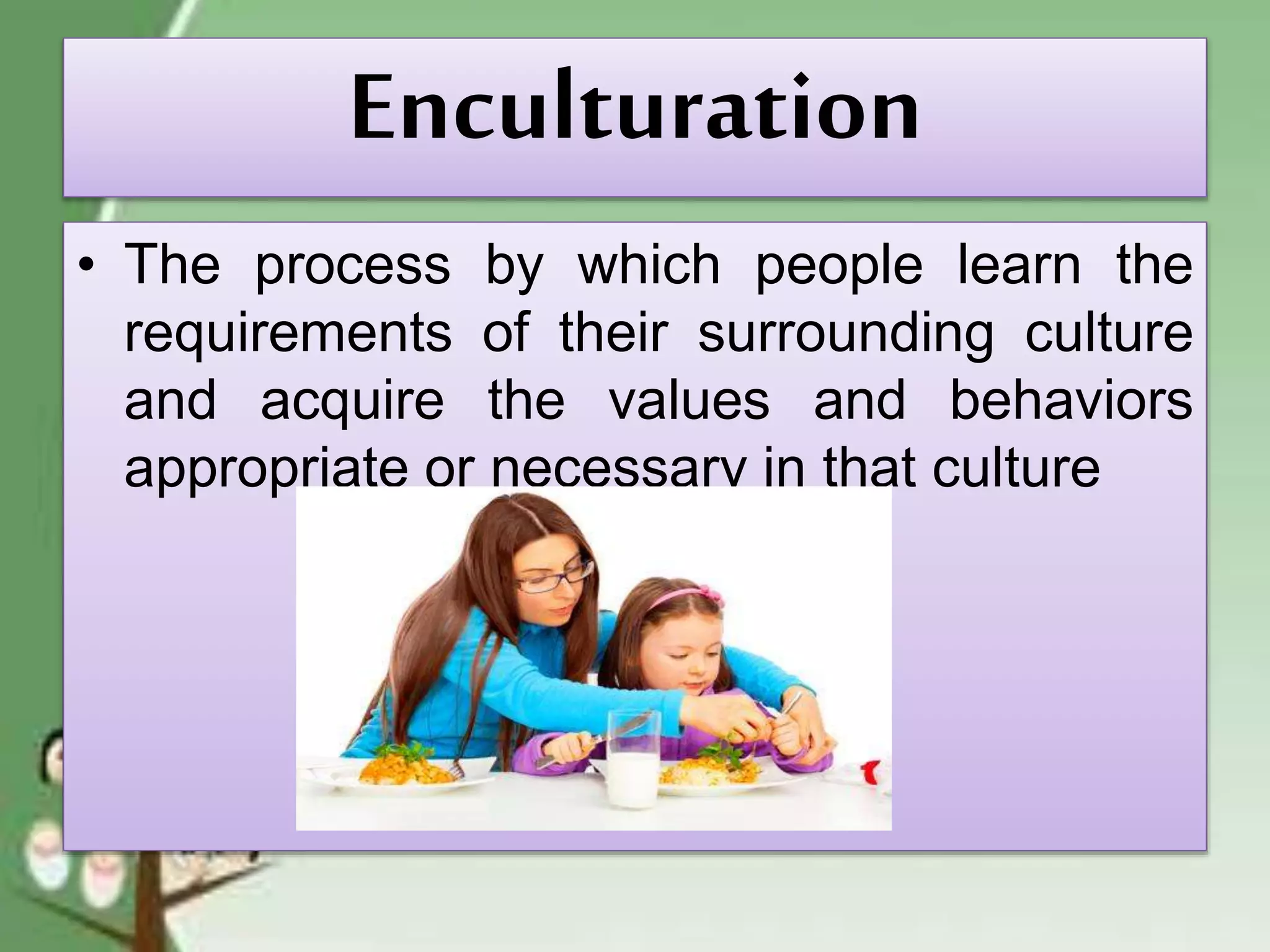
• The process by which people learn the
requirements of their surrounding culture
and acquire the values and behaviors
appropriate or necessary in that culture
Three Goals of Socialization
It teaches impulse
control and help
individuals develop a
conscience.
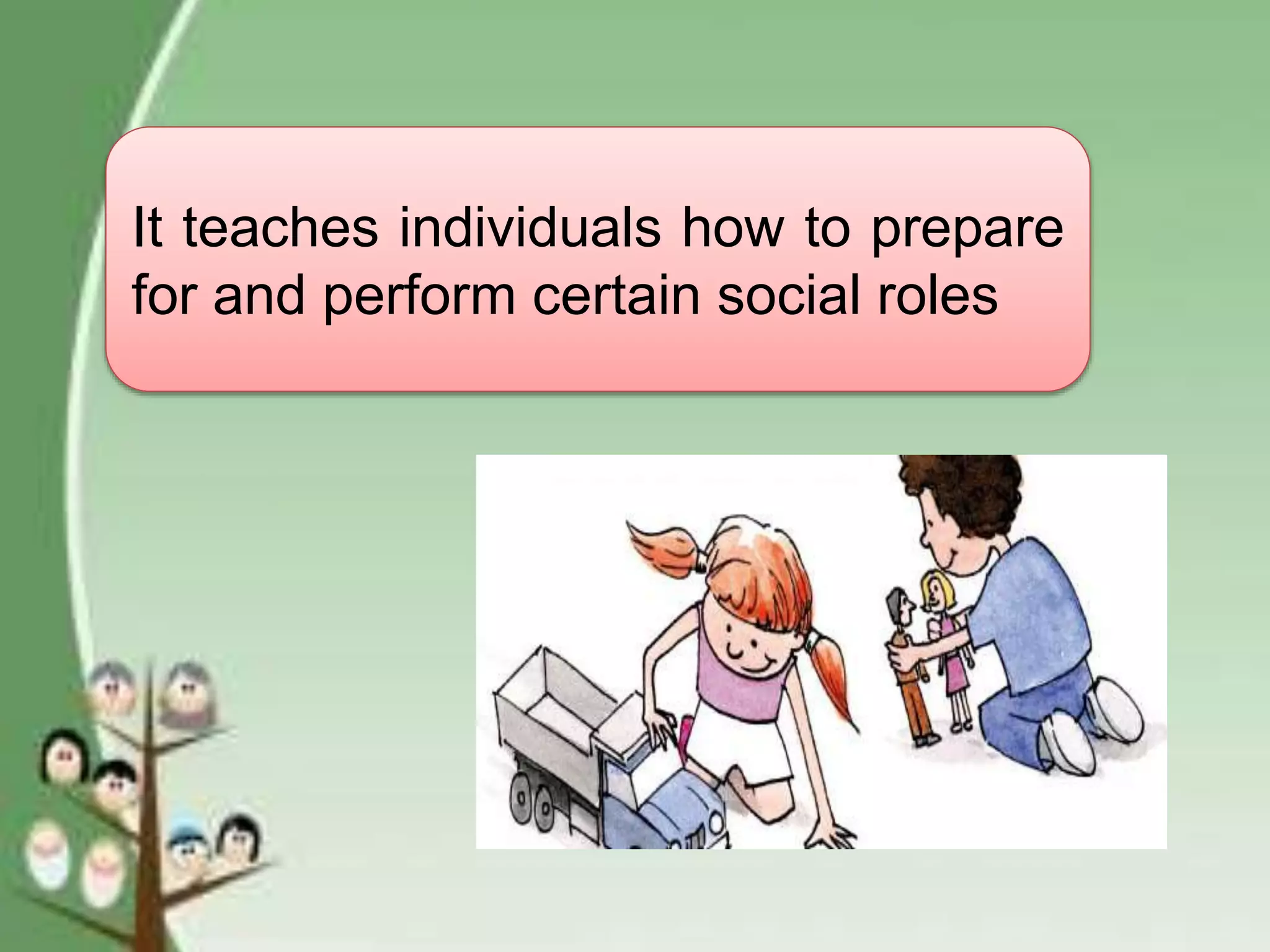
It teaches individuals how to prepare
for and perform certain social roles
It cultivates shared sources of
meaning and value
Mead and the Development of
the Social Mind (SELF)
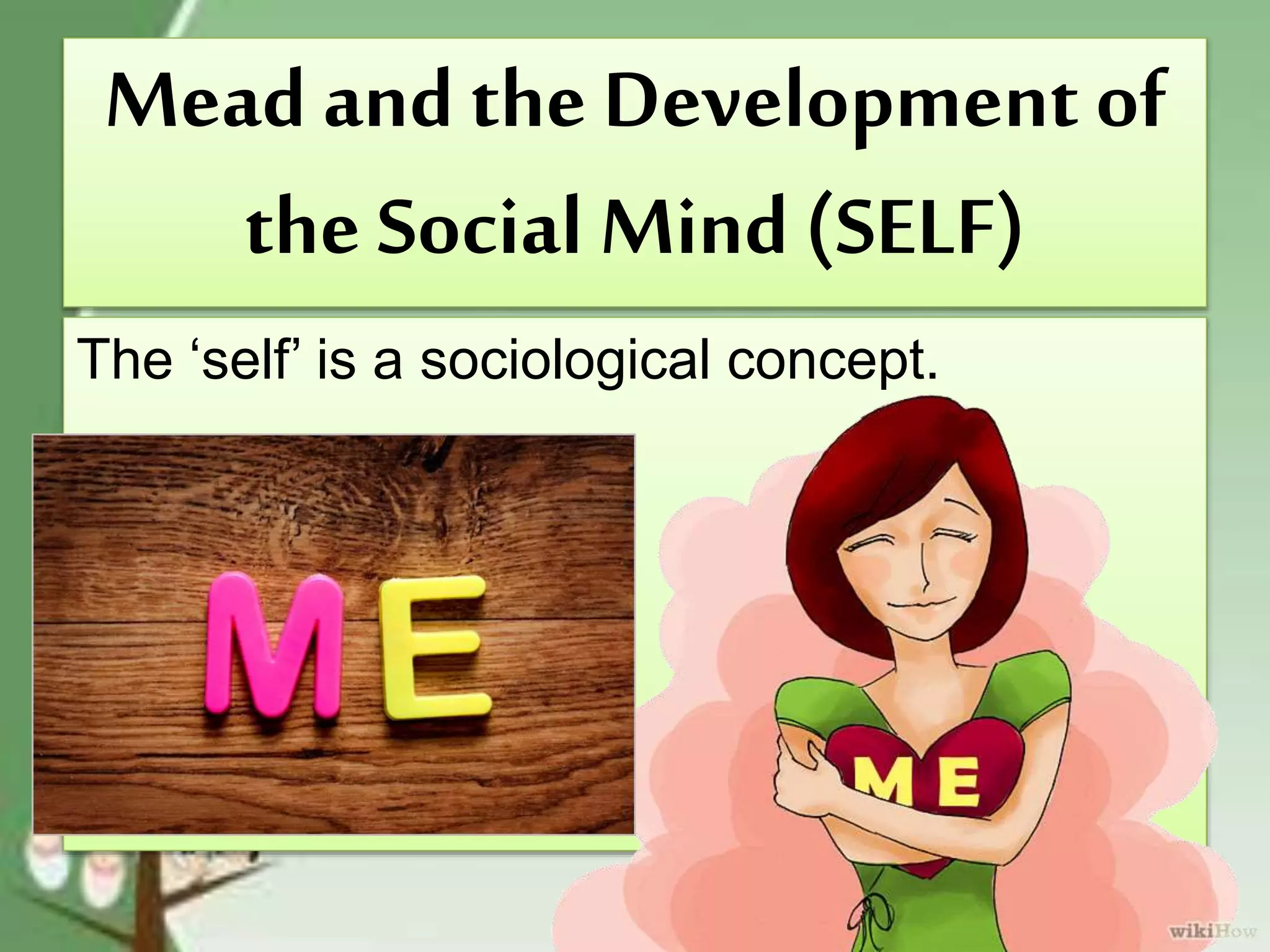
The ‘self’ is a sociological concept.
FERAL CHILD
George Herbert
Mead
He is regarded as one of
the founders of social
psychology and of what has
come to be referred to as
the Chicago sociological
tradition.
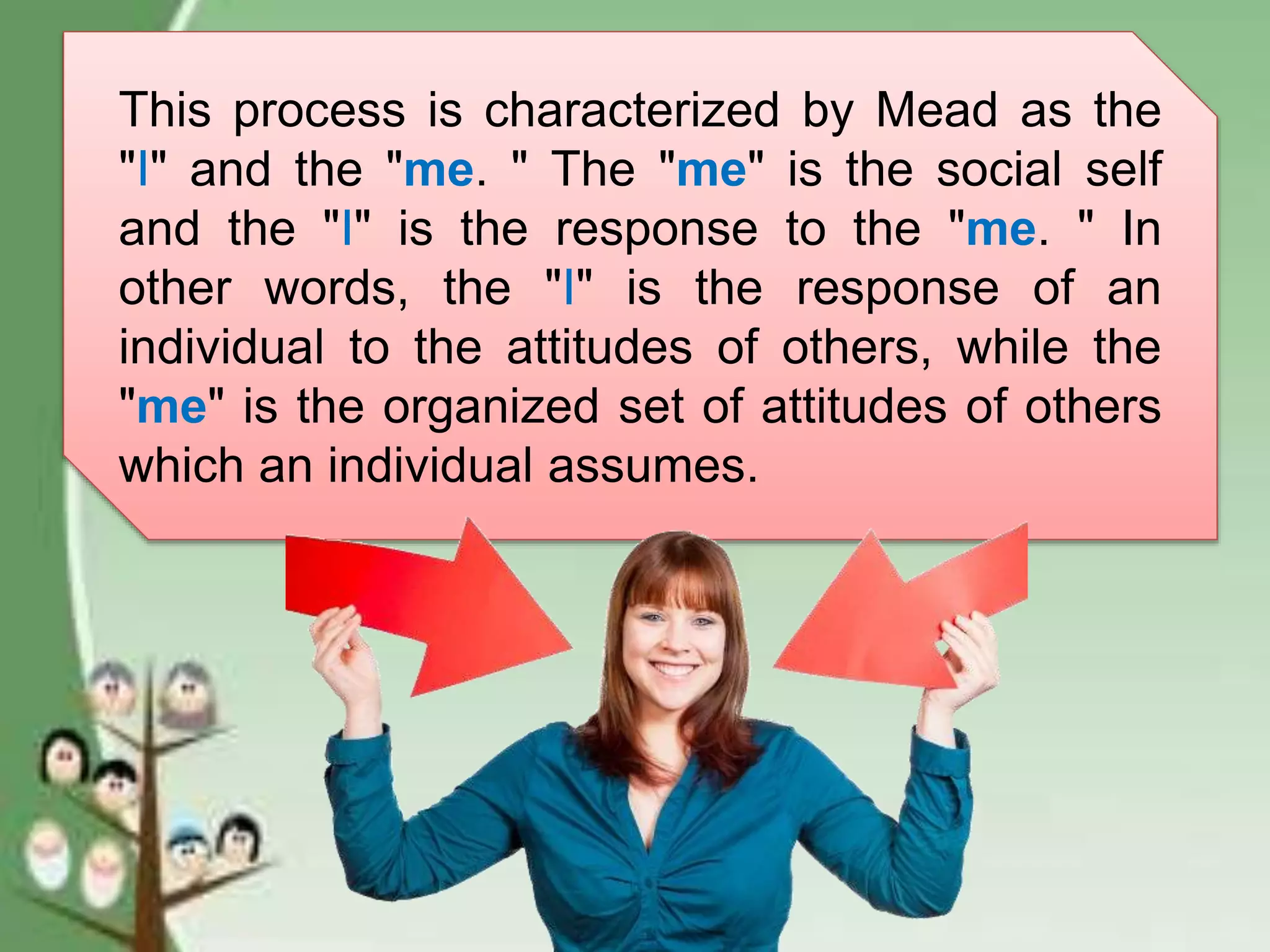
This process is characterized by Mead as the
"I" and the "me. " The "me" is the social self
and the "I" is the response to the "me. " In
other words, the "I" is the response of an
individual to the attitudes of others, while the
"me" is the organized set of attitudes of others
which an individual assumes.
Four-stage process
of self development
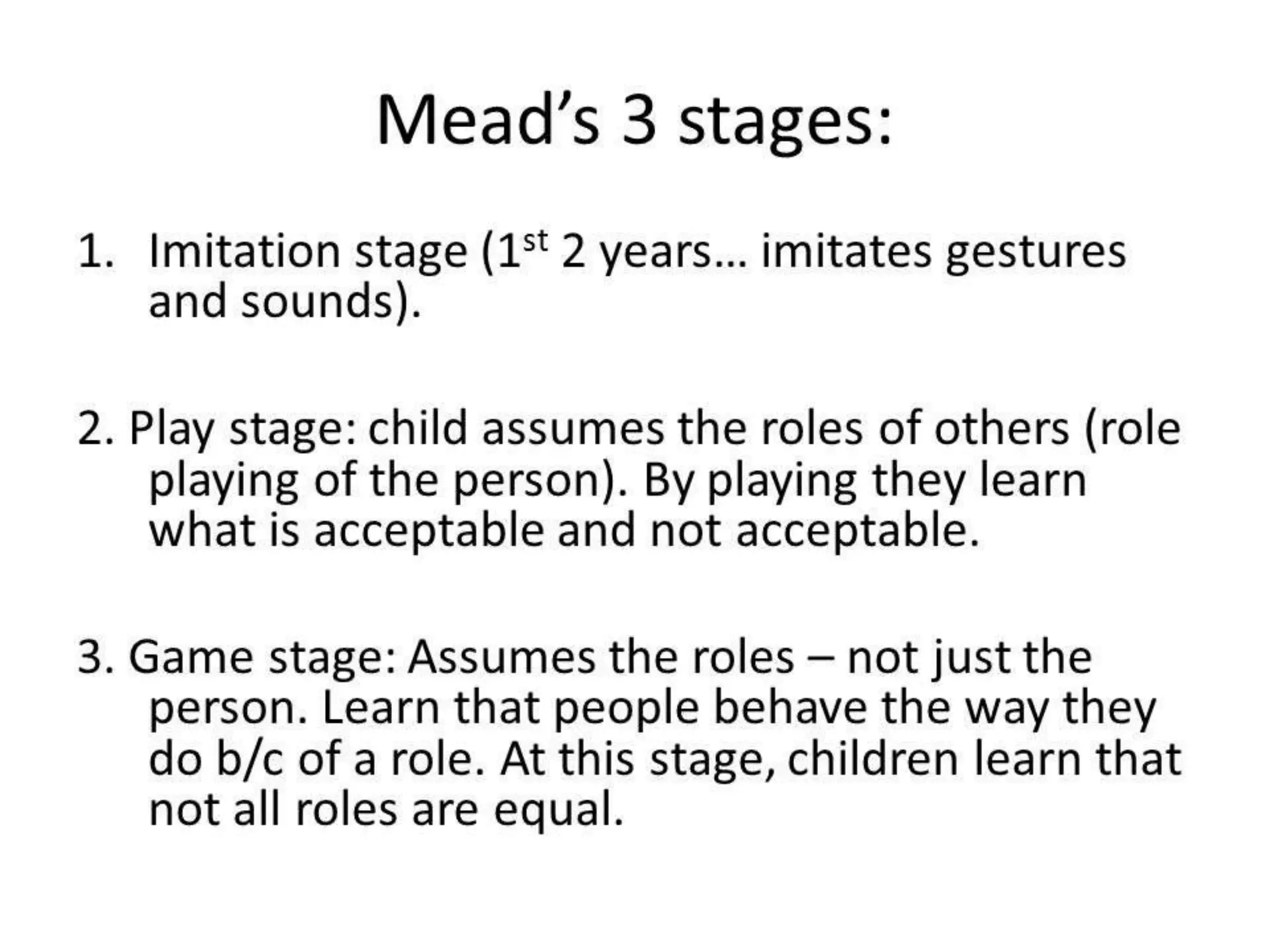
Imitation
Play
• The child takes different roles he/she
observes in “adult” society, and plays them
out to gain understanding of the different
social roles.
• The child learns to become both subject
and object and begins to become able to
build a self
Game
• The child must take the
role of everyone else
involved in the game.
• Organizations begins
and definite
personalities start to
emerge
“The Generalized Other”
• The individual understands what kind of
behavior is expected or appropriate in
different social settings
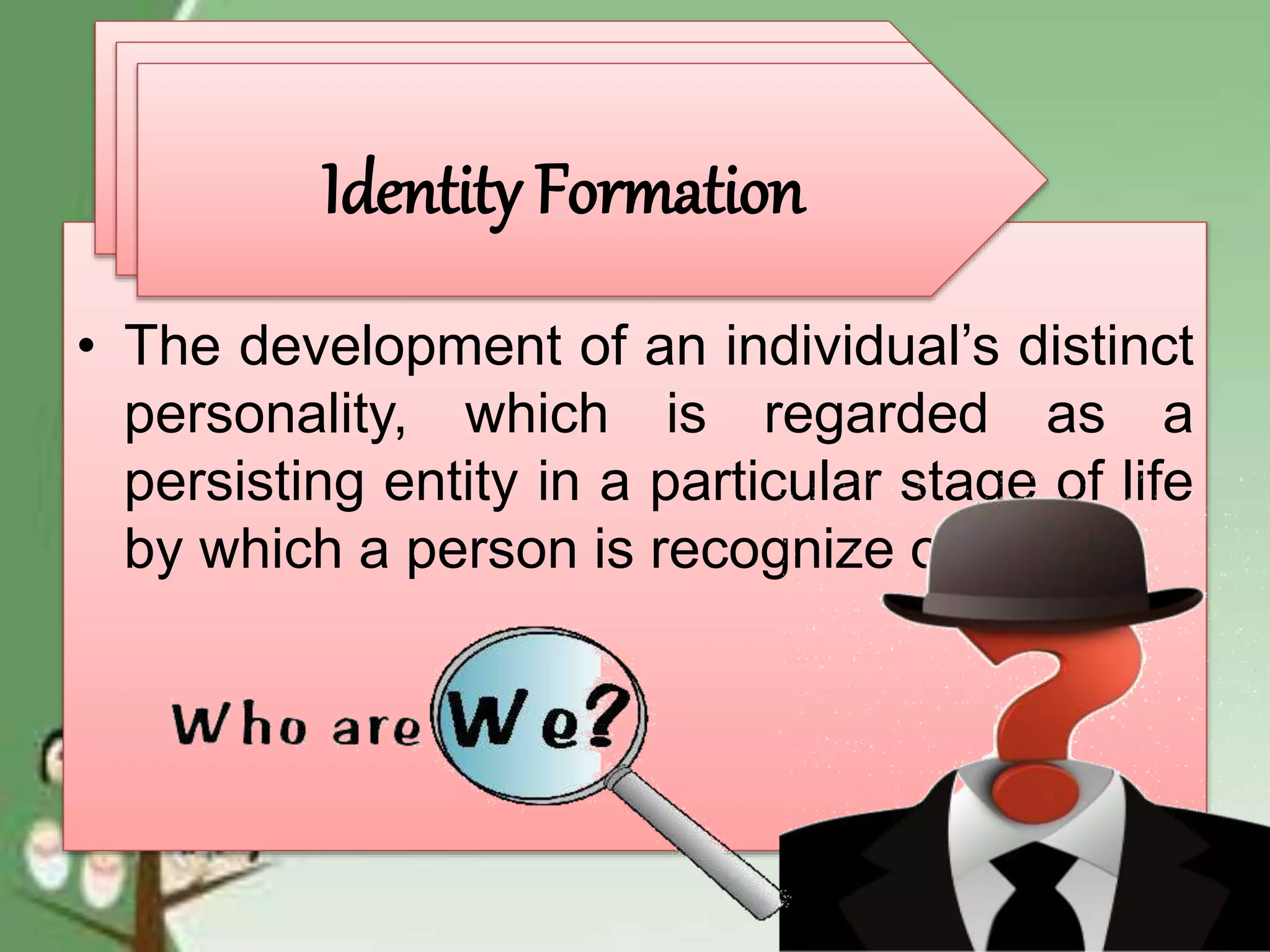
• The development of an individual’s distinct
personality, which is regarded as a
persisting entity in a particular stage of life
by which a person is recognize or known
Identity Formation
Identity Formation
Identity Formation
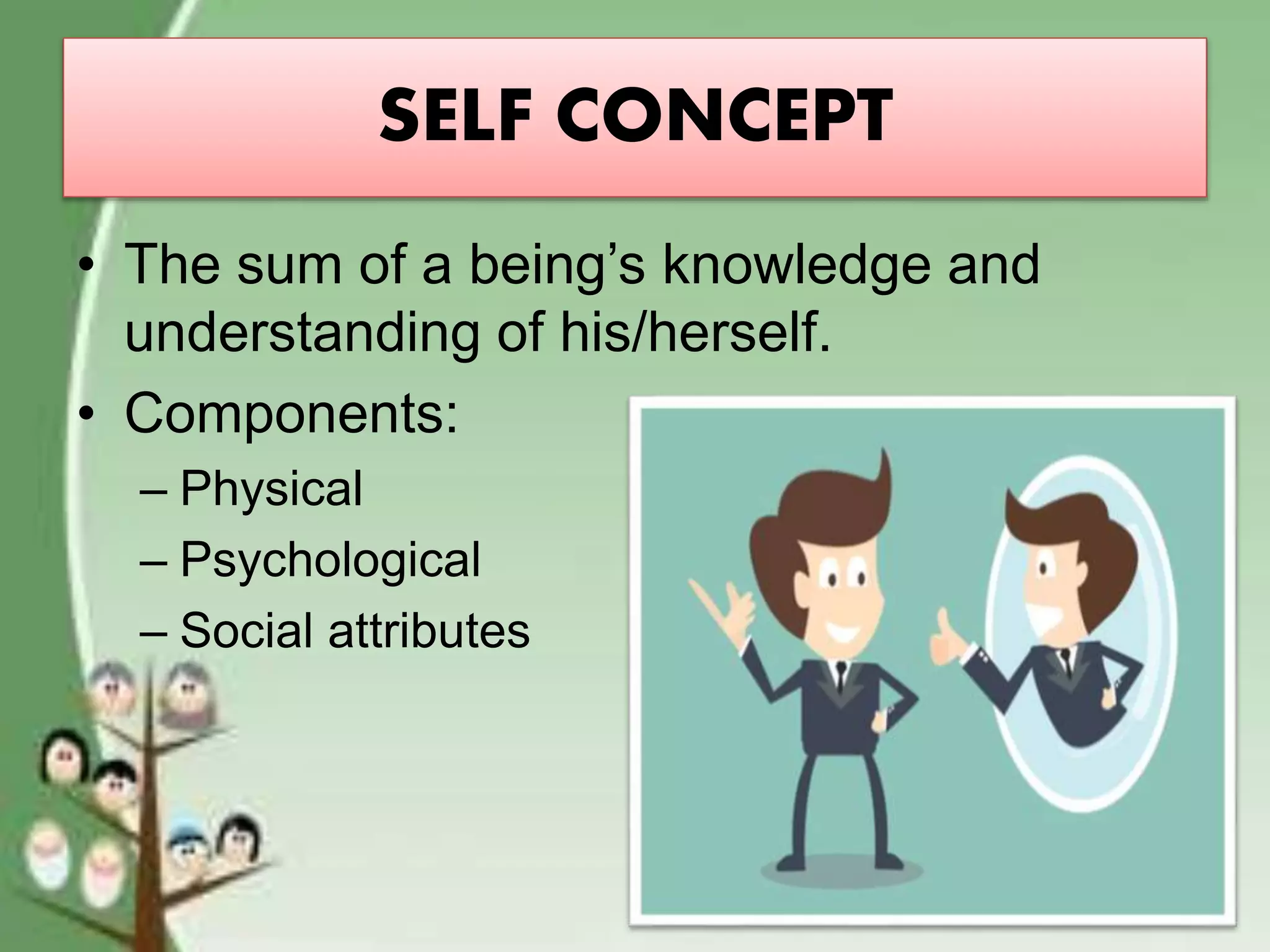
SELF CONCEPT
• The sum of a being’s knowledge and
understanding of his/herself.
• Components:
– Physical
– Psychological
– Social attributes
Cultural Identity
• Is one’s feeling of identity or affiliation
with a group or culture.
Ethnic Identity
• The Identification with a certain ethnicity,
usually on the basis of a presumed
common genealogy or ancestry
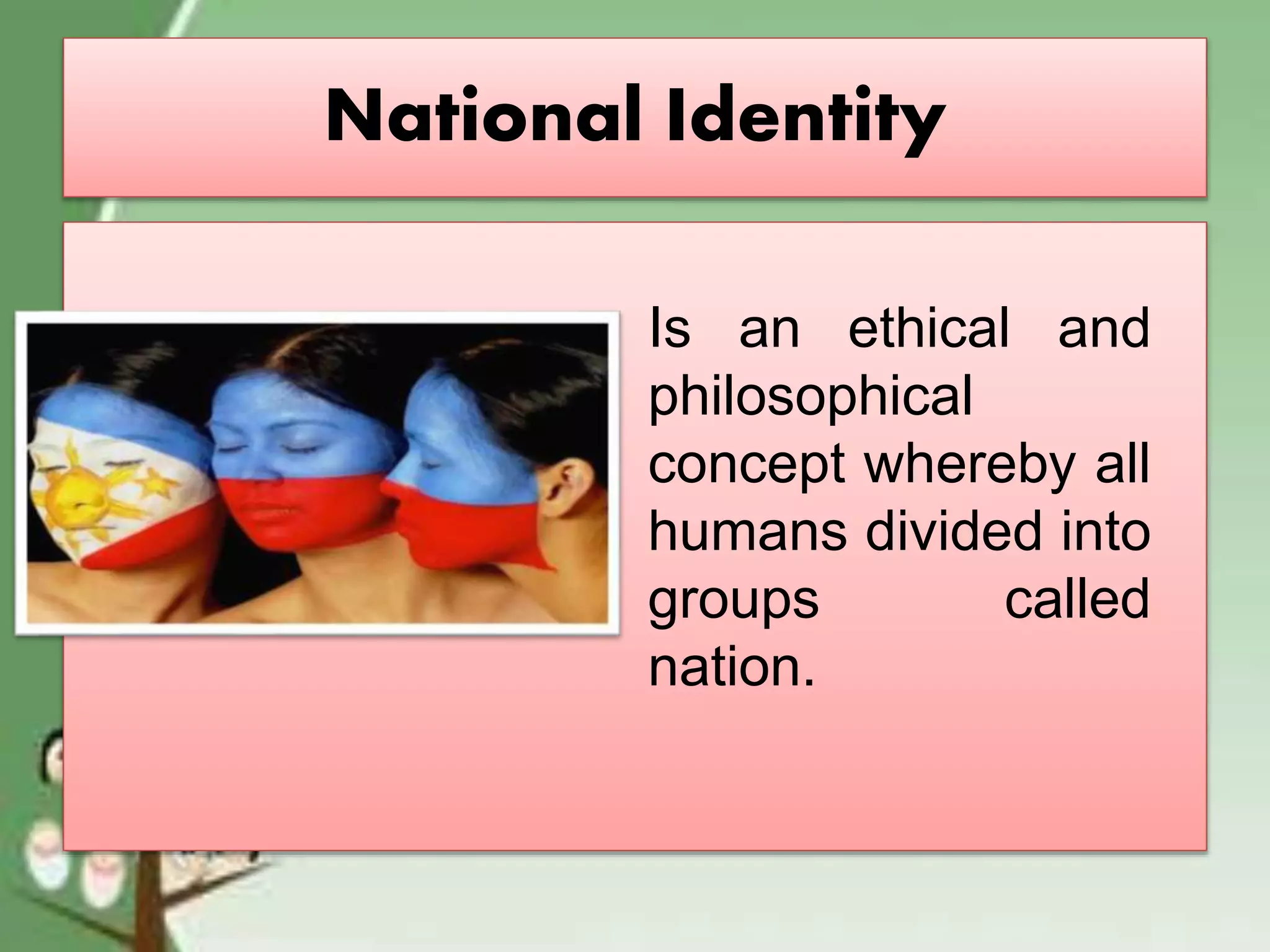
National Identity
Is an ethical and
philosophical
concept whereby all
humans divided into
groups called
nation.
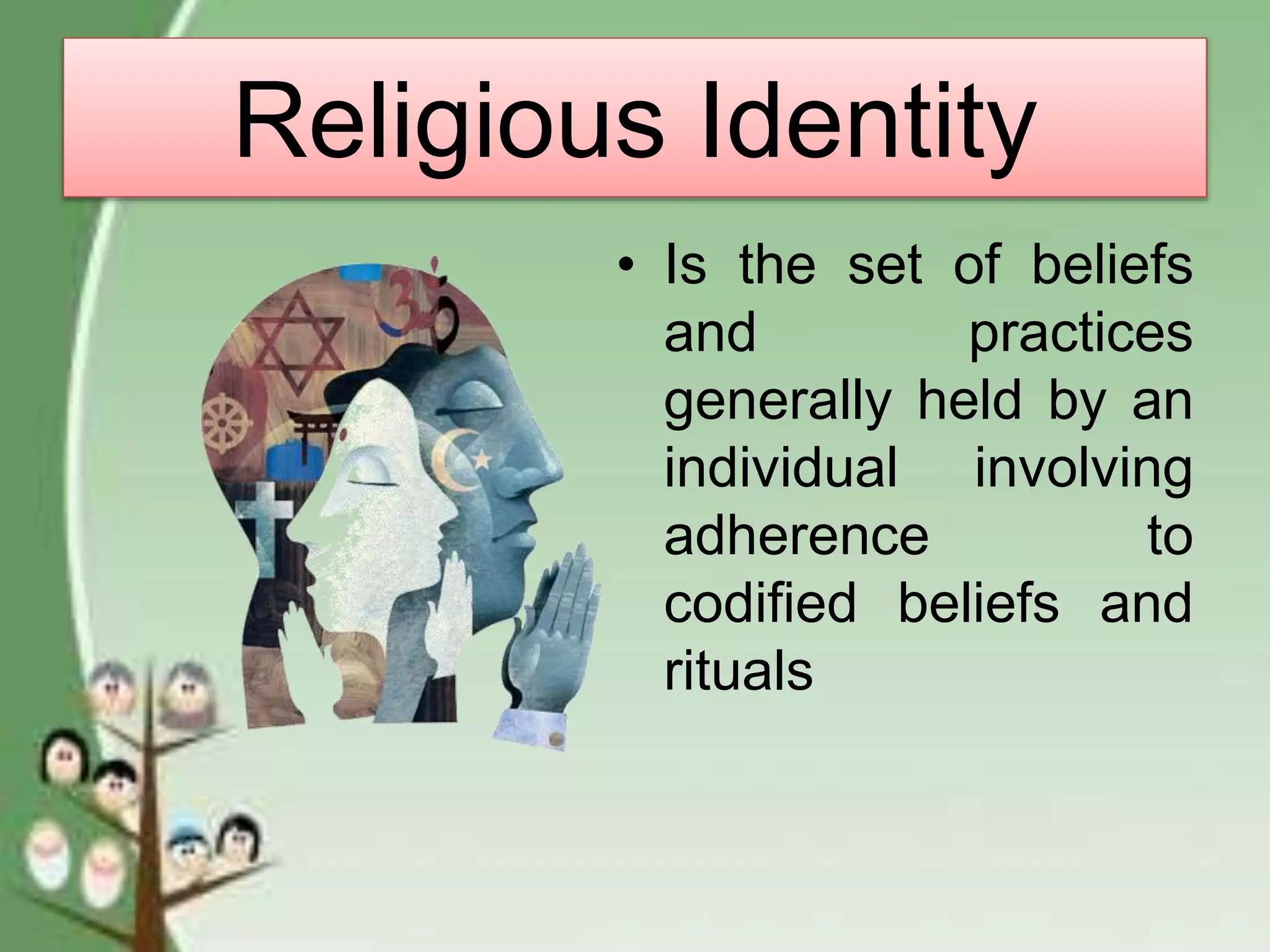
Religious Identity
• Is the set of beliefs
and practices
generally held by an
individual involving
adherence to
codified beliefs and
rituals
Norms and Values
Norms
• Is a rule that guides
the behavior of
members of a
society or group.
Things that exist in
society independent of
individuals and that
shape our thoughts
and behavior.
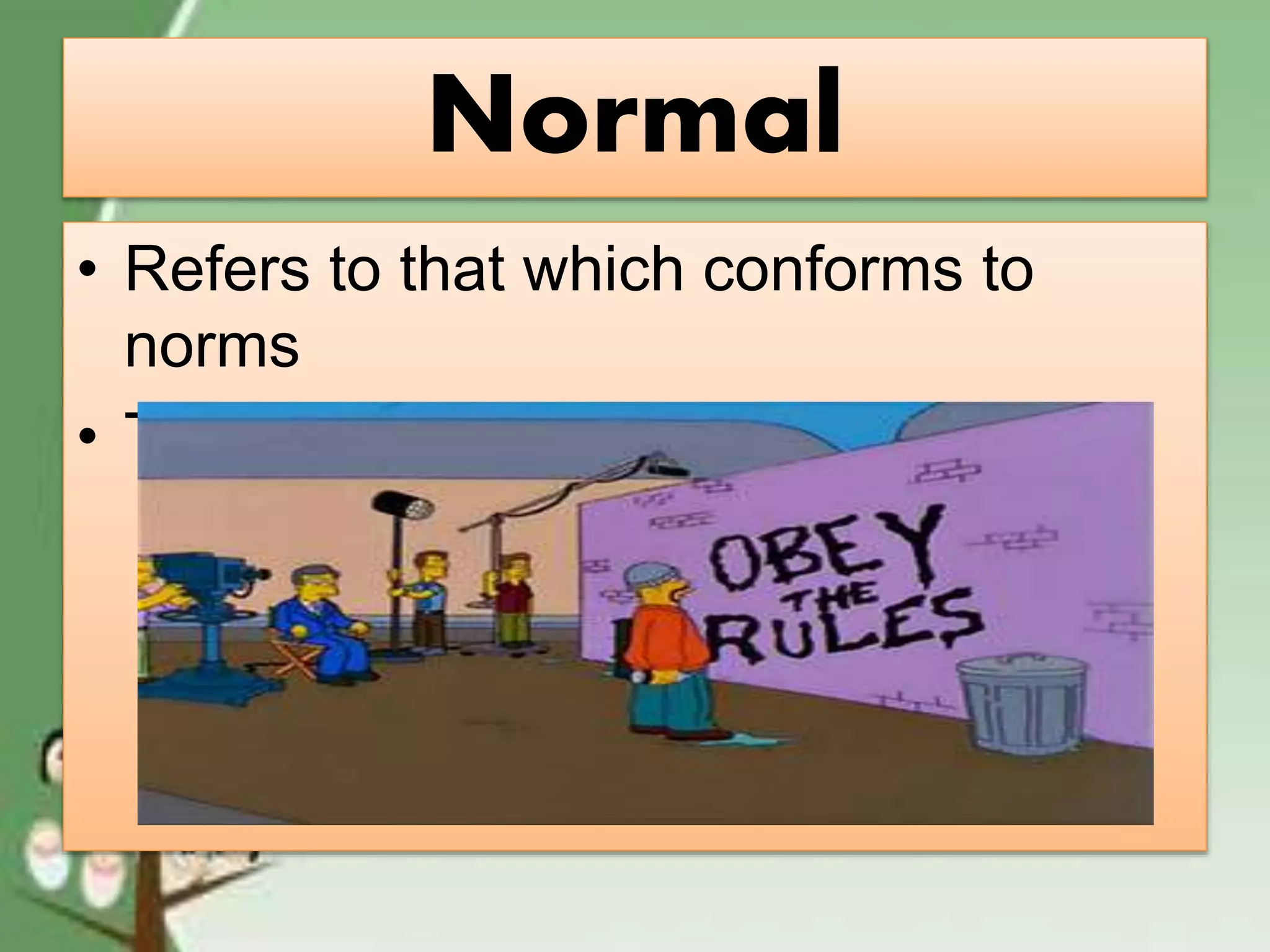
Normal
• Refers to that which conforms to
norms
• The act of abiding rules.
Normative
• Refers to what we perceive as normal, or
what we think should be normal,
regardless of whether it actually is
• Refers to beliefs that are expressed as
directives or value of judgement
• The process of socialization is
guided by norms and taught to
us by those around us.
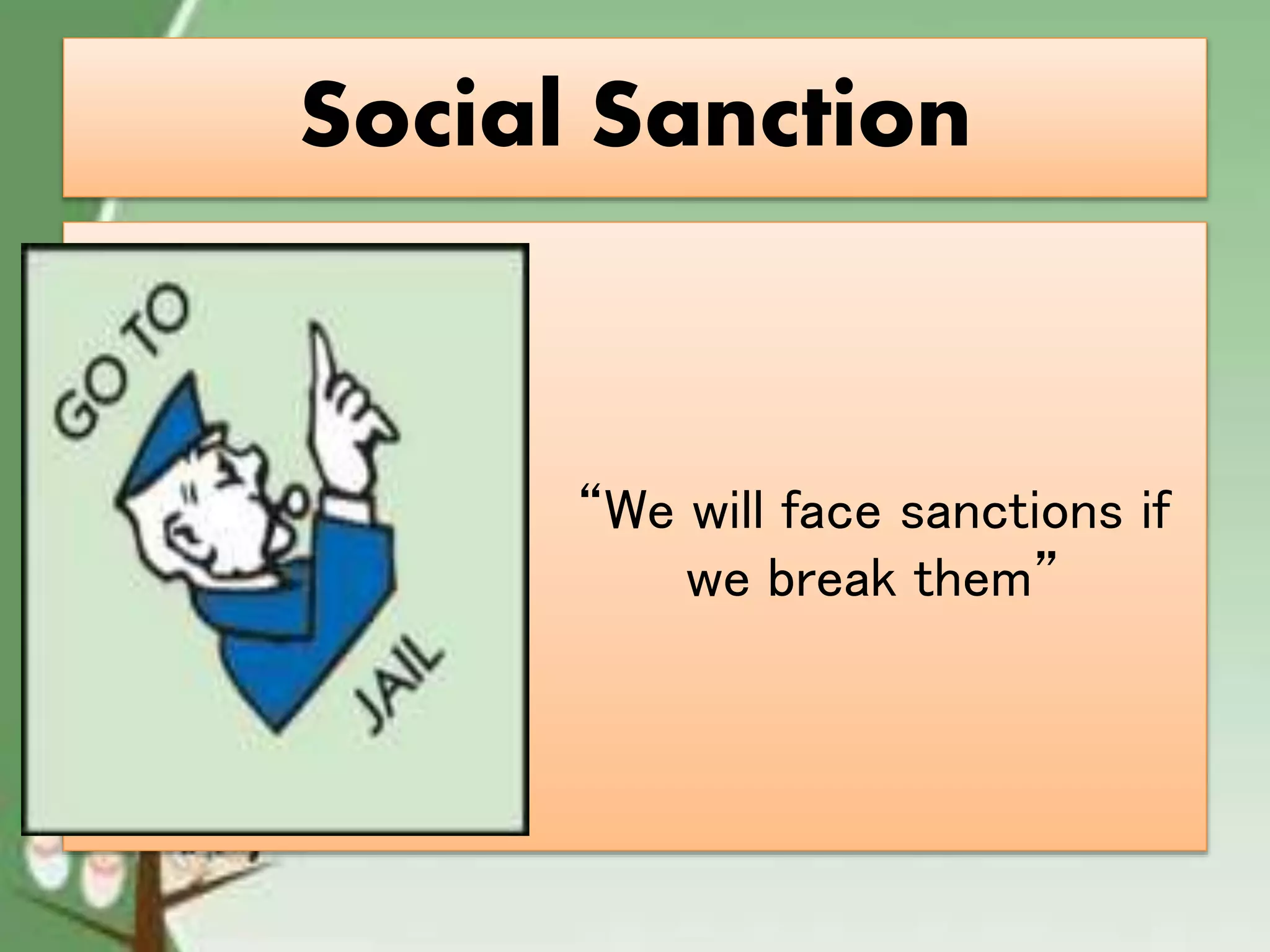
Social Sanction
“We will face sanctions if
we break them”
Proscriptive
Prescriptive
Values
• Culturally defined standards that people
use to decide what is desirable, good, and
beautiful, and that serve as broad
guidelines for social living.
Aspects of sociological concept of
value
• Values exist at different levels of generality of
abstraction
• Values tend to be hierarchically arranged
• Values are explicit and implicit in varying
degrees
• Values often are in conflict with one another
Filipino Values
Status and Roles
• Are important concepts in socialization
because the behavior of young members
of society are controlled by assigning them
certain status which they will enact.
• “we can deal with anyone, we need to
know who the person is”
Status
• Position in a social system
• Refers to a social position that a person
holds.
• Can be ascribed or achieved, given or
accomplished, respectively
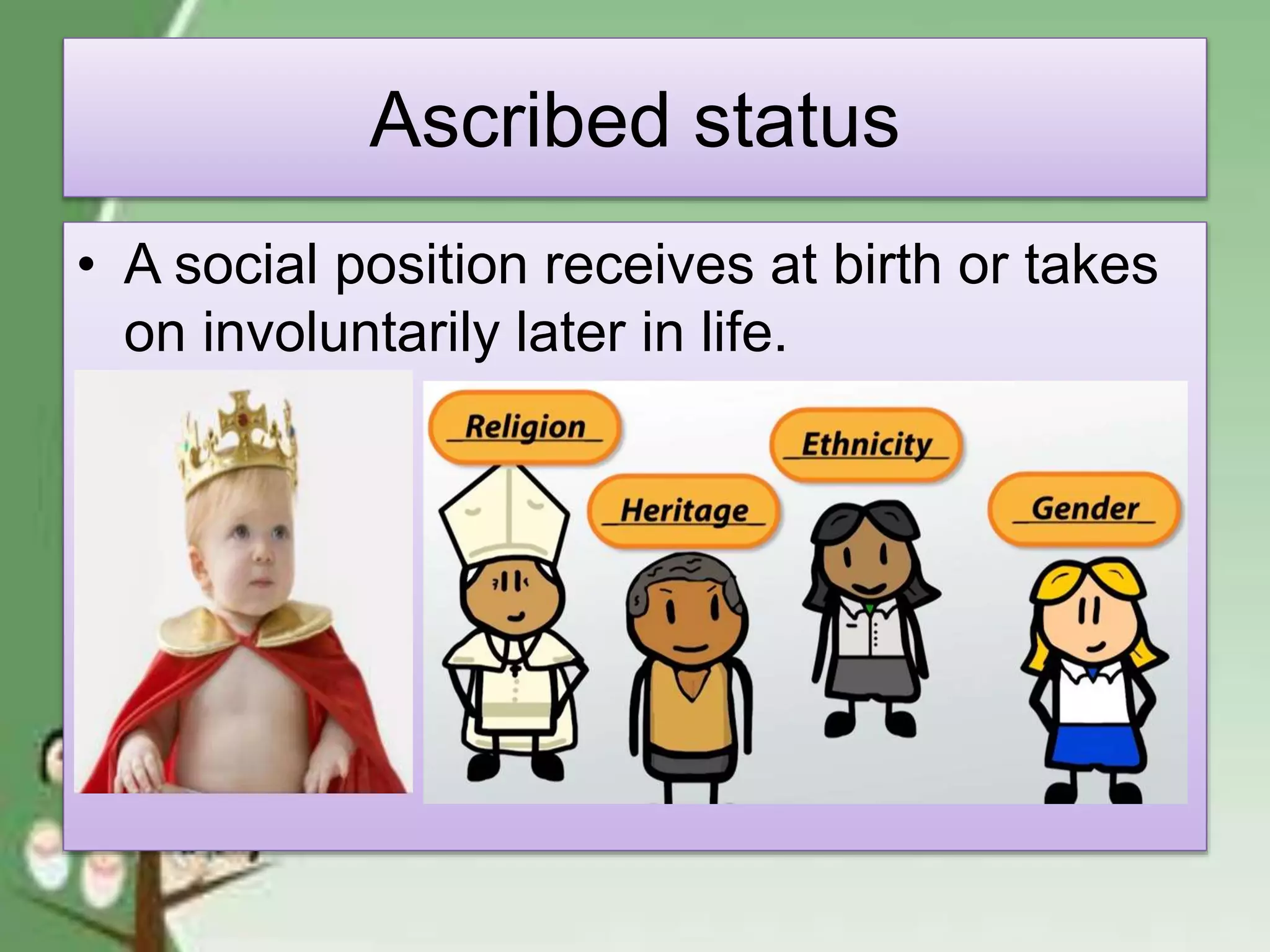
Ascribed status
• A social position receives at birth or takes
on involuntarily later in life.
Achieved Status
• Social
position a
person takes
on voluntarily
that reflects
personal
identity and
effort.
Role
• Refers to the behavior expected of
someone who holds a particular status
• A person who holds a status and perform
a role
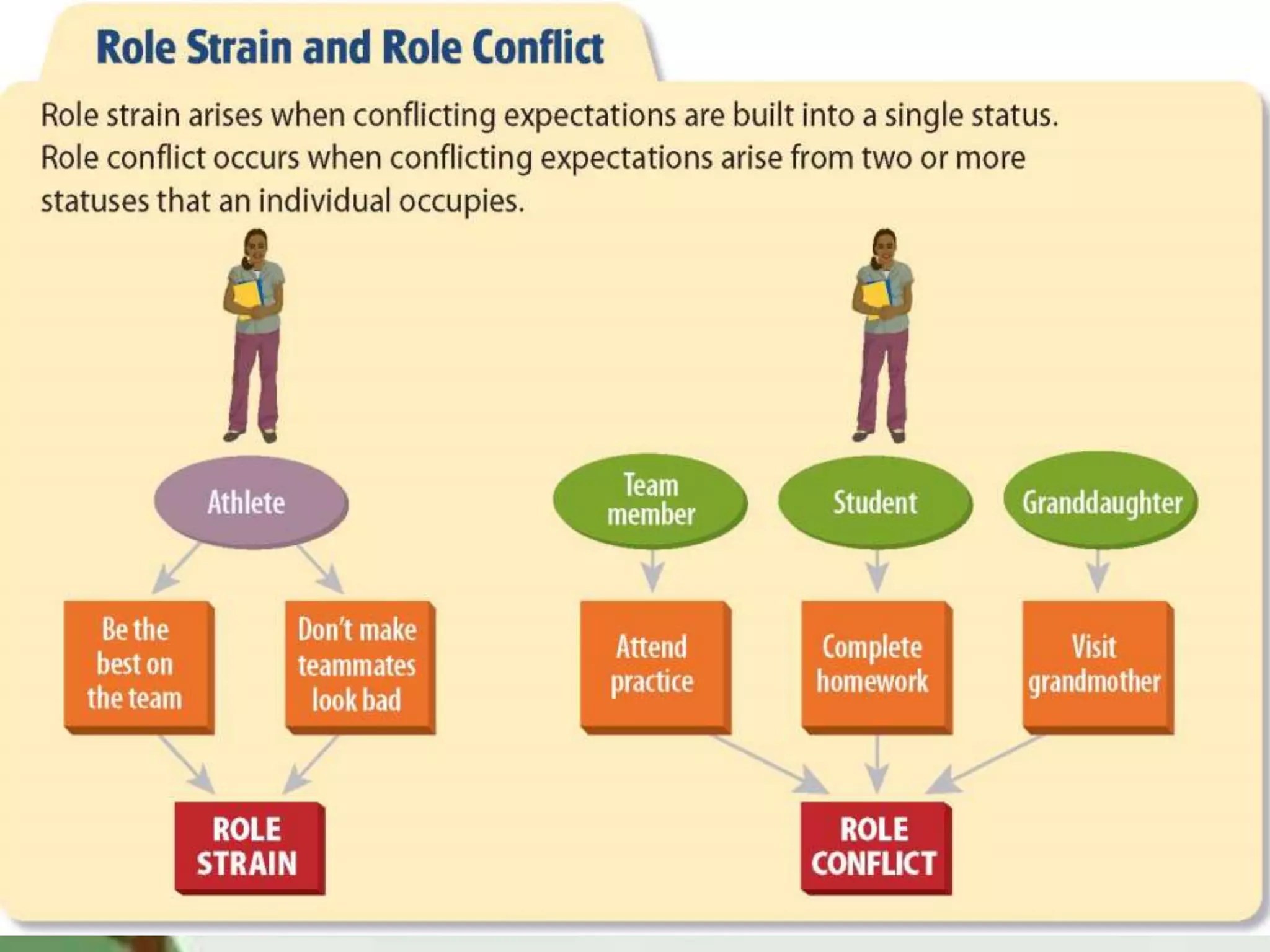
Role Strain
• Conflict among the roles connected to two
or more statuses.
• Results from the competing demands of
two or more roles that vie for our time and
energy.
z
Role, Impression Management, and
Identity Formation
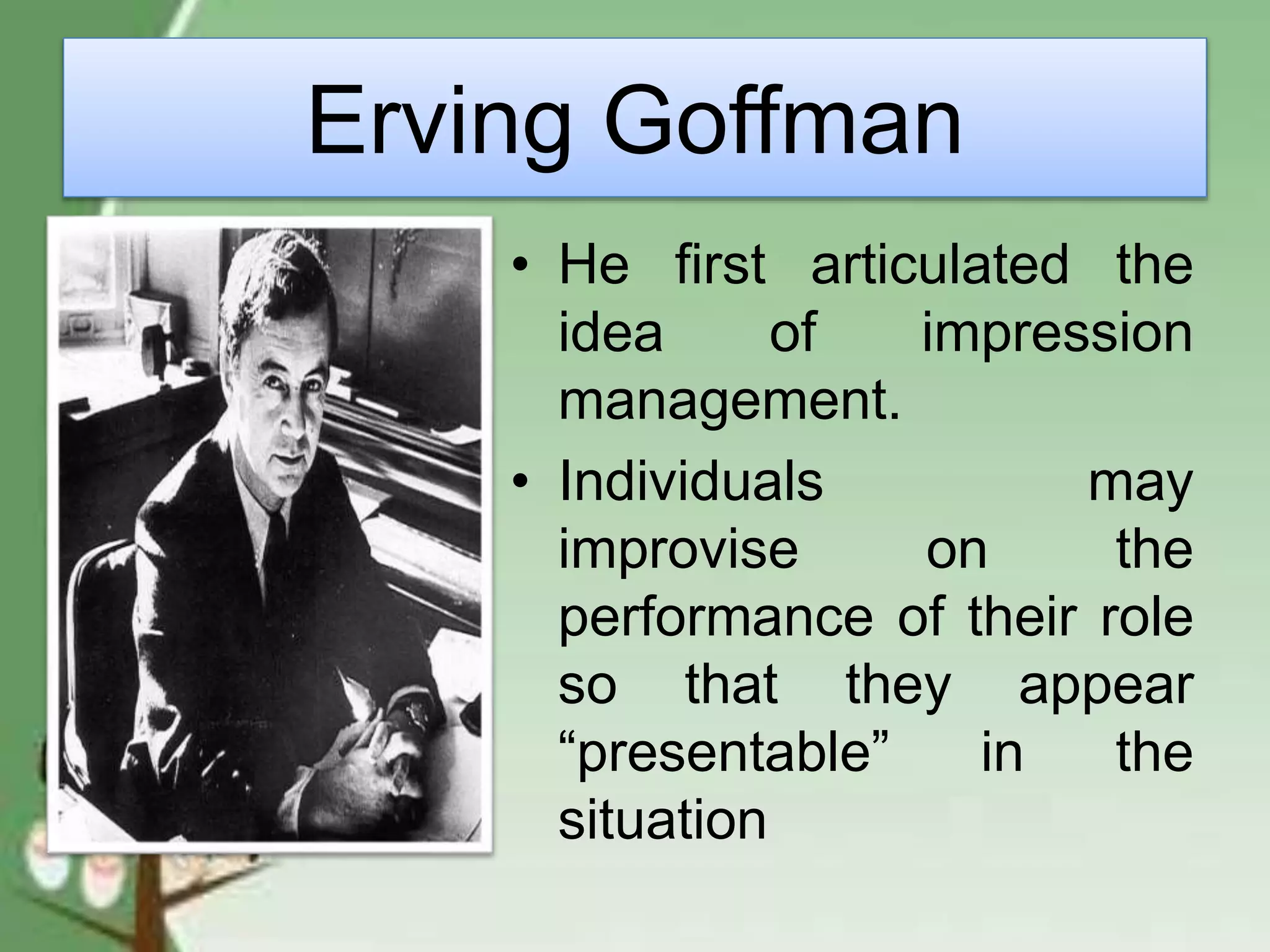
Erving Goffman
• He first articulated the
idea of impression
management.
• Individuals may
improvise on the
performance of their role
so that they appear
“presentable” in the
situation
Role Manipulation
• Through impression management has
bearing on the formation of a person’s
self-identity.
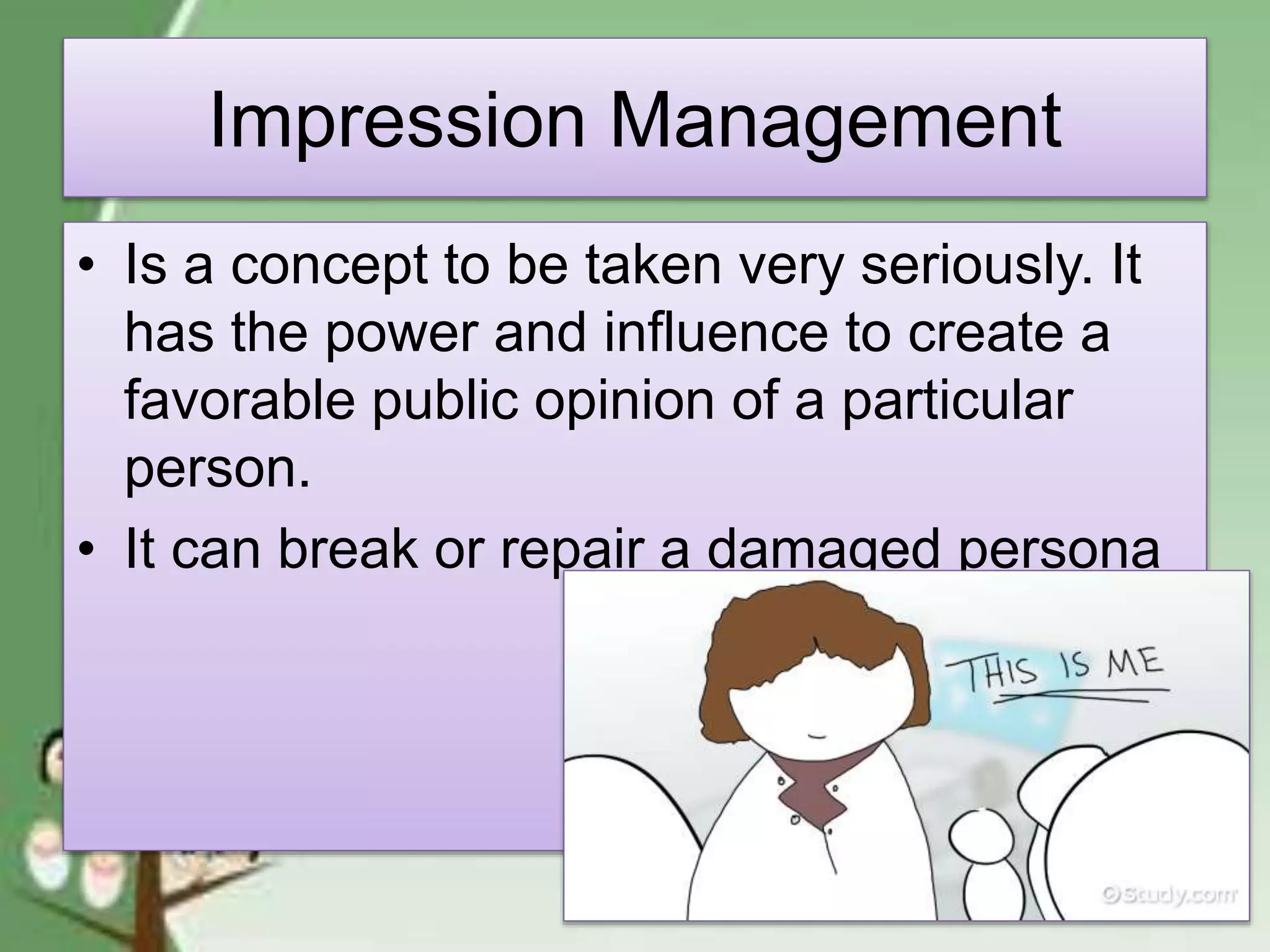
Impression Management
• Is a concept to be taken very seriously. It
has the power and influence to create a
favorable public opinion of a particular
person.
• It can break or repair a damaged persona
enculturationandsocialization-170808021339.pdf

enculturationandsocialization-170808021339.pdf

  • 1.
  • 2.
    • It refersto a lifelong social experience by which people develop their human potential and learn culture.
  • 3.
    Enculturation • The processby which people learn the requirements of their surrounding culture and acquire the values and behaviors appropriate or necessary in that culture
  • 4.
    Three Goals ofSocialization It teaches impulse control and help individuals develop a conscience.
  • 5.
    It teaches individualshow to prepare for and perform certain social roles
  • 6.
    It cultivates sharedsources of meaning and value
  • 7.
    Mead and theDevelopment of the Social Mind (SELF) The ‘self’ is a sociological concept.
  • 8.
  • 9.
    George Herbert Mead He isregarded as one of the founders of social psychology and of what has come to be referred to as the Chicago sociological tradition.
  • 10.
    This process ischaracterized by Mead as the "I" and the "me. " The "me" is the social self and the "I" is the response to the "me. " In other words, the "I" is the response of an individual to the attitudes of others, while the "me" is the organized set of attitudes of others which an individual assumes.
  • 12.
  • 13.
  • 14.
    Play • The childtakes different roles he/she observes in “adult” society, and plays them out to gain understanding of the different social roles. • The child learns to become both subject and object and begins to become able to build a self
  • 15.
    Game • The childmust take the role of everyone else involved in the game. • Organizations begins and definite personalities start to emerge
  • 16.
    “The Generalized Other” •The individual understands what kind of behavior is expected or appropriate in different social settings
  • 18.
    • The developmentof an individual’s distinct personality, which is regarded as a persisting entity in a particular stage of life by which a person is recognize or known Identity Formation Identity Formation Identity Formation
  • 19.
    SELF CONCEPT • Thesum of a being’s knowledge and understanding of his/herself. • Components: – Physical – Psychological – Social attributes
  • 20.
    Cultural Identity • Isone’s feeling of identity or affiliation with a group or culture.
  • 21.
    Ethnic Identity • TheIdentification with a certain ethnicity, usually on the basis of a presumed common genealogy or ancestry
  • 22.
    National Identity Is anethical and philosophical concept whereby all humans divided into groups called nation.
  • 23.
    Religious Identity • Isthe set of beliefs and practices generally held by an individual involving adherence to codified beliefs and rituals
  • 24.
  • 25.
    Norms • Is arule that guides the behavior of members of a society or group.
  • 26.
    Things that existin society independent of individuals and that shape our thoughts and behavior.
  • 27.
    Normal • Refers tothat which conforms to norms • The act of abiding rules.
  • 28.
    Normative • Refers towhat we perceive as normal, or what we think should be normal, regardless of whether it actually is • Refers to beliefs that are expressed as directives or value of judgement
  • 29.
    • The processof socialization is guided by norms and taught to us by those around us.
  • 30.
    Social Sanction “We willface sanctions if we break them”
  • 34.
  • 35.
    Values • Culturally definedstandards that people use to decide what is desirable, good, and beautiful, and that serve as broad guidelines for social living.
  • 36.
    Aspects of sociologicalconcept of value • Values exist at different levels of generality of abstraction • Values tend to be hierarchically arranged • Values are explicit and implicit in varying degrees • Values often are in conflict with one another
  • 37.
  • 38.
    Status and Roles •Are important concepts in socialization because the behavior of young members of society are controlled by assigning them certain status which they will enact. • “we can deal with anyone, we need to know who the person is”
  • 39.
    Status • Position ina social system • Refers to a social position that a person holds. • Can be ascribed or achieved, given or accomplished, respectively
  • 40.
    Ascribed status • Asocial position receives at birth or takes on involuntarily later in life.
  • 41.
    Achieved Status • Social positiona person takes on voluntarily that reflects personal identity and effort.
  • 42.
    Role • Refers tothe behavior expected of someone who holds a particular status • A person who holds a status and perform a role
  • 44.
    Role Strain • Conflictamong the roles connected to two or more statuses. • Results from the competing demands of two or more roles that vie for our time and energy.
  • 47.
  • 48.
    Role, Impression Management,and Identity Formation
  • 49.
    Erving Goffman • Hefirst articulated the idea of impression management. • Individuals may improvise on the performance of their role so that they appear “presentable” in the situation
  • 50.
    Role Manipulation • Throughimpression management has bearing on the formation of a person’s self-identity.
  • 51.
    Impression Management • Isa concept to be taken very seriously. It has the power and influence to create a favorable public opinion of a particular person. • It can break or repair a damaged persona