Research as a
Process
is a scientific process of collecting empirical data
that are intended for drawing a conclusion. It
consists of the following core steps:
Step 1
Defining a research
problem
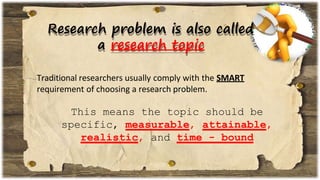
Research problem is also called
a research topic
Traditional researchers usually comply with the SMART
requirement of choosing a research problem.
This means the topic should be
specific, measurable, attainable,
realistic, and time - bound
Contemporary researchers added certain criteria for
defining a research problem.
It should posses newness or novelty
and international character
especially if the research outputs
are intended for presentation in
international conference
Step 2
Developing a research
plan
Doing a research is like building a house
Researchers have to lay out a
plan
Some essentials of research plan includes
specific research aim, background and
significance, related readings and research
design and methods
Step 3
Collecting research data
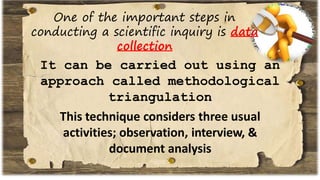
One of the important steps in
conducting a scientific inquiry is data
collection
It can be carried out using an
approach called methodological
triangulation
This technique considers three usual
activities; observation, interview, &
document analysis
Step 4
Analyzing research data
This step is carried out when all
necessary research data are intact
and ready for analysis
Here the researcher carefully
analyzes the textual data by
determining significant
statements from the texts
Step 5
Presenting the findings
Checking the accuracy and
completeness of the research data is
an essential task before writing and
revising the contents of the research
paper; otherwise, the presentation
of data would appear insufficient,
and yes, even questionable
Step 6
Disseminating and
utilizing the findings
Gone are the days when completed
researches are lodged on shelves
unread.
Modern – day research scientist
present their research findings
in research conferences; others
publish them in reputable
scientific journals
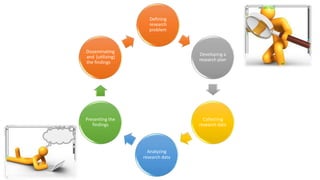
Defining
research
problem
Developing a
research plan
Collecting
research data
Analyzing
research data
Presenting the
findings
Disseminating
and (utilizing)
the findings
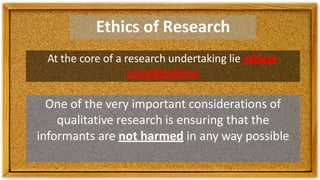
Ethics of Research
At the core of a research undertaking lie ethical
considerations
One of the very important considerations of
qualitative research is ensuring that the
informants are not harmed in any way possible
Ethics of Research
This is known as the ethics of non - maleficence
Researchers ought to be aware of the direct and
indirect consequences of the study particularly
on the participants
Ethics of Research
1. Scientific soundness
Once crucial consideration in conducting a
qualitative research is the extent of tangible
benefits that the investigation could produce.
Ethics of Research
Scientific soundness
The research objectives can be so hard to achieve
when the researcher does not possess sufficient
background and skills required
Ethics of Research
Scientific soundness
Hence, an inexperience person in research is
usually advised to seek clear guidance and
constant supervision from experts
Ethics of Research
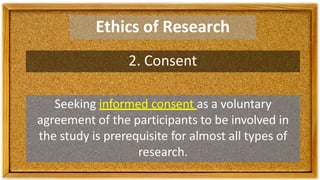
2. Consent
Seeking informed consent as a voluntary
agreement of the participants to be involved in
the study is prerequisite for almost all types of
research.
Ethics of Research
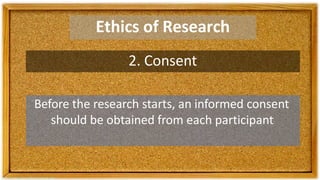
2. Consent
Before the research starts, an informed consent
should be obtained from each participant
Ethics of Research
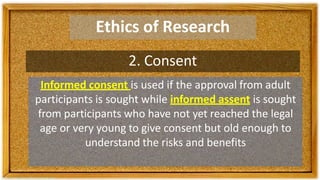
2. Consent
Informed consent is used if the approval from adult
participants is sought while informed assent is sought
from participants who have not yet reached the legal
age or very young to give consent but old enough to
understand the risks and benefits
Ethics of Research
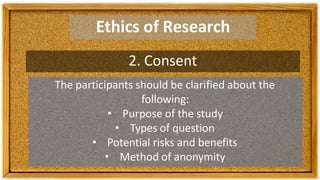
2. Consent
The participants should be clarified about the
following:
• Purpose of the study
• Types of question
• Potential risks and benefits
• Method of anonymity
Ethics of Research
3. Informant validation
A validation of qualitative data should be done with
the participants
Remember that it is so unethical to report a particular
statement which is not actually expressed by any of the
research informants
Ethics of Research
4. Confidentiality
Retaining anonymity than revealing full identification
of the participants should be dealt with utmost care
Ethics of Research
5. Exploitation
Being exploited in the conduct of a research is usually
attributed to the research participants
Ethics of Research
5. Exploitation
This happens when the researcher gets along with
them just to gain favor.
Though it is always understandable that the researcher should satisfy
his intellectual and emotional responsibility to the participants being
studied, others are tempted to abuse the basic rights of the
participants
Ethics of Research
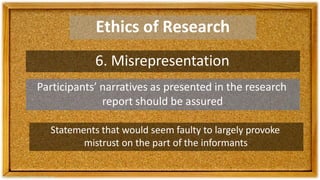
6. Misrepresentation
Participants’ narratives as presented in the research
report should be assured
Statements that would seem faulty to largely provoke
mistrust on the part of the informants
Ethics of Research
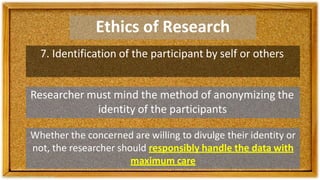
7. Identification of the participant by self or others
Researcher must mind the method of anonymizing the
identity of the participants
Whether the concerned are willing to divulge their identity or
not, the researcher should responsibly handle the data with
maximum care

Research as a Process and Research Ethics.pptx

  • 2.
  • 3.
    is a scientificprocess of collecting empirical data that are intended for drawing a conclusion. It consists of the following core steps:
  • 4.
    Step 1 Defining aresearch problem
  • 5.
    Research problem isalso called a research topic Traditional researchers usually comply with the SMART requirement of choosing a research problem. This means the topic should be specific, measurable, attainable, realistic, and time - bound
  • 6.
    Contemporary researchers addedcertain criteria for defining a research problem. It should posses newness or novelty and international character especially if the research outputs are intended for presentation in international conference
  • 7.
    Step 2 Developing aresearch plan
  • 8.
    Doing a researchis like building a house Researchers have to lay out a plan Some essentials of research plan includes specific research aim, background and significance, related readings and research design and methods
  • 9.
  • 10.
    One of theimportant steps in conducting a scientific inquiry is data collection It can be carried out using an approach called methodological triangulation This technique considers three usual activities; observation, interview, & document analysis
  • 11.
  • 12.
    This step iscarried out when all necessary research data are intact and ready for analysis Here the researcher carefully analyzes the textual data by determining significant statements from the texts
  • 13.
  • 14.
    Checking the accuracyand completeness of the research data is an essential task before writing and revising the contents of the research paper; otherwise, the presentation of data would appear insufficient, and yes, even questionable
  • 15.
  • 16.
    Gone are thedays when completed researches are lodged on shelves unread. Modern – day research scientist present their research findings in research conferences; others publish them in reputable scientific journals
  • 17.
    Defining research problem Developing a research plan Collecting researchdata Analyzing research data Presenting the findings Disseminating and (utilizing) the findings
  • 18.
    Ethics of Research Atthe core of a research undertaking lie ethical considerations One of the very important considerations of qualitative research is ensuring that the informants are not harmed in any way possible
  • 19.
    Ethics of Research Thisis known as the ethics of non - maleficence Researchers ought to be aware of the direct and indirect consequences of the study particularly on the participants
  • 20.
    Ethics of Research 1.Scientific soundness Once crucial consideration in conducting a qualitative research is the extent of tangible benefits that the investigation could produce.
  • 21.
    Ethics of Research Scientificsoundness The research objectives can be so hard to achieve when the researcher does not possess sufficient background and skills required
  • 22.
    Ethics of Research Scientificsoundness Hence, an inexperience person in research is usually advised to seek clear guidance and constant supervision from experts
  • 23.
    Ethics of Research 2.Consent Seeking informed consent as a voluntary agreement of the participants to be involved in the study is prerequisite for almost all types of research.
  • 24.
    Ethics of Research 2.Consent Before the research starts, an informed consent should be obtained from each participant
  • 25.
    Ethics of Research 2.Consent Informed consent is used if the approval from adult participants is sought while informed assent is sought from participants who have not yet reached the legal age or very young to give consent but old enough to understand the risks and benefits
  • 26.
    Ethics of Research 2.Consent The participants should be clarified about the following: • Purpose of the study • Types of question • Potential risks and benefits • Method of anonymity
  • 27.
    Ethics of Research 3.Informant validation A validation of qualitative data should be done with the participants Remember that it is so unethical to report a particular statement which is not actually expressed by any of the research informants
  • 28.
    Ethics of Research 4.Confidentiality Retaining anonymity than revealing full identification of the participants should be dealt with utmost care
  • 29.
    Ethics of Research 5.Exploitation Being exploited in the conduct of a research is usually attributed to the research participants
  • 30.
    Ethics of Research 5.Exploitation This happens when the researcher gets along with them just to gain favor. Though it is always understandable that the researcher should satisfy his intellectual and emotional responsibility to the participants being studied, others are tempted to abuse the basic rights of the participants
  • 31.
    Ethics of Research 6.Misrepresentation Participants’ narratives as presented in the research report should be assured Statements that would seem faulty to largely provoke mistrust on the part of the informants
  • 32.
    Ethics of Research 7.Identification of the participant by self or others Researcher must mind the method of anonymizing the identity of the participants Whether the concerned are willing to divulge their identity or not, the researcher should responsibly handle the data with maximum care