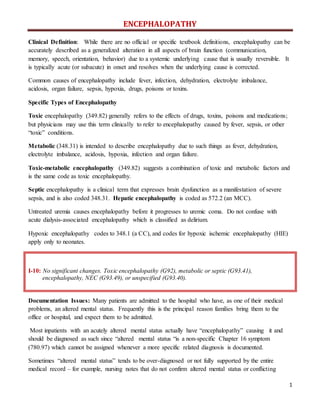
Encephalopathy is a generalized alteration in brain function caused by an underlying systemic condition that is usually reversible. It is acute or subacute in onset and resolves when the underlying cause is treated. Common causes include infection, organ failure, drugs/toxins. Specific types include toxic, metabolic, septic encephalopathies. Accurately diagnosing encephalopathy is important for documenting severity of illness and determining principal diagnosis. While altered mental status is non-specific, encephalopathy identifies toxic/metabolic brain dysfunction. Distinguishing encephalopathy from dementia or delirium relies on determining if mental status changes are due to acute/reversible toxic or metabolic factors.


![Principles of psychopharm[1]](https://cdn.slidesharecdn.com/ss_thumbnails/principlesofpsychopharm1-111129095442-phpapp02-thumbnail.jpg?width=640&height=640&fit=bounds)


