

ENABLING THE DEVOPS
CULTURE AT ORGANIZATION
M. Mizanur Rahman
1st – 3rd December, 2017 | Westin, Hyderabad, INDIA
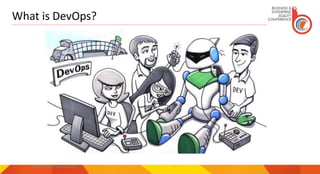
What is DevOps?
© AgiVetta Consulting 2016
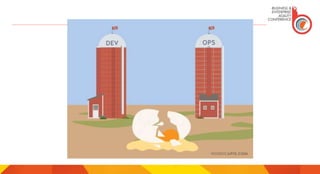
Remember this?
Dev-Ops
• all the people involved in developing the
product
• Product manager
• Developers
• QA engineer
• Software architects
• Analysts
• and other kinds of disciplines
• Dev - Developers • Ops – Operations (IT)
• Systems engineers
• system administrators
• operations staff
• release engineers
• DBAs
• network engineers
• security professionals
• and various other sub-disciplines
and job titles
The definition
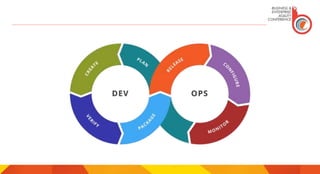
• DevOps is the combination of cultural philosophies,
practices, and tools that increases an organization’s ability
to deliver applications and services at high velocity:
evolving and improving products at a faster pace than
organizations using traditional software development and
infrastructure management processes.
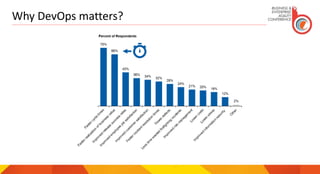
Why DevOps matters?
Top 5 reasons to adopt DevOps
• Improve deployment frequency
• Achieve faster time to market
• Lower failure rate of new releases
• Shorten lead time between fixes
• Improve mean time to recovery
Key DevOps Concepts
• Bridge the skills gap
• Share information
• Consistency
• Increased accountability
• Embrace failure
DevOps is not NoOps
• Some of us thinks that DevOps means that developers are taking over operations
and doing it themselves. So no need of Ops – NoOps
• Since we are more on cloud infrastructure, we do not need any in house IT
operations team or previously known as system guys ??!!!
• We have to remember that some parts of operations need to be automated, that
means that either we ops people do some automation development, or developers
are writing “operations” code, or both
DevOps is Not (Just) Tools
• It is not just implementing set of automation tools.
• Tools are required but they should not be called DevOps
• But it also does not mean that we do not need any tools for DevOps.
DevOps is Not (Just) Culture
• Culture can not be grown or changed overnight.
• The resistance is higher when we try to push something to existing culture
• It is more about the Mind Set
DevOps is Not (Just) Devs and Ops
• It is about everyone who is participating in the delivery of
the software or service
DevOps is Not (Just) A Job Title
• We just can not give anyone the title of DevOps just for no reason
• The skills and goal is important than having a nice job title.
• If we don’t adopt the values and principles of DevOps, which require change at an
overall system level not simply within a given team, we won’t get all the benefits.
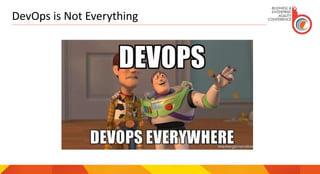
DevOps is Not Everything
DevOps vs Traditional approach
• Collaboration Oriented
• Structured and Substantially (or Wholly) Automated
• Self-Service Oriented
• Business Focused
• Designed for Change
• Silo Driven
• Snowflake Driven and Mostly
Manual
• “IT Ticket” Oriented
• Function Focused
• Change Averse
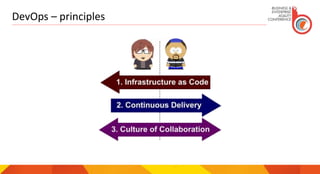
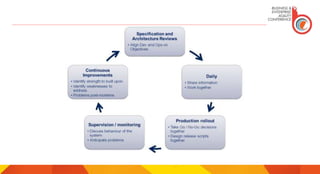
DevOps – principles
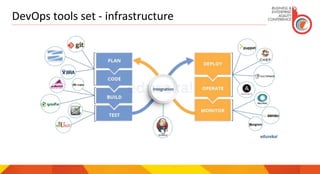
DevOps tools set - infrastructure
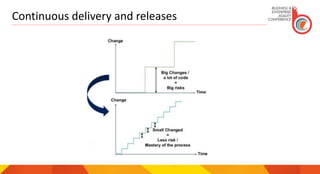
Continuous delivery and releases
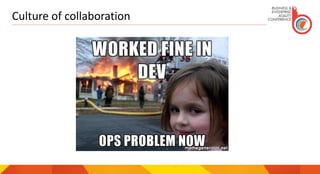
Culture of collaboration
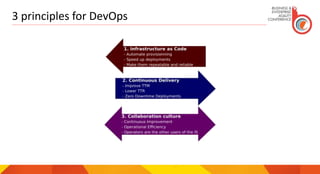
3 principles for DevOps
Four cornerstones of DevOps
• Agile
• Collaborate
• Standardize
• Automation
Is DevOps Agile?
• Individuals and interactions over processes and tools
• Working software over comprehensive documentation
• Customer collaboration over contract negotiation
• Responding to change over following a plan
Summary
• It’s about mindset
• It’s about customer
• It’s about flow
• It’s about collaboration
• It’s about taking pride of delivered services or works.
• It’s about being agile
Enabling DevOps at organizations
• Transformation
• Product over Process
• High-performance teams
• Futureproof
M. Mizanur Rahman
CSM, CSPO, CSD, CSP, REP, CAL 1, SA
+8801709651003
mizan@informatixbd.com
www.mizanurrahman.com
Thank You

Enabling The DevOps Culture At Organization

  • 1.
    ENABLING THE DEVOPS CULTUREAT ORGANIZATION M. Mizanur Rahman 1st – 3rd December, 2017 | Westin, Hyderabad, INDIA
  • 2.
    What is DevOps? ©AgiVetta Consulting 2016
  • 3.
  • 5.
    Dev-Ops • all thepeople involved in developing the product • Product manager • Developers • QA engineer • Software architects • Analysts • and other kinds of disciplines • Dev - Developers • Ops – Operations (IT) • Systems engineers • system administrators • operations staff • release engineers • DBAs • network engineers • security professionals • and various other sub-disciplines and job titles
  • 6.
    The definition • DevOpsis the combination of cultural philosophies, practices, and tools that increases an organization’s ability to deliver applications and services at high velocity: evolving and improving products at a faster pace than organizations using traditional software development and infrastructure management processes.
  • 8.
  • 9.
    Top 5 reasonsto adopt DevOps • Improve deployment frequency • Achieve faster time to market • Lower failure rate of new releases • Shorten lead time between fixes • Improve mean time to recovery
  • 10.
    Key DevOps Concepts •Bridge the skills gap • Share information • Consistency • Increased accountability • Embrace failure
  • 11.
    DevOps is notNoOps • Some of us thinks that DevOps means that developers are taking over operations and doing it themselves. So no need of Ops – NoOps • Since we are more on cloud infrastructure, we do not need any in house IT operations team or previously known as system guys ??!!! • We have to remember that some parts of operations need to be automated, that means that either we ops people do some automation development, or developers are writing “operations” code, or both
  • 12.
    DevOps is Not(Just) Tools • It is not just implementing set of automation tools. • Tools are required but they should not be called DevOps • But it also does not mean that we do not need any tools for DevOps.
  • 13.
    DevOps is Not(Just) Culture • Culture can not be grown or changed overnight. • The resistance is higher when we try to push something to existing culture • It is more about the Mind Set
  • 14.
    DevOps is Not(Just) Devs and Ops • It is about everyone who is participating in the delivery of the software or service
  • 15.
    DevOps is Not(Just) A Job Title • We just can not give anyone the title of DevOps just for no reason • The skills and goal is important than having a nice job title. • If we don’t adopt the values and principles of DevOps, which require change at an overall system level not simply within a given team, we won’t get all the benefits.
  • 16.
    DevOps is NotEverything
  • 17.
    DevOps vs Traditionalapproach • Collaboration Oriented • Structured and Substantially (or Wholly) Automated • Self-Service Oriented • Business Focused • Designed for Change • Silo Driven • Snowflake Driven and Mostly Manual • “IT Ticket” Oriented • Function Focused • Change Averse
  • 18.
  • 19.
    DevOps tools set- infrastructure
  • 20.
  • 21.
  • 23.
  • 24.
    Four cornerstones ofDevOps • Agile • Collaborate • Standardize • Automation
  • 25.
    Is DevOps Agile? •Individuals and interactions over processes and tools • Working software over comprehensive documentation • Customer collaboration over contract negotiation • Responding to change over following a plan
  • 26.
    Summary • It’s aboutmindset • It’s about customer • It’s about flow • It’s about collaboration • It’s about taking pride of delivered services or works. • It’s about being agile
  • 27.
    Enabling DevOps atorganizations • Transformation • Product over Process • High-performance teams • Futureproof
  • 28.
    M. Mizanur Rahman CSM,CSPO, CSD, CSP, REP, CAL 1, SA +8801709651003 mizan@informatixbd.com www.mizanurrahman.com Thank You

Editor's Notes

  • #9 Question: Which of these outcomes has DevOps created for your organization? Respondents: n=95 Gartner Research Circle members practicing DevOps [Source: Gartner; Five Questions I&O Leaders Should Ask Before Funding a DevOps Initiative; October 2016]