INCSOSE Russian Chapter Approach to Enabling System of Systems EngineeringAnatoly LevenchukINCOSE Russian chapter, presidentTechInvestLab.ru, president18th October 2010Special Session on System of Systems (SoS’10) at ICUMT2010
INCOSE Russian Chapter and SoSINCOSE Russian chapter meeting «System of Systems Paradigm» (11-Aug-10)Systems Engineering Challenges Workshop (RuSEC2010, 23-24-Sep-2010): 3 speakers mentioned SoS:Industrial parts catalog case, Smart Grid caseGeneral list of SE challengesPossible theme of RuSEC20112
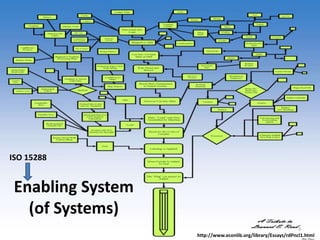
ISO 15288Enabling System (of Systems)http://www.econlib.org/library/Essays/rdPncl1.html3
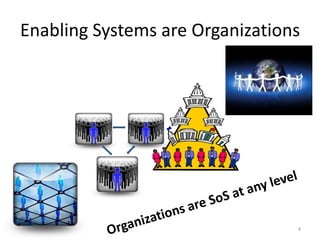
Enabling Systems are Organizations4Оrganizationsare SoS at any level
Sources of Ideas for Enabling SoS EngineeringFuture: SoS engineering will give ideas for otherdisciplines.5SoS engineering borrow from other disciplinesPolitics, economics, conflictology
Organizational studies
Software engineering (programming-in-the-large) with paraphrase to SoS slang («systems», «evolution»)Current state-of-the-art of traditional “idea donors” insufficient in dealing with SoS complexity
Enabling SoS Engineering of Enabling SoS Engineering = method engineeringEnabling SoS-1 (workers)  supports system-of-interestEnabling SoS-2 (organization managers) supports enabling system-1 ESoS-3 (organizational development consultants, methodologists)  supports ESoS-2 that supports ESoS-1Traditional systems engineeringTwo organizational modes (Habermas, MMC etc.):Actual work
Discourse (negotiations) and reorganization (evolution) – organizational engineeringWe are hereDiscourse and evolution methods engineering and invocation: engineering of organizational engineering6
One-method-not-fit-all: methods in enterprise, program, project managementHow to compare? How to integrate?7    * Activity-based costing    * Activity value analysis    * Adaptive enterprises    * Artificial intelligence    * Attention management    * Balanced scorecard    * Benchmarking    * Brainstorming    * Brand management    * Business modeling    * Cannibalization    * Centralization/decentralization    * Change management    * Chaos/complexity    * Competitive intelligence    * Complex adaptive systems    * Concurrent engineering    * Conglomeration    * Continuous improvement    * Co-opetition    * Core capabilities    * Core competence    * Corporate culture    * Cost-benefit analysis    * Creative destruction    * Crisis management    * Critical-path analysis    * Cross-selling    * Customer relationship management    * Customer satisfaction    * De-layering    * Decision trees    * Diversification    * Double-loop learning    * Downsizing    * e-Commerce    * e-Marketplaces    * Economic value analysis (EVA)    * Economies of scale/scope    * Electronic data interchange (EDI)    * Empowerment    * Enterprise systems    * Entrepreneurship    * Evolutionary modelling    * Excellence    * Experience curves    * Experience economy    * Five forces analysis    * Flat organizations    * Franchising    * Game theory    * Globalization    * Growth/share matrix    * Hawthorne effect    * Hierarchy of needs    * Horizontal organization    * Information ecology    * Information management    * Intellectual capitalism    * Intellectual property management    * Interorganizational systems    * Intrapreneurship    * Just-in-time delivery    * Keiretsu    * Knowledge management    * Lead user analysis    * Leadership    * Lean production    * Learning organizations    * Lifetime customer value    * Loyalty management    * Management by objectives    * Management by walking around    * Managerial grid    * Marketing myopia    * Mass customization    * Mass production    * Matrix management    * Mentoring    * Mission statements    * One-minute managing    * Open-book management    * Operations research    * Organizational ecology    * Outsourcing    * Paradigms    * Pay-for-performance    * Permission marketing    * Portfolio analysis    * Portfolio management    * Process improvement    * Product life cycles    * Profit pools    * Prototyping    * Quality circles    * Quality of work life    * Real options    * Reengineering    * Resource-based strategy    * Restructuring    * S-curves    * Satisficing    * Scenario planning    * Scientific management    * Scientific retailing    * Segmentation    * Services    * Seven S model    * Simulation    * Six Sigma    * Social capital    * Sociotechnical systems    * Spans of control    * Strategic alignment    * Strategic business units    * Strategic planning    * Strengths, weaknesses, opportunities, threats (SWOT) analysis    * Succession planning    * Supply chain management    * Synergy    * Systems dynamics    * T groups    * Teams    * Technology transfer    * Theories X and Y    * Theory Z    * Time-based competition    * Total quality management (TQM)    * Unbundling    * Value chain    * Value disciplines    * Value migration    * Value proposition    * Vertical/horizontal integration    * Virtual organizations    * Vision    * War for talent    * Wellness    * Yield management    * Zero-based budgeting 140 organisational fashions and fads, 2003.Thomas H.Davenport, Laurence Prusak, "What's the Big Idea?: Creating and Capitalizing in the Best Management Thinking"
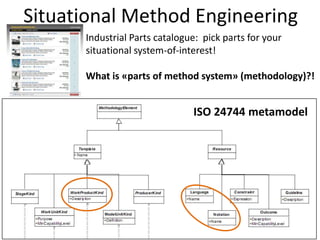
Situational Method Engineering8Industrial Parts catalogue:  pick parts for your situational system-of-interest!What is «parts of method system» (methodology)?!ISO 24744 metamodel
Model-based systems engineering9ISO 42010Provide systems visibility: address stakeholders concerns!Visibility to:Architecture
Organizations

INCOSE Russian Chapter Approach to Enabling System of Systems Engineering

  • 1.
    INCSOSE Russian ChapterApproach to Enabling System of Systems EngineeringAnatoly LevenchukINCOSE Russian chapter, presidentTechInvestLab.ru, president18th October 2010Special Session on System of Systems (SoS’10) at ICUMT2010
  • 2.
    INCOSE Russian Chapterand SoSINCOSE Russian chapter meeting «System of Systems Paradigm» (11-Aug-10)Systems Engineering Challenges Workshop (RuSEC2010, 23-24-Sep-2010): 3 speakers mentioned SoS:Industrial parts catalog case, Smart Grid caseGeneral list of SE challengesPossible theme of RuSEC20112
  • 3.
    ISO 15288Enabling System(of Systems)http://www.econlib.org/library/Essays/rdPncl1.html3
  • 4.
    Enabling Systems areOrganizations4Оrganizationsare SoS at any level
  • 5.
    Sources of Ideasfor Enabling SoS EngineeringFuture: SoS engineering will give ideas for otherdisciplines.5SoS engineering borrow from other disciplinesPolitics, economics, conflictology
  • 6.
  • 7.
    Software engineering (programming-in-the-large)with paraphrase to SoS slang («systems», «evolution»)Current state-of-the-art of traditional “idea donors” insufficient in dealing with SoS complexity
  • 8.
    Enabling SoS Engineeringof Enabling SoS Engineering = method engineeringEnabling SoS-1 (workers) supports system-of-interestEnabling SoS-2 (organization managers) supports enabling system-1 ESoS-3 (organizational development consultants, methodologists) supports ESoS-2 that supports ESoS-1Traditional systems engineeringTwo organizational modes (Habermas, MMC etc.):Actual work
  • 9.
    Discourse (negotiations) andreorganization (evolution) – organizational engineeringWe are hereDiscourse and evolution methods engineering and invocation: engineering of organizational engineering6
  • 10.
    One-method-not-fit-all: methods inenterprise, program, project managementHow to compare? How to integrate?7 * Activity-based costing * Activity value analysis * Adaptive enterprises * Artificial intelligence * Attention management * Balanced scorecard * Benchmarking * Brainstorming * Brand management * Business modeling * Cannibalization * Centralization/decentralization * Change management * Chaos/complexity * Competitive intelligence * Complex adaptive systems * Concurrent engineering * Conglomeration * Continuous improvement * Co-opetition * Core capabilities * Core competence * Corporate culture * Cost-benefit analysis * Creative destruction * Crisis management * Critical-path analysis * Cross-selling * Customer relationship management * Customer satisfaction * De-layering * Decision trees * Diversification * Double-loop learning * Downsizing * e-Commerce * e-Marketplaces * Economic value analysis (EVA) * Economies of scale/scope * Electronic data interchange (EDI) * Empowerment * Enterprise systems * Entrepreneurship * Evolutionary modelling * Excellence * Experience curves * Experience economy * Five forces analysis * Flat organizations * Franchising * Game theory * Globalization * Growth/share matrix * Hawthorne effect * Hierarchy of needs * Horizontal organization * Information ecology * Information management * Intellectual capitalism * Intellectual property management * Interorganizational systems * Intrapreneurship * Just-in-time delivery * Keiretsu * Knowledge management * Lead user analysis * Leadership * Lean production * Learning organizations * Lifetime customer value * Loyalty management * Management by objectives * Management by walking around * Managerial grid * Marketing myopia * Mass customization * Mass production * Matrix management * Mentoring * Mission statements * One-minute managing * Open-book management * Operations research * Organizational ecology * Outsourcing * Paradigms * Pay-for-performance * Permission marketing * Portfolio analysis * Portfolio management * Process improvement * Product life cycles * Profit pools * Prototyping * Quality circles * Quality of work life * Real options * Reengineering * Resource-based strategy * Restructuring * S-curves * Satisficing * Scenario planning * Scientific management * Scientific retailing * Segmentation * Services * Seven S model * Simulation * Six Sigma * Social capital * Sociotechnical systems * Spans of control * Strategic alignment * Strategic business units * Strategic planning * Strengths, weaknesses, opportunities, threats (SWOT) analysis * Succession planning * Supply chain management * Synergy * Systems dynamics * T groups * Teams * Technology transfer * Theories X and Y * Theory Z * Time-based competition * Total quality management (TQM) * Unbundling * Value chain * Value disciplines * Value migration * Value proposition * Vertical/horizontal integration * Virtual organizations * Vision * War for talent * Wellness * Yield management * Zero-based budgeting 140 organisational fashions and fads, 2003.Thomas H.Davenport, Laurence Prusak, "What's the Big Idea?: Creating and Capitalizing in the Best Management Thinking"
  • 11.
    Situational Method Engineering8IndustrialParts catalogue: pick parts for your situational system-of-interest!What is «parts of method system» (methodology)?!ISO 24744 metamodel
  • 12.
    Model-based systems engineering9ISO42010Provide systems visibility: address stakeholders concerns!Visibility to:Architecture
  • 13.