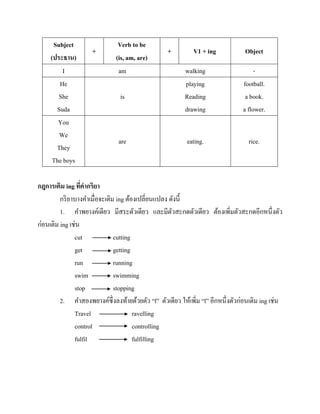
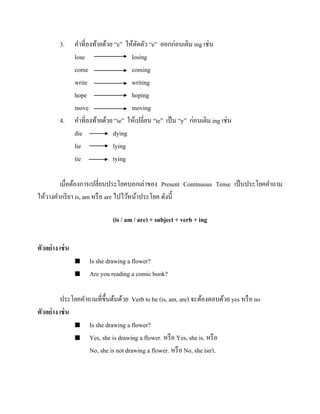
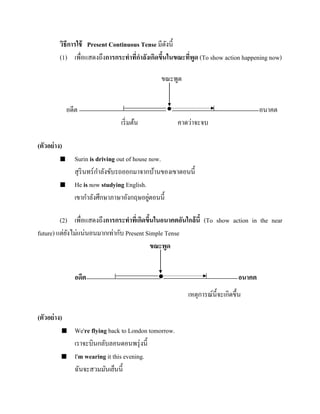
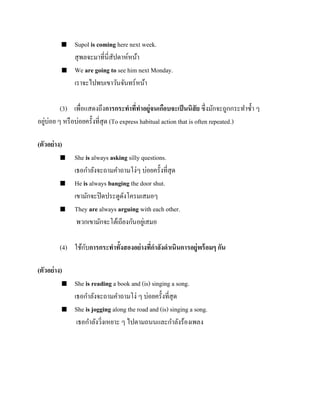
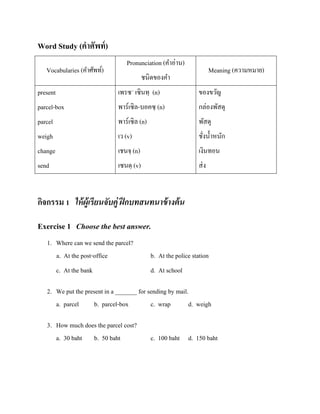
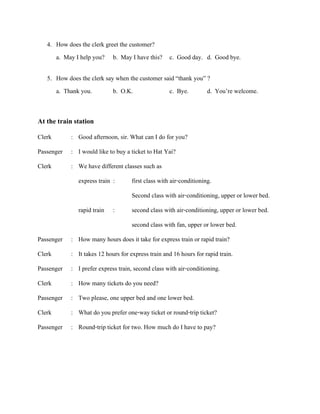
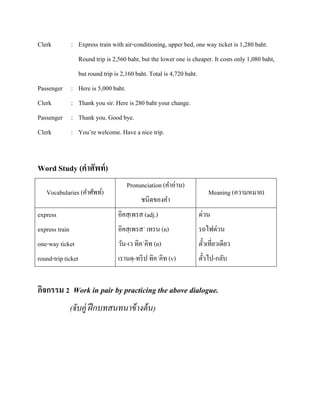
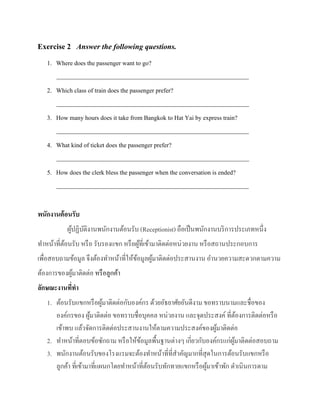
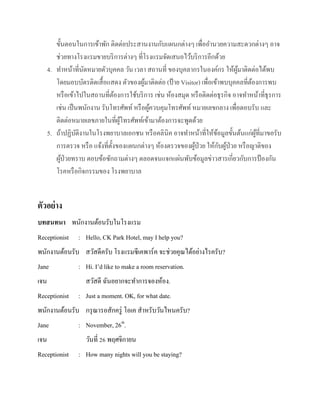
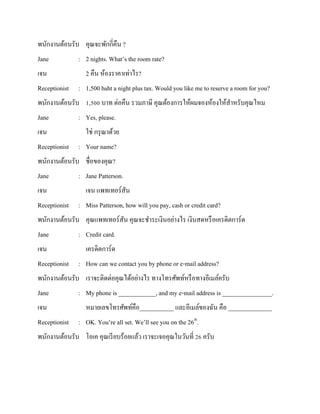
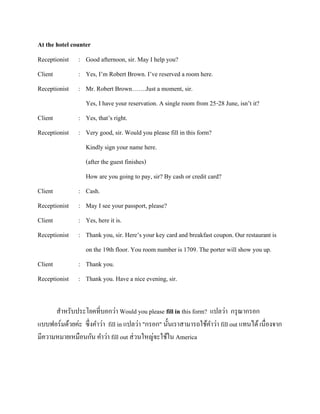
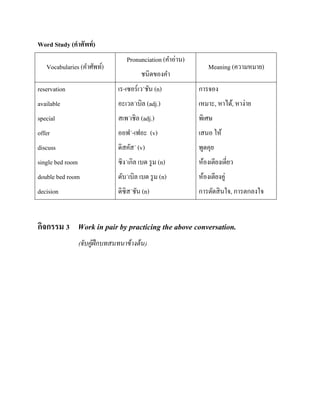
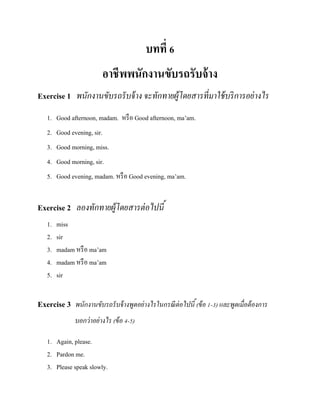
เรื่องที่ 1 การทักทายและการกล่าวลา
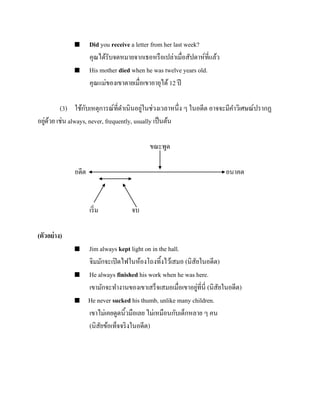
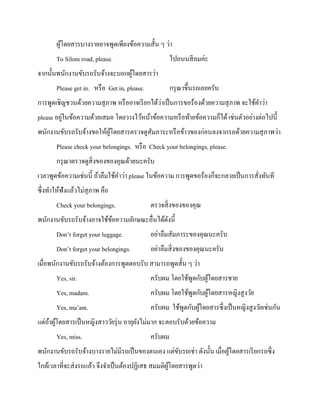
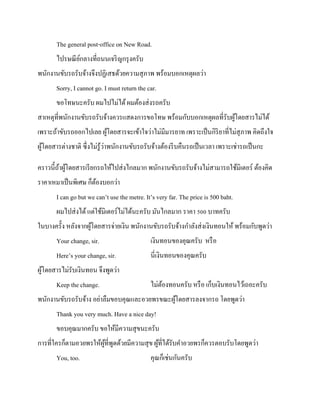
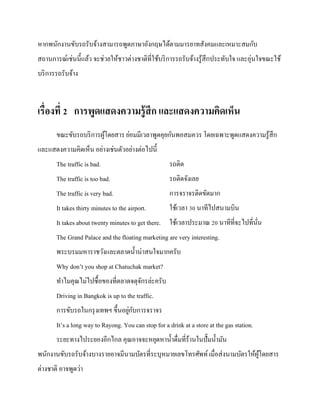
(Greetingand LeaveTaking)
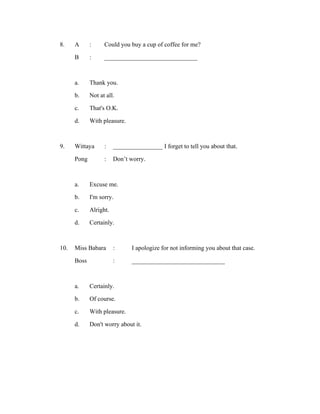
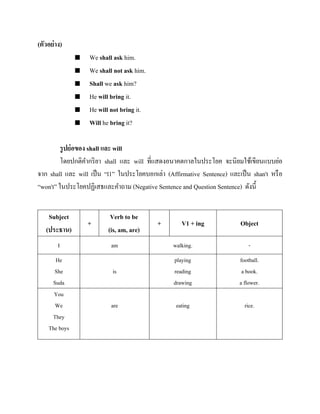
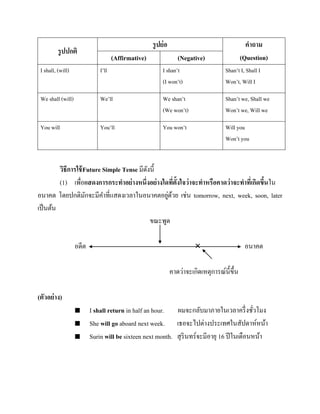
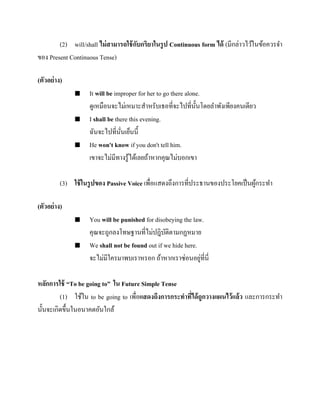
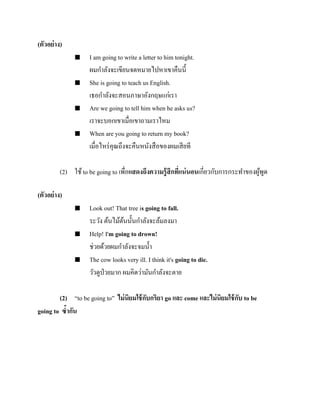
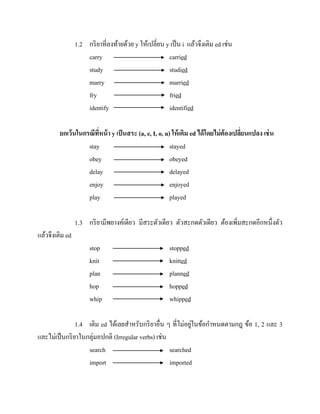
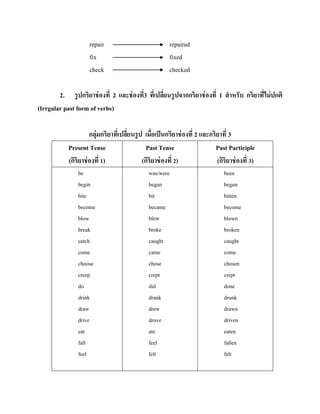
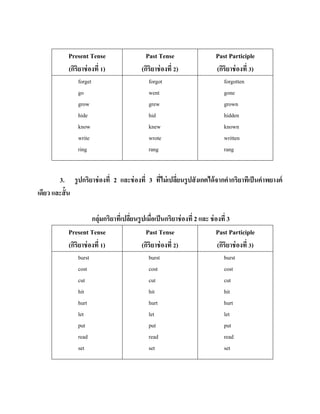
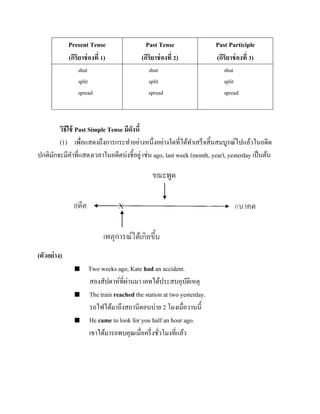
ตามปกติในชีวตประจาวัน เมื่อเราพบผูคนในที่ต่าง ๆ เราจะต้องมีการทักทายและกล่าวลากัน
ิ
้
ให้เหมาะสมตามโอกาส ในภาษาอังกฤษมีวธีการทักทาย (Greeting) และกล่าวลา (Leave taking)
ิ
กันอย่างไรบ้าง
1. การทักทาย (Greeting) ถ้าเป็ นคนที่คุนเคยและสนิทสนมกัน มักจะใช้คาว่า Hello
้
่
หรื อ Hi ซึ่งแปลว่าสวัสดี แต่การทักทายอย่างเป็ นทางการสาหรับผูไม่คุนเคยกัน หรื ออยูในสถานภาพ
้ ้
ั
ที่แตกต่างกัน เช่น เจ้านายกับลูกน้อง ครู กบลูกศิษย์ จะใช้คาว่า Good morning. (สวัสดีตอนเช้า)
Good afternoon. (สวัสดีตอน กลางวัน) และ Good evening. (สวัสดีตอนเย็น) ต่อด้วยคาทักทายว่า
How are you? (คุณสบายดีหรื อ) ซึ่งคู่สนทนาก็จะตอบและถามกลับในทานองเดียวกัน
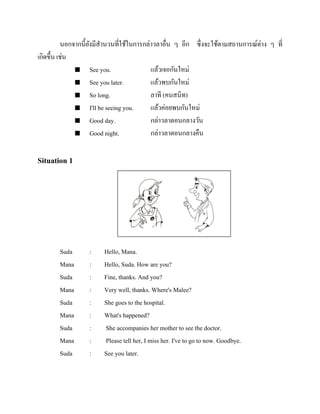
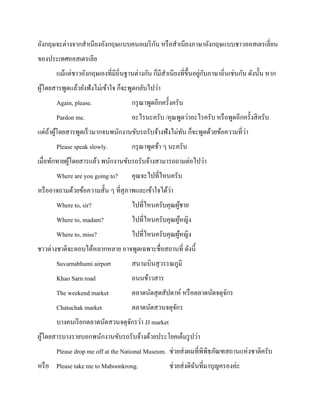
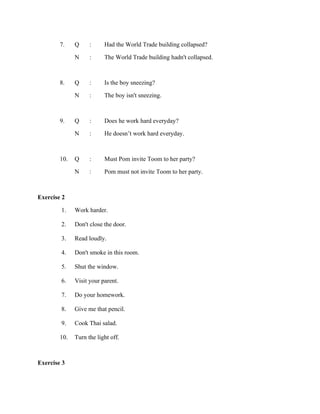
Situation 1
Suda
Malee
Suda
:
:
:
Hi, Malee. How are you?
Fine, thanks. And you?
Very well, thank you.
10.
ในสถานการณ์น้ ี สุดากับมาลีเป็ นเพื่อนกัน เมื่อพบกันก็ทกทายและถามทุกข์สุขซึ่งกัน
ั
และกันก่อน
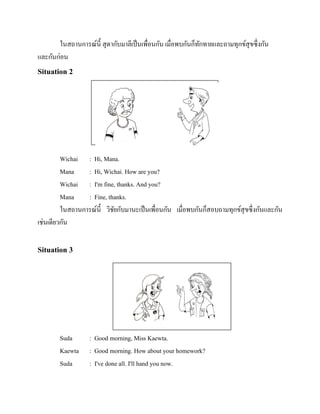
Situation 2
Wichai : Hi, Mana.
Mana
: Hi, Wichai. How are you?
Wichai : I'm fine, thanks. And you?
Mana
: Fine, thanks.
ในสถานการณ์น้ ี วิชยกับมานะเป็ นเพื่อนกัน เมื่อพบกันก็สอบถามทุกข์สุขซึ่งกันและกัน
ั
เช่นเดียวกัน
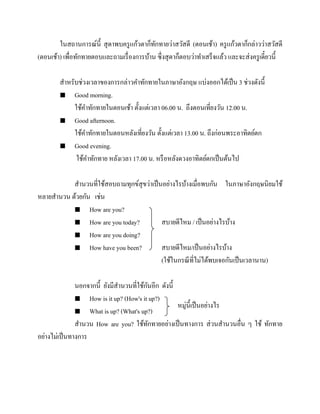
Situation 3
Suda
Kaewta
Suda
: Good morning, Miss Kaewta.
: Good morning. How about your homework?
: I've done all. I'll hand you now.
11.
ในสถานการณ์น้ ี สุดาพบครู แก้วตาก็ทกทายว่าสวัสดี (ตอนเช้า) ครู แก้วตาก็กล่าวว่าสวัสดี
ั
(ตอนเช้า) เพื่อทักทายตอบและถามเรื่ องการบ้าน ซึ่งสุ ดาก็ตอบว่าทาเสร็จแล้ว และจะส่ งครู เดี๋ยวนี้
สาหรับช่วงเวลาของการกล่าวคาทักทายในภาษาอังกฤษ แบ่งออกได้เป็ น 3 ช่วงดังนี้
Good morning.
ใช้คาทักทายในตอนเช้า ตั้งแต่เวลา 06.00 น. ถึงตอนเที่ยงวัน 12.00 น.
Good afternoon.
ใช้คาทักทายในตอนหลังเที่ยงวัน ตั้งแต่เวลา 13.00 น. ถึงก่อนพระอาทิตย์ตก
Good evening.
ใช้คาทักทาย หลังเวลา 17.00 น. หรื อหลังดวงอาทิตย์ตกเป็ นต้นไป
สานวนที่ใช้สอบถามทุกข์สุขว่าเป็ นอย่างไรบ้างเมื่อพบกัน ในภาษาอังกฤษนิยมใช้
หลายสานวน ด้วยกัน เช่น
How are you?
How are you today?
สบายดีไหม / เป็ นอย่างไรบ้าง
How are you doing?
How have you been?
สบายดีไหม/เป็ นอย่างไรบ้าง
(ใช้ในกรณี ที่ไม่ได้พบเจอกันเป็ นเวลานาน)
ั
นอกจากนี้ ยังมีสานวนที่ใช้กนอีก ดังนี้
How is it up? (How's it up?)
หมู่น้ ีเป็ นอย่างไร
What is up? (What's up?)
สานวน How are you? ใช้ทกทายอย่างเป็ นทางการ ส่ วนสานวนอื่น ๆ ใช้ ทักทาย
ั
อย่างไม่เป็ นทางการ
12.
สานวนที่ใช้ตอบรับถึงการสอบถามทุกข์สุขว่าเป็ นอย่างไรเมื่อพบกัน เช่น
Fine, thank you. And how are you?
สบายดี ขอบคุณ แล้วคุณล่ะ
Very well, thanks. How about you?
สบายดีมาก ขอบคุณ แล้วคุณ
Great, thanks. How about you?
ล่ รื
So so.
ก็เะ ่ อย ๆ นะ
I'm quite well, thank you. And you?
สบายดีนะ ขอบคุณ แล้วคุณล่ะ
Not quite well, I have a cold. And you? ไม่สบายนัก เป็ นหวัด แล้วคุณล่ะ
กิจกรรม
เมื่อผูเ้ รี ยนศึกษาเนื้อหารายละเอียดเรื่ องการทักทายแล้วให้ฝึกปฏิบติและทบทวน
ั
ดังต่อไปนี้
1. ให้จบคู่ฝึกสนทนา โดยแสดงบทบาทสมมุติดงนี้
ั
ั
1.1 เป็ น Suda กับ Malee ตาม Situation 1
1.2 เป็ น Wichai กับ Mana ตาม Situation 2
1.3 เป็ น Suda กับ kaewta ตาม Situation 3
2. ให้ฝึกเขียนบทสนทนาทั้ง 3 Situation อย่างละ 2 บท โดยให้กาหนดชื่อคู่สนทนา
ด้วยตนอง และใช้สานวนที่แตกต่างกัน
2. การกล่าวลา (Leave Taking) โดยปกติ ก่อนจะจบสิ้ นการสนทนาตามมารยาทและ
่
ธรรมเนียมปฏิบติของคนทัวโลก ไม่วาจะเป็ นประเทศใดก็ตาม สิ่ งสาคัญประการหนึ่งที่ไม่สามารถ
ั
่
ละเลยได้ คือ การกล่าวลา (Leave Taking) โดยทัวไป สานวนที่ใช้ในการกล่าวลา ได้แก่ Goodbye, Bye
่
แปลว่า ลาก่อน
13.
นอกจากนี้ยงมีสานวนที่ใช้ในการกล่าวลาอื่น ๆ อีกซึ่งจะใช้ตามสถานการณ์ต่าง ๆ ที่
ั
เกิดขึ้น เช่น
See you.
แล้วเจอกันใหม่
See you later.
แล้วพบกันใหม่
So long.
ลาที (คนสนิท)
I'll be seeing you.
แล้วค่อยพบกันใหม่
Good day.
กล่าวลาตอนกลางวัน
Good night.
กล่าวลาตอนกลางคืน
Situation 1
Suda
Mana
Suda
Mana
Suda
Mana
Suda
Mana
Suda
:
:
:
:
:
:
:
:
:
Hello, Mana.
Hello, Suda. How are you?
Fine, thanks. And you?
Very well, thanks. Where's Malee?
She goes to the hospital.
What's happened?
She accompanies her mother to see the doctor.
Please tell her, I miss her. I've to go to now. Goodbye.
See you later.
14.
สานวน See youlater.ใช้ในกรณี ที่ไม่ได้ระบุเวลา ในกรณี ที่ผสนทนาต้องการกล่าวลา
ู้
โดยการระบุเวลาที่จะพบกันอีกครั้งหนึ่งแน่นอน ให้ใช้สานวน ดังนี้
See you tomorrow.
แล้วพบกันวันพรุ่ งนี้
See you next year.
ไว้พบกันปี หน้า
See you on Sunday.
แล้วพบกันวันอาทิตย์
การบอกลาในกรณี ที่มีธุระสาคัญที่จะต้องขอลากลับก่อน ใช้สานวนดังนี้
I'd better be on my way.
จาเป็ นจะต้องไปแล้ว
I'll be back.
เดี๋ยวฉันจะกลับมา
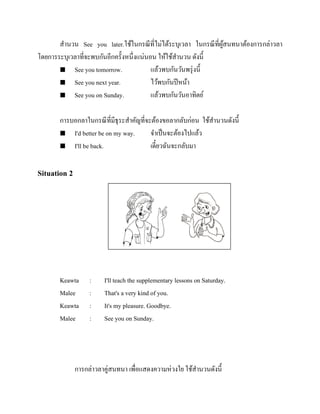
Situation 2
รู ปภาพ
Keawta
Malee
Keawta
Malee
:
:
:
:
I'll teach the supplementary lessons on Saturday.
That's a very kind of you.
It's my pleasure. Goodbye.
See you on Sunday.
การกล่าวลาคู่สนทนา เพื่อแสดงความห่วงใย ใช้สานวนดังนี้
15.
Take care.
ดูแลตัวเองให้ดีนะ
Takecare of yourself.
การบอกลาคู่สนทนาที่กาลังจะไปงานเลี้ยงหรื อไปเที่ยว ใช้สานวนดังนี้
Have a good time.
ขอให้มีความสุ ขนะ
Have a nice time.
Have a pleasant trip.
เดินทางให้สนุก/ปลอดภัยนะ
Have a nice trip.
Have a good holiday.
ขอให้สนุกสนานในวันหยุดนะ
Have a nice holiday.
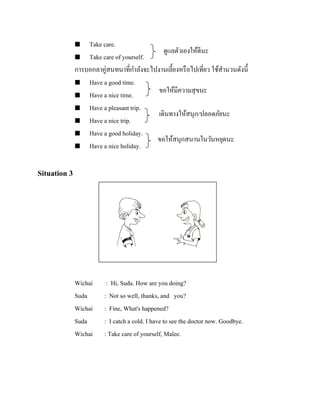
Situation 3
รู ปภาพ
Wichai
Suda
Wichai
Suda
Wichai
: Hi, Suda. How are you doing?
: Not so well, thanks, and you?
: Fine, What's happened?
: I catch a cold. I have to see the doctor now. Goodbye.
: Take care of yourself, Malee.
16.
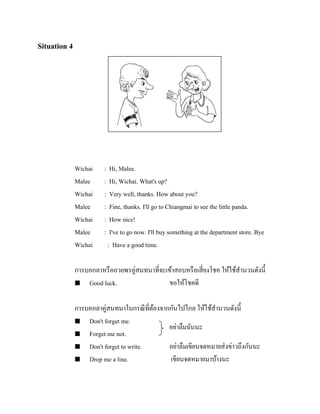
Situation 4
รู ปภาพ
Wichai
Malee
Wichai
Malee
Wichai
Malee
Wichai
:
:
:
:
:
:
Hi,Malee.
Hi, Wichai. What's up?
Very well, thanks. How about you?
Fine, thanks. I'll go to Chiangmai to see the little panda.
How nice!
I've to go now. I'll buy something at the department store. Bye
: Have a good time.
การบอกลาหรื ออวยพรคู่สนทนาที่จะเข้าสอบหรื อเสี่ ยงโชค ให้ใช้สานวนดังนี้
Good luck.
ขอให้โชคดี
การบอกลาคู่สนทนาในกรณี ที่ตองจากกันไปไกล ให้ใช้สานวนดังนี้
้
Don't forget me.
อย่าลืมฉันนะ
Forget me not.
Don't forget to write.
อย่าลืมเขียนจดหมายส่ งข่าวถึงกันนะ
Drop me a line.
เขียนจดหมายมาบ้างนะ
17.
การบอกลาคู่สนทนาที่มาเยียมบ้าน ให้ใช้สานวนดังนี้
่
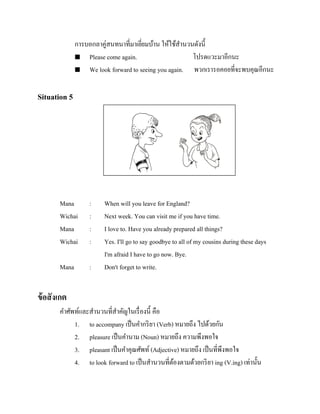
Pleasecome again.
โปรดแวะมาอีกนะ
We look forward to seeing you again.
พวกเรารอคอยที่จะพบคุณอีกนะ
Situation 5
รู ปภาพ
Mana
Wichai
Mana
Wichai
:
:
:
:
Mana
:
When will you leave for England?
Next week. You can visit me if you have time.
I love to. Have you already prepared all things?
Yes. I'll go to say goodbye to all of my cousins during these days
I'm afraid I have to go now. Bye.
Don't forget to write.
ข้ อสั งเกต
คาศัพท์และสานวนที่สาคัญในเรื่ องนี้ คือ
1. to accompany เป็ นคากริ ยา (Verb) หมายถึง ไปด้วยกัน
2. pleasure เป็ นคานาม (Noun) หมายถึง ความพึงพอใจ
3. pleasant เป็ นคาคุณศัพท์ (Adjective) หมายถึง เป็ นที่พึงพอใจ
4. to look forward to เป็ นสานวนที่ตองตามด้วยกริ ยา ing (V.ing) เท่านั้น
้
18.
5.
(to look forwardto + V.ing) หมายถึง ตั้งตารอ
to leave for เป็ นคากริ ยา หมายถึง เดินทางไปยัง.....
ถ้าใช้ to leave โดยไม่มี for หมายถึงเดินทางจากที่หนึ่งไปยังที่อื่น
กิจกรรม
1.
2.
ให้ผเู ้ รี ยนฝึ กพูดและเขียนคากล่าวลาในแต่ละสถานการณ์
เพื่อจะได้นาไปใช้ได้ถูกต้องและเหมาะสม
ให้ทาแบบฝึ กหัดต่อไปนี้
Exercise 1 Choose the best answer.
Jaew : Hi, Joy.
Toy : _______ (1) _______. How have you been?
Jaew : _______ (2) _______. And you?
Toy : Good thanks. _______ (3) _______.
Jaew : I've changed my work. Now I'm with Jook.
Toy : ______ (4) _______. I hope you enjoy it.
Jaew : I think so. I'm afraid I have to go now. I've a meeting this afternoon.
___________ (5)____________.
Toy : See you later.
19.
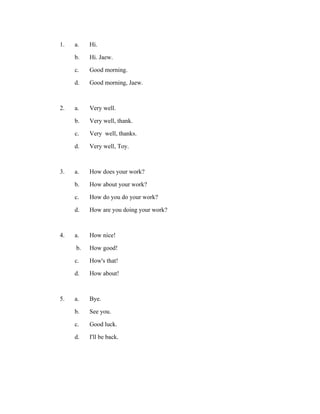
1.
a.
b.
c.
d.
Hi.
Hi. Jaew.
Good morning.
Goodmorning, Jaew.
2.
a.
b.
c.
d.
Very well.
Very well, thank.
Very well, thanks.
Very well, Toy.
3.
a.
b.
c.
d.
How does your work?
How about your work?
How do you do your work?
How are you doing your work?
4.
a.
b.
c.
d.
How nice!
How good!
How's that!
How about!
5.
a.
b.
c.
d.
Bye.
See you.
Good luck.
I'll be back.
20.
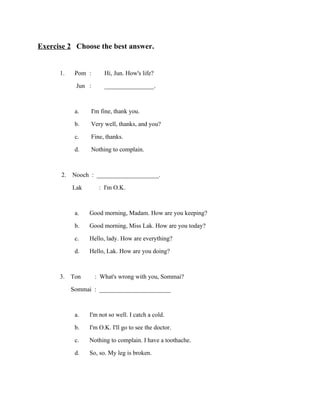
Exercise 2 Choosethe best answer.
1.
Pom :
Jun :
a.
b.
c.
d.
Hi, Jun. How's life?
________________.
I'm fine, thank you.
Very well, thanks, and you?
Fine, thanks.
Nothing to complain.
2. Nooch : ____________________.
Lak
: I'm O.K.
a.
b.
c.
d.
Good morning, Madam. How are you keeping?
Good morning, Miss Lak. How are you today?
Hello, lady. How are everything?
Hello, Lak. How are you doing?
3. Ton : What's wrong with you, Sommai?
Sommai : _______________________
a.
b.
c.
d.
I'm not so well. I catch a cold.
I'm O.K. I'll go to see the doctor.
Nothing to complain. I have a toothache.
So, so. My leg is broken.
21.
4. Tui :My mother is waiting for me at the bus stop. I have to go now, bye!
Kaew : ___________________________
a.
b.
c.
d.
See you.
Take care.
Have a good time.
Please come again.
5. Mr.Ya
: I'm sorry. I have to leave for Chiangmai now. Goodbye!
Miss Pattana : __________________________________________
a.
b.
c.
d.
See you later.
Please come again.
Have a nice trip.
Take good care of yourself.
เรื่องที่ 2 การแนะนาตนเองและผู้อน
ื่
(Introducing Yourself and Others)
เมื่อคนพบกันครั้งแรก การแนะนาตนเองให้บุคคลอื่นรู ้จกเป็ นสิ่ งสาคัญและจาเป็ นก่อนจะ
ั
ั
สนทนาพูดคุยกันในเรื่ องอื่น ๆ ซึ่งการแนะนาตนเองและผูอื่นในภาษาอังกฤษ มีสานวนที่ใช้กน
้
ดังนี้
22.
1. การแนะนาตนเอง (IntroducingYourself) ในการแนะนาตนเองให้ผอื่นรู ้จก จะเริ่ มต้น
ู้
ั
ด้วยการกล่าวทักทายและแนะนาตนเองด้วยสานวนต่าง ๆ ดังนี้
Hello. My name is (ชื่อของผูพด) .
้ ู
(สาหรับผูที่อยูในสถานะเดียวกัน เช่น เป็ นนักศึกษาด้วยกัน เป็ นต้น)
้ ่
Hi. I'm (ชื่อของผูพด). (สาหรับผูที่อยูในวัยเดียวกัน)
้ ู
้ ่
Good morning. My name is (ชื่อของผูพด).
้ ู
สวัสดีฉน/ผม/ดิฉนชื่อ____
ั
ั
Good morning. I'm (ชื่อของผูพด ).
้ ู
(สาหรับการพูดคุยอย่างเป็ นทางการ)
หากต้องการบอกชื่อเล่นให้ทราบด้วยก็อาจพูดว่า
Hello. My name is (ชื่อของผูพด) and my nickname is (ชื่ อเล่นของผูพด).
้ ู
้ ู
เมื่อกล่าวแนะนาตัวแล้ว คู่สนทนาจะตอบว่า
It's nice to meet you.
Nice to meet you.
ยินดีที่ได้จจกคุณ
ู้ ั
I'm glad to meet you.
I'm glad to see you.
Situation 1
รู ปภาพ
23.
Suda
Malee
Suda
Malee
:
:
:
:
Hi. I'm suda.What's your name?
Hi. My name is Malee.
Nice to meet you.
Nice to meet you, too.
Situation 2
รู ปภาพ
Wichai
Mana
Wichai
Mana
:
:
:
:
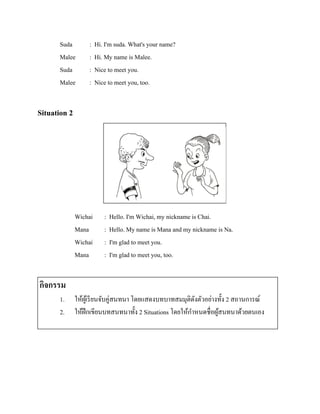
Hello. I'm Wichai, my nickname is Chai.
Hello. My name is Mana and my nickname is Na.
I'm glad to meet you.
I'm glad to meet you, too.
กิจกรรม
1.
2.
ให้ผเู ้ รี ยนจับคู่สนทนา โดยแสดงบทบาทสมมุติดงตัวอย่างทั้ง 2 สถานการณ์
ั
ให้ฝึกเขียนบทสนทนาทั้ง 2 Situations โดยให้กาหนดชื่อผูสนทนาด้วยตนเอง
้
24.
2. การแนะนาผู้อน (IntroducingOthers) ในสภาพความเป็ นจริ งของสังคม การพบปะ
ื่
่
สังสรรค์ระหว่างกลุ่มเพื่อนหรื อบุคคลที่ทางานในที่เดียวกันต้องเกิดขึ้นอยูตลอดเวลา การแนะนา
บุคคลอื่นให้รู้จกกันจึงเป็ นเรื่ องปกติที่เกิดขึ้นอยูเ่ สมอในสังคมชาวตะวันตกถือเป็ นธรรมเนียมปฏิบติ
ั
ั
ว่าหากจะพูดคุยระหว่างบุคคลที่ไม่รู้จกจะต้องได้รับการแนะนาให้รู้จก กันเสี ยก่อน
ั
ั
ยกตัวอย่างเช่น สุ ดาต้องการแนะนาให้มาลีรู้จกกับสุ วฒน์ สุ ดาต้องกล่าวแนะนา ดังนี้
ั
ั
Suda
: Malee, this is Suwat. Suwat, this is Malee.
(มาลีนี่คือคุณสุ วฒน์ คุณสุ วฒน์นี่คือคุณมาลี)
ั
ั
นอกจากนี้ ยังมีสานวนที่สามารถใช้กล่าวแนะนาให้บุคคลรู ้จกอีก เช่น
ั
Suwat, I'd like to introduce you Miss Malee.
(สุ วฒน์ ผมขอแนะนาให้คุณรู ้จกคุณมาลี)
ั
ั
Suwat, let me introduce Miss Malee to you.
(สุ วฒน์ ผมขออนุญาตแนะนาให้คุณรู ้จกกับคุณมาลี)
ั
ั
Suwat, this is my friend, Miss Malee.
(สุ วฒน์ นี่คือเพื่อนของผม คุณมาลี)
ั
เมื่อมีการแนะนาให้บุคคลหนึ่งรู ้จกกับอีกบุคคลหนึ่ง ผูที่ได้รับการแนะนาจะทักทาย
ั
้
กลับว่า
How do you do?
และคู่สนทนาก็จะกล่าวว่า
How do you do?
Nice to meet you.
Glad to meet you.
สวัสดี ยินดีที่ได้รู้จก
ั
Nice to meet you, too.
Glad to meet you.
สวัสดียนดีที่ได้รู้จกเช่นกัน
ิ
ั
25.
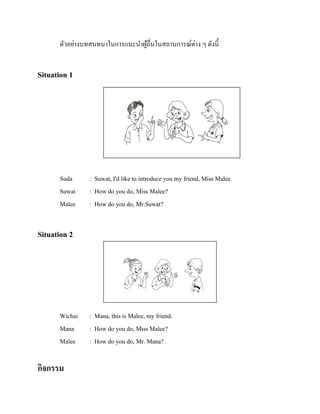
ตัวอย่างบทสนทนาในการแนะนาผูอื่นในสถานการณ์ต่าง ๆ ดังนี้
้
Situation1
รู ปภาพ
Suda
Suwat
Malee
: Suwat, I'd like to introduce you my friend, Miss Malee.
: How do you do, Miss Malee?
: How do you do, Mr.Suwat?
Situation 2
รู ปภาพ
Wichai
Mana
Malee
กิจกรรม
: Mana, this is Malee, my friend.
: How do you do, Miss Malee?
: How do you do, Mr. Mana?
26.
ให้ผเู ้ รียนทาแบบฝึ กหัดต่อไปนี้
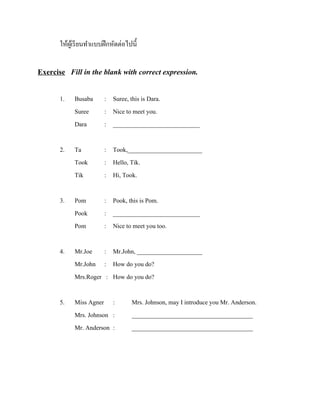
Exercise Fill in the blank with correct expression.
1.
Busaba
Suree
Dara
: Suree, this is Dara.
: Nice to meet you.
: ____________________________
2.
Ta
Took
Tik
: Took,________________________
: Hello, Tik.
: Hi, Took.
3.
Pom
Pook
Pom
: Pook, this is Pom.
: ____________________________
: Nice to meet you too.
4.
Mr.Joe : Mr.John, _____________________
Mr.John : How do you do?
Mrs.Roger : How do you do?
5.
Miss Agner :
Mrs. Johnson :
Mr. Anderson :
Mrs. Johnson, may I introduce you Mr. Anderson.
_______________________________________
_______________________________________
27.
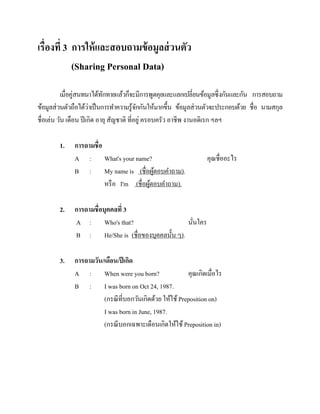
เรื่องที่ 3 การให้และสอบถามข้ อมูลส่ วนตัว
(Sharing Personal Data)
เมื่อคู่สนทนาได้ทกทายแล้วก็จะมีการพูดคุยและแลกเปลี่ยนข้อมูลซึ่งกันและกัน การสอบถาม
ั
่
ข้อมูลส่ วนตัวถือได้วาเป็ นการทาความรู ้จกกันให้มากขึ้น ข้อมูลส่ วนตัวจะประกอบด้วย ชื่อ นามสกุล
ั
ชื่อเล่น วัน เดือน ปี เกิด อายุ สัญชาติ ที่อยู่ ครอบครัว อาชีพ งานอดิเรก ฯลฯ
1.
การถามชื่อ
A : What's your name?
B : My name is (ชื่อผูตอบคาถาม).
้
หรื อ I'm (ชื่อผูตอบคาถาม).
้
คุณชื่ออะไร
2.
การถามชื่อบุคคลที่ 3
A : Who's that?
นันใคร
่
B : He/She is (ชื่อของบุคคลนั้น ๆ).
3.
การถามวัน/เดือน/ปี เกิด
A : When were you born?
คุณเกิดเมื่อไร
B : I was born on Oct 24, 1987.
(กรณี ที่บอกวันเกิดด้วย ให้ใช้ Preposition on)
I was born in June, 1987.
(กรณี บอกเฉพาะเดือนเกิดให้ใช้ Preposition in)
28.
4.
5.
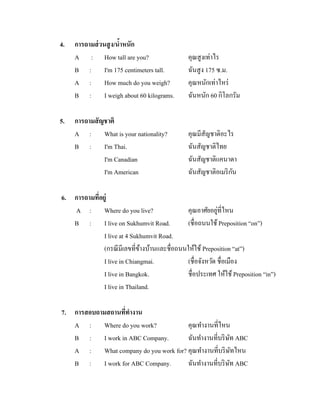
การถามส่ วนสู ง/นาหนัก
้
A: How tall are you?
B : I'm 175 centimeters tall.
A : How much do you weigh?
B : I weigh about 60 kilograms.
คุณสู งเท่าไร
ฉันสู ง 175 ซ.ม.
คุณหนักเท่าไหร่
ฉันหนัก 60 กิโลกรัม
การถามสั ญชาติ
A : What is your nationality?
B : I'm Thai.
I'm Canadian
I'm American
คุณมีสัญชาติอะไร
ฉันสัญชาติไทย
ฉันสัญชาติแคนาดา
ั
ฉันสัญชาติอเมริ กน
6. การถามทีอยู่
่
่
A : Where do you live?
คุณอาศัยอยูที่ไหน
B : I live on Sukhumvit Road.
(ชื่อถนนใช้ Preposition “on”)
I live at 4 Sukhumvit Road.
(กรณี มีเลขที่ขางบ้านและชื่อถนนให้ใช้ Preposition “at”)
้
I live in Chiangmai.
(ชื่อจังหวัด ชื่อเมือง
I live in Bangkok.
ชื่อประเทศ ให้ใช้ Preposition “in”)
I live in Thailand.
7. การสอบถามสถานทีทางาน
่
A : Where do you work?
คุณทางานที่ไหน
B : I work in ABC Company.
ฉันทางานที่บริ ษท ABC
ั
A : What company do you work for? คุณทางานที่บริ ษทไหน
ั
B : I work for ABC Company.
ฉันทางานที่บริ ษท ABC
ั
29.
8. การถามอาชีพการทางาน
A :What do you do?
B : I'm a teacher.
A : I'm a doctor.
a
คาตอบ คือ I'm
(ชื่ออาชีพ).
an
คุณทาอะไร
ฉันเป็ นครู
ฉันเป็ นหมอ
9. การถามถึงสมาชิกในครอบครัว
A : How many sisters and brothers do you have?
คุณมีพี่นองกี่คน
้
B : I have 2 sisters and a brother.
ฉันมีพี่สาวสองคนและน้องชาย1 คน
A : How many persons are there in your family?
ในครอบครัวคุณมีกี่คน
B : There are 5 persons in my family.
ในครอบครัวของฉันมี 5 คน
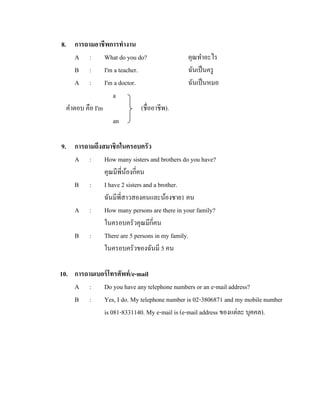
10. การถามเบอร์ โทรศัพท์ /e-mail
A : Do you have any telephone numbers or an e-mail address?
B : Yes, I do. My telephone number is 02-3806871 and my mobile number
is 081-8331140. My e-mail is (e-mail address ของแต่ละ บุคคล).
30.
ข้ อสั งเกต
การออกเสียงอ่านหมายเลยโทรศัพท์ จะอ่านทีละตัว ยกเว้นเลขที่ซ้ ากัน จะใช้ คาว่า Double
ซึ่งหมายเลข 0 จะใช้คาว่า oh แทนก็ได้ เช่น
081-8351140 อ่านว่า oh - eight - one - eight - three - five - double one -four - oh
02-3806871 อ่านว่า oh - two - three - eight - oh - six - eight - seven - one
Situation 1
เรื่องที่ 4 การใช้ภาษาทางกาย (Body Language)
Body Language - the movement of your body that show what you are really feeling
or thinking.
ภาษากาย หมายถึงการเคลื่อนไหวในลักษณะต่าง ๆ ของร่ างกายที่แสดงให้เห็นถึงสิ่ งที่เรา
รู ้สึกหรื อคิด การใช้ภาษากายมีความแตกต่างกันในแต่ละเชื้อชาติ ภาษาในเรื่ องของการแสดงท่าทาง
ได้แก่ ทางสายตา การสัมผัสและการสื่ อสารที่ไม่ใช้คาพูด แตกต่างไปตามวัฒนธรรมของแต่ละ
ประเทศ จากการวินิจฉัยของนักจิตวิทยา มหาวิทยาลัยอ็อกฟอร์ด ของ Dr. Peter Collett ในหนังสื อ
Foreign Bodies ได้ศึกษาความแตกต่างของการใช้ลกษณะท่าทางเมื่อรู ้สึกตื่นเต้นหรื อแสดงอาการ
ั
สบประมาท ส่ วนชาวอิตาลี กรี ก ฝรั่งเศส สเปนและโปรตุเกส จะแสดงลักษณะท่าทางเพื่อต้องการ
่
เน้นในสิ่ งที่พวกเขาพูดหรื อต้องการให้ผอื่นหันมาสนใจ แม้กระทังเมื่ออยูในความเงียบ มือของพวกเขา
ู้
่
่
่ ั
ก็จะวุนวายอยูกบการส่ งข้อความด้วยการส่ งสัญญาณต่าง ๆ
Here are some examples of body language. They are used by people in English-speaking
countries.
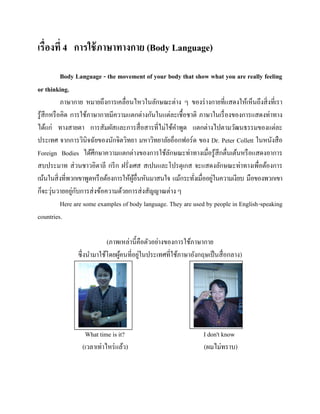
(ภาพเหล่านี้คือตัวอย่างของการใช้ภาษากาย
่
ซึ่งนามาใช้โดยผูคนที่อยูในประเทศที่ใช้ภาษาอังกฤษเป็ นสื่ อกลาง)
้
What time is it?
(เวลาเท่าไหร่ แล้ว)
รู ปภาพ
I don't know
(ผมไม่ทราบ)
33.
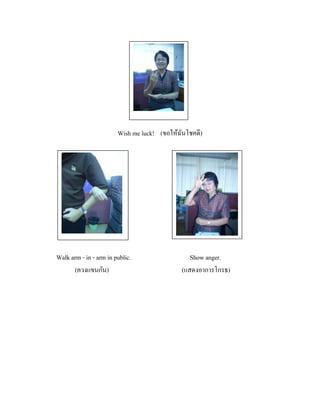
Wish me luck!(ขอให้ฉนโชคดี)
ั
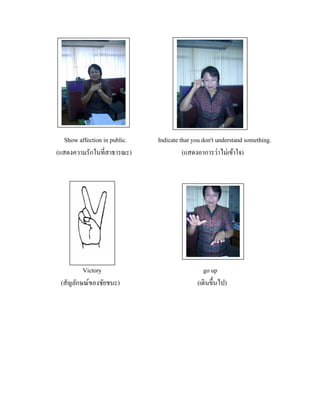
Walk arm - in - arm in public.
(ควงแขนกัน)
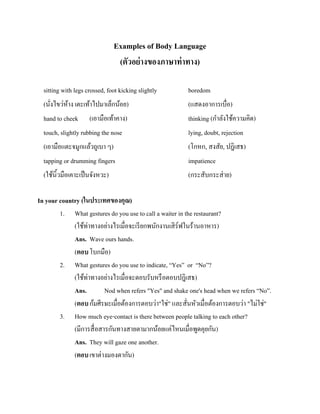
Show anger.
(แสดงอาการโกรธ)
34.
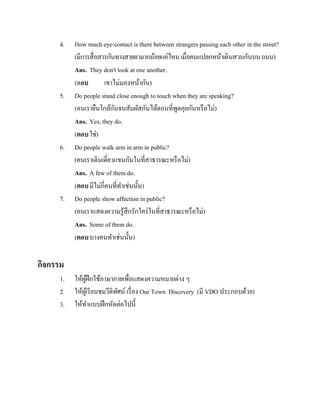
Show affection inpublic.
(แสดงความรักในที่สาธารณะ)
Victory
(สัญลักษณ์ของชัยชนะ)
Indicate that you don't understand something.
(แสดงอาการว่าไม่เข้าใจ)
go up
(เดินขึ้นไป)
35.
Examples of BodyLanguage
(ตัวอย่ างของภาษาท่ าทาง)
sitting with legs crossed, foot kicking slightly
(นังไขว่หาง เตะเท้าไปมาเล็กน้อย)
้
่
boredom
(แสดงอาการเบื่อ)
hand to cheek (เอามือเท้าคาง)
touch, slightly rubbing the nose
thinking (กาลังใช้ความคิด)
lying, doubt, rejection
(เอามือแตะจมูกแล้วถูเบา ๆ)
tapping or drumming fingers
(ใช้นิ้วมือเคาะเป็ นจังหวะ)
(โกหก, สงสัย, ปฎิเสธ)
impatience
(กระสับกระส่ าย)
In your country (ในประเทศของคุณ)
1. What gestures do you use to call a waiter in the restaurant?
(ใช้ท่าทางอย่างไรเมื่อจะเรี ยกพนักงานเสิ ร์ฟในร้านอาหาร)
Ans. Wave ours hands.
(ตอบ โบกมือ)
2. What gestures do you use to indicate, “Yes” or “No”?
(ใช้ท่าทางอย่างไรเมื่อจะตอบรับหรื อตอบปฎิเสธ)
Ans.
Nod when refers "Yes" and shake one's head when we refers “No”.
(ตอบ ก้มศีรษะเมื่อต้องการตอบว่า"ใช่" และสั่นหัวเมื่อต้องการตอบว่า "ไม่ใช่"
3. How much eye-contact is there between people talking to each other?
(มีการสื่ อสารกันทางสายตามากน้อยแค่ไหนเมื่อพูดคุยกัน)
Ans. They will gaze one another.
(ตอบ เขาต่างมองตากัน)
36.
4.
5.
6.
7.
How much eye-contactis there between strangers passing each other in the street?
(มีการสื่ อสารกันทางสายตามากน้อยแค่ไหน เมื่อคนแปลกหน้าเดินสวนกันบน ถนน)
Ans. They don't look at one another.
(ตอบ
เขาไม่มองหน้ากัน)
Do people stand close enough to touch when they are speaking?
ั
(คนเรายืนใกล้กนจนสัมผัสกันได้ตอนที่พดคุยกันหรื อไม่)
ู
Ans. Yes, they do.
(ตอบ ใช่)
Do people walk arm in arm in public?
(คนเราเดินเดี่ยวแขนกันในที่สาธารณะหรื อไม่)
Ans. A few of them do.
(ตอบ มีไม่กี่คนที่ทาเช่นนั้น)
Do people show affection in public?
(คนเราแสดงความรู ้สึกรักใคร่ ในที่สาธารณะหรื อไม่)
Ans. Some of them do.
(ตอบ บางคนทาเช่นนั้น)
กิจกรรม
1.
2.
3.
ให้ผฝึกใช้ภาษากายเพื่อแสดงความหมายต่าง ๆ
ู้
ให้ผเู ้ รี ยนชมวีดิทศน์ เรื่ อง Our Town Discovery (มี VDO ประกอบด้วย)
ั
ให้ทาแบบฝึ กหัดต่อไปนี้
37.
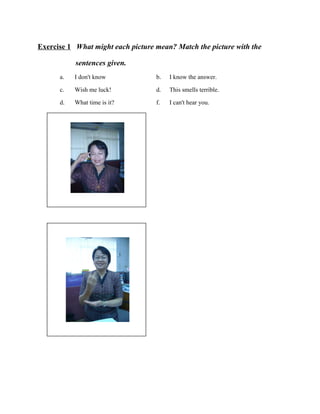
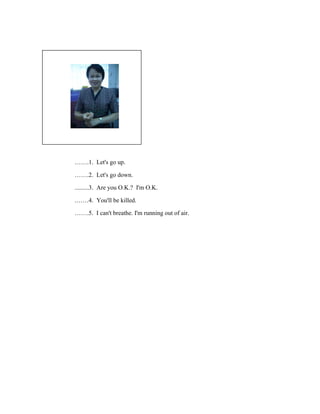
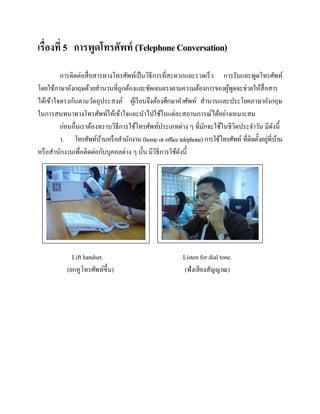
Exercise 1 Whatmight each picture mean? Match the picture with the
sentences given.
a.
c.
d.
I don't know
Wish me luck!
What time is it?
รู ปภาพ
รู ปภาพ
b. I know the answer.
d. This smells terrible.
f. I can't hear you.
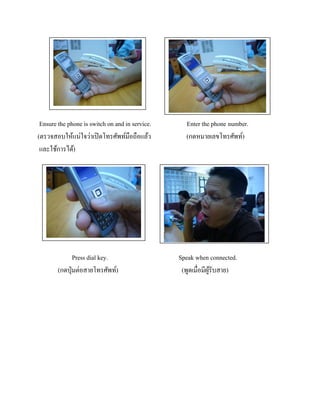
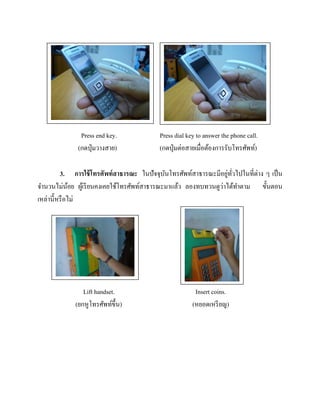
Ensure the phoneis switch on and in service.
(ตรวจสอบให้แน่ใจว่าเปิ ดโทรศัพท์มือถือแล้ว
และใช้การได้)
Press dial key.
(กดปุ่ มต่อสายโทรศัพท์)
Enter the phone number.
(กดหมายเลขโทรศัพท์)
Speak when connected.
(พูดเมื่อมีผรับสาย)
ู้
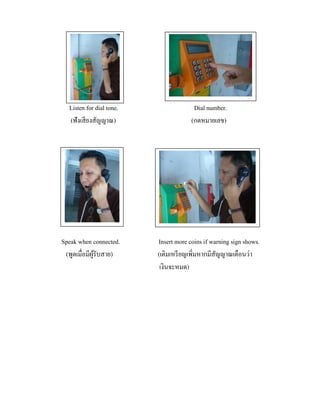
Listen for dialtone.
(ฟังเสี ยงสัญญาณ)
Speak when connected.
(พูดเมื่อมีผรับสาย)
ู้
Dial number.
(กดหมายเลข)
Insert more coins if warning sign shows.
(เติมเหรี ยญเพิ่มหากมีสัญญาณเตือนว่า
เงินจะหมด)
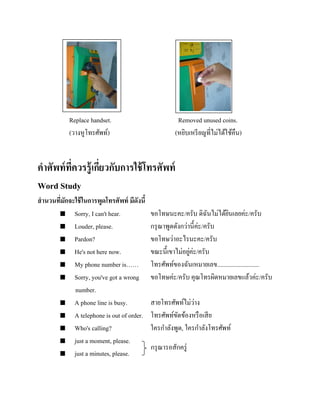
44.
Replace handset.
(วางหูโทรศัพท์)
Removed unusedcoins.
(หยิบเหรี ยญที่ไม่ได้ใช้คืน)
คาศัพท์ ที่ควรรู้ เกียวกับการใช้ โทรศัพท์
่
Word Study
สานวนทีมกจะใช้ ในการพูดโทรศัพท์ มีดังนี้
่ ั
Sorry, I can't hear.
Louder, please.
Pardon?
He's not here now.
My phone number is……
Sorry, you've got a wrong
number.
A phone line is busy.
A telephone is out of order.
Who's calling?
just a moment, please.
just a minutes, please.
ขอโทษนะคะ/ครับ ดิฉนไม่ได้ยนเลยค่ะ/ครับ
ั
ิ
กรุ ณาพูดดังกว่านี้ค่ะ/ครับ
ขอโทษว่าอะไรนะคะ/ครับ
่
ขณะนี้เขาไม่อยูค่ะ/ครับ
โทรศัพท์ของฉันเหมายเลข...........................
ขอโทษค่ะ/ครับ คุณโทรผิดหมายเลขแล้วค่ะ/ครับ
่
สายโทรศัพท์ไม่วาง
โทรศัพท์ขดข้องหรื อเสี ย
ั
ใครกาลังพูด, ใครกาลังโทรศัพท์
กรุ ณารอสักครู่
45.
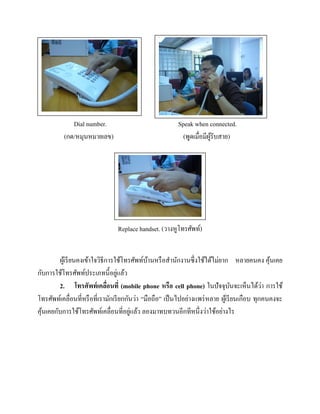
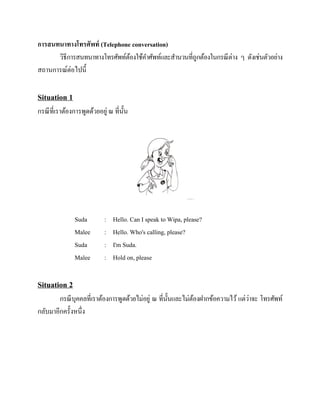
การสนทนาทางโทรศัพท์ (Telephone conversation)
วิธีการสนทนาทางโทรศัพท์ตองใช้คาศัพท์และสานวนที่ถูกต้องในกรณีต่าง ๆ ดังเช่นตัวอย่าง
้
สถานการณ์ต่อไปนี้
Situation 1
กรณี ที่เราต้องการพูดด้วยอยู่ ณ ที่น้ น
ั
Suda
Malee
Suda
Malee
:
:
:
:
Hello. Can I speak to Wipa, please?
Hello. Who's calling, please?
I'm Suda.
Hold on, please
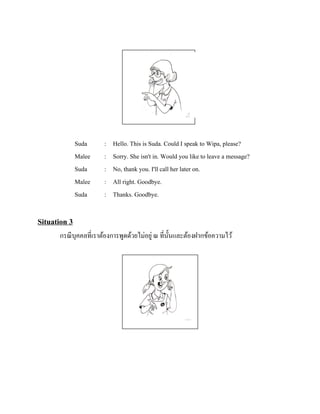
Situation 2
่
กรณี บุคคลที่เราต้องการพูดด้วยไม่อยู่ ณ ที่น้ นและไม่ตองฝากข้อความไว้ แต่วาจะ โทรศัพท์
ั
้
กลับมาอีกครั้งหนึ่ง
46.
Suda
Malee
Suda
Malee
Suda
:
:
:
:
:
Hello. This isSuda. Could I speak to Wipa, please?
Sorry. She isn't in. Would you like to leave a message?
No, thank you. I'll call her later on.
All right. Goodbye.
Thanks. Goodbye.
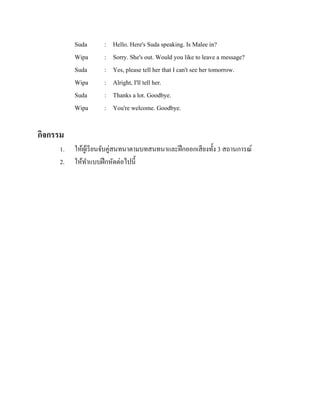
Situation 3
กรณี บุคคลที่เราต้องการพูดด้วยไม่อยู่ ณ ที่น้ นและต้องฝากข้อความไว้
ั
47.
Suda
Wipa
Suda
Wipa
Suda
Wipa
:
:
:
:
:
:
Hello. Here's Sudaspeaking. Is Malee in?
Sorry. She's out. Would you like to leave a message?
Yes, please tell her that I can't see her tomorrow.
Alright, I'll tell her.
Thanks a lot. Goodbye.
You're welcome. Goodbye.
กิจกรรม
1.
2.
ให้ผเู ้ รี ยนจับคู่สนทนาตามบทสนทนาและฝึ กออกเสี ยงทั้ง 3 สถานการณ์
ให้ทาแบบฝึ กหัดต่อไปนี้
48.
Exercise 1 Completeeach blank with one of the verbs given.
Replace
Remove
Dial
Ensure
Listen
Lift
Speak
Insert
1.
____________________ handset.
2.
3.
4.
5.
6.
Enter
Press
____________________ coins.
____________________ for dial tone.
____________________ number.
____________________ when connected.
____________________ handset after speaking.
7.
8.
9.
10.
____________________ unused coins.
____________________ the phone is switched on.
____________________ the phone number.
____________________ dial key.
Exercise 2 Complete this telephone conversation.
Woman
Jack
Woman
Jack
Woman
Jack
:
:
:
:
:
:
(1)
This is 02-3184596.
__________________
(2)
Sorry, ________________
(3)
Oh! I'm Jack Reed.
Can I
(4)
for her, Mr. Reed?
Yes. Could you tell Pam to
(5)
at 02-5618244.
49.
Exercise 3 Completethis telephone conversation.
Pam :
Jack :
Pam :
Jack :
Pam :
Jack :
Pam :
Hello.
(1)
.
Speaking.
Hi Jack.
(2)
My mother told me that you
and wanted me to call back.
Oh, yes. Jim cannot go to the concert with me this Friday night
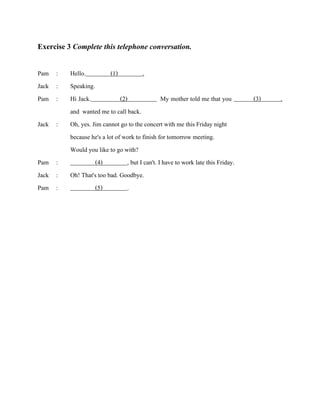
because he's a lot of work to finish for tomorrow meeting.
Would you like to go with?
(4)
, but I can't. I have to work late this Friday.
Oh! That's too bad. Goodbye.
(5)
.
(3)
.
50.
บทที่ 2
คุณรู้ สึกอย่างไร
(How do you feel ?)
สาระสาคัญ
การติดต่อสนทนาสื่ อสารระหว่างบุคคลในสถานการณ์ต่าง ๆ จะมีความหลากหลายในอารมณ์
เช่น ดีใจ เสี ยใจ เข้าใจ พอใจ ไม่พอใจ การให้กาลังใจ ความสนใจ และไม่สนใจ เป็ นต้น
ผลการเรียนรู้ ที่คาดหวัง
เพื่อให้ผเู ้ รี ยนใช้ภาษาอังกฤษในการแสดงความรู ้สึกในสถานการณ์ต่าง ๆ ได้ เช่น ดีใจ
เสี ยใจ เข้าใจ พอใจ ไม่พอใจ การให้กาลังใจ ความสนใจ และไม่สนใจ เป็ นต้น
ขอบข่ ายเนือหา
้
เรื่ องที่
เรื่ องที่
เรื่ องที่
เรื่ องที่
1
2
3
4
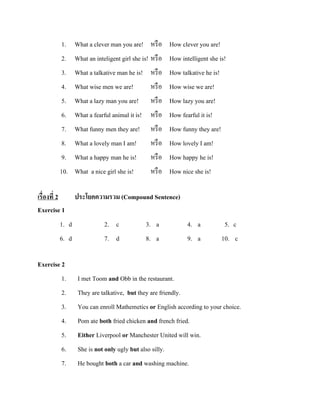
ภาพยนตร์เรื่ องนี้เป็ นอย่างไรบ้าง (How about the movie ?)
คุณสนใจอะไร (What are you interested in ?)
เสี ยใจด้วยนะ (Sorry to hear that .)
ยินดีดวย (Congratulations!)
้
51.
เรื่องที่ 1 ภาพยนตร์เรื่องนีเ้ ป็ นอย่ างไรบ้ าง
(How about the movie?)
ในการสนทนาโดยทัวไป เมื่อมีการพูดคุยสอบถามเรื่ องต่าง ๆ แล้ว การแสดงความชอบ
่
ความไม่ชอบ หรื อความพึงพอใจ ความไม่พึงพอใจ เป็ นเรื่ องธรรมดาและสามารถพบเห็นได้
โดยทัวไป คาศัพท์ที่ใช้แสดงอากัปกริ ยาดังกล่าวข้างต้น จะประกอบด้วยคาต่อไปนี้
่
like
=
ชอบ
dislike
=
ไม่ชอบ
pleasant
=
พึงพอใจ
pleased
unpleasant =
ไม่พึงพอใจ
กรณี ที่เราชอบ จะใช้ในรู ปประโยคบอกเล่า ยกตัวอย่างเช่น
I like seafood.
ฉันชอบอาหารทะเล
I like to walk to school.
ฉันชอบเดินไปโรงเรี ยน
I like dogs.
ฉันชอบสุ นข
ั
ในกรณี ที่เราไม่ชอบ สามารถเขียนรู ปประโยคเป็ นประโยคปฏิเสธ โดยใช้ Verb to
do มาวางไว้หลังประธาน ตามด้วย not นาหน้ากริ ยาแท้ ยกตัวอย่าง เช่น
I don't like seafood.
ฉันไม่ชอบอาหารทะเล
I don't like to walk to school. ฉันไม่ชอบเดินไปโรงเรี ยน
I don't like dogs.
ฉันไม่ชอบสุ นข
ั
52.
และสามารถใช้คาว่า dis ซึ่งเป็นอุปสรรค (prefix) เติมหน้าคากริ ยาแท้ เพือทาเป็ น
่
ประโยคปฏิเสธได้เช่นกัน เช่น
I dislike seafood.
ฉันไม่ชอบอาหารทะเล
I dislike to walk to school.
ฉันไม่ชอบเดินไปโรงเรี ยน
I dislike dogs.
ฉันไม่ชอบสุ นข
ั
นอกจากนั้น ยังมีสานวนที่มกใช้ในการแสดงความรู ้สึกพอใจและไม่พอใจอีกหลาย
ั
สานวน เช่น
That's great!
That is bad.
How wonderful!
How awful!
I am so pleased to hear that
I am afraid I don't like it.
I love it./I enjoy it./I like it.
I am disappointed to see that.
ยกตัวอย่างเช่น ในสถานการณ์ต่อไปนี้
Situation 1
ยอดเยียมจริ งๆ
่
แย่จริ ง
วิเศษมาก
แย่มาก
ฉันดีใจที่ได้ทราบเรื่ องนี้
ฉันคิดว่าฉันไม่ชอบ
ฉันชอบมัน
ฉันผิดหวังที่เห็นเช่นนั้น
53.
Suda
Malee
Suda
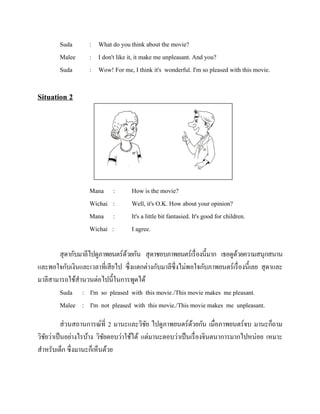
: What doyou think about the movie?
: I don't like it, it make me unpleasant. And you?
: Wow! For me, I think it's wonderful. I'm so pleased with this movie.
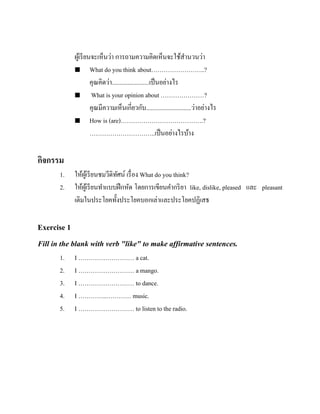
Situation 2
Mana
Wichai
Mana
Wichai
:
:
:
:
How is the movie?
Well, it's O.K. How about your opinion?
It's a little bit fantasied. It's good for children.
I agree.
สุ ดากับมาลีไปดูภาพยนตร์ดวยกัน สุ ดาชอบภาพยนตร์เรื่ องนี้มาก เธอดูดวยความสนุกสนาน
้
้
และพอใจกับเงินและเวลาที่เสี ยไป ซึ่งแตกต่างกับมาลีซ่ ึงไม่พอใจกับภาพยนตร์เรื่ องนี้เลย สุ ดาและ
มาลีสามารถใช้สานวนต่อไปนี้ในการพูดได้
Suda : I'm so pleased with this movie./This movie makes me pleasant.
Malee : I'm not pleased with this movie./This movie makes me unpleasant.
ส่ วนสถานการณ์ที่ 2 มานะและวิชย ไปดูภาพยนตร์ดวยกัน เมื่อภาพยนตร์จบ มานะก็ถาม
ั
้
วิชยว่าเป็ นอย่างไรบ้าง วิชยตอบว่าใช้ได้ แต่มานะตอบว่าเป็ นเรื่ องจินตนาการมากไปหน่อย เหมาะ
ั
ั
สาหรับเด็ก ซึ่งมานะก็เห็นด้วย
54.
ผูเ้ รี ยนจะเห็นว่าการถามความคิดเห็นจะใช้สานวนว่า
What do you think about……………………..?
คุณคิดว่า........................เป็ นอย่างไร
What is your opinion about …………………?
คุณมีความเห็นเกี่ยวกับ.............................ว่าอย่างไร
How is (are)………………………………….?
…………………………..เป็ นอย่างไรบ้าง
กิจกรรม
1.
2.
ให้ผเู ้ รี ยนชมวีดิทศน์ เรื่ อง What do you think?
ั
ให้ผเู ้ รี ยนทาแบบฝึ กหัด โดยการเขียนคากริ ยา like, dislike, pleased และ pleasant
เติมในประโยคทั้งประโยคบอกเล่าและประโยคปฏิเสธ
Exercise 1
Fill in the blank with verb "like" to make affirmative sentences.
1.
2.
3.
4.
5.
I ……………………… a cat.
I ……………………… a mango.
I ……………………… to dance.
I …………..………… music.
I ……………………… to listen to the radio.
55.
Exercise 2
Change theAffirmative Sentence from Exercise 1 into Negative Sentences.
1.
2.
3.
4.
5.
I …………….………… a cat.
I ……………………… a mango.
I ……………………… to dance.
I …………..……..……. music.
I ………………………. to listen to the radio.
Exercise 3
Fill in the blank with the word pleased or unpleasant.
1.
2.
3.
4.
5.
I am……………………….. to meet you today.
I am……………………….. to hear that.
I am……………………….. to see you.
The present you gave me makes me ………………………… .
The movie is so bored, it makes me…………………………… .
เรื่องที่ 2 คุณสนใจอะไร
( What are you interested in?)
โดยทัวไป บุคคลมักมีความสนใจและไม่สนใจแตกต่างกันไป คาศัพท์ที่ใช้บอกความสนใจ
่
คือ คาว่า interested ตามด้วยบุพบท in ซึ่งประกอบด้วยโครงสร้างประโยค ดังนี้
56.
Subject + Verbto be + interested in + noun (คานามทีแสดงถึงสิ่ งทีเ่ ราสนใจ)
่
ยกตัวอย่างเช่น
I am interested in dancing.
ฉันสนใจเรี ยนเต้นรา
She is interested in writing
เธอสนใจในการเป็ นนักเขียน
We are interested in playing sports.
พวกเราสนใจในการเล่นกีฬา
่
ซึ่งประโยคที่ยกตัวอย่างข้างต้นอยูในรู ปประโยคบอกเล่า
ในกรณี ที่จะทารู ปประโยคบอกเล่าเป็ นประโยคปฏิเสธ ให้ใช้คาว่า not วางหลัง Verb to be
ซึ่งความหมายจะเปลี่ยนเป็ นสิ่ งตรงกันข้ามทันที
ยกตัวอย่างเช่น
I am not interested in dancing.
ฉันไม่สนใจในการเต้นรา
She is not interested in writing.
เธอไม่สนใจในการเขียน
We are not interested in playing sports.
พวกเราไม่สนใจในการเล่นกีฬา
หากจะแสดงความไม่สนใจ อาจจะใช้สานวนอื่น ๆ ได้อีก เช่น
I don't care (about/that)...............
ฉันไม่ใส่ ใจในเรื่ อง........................
I have no idea.
ฉันไม่มีความคิด/ฉันไม่รู้เรื่ องเลย
ขอให้ลองศึกษาสถานการณ์ที่แสดงความสนใจและไม่สนใจในเรื่ องต่าง ๆ ดังนี้
57.
Situation 1
Suda
Malee
Suda
:
:
:
Malee
Suda
:
:
Malee
:
Suda
Malee
:
:
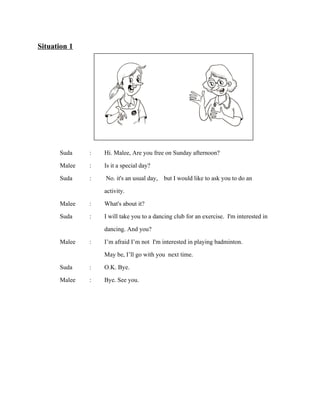
Hi. Malee,Are you free on Sunday afternoon?
Is it a special day?
No. it's an usual day, but I would like to ask you to do an
activity.
What's about it?
I will take you to a dancing club for an exercise. I'm interested in
dancing. And you?
I’m afraid I’m not I'm interested in playing badminton.
May be, I’ll go with you next time.
O.K. Bye.
Bye. See you.
58.
Situation 2
Wichai
Mana
:
:
Wichai
:
Mana
Wichai
Mana
Wichai
Mana
:
:
:
:
:
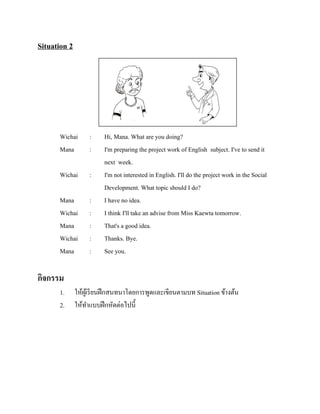
Hi, Mana.What are you doing?
I'm preparing the project work of English subject. I've to send it
next week.
I'm not interested in English. I'll do the project work in the Social
Development. What topic should I do?
I have no idea.
I think I'll take an advise from Miss Kaewta tomorrow.
That's a good idea.
Thanks. Bye.
See you.
กิจกรรม
1.
2.
ให้ผเู ้ รี ยนฝึ กสนทนาโดยการพูดและเขียนตามบท Situation ข้างต้น
ให้ทาแบบฝึ กหัดต่อไปนี้
59.
Exercise
Read Situation 1and 2 again, then answer the questions.
1.
When did situation 1 happened?
____________________________________________________
2.
Who likes to dance?
____________________________________________________
3.
What is Malee interested in?
____________________________________________________
4.
What is Mana doing?
____________________________________________________
5.
In which subject will Wichai do the project work?
____________________________________________________
เรื่องที่ 3 เสี ยใจด้ วยนะ (Sorry to hear that.)
ในชีวตประจาวัน การแสดงความเสี ยใจต่อเรื่ องหรื อเหตุการณ์ที่สูญเสี ยของบุคคล เป็ น
ิ
มารยาททางสังคมที่พึงปฏิบติต่อกัน ผูพดจึงต้องใช้คาพูดและสานวนที่แสดงความเห็นอกเห็นใจต่อ
ั
้ ู
่
่
ผูสูญเสี ยที่อยูในอารมณ์เศร้าให้ผอนคลายและเกิดกาลังใจในการต่อสู ้และดารง ชีวตต่อไป
้
ิ
60.
คาพูดและสานวนที่มกนิยมใช้ ได้แก่ คาว่า
ั
Sorry.
I'm so sorry.
ยกตัวอย่างเช่น
มาลีเป็ นเพื่อนรักกับสุ ดา วันหนึ่งมาลีได้รับทราบข่าวจากวนิดาว่า คุณพ่อของสุ ดาเสี ยชีวต
ิ
มาลีจึงได้โทรศัพท์ถึงสุ ดา เพื่อแสดงความเสี ยใจต่อการสู ญเสี ยคุณพ่อ การสนทนาจะประกอบด้วย
ถ้อยคาดังต่อไปนี้
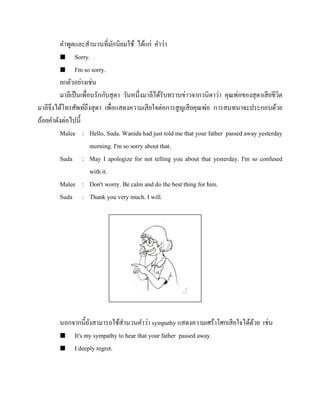
Malee : Hello, Suda. Wanida had just told me that your father passed away yesterday
morning. I'm so sorry about that.
Suda : May I apologize for not telling you about that yesterday. I'm so confused
with it.
Malee : Don't worry. Be calm and do the best thing for him.
Suda : Thank you very much. I will.
นอกจากนี้ยงสามารถใช้สานวนคาว่า sympathy แสดงความเศร้าโศกเสี ยใจได้ดวย เช่น
ั
้
It's my sympathy to hear that your father passed away.
I deeply regret.
61.
นอกจากแสดงความเสี ยใจ ยังสามารถแสดงความเห็นอกเห็นใจปลอบใจและให้กาลังใจ
ในโอกาสต่าง ๆ ซึ่งสานวนที่มกจะใช้ ได้แก่
ั
Don't worry.
ไม่ตองกังวล
้
Cheer up.
สู ้ ๆ
Take it easy.
ใจเย็น ๆ ไว้
Relaxed.
ทาใจให้สบาย
You will be fine.
เดี๋ยวก็ดีเอง
Well done.
ทาได้ดีมาก
You did a good job.
ทาได้ดีมาก
ลองศึกษาสถานการณ์กรณี ตวอย่างต่าง ๆ และพยายามทาความเข้าใจวีการใช้สานวนตาม
ั
สถานการณ์น้ นๆ
ั
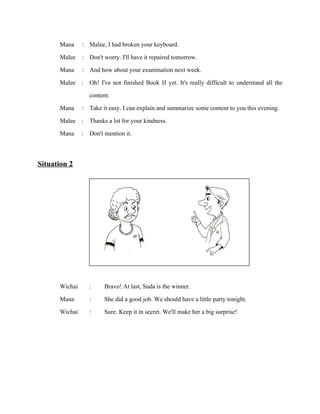
Situation 1
62.
Mana
Malee
Mana
Malee
:
:
:
:
Malee, I hadbroken your keyboard.
Don't worry. I'll have it repaired tomorrow.
And how about your examination next week.
Oh! I've not finished Book II yet. It's really difficult to understand all the
content.
Mana : Take it easy. I can explain and summarize some content to you this evening.
Malee : Thanks a lot for your kindness.
Mana : Don't mention it.
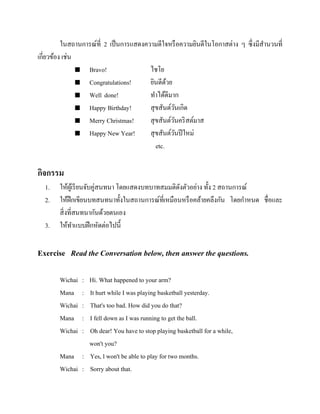
Situation 2
Wichai
Mana
Wichai
:
:
:
Bravo! At last, Suda is the winner.
She did a good job. We should have a little party tonight.
Sure. Keep it in secret. We'll make her a big surprise!
63.
ในสถานการณ์ที่ 2 เป็นการแสดงความดีใจหรื อความยินดีในโอกาสต่าง ๆ ซึ่งมีสานวนที่
เกี่ยวข้อง เช่น
Bravo!
ไชโย
Congratulations!
ยินดีดวย
้
Well done!
ทาได้ดีมาก
Happy Birthday!
สุ ขสันต์วนเกิด
ั
Merry Christmas!
สุ ขสันต์วนคริ สต์มาส
ั
Happy New Year!
สุ ขสันต์วนปี ใหม่
ั
etc.
กิจกรรม
1.
2.
3.
ให้ผเู ้ รี ยนจับคู่สนทนา โดยแสดงบทบาทสมมติดงตัวอย่าง ทั้ง 2 สถานการณ์
ั
ให้ฝึกเขียนบทสนทนาทั้งในสถานการณ์ที่เหมือนหรื อคล้ายคลึงกัน โดยกาหนด ชื่อและ
สิ่ งที่สนทนากันด้วยตนเอง
ให้ทาแบบฝึ กหัดต่อไปนี้
Exercise Read the Conversation below, then answer the questions.
Wichai
Mana
Wichai
Mana
Wichai
:
:
:
:
:
Hi. What happened to your arm?
It hurt while I was playing basketball yesterday.
That's too bad. How did you do that?
I fell down as I was running to get the ball.
Oh dear! You have to stop playing basketball for a while,
won't you?
Mana : Yes, l won't be able to play for two months.
Wichai : Sorry about that.
64.
1.
2.
3.
Who had anaccident?
____________________________________________________
When did the accident happen?
____________________________________________________
How did the accident happen?
____________________________________________________
4.
Who had to stop playing basketball?
____________________________________________________
5. How did his friend feel?
____________________________________________________
เรื่องที่ 4 ยินดีด้วย (Congratulations!)
ั
การแสดงความยินดีกบเพื่อน ๆ และผูใหญ่ในโอกาสที่บุคคลนั้น ๆ ได้รับความเจริ ญก้าวหน้า
้
ในหน้าที่การงานและอาชีพ ตลอดจนการได้เลื่อนตาแหน่งให้สูงขึ้น เป็ นมารยาททางสังคมที่ผมีน้ าใจ
ู้
พึงปฏิบติต่อกัน
ั
สานวนที่ใช้ในการแสดงความยินดี ได้แก่ คาว่า Congratulations! หรื อคาว่า
Congratulations on your……………! เป็ นต้น
Situation 1
สุ ดาทางานที่บริ ษท ABC และได้รับการแต่งตั้งให้ดารงตาแหน่งที่สูงขึ้น มาลีซ่ ึงเป็ น เพื่อน
ั
สนิทของสุ ดาต้องการแสดงความยินดี การสนทนาจะประกอบด้วยถ้อยคาต่อไปนี้
65.
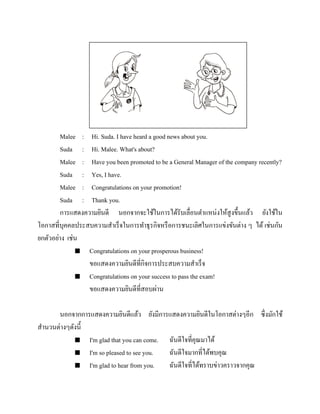
Malee : Hi.Suda. I have heard a good news about you.
Suda : Hi. Malee. What's about?
Malee : Have you been promoted to be a General Manager of the company recently?
Suda : Yes, I have.
Malee : Congratulations on your promotion!
Suda : Thank you.
การแสดงความยินดี นอกจากจะใช้ในการได้รับเลื่อนตาแหน่งให้สูงขึ้นแล้ว ยังใช้ใน
โอกาสที่บุคคลประสบความสาเร็จในการทาธุรกิจหรื อการชนะเลิศในการแข่งขันต่าง ๆ ได้ เช่นกัน
ยกตัวอย่าง เช่น
Congratulations on your prosperous business!
ขอแสดงความยินดีที่กิจการประสบความสาเร็จ
Congratulations on your success to pass the exam!
ขอแสดงความยินดีที่สอบผ่าน
นอกจากการแสดงความยินดีแล้ว ยังมีการแสดงความยินดีในโอกาสต่างๆอีก ซึ่งมักใช้
สานวนต่างๆดังนี้
I'm glad that you can come.
ฉันดีใจที่คุณมาได้
I'm so pleased to see you.
ฉันดีใจมากที่ได้พบคุณ
I'm glad to hear from you.
ฉันดีใจที่ได้ทราบข่าวคราวจากคุณ
66.
That's great.
How wonderful!
Marvelous!
Welldone.
You did a good job.
ยอดมาก
วิเศษมาก
วิเศษจริ งๆ
ทาได้ดีมาก
คุณทาได้ดีมาก
ลองศึกษาสถานการณ์ต่าง ๆ ที่ใช้สานวนการแสดงความดีใจในโอกาสที่แตกต่างกัน ดังตัวอย่าง
Situation 2
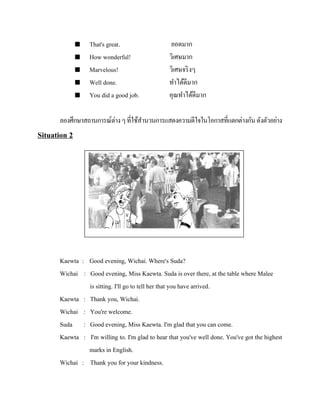
Kaewta : Good evening, Wichai. Where's Suda?
Wichai : Good evening, Miss Kaewta. Suda is over there, at the table where Malee
is sitting. I'll go to tell her that you have arrived.
Kaewta : Thank you, Wichai.
Wichai : You're welcome.
Suda : Good evening, Miss Kaewta. I'm glad that you can come.
Kaewta : I'm willing to. I'm glad to hear that you've well done. You've got the highest
marks in English.
Wichai : Thank you for your kindness.
67.
Situation 3
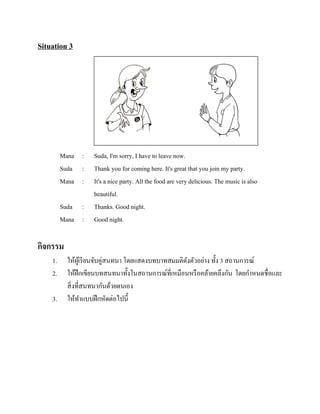
Mana :
Suda:
Mana :
Suda :
Mana :
Suda, I'm sorry, I have to leave now.
Thank you for coming here. It's great that you join my party.
It's a nice party. All the food are very delicious. The music is also
beautiful.
Thanks. Good night.
Good night.
กิจกรรม
1.
2.
3.
ให้ผเู ้ รี ยนจับคู่สนทนา โดยแสดงบทบาทสมมติดงตัวอย่าง ทั้ง 3 สถานการณ์
ั
ให้ฝึกเขียนบทสนทนาทั้งในสถานการณ์ที่เหมือนหรื อคล้ายคลึงกัน โดยกาหนดชื่อและ
สิ่ งที่สนทนากันด้วยตนเอง
ให้ทาแบบฝึ กหัดต่อไปนี้
68.
Exercise Complete thisconversation.
Mana :
Amnach :
Mana :
Amnach :
Mana :
(1)
(2)
Of course. I know
it better next time.
(4)
(5)
. I know you could done it.
. I must say I am very happy.
(3)
.I'm sure you'll do
. I'll try to do my best. Goodbye.
.
เรื่องที่ 1 ฉันควรใส่ชุดไหนดีสาหรับงานเลียงต้ อนรับ
้
(Which dress should I wear to the welcome party?)
เสื้ อผ้าเครื่ องแต่งกายเป็ นปัจจัยหนึ่งที่จาเป็ นสาหรับมนุษย์
งานเลี้ยงต่าง ๆ ให้เหมาะสมกับโอกาสและสถานที่
โดยเฉพาะการแต่งกายไปใน
สานวนที่ใช้สอบถามเกี่ยวกับความคิดเห็น ได้แก่
What do you think about…...................?
คุณคิดอย่างไรเกี่ยวกับ ............................
Do you have any idea about…………….?
คุณมีความคิดเห็นเกี่ยวกับ.....................หรื อไม่
Do you agree that…………………..?
คุณเห็นด้วยกับ........................หรื อไม่
สานวนที่ใช้ตอบ ได้แก่
In my opinion, ………………
In my point of view, ………...
I think so.
I agree with you.
I don't think so.
I disagree.
I have no idea.
ในความคิดเห็นของฉัน.........
ฉันเห็นด้วย
ฉันไม่เห็นด้วย
ฉันไม่มีความเห็น
71.
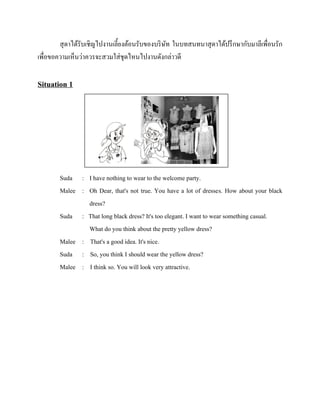
สุ ดาได้รับเชิญไปงานเลี้ยงต้อนรับของบริ ษทในบทสนทนาสุ ดาได้ปรึ กษากับมาลีเพื่อนรัก
ั
เพื่อขอความเห็นว่าควรจะสวมใส่ ชุดไหนไปงานดังกล่าวดี
Situation 1
Suda : I have nothing to wear to the welcome party.
Malee : Oh Dear, that's not true. You have a lot of dresses. How about your black
dress?
Suda : That long black dress? It's too elegant. I want to wear something casual.
What do you think about the pretty yellow dress?
Malee : That's a good idea. It's nice.
Suda : So, you think I should wear the yellow dress?
Malee : I think so. You will look very attractive.
72.
่
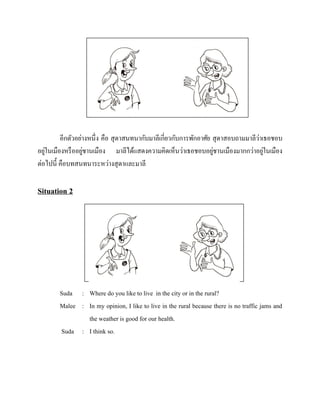
อีกตัวอย่างหนึ่ง คือ สุดาสนทนากับมาลีเกี่ยวกับการพักอาศัย สุ ดาสอบถามมาลีวาเธอชอบ
่
่
่
่
อยูในเมืองหรื ออยูชานเมือง มาลีได้แสดงความคิดเห็นว่าเธอชอบอยูชานเมืองมากกว่าอยูในเมือง
ต่อไปนี้ คือบทสนทนาระหว่างสุ ดาและมาลี
Situation 2
Suda : Where do you like to live in the city or in the rural?
Malee : In my opinion, I like to live in the rural because there is no traffic jams and
the weather is good for our health.
Suda : I think so.
73.
กิจกรรม
1.
2.
3.
ให้ผเู ้ รียนจับคู่สนทนา โดยแสดงบทบาทสมมติดงตัวอย่าง ทั้ง 2 สถานการณ์
ั
ให้ฝึกเขียนบนสนทนาทั้งในสถานการณ์ที่เหมือนหรื อคล้ายคลึงกัน โดยกาหนดชื่อและ
สิ่ งที่สนทนาด้วยตนเอง
ให้ทาแบบฝึ กหัดต่อไปนี้
Exercise Read the conversation, then answer the questions.
Interviewer
Preecha
Interviewer
Preecha
Interviewer
Preecha
Interviewer
Preecha
Interviewer
Preecha
: Excuse me. I'm doing a survey about mobile phones. Can I ask you a few
questions?
: Yes, of course.
: How often do you use your mobile phone?
: All the time, I enjoy talking with my friend.
: And do you use any other options on your phone? Like SMS or …..
: Oh! I often sent SMS. It's cheaper. And sometimes I take photos and send
them to my friends.
: Anything else?
: Oh yes! My parents often call me on mobile phone when I'm out at night.
They like to know if I'm safe.
: Do you have any problems with your phone?
: Yes. The large bill at the end of the month.
74.
1.
Who is theinterviewer?
____________________________________________________
2.
What is the interview about?
____________________________________________________
3.
How often does Preecha use his mobile phone?
____________________________________________________
4. What options does he use?
____________________________________________________
5.
What are problems of Preecha for using the mobile phone?
____________________________________________________
เรื่องที่ 2 เดินซื้อของ (Shopping)
่
การใช้ชีวตประจาวันของคนเราต้องเกี่ยวข้องกับการจับจ่ายใช้สอยไม่วาจะเป็ นอาหาร
ิ
เครื่ องดื่ม เสื้ อผ้าและของใช้ ตลอดจนยารักษาโรค
สถานที่ที่คนนิยมไปจับจ่ายซื้อของ ได้แก่ ร้านค้าสะดวกซื้อ (a convenience store) และ
ห้างสรรพสิ นค้า (a department store) เมื่อมีลูกค้าเข้าไปในร้าน พนักงานจะสอบถามความต้องการ
ของลูกค้าเพื่ออานวยความสะดวกในการจับจ่ายซื้อของได้เร็วขึ้น
75.
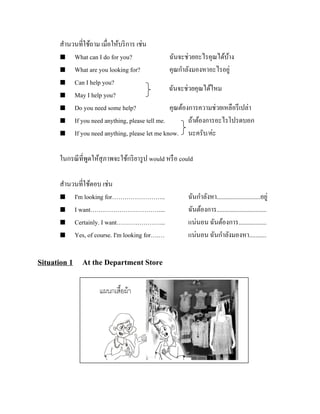
สานวนที่ใช้ถาม เมื่อให้บริ การเช่น
What can I do for you?
ฉันจะช่วยอะไรคุณได้บาง
้
What are you looking for?
คุณกาลังมองหาอะไรอยู่
Can I help you?
ฉันจะช่วยคุณได้ไหม
May I help you?
Do you need some help?
คุณต้องการความช่วยเหลือรึ เปล่า
If you need anything, please tell me.
ถ้าต้องการอะไรโปรดบอก
If you need anything, please let me know.
นะครับ/ค่ะ
ในกรณี ที่พดให้สุภาพจะใช้กริ ยารู ป would หรื อ could
ู
สานวนที่ใช้ตอบ เช่น
I'm looking for……………………..
I want……………………………....
Certainly. I want…………………...
Yes, of course. I'm looking for….…
Situation 1 At the Department Store
ฉันกาลังหา............................อยู่
ฉันต้องการ................................
แน่นอน ฉันต้องการ..................
แน่นอน ฉันกาลังมองหา...........
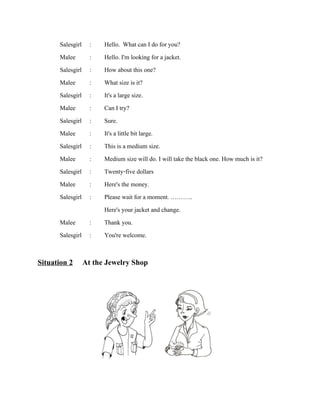
Salesgirl
Miss Kaewta
:
:
Salesgirl
Miss Kaewta
Salesgirl
:
:
:
MissKaewta
:
Salesgirl
:
Salesgirl
Miss Kaewta
:
:
Salesgirl
:
Miss Kaewta
Salesgirl
Miss Kaewta
Salesgirl
:
:
:
:
Salesgirl
:
Miss Kaewta
Salesgirl
:
:
Good morning. What can I do for you, Miss?
Of course. I'm looking for a set of emerald earrings, ring and
necklace.
Which design would you like, the classic, the modern or the fancy one?
Could I look around first, then I'll decide.
Certainly, Miss. If any set meets your consideration, please let me
know.
Sure!
……….. After 10 minutes past …………
Hello! I would like to see these two sets, the small one at
the right corner and the medium one in the middle of the
showcase.
A moment, please. Here you are. You can try both.
Umm…I prefer the small one. I think it will get along well with my
night silk dress. How much is it?
Full prize is 78,000 baht. You'll get the discount of 10%. So it will
cost you 70,200 baht.
Can I pay with credit card?
Of course.
Here you are.
Wait a minute, please.
………………..…………
Here your emerald set and credit card. Please sign the slip. Thank
you and come here again.
I will. Goodbye.
Goodbye.
78.
กิจกรรม
1. ให้ผเู ้รี ยนจับคู่สนทนา โดยแสดงบทบาทสมมติดงตัวอย่าง ทั้ง 2 สถานการณ์
ั
2. ให้ฝึกเขียนบทสนทนาทั้งในสถานการณ์ที่เหมือนหรื อคล้ายคลึงกัน โดยกาหนดชื่อและ
สิ่ งที่สนทนากันด้วยตนเอง
3. ให้ทาแบบฝึ กหัดต่อไปนี้
Exercise Read the conversation, then answer the questions.
Waiter : Could I help you, Madame
Siriporn : Yes, please. I'm hungry. What is your advice?
Waiter : Today specials are hot curry with fish ball, fried rice with garlic pork
sausages and super fried noodle with seafood gravy. What would you like,
Madame
Siriporn : Um… Fried rice with garlic pork sausages, please. Will I have a small
Tomyamkung as well.
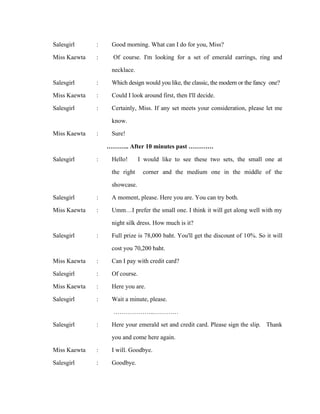
Waiter : Certainly, Madam. And what would you like for drink, soft drink or coffee
or Chinese tea?
Siriporn : I prefer cold water.
Waiter : Is that all, Madame?
Siriporn : Correct.
Waiter : All right. I'll read your list again. One fried rice with garlic pork sausages, a
small Tomyamkung and cold water, right.
Siriporn : Correct.
Waiter : I'll serve you just a minute.
79.
1.
Where is Siriporn?
________________________________________________________
2.
Whatare special for today?
________________________________________________________
3.
What does Siriporn order?
________________________________________________________
4. What does she take for drink?
________________________________________________________
5.
How long does it take for her meal to be served?
________________________________________________________
เรื่องที่ 3 การให้ บริการด้านต่ าง ๆ (Various Services)
สถานีตารวจเป็ นสถานที่ที่จะให้บริ การในด้านความปลอดภัยในชีวตและทรัพย์สินของ
ิ
ประชาชน เช่น ปัญหาเกี่ยวกับการประสบอุบติเหตุ การถูกเอารัดเอาเปรี ยบเรื่ องค่าจ้าง ของหาย
ั
เป็ นต้น สถานทูตเป็ นสถานที่สาหรับติดต่อและให้บริ การแก่ผที่เดินทางไปในประเทศนั้น ๆ
ู้
ลองมาดูสถานการณ์การทาหนังสื อเดินทาง (Passport) สู ญหายระหว่างการเดินทางไป
ต่างประเทศของสุ ดาว่าจะแก้ปัญหาอย่างไร
80.
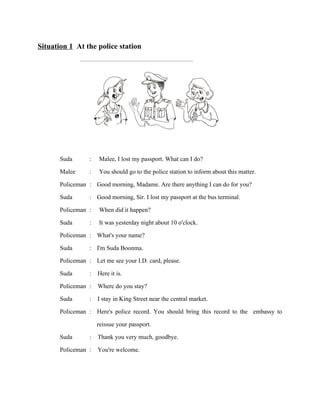
Situation 1 Atthe police station
Suda
Malee
Policeman
Suda
Policeman
Suda
Policeman
Suda
Policeman
Suda
Policeman
Suda
Policeman
:
:
:
:
:
:
:
:
:
:
:
:
:
Malee, I lost my passport. What can I do?
You should go to the police station to inform about this matter.
Good morning, Madame. Are there anything I can do for you?
Good morning, Sir. I lost my passport at the bus terminal.
When did it happen?
It was yesterday night about 10 o'clock.
What's your name?
I'm Suda Boonma.
Let me see your I.D. card, please.
Here it is.
Where do you stay?
I stay in King Street near the central market.
Here's police record. You should bring this record to the embassy to
reissue your passport.
Suda
: Thank you very much, goodbye.
Policeman : You're welcome.
81.
หลังจากสุ ดาไปแจ้งความว่า Passportสู ญหาย และตารวจได้บนทึกข้อความรับแจ้ง
ั
ของหายไว้เป็ นหลักฐานแล้วและได้แนะนาให้สุดานาบันทึกแจ้งความไปที่สถานทูตเพื่อขอทาหนังสื อ
เดินทางใหม่ หลังจากนั้นสุ ดาจึงได้เดินทางไปที่สถานทูต
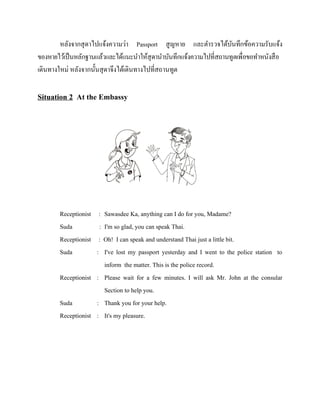
Situation 2 At the Embassy
Receptionist
Suda
Receptionist
Suda
: Sawasdee Ka, anything can I do for you, Madame?
: I'm so glad, you can speak Thai.
: Oh! I can speak and understand Thai just a little bit.
: I've lost my passport yesterday and I went to the police station to
inform the matter. This is the police record.
Receptionist : Please wait for a few minutes. I will ask Mr. John at the consular
Section to help you.
Suda
: Thank you for your help.
Receptionist : It's my pleasure.
82.
ต่อจากนั้น สุ ดาได้พบกับคุณจอห์นเจ้าหน้าที่ฝ่ายกงสุ ลที่จะช่วยออกหนังสื อเดินทางเล่มใหม่ให้
John
: Hello. What can I do for you?
Suda
: Hello. I need your help. Yesterday I lost my passport. This is the police
record.
John
: Don't worry; you can get a new one. You should fill the data In the
application form, the attach with these documents.
Police record
Census registration
I.D. card
2 of your photographs, size 2 1/2 inch.
Suda
: When will I get my new passport?
John
: About five days.
Suda
: Thank you very much for your kindness.
John
: You're welcome.
นอกจากนี้การใช้บริ การสถานีตารวจและสถานทูตแล้ว ยังมีสถานที่อื่นซึ่ งเราเข้าไปใช้
บริ การบ่อย ๆ คือ ธนาคาร (bank) และที่ทาการไปรษณี ย ์ (post office) ขอให้ศึกษาสถานการณ์ใน
การใช้บริ การดังต่อไปนี้
83.
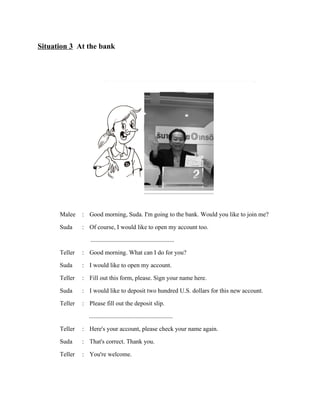
Situation 3 Atthe bank
Malee : Good morning, Suda. I'm going to the bank. Would you like to join me?
Suda : Of course, I would like to open my account too.
......................................................
Teller : Good morning. What can I do for you?
Suda : I would like to open my account.
Teller : Fill out this form, please. Sign your name here.
Suda : I would like to deposit two hundred U.S. dollars for this new account.
Teller : Please fill out the deposit slip.
......................................................
Teller : Here's your account, please check your name again.
Suda : That's correct. Thank you.
Teller : You're welcome.
84.
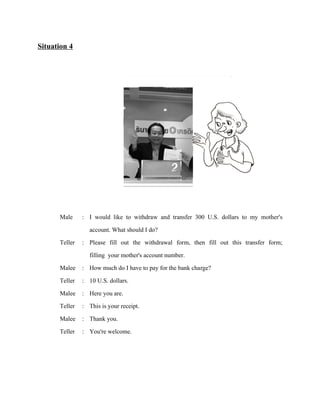
Situation 4
Male
Teller
Malee
Teller
Malee
Teller
Malee
Teller
: Iwould like to withdraw and transfer 300 U.S. dollars to my mother's
account. What should I do?
: Please fill out the withdrawal form, then fill out this transfer form;
filling your mother's account number.
: How much do I have to pay for the bank charge?
: 10 U.S. dollars.
: Here you are.
: This is your receipt.
: Thank you.
: You're welcome.
85.
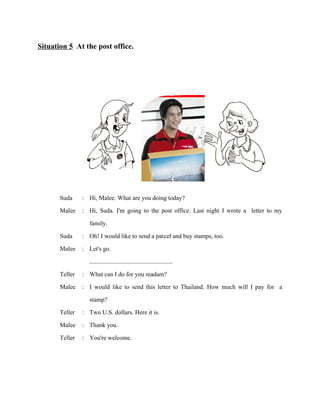
Situation 5 Atthe post office.
Suda : Hi, Malee. What are you doing today?
Malee : Hi, Suda. I'm going to the post office. Last night I wrote a letter to my
family.
Suda : Oh! I would like to send a parcel and buy stamps, too.
Malee : Let's go.
......................................................
Teller : What can I do for you madam?
Malee : I would like to send this letter to Thailand. How much will I pay for a
stamp?
Teller : Two U.S. dollars. Here it is.
Malee : Thank you.
Teller : You're welcome.
86.
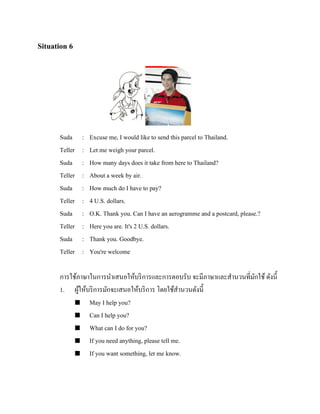
Situation 6
Suda
Teller
Suda
Teller
Suda
Teller
Suda
Teller
Suda
Teller
:
:
:
:
:
:
:
:
:
:
Excuse me,I would like to send this parcel to Thailand.
Let me weigh your parcel.
How many days does it take from here to Thailand?
About a week by air.
How much do I have to pay?
4 U.S. dollars.
O.K. Thank you. Can I have an aerogramme and a postcard, please.?
Here you are. It's 2 U.S. dollars.
Thank you. Goodbye.
You're welcome
การใช้ภาษาในการนาเสนอให้บริ การและการตอบรับ จะมีภาษาและสานวนที่มกใช้ ดังนี้
ั
1. ผูให้บริ การมักจะเสนอให้บริ การ โดยใช้สานวนดังนี้
้
May I help you?
Can I help you?
What can I do for you?
If you need anything, please tell me.
If you want something, let me know.
87.
2.
3.
4.
5.
6.
ผูรับบริ การโดยใช้สานวนดังนี้
้
Yes,please.
Yes, of course.
Sure.
Of course.
Certainly.
I need ………. .
I want ………. .
การกล่าวขอบคุณ โดยใช้สานวนดังนี้
Thank you.
Thank you for your help.
Thank you very much for your kindness.
การตอบรับการขอบคุณสาหรับผูให้บริ การ ใช้สานวนดังนี้
้
You're welcome.
การตอบรับการขอบคุณสาหรับคนที่คุนเคยกัน ใช้สานวนดังนี้
้
It's my pleasure.
Don't mention it.
It doesn't matter.
Don't worry.
Forget it.
การขอความช่วยเหลือต้องกล่าวพูดแทรกอย่างสุ ภาพ โดยใช้สานวนดังนี้
Excuse me, ......................……………….
88.
กิจกรรม
1.
2.
3.
ให้ผเู ้ รียนจับคู่สนทนา โดยแสดงบทบาทสมมติดงตัวอย่าง ทั้ง 6 สถานการณ์
ั
ให้ฝึกเขียนบทสนทนาทั้งในสถานการณ์ที่เหมือนหรื อคล้ายคลึงกัน โดยกาหนดชื่อและ
สิ่ งที่สนทนากันด้วยตนเอง
ให้ทาแบบฝึ กหัดต่อไปนี้
Exercise 1 Read the conversation, then answer the questions.
Suda :
Woman :
Suda :
Man :
Suda :
Man :
Suda :
Man :
Suda :
Man :
Excuse me, do you know where the police station is?
Sorry, I don’t. I’m not from this city.
Thanks anyway.
Can I help you, Miss?
Oh, yes. Can you tell me how to get to the police station?
Walk up this road about two blocks. When you get to Saint Bernard road, turn
right. It’s beside the post office.
O.K. Go up this street and turn right at Saint Bernard road. It’s next to the post
office.
That’s correct.
Thank you very much.
No problem.
1.
Who wants to go to the police station?
________________________________________________________
2.
Can the woman show her the way to the police station? Why?
________________________________________________________
89.
3.
Who can tellher the way?
________________________________________________________
4.
Where is the police station?
________________________________________________________
How can we go to the police station?
________________________________________________________
5.
Exercise 2 Read the conversation, then answer the questions.
Suda
Airline Staff
Suda
Airline Staff
Suda
Airline Staff
:
:
:
:
:
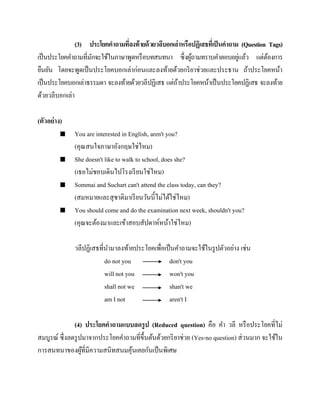
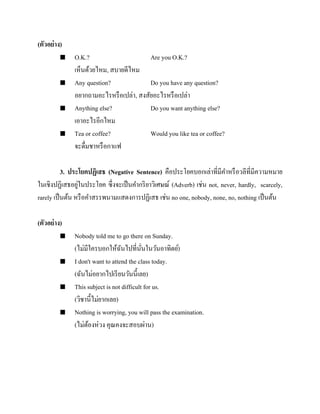
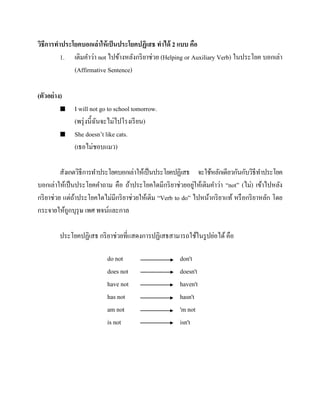
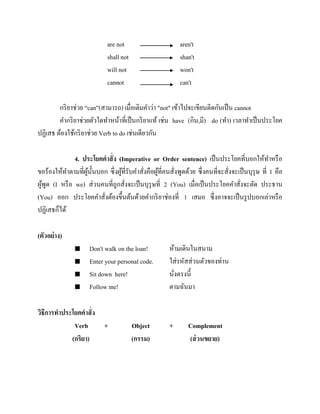
:
Suda
Airline Staff
Suda
Airline Staff
:
:
:
:
Excuse me, please. Will flight TG 2008 arrive at terminal C?
Yes, it will.
Is terminal C in this building?
No, it is not. It's in the next building.
Could you tell me the way to terminal C, please?
Walk along. When you see the sign "EMERGENCY", turn left. Then, follow
the blue arrow on the floor until you see the sign “Entrance to Terminal C”
on your right.
Thank you.
No problem. You should hurry up. Flight TG 2008 is landing now.
Thanks again.
You're welcome.
90.
1.
2.
3.
4.
5.
Where does thissituation happen?
________________________________________________________
Who does Suda ask?
________________________________________________________
Where will TG2008 arrive?
________________________________________________________
Is terminal C in that building?
________________________________________________________
Which arrow Suda follow?
________________________________________________________
เรื่องที่ 4 ขอโทษ (Excuse me.)
เวลาที่เราต้องการสอบถามหรื อพูดแทรกระหว่างที่คนอื่นกาลังพูดอยู่ ตามมารยาทแล้ว เรา
ต้องกล่าวว่า Excuse me. (ขอโทษที) ก่อน ลองศึกษาสถานการณ์ต่อไปนี้และทาความเข้าใจวิธีการ
สอบถามหรื อพูดแทรก การขอบคุณ การขอโทษ การขออนุญาตเพื่อที่จะสามารถใช้ได้อย่างถูกต้อง
Situation 1
91.
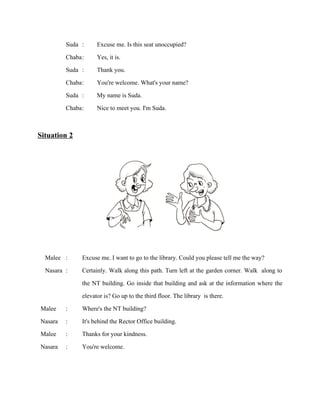
Suda :
Chaba :
Suda:
Chaba :
Suda :
Chaba :
Excuse me. Is this seat unoccupied?
Yes, it is.
Thank you.
You're welcome. What's your name?
My name is Suda.
Nice to meet you. I'm Suda.
Situation 2
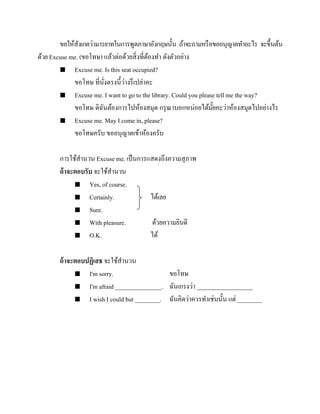
Malee :
Nasara :
Malee
Nasara
Malee
Nasara
:
:
:
:
Excuse me. I want to go to the library. Could you please tell me the way?
Certainly. Walk along this path. Turn left at the garden corner. Walk along to
the NT building. Go inside that building and ask at the information where the
elevator is? Go up to the third floor. The library is there.
Where's the NT building?
It's behind the Rector Office building.
Thanks for your kindness.
You're welcome.
92.
ขอให้สังเกตว่ามารยาทในการพูดภาษาอังกฤษนั้น ถ้าจะถามหรื อขออนุญาตทาอะไรจะขึ้นต้น
ด้วย Excuse me. (ขอโทษ) แล้วต่อด้วยสิ่ งที่ตองทา ดังตัวอย่าง
้
Excuse me. Is this seat occupied?
่
ขอโทษ ที่นงตรงนี้วางรึ เปล่าคะ
ั่
Excuse me. I want to go to the library. Could you please tell me the way?
ขอโทษ ดิฉนต้องการไปห้องสมุด กรุ ณาบอกหน่อยได้มยคะว่าห้องสมุดไปอย่างไร
ั
ั๊
Excuse me. May I come in, please?
ขอโทษครับ ขออนุญาตเข้าห้องครับ
การใช้สานวน Excuse me. เป็ นการแสดงถึงความสุ ภาพ
ถ้ าจะตอบรับ จะใช้สานวน
Yes, of course.
Certainly.
ได้เลย
Sure.
With pleasure.
ด้วยความยินดี
O.K.
ได้
ถ้ าจะตอบปฏิเสธ จะใช้สานวน
I'm sorry.
ขอโทษ
I'm afraid _______________. ฉันเกรงว่า __________________
I wish I could but ________. ฉันคิดว่าควรทาเช่ นนั้น แต่ ________
93.
Situation 3
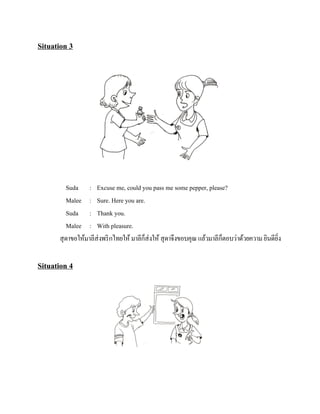
Suda :Excuse me, could you pass me some pepper, please?
Malee : Sure. Here you are.
Suda : Thank you.
Malee : With pleasure.
็
็
สุ ดาขอให้มาลีส่งพริ กไทยให้ มาลีกส่งให้ สุ ดาจึงขอบคุณ แล้วมาลีกตอบว่าด้วยความ ยินดียง
ิ่
Situation 4
94.
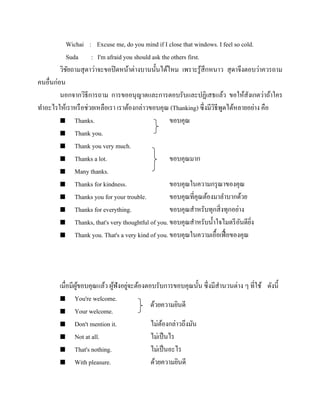
Wichai : Excuseme, do you mind if I close that windows. I feel so cold.
Suda : I'm afraid you should ask the others first.
วิชยถามสุ ดาว่าจะขอปิ ดหน้าต่างบานนั้นได้ไหม เพราะรู ้สึกหนาว สุ ดาจึงตอบว่าควรถาม
ั
คนอื่นก่อน
นอกจากวิธีการถาม การขออนุญาตและการตอบรับและปฏิเสธแล้ว ขอให้สังเกตว่าถ้าใคร
ทาอะไรให้เราหรื อช่วยเหลือเรา เราต้องกล่าวขอบคุณ (Thanking) ซึ่งมีวธีพดได้หลายอย่าง คือ
ิ ู
Thanks.
ขอบคุณ
Thank you.
Thank you very much.
Thanks a lot.
ขอบคุณมาก
Many thanks.
Thanks for kindness.
ขอบคุณในความกรุ ณาของคุณ
Thanks you for your trouble.
ขอบคุณที่คุณต้องมาลาบากด้วย
Thanks for everything.
ขอบคุณสาหรับทุกสิ่ งทุกอย่าง
Thanks, that's very thoughtful of you. ขอบคุณสาหรับน้ าใจไมตรี อนดียง
ั ิ่
Thank you. That's a very kind of you. ขอบคุณในความเอื้อเฟื้ อของคุณ
เมื่อมีผขอบคุณแล้ว ผูฟังอยูจะต้องตอบรับการขอบคุณนั้น ซึ่งมีสานวนต่าง ๆ ที่ใช้ ดังนี้
ู้
้ ่
You're welcome.
ด้วยความยินดี
Your welcome.
Don't mention it.
ไม่ตองกล่าวถึงมัน
้
Not at all.
ไม่เป็ นไร
That's nothing.
ไม่เป็ นอะไร
With pleasure.
ด้วยความยินดี
95.
Situation 5
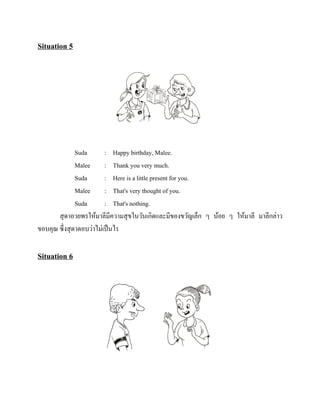
Suda
: Happybirthday, Malee.
Malee
: Thank you very much.
Suda
: Here is a little present for you.
Malee
: That's very thought of you.
Suda
: That's nothing.
สุ ดาอวยพรให้มาลีมีความสุ ขในวันเกิดและมีของขวัญเล็ก ๆ น้อย ๆ ให้มาลี มาลีกล่าว
ขอบคุณ ซึ่งสุ ดาตอบว่าไม่เป็ นไร
Situation 6
96.
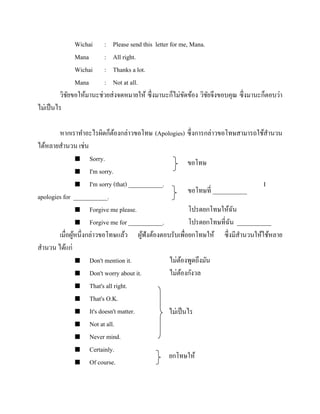
Wichai : Pleasesend this letter for me, Mana.
Mana
: All right.
Wichai : Thanks a lot.
Mana
: Not at all.
วิชยขอให้มานะช่วยส่ งจดหมายให้ ซึ่งมานะก็ไม่ขดข้อง วิชยจึงขอบคุณ ซึ่งมานะก็ตอบว่า
ั
ั
ั
ไม่เป็ นไร
หากเราทาอะไรผิดก็ตองกล่าวขอโทษ (Apologies) ซึ่งการกล่าวขอโทษสามารถใช้สานวน
้
ได้หลายสานวน เช่น
Sorry.
ขอโทษ
I'm sorry.
I'm sorry (that) ___________.
I
ขอโทษที่ ___________
apologies for ___________.
Forgive me please.
โปรดยกโทษให้ฉน
ั
Forgive me for ___________.
โปรดยกโทษที่ฉน ___________
ั
เมื่อผูหนึ่งกล่าวขอโทษแล้ว ผูฟังต้องตอบรับเพื่อยกโทษให้ ซึ่งมีสานวนให้ใช้หลาย
้
้
สานวน ได้แก่
Don't mention it.
ไม่ตองพูดถึงมัน
้
Don't worry about it.
ไม่ตองกังวล
้
That's all right.
That's O.K.
It's doesn't matter.
ไม่เป็ นไร
Not at all.
Never mind.
Certainly.
ยกโทษให้
Of course.
97.
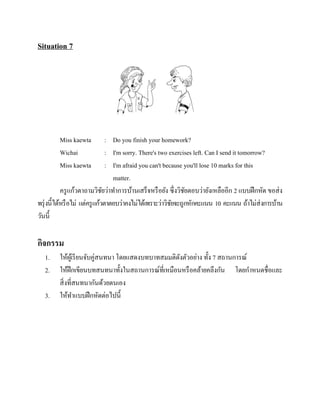
Situation 7
Miss kaewta
Wichai
Misskaewta
: Do you finish your homework?
: I'm sorry. There's two exercises left. Can I send it tomorrow?
: I'm afraid you can't because you'll lose 10 marks for this
matter.
ครู แก้วตาถามวิชยว่าทาการบ้านเสร็จหรื อยัง ซึ่งวิชยตอบว่ายังเหลืออีก 2 แบบฝึ กหัด ขอส่ ง
ั
ั
พรุ่ งนี้ได้หรื อไม่ แต่ครู แก้วตาตอบว่าคงไม่ได้เพราะว่าวิชยจะถูกหักคะแนน 10 คะแนน ถ้าไม่ส่งการบ้าน
ั
วันนี้
กิจกรรม
1.
2.
3.
ให้ผเู ้ รี ยนจับคู่สนทนา โดยแสดงบทบาทสมมติดงตัวอย่าง ทั้ง 7 สถานการณ์
ั
ให้ฝึกเขียนบทสนทนาทั้งในสถานการณ์ที่เหมือนหรื อคล้ายคลึงกัน โดยกาหนดชื่อและ
สิ่ งที่สนทนากันด้วยตนเอง
ให้ทาแบบฝึ กหัดต่อไปนี้
98.
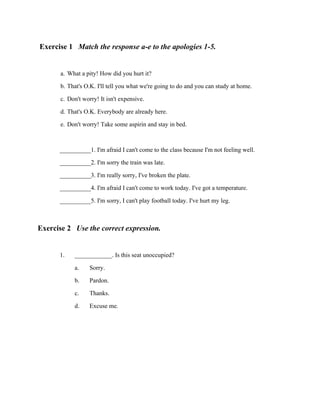
Exercise 1 Matchthe response a-e to the apologies 1-5.
a. What a pity! How did you hurt it?
b. That's O.K. I'll tell you what we're going to do and you can study at home.
c. Don't worry! It isn't expensive.
d. That's O.K. Everybody are already here.
e. Don't worry! Take some aspirin and stay in bed.
__________1. I'm afraid I can't come to the class because I'm not feeling well.
__________2. I'm sorry the train was late.
__________3. I'm really sorry, I've broken the plate.
__________4. I'm afraid I can't come to work today. I've got a temperature.
__________5. I'm sorry, I can't play football today. I've hurt my leg.
Exercise 2 Use the correct expression.
1.
____________. Is this seat unoccupied?
a. Sorry.
b. Pardon.
c. Thanks.
d. Excuse me.
99.
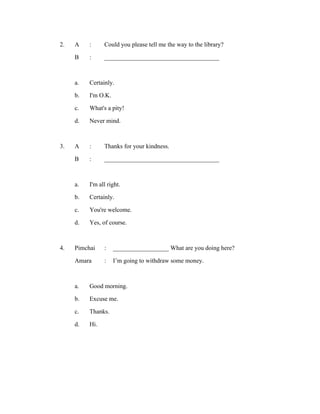
2.
Certainly.
I'm O.K.
What's apity!
Never mind.
A
B
:
:
a.
b.
c.
d.
4.
:
:
a.
b.
c.
d.
3.
A
B
Could you please tell me the way to the library?
_____________________________________
I'm all right.
Certainly.
You're welcome.
Yes, of course.
Thanks for your kindness.
_____________________________________
Pimchai : __________________ What are you doing here?
Amara : I’m going to withdraw some money.
a.
b.
c.
d.
Good morning.
Excuse me.
Thanks.
Hi.
100.
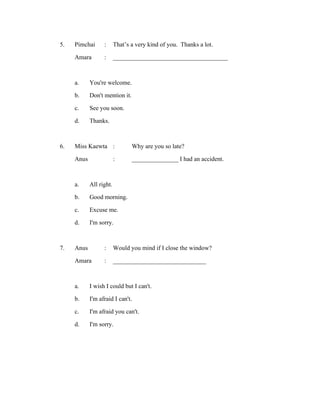
5.
Pimchai : That’sa very kind of you. Thanks a lot.
Amara : _____________________________________
a.
b.
c.
d.
6.
Miss Kaewta :
Anus
:
a.
b.
c.
d.
7.
You're welcome.
Don't mention it.
See you soon.
Thanks.
All right.
Good morning.
Excuse me.
I'm sorry.
Anus
Amara
a.
b.
c.
d.
Why are you so late?
_______________ I had an accident.
: Would you mind if I close the window?
: ______________________________
I wish I could but I can't.
I'm afraid I can't.
I'm afraid you can't.
I'm sorry.
101.
8.
:
:
a.
b.
c.
d.
9.
A
B
Thank you.
Not atall.
That's O.K.
With pleasure.
Wittaya
Pong
a.
b.
c.
d.
Could you buy a cup of coffee for me?
______________________________
: ________________ I forget to tell you about that.
: Don’t worry.
Excuse me.
I'm sorry.
Alright.
Certainly.
10. Miss Babara :
Boss
:
a.
b.
c.
d.
I apologize for not informing you about that case.
______________________________
Certainly.
Of course.
With pleasure.
Don't worry about it.
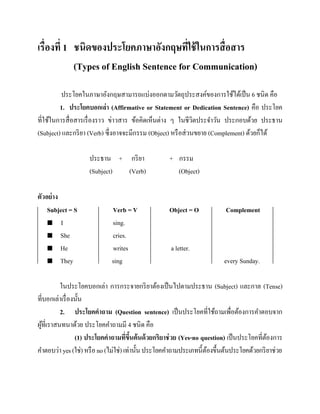
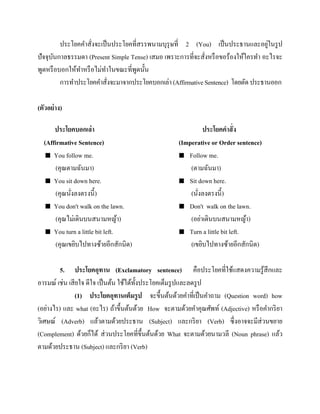
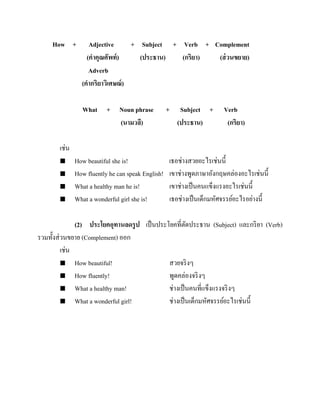
เรื่องที่ 1 ชนิดของประโยคภาษาอังกฤษที่ใช้ในการสื่ อสาร
(Types of English Sentence for Communication)
ประโยคในภาษาอังกฤษสามารถแบ่งออกตามวัตถุประสงค์ของการใช้ได้เป็ น 6 ชนิด คือ
1. ประโยคบอกเล่า (Affirmative or Statement or Dedication Sentence) คือ ประโยค
ที่ใช้ในการสื่ อสารเรื่ องราว ข่าวสาร ข้อคิดเห็นต่าง ๆ ในชีวตประจาวัน ประกอบด้วย ประธาน
ิ
(Subject) และกริ ยา (Verb) ซึ่งอาจจะมีกรรม (Object) หรื อส่ วนขยาย (Complement) ด้วยก็ได้
ประธาน + กริ ยา
(Subject)
(Verb)
ตัวอย่ าง
Subject = S
I
She
He
They
Verb = V
sing.
cries.
writes
sing
+ กรรม
(Object)
Object = O
Complement
a letter.
every Sunday.
ในประโยคบอกเล่า การกระจายกริ ยาต้องเป็ นไปตามประธาน (Subject) และกาล (Tense)
ที่บอกเล่าเรื่ องนั้น
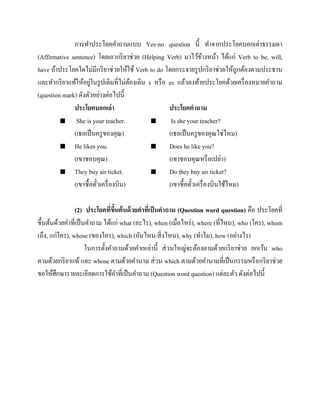
2. ประโยคคาถาม (Question sentence) เป็ นประโยคที่ใช้ถามเพื่อต้องการคาตอบจาก
ผูที่เราสนทนาด้วย ประโยคคาถามมี 4 ชนิด คือ
้
(1) ประโยคคาถามทีขนต้ นด้ วยกริยาช่ วย (Yes-no question) เป็ นประโยคที่ตองการ
่ ึ้
้
คาตอบว่า yes (ใช่) หรื อ no (ไม่ใช่) เท่านั้น ประโยคคาถามประเภทนี้ตองขึ้นต้นประโยคด้วยกริ ยาช่วย
้
104.
การทาประโยคคาถามแบบ Yes-no questionนี้ ทาจากประโยคบอกเล่าธรรมดา
(Affirmative sentence) โดยเอากริ ยาช่วย (Helping Verb) มาไว้ขางหน้า ได้แก่ Verb to be, will,
้
have ถ้าประโยคใดไม่มีกริ ยาช่วยให้ใช้ Verb to do โดยกระจายรู ปกริ ยาช่วยให้ถูกต้องตามประธาน
่
และทากริ ยาแท้ให้อยูในรู ปเดิมที่ไม่ตองเติม s หรื อ es แล้วลงท้ายประโยคด้วยเครื่ องหมายคาถาม
้
(question mark) ดังตัวอย่างต่อไปนี้
ประโยคบอกเล่า
ประโยคคาถาม
She is your teacher.
Is she your teacher?
(เธอเป็ นครู ของคุณ)
(เธอเป็ นครู ของคุณใช่ไหม)
He likes you.
Does he like you?
(เขาชอบคุณ)
(เขาชอบคุณหรื อเปล่า)
They buy air ticket.
Do they buy air ticket?
(เขาซื้ อตัวเครื่ องบิน)
(เขาซื้ อตัวเครื่ องบินใช้ไหม)
๋
๋
(2) ประโยคทีขนต้ นด้ วยคาทีเ่ ป็ นคาถาม (Question word question) คือ ประโยคที่
่ ึ้
ขึ้นต้นด้วยคาที่เป็ นคาถาม ได้แก่ what (อะไร), when (เมื่อไหร่ ), where (ที่ไหน), who (ใคร), whom
(ถึง, แก่ใคร), whose (ของใคร), which (อันไหน/สิ่ งไหน), why (ทาไม), how (อย่างไร)
ในการตั้งคาถามด้วยคาเหล่านี้ ส่ วนใหญ่จะต้องตามด้วยกริ ยาช่วย ยกเว้น who
ตามด้วยกริ ยาแท้ และ whose ตามด้วยคานาม ส่ วน which ตามด้วยคานามที่เป็ นกรรมหรื อกริ ยาช่วย
ขอให้ศึกษารายละเอียดการใช้คาที่เป็ นคาถาม (Question word question) แต่ละตัว ดังต่อไปนี้
105.
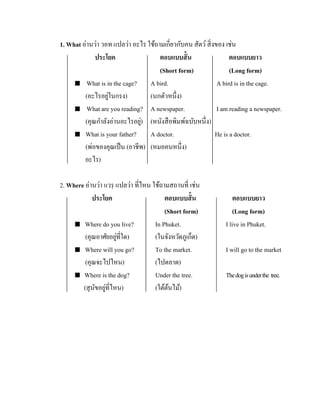
1. What อ่านว่าวอท แปลว่า อะไร ใช้ถามเกี่ยวกับคน สัตว์ สิ่ งของ เช่น
ประโยค
ตอบแบบสั้ น
ตอบแบบยาว
(Short form)
(Long form)
What is in the cage?
A bird.
A bird is in the cage.
่
(อะไรอยูในกรง)
(นกตัวหนึ่ง)
What are you reading? A newspaper.
I am reading a newspaper.
่
(คุณกาลังอ่านอะไรอยู) (หนังสื อพิมพ์ฉบับหนึ่ง)
What is your father?
A doctor.
He is a doctor.
(พ่อของคุณเป็ น (อาชีพ) (หมอคนหนึ่ ง)
อะไร)
2. Where อ่านว่า แวรฺ แปลว่า ที่ไหน ใช้ถามสถานที่ เช่น
ประโยค
ตอบแบบสั้ น
(Short form)
Where do you live?
In Phuket.
่
(คุณอาศัยอยูที่ใด)
(ในจังหวัดภูเก็ต)
Where will you go?
To the market.
(คุณจะไปไหน)
(ไปตลาด)
Where is the dog?
Under the tree.
(สุ นขอยูที่ไหน)
ั ่
(ใต้ตนไม้)
้
ตอบแบบยาว
(Long form)
I live in Phuket.
I will go to the market
The dog is under the tree.
106.
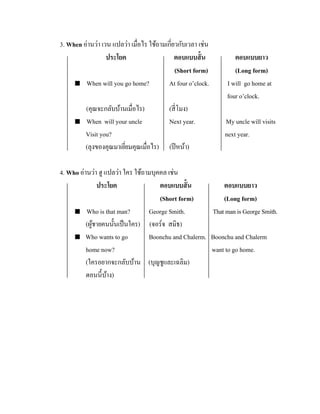
3. When อ่านว่าเวน แปลว่า เมื่อไร ใช้ถามเกี่ยวกับเวลา เช่น
ประโยค
ตอบแบบสั้ น
(Short form)
When will you go home?
At four o’clock.
(คุณจะกลับบ้านเมื่อไร)
When will your uncle
Visit you?
(ลุงของคุณมาเยียมคุณเมื่อไร)
่
(สี่ โมง)
Next year.
ตอบแบบยาว
(Long form)
I will go home at
four o’clock.
My uncle will visits
next year.
(ปี หน้า)
4. Who อ่านว่า ฮู แปลว่า ใคร ใช้ถามบุคคล เช่น
ประโยค
ตอบแบบสั้ น
ตอบแบบยาว
(Short form)
(Long form)
Who is that man?
George Smith.
That man is George Smith.
(ผูชายคนนั้นเป็ นใคร) (จอร์จ สมิธ)
้
Who wants to go
Boonchu and Chalerm. Boonchu and Chalerm
home now?
want to go home.
(ใครอยากจะกลับบ้าน (บุญชูและเฉลิม)
ตอนนี้บาง)
้
107.
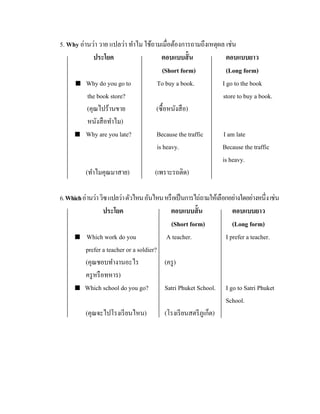
5. Why อ่านว่าวาย แปลว่า ทาไม ใช้ถามเมื่อต้องการถามถึงเหตุผล เช่น
ประโยค
ตอบแบบสั้ น
ตอบแบบยาว
(Short form)
(Long form)
Why do you go to
To buy a book.
I go to the book
the book store?
store to buy a book.
(คุณไปร้านขาย
(ซื้อหนังสื อ)
หนังสื อทาไม)
Why are you late?
Because the traffic
I am late
is heavy.
Because the traffic
is heavy.
(ทาไมคุณมาสาย)
(เพราะรถติด)
6. Which อ่านว่า วิซ แปลว่า ตัวไหน อันไหน หรื อเป็ นการไถ่ถามให้เลือกอย่างใดอย่างหนึ่ง เช่น
ประโยค
ตอบแบบสั้ น
ตอบแบบยาว
(Short form)
(Long form)
Which work do you
A teacher.
I prefer a teacher.
prefer a teacher or a soldier?
(คุณชอบทางานอะไร
(ครู )
ครู หรื อทหาร)
Which school do you go?
Satri Phuket School. I go to Satri Phuket
School.
(คุณจะไปโรงเรี ยนไหน)
(โรงเรี ยนสตรี ภูเก็ต)
108.
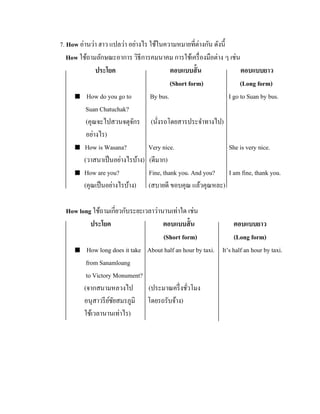
7. How อ่านว่าฮาว แปลว่า อย่างไร ใช้ในความหมายที่ต่างกัน ดังนี้
How ใช้ถามลักษณะอาการ วิธีการคมนาคม การใช้เครื่ องมือต่าง ๆ เช่น
ประโยค
ตอบแบบสั้ น
ตอบแบบยาว
(Short form)
(Long form)
How do you go to
By bus.
I go to Suan by bus.
Suan Chatuchak?
(คุณจะไปสวนจตุจกร (นังรถโดยสารประจาทางไป)
ั
่
อย่างไร)
How is Wasana?
Very nice.
She is very nice.
(วาสนาเป็ นอย่างไรบ้าง) (ดีมาก)
How are you?
Fine, thank you. And you? I am fine, thank you.
(คุณเป็ นอย่างไรบ้าง) (สบายดี ขอบคุณ แล้วคุณหละ)
How long ใช้ถามเกี่ยวกับระยะเวลาว่านานเท่าใด เช่น
ประโยค
ตอบแบบสั้ น
ตอบแบบยาว
(Short form)
(Long form)
How long does it take About half an hour by taxi. It’s half an hour by taxi.
from Sanamloang
to Victory Monument?
(จากสนามหลวงไป
(ประมาณครึ่ งชัวโมง
่
อนุสาวรี ยชยสมรภูมิ โดยรถรับจ้าง)
์ั
ใช้เวลานานเท่าไร)
109.
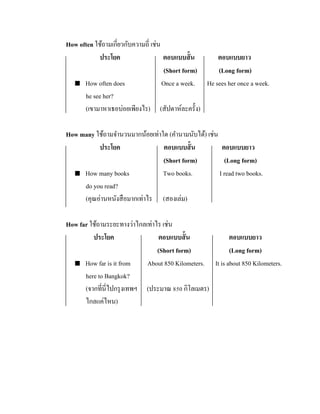
How often ใช้ถามเกี่ยวกับความถี่เช่น
ประโยค
ตอบแบบสั้ น
ตอบแบบยาว
(Short form)
(Long form)
How often does
Once a week. He sees her once a week.
he see her?
(เขามาหาเธอบ่อยเพียงไร) (สัปดาห์ละครั้ง)
How many ใช้ถามจานวนมากน้อยเท่าใด (คานามนับได้) เช่น
ประโยค
ตอบแบบสั้ น
ตอบแบบยาว
(Short form)
(Long form)
How many books
Two books.
I read two books.
do you read?
(คุณอ่านหนังสื อมากเท่าไร (สองเล่ม)
How far ใช้ถามระยะทางว่าไกลเท่าไร เช่น
ประโยค
ตอบแบบสั้ น
ตอบแบบยาว
(Short form)
(Long form)
How far is it from
About 850 Kilometers. It is about 850 Kilometers.
here to Bangkok?
(จากที่นี่ไปกรุ งเทพฯ (ประมาณ 850 กิโลเมตร)
ไกลแค่ไหน)
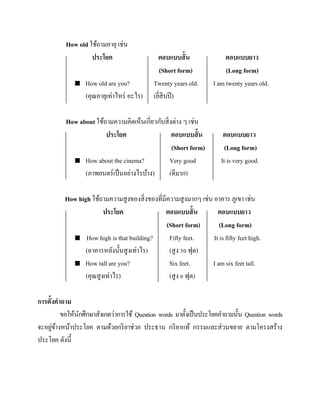
110.
How old ใช้ถามอายุเช่น
ประโยค
How old are you?
(คุณอายุเท่าไหร่ อะไร)
ตอบแบบสั้ น
(Short form)
Twenty years old.
(ยีสิบปี )
่
How about ใช้ถามความคิดเห็นเกี่ยวกับสิ่ งต่าง ๆ เช่น
ประโยค
ตอบแบบสั้ น
(Short form)
How about the cinema?
Very good
(ภาพยนตร์เป็ นอย่างไรบ้าง)
(ดีมาก)
ตอบแบบยาว
(Long form)
I am twenty years old.
ตอบแบบยาว
(Long form)
It is very good.
How high ใช้ถามความสูงของสิ่ งของที่มีความสู งมากๆ เช่น อาคาร ภูเขา เช่น
ประโยค
ตอบแบบสั้ น
ตอบแบบยาว
(Short form)
(Long form)
How high is that building?
Fifty feet.
It is fifty feet high.
(อาคารหลังนั้นสู งเท่าไร)
(สู ง 50 ฟุต)
How tall are you?
Six feet.
I am six feet tall.
(คุณสูงเท่าไร)
(สู ง 6 ฟุต)
การตั้งคาถาม
ขอให้นกศึกษาสังเกตว่าการใช้ Question words มาตั้งเป็ นประโยคคาถามนั้น Question words
ั
่ ้
จะอยูขางหน้าประโยค ตามด้วยกริ ยาช่วย ประธาน กริ ยาแท้ กรรมและส่ วนขยาย ตามโครงสร้าง
ประโยค ดังนี้
111.
Example (ตัวอย่ าง)
How
Where
When
Who
What
Why
do
do
will
is
are
do
you
you
you
that
you
you
go
live?
go
man?
reading?
go
to Suan Chatuchak?
home?
to the book store?
Question words บางคาสามารถตามด้ วยกริยาแท้ (Verb) ได้ เลย หากคาถามนั้นถามถึง
ประธาน (Subject) ของประโยค ซึ่งมีโครงสร้ างดังนี้
Example (ตัวอย่ าง)
What
Who
is
wants
to go home
in the case?
now?
What ในคาถามแรกถามถึงประธานของประโยคซึ่ งเป็ นสัตว์ จึงใช้คาว่า What ส่ วน Who
ใช้ถามสาหรับคนเท่านั้น
สาหรับคาว่า Which เป็ นคาถามเกี่ยวกับลักษณะให้เลือกตอบ แปลว่าอันไหน ตัวไหน จึง
ต้องตามด้วยคานามหรื อสรรพนามเสมอ แล้วตามด้วยกริ ยาช่วย ประธาน กริ ยาแท้ กรรมและส่ วนขยาย
มีโครงสร้างดังนี้
Example (ตัวอย่ าง)
Which
Which
Which
Which
work
school
one
one
do
do
do
does
you
you
you
he
prefer,
go?
like?
want?
a teacher or a soldier?
112.
ส่ วนคาว่า Howสามารถตามตัวด้วยคาคุณศัพท์ (Adjective) เพื่อถามลักษณะต่างๆ ได้ มี
โครงสร้างดังนี้
Example (ตัวอย่ าง)
How
How
How
How
How
long
often
far
old
high
does
does
is
are
is
it
take from Sanamluang to Victory Monument?
he see her?
it from here to Bangkok?
you?
that building?
ถ้าถามถึงจานวนหรื อปริ มาณจะใช้ How many สาหรับสิ่ งที่นบได้ และ How much
ั
สาหรับสิ่ งที่นบไม่ได้ เช่น
ั
How many boys are there in this village?
(ในหมู่บานนี้มีเด็กผูชายกี่คน)
้
้
How much sugar do you want?
(คุณต้องการน้ าตาลเท่าไร)
How much coffee does he drink everyday?
(เขาดื่มกาแฟมากเท่าใดใน 1 วัน)
How many birds are there in that case?
(ในกรงนั้ นมีนกกี่ตว)
ั
สาหรับการถามราคาจะใช้คาถามว่า How much does it cost? เสมอ
113.
(3) ประโยคคาถามทีลงท้ ายด้วยวลีบอกเล่าหรือปฏิเสธทีเ่ ป็ นคาถาม (Question Tags)
่
่
เป็ นประโยคคาถามที่มกจะใช้ในภาษาพูดหรื อบทสนทนา ซึ่งผูถามทราบคาตอบอยูแล้ว แต่ตองการ
ั
้
้
ยืนยัน โดยจะพูดเป็ นประโยคบอกเล่าก่อนและลงท้ายด้วยกริ ยาช่วยและประธาน ถ้าประโยคหน้า
เป็ นประโยคบอกเล่าธรรมดา จะลงท้ายด้วยวลีปฏิเสธ แต่ถาประโยคหน้าเป็ นประโยคปฏิเสธ จะลงท้าย
้
ด้วยวลีบอกเล่า
(ตัวอย่ าง)
You are interested in English, aren't you?
(คุณสนใจภาษาอังกฤษใช่ไหม)
She doesn't like to walk to school, does she?
(เธอไม่ชอบเดินไปโรงเรี ยนใช่ไหม)
Sommai and Suchart can't attend the class today, can they?
(สมหมายและสุ ชาติมาเรี ยนวันนี้ไม่ได้ใช่ไหม)
You should come and do the examination next week, shouldn't you?
(คุณจะต้องมาและเข้าสอบสัปดาห์หน้าใช่ไหม)
วลีปฏิเสธที่นามาลงท้ายประโยคเพื่อเป็ นคาถามจะใช้ในรู ปตัวอย่าง เช่น
do not you
don't you
will not you
won't you
shall not we
shan't we
am I not
aren't I
(4) ประโยคคาถามแบบลดรู ป (Reduced question) คือ คา วลี หรื อประโยคที่ไม่
สมบูรณ์ ซึ่งลดรู ปมาจากประโยคคาถามที่ข้ ึนต้นด้วยกริ ยาช่วย (Yes-no question) ส่ วนมาก จะใช้ใน
การสนทนาของผูที่มีความสนิทสนมคุนเคยกันเป็ นพิเศษ
้
้
114.
(ตัวอย่ าง)
O.K.?
Are youO.K.?
เห็นด้วยไหม, สบายดีไหม
Any question?
Do you have any question?
อยากถามอะไรหรื อเปล่า, สงสัยอะไรหรื อเปล่า
Anything else?
Do you want anything else?
เอาอะไรอีกไหม
Tea or coffee?
Would you like tea or coffee?
จะดื่มชาหรื อกาแฟ
3. ประโยคปฏิเสธ (Negative Sentence) คือประโยคบอกเล่าที่มีคาหรื อวลีที่มีความหมาย
่
ในเชิงปฏิเสธอยูในประโยค ซึ่งจะเป็ นคากริ ยาวิเศษณ์ (Adverb) เช่น not, never, hardly, scarcely,
rarely เป็ นต้น หรื อคาสรรพนามแสดงการปฏิเสธ เช่น no one, nobody, none, no, nothing เป็ นต้น
(ตัวอย่ าง)
Nobody told me to go there on Sunday.
(ไม่มีใครบอกให้ฉนไปที่นนในวันอาทิตย์)
ั
ั่
I don't want to attend the class today.
(ฉันไม่อยากไปเรี ยนวันนี้เลย)
This subject is not difficult for us.
(วิชานี้ไม่ยากเลย)
Nothing is worrying, you will pass the examination.
(ไม่ตองห่วง คุณคงจะสอบผ่าน)
้
115.
วิธีการทาประโยคบอกเล่าให้ เป็ นประโยคปฏิเสธทาได้ 2 แบบ คือ
1. เติมคาว่า not ไปข้างหลังกริ ยาช่วย (Helping or Auxiliary Verb) ในประโยค บอกเล่า
(Affirmative Sentence)
(ตัวอย่ าง)
I will not go to school tomorrow.
(พรุ่ งนี้ฉนจะไม่ไปโรงเรี ยน)
ั
She doesn’t like cats.
(เธอไม่ชอบแมว)
สังเกตวิธีการทาประโยคบอกเล่าให้เป็ นประโยคปฏิเสธ จะใช้หลักเดียวกันกับวิธีทาประโยค
่
บอกเล่าให้เป็ นประโยคคาถาม คือ ถ้าประโยคใดมีกริ ยาช่วยอยูให้เติมคาว่า “not” (ไม่) เข้าไปหลัง
กริ ยาช่วย แต่ถาประโยคใดไม่มีกริ ยาช่วยให้เติม “Verb to do” ไปหน้ากริ ยาแท้ หรื อกริ ยาหลัก โดย
้
กระจายให้ถูกบุรุษ เพศ พจน์และกาล
ประโยคปฏิเสธ กริ ยาช่วยที่แสดงการปฏิเสธสามารถใช้ในรู ปย่อได้ คือ
do not
does not
have not
has not
am not
is not
don't
doesn't
haven't
hasn't
'm not
isn't
116.
are not
shall not
willnot
cannot
aren't
shan't
won't
can't
กริ ยาช่วย “can”(สามารถ) เมื่อเติมคาว่า "not" เข้าไปจะเขียนติดกันเป็ น cannot
คากริ ยาช่วยตัวใดทาหน้าที่เป็ นกริ ยาแท้ เช่น have (กิน,มี) do (ทา) เวลาทาเป็ นประโยค
ปฏิเสธ ต้องใช้กริ ยาช่วย Verb to do เช่นเดียวกัน
4. ประโยคคาสั่ ง (Imperative or Order sentence) เป็ นประโยคที่บอกให้ทาหรื อ
ขอร้องให้ทาตามที่ผน้ นบอก ซึ่งผูที่รับคาสั่งคือผูที่คนสั่งพูดด้วย ซึ่งคนที่จะสั่งจะเป็ นบุรุษ ที่ 1 คือ
ู้ ั
้
้
ผูพด (I หรื อ we) ส่ วนคนที่ถูกสั่งจะเป็ นบุรุษที่ 2 (You) เมื่อเป็ นประโยคคาสั่งจะตัด ประธาน
้ ู
(You) ออก ประโยคคาสั่งต้องขึ้นต้นด้วยคากริ ยาช่องที่ 1 เสมอ ซึ่งอาจจะเป็ นรู ปบอกเล่าหรื อ
ปฏิเสธก็ได้
(ตัวอย่ าง)
Don't walk on the loan!
Enter your personal code.
Sit down here!
Follow me!
วิธีการทาประโยคคาสั่ ง
Verb
(กริยา)
+
Object
(กรรม)
ห้ามเดินในสนาม
ใส่ รหัสส่ วนตัวของท่าน
นังตรงนี้
่
ตามฉันมา
+
Complement
(ส่ วนขยาย)
117.
่
ประโยคคาสั่งจะเป็ นประโยคที่สรรพนามบุรุษที่ 2(You) เป็ นประธานและอยูในรู ป
ปัจจุบนกาลธรรมดา (Present Simple Tense) เสมอ เพราะการที่จะสั่งหรื อขอร้องให้ใครทา อะไรจะ
ั
พูดหรื อบอกให้ทาหรื อไม่ทาในขณะที่พดนั้น
ู
การทาประโยคคาสั่งจะมาจากประโยคบอกเล่า (Affirmative Sentence) โดยตัด ประธานออก
(ตัวอย่ าง)
ประโยคบอกเล่า
(Affirmative Sentence)
You follow me.
(คุณตามฉันมา)
You sit down here.
(คุณนังลงตรงนี้)
่
You don't walk on the lawn.
(คุณไม่เดินบนสนามหญ้า)
You turn a little bit left.
(คุณเขยิบไปทางซ้ายอีกสักนิด)
ประโยคคาสั่ ง
(Imperative or Order sentence)
Follow me.
(ตามฉันมา)
Sit down here.
(นังลงตรงนี้)
่
Don't walk on the lawn.
(อย่าเดินบนสนามหญ้า)
Turn a little bit left.
(เขยิบไปทางซ้ายอีกสักนิด)
5. ประโยคอุทาน (Exclamatory sentence) คือประโยคที่ใช้แสดงความรู ้สึกและ
อารมณ์ เช่น เสี ยใจ ดีใจ เป็ นต้น ใช้ได้ท้ งประโยคเต็มรู ปและลดรู ป
ั
(1) ประโยคอุทานเต็มรู ป จะขึ้นต้นด้วยคาที่เป็ นคาถาม (Question word) how
(อย่างไร) และ what (อะไร) ถ้าขึ้นต้นด้วย How จะตามด้วยคาคุณศัพท์ (Adjective) หรื อคากริ ยา
วิเศษณ์ (Adverb) แล้วตามด้วยประธาน (Subject) และกริ ยา (Verb) ซึ่งอาจจะมีส่วนขยาย
(Complement) ด้วยก็ได้ ส่ วนประโยคที่ข้ ึนต้นด้วย What จะตามด้วยนามวลี (Noun phrase) แล้ว
ตามด้วยประธาน (Subject) และกริ ยา (Verb)
118.
How +
Adjective
+ Subject+ Verb + Complement
(คาคุณศัพท์ )
(ประธาน)
(กริยา)
(ส่ วนขยาย)
Adverb
(คากริยาวิเศษณ์ )
What + Noun phrase
(นามวลี)
+
Subject +
(ประธาน)
Verb
(กริยา)
เช่น
How beautiful she is!
How fluently he can speak English!
What a healthy man he is!
What a wonderful girl she is!
เธอช่างสวยอะไรเช่นนี้
เขาช่างพูดภาษาอังกฤษคล่องอะไรเช่นนี้
เขาช่างเป็ นคนแข็งแรงอะไรเช่นนี้
เธอช่างเป็ นเด็กมหัศจรรย์อะไรอย่างนี้
(2) ประโยคอุทานลดรู ป เป็ นประโยคที่ตดประธาน (Subject) และกริ ยา (Verb)
ั
รวมทั้งส่ วนขยาย (Complement) ออก
เช่น
How beautiful!
สวยจริ งๆ
How fluently!
พูดคล่องจริ งๆ
What a healthy man!
ช่างเป็ นคนที่แข็งแรงจริ งๆ
What a wonderful girl!
ช่างเป็ นเด็กมหัศจรรย์อะไรเช่นนี้
119.
กิจกรรม
ให้ผเู ้ รียนทบทวนความรู ้ในบทนี้ แล้วทาแบบฝึ กหัดต่อไปนี้
Exercise 1
Change these sentences into question (Q) and negative (N) sentences.
1.
I'll meet you tonight.
Q : ___________________________________________________
N : ___________________________________________________
2.
He planted flowers of different kinds.
Q : ___________________________________________________
N : ___________________________________________________
3.
She kepts her secret very well.
Q : ___________________________________________________
N : ___________________________________________________
4.
They sang and played the guitar.
Q : ___________________________________________________
N : ___________________________________________________
5.
He borrowed books from the library.
Q : ___________________________________________________
N : ___________________________________________________
120.
6.
She can speakEnglish.
Q : ___________________________________________________
N : ___________________________________________________
7.
The World Trade building had collapsed.
Q : ___________________________________________________
N : ___________________________________________________
8.
The boy is sneezing.
Q : ___________________________________________________
N : ___________________________________________________
9.
He works hard everyday.
Q : ___________________________________________________
N : ___________________________________________________
10. Pom must invite Toom to her party.
Q : ___________________________________________________
N : ___________________________________________________
121.
Exercise 2 Makeimperative sentence from these words.
1.
work/harder
___________________________________________________
2.
not close/the door
___________________________________________________
3.
read/loudly
___________________________________________________
4.
not smoke/in this room
___________________________________________________
5.
shut/the window
___________________________________________________
6.
visit/your parent
___________________________________________________
7.
do/your homework
___________________________________________________
122.
8.
give/me/that pencil
___________________________________________________
9.
cook/Thai salad
___________________________________________________
10.turn/the light/off
___________________________________________________
Exercise 3 Make explanative sentences by the words given.
1.
you/clever
___________________________________________________
2.
she/intelligent
___________________________________________________
3.
he/talkative
___________________________________________________
4.
we/wise
___________________________________________________
5.
you/lazy
___________________________________________________
ประโยคความเดียวหรือเอกัตถประโยค (Simple Sentence)หมายถึงประโยคที่แสดง
ข้อความที่พดซึ่งมีความเดียว ไม่กากวม สามารถเข้าใจได้ง่าย
ู
ยกตัวอย่างเช่น
He is a boy.
Suda walks to school.
I sit on a chair.
ประโยคความเดียว (Simple Sentence) จะมีประธานและกริ ยาเพียงตัวเดียว ประกอบด้วย
ภาคประธาน (Subject) คือส่ วนที่เป็ นประธานของประโยค และภาคแสดง (Predicate) คือส่ วนที่
เป็ นกริ ยาและส่ วนขยายอื่นๆ
ภาคประธาน
ภาคกริยา
(Subject)
(Predicate)
The birds
sing.
The mob
move down the street.
It
rained heavily in Bangkok.
He
sent her a bouquet of flowers.
สาหรับประโยคความรวมหรื อเอกัตถประโยค (Compound Sentence) หมายถึง ประโยคที่
มีขอความ 2 ข้อความ มารวมกันแล้วเชื่อมด้วยคาสันธาน (Conjunction หรื อตัวเชื่อมประสาน)
้
ได้แก่ and (และ), or (หรื อ), but (แต่), so (ดังนั้น), still (ยังคง), yet (แล้ว) etc. และ Conjunctive
Adverb (คากริ ยาวิเศษณ์เชื่อม) ได้แก่ however (อย่างไรก็ตาม), meanwhile (ในขณะที่), therefore
(ดังนั้น), otherwise (มิฉะนั้น), thus (ดังนั้น) etc.
Compound Sentence ประโยคที่เชื่อมด้วยบุพบท (Conjunction หรื อตัวเชื่อมประสาน)
ได้แก่ and, or, but, so, still, yet etc.
ยกตัวอย่างเช่น
Suda can speak English.
125.
สุ ดาพูดภาษาอังกฤษได้
Suda canspeak French.
สุ ดาพูดฝรั่งเศสได้
Suda can speak English and French.
สุ ดาพูดภาษาอังกฤษและภาษาฝรั่งเศสได้
Malee does not study French.
มาลีไม่ได้เรี ยนภาษาฝรั่งเศส
Malee can speak French.
มาลีพดภาษาฝรั่งเศสได้
ู
Malee does not study French
but she can speak it.
มาลีไม่ได้เรี ยนภาษาฝรั่งเศส
แต่พดภาษาฝรั่งเศสได้
ู
He is strong.
เขาเป็ นคนแข็งแรง
He is silly.
เขาเป็ นคนโง่
He is strong but silly.
เขาเป็ นคนแข็งแรงแต่โง่
Chuan was prime minister.
ชวนเป็ นนายกรัฐมนตรี
Banharn was prime minister.
บรรหารเป็ นนายกรัฐมนตรี
Chuan and Banharn were prime ministers.
ชวนและบรรหารเป็ นนายกรัฐมนตรี
You can have fried rice.
คุณทานข้าวผัดได้
You can have boiled rice.
คุณทานข้าวต้มได้
You can have fried rice or boiled rice.
คุณสามารถเลือกทานข้าวผัด
หรื อข้าวต้มก็ได้
คาสันธานที่ใช้เชื่อมประโยคความรวม (Compound Sentence) ที่สาคัญ ได้แก่
and แปลว่า และ, กับ ใช้เชื่อมประโยคที่มีใจความคล้อยตามกัน
126.
(ตัวอย่ าง)
Obb andToom work in Distance Education Institute.
อ็อบและตุมทางานที่สถาบันการศึกษาทางไกล
้
This table is new and shiny.
โต๊ะตัวนี้ใหม่และเป็ นเงางาม
Pom talks and walks to school.
ป้ อมคุยไปและเดินไปโรงเรี ยน
but แปลว่า แต่ ใช้เชื่อมประโยคที่มีใจความขัดแย้งกัน
(ตัวอย่ าง)
That house is old but strong.
บ้านหลังนี้เก่าแต่ยงแข็งแรง
ั
He complains but he goes with his mother.
เขาบ่นแต่เขาก็ไปกับแม่
or แปลว่า หรื อ ใช้เชื่อมประโยคที่มีใจความให้เลือกอย่างใดอย่างหนึ่ง
(ตัวอย่ าง)
What would you like, coffee or tea?
คุณต้องการอะไร กาแฟหรื อชา
You can sit here or in that room.
คุณจะนังที่นี่หรื อในห้องนั้นก็ได้
่
both…and แปลว่า ทั้ง…และ
127.
(ตัวอย่ าง)
Both boysand girls learn English.
ทั้งเด็กผูชายและเด็กผูหญิงเรี ยนภาษาอังกฤษ
้
้
Idd is both pretty and clever.
อิ้ดทั้งน่ารักและฉลาด
Suchart both works and studies in the university.
สุ ชาติท้ งทางานและเรี ยนในมหาวิทยาลัย
ั
either…or แปลว่า ไม่อย่างหนึ่งก็อีกอย่างหนึ่ง (ให้เลือกเอาอย่างใดอย่างหนึ่ง)
(ตัวอย่ าง)
Either me or you should telephone to the director.
ไม่ฉนก็คุณจะต้องโทรศัพท์ไปหาท่านผูอานวยการ
ั
้
Dan begins either reading or writing English tomorrow.
แดนจะเริ่ มไม่อ่านก็เขียนภาษาอังกฤษพรุ่ งนี้
You have to sell either the house or the car.
คุณจะต้องขายไม่บานก็รถยนต์
้
neither…nor แปลว่า ไม่ท้ งสองอย่าง
ั
(ตัวอย่ าง)
This man is neither rich nor clever.
ผูชายคนนี้ท้ งไม่รวยและไม่ฉลาด
้
ั
Pan will neither live nor work in Bangkok.
ปานจะไม่มีวนอยูหรื อทางานในกรุ งเทพฯ
ั ่
128.
ถ้าใช้ neither วางไว้หน้าประโยคจะต้องตามด้วยกริ ยาช่วย ประธานและกริ ยาแท้ เช่น
Neither did he listen his teacher, nor did he read the book.
เขาทั้งไม่ฟังครู และไม่อ่านหนังสื อ
not only…but also แปลว่า ไม่เพียง.......แต่.......ด้วย
(ตัวอย่ าง)
Not only man, but also woman could be the prime minister.
ไม่ใช่เฉพาะแต่ผชายเท่านั้น ผูหญิงก็สามารถเป็ นนายกรัฐมนตรี ได้
ู้
้
Not only you, but also he has not read the book yet.
ไม่เพียงแต่คุณเท่านั้น เขาก็ยงไม่ได้อ่านหนังสื อเช่นเดียวกัน
ั
I know not only Sumalee but also her family.
ฉันไม่เพียงแต่รู้จกกับสุ มาลีเท่านั้น ฉันยังรู ้จกครอบครัวของเธอด้วย
ั
ั
สาหรับประโยคความรวม (Compound Sentence) บางประโยคจะเชื่อมด้วยคากริ ยา
วิเศษณ์ (Conjunctive Adverb) ได้แก่ however (อย่างไรก็ตาม), meanwhile (ในขณะที่),
therefore (ดังนั้น, เพราะฉะนั้น), otherwise (มิฉะนั้น), thus (ดังนั้น), hence (ด้วยเหตุน้ ี),
nevertheless (แม้กระนั้น), etc.
ยกตัวอย่างเช่น
Suda comes to see me at the temple.
It begins to rain.
She comes to see me at the temple,
meanwhile it begins to rain.
Malee was ill.
Malee was ill, thus she went to
Malee went to see the doctor at a hospital. see the doctor at a hospital.
129.
ประโยคความรวมที่เชื่อมด้วยคากริ ยาวิเศษณ์จะมีเครื่ องหมาย,คันระหว่างข้อความในส่ วนแรก
่
กับข้อความในส่ วนหลัง
ยกตัวอย่างเช่น
They tried their best, yet they didn't succeed.
เขาพยายามทาดีที่สุดแล้ว เขาก็ยงทาได้ไม่สาเร็จ
ั
Before I go out, I would like to leave my messages.
ก่อนที่ฉนจะออกไป ฉันต้องการทิ้งข้อความเอาไว้
ั
่
บางครั้งอาจจะพบการใช้เครื่ องหมายวรรคตอนหลายชนิดอยูในประโยคเดียวกัน ถ้าเป็ น
ประโยคที่มีการขยายความหรื อให้รายละเอียดมากขึ้น
I do not only buy her a new car, but also give her a diamond set; anyway she
doesn't use it.
ฉันไม่ได้ซ้ือให้เธอแต่เพียงรถใหม่เท่านั้น แต่ยงซื้อชุดเครื่ องเพชรให้เธอด้วย อย่างไร
ั
ก็ตามเธอก็ไม่ได้ใช้มน
ั
ให้สังเกตว่าประโยคความรวม (Compound Sentence) คือ การนาประโยคความเดียว
(Simple Sentence) 2 ประโยคมารวมกันและเชื่อมด้วยคาสันธาน (Conjunction) หรื อ คากริ ยา
วิเศษณ์ (Conjunctive Adverb)
130.
กิจกรรม
ให้ผเู ้ รียนทบทวนความรู ้ในบทนี้ แล้วทาแบบฝึ กหัดต่อไปนี้
Exercise 1 Choose the best answer.
1. If you want to ask about your friend's health. You say “_____________”
a. Where do you live?
b. How do you do?
c. What do you do?
d. How about you?
2. You accidentally step on someone's foot. You blame yourself “____________”
a. How clumsy of me!
b. It's not my fault.
c. I'm sorry.
d. Thank you.
3. Suda would like to buy a computer notebook. The shopkeeper say “________”
a. May I help you?
b. Where are you going?
c. What are you doing here?
d. What would you like to do?
4. Suda : Could you show me how to get to the post office?
Malee : “_____________”
a. Yes, I can.
b. Yes, I do.
c. Yes, I should.
d. Yes, I would.
131.
5. A touristis visiting Bangkok for the first time and she wants to go to
the Grand Palace. She asks a policeman, “_____________”
a. I want to go to the Grand Palace. Please take me there.
b. Could you tell me where I go to the Grand Palace?
c. Could you tell me how to get to the Grand Palace?
d. Give me the map of the Grand Palace.
6. Suda has got grade A in English. What will you say?
a. Cheers.
b. I wish you luck.
c. Don't worry about it.
d. How clever you are!
7. When will you say, "Merry Christmas and a Happy New Year."
a. On your birthday.
b. On Christmas day.
c. On New Year's day.
d. On Christmas and New Year's day.
8. What is the population of this town?
The answer will be about, “_____________”
.
a. the number of people
b. famous men and women
c. history and geography
d. masses of buildings
132.
9. The apartmenthas been vacant for over a week. What will you do?
a. Make a notice for the apartment to rent.
b. Tell all of my friends.
c. Have it repaired.
d. Leave it like that.
10. The robber climbed up and went into the opened window and stole his money.
What should he do?
He should “_____________”
.
a. do nothing
b. tell his friend
c. inform the police
d. blame his neighbor
Exercise 2 Put the correct conjunction in the blank
1.
2.
3.
4.
I met Toom _________ Obb in the restaurant.
They are talkative ___________ they are friendly.
You can enroll Mathemetic ___________ English according to your choice.
Pom ate ___________ fried chicken ___________ french fried.
5.
6.
7.
8.
9.
___________ Liverpool ___________ Manchester United will win.
She is ___________ ugly ___________ silly.
He bought ___________ a car ___________ a washing machine.
She has been very sad ___________ her mother died.
I was very tired ___________ I stayed at home.
10. Today is ___________ Tuesday ___________ Friday.
ในระดับประถมศึกษา ผูเ้ รียนได้เรี ยนใช้ Present Simple Tense, Present Continuous Tense
และ Future Simple Tense ไปแล้ว ในระดับมัธยมศึกษาตอนต้นนี้ จะเรี ยนอดีตกาล (Past Tense) คือ
Past Simple Tense และ Past Continuous Tense โดยละเอียด
ก่อนอื่นต้องขอให้ทบทวนการใช้ Present Simple Tense, Present Continuous Tense และ
Future Simple Tense กันก่อน
1. Present Simple Tense คือ ประโยคที่แสดงเหตุการณ์ที่เกิดขึ้นในปัจจุบน
ั
มีโครงสร้างประโยค ดังนี้
Subject
(ประธาน)
+
Verb ช่ องที่ 1
(คากิริยาช่ องที่ 1)
+
Object
(กรรม)
+
Complement
(ส่ วนขยาย)
โครงสร้างของประโยคดังกล่าว อาจจะมีกรรม (Object) และส่ วนขยาย (Complement)
็
หรื อไม่มีกได้ ให้สังเกตว่าการใช้ประโยคปั จจุบนกาลนั้น จะมีวธีการกระจายคากริ ยา (Verb) ตาม
ั
ิ
ประธาน (Subject) ของประโยค ดังตาราง
Subject
(ประธาน)
Verb 1
(ช่ องที่ 1)
Object
(กรรม)
Complement
(ส่ วนขยาย)
I
We
You
He
She
It
They
sing
sing
laugh
laughs
laughs
laughs
laugh
a song
a song
-
loudly.
happily.
funny.
lightly.
ugly,
terribly.
lovely.
Meaning
(หมายเหตุ)
ฉันร้องเพลงเสี ยงดัง
ฉันร้องเพลงอย่างมีความสุ ข
คุณหัวเราะตลก ๆ
เขาหัวเราะเบา ๆ
เธอหัวเราะน่าเกลียด
มันหัวเราะน่ากลัว
พวกเขาหัวเราะน่ารัก
136.
จากตาราง เราจะเห็นว่าการกระจายกริ ยาในประโยคปัจจุบนกาล(Present Simple Tense) นั้น
ั
ถ้าประธานเป็ นเอกพจน์บุรุษที่ 3 (He, She, It) คากริ ยาต้องเติม “s” หรื อคากริ ยา บางตัวต้องเติม “es”
1. คากริยาทีเ่ ติม “S” ข้ างหลังได้ เลย เช่ น
The wind blows.
He eats a mango.
She likes fish.
2. คากริยาทีลงท้ ายด้ วย s, ss, sh, ch, o และ x ให้ เติม "es" หลังคากริยาตัวนั้น เช่ น
่
My sister watches television.
She washes her clothes every day.
My father misses the train.
3. คากริยาทีลงท้ ายด้ วย “y” ให้ เปลียน “y” เป็ น “i” แล้วจึงเติม “es” หลัง คากริยาตัว
่
่
นั้น ยกตัวอย่ าง เช่ น
He carries a big box.
(carries มาจาก carry)
Suda tries to call me every day.
(tries มาจาก try)
My mother fries bean with egg.
(fries มาจาก fry)
4. คากริยาทีลงท้ ายด้ วย “y” แต่ หน้ า “y” เป็ นสระให้ เติม “s” ไปข้ างท้าย เช่ น
่
He stays with his mother.
(stay หน้า y คือ a ซึ่งเป็ นสระ)
Malee pays for a dress.
(pay หน้า y คือ a ซึ่งเป็ นสระ)
Suda enjoys eating.
(enjoy หน้า y คือ o ซึ่งเป็ นสระ)
137.
วิธีการใช้ Present SimpleTense มีดังนี้
(1) เพื่อแสดงถึงการกระทาที่เป็ นนิสัย การกระทาซ้ าๆ ที่ทาอยูเ่ ป็ นประจา โดยปกติมกมี
ั
่ ้
คาวิเศษณ์บ่งชี้อยูดวย เช่น every day, every year, every month, every hour, often, usually,
always, daily, weekly, yearly, annually, sometimes และ regularly เป็ นต้น
ขณะพูด
อดีต
xxxxxxxxxxxxxxxxxxxxxxxxxxxxxxxxxxxxxxxxxxxxxx
เหตุการณ์เกิดขึ้นเป็ นประจาจนเป็ นนิสัย
อนาคต
(ตัวอย่ าง)
She sometimes does things because she wants to be diligent.
บางครั้งเธอก็ทาสิ่ งต่างๆ ไป เพราะเธอต้องการที่จะให้เห็นว่าเธอเป็ นคนขยัน
The girls always stay at home on Monday nights to do the housework.
่ ้
ผูหญิงมักจะอยูบานในคืนวันจันทร์เพื่อทางานบ้าน
้
Mr. Cornway has meeting there one a month.
นายคอนเวย์ไปประชุมที่นนเดือนละครั้ง
ั่
He often comes late to school.
เขามักจะมาโรงเรี ยนสายบ่อยๆ
They usually walk up this way.
ปกติเขาเดินขึ้นมาทางนี้
I drink a glass of milk every day.
ฉันดื่มนมหนึ่งแก้วทุกวัน
138.
(2) เพื่อกล่าวถึงความจริ งโดยทัวๆไป ซึ่งเป็ นความจริ งอยูเ่ สมอ (To state a general truth)
่
ขณะพูด
อดีต
xxxxxxxxxxxxxxxxxxxxxxxxxxxxxxxxxxxxxxxxxxxxxx
เหตุการณ์ที่เป็ นความจริ งอยูเ่ สมอ
อนาคต
(ตัวอย่ าง)
It often rains at this time.
Light moves faster than sound.
The earth rotates around the sun.
The sun gives us warmth.
ฝนจะตกในช่วงเวลานี้บ่อยๆ
แสงเดินทางเร็วกว่าเสี ยง
โลกหมุนรอบดวงอาทิตย์
ดวงอาทิตย์ให้ความอบอุ่นแก่เรา
(3) เพื่อแสดงถึงการกระทาที่จะเกิดขึ้นในอนาคตอย่างแน่นอน (To show future action)
(ตัวอย่ าง)
The plane arrives at Don Muang Airport at ten a.m.
เครื่ องบินจะมาถึงสนามบินดอนเมืองตอน 10 โมงเช้า (อย่างแน่นอน)
He departs for London on Thursday morning.
เขาจะออกเดินทางไปลอนดอนตอนเช้าวันพฤหัส (อย่างแน่นอน)
Surin leaves by his car in the morning.
สุ รินทร์จะออกเดินทางโดยรถยนต์ของเขาในตอนเช้า (อย่างแน่นอน)
(4) เพื่อเล่าหรื อเขียนเรื่ องราวที่เป็ นอดีต เพื่อให้ผฟังหรื อผูอ่านตื่นเต้นเร้าใจเห็นคล้อยตาม
ู้
้
นิยมใช้ในบทละครหรื อเรื่ องราวบางตอนที่เหมาะสม การเล่าหรื อเขียนแบบนี้เรี ยกว่า Historic Present
(To show historic present)
139.
(ตัวอย่ าง)
A witchpoints her finger to the child and says, “Die.”
แม่มดชี้นิ้วของเธอไปที่เด็กแล้วพูดว่า จงตายเสี ยเถอะ
Finally, a gunman shoots him dead on the spot.
ในที่สุดมือปื นก็ได้ยงเขาจนตายคาที่
ิ
(5) เพื่อบอกถึงคาพูด คาประพันธ์หรื อสิ่ งหนึ่งสิ่ งใดที่ผประพันธ์ได้กล่าวหรื อเขียนไว้
ู้
(ตัวอย่ าง)
Aristotle says, “Human beings are rational animals.”
่
อริ สโตเติลกล่าวไว้วา "มนุษย์เป็ นสัตว์ที่มีเหตุผล"
A poet says, “Beauty is truth.”
่
กวีท่านหนึ่งกล่าวไว้วา "ความสวยคือความจริ ง"
(6) เพื่อบอกเหตุผลที่จะเกิดขึ้นในประโยคที่นาด้วย If - clause เป็ นการแสดงถึงเงื่อนไข
บางประการของความน่าจะเป็ นจริ งในอนาคต (conditions of future possibility)
(ตัวอย่ าง)
If you drink poison, you die.
ถ้าคุณดื่มยาพิษคุณต้องตาย
If you fail English, you have to enroll again.
ถ้าคุณสอบภาษาอังกฤษตก คุณจะต้องลงทะเบียนเรี ยนหมวดวิชานี้อีกครั้ง
หมายเหตุ จะสังเกตเห็นว่า drink และ die เป็ นกริ ยาช่องที่ 1 ที่แสดงถึงเงื่อนไขที่เป็ น
เหตุผลซึ่งกันและกันในแบบที่เป็ นจริ งและต้องเกิดขึ้นแน่ๆ
140.
(7) ใช้ใน If- clause เพื่อแสดงถึงเงื่อนไขบางประการที่เป็ นไปได้
(ตัวอย่ าง)
If you help me do this work, I shall give you money.
ถ้าคุณช่วยผมทางานชิ้นนี้ ผมจะให้เงินคุณ
If he comes, I'll see him.
ถ้าเขามาฉันจะต้องได้พบเขา
(8) ใช้ใน Passive form เพื่อแสดงถึงการถูกกระทา
(ตัวอย่ าง)
Active form
Passive form
Active form
Passive form
:
:
:
:
They make it into a paste. พวกเขาทามันเละ (เป็ นแป้ งเปี ยก)
It is made into a paste. มันถูกทาให้เป็ นแป้ งเปี ยก
He sells them at $ 5 each. เขาขายมันด้วยราคาอันละ 5 ดอลลาร์
They are sold at $ 5 each. พวกมันถูกขายในราคาอันละ 5 ดอลลาร์
(9) ใช้ Present Simple Tense หลัง Here และ There
(ตัวอย่ าง)
Here comes the bride .
There goes the train.
There goes your friend, Surin.
เจ้าสาวกาลังมานี่แล้ว
รถไปกาลังไปโน่นไง
สุ รินทร์เพื่อนของคุณกาลังไปโน่นไง
2. Present Continuous tense หรื อ Present Progressive Tense คือประโยคที่ใช้
่
แสดงเหตุการณ์ที่กาลังทาอยูในขณะที่พด มีโครงสร้างประโยค ดังนี้
ู
141.
Subject
(ประธาน)
I
He
She
Suda
You
We
They
The boys
+
Verb tobe
(is, am, are)
am
is
are
+
V1 + ing
Object
walking
playing
Reading
drawing
football.
a book.
a flower.
eating.
rice.
กฎการเติม ing ทีคากริยา
่
กริ ยาบางคาเมื่อจะเติม ing ต้องเปลี่ยนแปลง ดังนี้
1. คาพยางค์เดียว มีสระตัวเดียว และมีตวสะกดตัวเดียว ต้องเพิ่มตัวสะกดอีกหนึ่งตัว
ั
ก่อนเติม ing เช่น
cut
cutting
get
getting
run
running
swim
swimming
stop
stopping
2. คาสองพยางค์ซ่ ึงลงท้ายด้วยตัว “l” ตัวเดียว ให้เพิม “l” อีกหนึ่งตัวก่อนเติม ing เช่น
่
Travel
ravelling
control
controlling
fulfil
fulfilling
142.
3.
4.
คาที่ลงท้ายด้วย “e” ให้ตดตัว“e” ออกก่อนเติม ing เช่น
ั
lose
losing
come
coming
write
writing
hope
hoping
move
moving
คาที่ลงท้ายด้วย “ie” ให้เปลี่ยน “ie” เป็ น “y” ก่อนเติม ing เช่น
die
dying
lie
lying
tie
tying
เมื่อต้องการเปลี่ยนประโยคบอกเล่าของ Present Continuous Tense เป็ นประโยคคาถาม
ให้วางคากริ ยา is, am หรื อ are ไปไว้หน้าประโยค ดังนี้
(is / am / are) + subject + verb + ing
ตัวอย่ าง เช่ น
Is she drawing a flower?
Are you reading a comic book?
ประโยคคาถามที่ข้ ึนต้นด้วย Verb to be (is, am, are) จะต้องตอบด้วย yes หรื อ no
ตัวอย่ าง เช่ น
Is she drawing a flower?
Yes, she is drawing a flower. หรื อ Yes, she is. หรื อ
No, she is not drawing a flower. หรื อ No, she isn't.
143.
วิธีการใช้ Present ContinuousTense มีดงนี้
ั
(1) เพื่อแสดงถึงการกระทาที่กาลังเกิดขึนในขณะทีพูด (To show action happening now)
้
่
ขณะพูด
อดีต
อนาคต
เริ่ มต้น
คาดว่าจะจบ
(ตัวอย่ าง)
Surin is driving out of house now.
สุ รินทร์กาลังขับรถออกมาจากบ้านของเขาตอนนี้
He is now studying English.
่
เขากาลังศึกษาภาษาอังกฤษอยูตอนนี้
(2) เพื่อแสดงถึงการกระทาทีเ่ กิดขึนในอนาคตอันใกล้นี้ (To show action in the near
้
future) แต่ยงไม่แน่นอนมากเท่ากับ Present Simple Tense
ั
ขณะพูด
อดีต
อนาคต
เหตุการณ์น้ ีจะเกิดขึ้น
(ตัวอย่ าง)
We're flying back to London tomorrow.
เราจะบินกลับลอนดอนพรุ่ งนี้
I'm wearing it this evening.
ฉันจะสวมมันเย็นนี้
144.
Supol is cominghere next week.
สุ พลจะมาที่นี่สัปดาห์หน้า
We are going to see him next Monday.
เราจะไปพบเขาวันจันทร์หน้า
(3) เพื่อแสดงถึงการกระทาที่ทาอยู่จนเกือบจะเป็ นนิสัย ซึ่งมักจะถูกกระทาซ้ า ๆ
่
อยูบ่อย ๆ หรื อบ่อยครั้งที่สุด (To express habitual action that is often repeated.)
(ตัวอย่ าง)
She is always asking silly questions.
เธอกาลังจะถามคาถามโง่ๆ บ่อยครั้งที่สุด
He is always banging the door shut.
เขามักจะปิ ดประตูดงโครมเสมอๆ
ั
They are always arguing with each other.
พวกเขามักจะโต้เถียงกันอยูเ่ สมอ
ั
(4) ใช้กบการกระทาทั้งสองอย่ างทีกาลังดาเนินการอยู่พร้ อมๆ กัน
่
(ตัวอย่ าง)
She is reading a book and (is) singing a song.
เธอกาลังจะถามคาถามโง่ ๆ บ่อยครั้งที่สุด
She is jogging along the road and (is) singing a song.
เธอกาลังวิงเหยาะ ๆ ไปตามถนนและกาลังร้องเพลง
่
145.
ั
(5) ใช้กบการกระทาอย่ างหนึ่งทีกาลังดาเนินอยู่และมีผู้กระทาการอีกอย่างหนึ่งขึนมา
่
้
โดยไม่คาดฝันมาก่อน
(ตัวอย่ าง)
She enters the room while I am reading a book.
เธอเข้ามาในห้องขณะที่ฉนกาลังอ่านหนังสื ออยู่
ั
My mother opens the door while I am watching T.V.
คุณแม่เปิ ดประตูขณะที่ผมดูทีวอยู่
ี
(6) ใช้ ในรู ป Passive voice เมื่อเราต้องการจะแสดงให้เห็นว่าการกระทานั้น ๆ มีสิ่งหนึ่ง
หรื อบุคคลหนึ่งกระทาต่อประธานของประโยค
(ตัวอย่ าง)
Active Voice :
Passive Voice :
Active Voice :
Passive Voice :
Someone is cutting tree down.
ใครคนหนึ่งกาลังตัดต้นไม้ลง
The tree is being cut down.
ต้นไม้กาลังถูกตัด
Someone is painting the house.
ใครบางคนกาลังทาสี บาน
้
The house is being painted.
บ้านกาลังถูกทาสี
146.
ข้ อสั งเกต
มีคากริยาบางประเภทที่ไม่ใช้ในรู ปของ Continuous form (Verb to be + V.ing) ได้แก่
1. Verb to be เช่น is, am, are, was, were ทีแสดงถึงลักษณะ (stative verbs)
่
ถูก : He is handsome. เขาหล่อ
ผิด : He is being handsome.
2. กริยาประเภททีแสดงถึงจิตใจ (mind) เช่น think, know, recognize, understand,
่
believe, desire, wish, love, realize, forget, dislike, hate เป็ นต้น
(ตัวอย่ าง)
ถูก :
ผิด :
ถูก :
3.
เป็ นต้น
I remember him quite clearly.
I am remembering him quite clearly.
They wish to go home now.
ฉันจาเขาได้ดีทีเดียว
พวกเขาอยากจะกลับบ้าน
เดี๋ยวนี้
ผิด : They are wishing to go home now.
ถูก : She thinks everybody likes her.
เธอคิดว่าทุกคนชอบเธอ
ผิด : She is thinking everybody likes her.
ถูก : We know them very well.
เรารู ้จกเขาเป็ นอย่างดี
ั
ผิด : We are knowing them very well.
ถูก : I love you.
ผมรักคุณ
ผิด :
I am loving you.
กริยาทีแสดงถึงความรู้ สึกประสาทสั มผัส (senses) เช่น fell, see, hear, taste, smell
่
147.
(ตัวอย่ าง)
ถูก :
ผิด:
ถูก :
ผิด :
ถูก :
4.
I fell very warm.
I am feeling very warm.
I smell something burning.
I smelling something burning.
I hear someone walking up the stairs.
ถูก :
ผิด :
ถูก :
She has a lot of money.
She is having a lot of money.
We have a lot of homework to do.
ผิด :
ถูก :
ผิด :
We are having a lot of homework to do.
She has a cold.
She is having a cold.
ฉันรู ้สึกอบอุ่นขึ้นมาก
ฉันไม่ได้กลิ่นอะไรไหม้
สักอย่าง
ฉันได้ยนใครคนหนึ่งกาลัง
ิ
ขึ้นบันไดมา
ผิด : I am hearing someone walking up the stairs.
ถูก : The coffee tastes sweet.
กาแฟหวาน
ผิด : The coffee is tasting sweet.
ถูก : I see her walking in the garden.
ฉันเห็นเธอกาลังเดิน
่
อยูในสวน
ผิด : I am seeing her walking in the garden.
กริยา “to have'” ทีหมายถึง การเป็ นเจ้ าของ (possession) แปลว่า "มี''
่
( ตัวอย่ าง)
เธอมีเงินจานวนมาก
เรามีการบ้านที่จะต้องทา
อีกเยอะ
148.
5. กริยาบางตัวทีเ่ ป็น Continuous form ไม่ ได้ เช่น matter, consist, possess, own,
fit, belong, contain, see, suppose, owe, suit, concern, appear, look, call เป็ นต้น
(ตัวอย่ าง)
ถูก :
It seems that he dislike that girl.
ผิด :
ถูก :
It is seeming that he dislike that girl.
Fruit contains good deal of vitamins.
ผิด
ถูก
ผิด
ถูก
ผิด
Fruit is containing good deal of vitamins.
He supposes that the news is true.
เขานึกว่าข่าวนั้นเป็ นเรื่ องจริ ง
He is supposing that the news is true.
This book belongs to me.
หนังสื อเล่มนี้เป็ นของฉัน
This book is belonging to me.
:
:
:
:
:
ดูเหมือนว่าเขาจะไม่ชอบ
ผูหญิงคนนั้น
้
ผลไม้ประกอบด้วยวิตามิน
จานวน มาก
ั
3. Future Simple tense คือ ประโยคที่ใช้กบเหตุการณ์ที่จะเกิดขึ้นในอนาคต โดยวาง
โครงการหรื อวางแผนไว้ล่วงหน้า
โครงสร้ างประโยค Future Simple Tense
Subject
+
shall, will
+
V1
+
(ส่ วนขยาย)
149.
(ตัวอย่ าง)
We shallask him.
We shall not ask him.
Shall we ask him?
He will bring it.
He will not bring it.
Will he bring it?
รู ปย่ อของ shall และ will
โดยปกติคากริ ยา shall และ will ที่แสดงอนาคตกาลในประโยค จะนิยมใช้เขียนแบบย่อ
จาก shall และ will เป็ น “l1” ในประโยคบอกเล่า (Affirmative Sentence) และเป็ น shan't หรื อ
“won't” ในประโยคปฏิเสธและคาถาม (Negative Sentence and Question Sentence) ดังนี้
Subject
(ประธาน)
I
He
She
Suda
You
We
They
The boys
+
Verb to be
(is, am, are)
+
V1 + ing
Object
am
walking.
-
is
playing
reading
drawing
football.
a book.
a flower.
are
eating
rice.
150.
รู ปย่ อ
รูปปกติ
(Affirmative)
คาถาม
(Question)
(Negative)
I shall, (will)
I’ll
I shan’t
(I won’t)
Shan’t I, Shall I
Won’t, Will I
We shall (will)
We’ll
We shan’t
(We won’t)
Shan’t we, Shall we
Won’t we, Will we
You will
You’ll
You won’t
Will you
Won’t you
วิธีการใช้ Future Simple Tense มีดงนี้
ั
(1) เพื่อแสดงการกระทาอย่ างหนึ่งอย่ างใดทีต้ังใจว่าจะทาหรือคาดว่ าจะทาทีเ่ กิดขึนใน
่
้
่ ้
อนาคต โดยปกติมกจะมีคาที่แสดงเวลาในอนาคตอยูดวย เช่น tomorrow, next, week, soon, later
ั
เป็ นต้น
ขณะพูด
อดีต
อนาคต
คาดว่าจะเกิดเหตุการณ์น้ ีข้ ึน
(ตัวอย่ าง)
I shall return in half an hour. ผมจะกลับมาภายในเวลาครึ่ งชัวโมง
่
She will go aboard next week. เธอจะไปต่างประเทศในสัปดาห์หน้า
Surin will be sixteen next month. สุ รินทร์จะมีอายุ 16 ปี ในเดือนหน้า
151.
(2) will/shall ไม่สามารถใช้ กบกริยาในรู ป Continuous form ได้ (มีกล่าวไว้ในข้อควรจา
ั
ของ Present Continuous Tense)
(ตัวอย่ าง)
It will be improper for her to go there alone.
ดูเหมือนจะไม่เหมาะสาหรับเธอที่จะไปที่น้ นโดยลาพังเพียงคนเดียว
ั
I shall be there this evening.
ฉันจะไปที่นนเย็นนี้
ั่
He won't know if you don't tell him.
เขาจะไม่มีทางรู ้ได้เลยถ้าหากคุณไม่บอกเขา
(3) ใช้ ในรู ปของ Passive Voice เพื่อแสดงถึงการที่ประธานของประโยคเป็ นผูกระทา
้
(ตัวอย่ าง)
You will be punished for disobeying the law.
คุณจะถูกลงโทษฐานที่ไม่ปฎิบติตามกฏหมาย
ั
We shall not be found out if we hide here.
่
จะไม่มีใครมาพบเราหรอก ถ้าหากเราซ่อนอยูที่นี่
หลักการใช้ “To be going to” ใน Future Simple Tense
(1) ใช้ใน to be going to เพื่อแสดงถึงการกระทาทีได้ ถูกวางแผนไว้ แล้ว และการกระทา
่
นั้นจะเกิดขึ้นในอนาคตอันใกล้
152.
(ตัวอย่ าง)
I amgoing to write a letter to him tonight.
ผมกาลังจะเขียนจดหมายไปหาเขาคืนนี้
She is going to teach us English.
เธอกาลังจะสอนภาษาอังกฤษแก่เรา
Are we going to tell him when he asks us?
เราจะบอกเขาเมื่อเขาถามเราไหม
When are you going to return my book?
เมื่อไหร่ คุณถึงจะคืนหนังสื อของผมเสี ยที
(2) ใช้ to be going to เพื่อแสดงถึงความรู้ สึกทีแน่ นอนเกี่ยวกับการกระทาของผูพด
่
้ ู
(ตัวอย่ าง)
Look out! That tree is going to fall.
ระวัง ต้นไม้ตนนั้นกาลังจะล้มลงมา
้
Help! I'm going to drown!
ช่วยด้วยผมกาลังจะจมน้ า
The cow looks very ill. I think it's going to die.
วัวดูป่วยมาก ผมคิดว่ามันกาลังจะตาย
(2) “to be going to” ไม่ นิยมใช้ กบกริยา go และ come และไม่ นิยมใช้ กบ to be
ั
ั
going to ซ้ากัน
153.
(ตัวอย่ าง)
ถูก
ผิด
ถูก
ผิด
ถูก
ผิด
:
:
:
:
:
:
Are theycoming this afternoon?
พวกเขาจะมาบ่ายนี้หรื อ
Are they going to come this afternoon?
He is going to Populand soon.
เขาจะไปป้ อปปูแลนด์ในไม่ชานี้
้
He is going to go Populand soon.
She is coming to visit him.
เธอจะมาเยียม
่
She is going come to visit him.
กิจกรรม
1.
2.
3.
ให้ผเู ้ รี ยนทบทวนความรู ้ในบทนี้
ให้ผเู ้ รี ยนชมวีดิทศน์เรื่ อง What's going on?
ั
ให้ทาแบบฝึ กหัดต่อไปนี้
Exercise 1 Change verbs in blankets into Present Simple Tense.
1.
2.
3.
4.
5.
6.
7.
8.
9.
10.
The teacher (teach) ....................................... us English.
Her mother (love) ....................................... him very much.
My aunt (give) ....................................... me a book.
Suda (kiss) ....................................... her mother.
The child (cry) ....................................... loudly.
The rat (catch) ....................................... a rat.
Malee (lay) ....................................... down on the beach.
Suda (pass) ....................................... the exam.
He (buy) ....................................... a motorcycle.
They often (sing) ...................................... an English song.
154.
Exercise 2 Changeverbs in the blankets into Present Continuous Tense
1.
2.
3.
4.
5.
6.
7.
8.
9.
10.
The children (eat) ...................................... mangoes.
My mother (cut) ....................................... a mango.
Suda (study) ....................................... English.
You & I (swing) ....................................... in the pool.
We (travel) ....................................... abroad.
They (watch) ....................................... football.
He (go) ....................................... to school.
Malee (write) ....................................... a letter to her friend.
The boy (play) ....................................... in the field.
A rat (run) ....................................... fast.
Exercise 3 Change verbs in blankets into Future Simple Tense.
1.
2.
3.
4.
5.
6.
7.
8.
9.
10.
The movie (come) ................................. soon.
Suda (go) ................................. to pattaya tomorrow.
The teacher (teach) ................................. us English next week.
I (go) ................................. to school tomorrow.
We (play).................................tennis next month.
Malee (study) ................................. in Australia next week.
My father (take) ................................. me to Koh Samet on next Sunday.
Her sister (see) ................................. me at home tomorrow.
That boy (play) ................................. badminton in the afternoon.
She (work) ................................. on the farm soon.
155.
เรื่องที่ 2 PastSimple Tense
Past Simple Tense คือ ประโยคทีแสดงเหตุการณ์ ทเี่ กิดขึนและสิ้นสุ ดแล้วในอดีต
่
้
โครงสร้ าง ของประโยค Past simple Tense
Subject + V2 + Object + (adv. Of place) + (adv. Of time)
ประธาน + กริยาช่ องที่ 2 + กรรม + (วิเศษณ์ บอกสถานที) + (วิเศษณ์ บอกเวลา)
่
ยกตัวอย่ างเช่ น
โครงสร้ าง 1
S +
Suda
โครงสร้ าง 2
S
Malee
V +
left
+
Adv. Of place +
Adv. Of time
England
yesterday
V2 (V.infinitive with to) +
wanted to help
O
her family
(ตัวอย่ าง)
่
โครงสร้าง 2 ในประโยคนี้เป็ นกริ ยาซ้อนกริ ยาหรื อคากริ ยาสองตัวอยูติดกัน คือ กริ ยาหลัก
่
กับกริ ยารอง want เป็ นกริ ยาหลัก help เป็ นกริ ยารองอยูในรู ป infinitive with to เมื่อเป็ นประโยค
Past Simple Tense เป็ นคากริ ยาหลักจะเปลี่ยนเป็ นคากริ ยาช่องที่ 2 คือ wanted
156.
รู ปกริยาทีใช้ ในประโยคPast Simple Tense
่
ั
ประโยค Past Simple Tense ใช้กบกริ ยาช่องที่ 2 เสมอ ซึ่งรู ปกริ ยาช่องที่ 2 แบ่งเป็ น
3 ประเภท ดังนี้
1.
กริยาช่ องที่ 1 เมือเปลียนเป็ นช่ องที่ 2 ให้ เติม d หรือ ed ยกตัวอย่ าง เช่ น
่ ่
กริยาช่ องที่ 1
กริยาช่ องที่ 2
work
wait
arrive
open
return
like
stop
worked
waited
arrived
opened
returned
liked
stopped
กฎการเติม ed ทีท้ายกริยาช่ องที่ 1
่
การเติม ed ท้ ายคากริยาในช่ องที่ 1 ให้ เป็ นกริยาในช่ องที่ 2 หรือรู ปอดีต มีกฎดังนี้
่
1.1 กริ ยาที่ลงท้ายด้วย e อยูแล้วให้เติม d ได้เลย เช่น
agree
agreed
use
used
bake
baked
joke
joked
define
defined
157.
1.2 กริ ยาที่ลงท้ายด้วยy ให้เปลี่ยน y เป็ น i แล้วจึงเติม ed เช่น
carry
carried
study
studied
marry
married
fry
fried
identify
identified
ยกเว้ นในกรณีที่หน้ า y เป็ นสระ (a, e, I, o, u) ให้ เติม ed ได้ โดยไม่ ต้องเปลียนแปลง เช่ น
่
stay
stayed
obey
obeyed
delay
delayed
enjoy
enjoyed
play
played
1.3 กริ ยามีพยางค์เดียว มีสระตัวเดียว ตัวสะกดตัวเดียว ต้องเพิ่มสะกดอีกหนึ่งตัว
แล้วจึงเติม ed
stop
knit
plan
hop
whip
stopped
knitted
planned
hopped
whipped
่
1.4 เติม ed ได้เลยสาหรับกริ ยาอื่น ๆ ที่ไม่อยูในข้อกาหนดตามกฎ ข้อ 1, 2 และ 3
และไม่เป็ นกริ ยาในกลุ่มอปกติ (Irregular verbs) เช่น
search
searched
import
imported
158.
repair
fix
check
repaired
fixed
checked
2. รู ปกริยาช่องที่ 2 และช่ องที3 ทีเ่ ปลียนรู ปจากกริยาช่ องที่ 1 สาหรับ กริยาทีไม่ ปกติ
่
่
่
(Irrgular past form of verbs)
กลุ่มกริยาทีเ่ ปลียนรู ป เมื่อเป็ นกริยาช่ องที่ 2 และกริยาที่ 3
่
Present Tense
Past Tense
Past Participle
(กิริยาช่ องที่ 1)
(กิริยาช่ องที่ 2)
(กิริยาช่ องที่ 3)
be
begin
bite
become
blow
break
catch
come
choose
creep
do
drink
draw
drive
eat
fall
feel
was/were
began
bit
became
blew
broke
caught
came
chose
crept
did
drank
drew
drove
ate
feel
felt
been
begun
bitten
become
blown
broken
caught
come
chosen
crept
done
drunk
drawn
driven
eaten
fallen
felt
159.
Present Tense
(กิริยาช่ องที่1)
forget
go
grow
hide
know
write
ring
Past Tense
(กิริยาช่ องที่ 2)
forgot
went
grew
hid
knew
wrote
rang
Past Participle
(กิริยาช่ องที่ 3)
forgotten
gone
grown
hidden
known
written
rang
3. รู ปกริยาช่ องที่ 2 และช่ องที่ 3 ทีไม่ เปลียนรู ปสั งเกตได้ จากคากริยาทีเป็ นคาพยางค์
่
่
เดียว และสั้ น
กลุ่มกริยาทีเ่ ปลียนรู ปเมือเป็ นกริยาช่ องที่ 2 และ ช่ องที่ 3
่
่
Present Tense
Past Tense
Past Participle
(กิริยาช่ องที่ 1)
(กิริยาช่ องที่ 2)
(กิริยาช่ องที่ 3)
burst
cost
cut
hit
hurt
let
put
read
set
burst
cost
cut
hit
hurt
let
put
read
set
burst
cost
cut
hit
hurt
let
put
read
set
160.
Present Tense
(กิริยาช่ องที่1)
shut
split
spread
Past Tense
(กิริยาช่ องที่ 2)
shut
split
spread
Past Participle
(กิริยาช่ องที่ 3)
shut
split
spread
วิธีใช้ Past Simple Tense มีดังนี้
(1) เพื่อแสดงถึงการกระทาอย่างหนึ่งอย่างใดที่ได้ทาเสร็จสิ้ นสมบูรณ์ไปแล้วในอดีต
ปกติมกจะมีคาที่แสดงเวลาในอดีตบ่งชี้อยู่ เช่น ago, last week (month, year), yesterday เป็ นต้น
ั
(ตัวอย่ าง)
Two weeks ago, Kate had an accident.
่
สองสัปดาห์ที่ผานมา เคทได้ประสบอุบติเหตุ
ั
The train reached the station at two yesterday.
รถไฟได้มาถึงสถานีตอนบ่าย 2 โมงเมื่อวานนี้
He came to look for you half an hour ago.
เขาได้มารอพบคุณเมื่อครึ่ งชัวโมงที่แล้ว
่
161.
Did you receivea letter from her last week?
คุณได้รับจดหมายจากเธอหรื อเปล่าเมื่อสัปดาห์ที่แล้ว
His mother died when he was twelve years old.
คุณแม่ของเขาตายเมื่อเขาอายุได้ 12 ปี
ั
่
(3) ใช้กบเหตุการณ์ที่ดาเนินอยูในช่วงเวลาหนึ่ง ๆ ในอดีต อาจจะมีคาวิเศษณ์ปรากฏ
่ ้
อยูดวย เช่น always, never, frequently, usually เป็ นต้น
ขณะพูด
อดีต
อนาคต
เริ่ ม
จบ
(ตัวอย่ าง)
Jim always kept light on in the hall.
จิมมักจะเปิ ดไฟในห้องโถงทิ้งไว้เสมอ (นิสัยในอดีต)
He always finished his work when he was here.
่
เขามักจะทางานของเขาเสร็จเสมอเมื่อเขาอยูที่นี่ (นิสัยในอดีต)
He never sucked his thumb, unlike many children.
เขาไม่เคยดูดนิ้วมือเลย ไม่เหมือนกับเด็กหลาย ๆ คน
(นิสัยข้อเท็จจริ งในอดีต)
162.
(3) ใช้ บอกถึงเงื่อนไขทีเ่ป็ นไปไม่ ได้ ใน If-clause (Unlikely type)
(ตัวอย่ าง)
lf I saw him, I would tell him the news.
ถ้าหากผมพบเขา ผมคงเล่าข่าวนี้ให้เขาฟัง
You would pass if you worked hard enough.
คงสอบผ่านแล้ว ถ้าหากคุณตั้งใจเล่าเรี ยนให้มากพอ
If I had money, I would make a long journey around the world.
ถ้าหากผมมีเงิน ผมคงจะเดินทางไปรอบโลก
(4) ใช้ ใน Past Simple Tense แทนที่ Present Simple Tense เมื่อเปลี่ยนประโยคจาก
Direct Speech มาเป็ น Indirect Speech
(ตัวอย่ าง)
Direct Speech :
Indirect Speech :
Direct Speech :
Indirect Speech :
She said, “I understand what he means.”
เธอพูดว่า “ฉันเข้าใจว่าเขาหมายความว่าอย่างไร”
She said that she understood what he meant.
เธอพูดว่าเธอเข้าใจว่าเขาหมายความว่าอย่างไร
I asked him, “Is it cleaned by service center”
ฉันถามเขาว่า “มันถูกทาความสะอาดที่ศนย์บริ การ
ู
ใช่หรื อไม่”
I asked him whether it was cleaned by service center.
ฉันถามเขาว่ามันทางานด้วยไฟฟ้ าใช่หรื อไม่
163.
กิจกรรม
ให้ผเู ้ รียนทบทวนความรู ้ในบทนี้ แล้วทาแบบฝึ กหัดต่อไปนี้
Exercise 1 Change verbs in blankets into Past Simple Tense.
1. The play (begin) ______________ at 7 p.m.
2.
3.
4.
5.
6.
7.
Malee (visit) ______________ Suda at home yesterday.
Suda (write) ________________ a letter to her mother.
Somebody (ring) _______________ the bell just a moment.
A robber (break) _______________ into her house last night.
She (come) _______________ here yesterday.
They (forget) _______________ to bring us a book.
8. We (cut) _______________ meat with knife.
9. May (go) _______________ there five years ago.
10. The wind (blow) ______________ strongly last night.
Exercise 2 Change these sentences into Past Simple Tense.
1. She rides her bicycle to school.
_______________________________________________
2. They stand under the tree.
_______________________________________________
3. The door bell rings loudly.
_______________________________________________
164.
4. They arevery happy.
_______________________________________________
5. I break the glass.
_______________________________________________
6. We enjoy walking in the park.
_______________________________________________
7. Mana writes a letter to Suda.
_______________________________________________
8. Malee and Wichai buy a house.
_______________________________________________
9. You send me those pictures.
_______________________________________________
10. She loves classical music.
_______________________________________________
165.
เรื่องที่ 3 PastContinuous Tense
Past Continuous Tense หรื ออีกอย่างหนึ่งเรี ยกว่า Past Progressive Tense เป็ น Tense ที่
ใช้แสดงเหตุการณ์ที่กาลังเกิดขึ้น ณ ช่วงเวลาหนึ่งในอดีตหรื อมีเหตุการณ์ 2 เหตุการณ์กาลังเกิดขึ้น
พร้อมกัน ณ ช่วงเวลาหนึ่งในอดีต
โครงสร้ างประโยค Past Continuous Tense
Subject
ประธาน
V.to be
+
(was, were)
V.ing
+
กิริยาทีลงท้ ายด้ วย ing
่
ตัวอย่ างเช่ น
We were playing in the garden.
They were swimming in the pool.
He was singing a song.
วิธีใช้ Past Continuous Tense มีดังนี้
(1) ใช้แสดงถึงการกระทาที่เกิดขึ้นในอดีต (โดยปกติมกจะมีคาแสดงเวลาระบุ ให้เห็น)
ั
166.
(ตัวอย่ าง)
They wereeating dinner at half past seven.
เขากาลังทานอาหารเย็นเมื่อเวลา 19.30 น. (ในอดีต)
It was raining heavily that afternoon.
ฝนกาลังตกอย่างหนักในตอนบ่ายวันนั้น (ในอดีต)
At 8 o'clock, he was having breakfast.
เวลา 8 โมง เขากาลังทานอาหารอยู่ (ในอดีต)
(2) ใช้แสดงถึงการกระทาทั้งสองอย่ างทีเ่ กิดขึนในเวลาเดียวกัน โดยปกติมกมีคาว่า
้
ั
่
"while" ประกอบอยูในประโยคด้วย
While he was working, we were sleeping.
ขณะที่เขากาลังทางาน เราก็กาลังนอนหลับ (ในอดีต)
While they were playing football, I was studying in my room.
่
ขณะที่พวกเขากาลังเล่นฟุตบอล ผมก็กาลังเรี ยนอยูในห้อง (ในอดีต)
Was she listening while we were talking?
่
เธอกาลังฟังอยูหรื อเปล่าขณะที่พวกเรากาลังพูดคุยกัน (ในอดีต)
167.
(3) การกระทาอย่ างหนึ่งทีเ่กิดขึนในขณะทีการกระทาอีกอย่ างหนึ่งกาลังดาเนินอยู่ เราใช้
้
่
Past Continuous Tense เพือเน้ นถึงการต่ อเนื่อง (Continuity) ของเหตุการณ์ หรือการ กระทาใน
่
ขณะที่ Past Simple Tense ใช้ เพือแสดงถึงเหตุการณ์ หรือการกระทาทีเ่ สร็จสิ้นสมบูรณ์ ไปแล้ว
่
(completed action)
(ตัวอย่ าง)
While I was riding to school, I saw an accident.
ขณะที่ผมกาลังขี่จกรยานไปโรงเรี ยน ผมได้เห็นอุบติเหตุ
ั
ั
He was working in Bangkok when his father died.
เขากาลังทางานในกรุ งเทพฯ เมื่อคุณพ่อของเขาตาย
(4) เพื่อแสดงถึงการกระทาทีเ่ ป็ นนิสัยในอดีต (Past habitual action) ปกติมกมีคาวิเศษณ์
ั
่ ้
(Adverbs) ปรากฏอยูดวย เช่น always, never, often เป็ นต้น
168.
(ตัวอย่ าง)
They wereoften quarrelling with each other.
่
พวกเขามักจะทะเลาะเบาะแว้งกันอยูบ่อยๆ
He was always working in the garden when we went to visit for him.
เขามักจะกาลังทางานในสวนเสมอเมื่อเราไปหาเขา
She was complaining about the weather.
เธอกาลังบ่นถึงเรื่ องดินฟ้ าอากาศ
(5) กริยาประเภททีแสดงถึงสภาพจิตใจ (mind) ความรู้ สึกทางประสามสั มผัส (sense),
่
่
have = มี, และกริ ยาอื่นๆ ที่มีปรากฎอยูในความรู ้สึกทางประสาท (ในข้อควรจาของ Present
Continuous Tense) จะนามาใช้ ใน Past Continuous Tense ไม่ ได้ ต้ องใช้ Past Simple Tense
(ตัวอย่ าง)
ถูก :
ผิด :
ถูก :
ผิด :
ถูก :
ผิด :
He seemed anxious to go out.
ดูเหมือนเขาจะกระตือรื อร้นที่จะออกไป
He was seeming anxious to go out.
As he walked along, he suddenly remembered something.
ขณะที่เขาเดินไปนั้น ทันใดเขาก็จาบางสิ่ งขึ้นมาได้
As he walked along, he suddenly was remembering something.
We noticed that he was wearing spectacles.
เราสังเกตเห็นว่าเขาสวมแว่น
We were noticing that he was wearing spectacles.
169.
กิจกรรม
ให้ผเู ้ รียนทบทวนความรู ้ในบทนี้ แล้วทาแบบฝึ กหัดต่อไปนี้
Exercise 1 Change verbs in blankets into Past Continuous Tense.
1.
2.
3.
4.
5.
6.
7.
8.
9.
While Suda (sleep) _________________ in the bedroom, Malee called her.
The workers (repair) _________________ the car at this time last week.
The sun (shine) _________________ brightly all afternoon yesterday.
The children (play) _________________ football in the playground
at 5 o'clock yesterday evening.
It (rain) _________________ when we got home yesterday.
Suda (help) _________________ her mother in the kitchen all day
yesterday.
Her baby (climb) _________________ the table when her mother
came back from the market.
I saw Suda yesterday while she (get) _________________ out of taxi.
They (drive) _________________ along Sukhumvit road at 6 o'clock
this morning.
10. While the audiences (clap) _________________, the curtain fell.
170.
Exercise 2 Usethe correct form of verb in each sentences.
1.
2.
3.
4.
I (see) _____________ him when he was shopping in the Big A supermarket.
His mother called him when he (play) ________________ basketball.
I was reading a magazine when she (bring) ______________ me a cup of coffee.
Before you came here, I (eat) _________________ pizza with my friends.
5.
6.
Suda was driving to work when I (call) _________________.
John came in while his mother (cook) _________________ dinner.
7.
8.
9.
10.
While Mary was sleeping last night, someone (steal) _____________ her car.
They (see) ______________ an accident while they were walking along the street.
I (read) _______________ a book when my mother arrived.
We (visit) _______________ my parents every Sunday while we were in Bangkok.
Exercise 3 Use the correct form of verb in each sentences.
1.
2.
3.
He (stop) _________________ drinking three years ago.
I (study) _________________ English now.
Suda (wake up) _________________ at 5 o'clock every day.
4.
5.
6.
7.
8.
9.
Malee (finish) _________________ the report tomorrow.
They (cook) _________________ some food in the kitchen at present.
Mana (go) _________________ to America next week.
Nuch (drive) _________________ her new car last night.
The sun (set) _________________ in the west.
Nipa always (walk) _________________ to school when she was young.
10. We (play) _________________ football at this time yesterday.
The general post-officeon New Road.
ไปรษณี ยกลางที่ถนนเจริ ญกรุ งครับ
์
พนักงานขับรถรับจ้างจึงปฏิเสธด้วยความสุ ภาพ พร้อมบอกเหตุผลว่า
Sorry, I cannot go. I must return the car.
ขอโทษนะครับ ผมไปไม่ได้ ผมต้องส่ งรถครับ
สาเหตุที่พนักงานขับรถรับจ้างควรแสดงการขอโทษ พร้อมกับบอกเหตุผลที่รับผูโดยสารไม่ได้
้
เพราะถ้าขับรถออกไปเลย ผูโดยสารจะเข้าใจว่าไม่มีมารยาท เพราะเป็ นกิริยาที่ไม่สุภาพ คิดถึงใจ
้
่
ผูโดยสารต่างชาติ ซึ่งไม่รู้วาพนักงานขับรถรับจ้างต้องรี บคืนรถเป็ นเวลา เพราะเช่ารถเป็ นกะ
้
คราวนี้ถาผูโดยสารเรี ยกรถให้ไปส่ งไกลมาก พนักงานขับรถรับจ้างไม่สามารถใช้มิเตอร์ ต้องคิด
้ ้
ราคาเหมาเป็ นพิเศษ ก็ตองบอกว่า
้
I can go but we can’t use the metre. It’s very far. The price is 500 baht.
ผมไปส่ งได้ แต่ใช้มิเตอร์ไม่ได้นะครับ มันไกลมาก ราคา 500 บาทครับ
ในบางครั้ง หลังจากผูโดยสารจ่ายเงิน พนักงานขับรถรับจ้างกาลังส่ งเงินทอนให้ พร้อมกับพูดว่า
้
Your change, sir.
เงินทอนของคุณครับ หรื อ
Here’s your change, sir.
นี่เงินทอนของคุณครับ
ผูโดยสารไม่รับเงินทอน จึงพูดว่า
้
Keep the change.
ไม่ตองทอนครับ หรื อ เก็บเงินทอนไว้เถอะครับ
้
พนักงานขับรถรับจ้าง อย่าลืมขอบคุณและอวยพรขณะผูโดยสารลงจากรถ โดยพูดว่า
้
Thank you very much. Have a nice day!
ขอบคุณมากครับ ขอให้มีความสุ ขนะครับ
การที่ใครก็ตามอวยพรให้ผที่พดด้วยมีความสุ ข ผูที่ได้รับคาอวยพรก็ควรตอบรับโดยพูดว่า
ู้ ู
้
You, too.
คุณก็เช่นกันครับ
176.
หากพนักงานขับรถรับจ้างสามารถพูดภาษาอังกฤษได้ตามมารยาทสังคมและเหมาะสมกับ
สถานการณ์เช่นนี้แล้ว จะช่วยให้ชาวต่างชาติที่ใช้บริ การรถรับจ้างรู้สึกประทับใจ และอุ่นใจขณะใช้
บริ การรถรับจ้าง
เรื่องที่ 2 การพูดแสดงความรู้ สึก และแสดงความคิดเห็น
ขณะขับรถบริ การผูโดยสาร ย่อมมีเวลาพูดคุยกันพอสมควร โดยเฉพาะพูดแสดงความรู ้สึก
้
และแสดงความคิดเห็น อย่างเช่นตัวอย่างต่อไปนี้
The traffic is bad.
รถติด
The traffic is too bad.
รถติดจังเลย
The traffic is very bad.
การจราจรติดขัดมาก
It takes thirty minutes to the airport.
ใช้เวลา 30 นาทีไปสนามบิน
It takes about twenty minutes to get there. ใช้เวลาประมาณ 20 นาทีที่จะไปที่นน
ั่
The Grand Palace and the floating marketing are very interesting.
พระบรมมหาราชวังและตลาดน้ าน่าสนใจมากครับ
Why don’t you shop at Chatuchak market?
ทาไมคุณไม่ไปซื้อของที่ตลาดจตุจกรล่ะครับ
ั
Driving in Bangkok is up to the traffic.
่ ั
การขับรถในกรุ งเทพฯ ขึ้นอยูกบการจราจร
It’s a long way to Rayong. You can stop for a drink at a store at the gas station.
ระยะทางไประยองอีกไกล คุณอาจจะหยุดหาน้ าดื่มที่ร้านในปั๊มน้ ามัน
พนักงานขับรถรับจ้างบางรายอาจมีนามบัตรที่ระบุหมายเลขโทรศัพท์ เมื่อส่ งนามบัตรให้ผโดยสาร
ู้
ต่างชาติ อาจพูดว่า
177.
This is myphone number. Please call me if you want a taxi. I can pick you up in front of
the hotel.
นี่หมายเลขโทรศัพท์ของผมครับ กรุ ณาโทรศัพท์เรี ยกผมได้ถาคุณต้องการใช้บริ การแท็กซี่
้
ผมไปรับคุณได้ที่หน้าโรงแรมครับ
ก่อนที่ผโดยสารลงจากรถ หรื อเกือบถึงจุดหมายที่ผโดยสารจะลงแล้ว พนักงานขับรถรับจ้างอาจใช้
ู้
ู้
ข้อความที่หลากหลาย ดังนี้
Please don’t forget anything.
อย่าลืมสิ่ งของไว้ในรถนะครับ
Please watch out for the motorcycle before getting out.
ระวังรถจักรยานยนต์ตอนลงจากรถนะครับ
เมื่อผูโดยสารต่างชาติสอบถามข้อมูลการท่องเที่ยว ซึ่งพนักงานขับรถรับจ้างไม่สามารถให้ขอมูลที่
้
้
ถูกต้องได้ ก็อาจแสดงความคิดเห็นว่า
Why don’t you ask the tourist police?
ทาไมคุณไม่ถามตารวจท่องเที่ยวล่ะครับ
I’ll stop and ask the police for you.
ผมจะจอดแล้วถามตารวจให้คุณครับ
บางช่วงจะมีนิทรรศการซึ่ งผูโดยสารต่างชาติน่าจะให้ความสนใจ พนักงานขับรถรับจ้างก็อาจพูดกับ
้
ผูโดยสารว่า
้
Now there is an exhibition on Thai handicraft at this convention centre.
ตอนนี้มีนิทรรศการงานฝี มือไทยที่ศนย์ประชุมแห่งนี้ครับ
ู
ถ้ารับผูโดยสารต่างชาติมาจากสนามบิน พนักงานขับรถรับจ้างอาจพูดคุยกับชาวต่างชาติเกี่ยวกับการ
้
เดินทางมาเมืองไทยของเขาได้ แต่ตองเป็ นคาถามกลาง ๆ ที่ไม่เสี ยมารยาท เช่น
้
Is this your first time in Thailand?
นี่เป็ นครั้งแรกที่คุณมาเมืองไทยใช่มยครับ
ั๊
178.
How long areyou staying in Bangkok?
่
คุณจะอยูที่กรุ งเทพฯ นานแค่ไหนครับ
Is this your first time in Bangkok?
นี่เป็ นครั้งแรกที่คุณมากรุ งเทพฯ หรื อเปล่าครับ
I hope you have a good time in Bangkok.
ผมหวังว่าคุณจะมีความสุ ขที่กรุ งเทพฯ นะครับ
Enjoy your stay.
่
ขอให้คุณอยูอย่างมีความสุ ขนะครับ
การพูดคุยกับผูโดยสารจะสร้างความเป็ นกันเองยิงขึ้น แต่พนักงานขับรถรับจ้างควรพูดคุยเฉพาะ
้
่
เรื่ องทัวไปเท่านั้น อย่าถามเรื่ องที่เป็ นส่ วนตัวจนเกินไป เพราะแทนที่จะเกิดสัมพันธภาพที่ดีต่อกัน
่
จะกลายเป็ นสร้างความขุ่นข้องหมองใจให้เกิดขึ้น ผูโดยสารจะมองว่าไม่มีมารยาทที่ถามเรื่ อง
้
ส่ วนตัว เพราะฉะนั้นการสร้างความเป็ นกันเองด้วยการพูดคุยก็จาเป็ นต้องสังเกตสี หน้าและคาพูด
ของผูโดยสารต่างชาติดวย อย่าพูดหรื อถามในเรื่ องที่ผโดยสารไม่ชอบ หรื อขณะนั้นผูโดยสารรู ้สึก
้
้
ู้
้
ราคาญแล้ว พนักงานขับรถรับจ้างต้องปรับตนเองตามสถานการณ์ทนที
ั
เรื่องที่ 3 การพูดแสดงความช่ วยเหลือ
หน้าที่ของพนักงานขับรถรับจ้างไม่เพียงแต่ขบรถเท่านั้น แต่จาเป็ นต้องช่วยเหลือผูโดยสาร
ั
้
การช่วยเหลือเริ่ มด้วยการพูดแสดงความช่วยเหลือ รวมทั้งการช่วยเหลือด้วยแรงกายในเรื่ องต่าง ๆ
เมื่อพนักงานขับรถรับจ้างมารับผูโดยสารต่างชาติที่หน้าโรงแรมแห่งหนึ่ง ผูโดยสารให้ไป
้
้
ส่ งที่สถานีขนส่ งสายตะวันออก เขาจึงมีประเป๋ าเดินทางใบใหญ่ พนักงานขับรถรับจ้างรี บเปิ ดฝา
กระโปรงรถด้านท้าย แล้วไปรับกระเป๋ าเดินทางจากผูโดยสารต่างชาติ พร้อมกับพูดว่า
้
Let me help you.
ให้ผมช่วยคุณครับ
ผูโดยสารพูดขอบคุณ Thank you.
้
พนักงานขับรถรับจ้างตอบรับคาขอบคุณว่า
My pleasure. หรื อ You’re welcome. ด้วยความยินดีครับ
ผูโดยสารถามถึงห้องน้ าในขณะนังรถรับจ้างไปพัทยา
้
่
179.
Is there atoilet around here?
มีหองน้ าแถวนี้มยครับ
้
ั๊
พนักงานขับรถรับจ้างเสนอว่า
I can take you to the nearest toilet at the gas station.
ผมสามารถพาคุณไปห้องน้ าที่ใกล้ที่สุดที่ปั๊มน้ ามันครับ
คราวนี้ผโดยสารต่างชาติหิวน้ า จึงบอกพนักงานขับรถรับจ้างว่า
ู้
Can you get me a drink?
คุณหาเครื่ องดื่มให้ผมได้มยครับ
ั๊
The convenience store is about two kilometers from here. I can take you there.
่
ร้านสะดวกซื้ออยูห่างจากตรงนี้ราว 2 กิโลเมตร ผมสามารถพาคุณไปที่นนได้ครับ
ั่
บางครั้งผูโดยสารรี บมาก เขาบอกพนักงานขับรถรับจ้างว่า
้
Can you speed up? I’m in a hurry. คุณช่วยขับเร็วอีกหน่อยได้มย ผมรี บครับ
ั๊
่
พนักงานขับรถรับจ้างเสนอผูโดยสารต่างชาติวา
้
I can take the express way. So we will reach the airport within 20 minutes.
ผมสามารถใช้ทางด่วน เพราะฉะนั้นเราจะไปถึงสนามบินได้ภายใน 20 นาที
ผูโดยสารอาจต้องเช่ารถไว้ใช้ท้ งวัน พนักงานขับรถรับจ้างจึงเสนอว่า
้
ั
You can hire me all day, sir. I’ll give you a fair price.
ท่านเช่ารถผมทั้งวันก็ได้ครับ ผมจะให้ราคายุติธรรม
ชาวต่างชาติมกไม่ค่อยคุนเคยกับการข้ามถนนในบ้านเรา เมื่อผูโดยสารต่างชาติบอกพนักงานขับรถ
ั
้
้
รับจ้างว่าให้ส่งซ้ายมือข้างหน้า แต่อนที่จริ งเขาจะไปที่อาคารฝั่งตรงข้าม พนักงานขับรถรับจ้างจึง
ั
เสนอว่า
I can make a u-turn and drop you at the opposite side. So you don’t need to cross the road, sir.
ผมสามารถกลับรถแล้วส่ งท่านที่ฝั่งตรงข้าม ท่านจะได้ไม่ตองข้ามถนนครับ
้
พนักงานขับรถรับจ้างนอกจากจะพูดด้วยมารยาทที่ดี สุ ภาพ และเหมาะสมกับสถานการณ์แล้ว สิ่ งที่
จาเป็ นและสาคัญเป็ นอย่างยิงคือ รู ้จกเอาใจเขามาใส่ ใจเรา มีการบริ การเพื่อสร้างความประทับใจให้
ั
่
180.
เกิดขึ้น ทั้งความประทับใจต่อตัวของพนักงานขับรถรับจ้างเองและความประทับใจที่จะเกิดขึ้นต่อ
คนไทยและประเทศไทยโดยรวม
เรื่องที่ 4การขออนุญาต
่ ั
พนักงานขับรถรับจ้างควรนึกอยูเ่ สมอว่าขณะทาหน้าที่เป็ นพนักงานขับรถอยูน้ น ต้องคิดถึง
ความต้องการและจิตใจของผูโดยสารเป็ นหลัก ความพึงพอใจที่เกิดขึ้นจะช่วยสร้างภาพพจน์ที่ดีให้
้
คนไทย
ถ้าผูโดยสารกาลังรี บเดินทางไปสนามบิน เพราะเกรงว่าจะไม่ทนเครื่ องบิน พนักงานขับรถรับจ้างจะ
้
ั
็
ใช้ทางด่วน แต่กจาเป็ นต้องพูดขออนุญาตก่อน ดังนี้
Can I take an express way, sir?
ให้ผมใช้ทางด่วนได้มยครับ
ั๊
่
ผูโดยสารรี บบอกพนักงานขับรถรับจ้างทันทีวา
้
Oh, sure. I will pay you extra.
อ๋ อ ได้เลยครับ ผมจะให้พิเศษ
บางครั้งที่พนักงานขับรถรับจ้างขับรถทางไกลให้ผโดยสารชาวต่างชาติ และต้องการแวะที่ปั๊มน้ ามัน
ู้
เพื่อตรวจสอบยาง พนักงานขับรถรับจ้างจาเป็ นต้องขออนุญาตผูโดยสารก่อนแวะจอดที่ปั๊มน้ ามัน
้
โดยพูดว่า
Can I stop at a gas station to check the tyres?
ให้ผมจอดที่ปั๊มน้ ามันเพื่อตรวจสอบยางนะครับ
่
ผูโดยสารต่างชาติรีบตอบทันทีวา
้
Yes, go ahead.
ครับ เชิญเลยครับ
ขณะที่พนักงานขับรถรับจ้างกาลังพาผูโดยสารต่างชาติไปได้สักระยะหนึ่ง เขารู ้สึกว่ายางแบน จึง
้
่
บอกผูโดยสารต่างชาติวา
้
I think I have a flat tyre.
ผมคิดว่ายางรถแบนครับ
Exercise 3 พนักงานขับรถรับจ้ างพูดอย่างไรในกรณี ต่อไปนี ้ (ข้ อ 1-3) และพูดเมื่อต้ องการ
บอกว่ าอย่ างไร (ข้ อ 4-5)
1. ต้องการให้ผโดยสารพูดซ้ าอีกครั้ง
ู้
__________________________________________________________
2. ต้องการพูดว่า “อะไรนะครับ”
__________________________________________________________
3. ต้องการให้ผโดยสารพูดช้า ๆ
ู้
__________________________________________________________
4. I’m sorry. I don’t understand.
__________________________________________________________
5. I beg your pardon.
__________________________________________________________
Exercise 4 พนักงานขับรถรั บจ้ างจะถามอย่ างไร
1. __________________________________________________________
Please drop me off at the Miramar Hotel.
2. __________________________________________________________
To Suvarnabhumi airport, please.
3. __________________________________________________________
I want to go to the Australian Embassy.
4. __________________________________________________________
Please take me to the Eastern Bus Terminal.
184.
5. __________________________________________________________
To BBbeauty salon, please.
Exercise 5 วางคาว่ า please อีกแบบหนึ่ง
1. Please get in.
__________________________________________________________________
2. Please don’t forget your luggage.
__________________________________________________________________
3. Say again, please.
__________________________________________________________________
4. Drop me here, please.
__________________________________________________________________
5. Please drive, slowly.
__________________________________________________________________
Exercise 6 พนักงานขับรถรั บจ้ างจะตอบรั บอย่ างไร
1. Keep the change.
__________________________________________________________________
2. Have a nice day.
__________________________________________________________________
3. Here your are.
__________________________________________________________________
บทที่ 7
ภาษาอังกฤษสาหรับพนักงานบริการในสถานทีต่าง ๆ
่
สาระสาคัญ
อาชีพพนักงานบริ การในสถานที่ต่าง ๆ มีความจาเป็ นต้องรู ้ภาษาต่างประเทศ เพราะต้อง
สื่ อสารกับลูกค้า กับผูมาติดต่อรับบริ การจากสถานประกอบการหรื อหน่วยงาน โดยเฉพาะอย่างยิง
้
่
ภาษาอังกฤษที่ตองสื่ อสารกับชาวต่างประเทศ นักท่องเที่ยวที่รับบริ การในสถานที่ต่าง ๆ เช่น สถานี
้
รถไฟ สนามบิน โรงแรม ที่ทาการไปรษณี ย ์ ห้างร้าน บริ ษท เป็ นต้น พนักงานบริ การในสถานที่
ั
ต่าง ๆ หมายรวมถึง พนักงานต้อนรับที่ตองมีทกษะในการใช้ภาษาอังกฤษเพื่อการสื่ อสารด้วย
้
ั
ผลการเรี ยนรู้ ที่คาดหวัง
1. ใช้ภาษาในการต้อนรับลูกค้าในสถานบริ การต่าง ๆ ได้
2. ใช้ภาษานาเสนอความช่วยเหลือและให้บริ การข้อมูลแก่ลูกค้าประเภทต่าง ๆ ณ สถานบริ การ
ประเภทต่าง ๆ ได้
ขอบข่ ายเนือหา
้
1. ประโยคการให้บริ การความช่วยเหลือและบริ การ รวมทั้งการตอบรับในสถานที่ต่าง ๆ เช่น
ที่ทาการไปรษณี ย ์ โรงแรม เป็ นต้น
- What can I do for you?
- May I help you?
- If you need something, please let me know.
2. การกล่าวต้อนรับลูกค้าของพนักงานบริ การประเภทต่าง ๆ
187.
เรื่องที่ 1 การให้บริการ ณ สถานบริการประเภทต่ าง ๆ
(Various Services)
การใช้ภาษาในการนาเสนอ ให้บริ การและการตอบรับ ควรใช้ภาษาและสานวนที่สุภาพ
ดังนี้
1. พนักงานบริ การ นาเสนอบริ การ โดยใช้สานวน ดังนี้
1.1 กล่าวทักทาย
Good morning, sir/ madam.
Good afternoon, sir/ madam.
Good evening, sir/ madam.
1.2 เสนอให้ บริการ
- May I help you?
- Can I help you?
- What can I do for you?
- If you need anything, please tell me.
- If you want something, please let me know.
1.3 ผู้รับบริการตอบ โดยใช้สานวนดังนี้
- Yes, please.
- Yes, of course.
- Sure
- Certainly.
- I need __________.
- I want __________.
188.
1.4 การกล่าวขอบคุณ
- Thankyou.
- Thank you for your help.
- Thank you very much for your kindness.
1.5 การตอบรับการขอบคุณของลูกค้ า
- It’s my pleasure.
- It doesn’t matter.
- Don’t worry.
- Don’t mention it.
1.6 การขอความช่ วยเหลือ
- Excuse me ______________________.
ตัวอย่ าง การนาเสนอการให้ บริการและการตอบรับ ณ สถานทีต่าง ๆ
่
At the post-office (ที่ทาการไปรษณี ย)์
Clerk
: Good morning, sir. May I help you?
Customer : Yes, I would like to send this present to my friend in Chiengmai. What should I do?
Clerk
: You should buy a parcel-box, we’ll wrap it for you.
Customer : That’s great. How much does it cost?
Clerk
: Let me weigh your parcel. It weighs 2 gm. It takes 100 baht.
Customer : Here’s 500 baht.
Clerk
: Thank you. Here is your change.
Customer : Thank you. Good bye.
Clerk
: You’re welcome.
189.
Word Study (คาศัพท์)
Vocabularies (คาศัพท์)
Pronunciation (คาอ่าน)
Meaning (ความหมาย)
ชนิดของคา
present
เพรซ´ เซินทฺ (n)
ของขวัญ
parcel-box
พาร์เซิล-บอคซฺ (n)
กล่องพัสดุ
parcel
พาร์เซิล (n)
พัสดุ
weigh
เว (v)
ชังน้ าหนัก
่
change
เชนจฺ (n)
เงินทอน
send
เซนดฺ (v)
ส่ ง
กิจกรรม 1 ให้ ผ้ เู รี ยนจับคู่ ฝึ กบทสนทนาข้ างต้ น
Exercise 1 Choose the best answer.
1. Where can we send the parcel?
a. At the post-office
c. At the bank
b. At the police station
d. At school
2. We put the present in a _______ for sending by mail.
a. parcel
b. parcel-box
c. wrap
d. weigh
3. How much does the parcel cost?
a. 30 baht b. 50 baht
c. 100 baht d. 150 baht
190.
4. How doesthe clerk greet the customer?
a. May I help you? b. May I have this? c. Good day. d. Good bye.
5. How does the clerk say when the customer said “thank you” ?
a. Thank you.
b. O.K.
c. Bye.
d. You’re welcome.
At the train station
Clerk
: Good afternoon, sir. What can I do for you?
Passenger : I would like to buy a ticket to Hat Yai?
Clerk
: We have different classes such as
express train :
first class with air-conditioning.
Second class with air-conditioning, upper or lower bed.
rapid train :
second class with air-conditioning, upper or lower bed.
second class with fan, upper or lower bed.
Passenger : How many hours does it take for express train or rapid train?
Clerk
: It takes 12 hours for express train and 16 hours for rapid train.
Passenger : I prefer express train, second class with air-conditioning.
Clerk
: How many tickets do you need?
Passenger : Two please, one upper bed and one lower bed.
Clerk
: What do you prefer one-way ticket or round-trip ticket?
Passenger : Round-trip ticket for two. How much do I have to pay?
191.
Clerk
: Express trainwith air-conditioning, upper bed, one way ticket is 1,280 baht.
Round trip is 2,560 baht, but the lower one is cheaper. It costs only 1,080 baht,
but round trip is 2,160 baht. Total is 4,720 baht.
Passenger : Here is 5,000 baht.
Clerk
: Thank you sir. Here is 280 baht your change.
Passenger : Thank you. Good bye.
Clerk
: You’re welcome. Have a nice trip.
Word Study (คาศัพท์ )
Vocabularies (คาศัพท์)
Pronunciation (คาอ่าน)
ชนิดของคา
Meaning (ความหมาย)
express
อิคสฺ เพรส (adj.)
ด่วน
express train
อิคสฺ เพรส´ เทรน (n)
รถไฟด่วน
one-way ticket
วัน-เว ทิค´คิท (n)
ตัวเที่ยวเดียว
๋
round-trip ticket
เรานดฺ -ทริ ป ทิค´คิท (v)
ตัวไป-กลับ
๋
กิจกรรม 2 Work in pair by practicing the above dialogue.
(จับคู่ ฝึ กบทสนทนาข้ างต้ น)
192.
Exercise 2 Answerthe following questions.
1. Where does the passenger want to go?
______________________________________________________________
2. Which class of train does the passenger prefer?
______________________________________________________________
3. How many hours does it take from Bangkok to Hat Yai by express train?
______________________________________________________________
4. What kind of ticket does the passenger prefer?
______________________________________________________________
5. How does the clerk bless the passenger when the conversation is ended?
______________________________________________________________
พนักงานต้ อนรับ
ผูปฏิบติงานพนักงานต้อนรับ (Receptionist) ถือเป็ นพนักงานบริ การประเภทหนึ่ง
้ ั
ทาหน้าที่ตอนรับ หรื อ รับรองแขก หรื อผูที่เข้ามาติดต่อหน่วยงาน หรื อสถานประกอบการ
้
้
เพื่อสอบถามข้อมูล จึงต้องทาหน้าที่ให้ขอมูลผูมาติดต่อประสานงาน อานวยความสะดวกตามความ
้
้
ต้องการของผูมาติดต่อ หรื อลูกค้า
้
ลักษณะงานทีทา
่
1. ต้อนรับแขกหรื อผูมาติดต่อกับองค์กร ด้วยอัธยาศัยอันดีงาม ขอทราบนามและชื่อของ
้
องค์กรของ ผูมาติดต่อ ขอทราบชื่อบุคคล หน่วยงาน และจุดประสงค์ ที่ตองการติดต่อหรื อ
้
้
เข้าพบ แล้วจัดการติดต่อประสานงานให้ตามความประสงค์ของผูมาติดต่อ
้
2. ทาหน้าที่ตอบข้อซักถาม หรื อให้ขอมูลพื้นฐานต่างๆ เกี่ยวกับองค์กรแก่ผมาติดต่อสอบถาม
้
ู้
3. พนักงานต้อนรับของโรงแรมจะต้องทาหน้าที่ที่สาคัญมากที่สุดในการต้อนรับแขกหรื อ
ลูกค้า ที่เข้ามาที่แผนกโดยทาหน้าที่ตอนรับทักทายแขกหรื อผูมาเข้าพัก ดาเนินการตาม
้
้
193.
ขั้นตอนในการเข้าพัก ติดต่อประสานงานกับแผนกต่างๆ เพื่ออานวยความสะดวกต่างๆอาจ
ช่วยทางโรงแรมขายบริ การต่างๆ ที่โรงแรมจัดเสนอไว้บริ การอีกด้วย
4. ทาหน้าที่นดหมายตัวบุคคล วัน เวลา สถานที่ ของบุคลากรในองค์กร ให้ผมาติดต่อได้พบ
ั
ู้
โดยมอบบัตรติดเสื้ อแสดง ตัวของผูมาติดต่อ (ป้ าย Visitor) เพื่อเข้าพบบุคคลที่ตองการพบ
้
้
หรื อเข้าไปในสถานที่ตองการใช้บริ การ เช่น ห้องสมุด หรื อติดต่อธุรกิจ อาจทาหน้าที่ธุรการ
้
เช่น เป็ นพนักงาน รับโทรศัพท์ หรื อผูควบคุมโทรศัพท์ หมายเลขกลาง เพื่อตอบรับ และ
้
ติดต่อหมายเลขภายในที่ผโทรศัพท์เข้ามาต้องการจะพูดด้วย
ู้
5. ถ้าปฏิบติงานในโรงพยาบาลเอกชน หรื อคลินิค อาจทาหน้าที่ให้ขอมูลขั้นต้นแก่ผที่มาขอรับ
ั
้
ู้
ั ้
การตรวจ หรื อ แจ้งที่ต้ งของแผนกต่างๆ ห้องตรวจของผูป่วย ให้กบผูป่วย หรื อญาติของ
ั
้
ผูป่วยทราบ ตอบข้อซักถามต่างๆ ตลอดจนแจกแผ่นพับข้อมูลข่าวสารเกี่ยวกับการป้ องกัน
้
โรคหรื อกิจกรรมของ โรงพยาบาล
ตัวอย่ าง
บทสนทนา พนักงานต้อนรับในโรงแรม
Receptionist
: Hello, CK Park Hotel, may I help you?
พนักงานต้อนรับ สวัสดีครับ โรงแรมซีเคพาร์ค จะช่วยคุณได้อย่างไรครับ?
Jane
เจน
Receptionist
: Hi. I’d like to make a room reservation.
สวัสดี ฉันอยากจะทาการจองห้อง.
: Just a moment. OK, for what date.
พนักงานต้อนรับ กรุ ณารอสักครู่ โอเค สาหรับวันไหนครับ?
Jane
เจน
Receptionist
: November, 26th.
วันที่ 26 พฤศจิกายน
: How many nights will you be staying?
194.
พนักงานต้อนรับ คุณจะพักกี่คืน ?
Jane
เจน
Receptionist
:2 nights. What’s the room rate?
2 คืน ห้องราคาเท่าไร?
: 1,500 baht a night plus tax. Would you like me to reserve a room for you?
พนักงานต้อนรับ 1,500 บาท ต่อคืน รวมภาษี คุณต้องการให้ผมจองห้องให้สาหรับคุณไหม
Jane
เจน
Receptionist
: Yes, please.
ใช่ กรุ ณาด้วย
: Your name?
พนักงานต้อนรับ ชื่อของคุณ?
Jane
เจน
Receptionist
: Jane Patterson.
เจน แพทเทอร์สัน
: Miss Patterson, how will you pay, cash or credit card?
พนักงานต้อนรับ คุณแพทเทอร์สัน คุณจะชาระเงินอย่างไร เงินสดหรื อเครดิตการ์ด
Jane
: Credit card.
เจน
เครดิตการ์ด
Receptionist
: How can we contact you by phone or e-mail address?
พนักงานต้อนรับ เราจะติดต่อคุณได้อย่างไร ทางโทรศัพท์หรื อทางอีเมล์ครับ
Jane
: My phone is ____________, and my e-mail address is ________________.
เจน
หมายเลขโทรศัพท์คือ___________ และอีเมล์ของฉัน คือ ______________
Receptionist
: OK. You’re all set. We’ll see you on the 26th.
พนักงานต้อนรับ โอเค คุณเรี ยบร้อยแล้ว เราจะเจอคุณในวันที่ 26 ครับ
195.
At the hotelcounter
Receptionist
: Good afternoon, sir. May I help you?
Client
: Yes, I’m Robert Brown. I’ve reserved a room here.
Receptionist
: Mr. Robert Brown…….Just a moment, sir.
Yes, I have your reservation. A single room from 25-28 June, isn’t it?
Client
: Yes, that’s right.
Receptionist
: Very good, sir. Would you please fill in this form?
Kindly sign your name here.
(after the guest finishes)
How are you going to pay, sir? By cash or credit card?
Client
: Cash.
Receptionist
: May I see your passport, please?
Client
: Yes, here it is.
Receptionist
: Thank you, sir. Here’s your key card and breakfast coupon. Our restaurant is
on the 19th floor. You room number is 1709. The porter will show you up.
Client
: Thank you.
Receptionist
: Thank you. Have a nice evening, sir.
สาหรับประโยคที่บอกว่า Would you please fill in this form? แปลว่า กรุ ณากรอก
แบบฟอร์มด้วยค่ะ ซึ่งคาว่า fill in แปลว่า "กรอก" นั้นเราสามารถใช้คาว่า fill out แทนได้ เนื่องจาก
มีความหมายเหมือนกัน คาว่า fill out ส่ วนใหญ่จะใช้ใน America
196.
Word Study (คาศัพท์)
Vocabularies (คาศัพท์)
Pronunciation (คาอ่าน)
ชนิดของคา
Meaning (ความหมาย)
reservation
เร-เซอร์เว´ชัน (n)
การจอง
available
อะเวล´เบิล (adj.)
เหมาะ, หาได้, หาง่าย
special
สเพ´เชิล (adj.)
พิเศษ
offer
ออฟ´-เฟอะ (v)
เสนอ ให้
discuss
ดิสคัส´ (v)
พูดคุย
single bed room
ซิง´เกิล เบด รู ม (n)
ห้องเตียงเดี่ยว
double bed room
ดับ´เบิล เบด รู ม (n)
ห้องเตียงคู่
decision
ดิซิส´ชัน (n)
การตัดสิ นใจ, การตกลงใจ
กิจกรรม 3 Work in pair by practicing the above conversation.
(จับคู่ฝึกบทสนทนาข้ างต้ น)
197.
เฉลยแบบฝึ กหัด
บทที่ 1การใช้ ภาษาท่ าทางในการสื่ อความหมายในชีวตประจาวัน
ิ
(Language in Daily Life)
เรื่องที่ 1
การทักทายและการกล่าวลา (Greeting and Leave Taking)
Exercise 1
1. b
2. c
3. b
4. a
5. a
Exercise 2
1. d
2. d
3. a
4. a
5. c
เรื่องที่ 2
1.
2.
3.
4.
5.
เรื่องที่ 3
การแนะนาตนเองและผู้อน (Introducing Yourself and Others)
ื่
Nice to meet you, too.
This is Tik. หรื อ Here’s Tik.
Nice to meet you.
may I introduce you Mrs.Roger?
How do you do?
Mrs.Johnson :
How do you do?
Mr.Anderson :
การให้ และการสอบถามข้ อมูลส่ วนตัว (Sharing Personal Data)
ให้มีประโยคแนะนาตัวเอง ที่อยู่ อายุ ครอบครัว อาชีพ หรื อสิ่ งที่ชอบ ให้ครบ 5-6 ประโยค
ดังตัวอย่าง
198.
My name is____________________. I’m ____________________ year old.
I’m ____________________.
I lived at _____________. I’ve________ sisters and ________________ borthers.
I work at ________________. I like to be ______________________________.
เรื่องที่ 4
การใช้ ภาษากาย (Body Language)
Exercise 1
1. e
2. a
3. c
6. f
Exercise 2
1. d
2. b
3. a
เรื่องที่ 5
Exercise 1
1.
2.
3.
4.
5.
6.
7.
8.
9.
10.
การพูดโทรศัพท์ (Telephone Conversation)
Lift
Insert
Listen
Dial
Speak
Replace
Remove
Ensure
Enter
Press
4. b
5. d
4. e
5. c
199.
Exercise 2
1.
2.
3.
4.
5.
Hello
Can Ispeak to Pam, please?
she’s not home
take a message
call back
Exercise 3
1.
2.
3.
4.
5.
Could I speak to Jack, please?
This is Pam.
called
I would love to
Goodbye.
บทที่ 2 คุณรู้ สึกอย่ างไร (How do you feel?)
เรื่องที่ 1
Exercise 1
1.
2.
3.
4.
5.
ภาพยนตร์ เรื่องนีเ้ ป็ นอย่ างไรบ้ าง (How about the movie?)
like
like
like
like
like
200.
Exercise 2
1.
2.
3.
4.
5.
don’t likeor dislike
don’t like or dislike
don’t like or dislike
don’t like or dislike
don’t like or dislike
Exercise 3
1.
2.
3.
4.
5.
pleased
pleased
pleased
pleasant
unpleasant
เรื่องที่ 2
1.
2.
3.
4.
5.
คุณสนใจอะไร (Where are you interested in?)
It happened before Sunday afternoon.
Suda likes to dance.
Malee is interested in playing badminton.
Mana is preparing the project work in English.
Wichai will do the project work in Social Development subject.
201.
เรื่องที่ 3
4.
5.
เสี ยใจด้วยนะ (Sorry to hear that.)
Mana had an accident.
The acdcident happened yesterday.
It happened while Mana was playing basktball.
He fell down as he was running to get the ball.
Mana had to stop playing basketball.
He felt sorry about that.
1.
2.
3.
4.
5.
ยินดีด้วย (Congratulation!)
Congratulations!
Thanks. หรื อ Thanks a lot.
you’ve worked (so) hard for it.
Thanks again.
Goodbye. หรื อ See you.
1.
2.
3.
เรื่องที่ 4
บทที่ 3 คุณคิดอย่ างไร (What do you think?)
เรื่องที่ 1
ฉันควรสวมใส่ ชุดไหนดีสาหรับงานเลียงต้ อนรับ
้
(Which dress should I wear to the welcome party?)
Exercise
1.
2.
3.
4.
5.
He is a surveyor about mobile phone.
It is about mobile phone.
Preecha uses his mobile phone all the time.
He uses options to call, take photos and send SMS and photos.
His problem is the large bill at the end of the month.
202.
เรื่องที่ 2
เดินซื้อของ (Shopping)
Exercise1
1. Siriporn is in the restaurant.
2. Specials for today are hot curry with fish ball, fried rice with garlic pork
sausages and super fried noodle with seafood gravy.
3. Siriporn orders fried rice with garlic pork sausages and a small Tomyamkung.
4. She takes cold water.
5. It takes for her meal to be served just a minute.
เรื่องที่ 3
Exercise 1
1.
2.
3.
4.
5.
Exercise 2
1.
2.
3.
4.
5.
การให้ บริการด้ านต่ าง ๆ (Various Services)
Suda wants to go to the police station.
No, she can't. Because she is not from this city.
The man can tell her the way.
The police station is beside the post office.
Go up the street and turn right at Saint Bernard road. The police station is
next to the post office.
This situation happens at the airport.
Suda asks airline staff.
TG 2008 will arrive at terminal C.
No, it is't in that building.
Suda should follow blue arrow.
203.
เรื่องที่ 4
ขอโทษ (Excuseme)
Exercise 1
1. b
2. d
3. c
4. e
5. a
Exercise 2
1. d
6. d
3. c
8. d
4. d
9. b
5. b
10. d
2. a
7. c
204.
บทที่ 4 รูปแบบประโยคในภาษาอังกฤษ
(Types of English Sentence)
เรื่องที่ 1
ชนิดของประโยคภาษาอังกฤษทีใช้ ในการสื่ อสาร
่
(Types of Sentence for Communication)
Exercise 1
1.
Q
N
:
:
Shall I meet you tonight?
I shan't meet you tonight.
2.
Q
N
:
:
Did he plant flowers of different kinds?
He didn't plant flowers of different kinds.
3.
Q
N
:
:
Did she keep her secret very well?
She didn't keep her secret very well.
4.
Q
N
:
:
Did they sing and play the guitar?
They didn't sing and play the guitar.
5.
Q
N
:
:
Did he borrow books from the library?
He didn't borrow books from the library.
6.
Q
N
:
:
Can she speak English?
She can't speak English.
205.
7.
Q
N
:
:
Had the WorldTrade building collapsed?
The World Trade building hadn't collapsed.
8.
Q
N
:
:
Is the boy sneezing?
The boy isn't sneezing.
9.
Q
N
:
:
Does he work hard everyday?
He doesn’t work hard everyday.
10. Q
N
:
:
Must Pom invite Toom to her party?
Pom must not invite Toom to her party.
Exercise 2
1. Work harder.
2.
3.
4.
5.
Don't close the door.
Read loudly.
Don't smoke in this room.
Shut the window.
6.
7.
8.
9.
10.
Visit your parent.
Do your homework.
Give me that pencil.
Cook Thai salad.
Turn the light off.
Exercise 3
206.
1. What aclever man you are! หรื อ How clever you are!
2.
3.
4.
5.
What an inteligent girl she is! หรื อ
What a talkative man he is! หรื อ
What wise men we are!
หรื อ
What a lazy man you are! หรื อ
How intelligent she is!
How talkative he is!
How wise we are!
How lazy you are!
6.
7.
8.
9.
10.
What a fearful animal it is!
What funny men they are!
What a lovely man I am!
What a happy man he is!
What a nice girl she is!
How fearful it is!
How funny they are!
How lovely I am!
How happy he is!
How nice she is!
เรื่องที่ 2
Exercise 1
1. d
6. d
หรื อ
หรื อ
หรื อ
หรื อ
หรื อ
ประโยคความรวม (Compound Sentence)
2. c
7. d
3. a
8. a
4. a
9. a
5. c
10. c
Exercise 2
1.
2.
3.
4.
5.
I met Toom and Obb in the restaurant.
They are talkative, but they are friendly.
You can enroll Mathemetics or English according to your choice.
Pom ate both fried chicken and french fried.
Either Liverpool or Manchester United will win.
6.
7.
She is not only ugly but also silly.
He bought both a car and washing machine.
207.
8.
9.
10.
She has beenvery sad because her mother died.
I was very tried so I stayed at home.
Today is neither Tuesday nor Friday.
208.
บทที่ 5 อดีตกาล(Past Tense)
เรื่องที่ 1
ทบทวนการใช้ Present Simple Tense, Present Continuous Tense และ Future
Simple Tense
Exercise 1
1.
2.
3.
4.
5.
6.
7.
8.
9.
10.
The teacher teaches us English.
Her mother loves him very much.
My aunt gives me a book.
Suda kisses her mother.
The child cries loudly.
The rat catches a rat.
Malee lays down on the beach.
Suda passes the exam.
He buys a motorcycle.
They often sing an English songs.
Exercise 2
1.
2.
3.
4.
5.
The children are eating mangoes.
My mother is cutting a mango.
Suda is studying English.
You and I are swimming in the pool.
We are travelling abroad.
6.
Thay are watching football.
209.
7.
8.
9.
10.
He is goingto school.
Malee is writing a letter to her friend.
The boy is playing in the field.
A rat is running fast.
Exereise 3
1.
2.
3.
4.
5.
The movie will come soon.
Suda will go to Pattaya tomorrow.
The teacher will teach us English next week.
I shall go to school tomorrow.
We shall play tennis next month.
6.
7.
8.
9.
10.
Malee will study in Australia next year.
My father will take me to Koh Samet on next Sunday.
Her sister will see me at home tomorrow
That boy will play badminton in the afternoon.
She will work on the farm soon.
เรื่องที่ 2
Past Simple Tense
Exercise 1
1. The play bagan at 7 p.m.
2. Malee visited Suda at home yesterday.
3. Suda wrote a letter to her mother.
4.
5.
Somebody rang the bell jsut a moment.
A robber broke into her house last night.
210.
6.
7.
8.
9.
10.
Exercise 2
1.
2.
3.
4.
She camehere yesterday.
They forgot to bring us a book.
We cut meat with knife.
May went there five years ago.
The wind blew strongly last night.
She rode her bicycle to school.
They stood under the tree.
The door bell rang loudly.
They were very happy.
5.
6.
7.
8.
9.
I broke the glass.
We enjoyed walking in the park.
Mana wrote a letter to Suda.
Malee and Wichai bought a house.
You sent me those pictures.
10.
She loved classical music.
เรื่องที่ 3
Exercise 1
Past Continuous Tense
1.
2.
While Suda was sleeping in the bedroom, Malee called her.
The workers was repairing the car at this time last week.
3.
4.
The sun was shining brightly all afternoon yesterday.
The children were playing football in the playground at 5 o’clock yesterday
211.
5.
6.
7.
8.
9.
10.
evening.
It was rainingwhen we got home yesterday.
Suda was helping her mother in the kitchen all day yesterday.
Her baby was climbing the table when her mother came back from the
market.
I saw Suda yesterday while she was getting out of taxi.
They were driving along Sukhumvit road at 6 o’clock this morning.
While the audience was clapping, the curtain fell.
Exercise 2
1.
2.
3.
I saw him when he was shopping in the Big A supermarket.
His mother called him when he was playing basketball.
I was reading a magazine when she brought me a cup of coffee.
4.
5.
6.
7.
8.
9.
Before you came here, I was eating pizza with my friends.
Suda was driving to work when I called.
John came in while his mother was cooking dinner.
While Mary was sleeping last night, someone stole her car.
They saw an acident while they were walking along the street.
I was reading a book when my mother arrived.
10.
We were visiting my parents every Sunday while we were in Bangkok.
212.
Exercise 3
1.
2.
3.
4.
He stoppeddrinking three years ago.
I am studying English now.
Suda wakes up at 5 o’clock every day.
Malee will finish the report tomorrow.
5.
6.
7.
8.
9.
They are cooking some food in the kitchen at present.
Mana will go to America next week.
Nuch drove her new car last night.
The sun sets in the west.
Nipa always walked to school when she was young.
10.
We were playing football at this time yesterday.
213.
บทที่ 6
อาชีพพนักงานขับรถรับจ้ าง
Exercise1 พนักงานขับรถรั บจ้ าง จะทักทายผู้โดยสารที่ มาใช้ บริ การอย่ างไร
1. Good afternoon, madam. หรื อ Good afternoon, ma’am.
2. Good evening, sir.
3. Good morning, miss.
4. Good morning, sir.
5. Good evening, madam. หรื อ Good evening, ma’am.
Exercise 2 ลองทักทายผู้โดยสารต่ อไปนี ้
1.
2.
3.
4.
5.
miss
sir
madam หรื อ ma’am
madam หรื อ ma’am
sir
Exercise 3 พนักงานขับรถรั บจ้ างพูดอย่างไรในกรณี ต่อไปนี ้ (ข้ อ 1-3) และพูดเมื่อต้ องการ
บอกว่ าอย่ างไร (ข้ อ 4-5)
1. Again, please.
2. Pardon me.
3. Please speak slowly.
214.
4. ต้องการให้ผโดยสารพูดซ้ าอีกครั้ง
ู้
5.ต้องการให้ผโดยสารพูดซ้ าอีกครั้ง
ู้
Exercise 4 พนักงานขับรถรั บจ้ างจะถามอย่ างไร
1.
2.
3.
4.
5.
Where are you going to?
Where to, sir?
Where are you going to?
Where are you going to?
Where to, miss?
Exercise 5 วางคาว่ า please อีกแบบหนึ่ง
1.
2.
3.
4.
5.
Get in, please
Don’t forget your luggage, please.
Please say again.
Please drop me here.
Drive slowly, please.
Exercise 6 พนักงานขับรถรั บจ้ างจะตอบรั บอย่ างไร
1.
2.
3.
4.
5.
Thank you very much.
You too.
Thank you very much.
Thank you very much.
See you.
215.
Exercise 7 ให้ตัวอย่ างการเสนอแนะผู้โดยสาร
1. Why don’t’ you ask the police?
2. Why don’t you go to the Emerald Buddha Temple?
3. I think you should visit the floating market?
4. I’ll show you around Bangkok.
5. Why don’t you join a group tour to Ayuttaya.
Exercise 8 ให้ ตัวอย่ างการพูดแทรกอย่ างสุภาพ
1. Excuse me. Can I stop at this gas station?
2. Sir. Can I take the toll way?
3. Madam. Can I use the express way?
4. Excuse me. Is this your first time in Thailand?
5. Excuse me. How long will you stay in Bangkok.
216.
บทที่ 7
ภาษาอังกฤษสาหรับพนักงานบริการในสถานทีต่าง ๆ
่
Exercise1
1. a
2. b
3. c
4. a
Exercise 2
1.
2.
3.
4.
5.
The passenger wants to go to Hat Yai.
The passenger prefers second class with air-conditioning.
It takes 12 hours by express train.
The passenger prefers round-trip ticket.
“Have a nice trip.”
5. d