FOLK & Fairy Tale
LITERATURE
From Cover to Cover Chapter 3
Folk Literature
• Folk literature is primarily oral rather than
written.
• Transmits culturally significant information.
• There are several types of folk literature.
– Cumulative ie. “The House That Jack Built”
– Pourquoi ie. “Why Mosquitoes Buzz in People’s Ears”
– Beast Tales
– Fairy Tales
– Realistic
Fables
• Definition: A brief story intended to teach a lesson, which
utilizes animals.
• Characteristics:
1. Talking animals
2. Clear lesson
3. Personification
Folk Tales / Fairy Tales
• Definition: A fictional story intended for children, which includes
far-fetched elements.
• Characteristics:
1. Young protagonists
2. Specialized intro. words (i.e. “once upon a time”)
3. Folkloric figures (fairies, gnomes, etc.)
Fractured Fairy Tales such as
The True Story of the 3 Little Pigs by A. Wolf
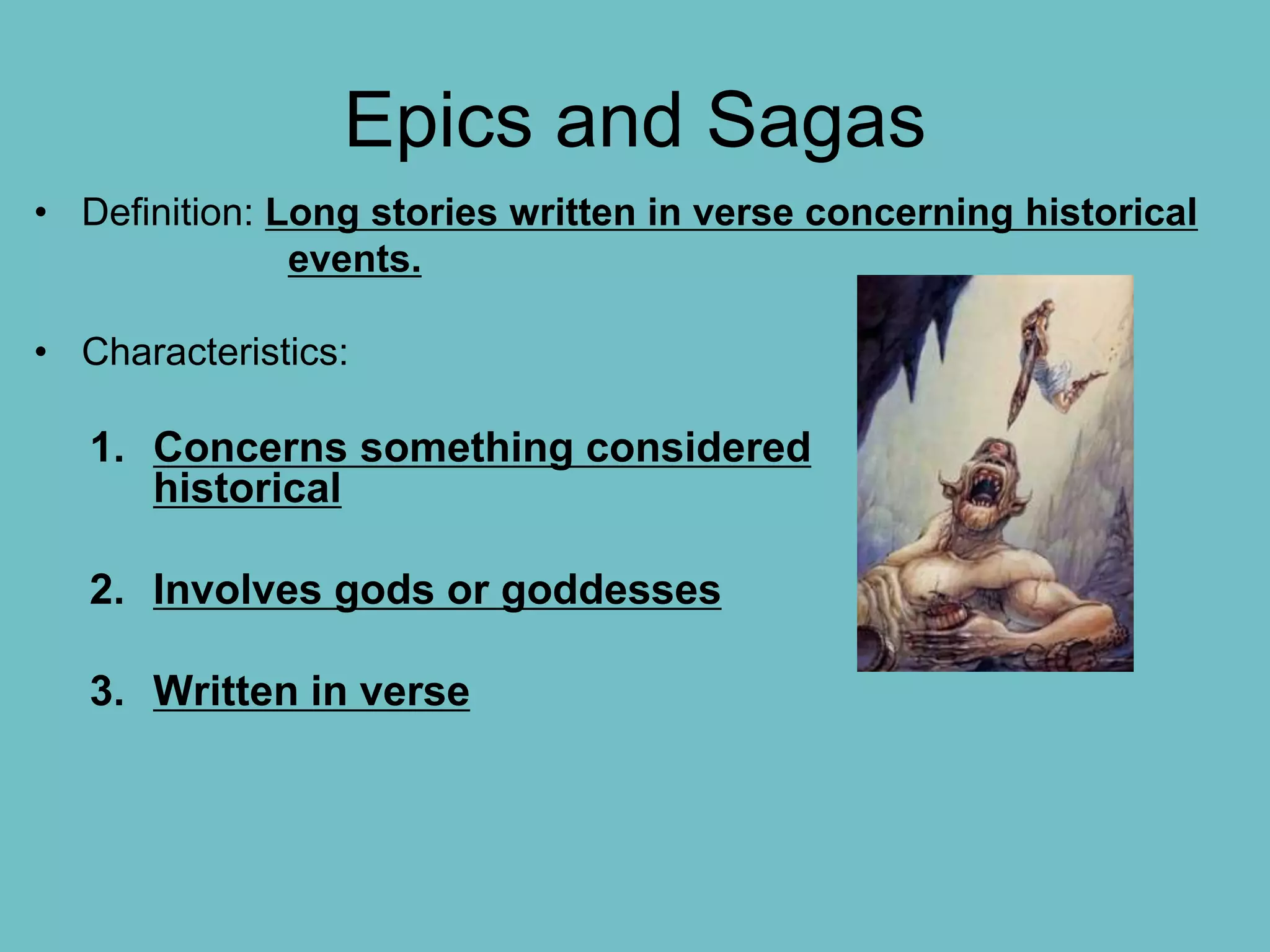
Epics and Sagas
• Definition: Long stories written in verse concerning historical
events.
• Characteristics:
1. Concerns something considered
historical
2. Involves gods or goddesses
3. Written in verse
Proverbs
• Definition: A short, pithy saying intended to contain some
wisdom.
• Characteristics:
1. Typically no longer than a sentence
2. Typically utilizes a form of
metaphor (i.e. not literal)
3. Contains a lesson
Myths
• Definition: Stories with god or hero protagonists in a
proto-world setting to explain natural events
• Characteristics:
1. Religious
2. Discusses gods/goddesses
3. Presented as truth
Legends
• Definition: Stories based on historical events or figures
• Characteristics:
1. Set in identifiable location and time
2. Based on fact
3. May utilize folkloric figures
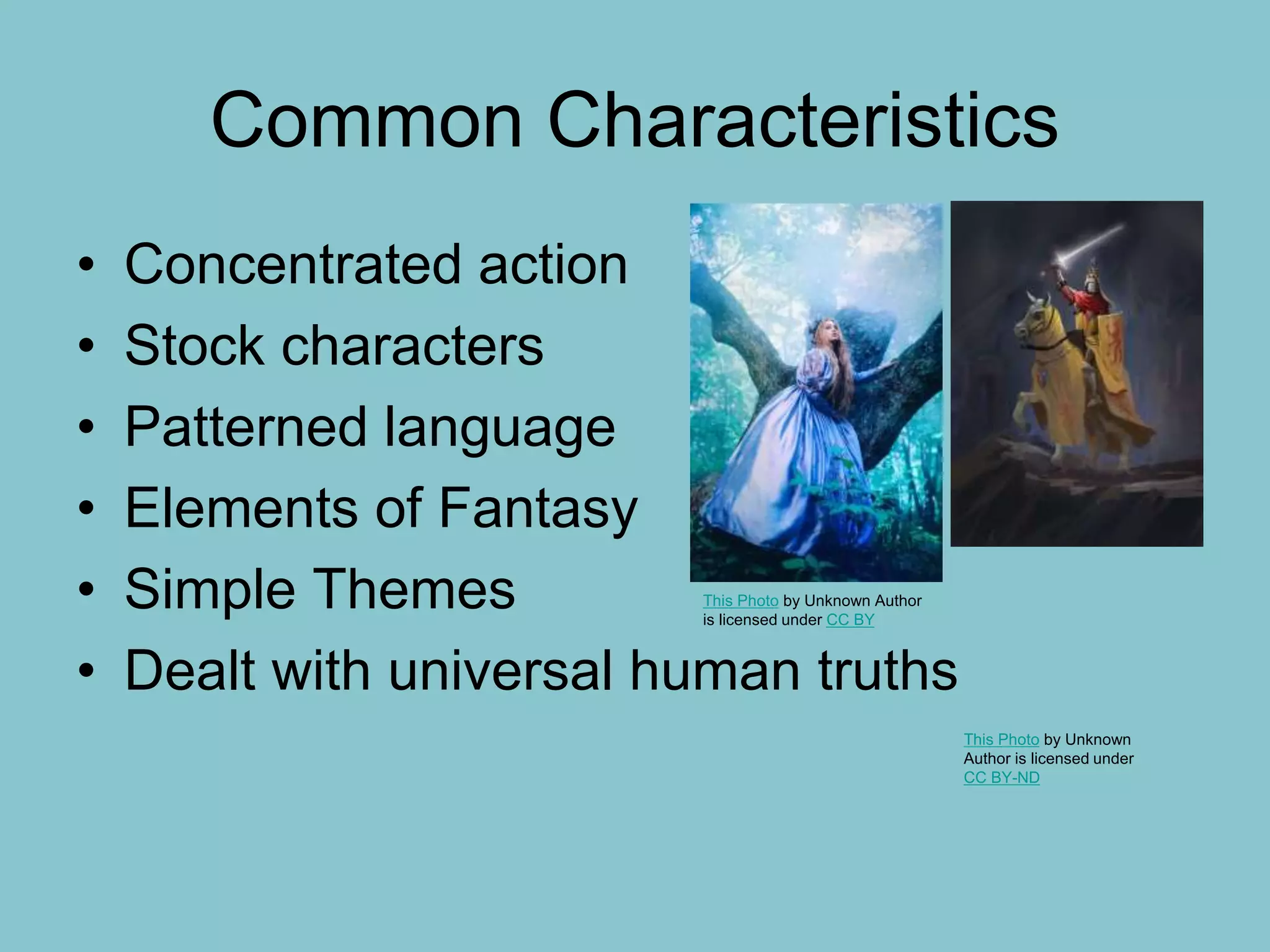
Common Characteristics
• Concentrated action
• Stock characters
• Patterned language
• Elements of Fantasy
• Simple Themes
• Dealt with universal human truths
This Photo by Unknown
Author is licensed under
CC BY-ND
This Photo by Unknown Author
is licensed under CC BY
A Little Tip 
• There is frequently a lot of overlap with folk literature.
• Differences between Fairy Tales and other Folk
Literature:
– Folk Tales record POOR people’s view of the world.
– Fairy Tales record WEALTHY people’s view of the world.
Why Teach Stories?
• Help readers understand truths about life using
made-up characters/setting/actions.
– Jesus used parables to help His disciples understand
spiritual truths
• Help readers understand truths about
themselves.
– Nathan the prophet helped David see how wicked his
sin was with a story!
• Entertain & amuse!
• Engage imagination and humor with increases
endorphins: it is good for your health to read
fairy tales 
Source
• https://www.mooreschools.com/site/handle
rs/filedownload.ashx?moduleinstanceid=5
3753&dataid=86773&FileName=Fairytales
-Fables-Myths-Legends-and-folk-tales.ppt

EN 302 Session 3A Fairy Tales Folklore.pptx

  • 1.
    FOLK & FairyTale LITERATURE From Cover to Cover Chapter 3
  • 2.
    Folk Literature • Folkliterature is primarily oral rather than written. • Transmits culturally significant information. • There are several types of folk literature. – Cumulative ie. “The House That Jack Built” – Pourquoi ie. “Why Mosquitoes Buzz in People’s Ears” – Beast Tales – Fairy Tales – Realistic
  • 3.
    Fables • Definition: Abrief story intended to teach a lesson, which utilizes animals. • Characteristics: 1. Talking animals 2. Clear lesson 3. Personification
  • 4.
    Folk Tales /Fairy Tales • Definition: A fictional story intended for children, which includes far-fetched elements. • Characteristics: 1. Young protagonists 2. Specialized intro. words (i.e. “once upon a time”) 3. Folkloric figures (fairies, gnomes, etc.) Fractured Fairy Tales such as The True Story of the 3 Little Pigs by A. Wolf
  • 5.
    Epics and Sagas •Definition: Long stories written in verse concerning historical events. • Characteristics: 1. Concerns something considered historical 2. Involves gods or goddesses 3. Written in verse
  • 6.
    Proverbs • Definition: Ashort, pithy saying intended to contain some wisdom. • Characteristics: 1. Typically no longer than a sentence 2. Typically utilizes a form of metaphor (i.e. not literal) 3. Contains a lesson
  • 7.
    Myths • Definition: Storieswith god or hero protagonists in a proto-world setting to explain natural events • Characteristics: 1. Religious 2. Discusses gods/goddesses 3. Presented as truth
  • 8.
    Legends • Definition: Storiesbased on historical events or figures • Characteristics: 1. Set in identifiable location and time 2. Based on fact 3. May utilize folkloric figures
  • 9.
    Common Characteristics • Concentratedaction • Stock characters • Patterned language • Elements of Fantasy • Simple Themes • Dealt with universal human truths This Photo by Unknown Author is licensed under CC BY-ND This Photo by Unknown Author is licensed under CC BY
  • 10.
    A Little Tip • There is frequently a lot of overlap with folk literature. • Differences between Fairy Tales and other Folk Literature: – Folk Tales record POOR people’s view of the world. – Fairy Tales record WEALTHY people’s view of the world.
  • 11.
    Why Teach Stories? •Help readers understand truths about life using made-up characters/setting/actions. – Jesus used parables to help His disciples understand spiritual truths • Help readers understand truths about themselves. – Nathan the prophet helped David see how wicked his sin was with a story! • Entertain & amuse! • Engage imagination and humor with increases endorphins: it is good for your health to read fairy tales 
  • 12.