MARTIN
JOOS
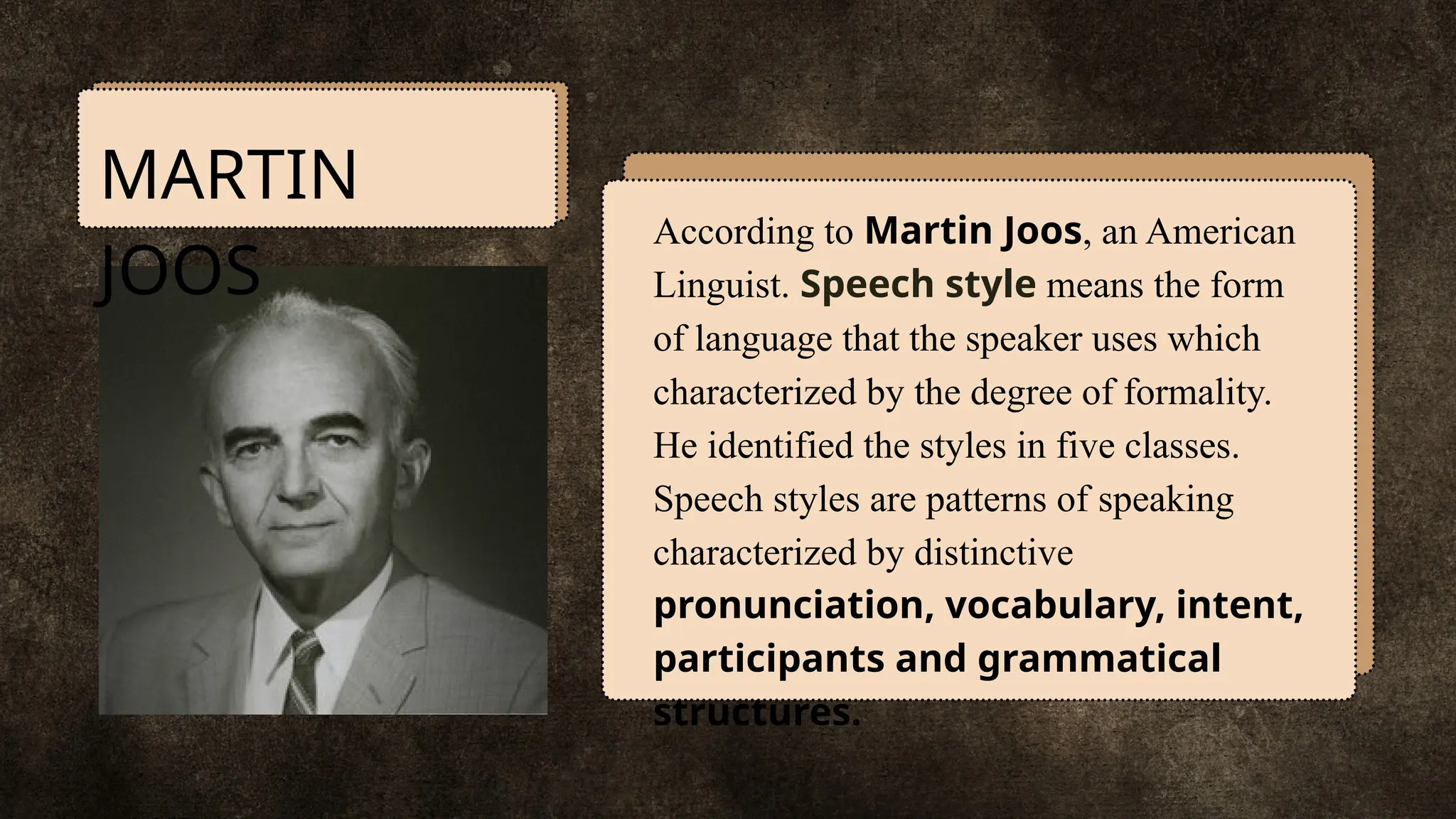
According to MartinJoos, an American
Linguist. Speech style means the form
of language that the speaker uses which
characterized by the degree of formality.
He identified the styles in five classes.
Speech styles are patterns of speaking
characterized by distinctive
pronunciation, vocabulary, intent,
participants and grammatical
structures.
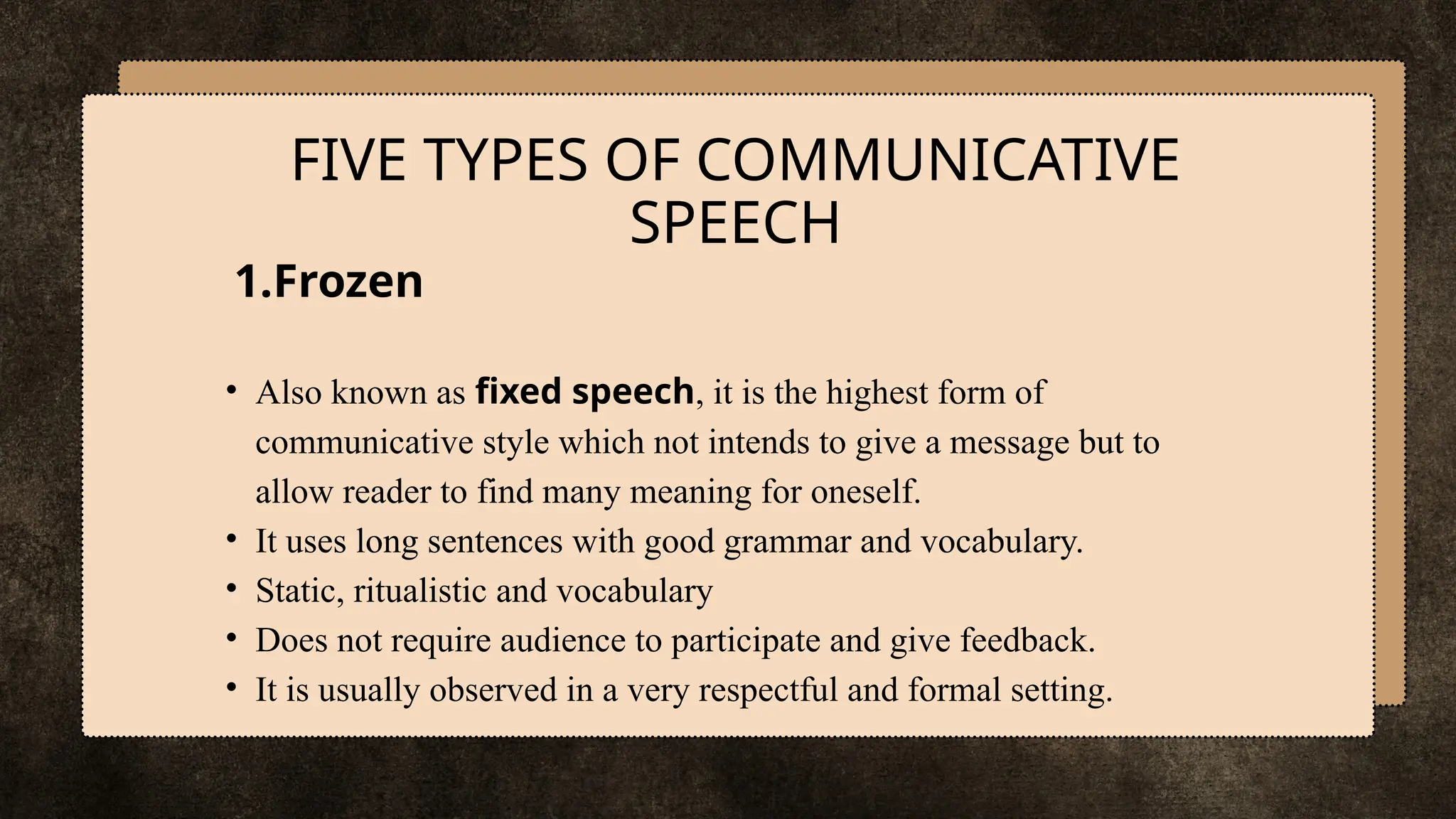
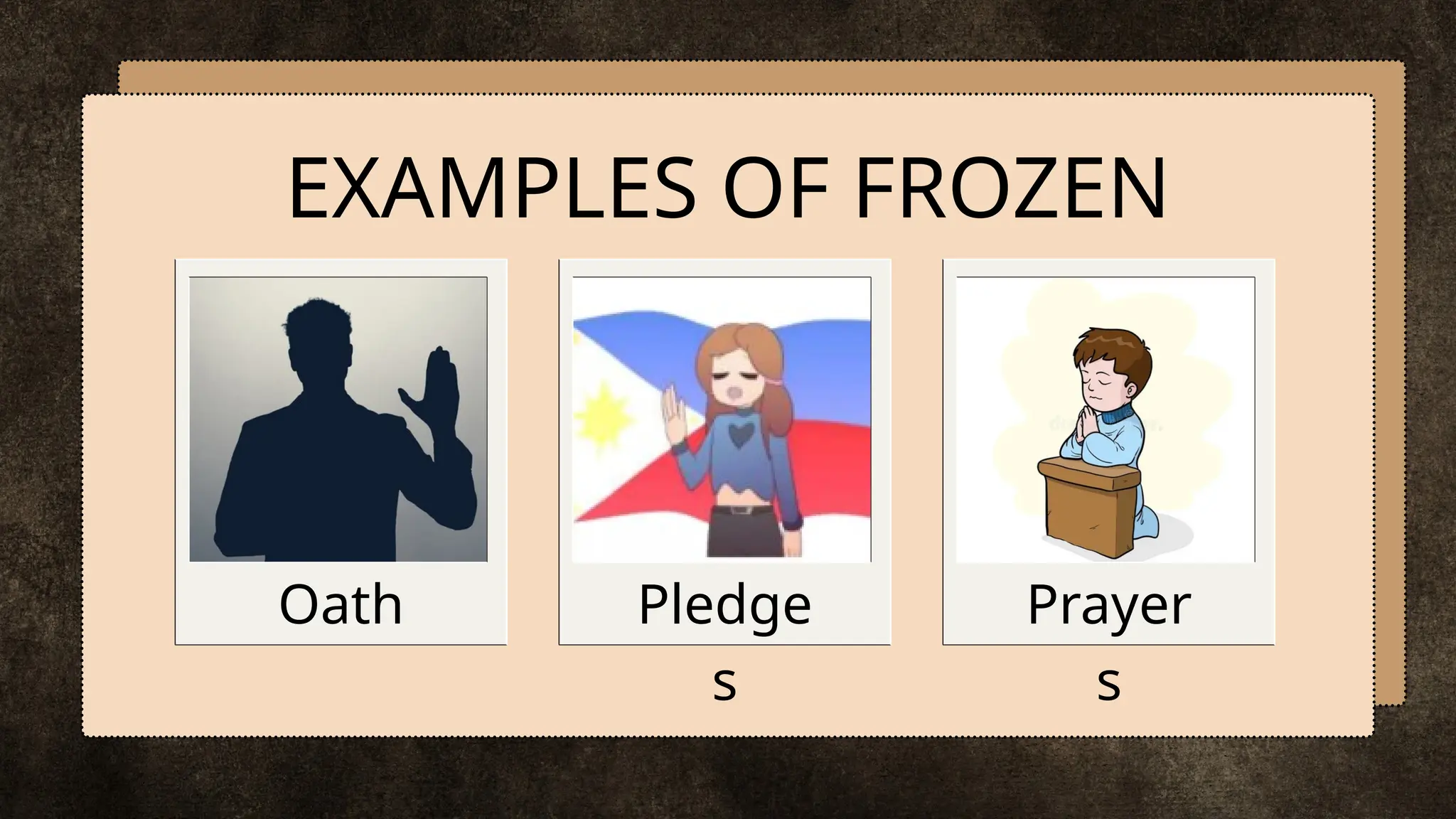
1.Frozen
• Also knownas fixed speech, it is the highest form of
communicative style which not intends to give a message but to
allow reader to find many meaning for oneself.
• It uses long sentences with good grammar and vocabulary.
• Static, ritualistic and vocabulary
• Does not require audience to participate and give feedback.
• It is usually observed in a very respectful and formal setting.
FIVE TYPES OF COMMUNICATIVE
SPEECH
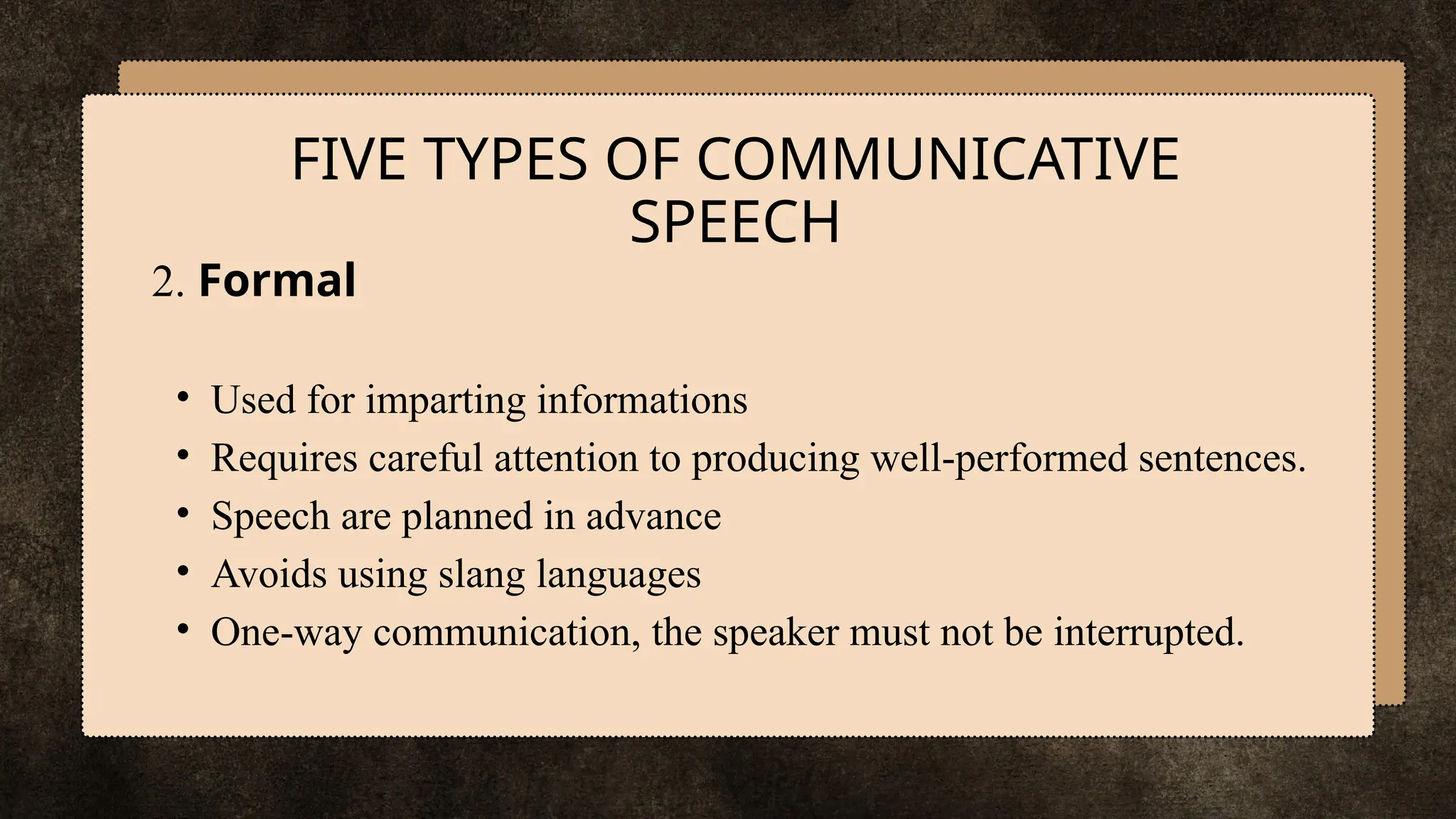
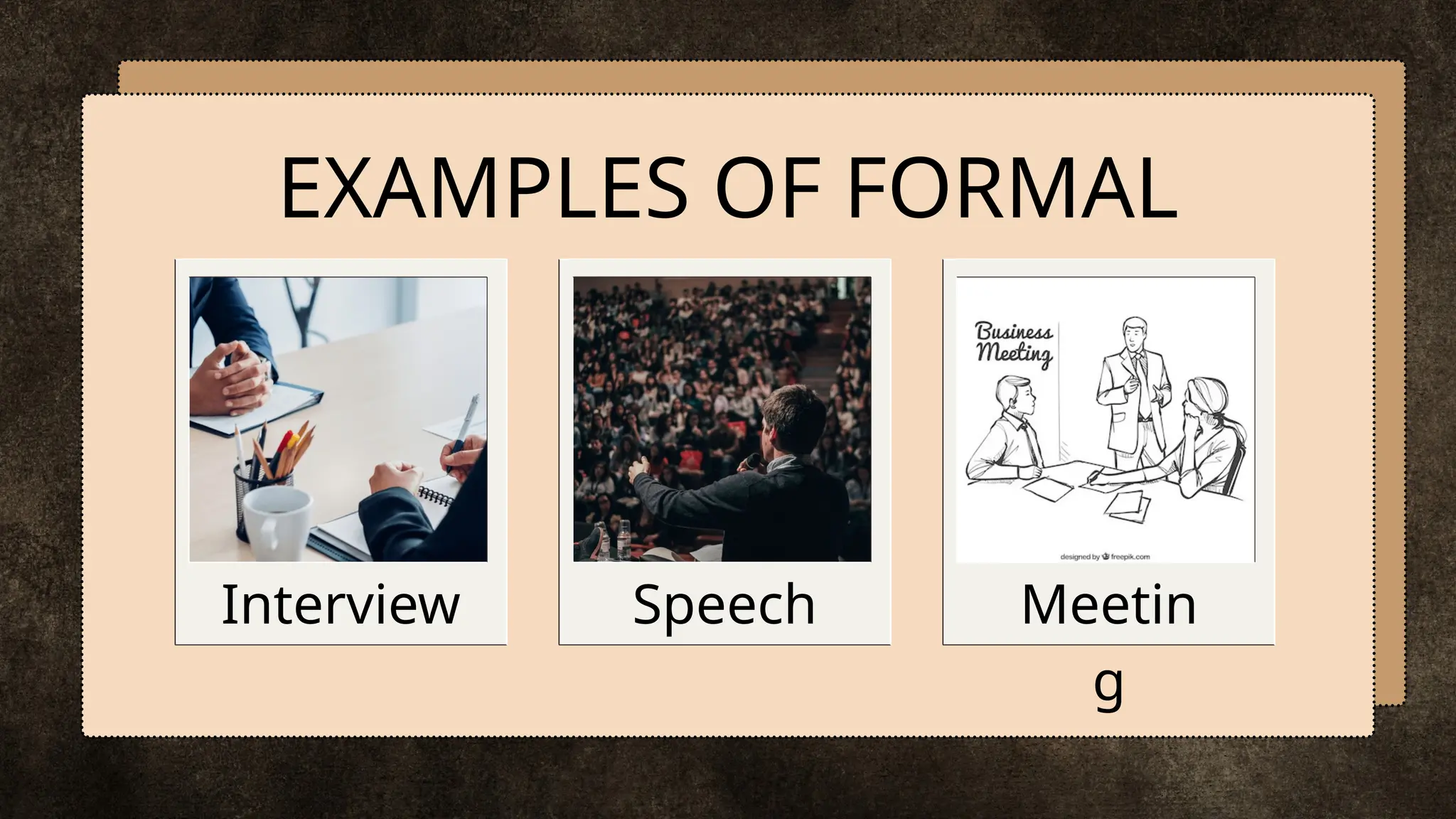
2. Formal
• Usedfor imparting informations
• Requires careful attention to producing well-performed sentences.
• Speech are planned in advance
• Avoids using slang languages
• One-way communication, the speaker must not be interrupted.
FIVE TYPES OF COMMUNICATIVE
SPEECH
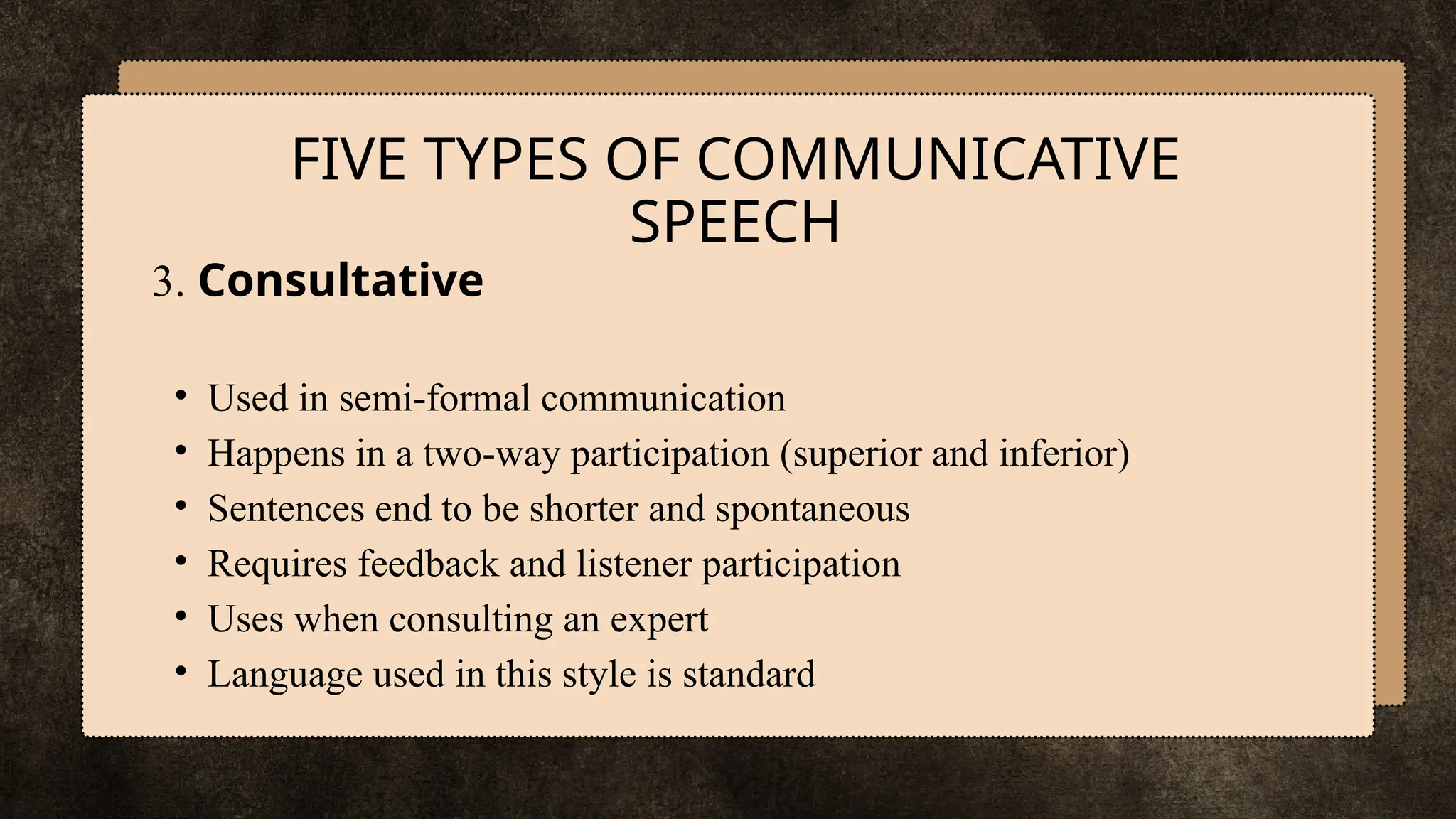
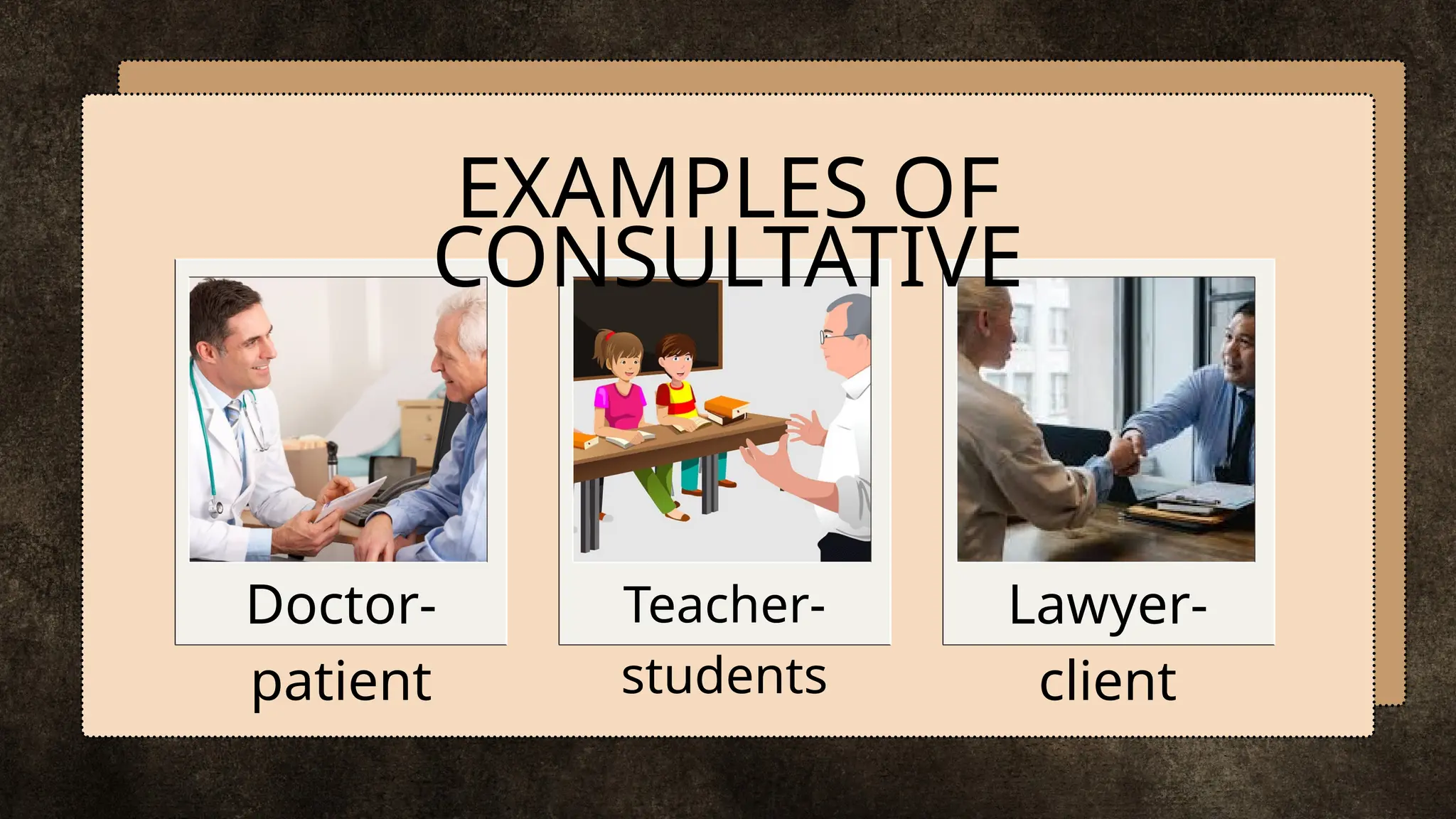
3. Consultative
• Usedin semi-formal communication
• Happens in a two-way participation (superior and inferior)
• Sentences end to be shorter and spontaneous
• Requires feedback and listener participation
• Uses when consulting an expert
• Language used in this style is standard
FIVE TYPES OF COMMUNICATIVE
SPEECH
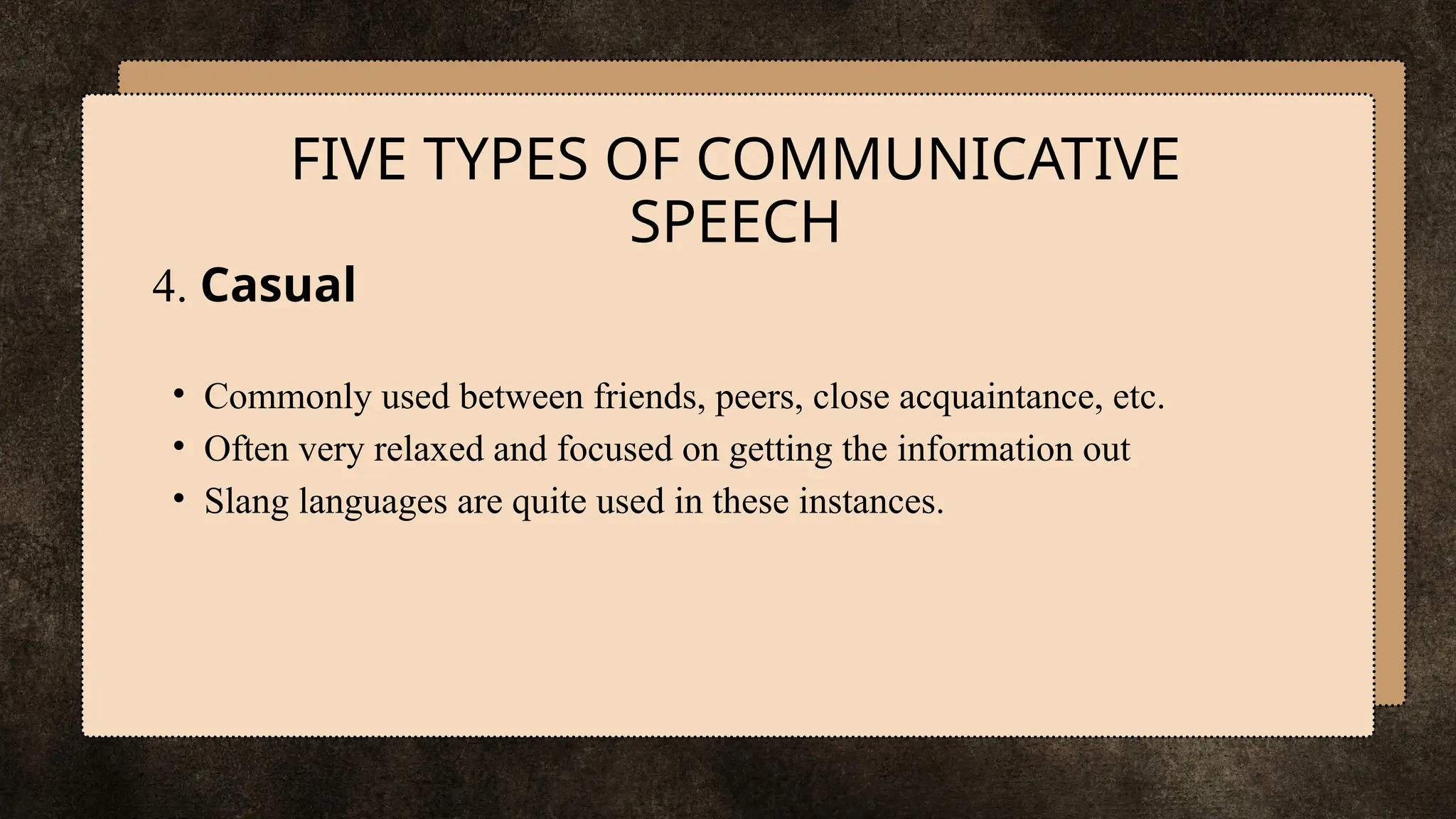
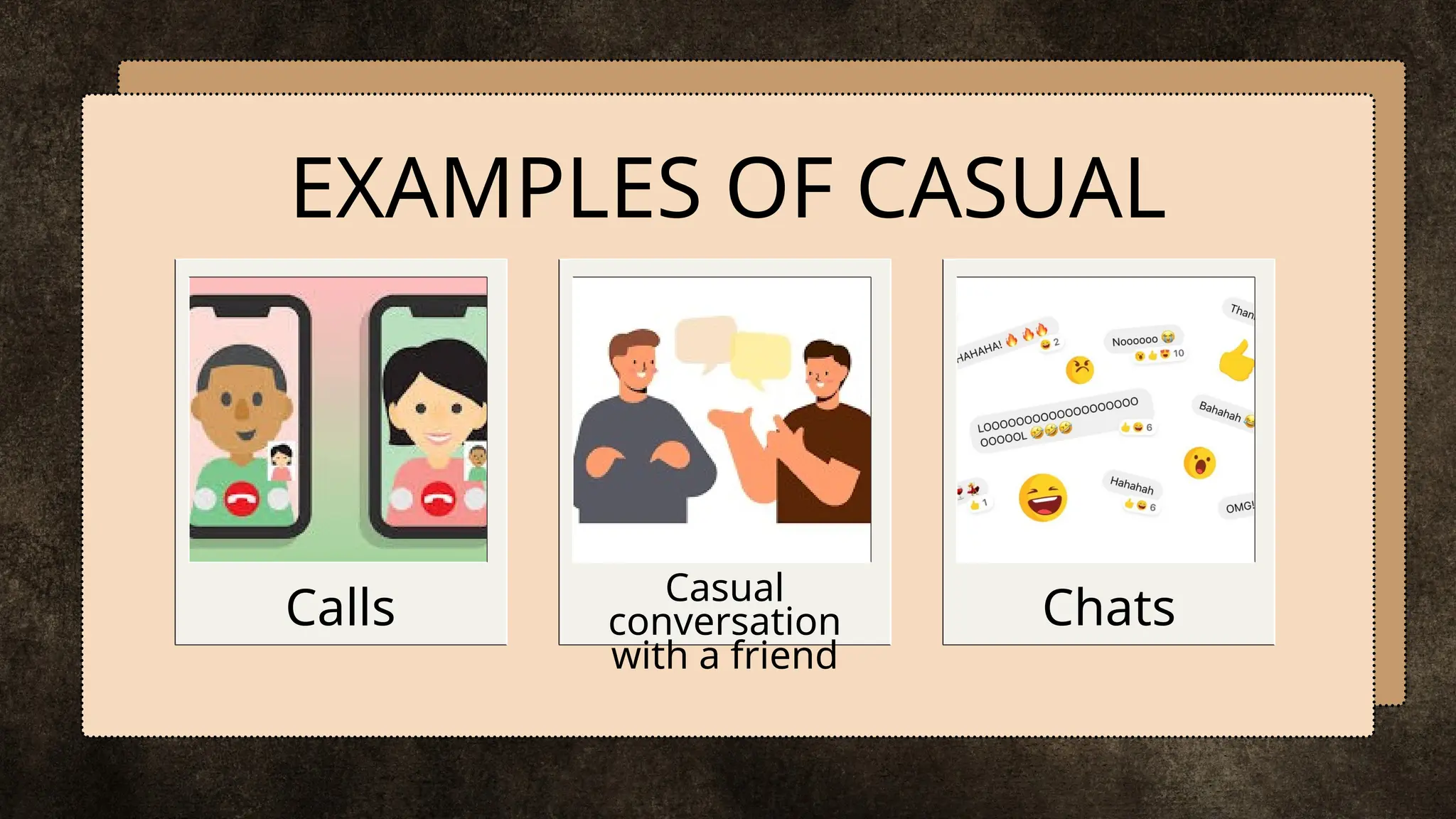
4. Casual
• Commonlyused between friends, peers, close acquaintance, etc.
• Often very relaxed and focused on getting the information out
• Slang languages are quite used in these instances.
FIVE TYPES OF COMMUNICATIVE
SPEECH
5. Intimate
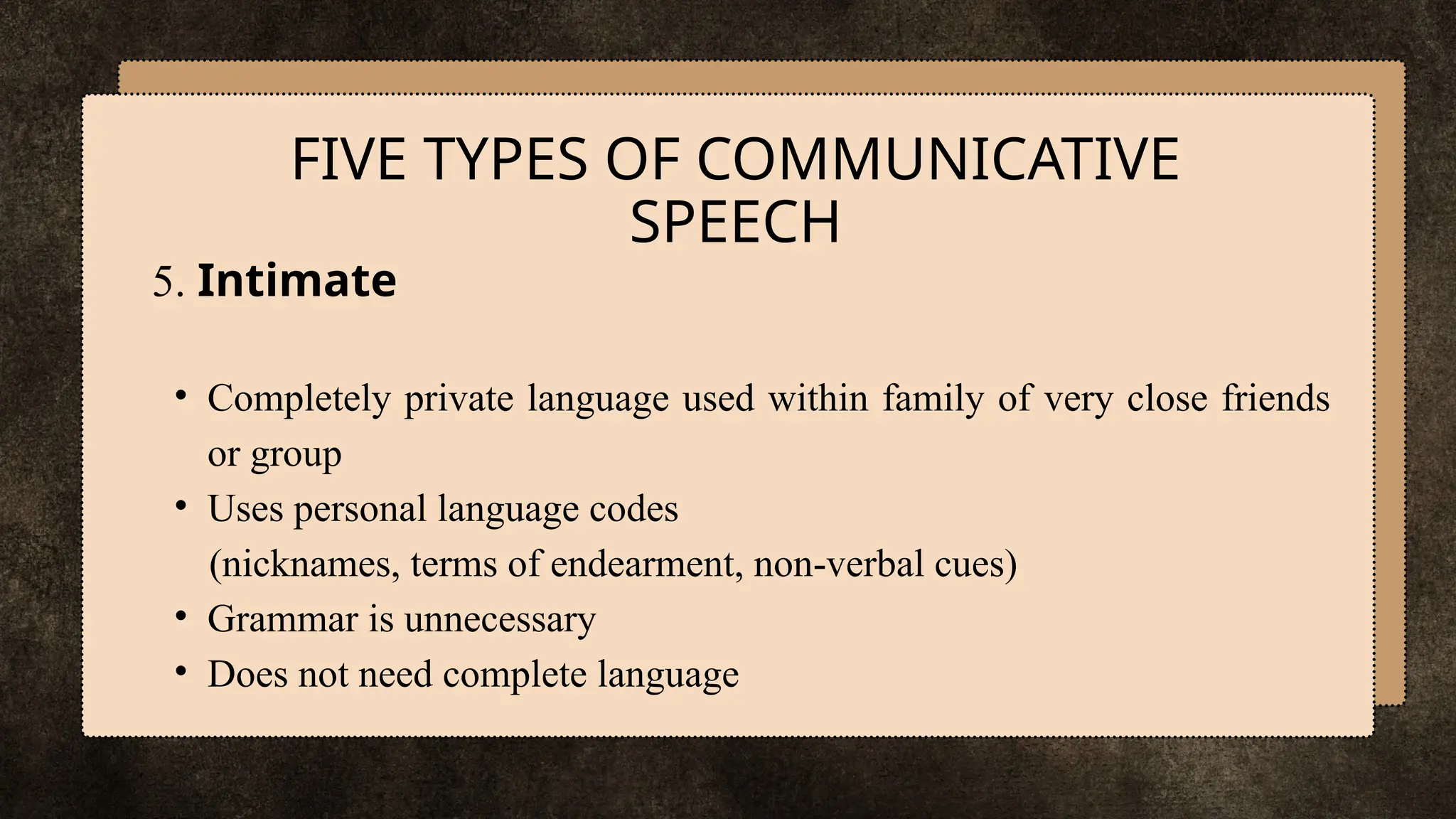
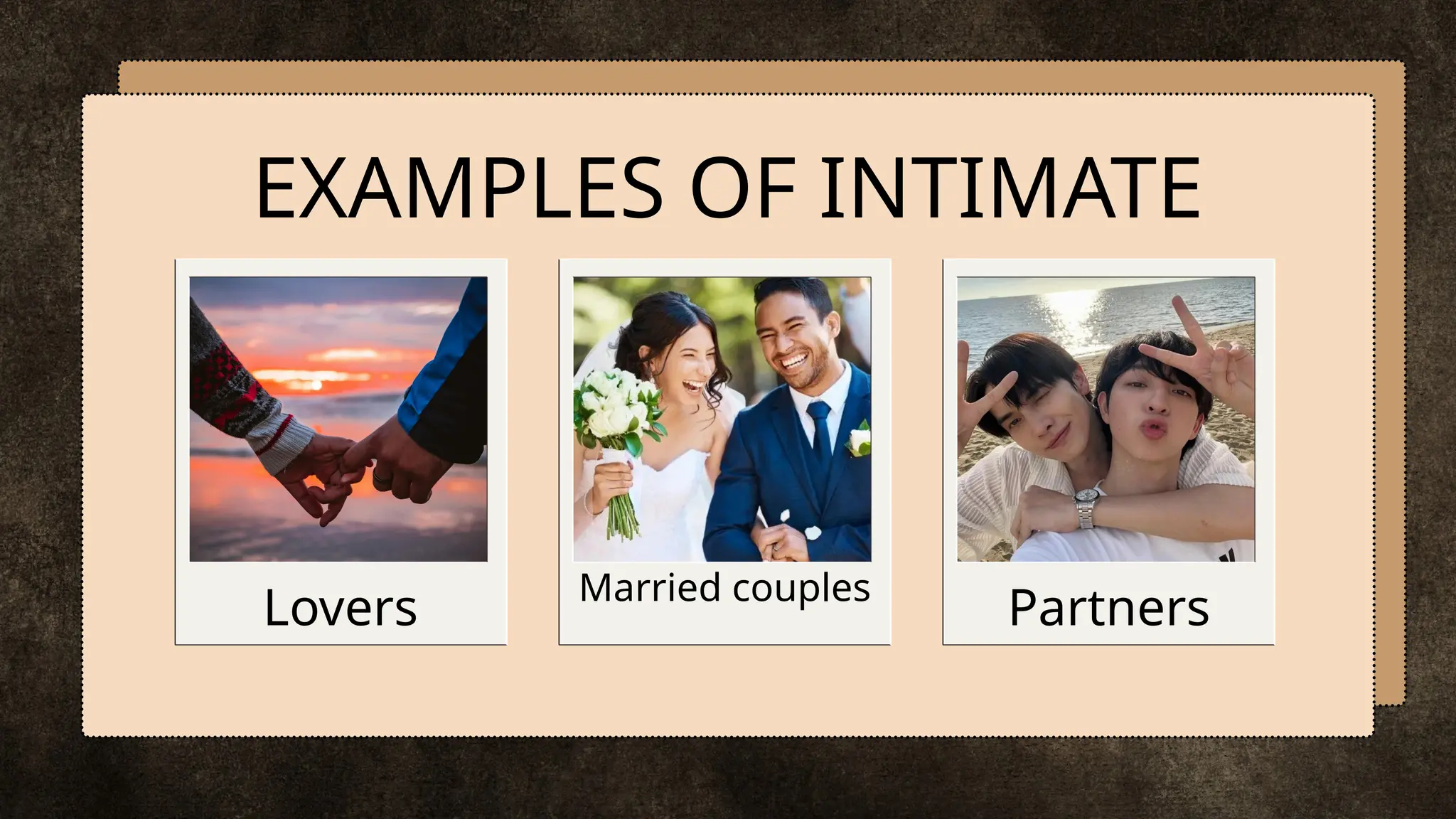
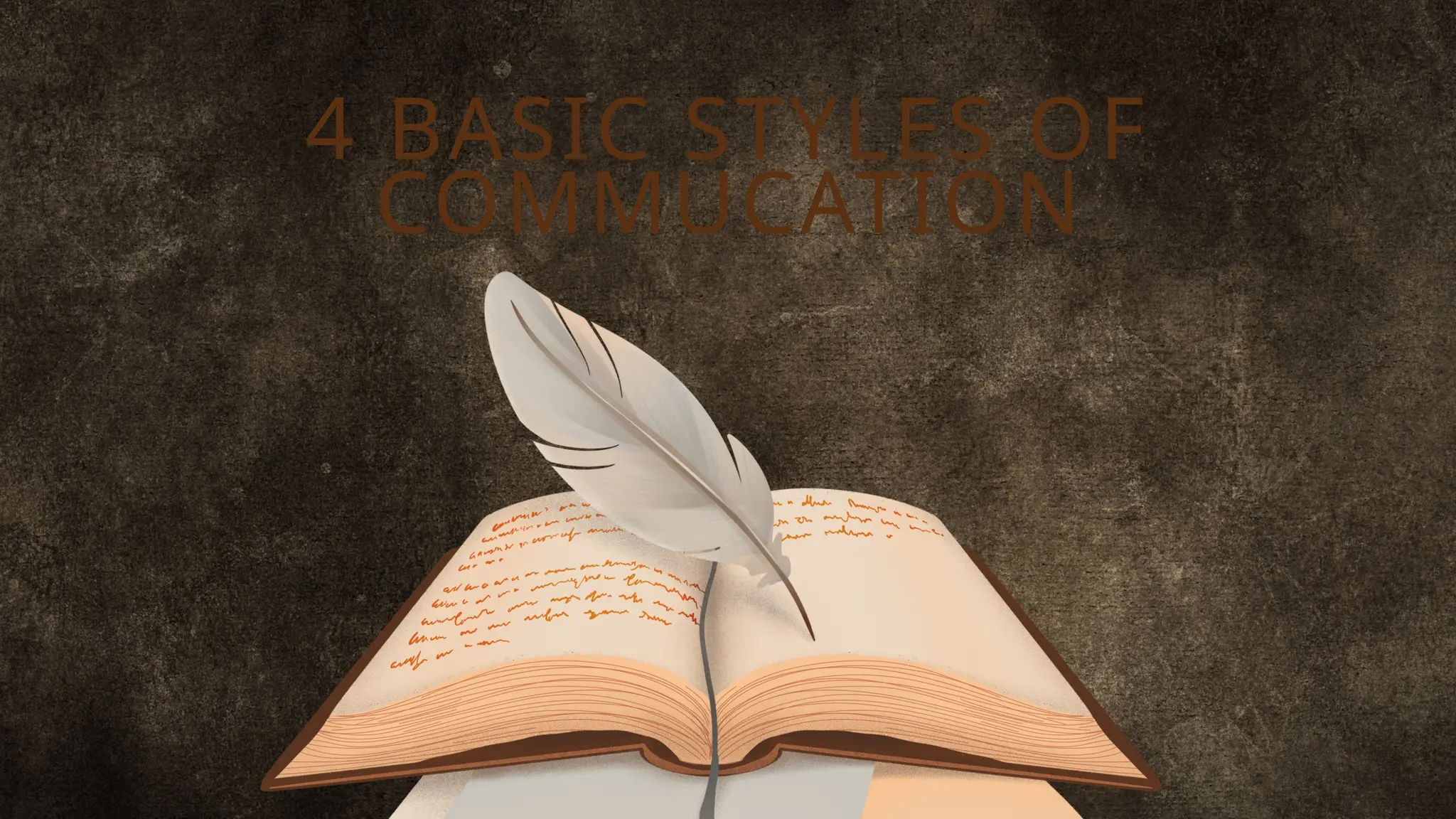
• Completelyprivate language used within family of very close friends
or group
• Uses personal language codes
(nicknames, terms of endearment, non-verbal cues)
• Grammar is unnecessary
• Does not need complete language
FIVE TYPES OF COMMUNICATIVE
SPEECH
is a stylewhere a person avoids
expressing their thoughts, feelings, or
needs openly. Instead, they often stay
quiet, go along with others, and avoid
conflict—even if it means their own needs
are ignored. This can lead to feelings of
frustration, resentment, or being
overlooked.
1. PASSIVE COMMUNICATION
17.
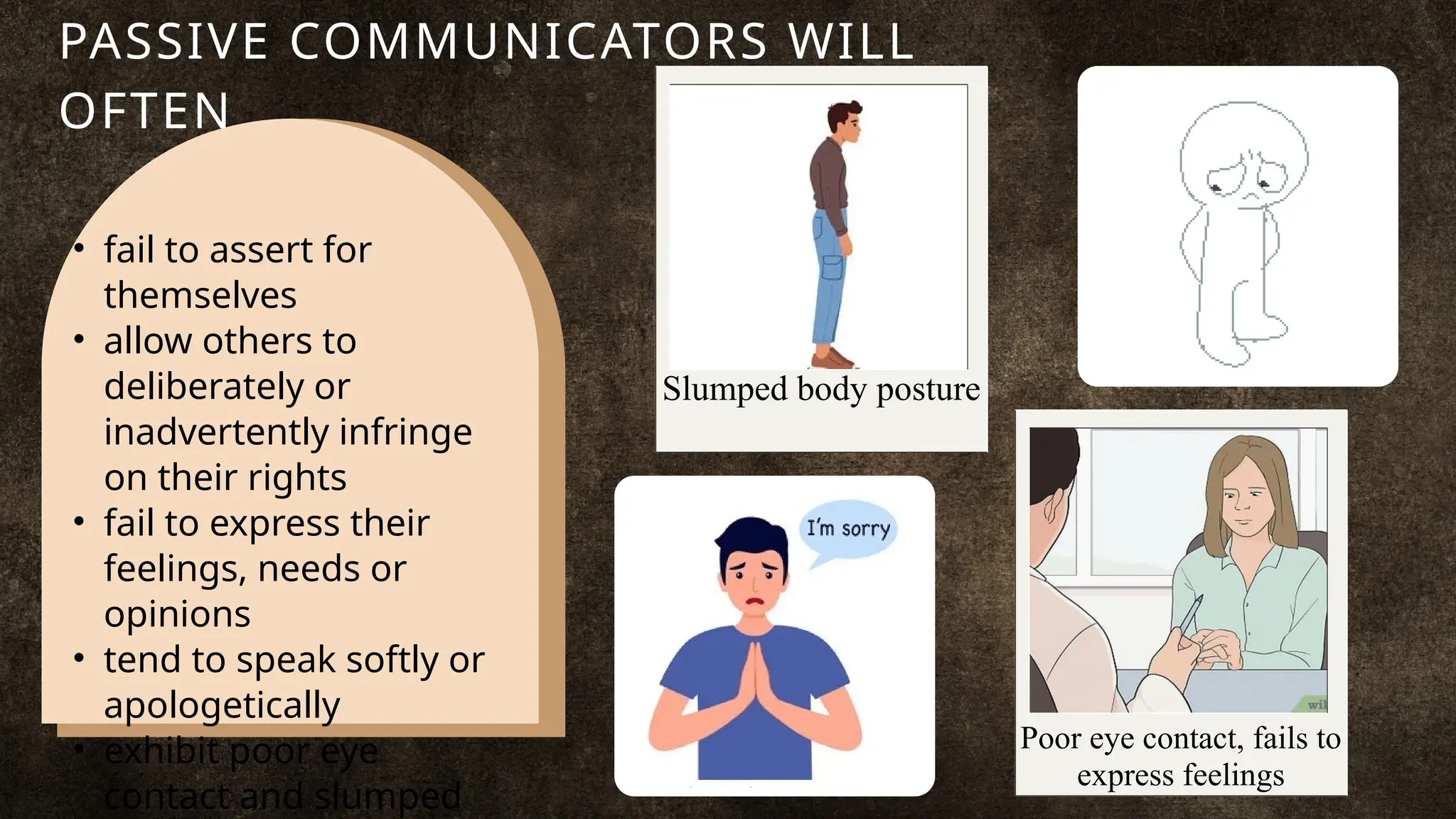
Slumped body posture
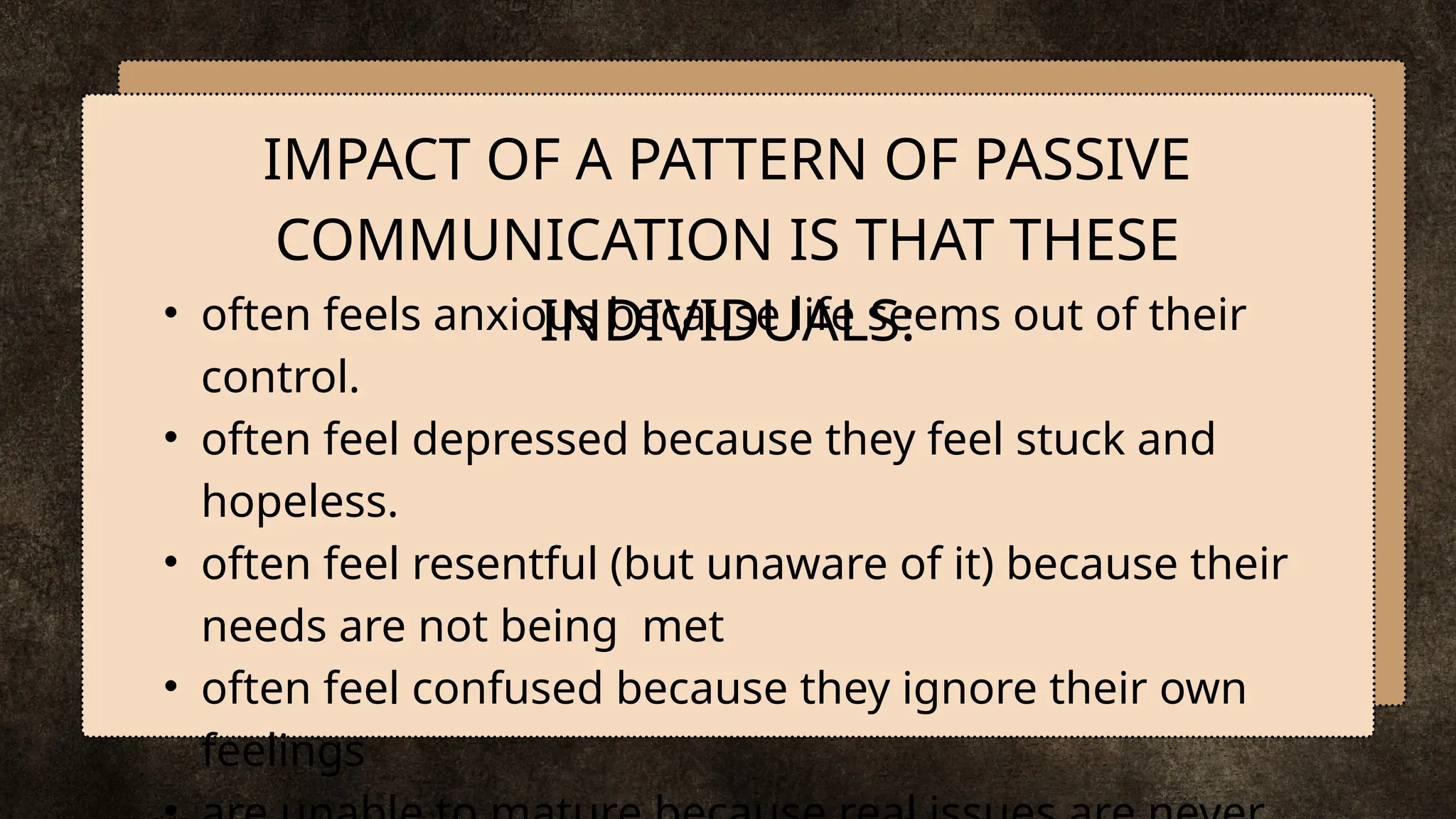
•fail to assert for
themselves
• allow others to
deliberately or
inadvertently infringe
on their rights
• fail to express their
feelings, needs or
opinions
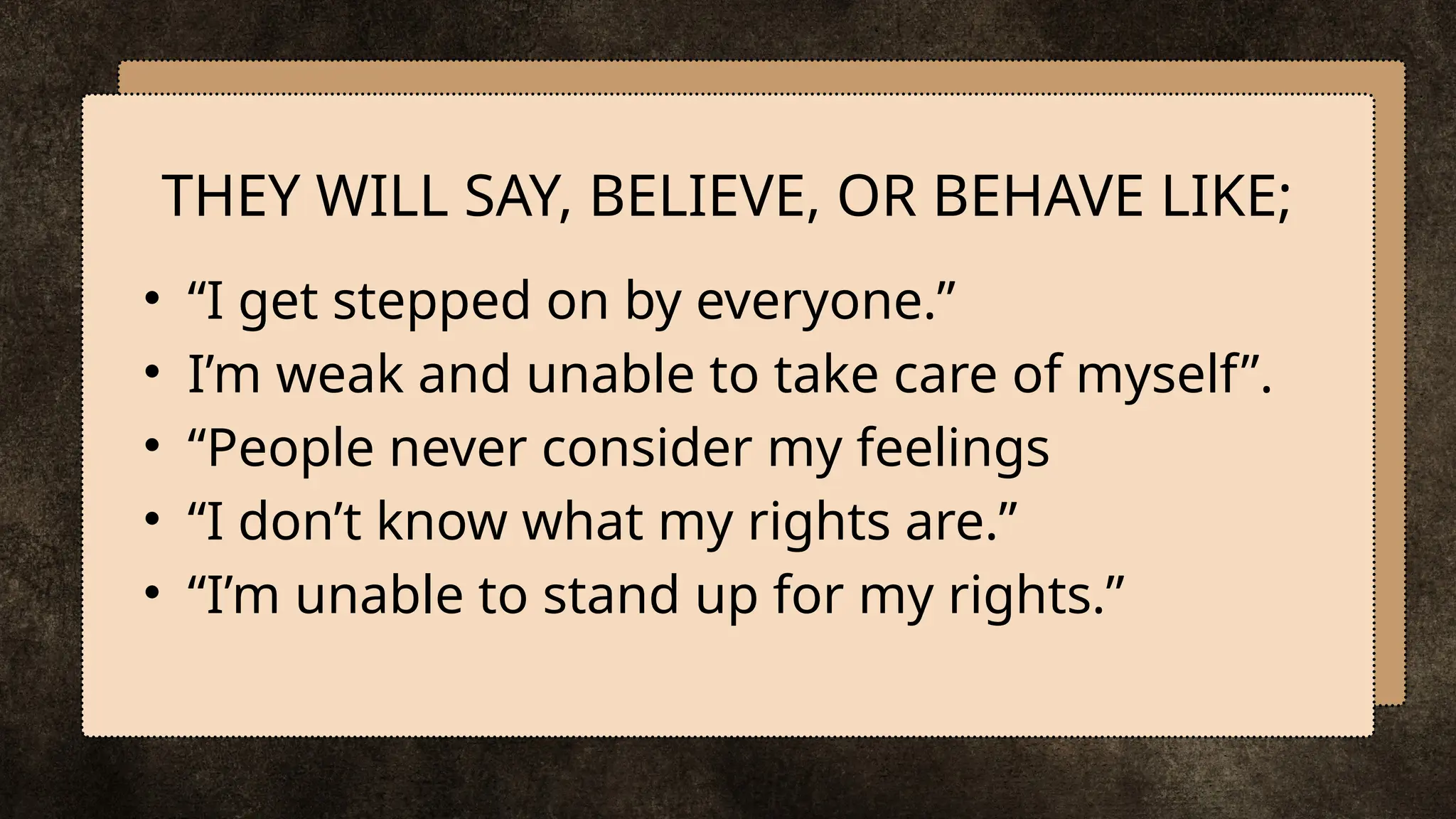
• tend to speak softly or
apologetically
• exhibit poor eye
contact and slumped
PASSIVE COMMUNICATORS WILL
OFTEN
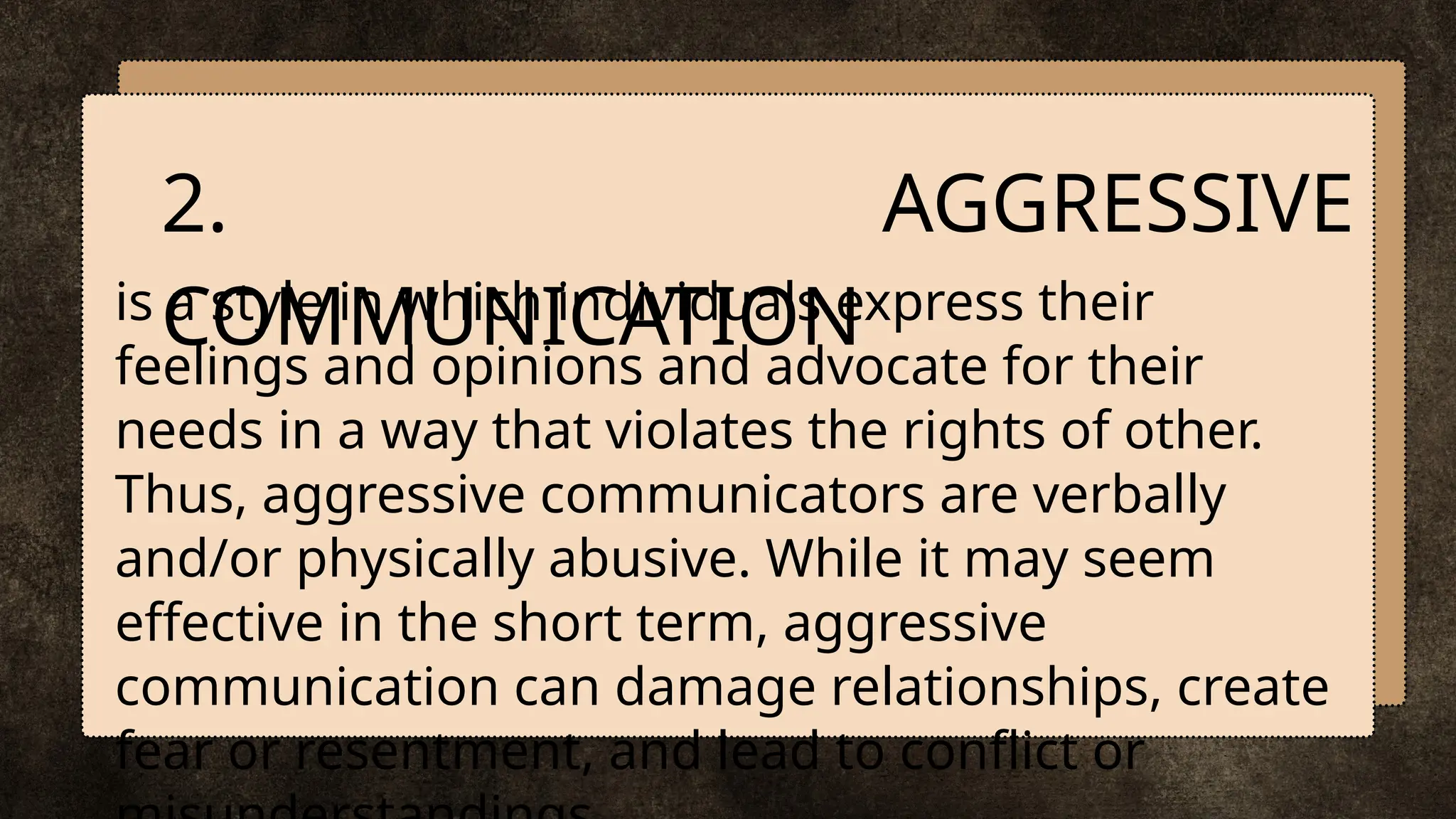
Poor eye contact, fails to
express feelings
18.
• often feelsanxious because life seems out of their
control.
• often feel depressed because they feel stuck and
hopeless.
• often feel resentful (but unaware of it) because their
needs are not being met
• often feel confused because they ignore their own
feelings
IMPACT OF A PATTERN OF PASSIVE
COMMUNICATION IS THAT THESE
INDIVIDUALS:
19.
• “I getstepped on by everyone.”
• I’m weak and unable to take care of myself”.
• “People never consider my feelings
• “I don’t know what my rights are.”
• “I’m unable to stand up for my rights.”
THEY WILL SAY, BELIEVE, OR BEHAVE LIKE;
20.
is a stylein which individuals express their
feelings and opinions and advocate for their
needs in a way that violates the rights of other.
Thus, aggressive communicators are verbally
and/or physically abusive. While it may seem
effective in the short term, aggressive
communication can damage relationships, create
fear or resentment, and lead to conflict or
2. AGGRESSIVE
COMMUNICATION
21.
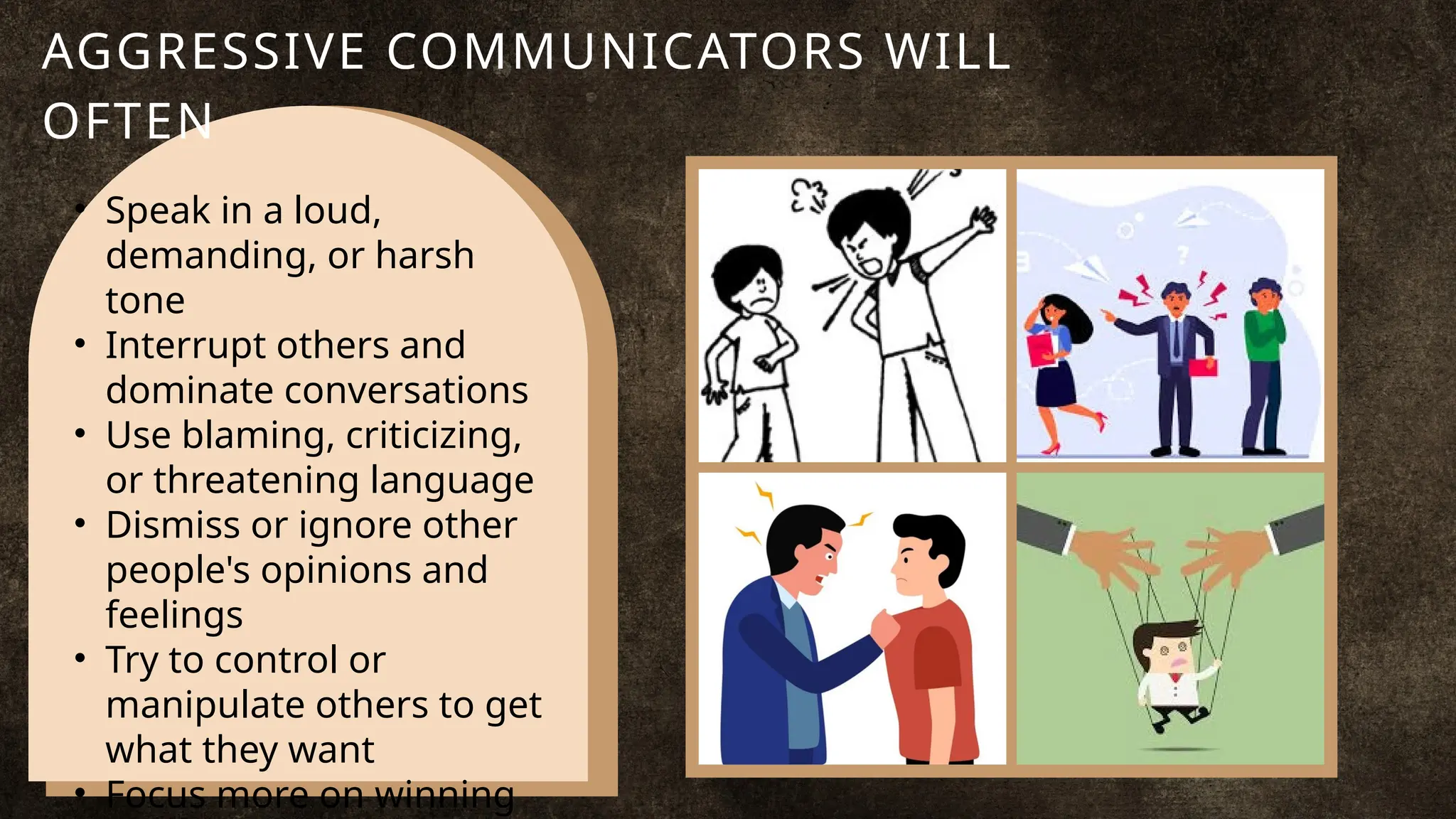
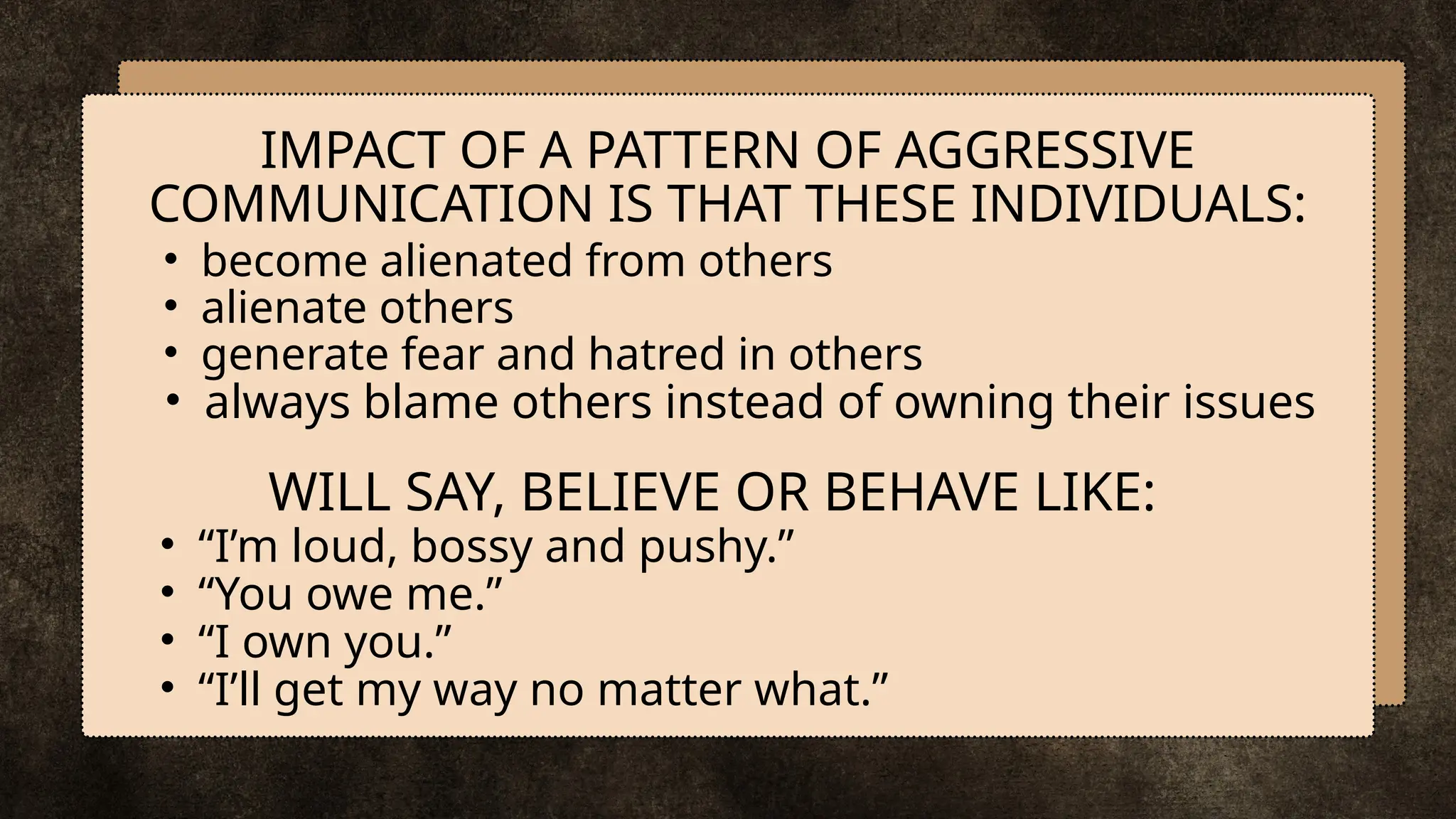
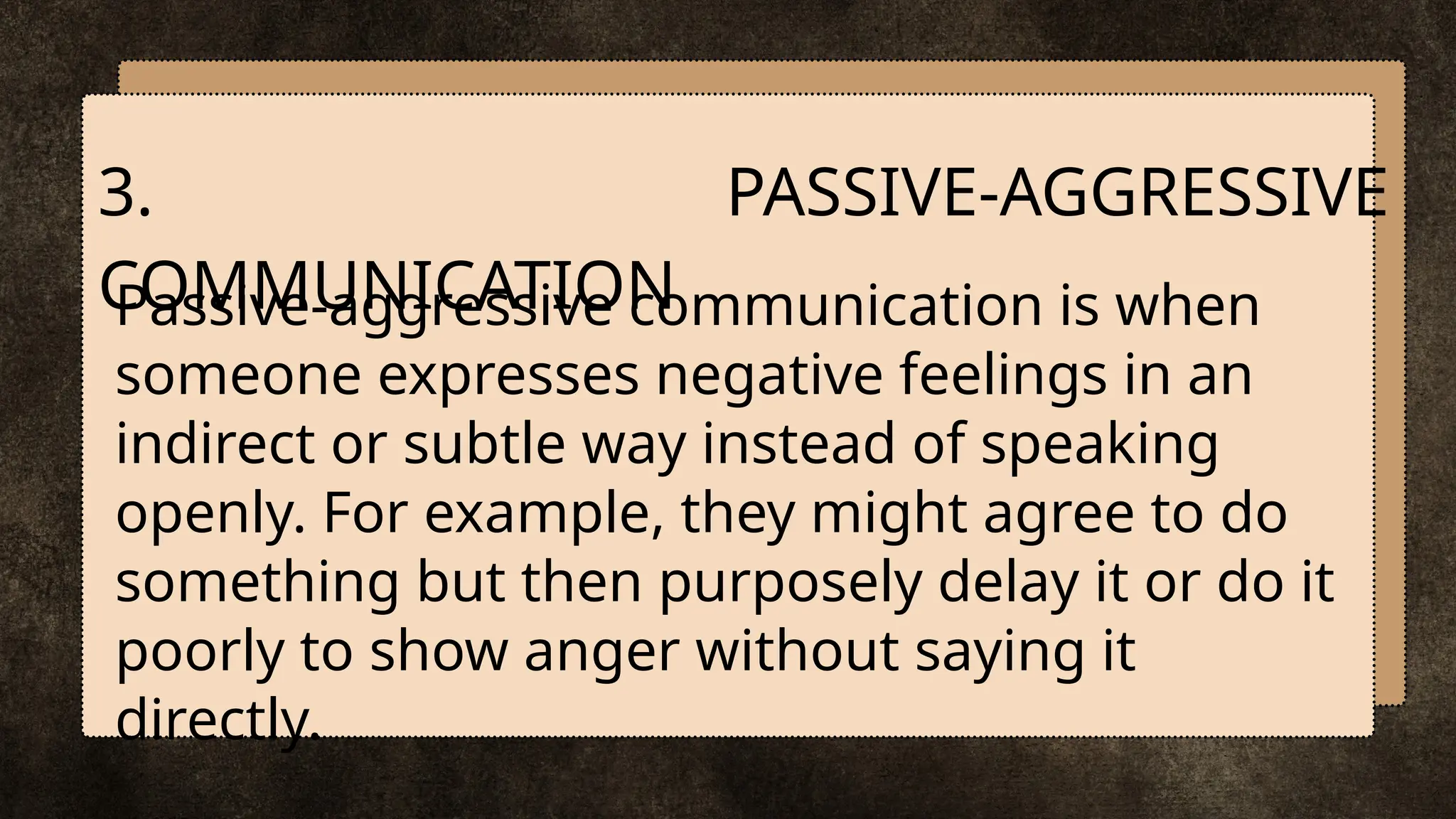
• Speak ina loud,
demanding, or harsh
tone
• Interrupt others and
dominate conversations
• Use blaming, criticizing,
or threatening language
• Dismiss or ignore other
people's opinions and
feelings
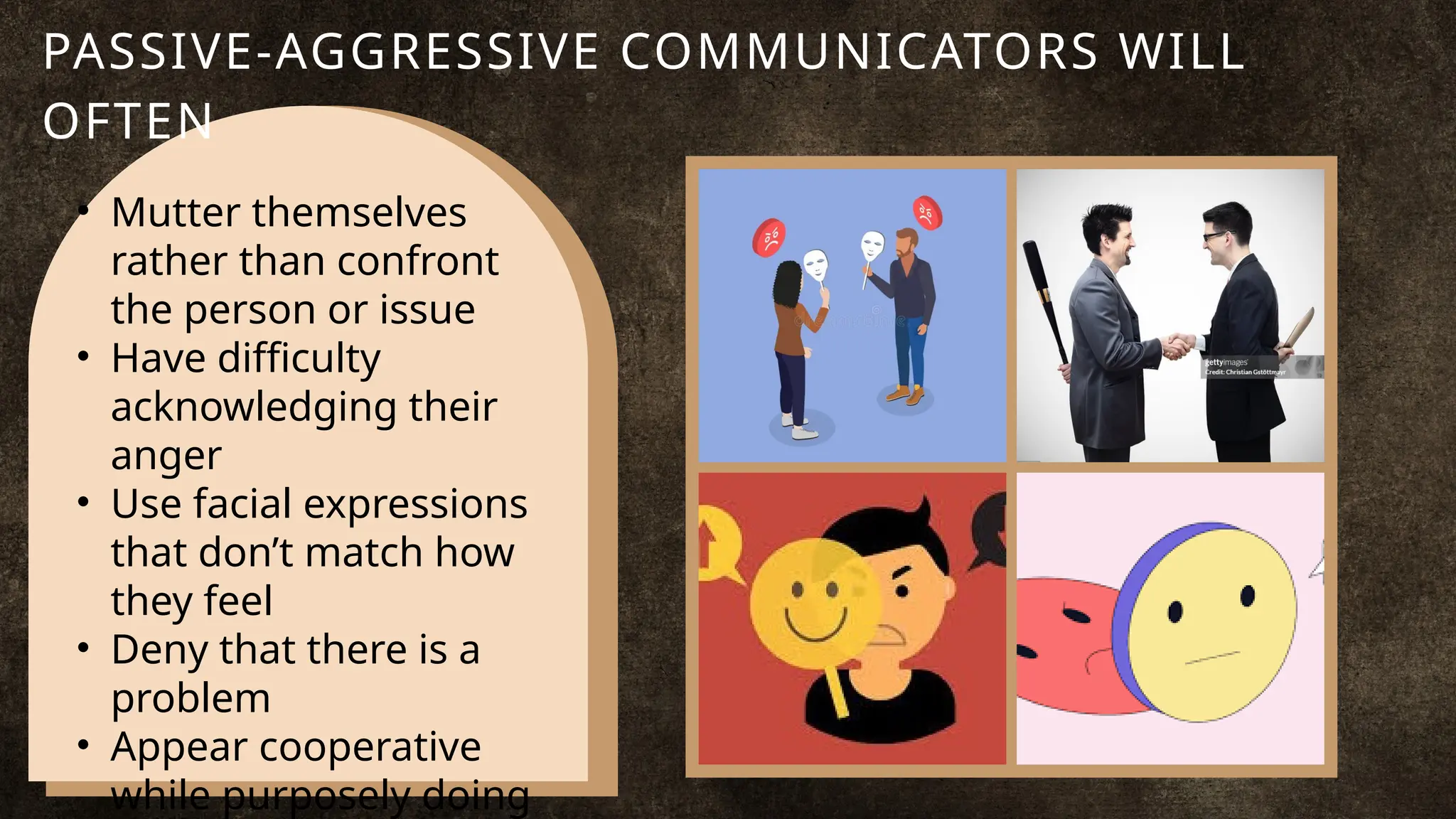
• Try to control or
manipulate others to get
what they want
• Focus more on winning
AGGRESSIVE COMMUNICATORS WILL
OFTEN
22.
• become alienatedfrom others
• alienate others
• generate fear and hatred in others
• always blame others instead of owning their issues
IMPACT OF A PATTERN OF AGGRESSIVE
COMMUNICATION IS THAT THESE INDIVIDUALS:
WILL SAY, BELIEVE OR BEHAVE LIKE:
• “I’m loud, bossy and pushy.”
• “You owe me.”
• “I own you.”
• “I’ll get my way no matter what.”
23.
Passive-aggressive communication iswhen
someone expresses negative feelings in an
indirect or subtle way instead of speaking
openly. For example, they might agree to do
something but then purposely delay it or do it
poorly to show anger without saying it
directly.
3. PASSIVE-AGGRESSIVE
COMMUNICATION
24.
• Mutter themselves
ratherthan confront
the person or issue
• Have difficulty
acknowledging their
anger
• Use facial expressions
that don’t match how
they feel
• Deny that there is a
problem
• Appear cooperative
while purposely doing
PASSIVE-AGGRESSIVE COMMUNICATORS WILL
OFTEN
25.
• become alienatedfrom those around them
• remain stuck in a position of powerlessness
• discharge resentment while real issues are never
addressed so they can’t mature
IMPACT OF A PATTERN OF PASSIVE AGGRESSIVE
COMMUNICATION IS THAT THESE INDIVIDUALS:
WILL SAY, BELIEVE OR BEHAVE LIKE:
• “I’m weak and resentful, so I sabotage , frustrate and
disrupt”
• “I’m not mad.” (Even when they clearly are.)
• “Sure, I’ll do it.” (Then intentionally procrastinate or
26.
Assertive communication isa clear,
respectful, and confident way of
expressing your thoughts, feelings, and
needs while also considering others' rights
and opinions.
4. ASSERTIVE COMMUNICATION
27.
• Help buildhealthy and respectful
relationships
• Allow you to express your needs and
opinions clearly
• Increase self-confidence and self-respect
• Reduce conflicts and misunderstandings
• Encourage open and honest
communication
ASSERTIVE COMMUNICATION WILL: