Empathy Map
Shem Cristobal
Design Thinking
Say
Empathy Map
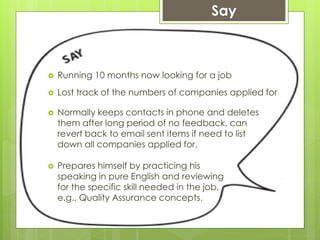
 Running 10 months now looking for a job
Say
 Lost track of the numbers of companies applied for
 Normally keeps contacts in phone and deletes
them after long period of no feedback, can
revert back to email sent items if need to list
down all companies applied for.
 Prepares himself by practicing his
speaking in pure English and reviewing
for the specific skill needed in the job,
e.g., Quality Assurance concepts.
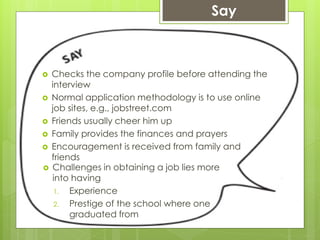
 Checks the company profile before attending the
interview
 Normal application methodology is to use online
job sites, e.g., jobstreet.com
 Friends usually cheer him up
 Family provides the finances and prayers
 Encouragement is received from family and
friends
Say
 Challenges in obtaining a job lies more
into having
1. Experience
2. Prestige of the school where one
graduated from
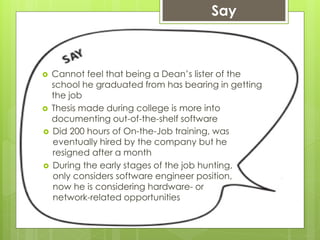
 Cannot feel that being a Dean’s lister of the
school he graduated from has bearing in getting
the job
 Thesis made during college is more into
documenting out-of-the-shelf software
Say
 Did 200 hours of On-the-Job training, was
eventually hired by the company but he
resigned after a month
 During the early stages of the job hunting,
only considers software engineer position,
now he is considering hardware- or
network-related opportunities
 Due to the number of interviews undertaken, he
already has the idea on the ‘usual’ questions and
‘usual’ answers to the them
 More confident now to do one-on-one interviews
but still find it difficult to do panel interviews
Say
 Got a final interview only once, all the rest
were initial interviews checking his skills and
experiences
 Internal pressure to have a job is felt
only when hearing a friend or peer
getting a job, but this motivates him
to persevere more in job hunting
 Normally asks his peers how they got the job, looking
for things they did that he missed to do in job hunting
 He thinks that if after one year of not being able to
get a job, he will take a master’s degree in
Technology Management, as suggested by his
parents, from the University of the Philippines
Say
 Aside from job hunting, he is doing other
“past times” during the transition, e.g.,
1. Reviewing
2. Watching American movies – to get
English “lines” and be more fluent in
speaking
3. Helps friends by teaching them on
their homework
Think
Empathy Map
 10 months is long enough for him to
accept the job hunting
preconceptions, such as, (1)
experienced/skilled and (2) coming
from a prestigious school or university
are indeed realities in getting a job
Think
 He is experiencing negligible amount of
pressure from friends and family that he is
able to wait this long for the desired job
related to his course (as opposed to
others who would take on any job just to
have work and generate income)
Think
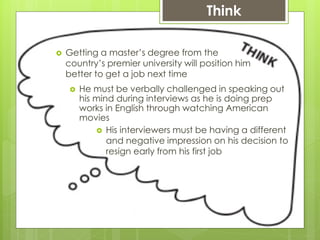
 Getting a master’s degree from the
country’s premier university will position him
better to get a job next time
 He must be verbally challenged in speaking out
his mind during interviews as he is doing prep
works in English through watching American
movies
 His interviewers must be having a different
and negative impression on his decision to
resign early from his first job
Think
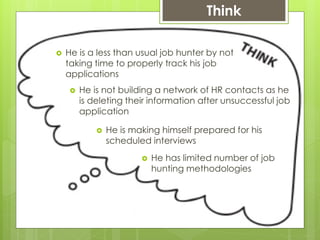
 He is a less than usual job hunter by not
taking time to properly track his job
applications
 He is not building a network of HR contacts as he
is deleting their information after unsuccessful job
application
 He is making himself prepared for his
scheduled interviews
 He has limited number of job
hunting methodologies
Think
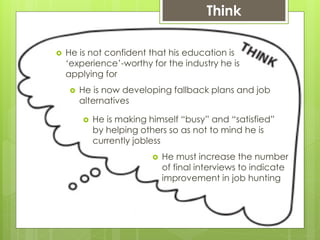
 He is not confident that his education is
‘experience’-worthy for the industry he is
applying for
 He is now developing fallback plans and job
alternatives
 He is making himself “busy” and “satisfied”
by helping others so as not to mind he is
currently jobless
 He must increase the number
of final interviews to indicate
improvement in job hunting
Feel
Empathy Map
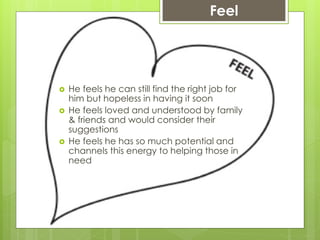
Feel
 He feels he can still find the right job for
him but hopeless in having it soon
 He feels loved and understood by family
& friends and would consider their
suggestions
 He feels he has so much potential and
channels this energy to helping those in
need
Stakeholder
Empathy Map
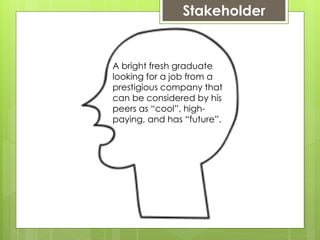
Stakeholder
A bright fresh graduate
looking for a job from a
prestigious company that
can be considered by his
peers as “cool”, high-
paying, and has “future”.
Insight
 Chance of getting a job is slimmer as first
pick companies have rejected you
 Chance of getting a job is harder as
months pass you by
 Chance of getting a job is getting worse
as peers get hired before you do
Problem Statement
An intelligent fresh graduate needs a way
to reinvent himself in order to get a job
because he is running out of company
options, time is against him and he is being
left out by peers.

Empathy Map (by Shem Cristobal)

  • 1.
  • 2.
  • 3.
     Running 10months now looking for a job Say  Lost track of the numbers of companies applied for  Normally keeps contacts in phone and deletes them after long period of no feedback, can revert back to email sent items if need to list down all companies applied for.  Prepares himself by practicing his speaking in pure English and reviewing for the specific skill needed in the job, e.g., Quality Assurance concepts.
  • 4.
     Checks thecompany profile before attending the interview  Normal application methodology is to use online job sites, e.g., jobstreet.com  Friends usually cheer him up  Family provides the finances and prayers  Encouragement is received from family and friends Say  Challenges in obtaining a job lies more into having 1. Experience 2. Prestige of the school where one graduated from
  • 5.
     Cannot feelthat being a Dean’s lister of the school he graduated from has bearing in getting the job  Thesis made during college is more into documenting out-of-the-shelf software Say  Did 200 hours of On-the-Job training, was eventually hired by the company but he resigned after a month  During the early stages of the job hunting, only considers software engineer position, now he is considering hardware- or network-related opportunities
  • 6.
     Due tothe number of interviews undertaken, he already has the idea on the ‘usual’ questions and ‘usual’ answers to the them  More confident now to do one-on-one interviews but still find it difficult to do panel interviews Say  Got a final interview only once, all the rest were initial interviews checking his skills and experiences  Internal pressure to have a job is felt only when hearing a friend or peer getting a job, but this motivates him to persevere more in job hunting
  • 7.
     Normally askshis peers how they got the job, looking for things they did that he missed to do in job hunting  He thinks that if after one year of not being able to get a job, he will take a master’s degree in Technology Management, as suggested by his parents, from the University of the Philippines Say  Aside from job hunting, he is doing other “past times” during the transition, e.g., 1. Reviewing 2. Watching American movies – to get English “lines” and be more fluent in speaking 3. Helps friends by teaching them on their homework
  • 8.
  • 9.
     10 monthsis long enough for him to accept the job hunting preconceptions, such as, (1) experienced/skilled and (2) coming from a prestigious school or university are indeed realities in getting a job Think  He is experiencing negligible amount of pressure from friends and family that he is able to wait this long for the desired job related to his course (as opposed to others who would take on any job just to have work and generate income)
  • 10.
    Think  Getting amaster’s degree from the country’s premier university will position him better to get a job next time  He must be verbally challenged in speaking out his mind during interviews as he is doing prep works in English through watching American movies  His interviewers must be having a different and negative impression on his decision to resign early from his first job
  • 11.
    Think  He isa less than usual job hunter by not taking time to properly track his job applications  He is not building a network of HR contacts as he is deleting their information after unsuccessful job application  He is making himself prepared for his scheduled interviews  He has limited number of job hunting methodologies
  • 12.
    Think  He isnot confident that his education is ‘experience’-worthy for the industry he is applying for  He is now developing fallback plans and job alternatives  He is making himself “busy” and “satisfied” by helping others so as not to mind he is currently jobless  He must increase the number of final interviews to indicate improvement in job hunting
  • 13.
  • 14.
    Feel  He feelshe can still find the right job for him but hopeless in having it soon  He feels loved and understood by family & friends and would consider their suggestions  He feels he has so much potential and channels this energy to helping those in need
  • 15.
  • 16.
    Stakeholder A bright freshgraduate looking for a job from a prestigious company that can be considered by his peers as “cool”, high- paying, and has “future”.
  • 17.
    Insight  Chance ofgetting a job is slimmer as first pick companies have rejected you  Chance of getting a job is harder as months pass you by  Chance of getting a job is getting worse as peers get hired before you do
  • 18.
    Problem Statement An intelligentfresh graduate needs a way to reinvent himself in order to get a job because he is running out of company options, time is against him and he is being left out by peers.