










Emotional Strategy for
Balanced UX Design
Mike Donahue
UX Architect - Citrix
February 2014
@mdonahue37 | LinkedIn
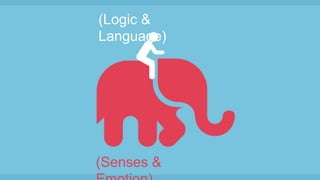
(Logic &
Language)
(Senses &
Emotion only driven
decisions often result in
feelings
of regret.
Logic only driven decisions
often result in lack of
connection.
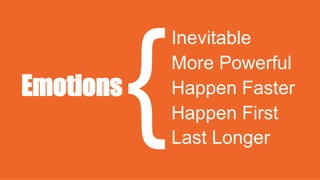
Emotions
Inevitable
More Powerful
Happen Faster
Happen First
Last Longer
“People will forget what you said,
people will forget what you did,
but people will never forget how
you made them feel.”
Maya Angelou
What is your strategy for
targeting emotions?
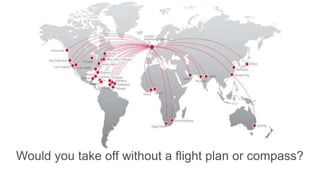
Would you take off without a flight plan or compass?
The 4 Stages of
Accomplishing Goals
How we experience everything.
Every experience begins with
a goal to be accomplished.
goal:
the object of a person's ambition or
effort; an aim or desired result.
Gordon Ramsey
Stage 1: Awareness
The moment we become aware of
a goal to be accomplished.
Stage 2: Assessment
Evaluate everything associated to
accomplishing a goal.
Stage 3: Action
The physical activities taken
to accomplish a goal.
Stage 4: Association
Define what accomplishing the goal
means to us – our experience.
Gordon
Ramsey’s
Stage 1: Awareness
Our experience begins the moment
we become aware.
The moment we become
aware logical and emotional
expectations are set.
UX Responsibility
Manage users expectations
and emotions at the moment
of awareness.
Our expectations are
NOT always right.
Our expectations are
NOT always based in reality.
UX Responsibility
Start with how you want the user to
feel at the end.
Make emotions
the target of UX.
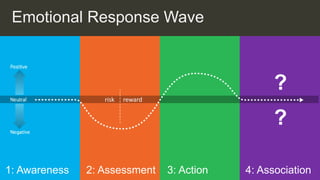
1: Awareness 3: Action 4: Association
2: Assessment
Emotional Response Wave
?
?
risk reward
UX Responsibility
Set honest and appropriate
expectations for users at every
possible touch point.
Stage 2: Assessment
We always assess risks before rewards.
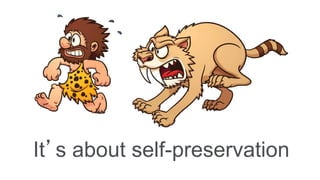
It’s about self-preservation
People will do more to avoid
pain than they will do to gain
pleasure.
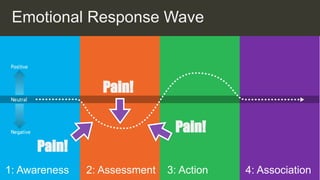
1: Awareness 3: Action 4: Association
2: Assessment
Emotional Response Wave
Pain!
Pain!
Pain!
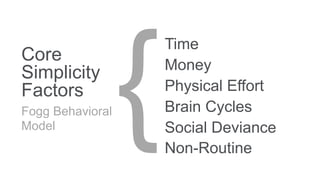
Core
Simplicity
Factors
Fogg Behavioral
Model
Time
Money
Physical Effort
Brain Cycles
Social Deviance
Non-Routine
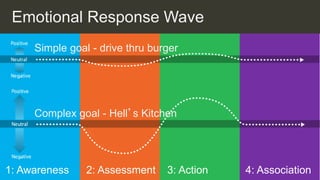
1: Awareness 3: Action 4: Association
2: Assessment
Emotional Response Wave
Simple goal - drive thru burger
Complex goal - Hell’s Kitchen
Watch video on YouTube
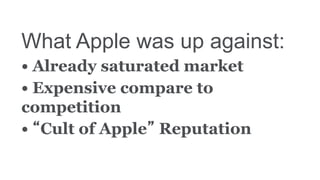
What Apple was up against:
• Already saturated market
• Expensive compare to
competition
• “Cult of Apple” Reputation
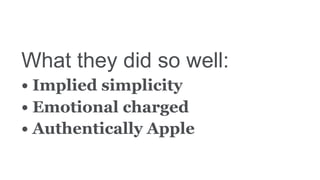
What they did so well:
• Implied simplicity
• Emotional charged
• Authentically Apple
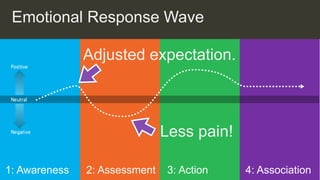
1: Awareness 3: Action 4: Association
2: Assessment
Emotional Response Wave
Less pain!
Adjusted expectation.
UX Responsibility
Take control of the emotional wave to
drive user behavior.
authenticity:
concerns the truthfulness of origins,
attributions, commitments, sincerity,
devotion, and intentions; genuine.
Authenticity Creates Trust.
“A lack of transparency results in
distrust and a deep sense of
insecurity.”
Dalai Lama
UX Responsibility
Define who we (our clients/product/site)
are and what we stand for, and then craft
experiences that reflect those values.
If your site were a
person what would
they be like?
Design personas can
help.
Stage 3: Action
Actions are more about will than skill.
“The essential difference between
emotion and reason is that
emotion leads to action while
reason leads to conclusions.”
Dr. Donald Calne
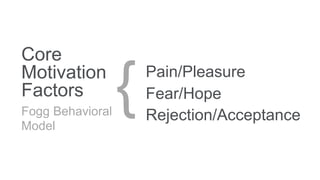
Core
Motivation
Factors
Fogg Behavioral
Model
Pain/Pleasure
Fear/Hope
Rejection/Acceptance
{
Simple Solution:
Scare users into action.
Right?
One man’s pain is another
man’s pleasure.
Red Bull: World Record Skydive
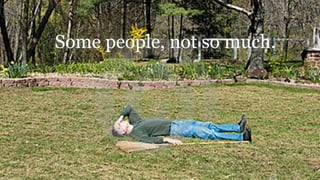
Some people love gardening.
Some people, not so much.
UX Responsibility
Know the users real pain point.
Stage 4: Association
The users process of evaluating and valuing
the overall experience.
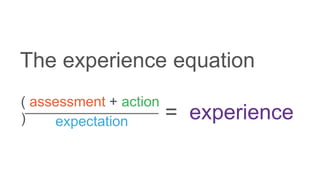
( assessment + action
) expectation = experience
The experience equation
Desire Draws Our Focus to
the Positive or Negative
need vs. want
need or want?
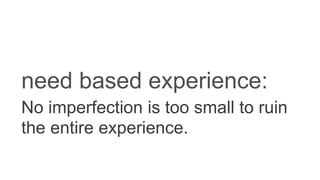
need based experience:
No imperfection is too small to ruin
the entire experience.
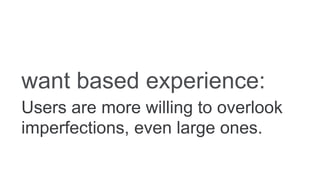
want based experience:
Users are more willing to overlook
imperfections, even large ones.
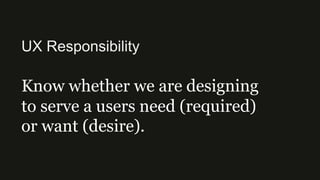
UX Responsibility
Know whether we are designing
to serve a users need (required)
or want (desire).
Pulling it all together.
How do we use emotions as strategic
targets when designing for each of the 4
stages?
Evaluate & Validate:
Will this {experience} significantly
enhance the users state and have I
made as simple as possible to
attain?
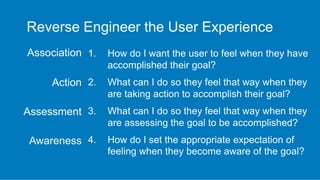
1. How do I want the user to feel when they have
accomplished their goal?
2. What can I do so they feel that way when they
are taking action to accomplish their goal?
3. What can I do so they feel that way when they
are assessing the goal to be accomplished?
4. How do I set the appropriate expectation of
feeling when they become aware of the goal?
Association
Action
Assessment
Awareness
Reverse Engineer the User Experience
Logic
Logic AND Emotions
“When you design for meaning,
good things will happen.”
Doug Dietz,
Principal Designer for GE Healthcare
Resources
Books
Designing for Emotions, Aarron Walter
Start with the WHY, Simon Sinek
Videos
TEDx: Transforming healthcare for children and their families, Doug Dietz
Start with the WHY, Simon Sinek

Emotional Strategy for Balanced UX Design

Editor's Notes

  • #34 youtu.be/TaVFCdwT0hk
  • #48 If we’ll do more to avoid pain than to gain pleasure this should work every time. But it doesn’t. Why?