EMOTIONAL INTELLIGENCE IN MANAGEMENT
INTRODUCTION Emotional Intelligence was coined by Dr. Peter Salovey of Yale University along with Dr. John Mayer of New Hampshire. They identified four abilities and skills for emotional intelligence:
They are The ability to recognise emotions The ability to use emotions to assist the thought process The ability to be aware of emotions The ability to manage emotions
The ability to recognize emotions: Means to understand the emotions through facial expressions  The ability to use emotions to assist the thought process: ability to use the emotions and assist the thought process
The third to the ability to be aware of emotions  this is to understand the emotions and to think of the development in due course and their outcomes/ The fourth is the ability of an individual to handle the emotions.
Components of Emotional Intelligence: Personal and Social Competence are the two major components Personal is the awareness and management of self.  Social competence is the awareness of the feelings of an individual’s environment.
How to handle Emotions at Work Place. The negative emotions at workplace; Lack of team work Poor working conditions Unsuitable employees Fear of change Repeated changes in organizational structure Very high or low levels of stress. Lack of trust on superiors and lower level staff Lack of job security Inter departmental conflicts Career growth opportunity Poor supervision
Results of negative emotions Absenteeism Lower motivation Reduced quality Cold wars
MANAGING EMOTIONS AT WORK PLACE Both positive and negative emotions play an important role in organizations Positive emotions  helps in a better performance Negative emotions  should be eliminated  as it can demotivate and result in bad performance
Tips to manage negative emotions Try to shift the focus Take a walk Share emotions Communicate needs Act
Applications of Emotional Intelligence at the Workplace Cognitive skills can help to get u job, but its emotional intelligence that will help u to climb the ladder. Emotional intelligent Is as important as Technical and analytical skills
Emotional Intelligence Is one important characteristic that determines the career development of a person as a person with emotional intelligence possesses  qualities like self awareness, self control empathy and social skills.
Emotional intelligence and leadership A good leader will posses the ability to understand and be aware of his own emotions  and also those of others . Good leaders with high EI will manage relationships with other more effectively which in turn will help to enhance the productivity of the organization.
Emotional Intelligence and Team building Today’s corporate world depends on the Teams for accomplishing its work. The emotional intelligence by team members is an essential ingredient for achieving its goal.
Improving Emotional Intelligence Developing emotional intelligence involves  both personal and Social competence To develop personal intelligence:
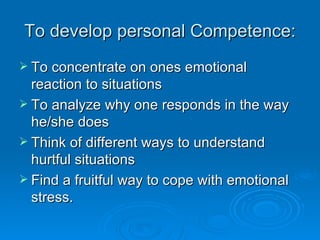
To develop personal Competence: To concentrate on ones emotional reaction to situations To analyze why one responds in the way he/she does Think of different ways to understand hurtful situations Find a fruitful way to cope with emotional stress.
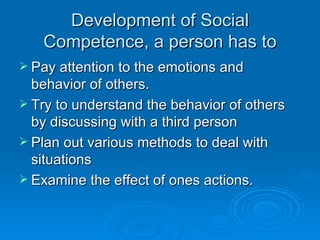
Development of Social Competence, a person has to Pay attention to the emotions and behavior of others. Try to understand the behavior of others by discussing with a third person Plan out various methods to deal with situations  Examine the effect of ones actions.
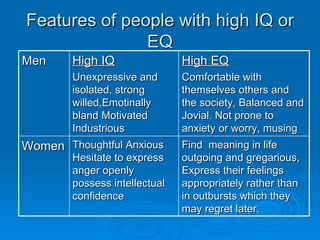
Features of people with high IQ or EQ Men High IQ Unexpressive and isolated, strong willed,Emotinally bland Motivated Industrious High EQ Comfortable with themselves others and the society, Balanced and Jovial. Not prone to anxiety or worry, musing Women Thoughtful Anxious Hesitate to express anger openly possess intellectual confidence Find  meaning in life outgoing and gregarious, Express their feelings appropriately rather than in outbursts which they may regret later.
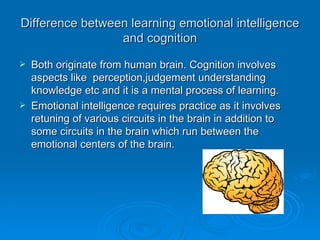
Difference between learning emotional intelligence and cognition Both originate from human brain. Cognition involves aspects like  perception,judgement understanding knowledge etc and it is a mental process of learning. Emotional intelligence requires practice as it involves retuning of various circuits in the brain in addition to some circuits in the brain which run between the  emotional centers of the brain.
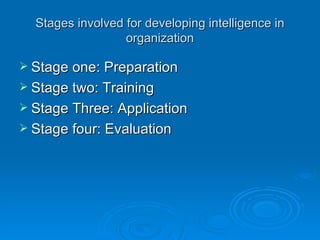
Stages involved for developing intelligence in organization Stage one: Preparation Stage two: Training Stage Three: Application Stage four: Evaluation

Emotional Intelligence In Management 3

  • 1.
  • 2.
    INTRODUCTION Emotional Intelligencewas coined by Dr. Peter Salovey of Yale University along with Dr. John Mayer of New Hampshire. They identified four abilities and skills for emotional intelligence:
  • 3.
    They are Theability to recognise emotions The ability to use emotions to assist the thought process The ability to be aware of emotions The ability to manage emotions
  • 4.
    The ability torecognize emotions: Means to understand the emotions through facial expressions The ability to use emotions to assist the thought process: ability to use the emotions and assist the thought process
  • 5.
    The third tothe ability to be aware of emotions this is to understand the emotions and to think of the development in due course and their outcomes/ The fourth is the ability of an individual to handle the emotions.
  • 6.
    Components of EmotionalIntelligence: Personal and Social Competence are the two major components Personal is the awareness and management of self. Social competence is the awareness of the feelings of an individual’s environment.
  • 7.
    How to handleEmotions at Work Place. The negative emotions at workplace; Lack of team work Poor working conditions Unsuitable employees Fear of change Repeated changes in organizational structure Very high or low levels of stress. Lack of trust on superiors and lower level staff Lack of job security Inter departmental conflicts Career growth opportunity Poor supervision
  • 8.
    Results of negativeemotions Absenteeism Lower motivation Reduced quality Cold wars
  • 9.
    MANAGING EMOTIONS ATWORK PLACE Both positive and negative emotions play an important role in organizations Positive emotions helps in a better performance Negative emotions should be eliminated as it can demotivate and result in bad performance
  • 10.
    Tips to managenegative emotions Try to shift the focus Take a walk Share emotions Communicate needs Act
  • 11.
    Applications of EmotionalIntelligence at the Workplace Cognitive skills can help to get u job, but its emotional intelligence that will help u to climb the ladder. Emotional intelligent Is as important as Technical and analytical skills
  • 12.
    Emotional Intelligence Isone important characteristic that determines the career development of a person as a person with emotional intelligence possesses qualities like self awareness, self control empathy and social skills.
  • 13.
    Emotional intelligence andleadership A good leader will posses the ability to understand and be aware of his own emotions and also those of others . Good leaders with high EI will manage relationships with other more effectively which in turn will help to enhance the productivity of the organization.
  • 14.
    Emotional Intelligence andTeam building Today’s corporate world depends on the Teams for accomplishing its work. The emotional intelligence by team members is an essential ingredient for achieving its goal.
  • 15.
    Improving Emotional IntelligenceDeveloping emotional intelligence involves both personal and Social competence To develop personal intelligence:
  • 16.
    To develop personalCompetence: To concentrate on ones emotional reaction to situations To analyze why one responds in the way he/she does Think of different ways to understand hurtful situations Find a fruitful way to cope with emotional stress.
  • 17.
    Development of SocialCompetence, a person has to Pay attention to the emotions and behavior of others. Try to understand the behavior of others by discussing with a third person Plan out various methods to deal with situations Examine the effect of ones actions.
  • 18.
    Features of peoplewith high IQ or EQ Men High IQ Unexpressive and isolated, strong willed,Emotinally bland Motivated Industrious High EQ Comfortable with themselves others and the society, Balanced and Jovial. Not prone to anxiety or worry, musing Women Thoughtful Anxious Hesitate to express anger openly possess intellectual confidence Find meaning in life outgoing and gregarious, Express their feelings appropriately rather than in outbursts which they may regret later.
  • 19.
    Difference between learningemotional intelligence and cognition Both originate from human brain. Cognition involves aspects like perception,judgement understanding knowledge etc and it is a mental process of learning. Emotional intelligence requires practice as it involves retuning of various circuits in the brain in addition to some circuits in the brain which run between the emotional centers of the brain.
  • 20.
    Stages involved fordeveloping intelligence in organization Stage one: Preparation Stage two: Training Stage Three: Application Stage four: Evaluation