

Embrace the front-end
revolution
Álvaro Sánchez-Mariscal
Web Architect —
@alvaro_sanchez
About me
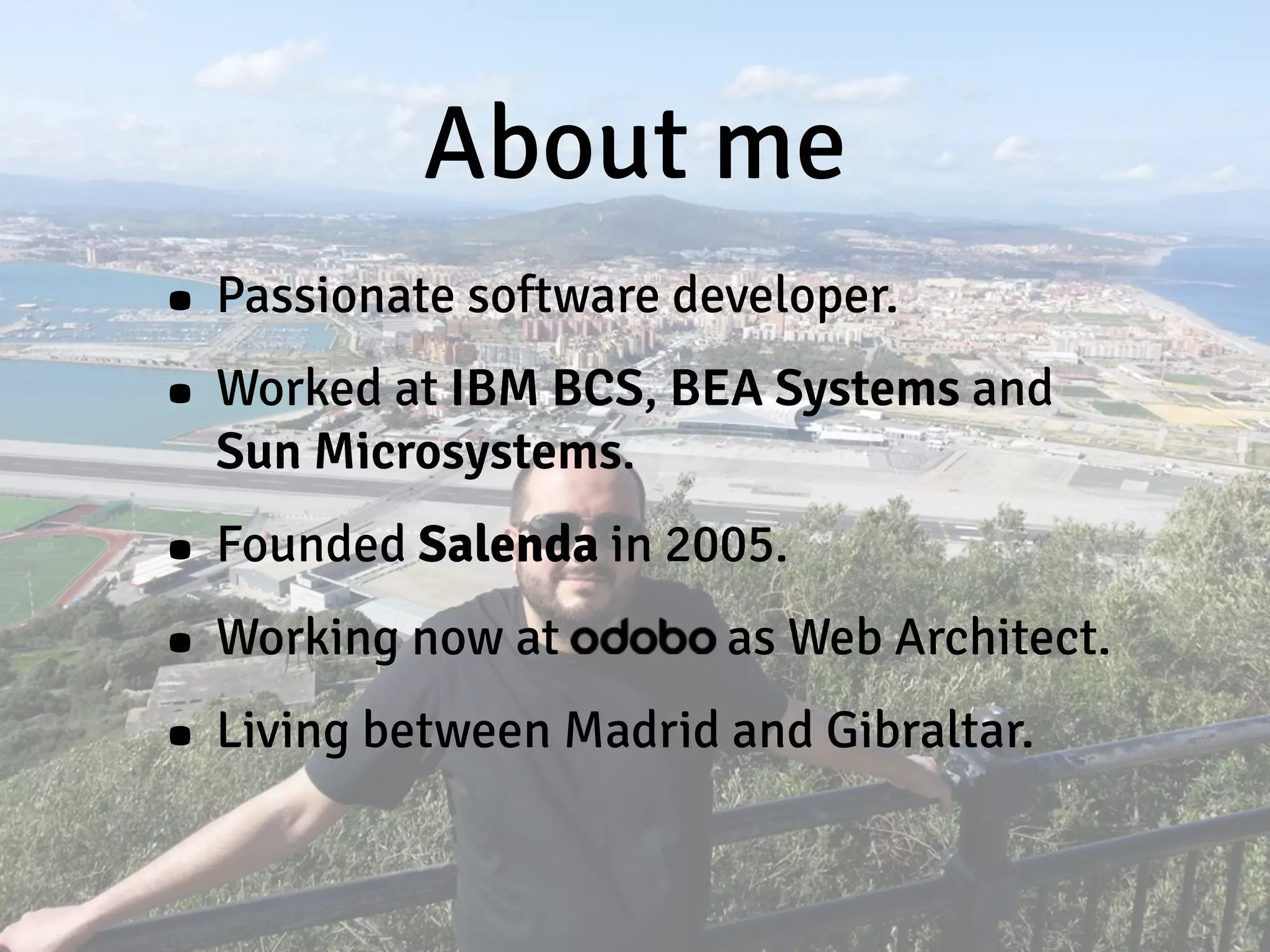
• Passionate software developer.
• Worked at IBM BCS, BEA Systems and
Sun Microsystems.
• Founded Salenda in 2005.
• Working now at Odobo as Web Architect.
• Living between Madrid and Gibraltar.
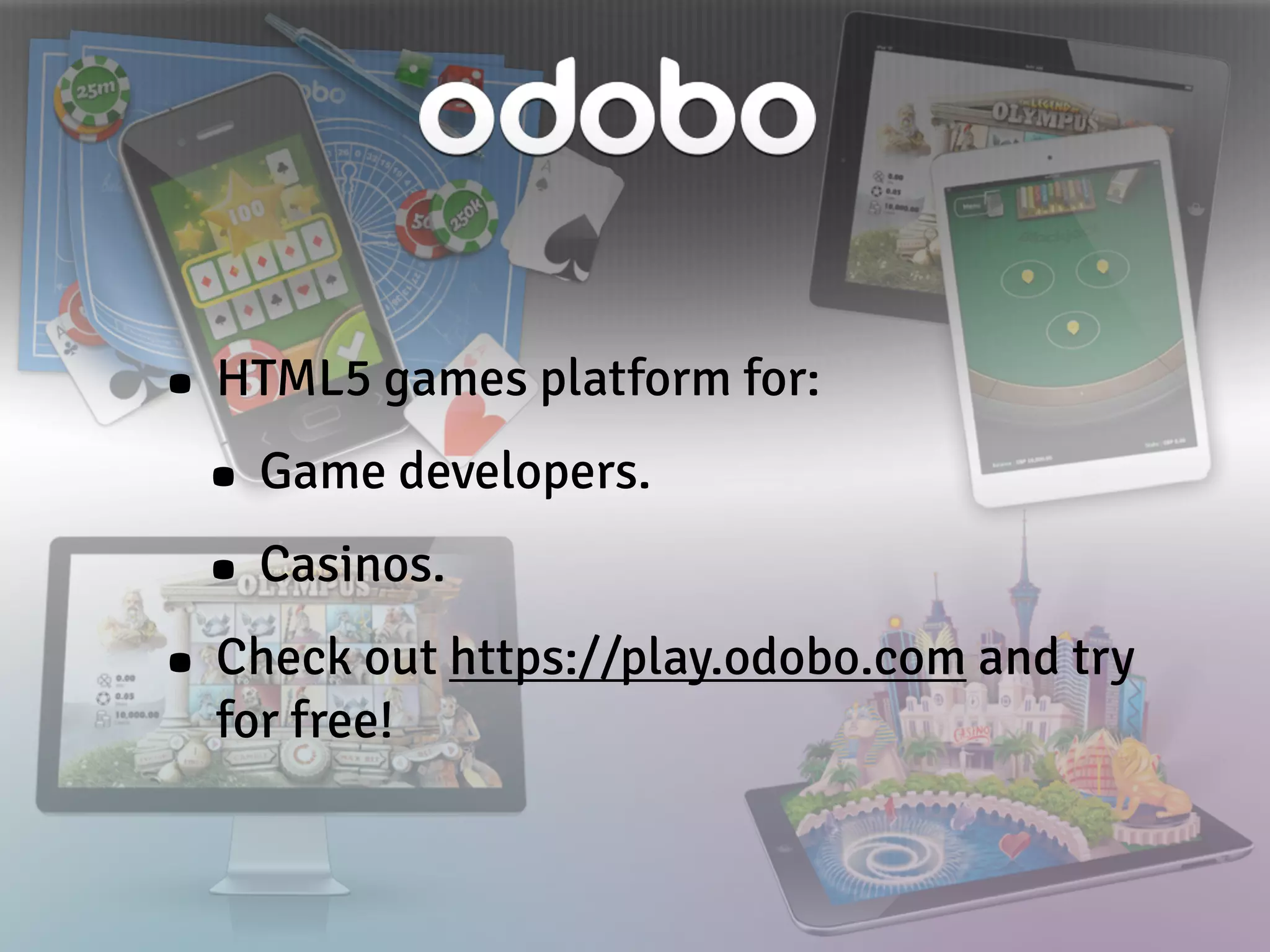
• HTML5 games platform for:
• Game developers.
• Casinos.
• Check out https://play.odobo.com and try
for free!
The front-end
revolution from a
human resources
perspective.
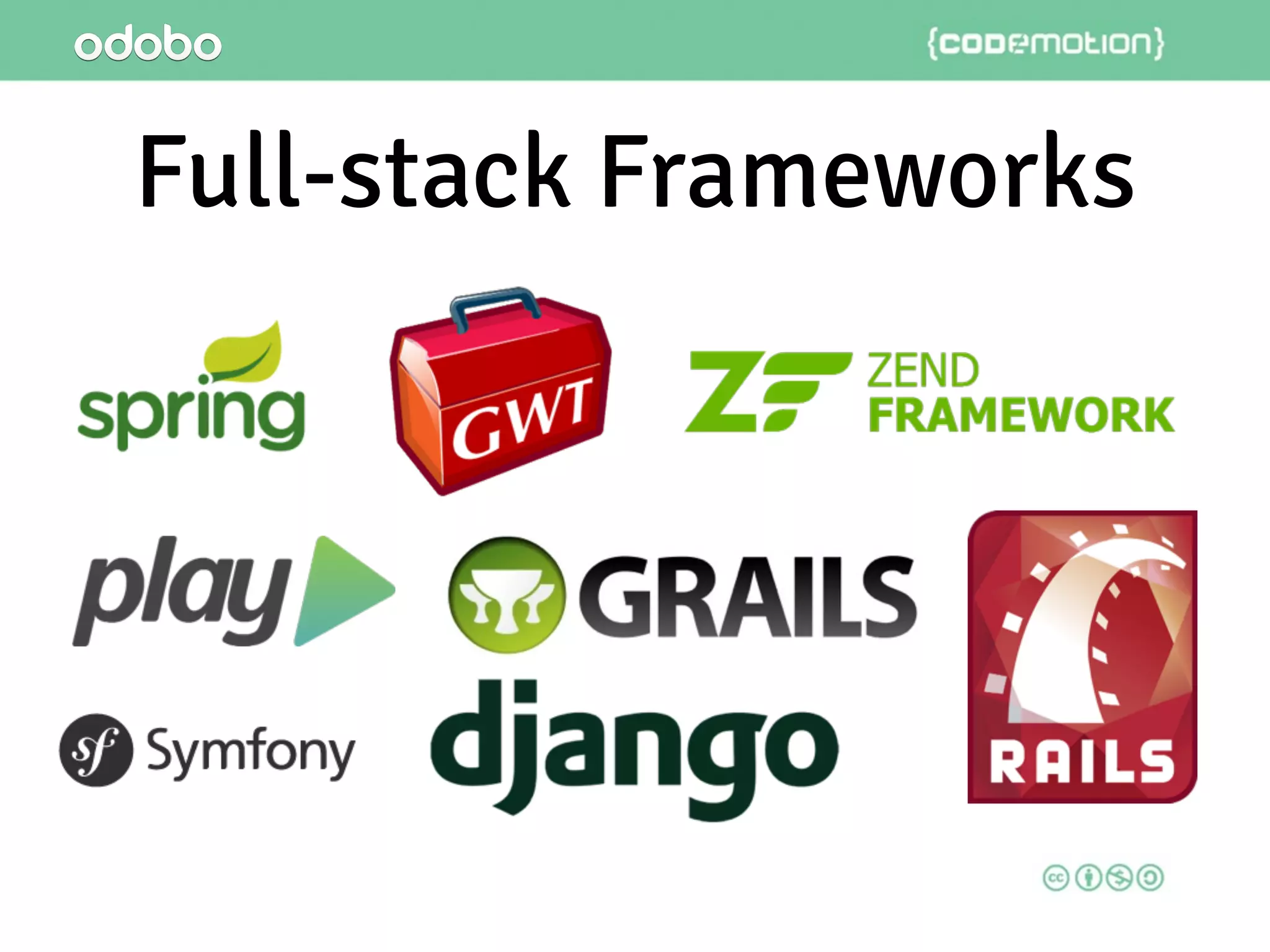
Full-stack Frameworks
Monolithic!
Monolithic frameworks
• The views and the business logic are
packaged together.
• Server-side generated views.
• Full-stack frameworks require full-stack
developers.
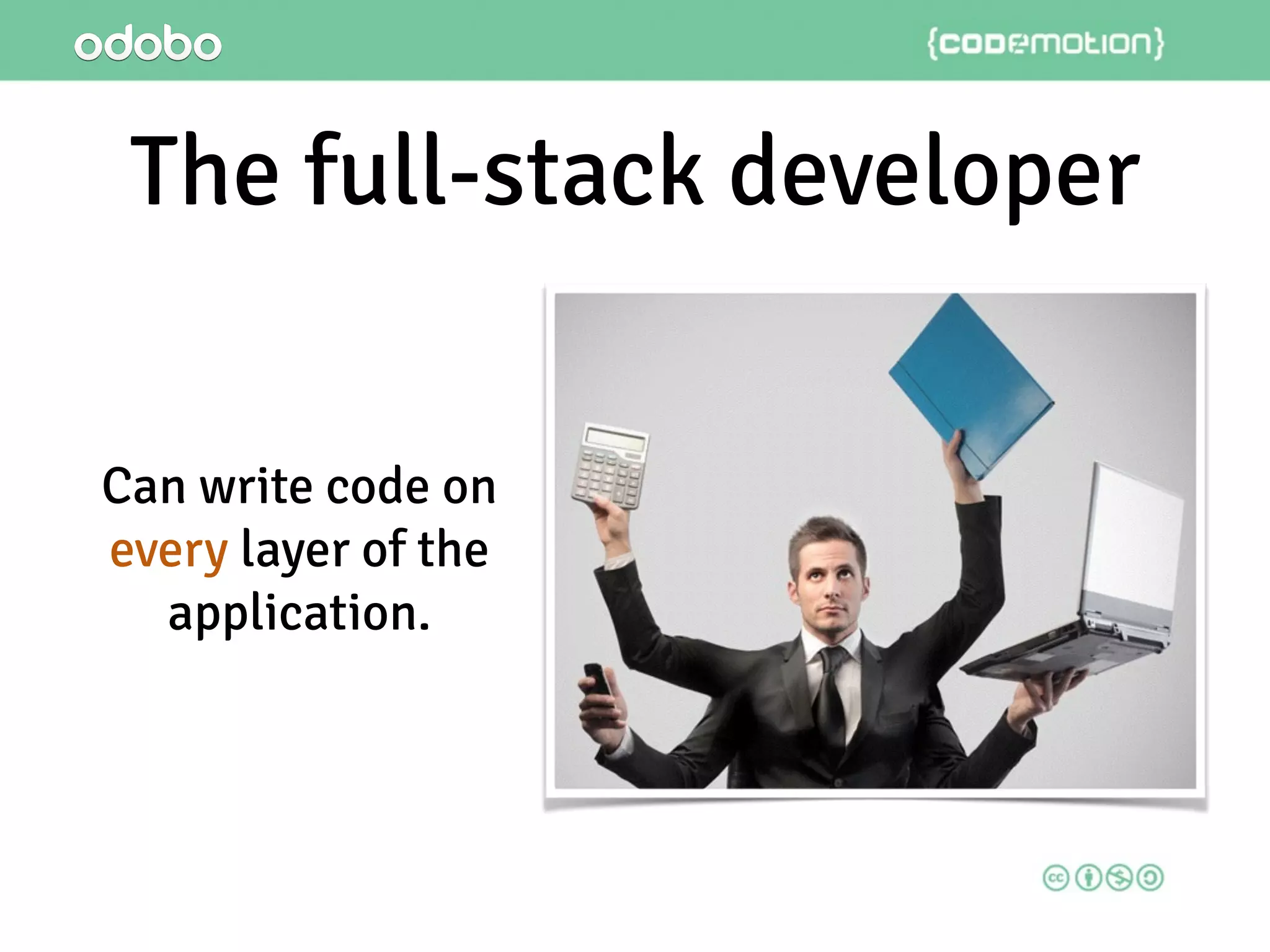
The full-stack developer
Can write code on
every layer of the
application.
Q: How do you see
yourself as a
developer?
http://poll.fm/4qjo0
• Great if they are really full-stack.
• Not so good if they are back-end
developers, with some jQuery knowledge
and pixel-up-down-ok CSS skills.
• Makes less sense when your company has
truly front-end developers.
Full-stack developers
The front-end revolution
The front-end
revolution facts
• Javascript community is HUGE. Lot of
developers out there.
• NodeJS is the new framework for
hipsters.
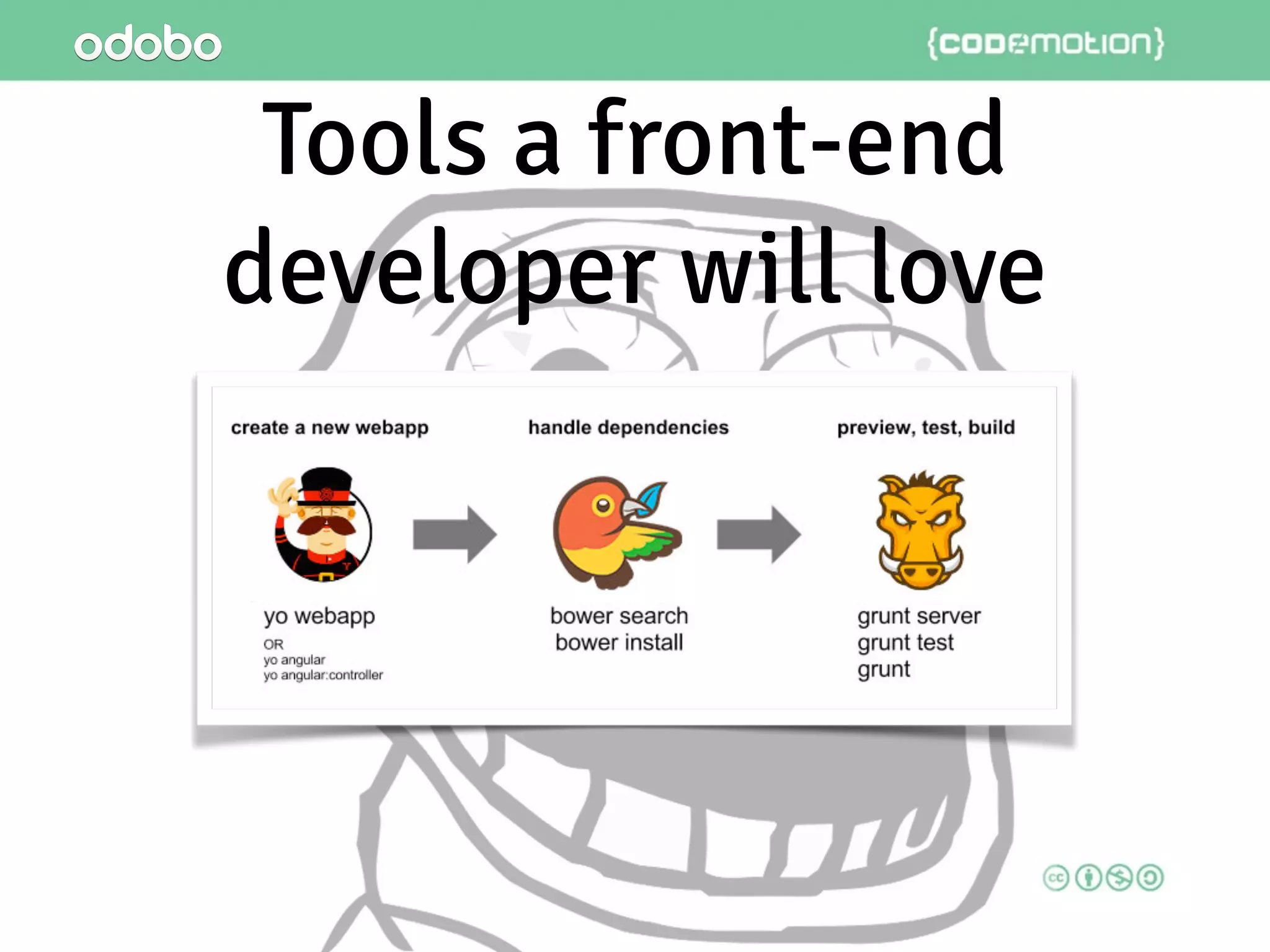
• There is a lot of tools built with/around
NodeJS/Javascript.
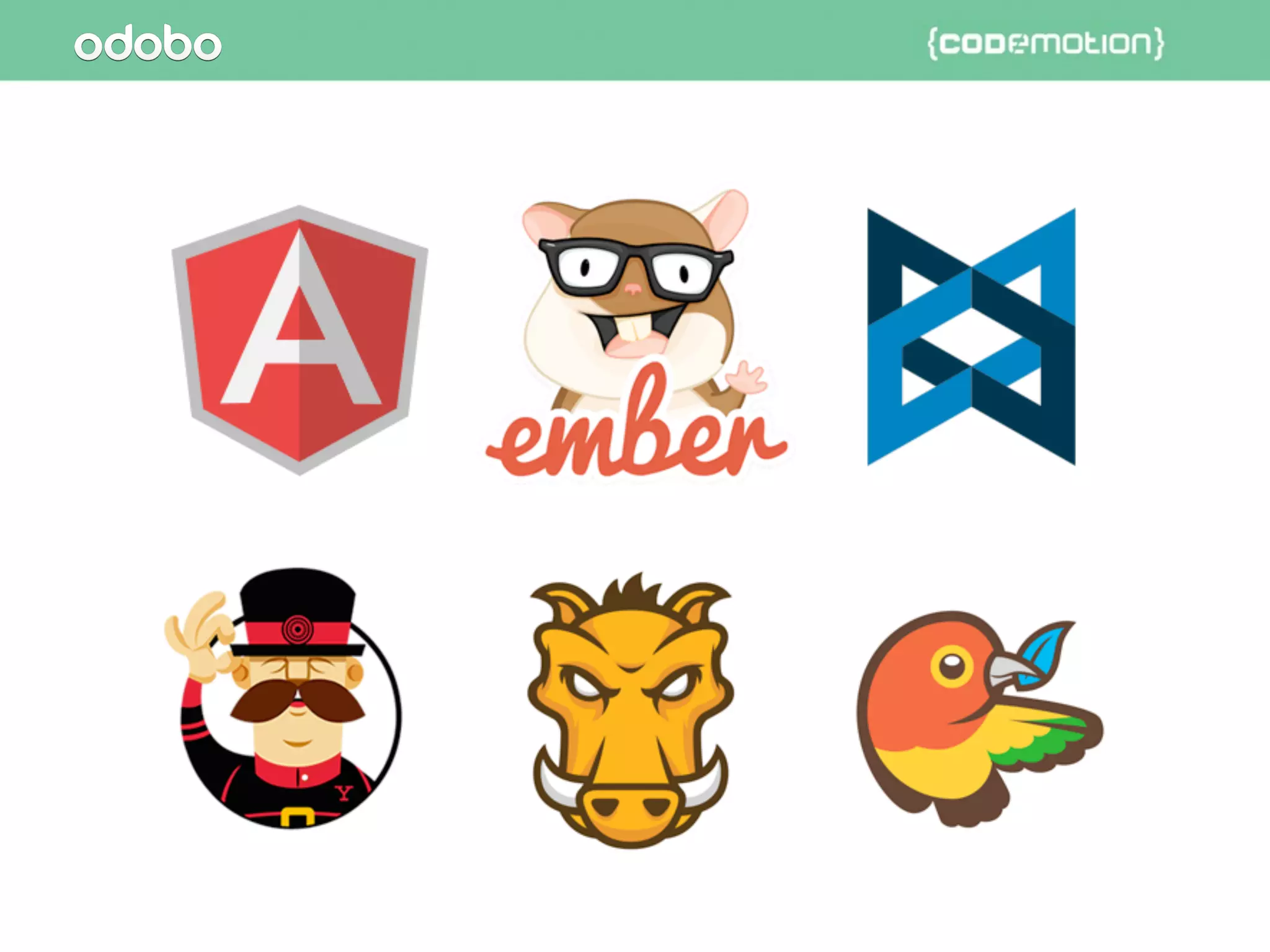
Tools a front-end
developer will love
The front-end
revolution from an
architectural
perspective.
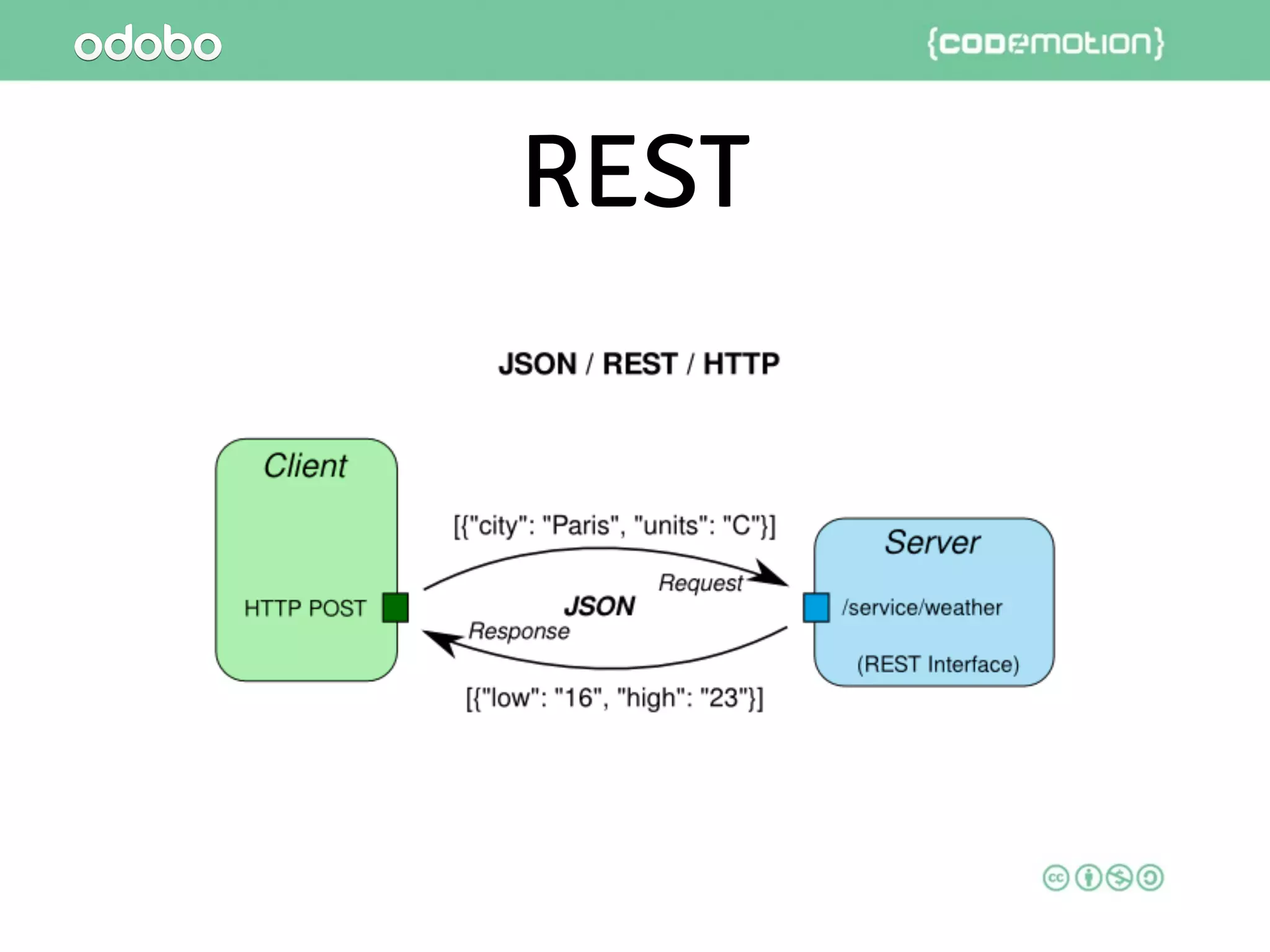
REST
REST is much
more than just
returning
JSON.
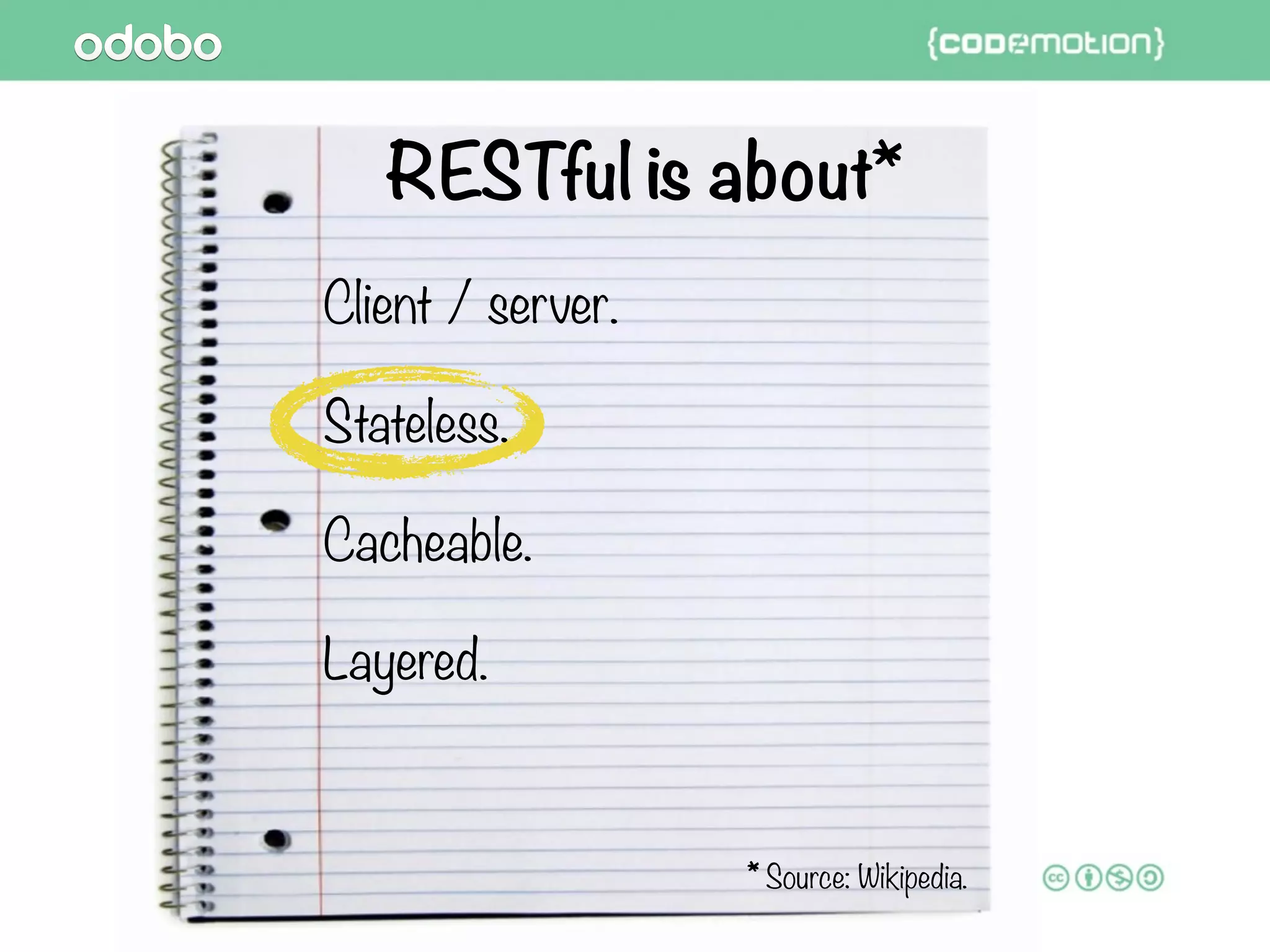
RESTful is aboutRESTful is about*
Client / server.
Stateless.
Cacheable.
Layered.
* Source: Wikipedia.
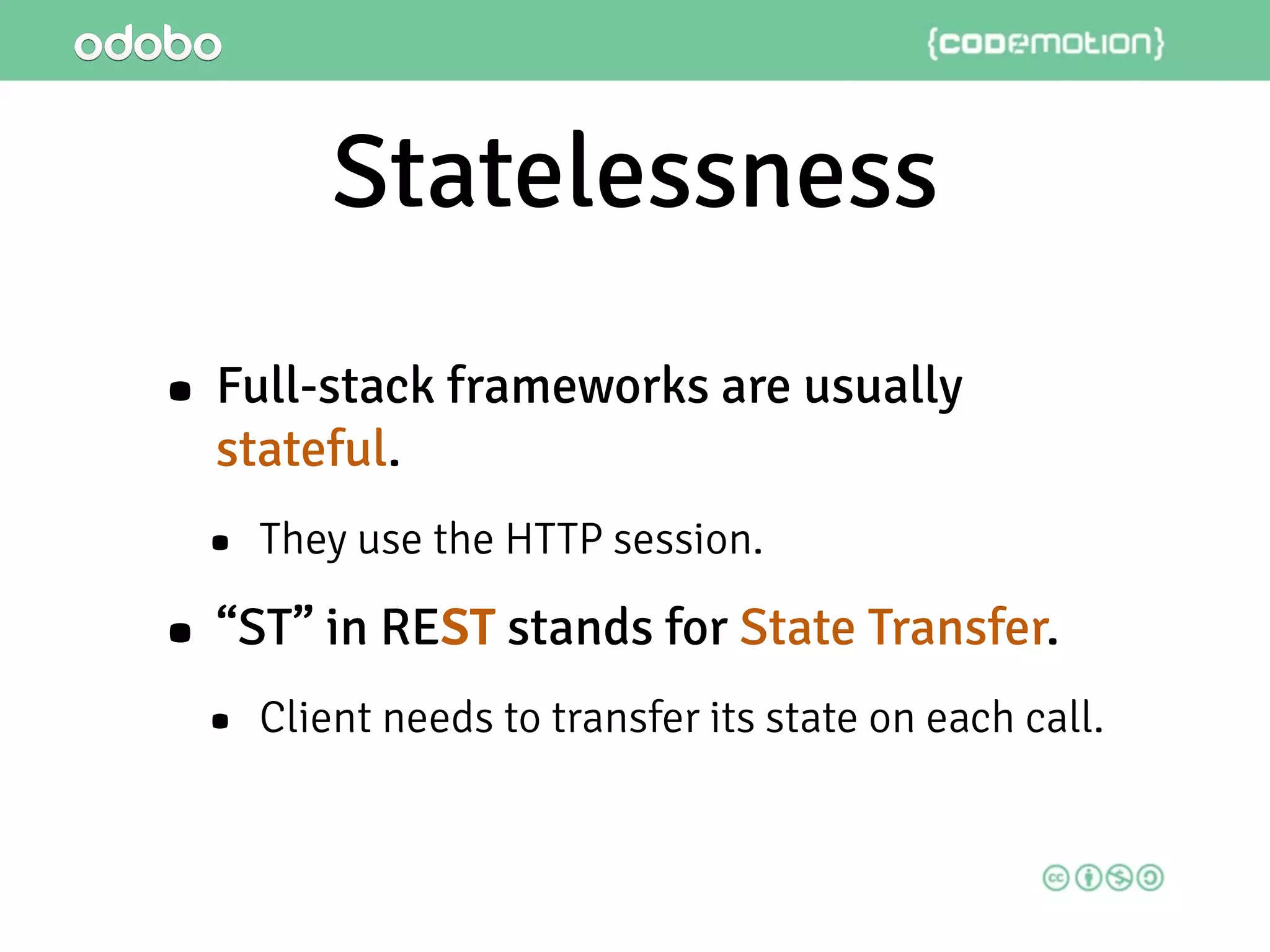
Statelessness
• Full-stack frameworks are usually
stateful.
• They use the HTTP session.
• “ST” in REST stands for State Transfer.
• Client needs to transfer its state on each call.
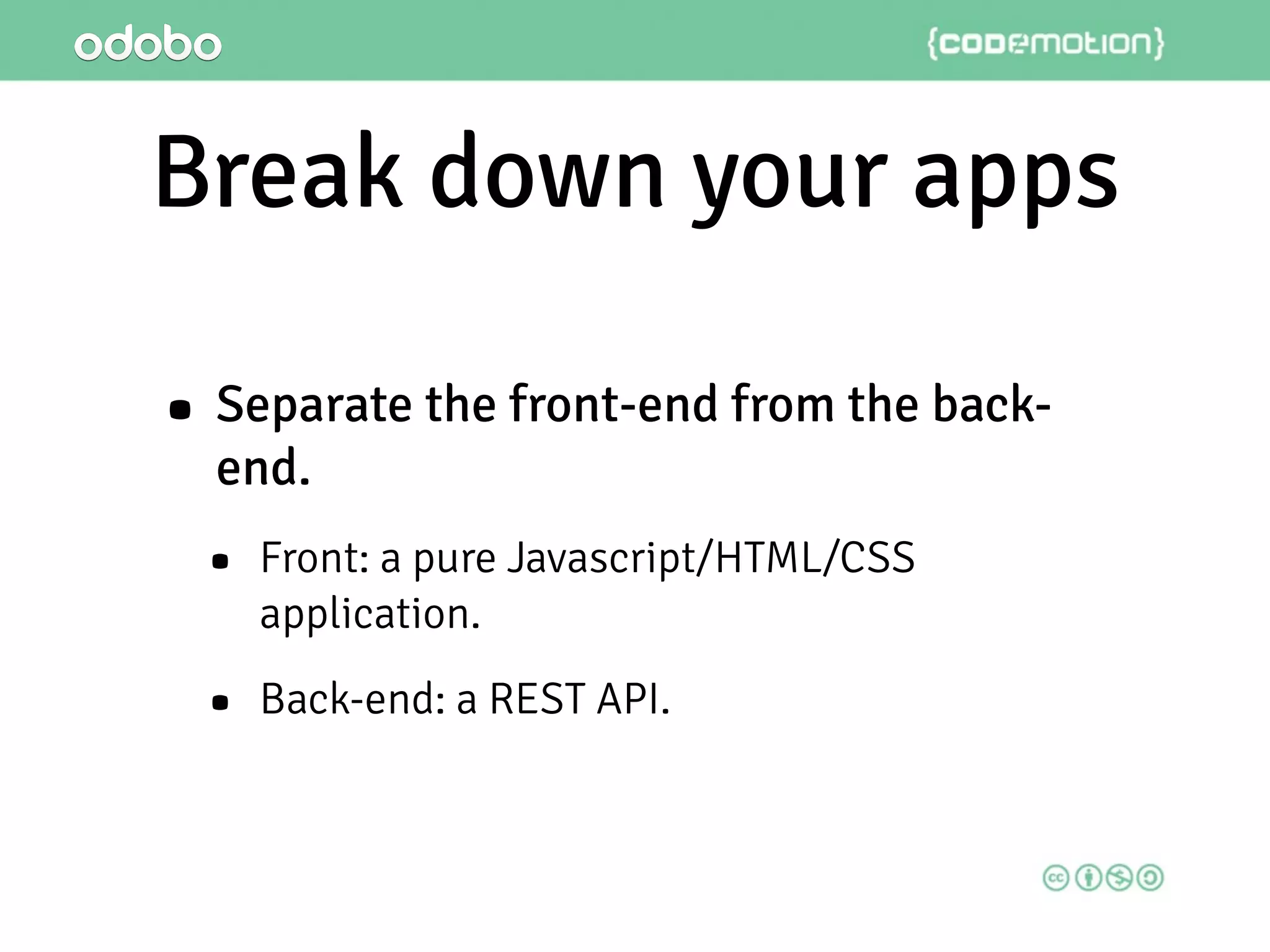
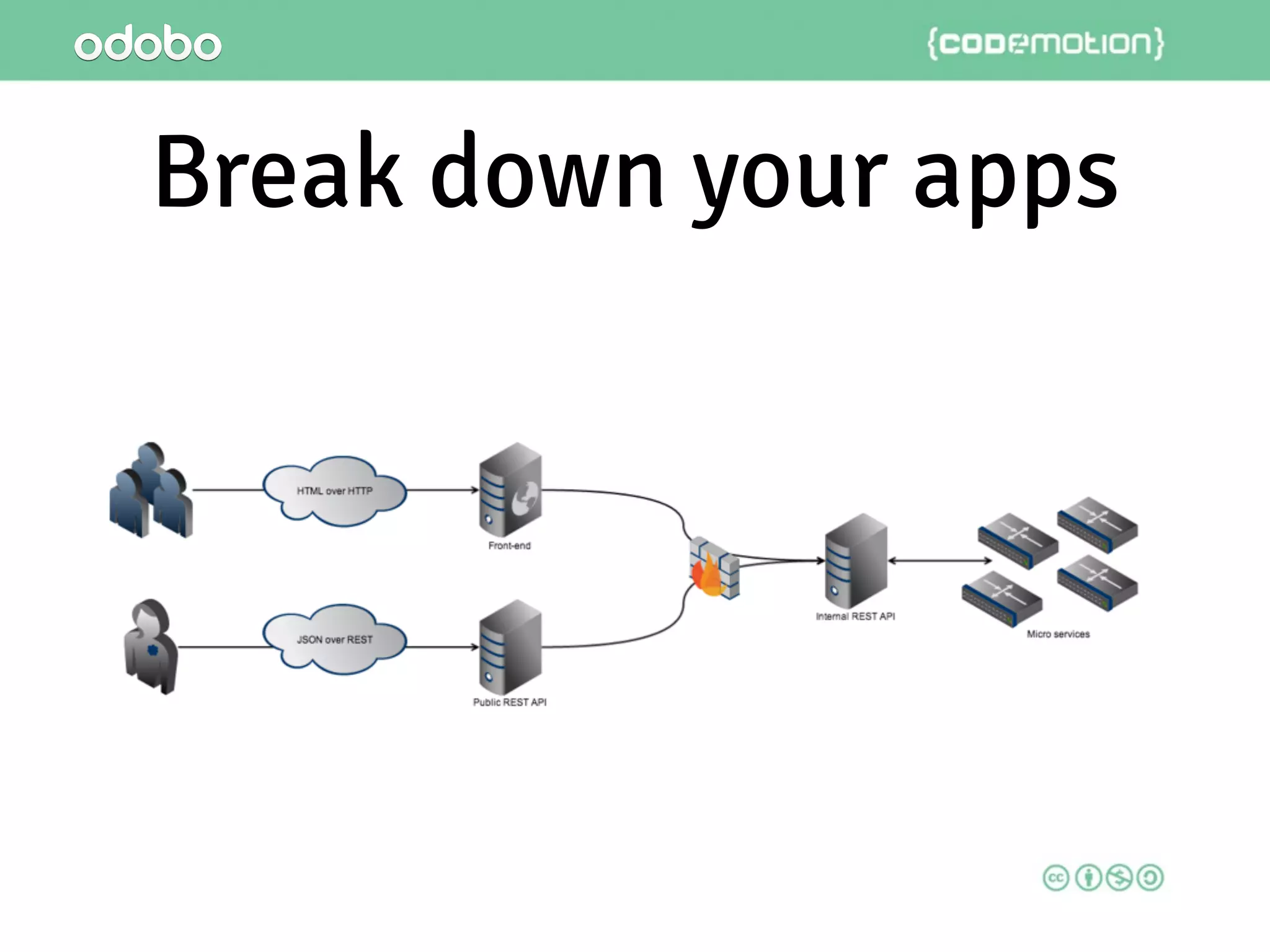
Break down your apps
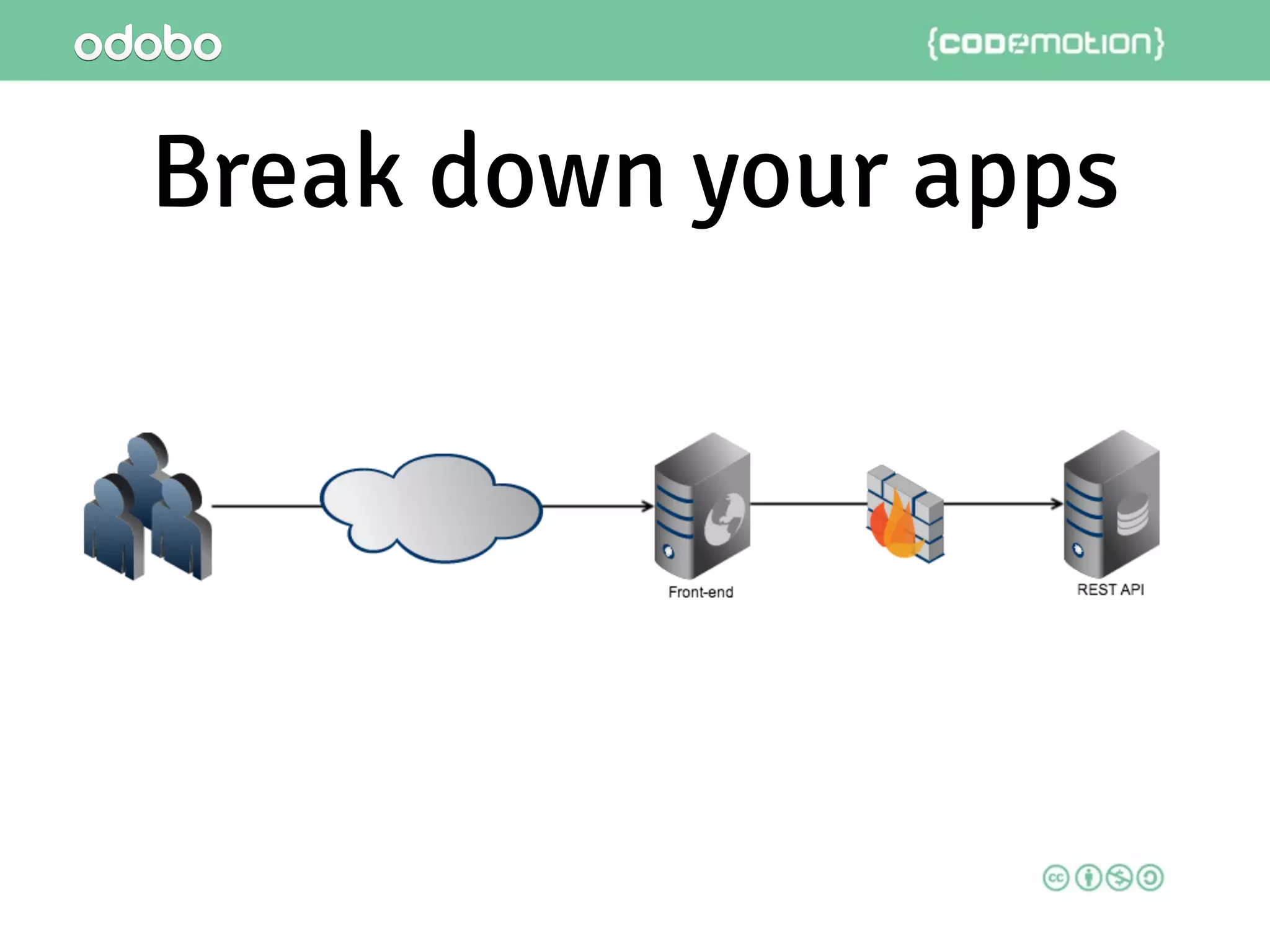
• Separate the front-end from the back-
end.
• Front: a pure Javascript/HTML/CSS
application.
• Back-end: a REST API.
Break down your apps
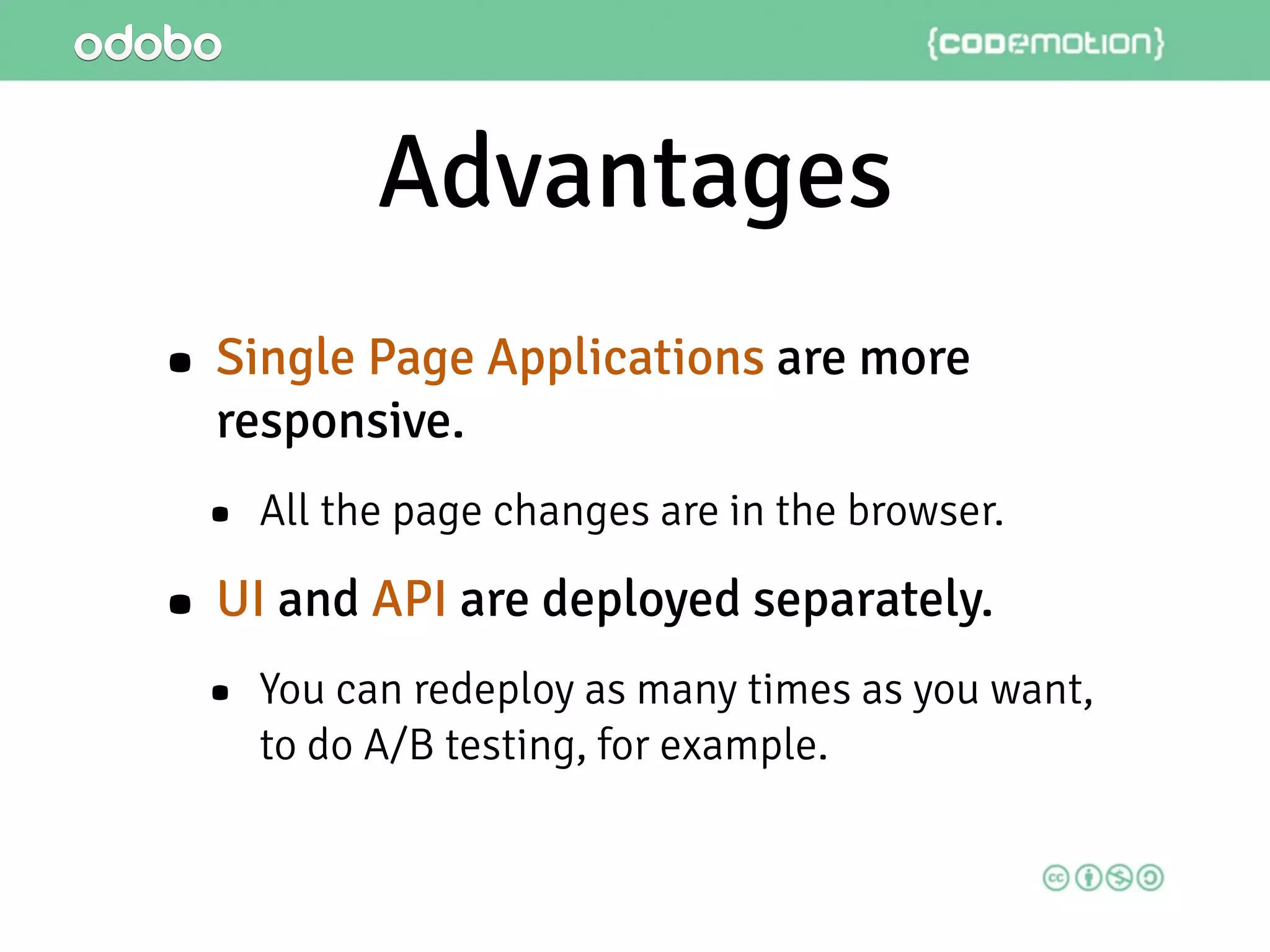
Advantages
• Single Page Applications are more
responsive.
• All the page changes are in the browser.
• UI and API are deployed separately.
• You can redeploy as many times as you want,
to do A/B testing, for example.
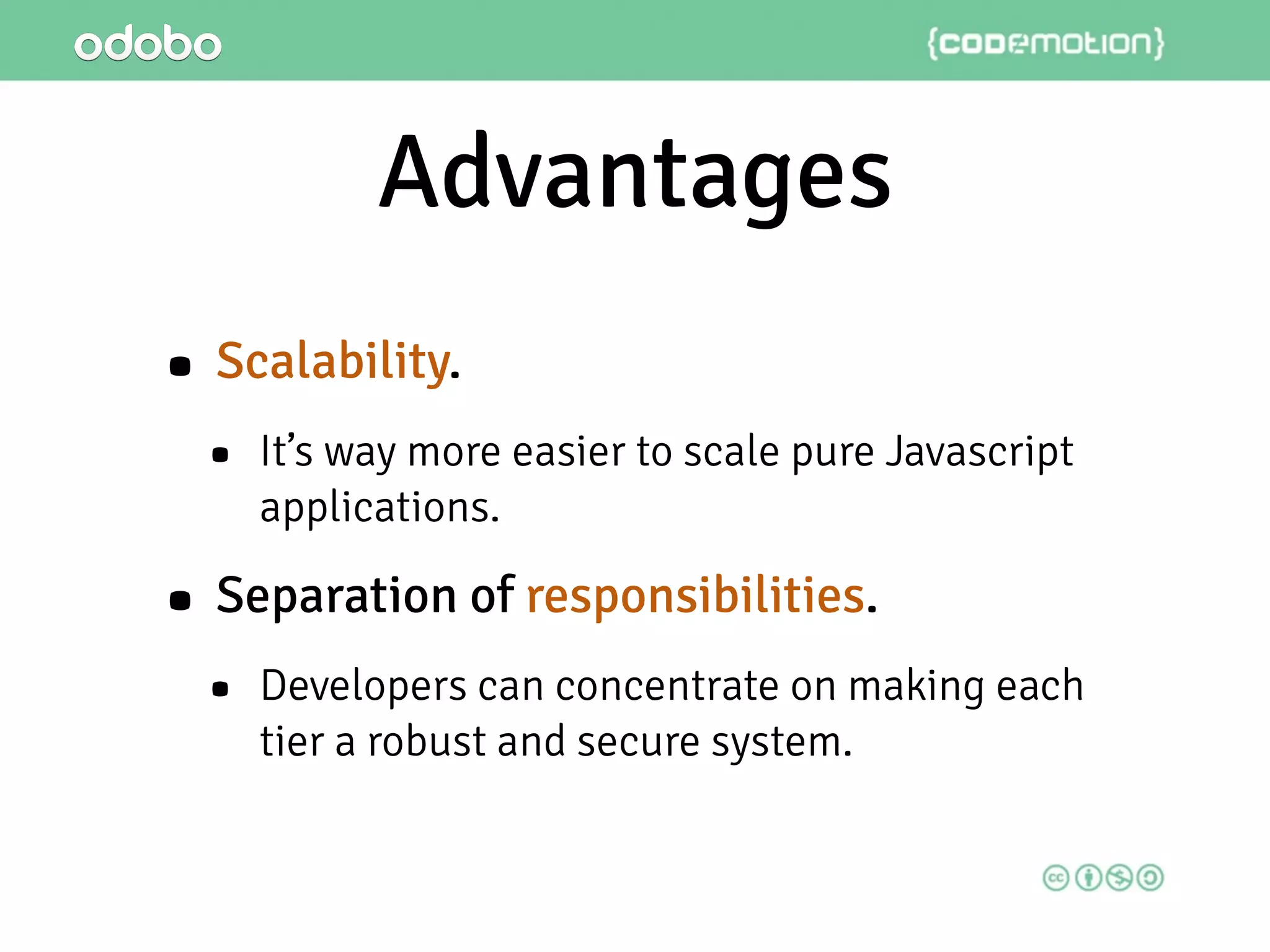
Advantages
• Scalability.
• It’s way more easier to scale pure Javascript
applications.
• Separation of responsibilities.
• Developers can concentrate on making each
tier a robust and secure system.
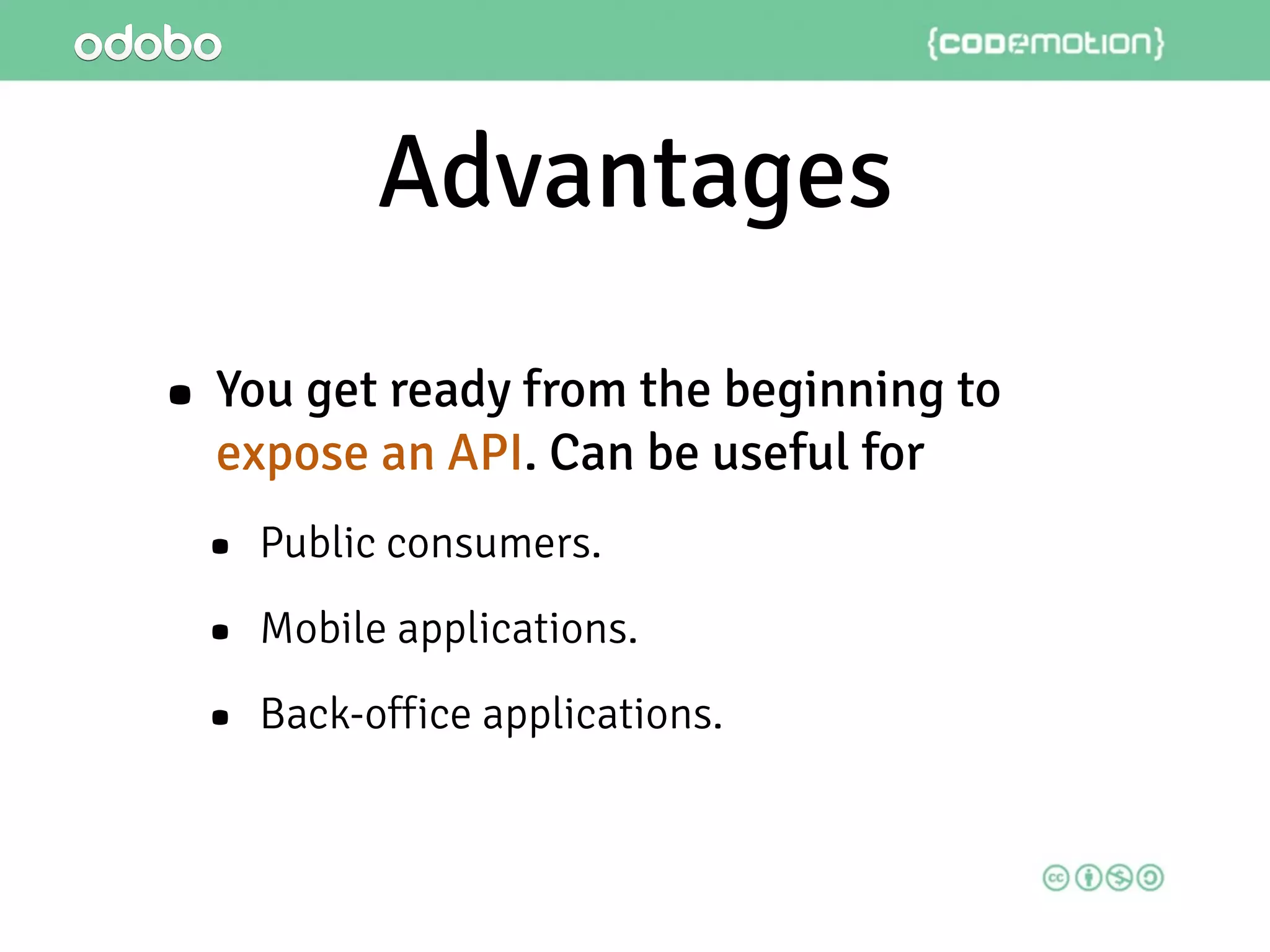
Advantages
• You get ready from the beginning to
expose an API. Can be useful for
• Public consumers.
• Mobile applications.
• Back-office applications.
Demo
http://bit.ly/grails-angular
Conclusions
• Think whether your team/company has
full-stack developers or not.
• Think if the teams need to scale.
Conclusions
• From a RESTful point of view, you need to
achieve statelessness.
• For that, you need to avoid server-centric,
full-stack frameworks.
• Break down your applications into a truly
Javascript front-end + REST API.
Álvaro Sánchez-Mariscal
Web Architect —
@alvaro_sanchez
Grazie mille!

Embrace the frontend revolution