Unifying
Themes in
the Study of
Life
Biology is the study of life. It is a vast and complex field, but there are some
unifying themes that connect all living things. These themes help us understand
the diversity of life on Earth, as well as the commonalities that unite all living
organisms.
by Romel Rigore
What Makes
Something Alive?
1 Organization
All living things are organized, from the level of the cell to the level of the
ecosystem. Each level has its own unique structure and function.
2 Metabolism
Living things use energy to carry out life processes, such as growth,
reproduction, and movement.
3 Homeostasis
Living things maintain a stable internal environment, despite changes in
their external environment.
4 Growth and Development
Living things grow and develop over time, increasing in size and
complexity.
Structure and Function
Structure
The structure of a living thing determines its function. This
means that the shape and arrangement of parts in an
organism are related to what it does. For example, the
shape of a bird's wing is adapted for flight.
Function
The function of a living thing is its specific role in its
environment. For example, the function of a leaf is to
absorb sunlight and produce food for the plant.
Homeostasis:
Maintaining
Balance
1
Regulation
Homeostasis is a dynamic process that involves regulating
many aspects of the internal environment, such as temperature,
pH, and blood sugar levels.
2
Sensors
Living things have sensors that detect changes in their
environment, such as temperature receptors in the skin.
3
Feedback Mechanisms
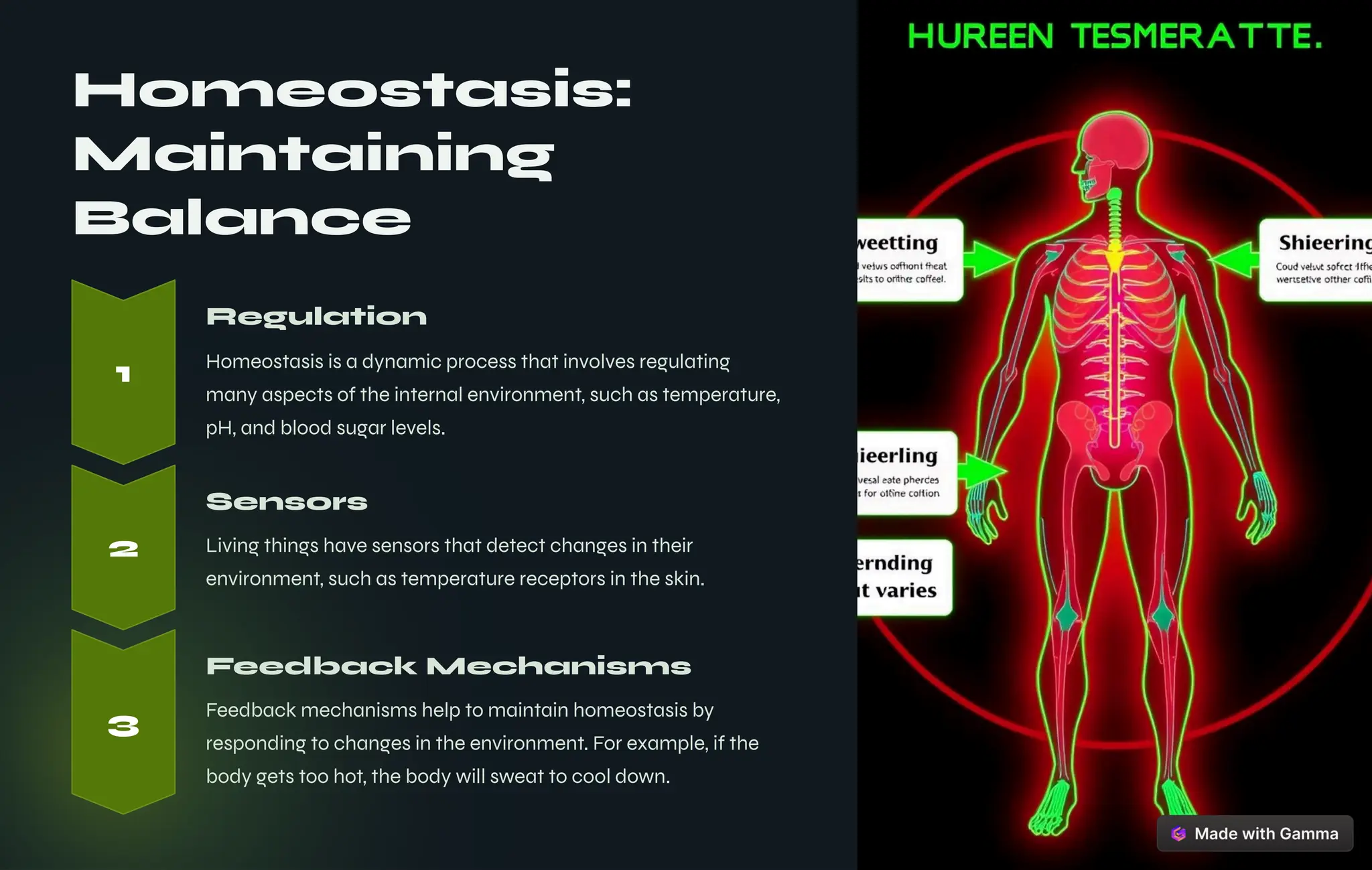
Feedback mechanisms help to maintain homeostasis by
responding to changes in the environment. For example, if the
body gets too hot, the body will sweat to cool down.
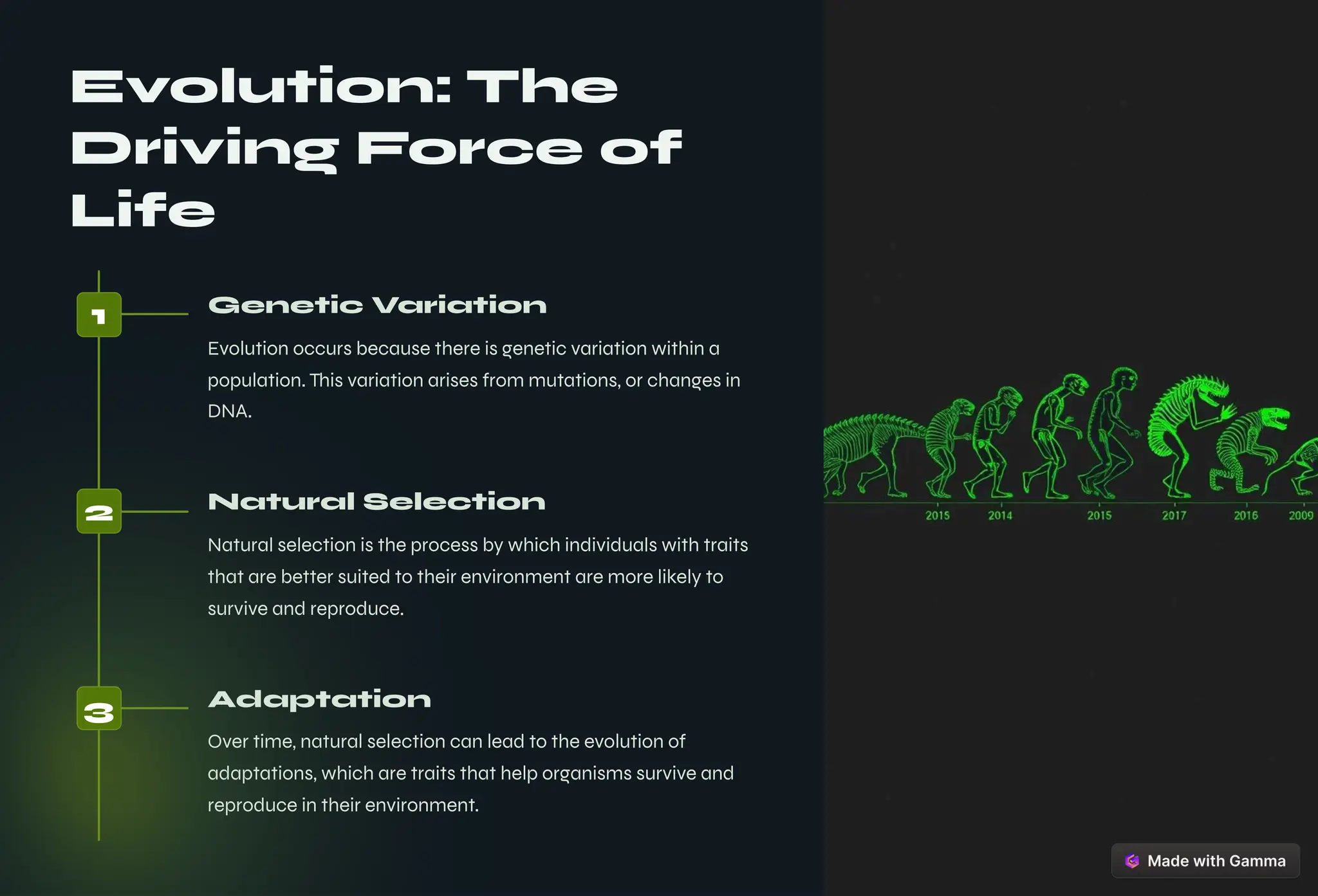
Evolution: The
Driving Force of
Life
1 Genetic Variation
Evolution occurs because there is genetic variation within a
population. This variation arises from mutations, or changes in
DNA.
2 Natural Selection
Natural selection is the process by which individuals with traits
that are better suited to their environment are more likely to
survive and reproduce.
3 Adaptation
Over time, natural selection can lead to the evolution of
adaptations, which are traits that help organisms survive and
reproduce in their environment.
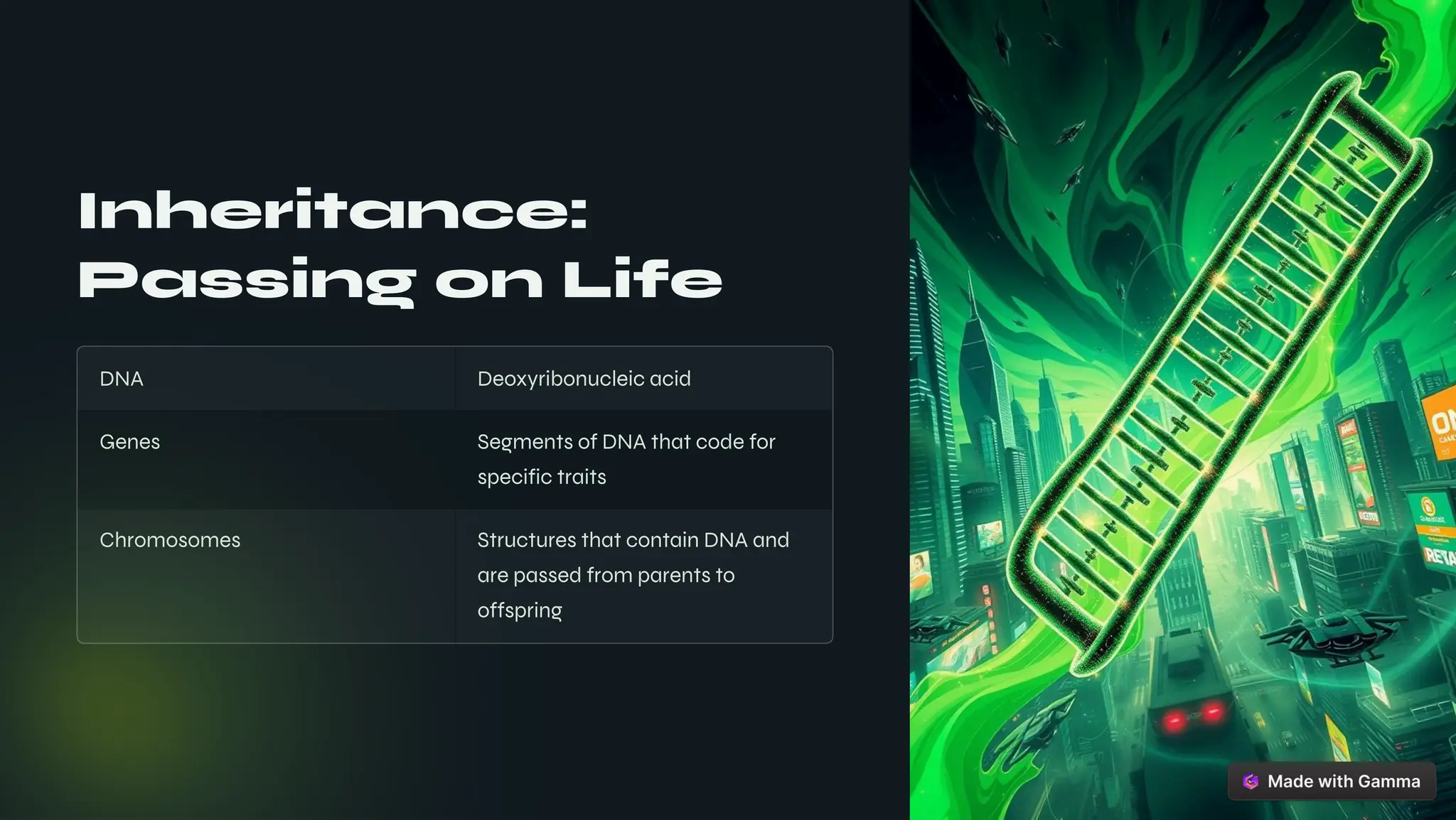
Inheritance:
Passing on Life
DNA Deoxyribonucleic acid
Genes Segments of DNA that code for
specific traits
Chromosomes Structures that contain DNA and
are passed from parents to
offspring
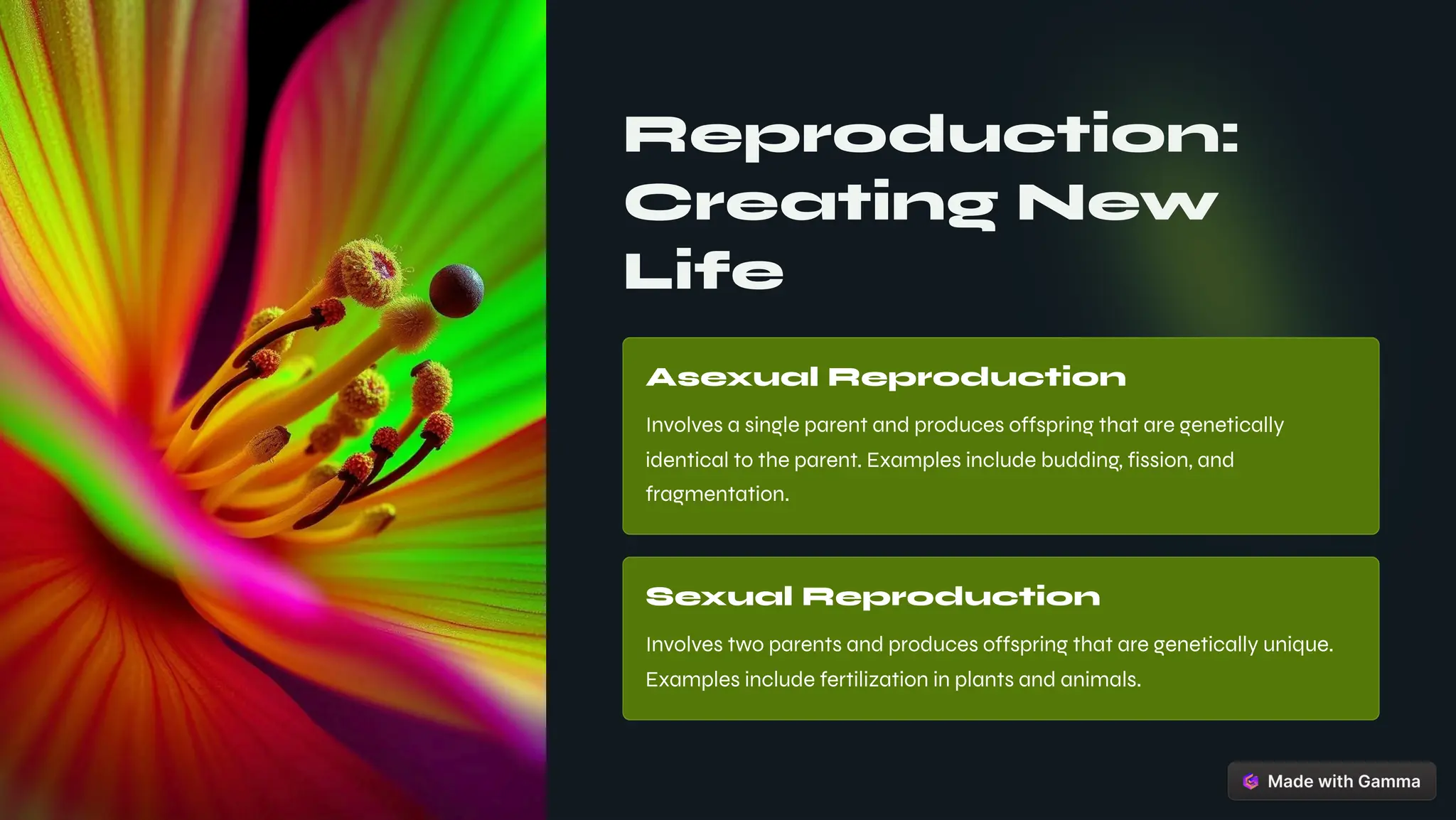
Reproduction:
Creating New
Life
Asexual Reproduction
Involves a single parent and produces offspring that are genetically
identical to the parent. Examples include budding, fission, and
fragmentation.
Sexual Reproduction
Involves two parents and produces offspring that are genetically unique.
Examples include fertilization in plants and animals.
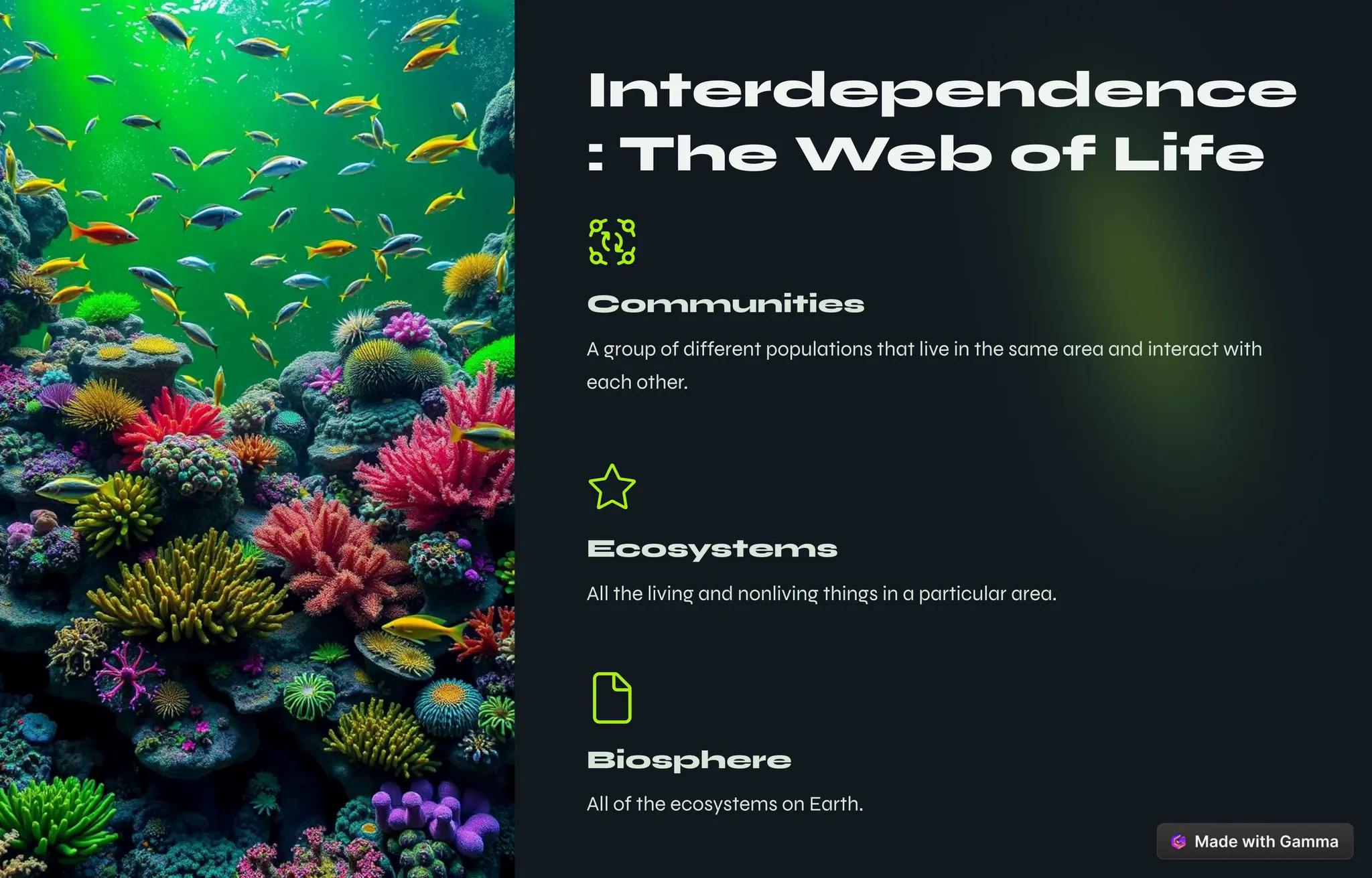
Interdependence
: The Web of Life
Communities
A group of different populations that live in the same area and interact with
each other.
Ecosystems
All the living and nonliving things in a particular area.
Biosphere
All of the ecosystems on Earth.
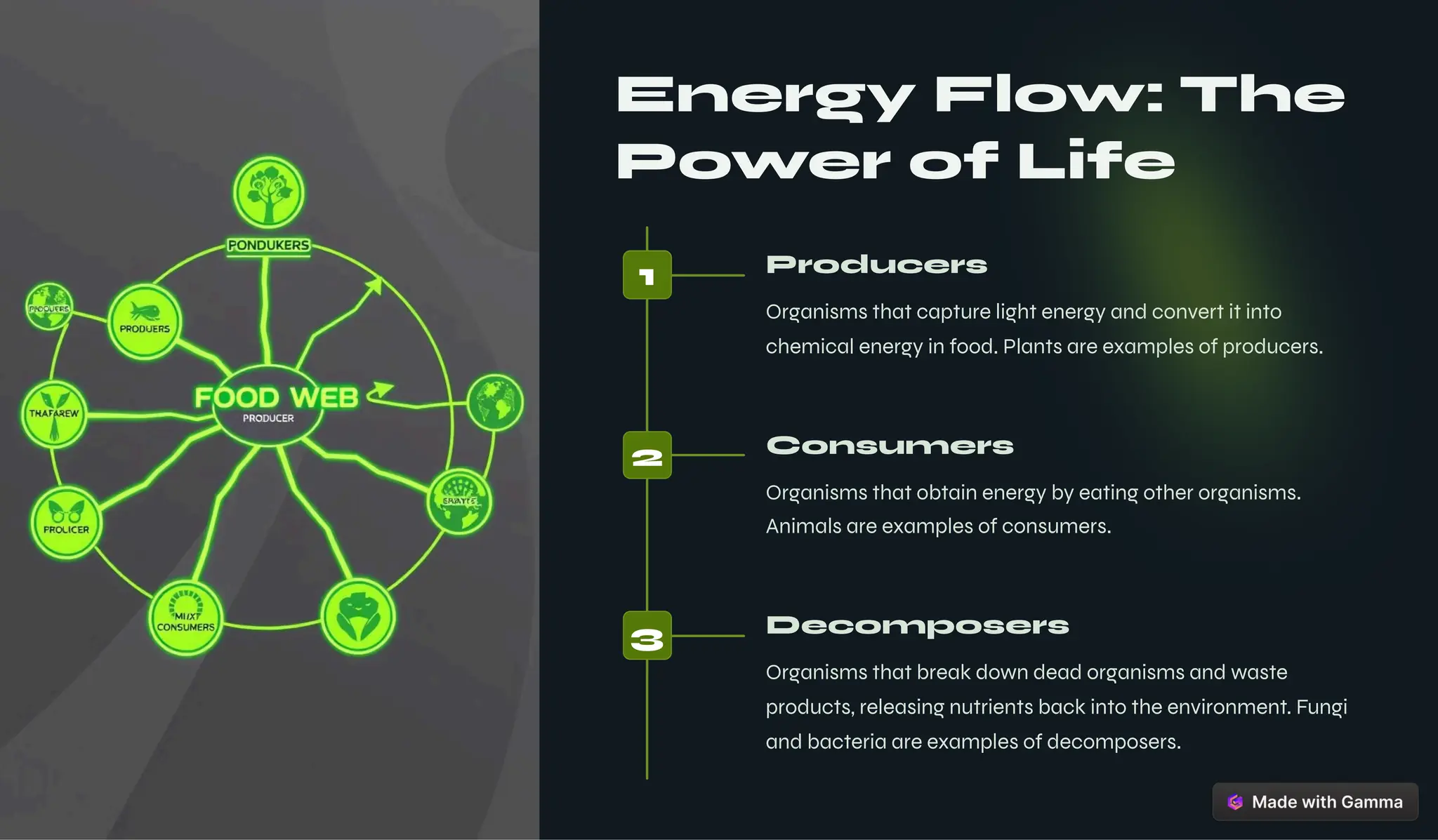
Energy Flow: The
Power of Life
1 Producers
Organisms that capture light energy and convert it into
chemical energy in food. Plants are examples of producers.
2 Consumers
Organisms that obtain energy by eating other organisms.
Animals are examples of consumers.
3 Decomposers
Organisms that break down dead organisms and waste
products, releasing nutrients back into the environment. Fungi
and bacteria are examples of decomposers.
Science and Technology
1 Scientific
Inquiry
The process of science is based
on observation,
experimentation, and the
formulation of hypotheses.
2 Technology
Technology is the application of
scientific knowledge to solve
problems and create new
products and processes.
3 Society
Science and technology have a
profound impact on society,
influencing our lives in many
ways. It's important to
understand these relationships
to make informed decisions
about the use of science and
technology.

Unifying-Themes-in-the-Study-of-Life.pdf

  • 1.
    Unifying Themes in the Studyof Life Biology is the study of life. It is a vast and complex field, but there are some unifying themes that connect all living things. These themes help us understand the diversity of life on Earth, as well as the commonalities that unite all living organisms. by Romel Rigore
  • 2.
    What Makes Something Alive? 1Organization All living things are organized, from the level of the cell to the level of the ecosystem. Each level has its own unique structure and function. 2 Metabolism Living things use energy to carry out life processes, such as growth, reproduction, and movement. 3 Homeostasis Living things maintain a stable internal environment, despite changes in their external environment. 4 Growth and Development Living things grow and develop over time, increasing in size and complexity.
  • 3.
    Structure and Function Structure Thestructure of a living thing determines its function. This means that the shape and arrangement of parts in an organism are related to what it does. For example, the shape of a bird's wing is adapted for flight. Function The function of a living thing is its specific role in its environment. For example, the function of a leaf is to absorb sunlight and produce food for the plant.
  • 4.
    Homeostasis: Maintaining Balance 1 Regulation Homeostasis is adynamic process that involves regulating many aspects of the internal environment, such as temperature, pH, and blood sugar levels. 2 Sensors Living things have sensors that detect changes in their environment, such as temperature receptors in the skin. 3 Feedback Mechanisms Feedback mechanisms help to maintain homeostasis by responding to changes in the environment. For example, if the body gets too hot, the body will sweat to cool down.
  • 5.
    Evolution: The Driving Forceof Life 1 Genetic Variation Evolution occurs because there is genetic variation within a population. This variation arises from mutations, or changes in DNA. 2 Natural Selection Natural selection is the process by which individuals with traits that are better suited to their environment are more likely to survive and reproduce. 3 Adaptation Over time, natural selection can lead to the evolution of adaptations, which are traits that help organisms survive and reproduce in their environment.
  • 6.
    Inheritance: Passing on Life DNADeoxyribonucleic acid Genes Segments of DNA that code for specific traits Chromosomes Structures that contain DNA and are passed from parents to offspring
  • 7.
    Reproduction: Creating New Life Asexual Reproduction Involvesa single parent and produces offspring that are genetically identical to the parent. Examples include budding, fission, and fragmentation. Sexual Reproduction Involves two parents and produces offspring that are genetically unique. Examples include fertilization in plants and animals.
  • 8.
    Interdependence : The Webof Life Communities A group of different populations that live in the same area and interact with each other. Ecosystems All the living and nonliving things in a particular area. Biosphere All of the ecosystems on Earth.
  • 9.
    Energy Flow: The Powerof Life 1 Producers Organisms that capture light energy and convert it into chemical energy in food. Plants are examples of producers. 2 Consumers Organisms that obtain energy by eating other organisms. Animals are examples of consumers. 3 Decomposers Organisms that break down dead organisms and waste products, releasing nutrients back into the environment. Fungi and bacteria are examples of decomposers.
  • 10.
    Science and Technology 1Scientific Inquiry The process of science is based on observation, experimentation, and the formulation of hypotheses. 2 Technology Technology is the application of scientific knowledge to solve problems and create new products and processes. 3 Society Science and technology have a profound impact on society, influencing our lives in many ways. It's important to understand these relationships to make informed decisions about the use of science and technology.