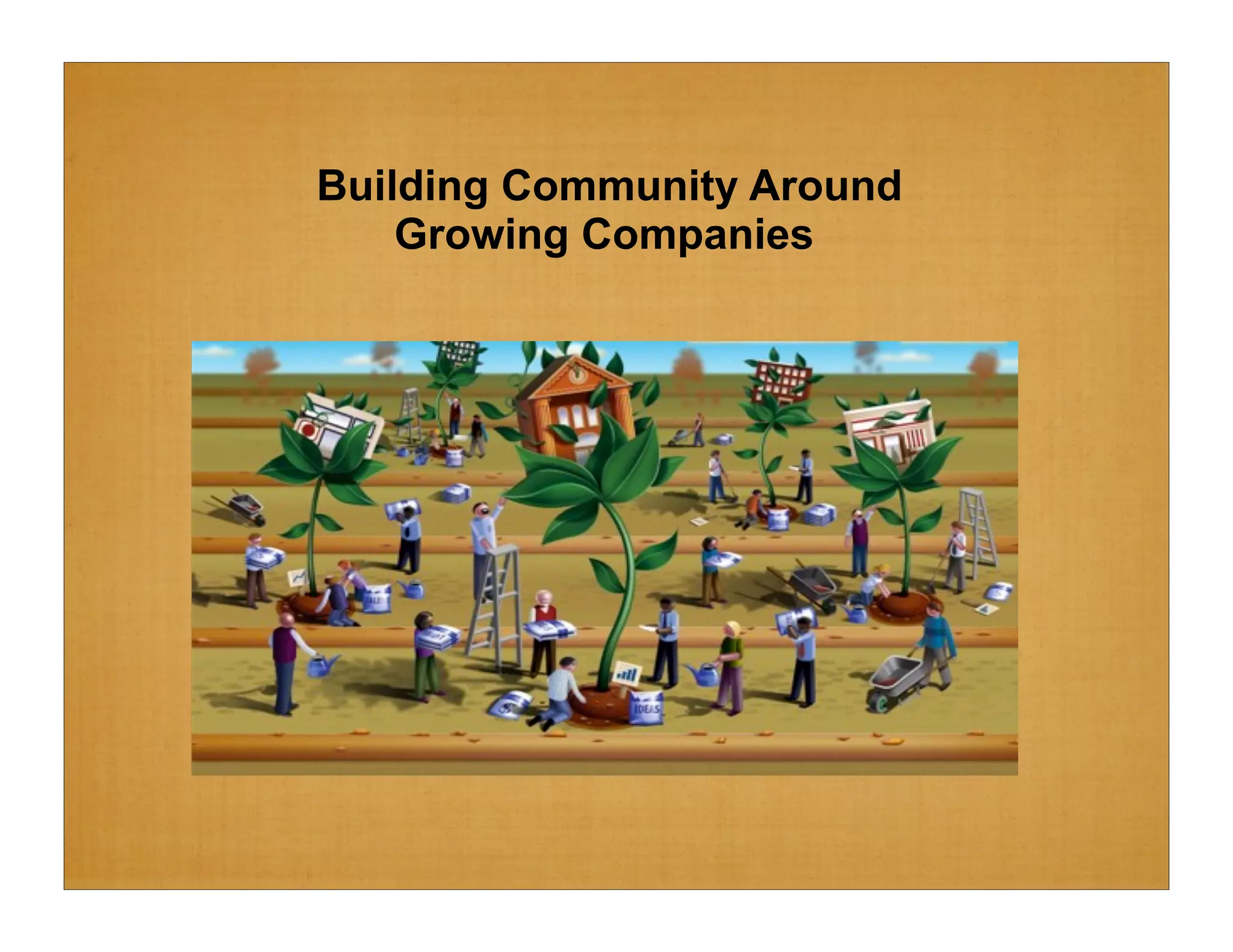
Building Community Around
    Growing Companies
Second Stage Companies
Growth Issues vs Survival


Intent to Grow


Capacity to Grow


Enterprise Composition


    Privately Held Businesses
    10-99 Employees
    Revenue $1 M to $50 M
    Double-Digit Rate of Growth
Importance of Second-Stage Companies

Create jobs

Attract money

Attract talent

Drive culture

Drive community direction

Affect philanthropy

Drive policy decisions through identified needs
Understanding the Second-Stage Entrepreneur


                 If you really want to
                 understand, you must listen
                 and be willing to look beyond
                 the obvious.
How to Spot a Second-Stager
Moves fast and faces complex problems, often many at the same time


Not attracted to traditional ways of learning


Content must be relevant instead of unique


Need to build systems so they can step away from the business


Too much business can trip them up faster than too little – capacity issues


Hard to gain their trust / High Trust level of Peers


Easily frustrated by bureaucracy


Process everything through the lens of their business


May love creating but not managing

Very positive

Strong internal locus of control
Does Your Culture Look Like Theirs?

Do you listen to ideas, then act and implement quickly?

Can you live with making mistakes?

Are you willing to change some of your direction to serve your
audience?

Do you understand outside audiences well enough to find and
match resources?

Is it OK if you don’t know everything?
Our Role in Second Stage


Spreading the word

Research and data analysis

Program development

Community convener
Our Programs
Your Economy
Longitudinal Database


15 Years / 37 Million records


Key Measurements:


  Resident Enterprises


  Non-Resident Enterprises


  Non-Commercial Enterprises


  Births and Deaths of Establishments


  Impact on Jobs
Elkhart County
  Key Trends
  2005-2007
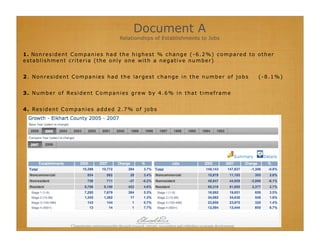
Document A
                                                Relationships of Establishments to Jobs


1. No n r e s i d e n t C o m p a n i e s h a d t h e h i g h e s t % c h a n g e ( - 6 . 2 % ) c o m p a r e d t o o t h e r
establishment criteria (the only one with a negative number)


2. Nonresident Companies had the largest change in the number of jobs                                                (-8.1%)


3 . N u m b e r o f Re s i d e n t C o m p a n i e s g r e w b y 4 . 6 % i n t h a t t i m e f r a m e


4 . Re s i d e n t C o m p a n i e s a d d e d 2 . 7 % o f j o b s
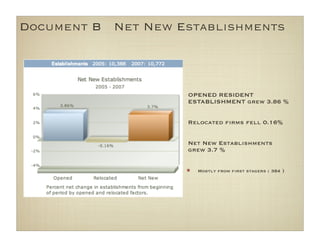
Document B Net New Establishments


                    OPENED RESIDENT
                    ESTABLISHMENT grew 3.86 %


                    Relocated firms fell 0.16%


                    Net New Establishments
                    grew 3.7 %


                      Mostly from first stagers ( 384   )
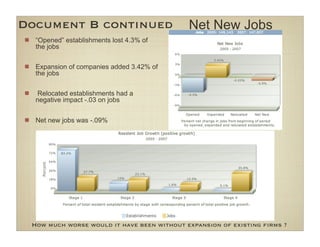
Document B continued                        Net New Jobs
  “Opened” establishments lost 4.3% of
  the jobs


  Expansion of companies added 3.42% of
  the jobs


   Relocated establishments had a
  negative impact -.03 on jobs


  Net new jobs was -.09%


 How much worse would it have been without expansion of existing firms ?
The Bottom Line
Job growth comes from “resident” company
               expansion

Economic Gardening provides resources to
  growth oriented “Resident” companies

Do you know who the growth oriented “expansion” companies are?


Do you know “how” you add value to these establishments?


How do you help first stages make the “leap” to second stage?


How do you help Second-stagers sustain and thrive?
Don’t Make it so Hard!

Let your audience be your guide


Unleash your creativity


Trust your audience


Trust yourself


Tell everybody what you’re doing


Tell your own audience what you’re doing


Tell everyone about your audience

Elkhart Edc

  • 1.
    Building Community Around Growing Companies
  • 3.
    Second Stage Companies GrowthIssues vs Survival Intent to Grow Capacity to Grow Enterprise Composition Privately Held Businesses 10-99 Employees Revenue $1 M to $50 M Double-Digit Rate of Growth
  • 4.
    Importance of Second-StageCompanies Create jobs Attract money Attract talent Drive culture Drive community direction Affect philanthropy Drive policy decisions through identified needs
  • 5.
    Understanding the Second-StageEntrepreneur If you really want to understand, you must listen and be willing to look beyond the obvious.
  • 6.
    How to Spota Second-Stager Moves fast and faces complex problems, often many at the same time Not attracted to traditional ways of learning Content must be relevant instead of unique Need to build systems so they can step away from the business Too much business can trip them up faster than too little – capacity issues Hard to gain their trust / High Trust level of Peers Easily frustrated by bureaucracy Process everything through the lens of their business May love creating but not managing Very positive Strong internal locus of control
  • 7.
    Does Your CultureLook Like Theirs? Do you listen to ideas, then act and implement quickly? Can you live with making mistakes? Are you willing to change some of your direction to serve your audience? Do you understand outside audiences well enough to find and match resources? Is it OK if you don’t know everything?
  • 8.
    Our Role inSecond Stage Spreading the word Research and data analysis Program development Community convener
  • 9.
  • 10.
    Your Economy Longitudinal Database 15Years / 37 Million records Key Measurements: Resident Enterprises Non-Resident Enterprises Non-Commercial Enterprises Births and Deaths of Establishments Impact on Jobs
  • 11.
    Elkhart County Key Trends 2005-2007
  • 12.
    Document A Relationships of Establishments to Jobs 1. No n r e s i d e n t C o m p a n i e s h a d t h e h i g h e s t % c h a n g e ( - 6 . 2 % ) c o m p a r e d t o o t h e r establishment criteria (the only one with a negative number) 2. Nonresident Companies had the largest change in the number of jobs (-8.1%) 3 . N u m b e r o f Re s i d e n t C o m p a n i e s g r e w b y 4 . 6 % i n t h a t t i m e f r a m e 4 . Re s i d e n t C o m p a n i e s a d d e d 2 . 7 % o f j o b s
  • 13.
    Document B NetNew Establishments OPENED RESIDENT ESTABLISHMENT grew 3.86 % Relocated firms fell 0.16% Net New Establishments grew 3.7 % Mostly from first stagers ( 384 )
  • 14.
    Document B continued Net New Jobs “Opened” establishments lost 4.3% of the jobs Expansion of companies added 3.42% of the jobs Relocated establishments had a negative impact -.03 on jobs Net new jobs was -.09% How much worse would it have been without expansion of existing firms ?
  • 15.
    The Bottom Line Jobgrowth comes from “resident” company expansion Economic Gardening provides resources to growth oriented “Resident” companies Do you know who the growth oriented “expansion” companies are? Do you know “how” you add value to these establishments? How do you help first stages make the “leap” to second stage? How do you help Second-stagers sustain and thrive?
  • 16.
    Don’t Make itso Hard! Let your audience be your guide Unleash your creativity Trust your audience Trust yourself Tell everybody what you’re doing Tell your own audience what you’re doing Tell everyone about your audience