MODULE 5.
Neoplastic growth
Department of General and Clinical Pathology
Medical University - Varna
Peter Ghenev MD, PhD
2
ETIOLOGY OF TUMOR GROWTH
Theories
 Chemical (irritative) R.Virchow
 Viral (genetic)
 Dysonthogenetic (Conheim)
 Polietiological
3
 Sir Percival Pott, London surgeon -
more than 200 years ago correctly attributed
scrotal skin cancer in chimney sweeps to
chronic exposure to soot
Chemical Carcinogenesis
4
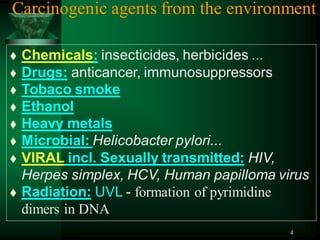
Carcinogenic agents from the environment
 Chemicals: insecticides, herbicides ...
 Drugs: anticancer, immunosuppressors
 Tobaco smoke
 Ethanol
 Heavy metals
 Microbial: Helicobacter pylori...
 VIRAL incl. Sexually transmitted: HIV,
Herpes simplex, HCV, Human papilloma virus
 Radiation: UVL - formation of pyrimidine
dimers in DNA
5
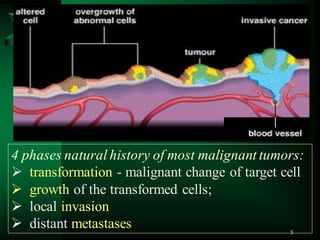
4 phases natural history of most malignant tumors:
 transformation - malignant change of target cell
 growth of the transformed cells;
 local invasion
 distant metastases
6
Steps in Chemical
Carcinogenesis
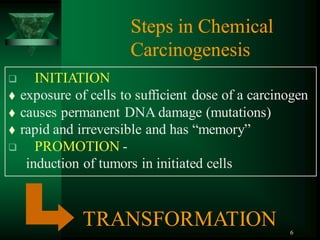
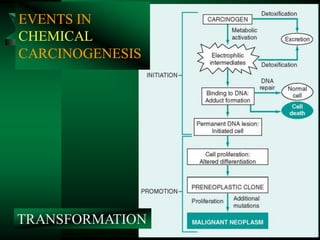
 INITIATION
 exposure of cells to sufficient dose of a carcinogen
 causes permanent DNA damage (mutations)
 rapid and irreversible and has “memory”
 PROMOTION -
induction of tumors in initiated cells
TRANSFORMATION
7
TRANSFORMATION
EVENTS IN
CHEMICAL
CARCINOGENESIS
8
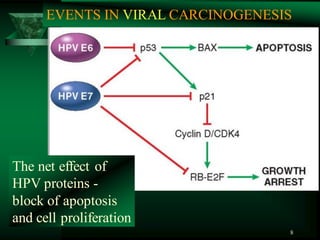
The net effect of
HPV proteins -
block of apoptosis
and cell proliferation
EVENTS IN VIRAL CARCINOGENESIS
9
Dissemination of cancers may occur through
one of three pathways:
(1) direct seeding of body cavities or surfaces,
(2) lymphatic spread, and
(3) hematogenous spread
+Implantation during surgery
Pathways of Spread
10
DEFINITION: Tumor implants discontinuous
with the primary tumor
Metastasis unequivocally marks a tumor as malignant
because benign neoplasms do not metastasize
The invasiveness of cancers permits them to
penetrate into blood vessels, lymphatics, and
body cavities, providing the opportunity for spread
With few exceptions, all cancers can metastasize
Metastases
11
Millions of cells are released into
the circulation each day from
a primary tumor, but only a few
metastases are produced
A clear understanding of the origin of metastasis is
of major importance for the management of cancer
patients and the development of effective therapies
to prevent tumor spread
METASTASIS
12
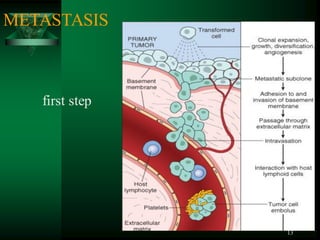
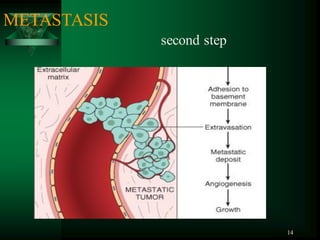
involves two phases:
(1) invasion of the extracellular matrix and
(2) vascular dissemination and homing of tumor cells
The metastatic cascade
13
METASTASIS
first step
14
METASTASIS
second step
15
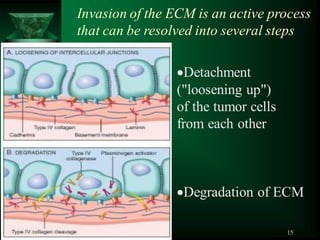
Detachment
("loosening up")
of the tumor cells
from each other
Degradation of ECM
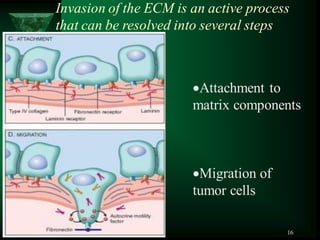
Invasion of the ECM is an active process
that can be resolved into several steps
16
Attachment to
matrix components
Migration of
tumor cells
Invasion of the ECM is an active process
that can be resolved into several steps
17
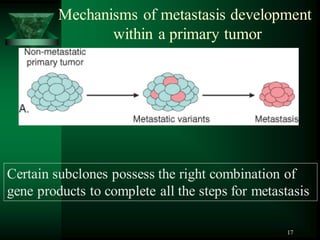
Certain subclones possess the right combination of
gene products to complete all the steps for metastasis
Mechanisms of metastasis development
within a primary tumor
18
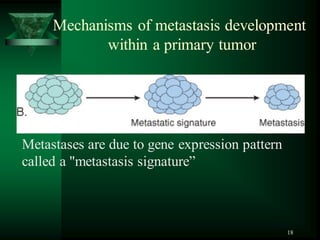
Metastases are due to gene expression pattern
called a "metastasis signature”
Mechanisms of metastasis development
within a primary tumor
19
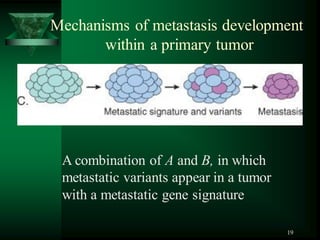
Mechanisms of metastasis development
within a primary tumor
A combination of A and B, in which
metastatic variants appear in a tumor
with a metastatic gene signature
20
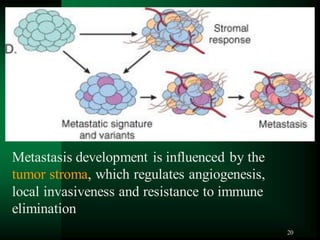
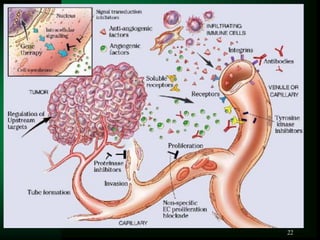
Metastasis development is influenced by the
tumor stroma, which regulates angiogenesis,
local invasiveness and resistance to immune
elimination
21
Metastasis signature represents a general
predisposition for metastasis, due to multiple
abnormalities that occur in many, perhaps in
most, cells of a primary tumor.
This signature may involve not only properties
intrinsic to the cancer cells, but also the
characteristics of the stroma, the presence of
infiltrating immune cells, and angiogenesis.
Nat Rev Cancer. 2005; 5 (5): 338.
22
23
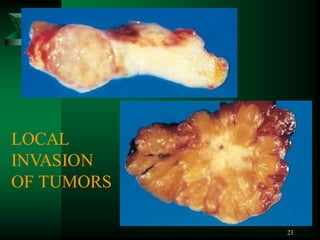
LOCAL
INVASION
OF TUMORS
24
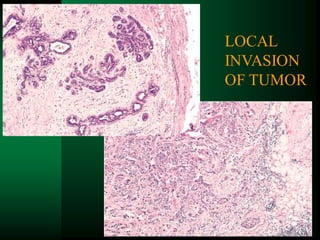
LOCAL
INVASION
OF TUMOR
25
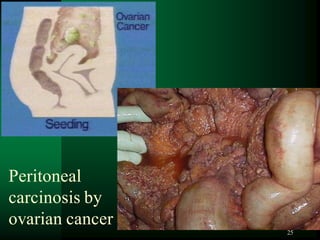
Peritoneal
carcinosis by
ovarian cancer
26
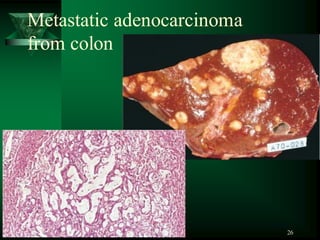
Metastatic adenocarcinoma
from colon
27
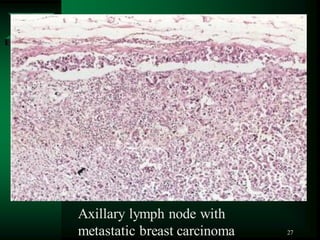
Axillary lymph node with
metastatic breast carcinoma
28
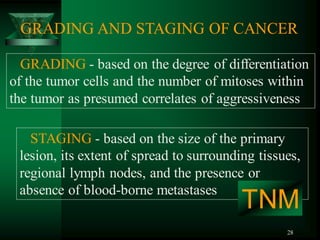
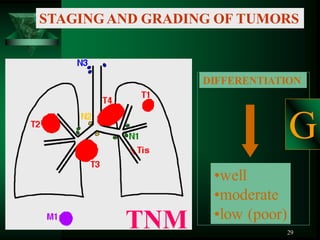
GRADING AND STAGING OF CANCER
GRADING - based on the degree of differentiation
of the tumor cells and the number of mitoses within
the tumor as presumed correlates of aggressiveness
STAGING - based on the size of the primary
lesion, its extent of spread to surrounding tissues,
regional lymph nodes, and the presence or
absence of blood-borne metastases
TNM
29
STAGING AND GRADING OF TUMORS
TNM
DIFFERENTIATION
•well
•moderate
•low (poor)
G
30
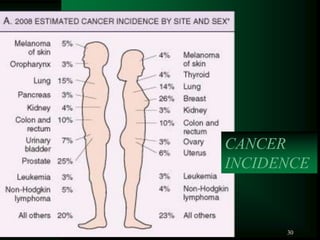
CANCER
INCIDENCE
31
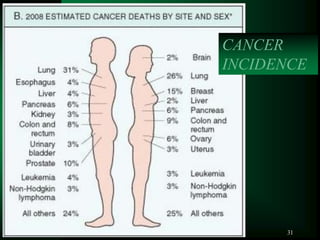
CANCER
INCIDENCE
32
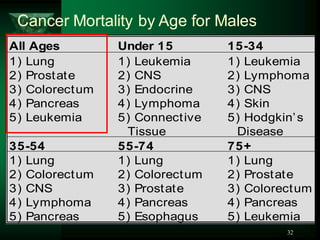
Cancer Mortality by Age for Males
All Ages Under 15 15-34
1) Lung
2) Prostate
3) Colorectum
4) Pancreas
5) Leukemia
1) Leukemia
2) CNS
3) Endocrine
4) Lymphoma
5) Connective
Tissue
1) Leukemia
2) Lymphoma
3) CNS
4) Skin
5) Hodgkin’s
Disease
35-54 55-74 75+
1) Lung
2) Colorectum
3) CNS
4) Lymphoma
5) Pancreas
1) Lung
2) Colorectum
3) Prostate
4) Pancreas
5) Esophagus
1) Lung
2) Prostate
3) Colorectum
4) Pancreas
5) Leukemia
33
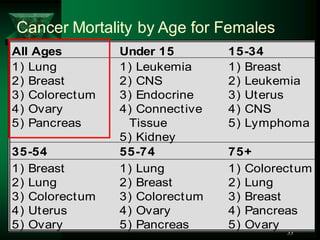
Cancer Mortality by Age for Females
All Ages Under 15 15-34
1) Lung
2) Breast
3) Colorectum
4) Ovary
5) Pancreas
1) Leukemia
2) CNS
3) Endocrine
4) Connective
Tissue
5) Kidney
1) Breast
2) Leukemia
3) Uterus
4) CNS
5) Lymphoma
35-54 55-74 75+
1) Breast
2) Lung
3) Colorectum
4) Uterus
5) Ovary
1) Lung
2) Breast
3) Colorectum
4) Ovary
5) Pancreas
1) Colorectum
2) Lung
3) Breast
4) Pancreas
5) Ovary
34
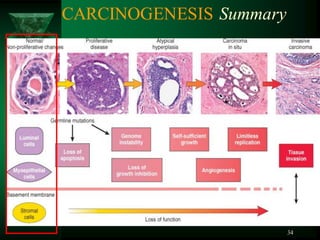
CARCINOGENESIS Summary
35
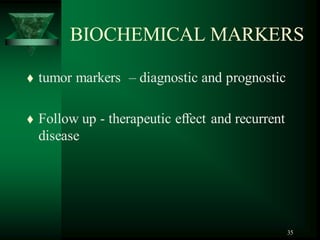
BIOCHEMICAL MARKERS
 tumor markers – diagnostic and prognostic
 Follow up - therapeutic effect and recurrent
disease
36
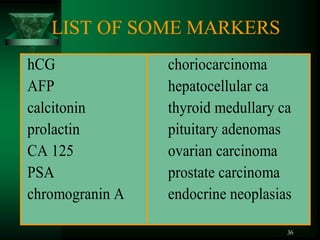
LIST OF SOME MARKERS
hCG choriocarcinoma
AFP hepatocellular ca
calcitonin thyroid medullary ca
prolactin pituitary adenomas
CA 125 ovarian carcinoma
PSA prostate carcinoma
chromogranin A endocrine neoplasias
37
 Senile kerratosis
 Radiation dermatitis
 Leukoplakia
 Erythroplasia Queyrat
 Cryptorchism
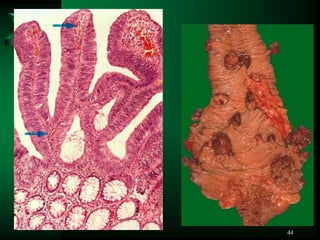
 Villous adenoma
 Morbus Bowen
 Adenomatous hyperplasia of endometrium
 Familial polyposis
 Ulcerous colitis
 Atrophic gastritis
Precancerous
lesions
38
Cancer patients usually die because of:
 Metastases
 Rupture of large vessels and hemorrhage
 Compression of vital organs
 Organ failure
 Infections
 Intoxication - cacchexia
 Paraneoplastic syndrome - tromboses
39
Histogenetic
Classification
of Tumors
40
41
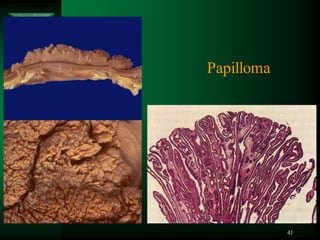
Papilloma
42
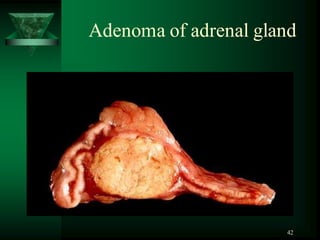
Adenoma of adrenal gland
43
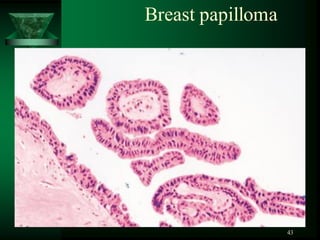
Breast papilloma
44
45
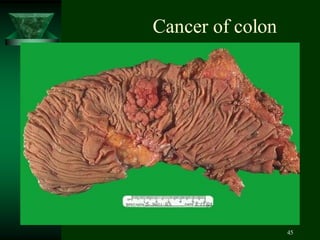
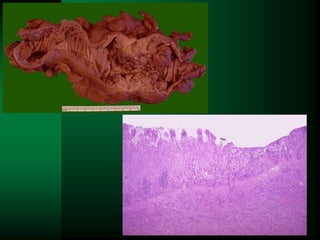
Cancer of colon
46
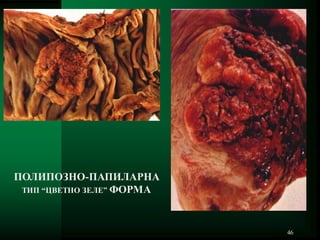
ПОЛИПОЗНО-ПАПИЛАРНА
ТИП “ЦВЕТНО ЗЕЛЕ” ФОРМА
47
48
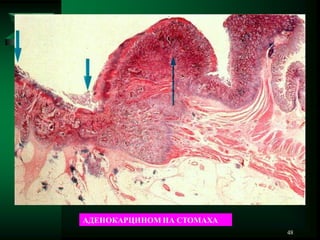
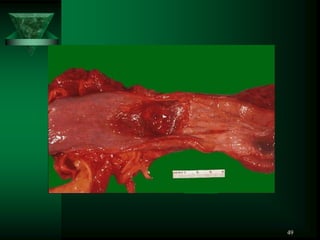
АДЕНОКАРЦИНОМ НА СТОМАХА
49
50
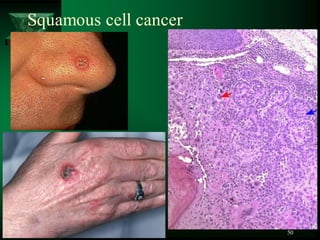
Squamous cell cancer
51
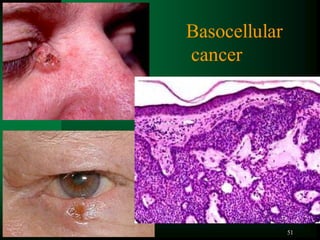
Basocellular
cancer
52
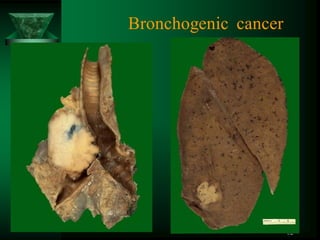
Bronchogenic cancer
53
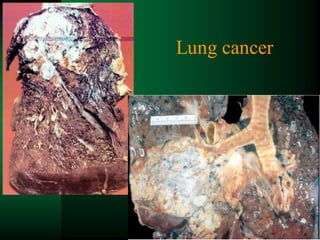
Lung cancer
54
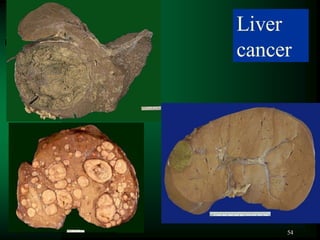
Liver
cancer
55
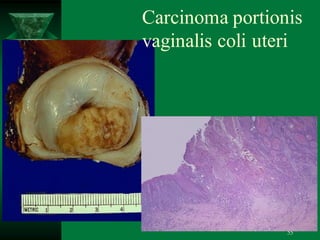
Carcinoma portionis
vaginalis coli uteri
56
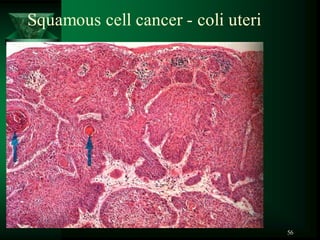
Squamous cell cancer - coli uteri
57
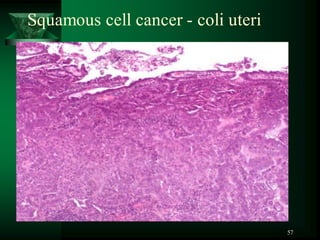
Squamous cell cancer - coli uteri
58
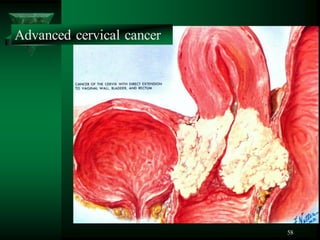
Advanced cervical cancer
59
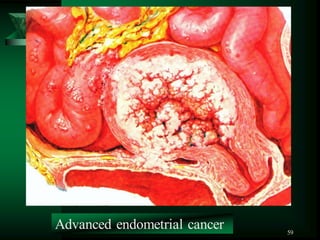
Advanced endometrial cancer
60
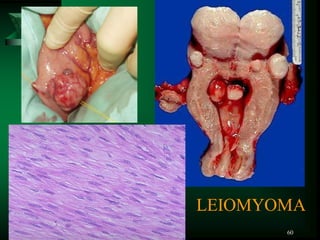
LEIOMYOMA
61
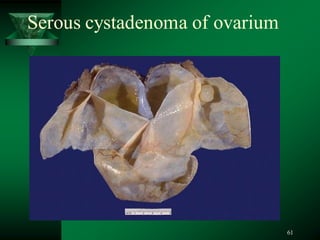
Serous cystadenoma of ovarium
62
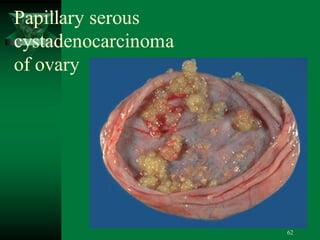
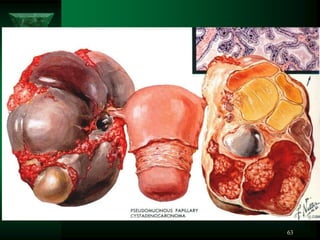
Papillary serous
cystadenocarcinoma
of ovary
63
64
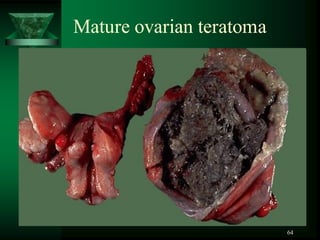
Mature ovarian teratoma
65
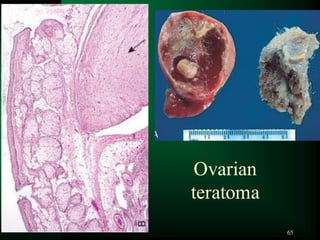
Ovarian
teratoma
66
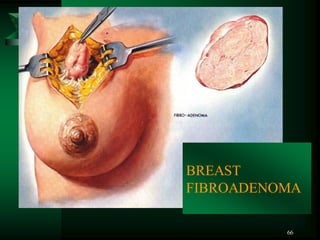
BREAST
FIBROADENOMA
67
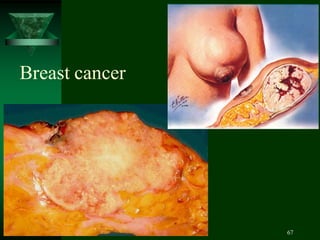
Breast cancer
68
69
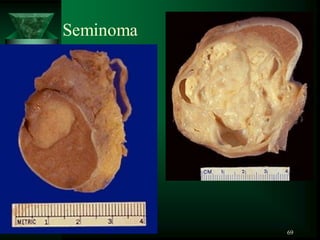
Seminoma
70
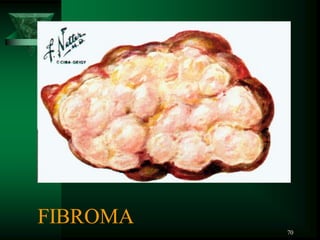
FIBROMA
71
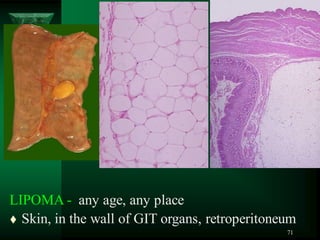
LIPOMA - any age, any place
 Skin, in the wall of GIT organs, retroperitoneum
72
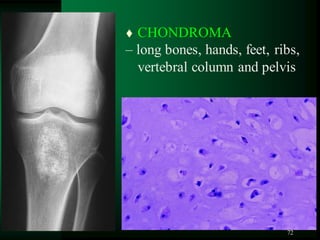
 CHONDROMA
– long bones, hands, feet, ribs,
vertebral column and pelvis
73
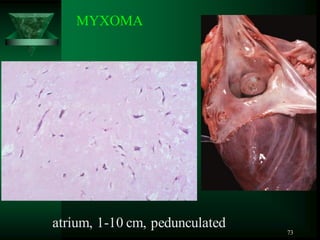
atrium, 1-10 cm, pedunculated
MYXOMA
74
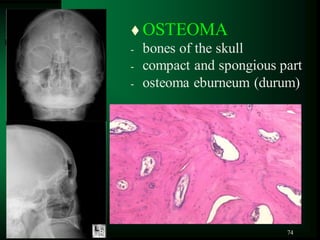
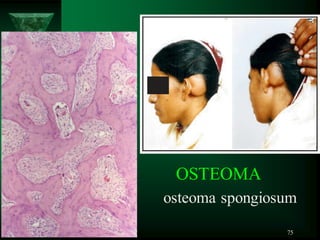
 OSTEOMA
- bones of the skull
- compact and spongious part
- osteoma eburneum (durum)
75
OSTEOMA
osteoma spongiosum
76
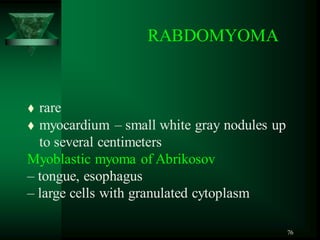
 rare
 myocardium – small white gray nodules up
to several centimeters
Myoblastic myoma of Abrikosov
– tongue, esophagus
– large cells with granulated cytoplasm
RABDOMYOMA
77
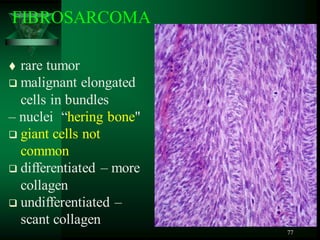
 rare tumor
 malignant elongated
cells in bundles
– nuclei “hering bone"
 giant cells not
common
 differentiated – more
collagen
 undifferentiated –
scant collagen
FIBROSARCOMA
78
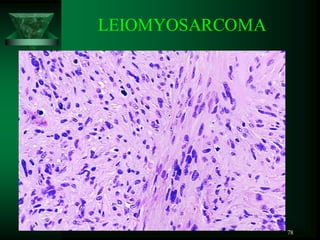
LEIOMYOSARCOMA
79
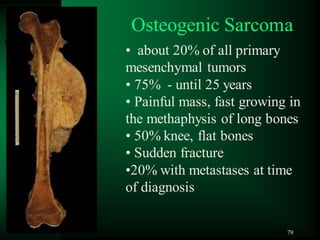
• about 20% of all primary
mesenchymal tumors
• 75% - until 25 years
• Painful mass, fast growing in
the methaphysis of long bones
• 50% knee, flat bones
• Sudden fracture
•20% with metastases at time
of diagnosis
Osteogenic Sarcoma
80
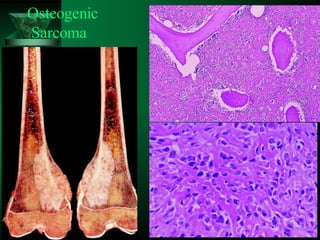
Osteogenic
Sarcoma
81
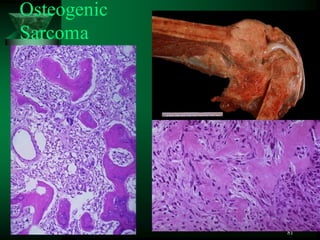
Osteogenic
Sarcoma
82
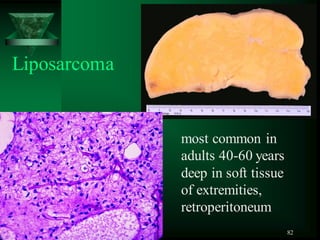
most common in
adults 40-60 years
deep in soft tissue
of extremities,
retroperitoneum
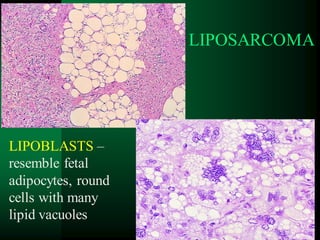
Liposarcoma
83
LIPOSARCOMA
LIPOBLASTS –
resemble fetal
adipocytes, round
cells with many
lipid vacuoles
84
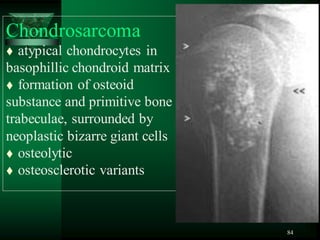
Chondrosarcoma
 atypical chondrocytes in
basophillic chondroid matrix
 formation of osteoid
substance and primitive bone
trabeculae, surrounded by
neoplastic bizarre giant cells
 osteolytic
 osteosclerotic variants
85
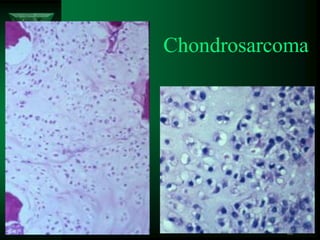
Chondrosarcoma
86
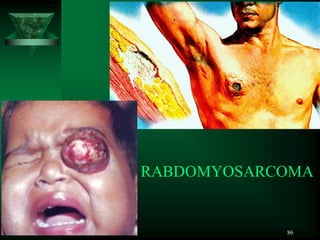
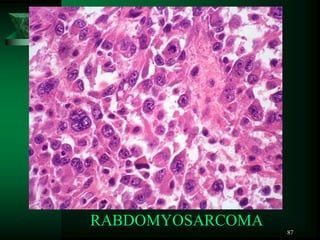
RABDOMYOSARCOMA
87
RABDOMYOSARCOMA
88
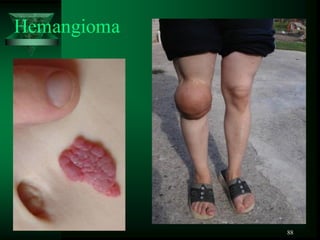
Hemangioma
89
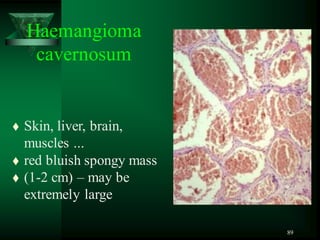
Haemangioma
cavernosum
 Skin, liver, brain,
muscles ...
 red bluish spongy mass
 (1-2 cm) – may be
extremely large
90
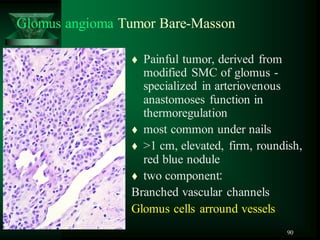
Glomus angioma Tumor Bare-Masson
 Painful tumor, derived from
modified SMC of glomus -
specialized in arteriovenous
anastomoses function in
thermoregulation
 most common under nails
 >1 cm, elevated, firm, roundish,
red blue nodule
 two component‫׃‬
Branched vascular channels
Glomus cells arround vessels
91
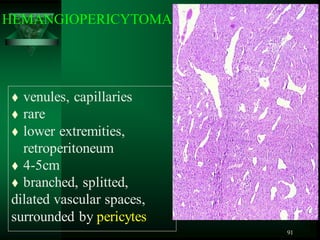
HEMANGIOPERICYTOMA
 venules, capillaries
 rare
 lower extremities,
retroperitoneum
 4-5cm
 branched, splitted,
dilated vascular spaces,
surrounded by pericytes
92
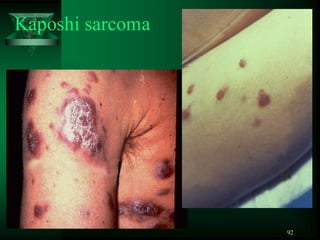
Kaposhi sarcoma
93
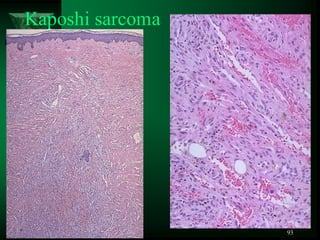
Kaposhi sarcoma
94
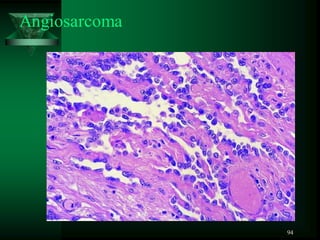
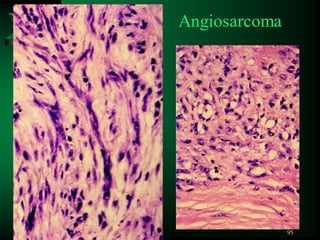
Angiosarcoma
95
Angiosarcoma
96
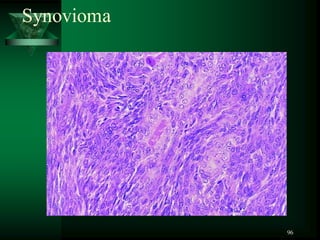
Synovioma
97
Ewing sarcoma
 Първични малигнени дребноклетъчни тумори на
костта /сарком на Юинг и PNET/
 Неврална диференциация
 PNET – примитивни невроектодермални тумори
 Различават се по диференциация
 Туморите с неврална диференциация на светлинна
микроскопия, имунохистохимично и ЕМ - PNET,
а тези, които не се позитивират - Юинг сарком
 Двата тумора – 6-10% от първичните малигнени
костни тумори
 При деца на 2-ро място след остеосаркома
 10-15 г- възраст
98
Сарком на Юинг и PNET
 Произлизат от медуларния канал, инвазират
кортекса и периоста и образува болезнена
мекотъканна маса – жълтеникавобелезникава
често с кръвоизливи и некрози
 В диафизата на дългите тръбести кости,
плоските кости на таза
 Сарком на Юинг - малки сини кръгли клетки -
ПАС + цитоплазма - гликоген.
 PNET - розетки на Homer-Wright розетки
/туморни клетки подредени около централно
фибриларно пространство/ е индикатор за
невронална диференциация
99
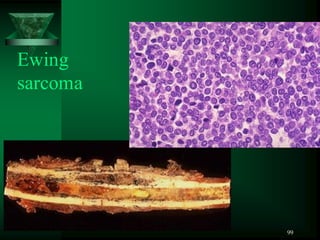
Ewing
sarcoma
100
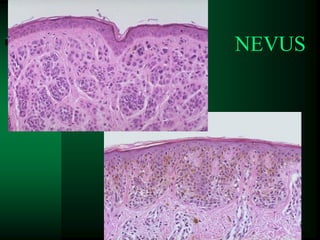
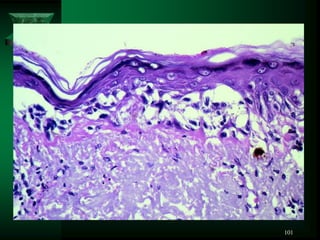
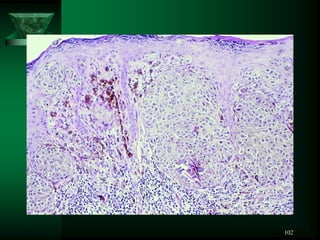
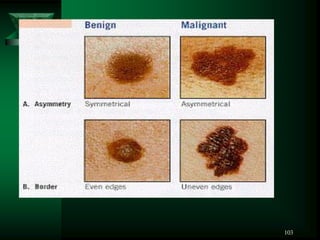
NEVUS
101
102
103
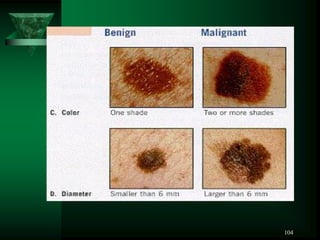
104
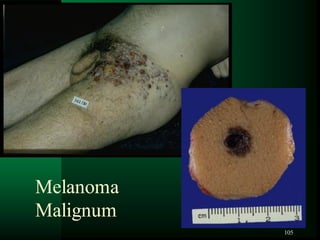
105
Melanoma
Malignum
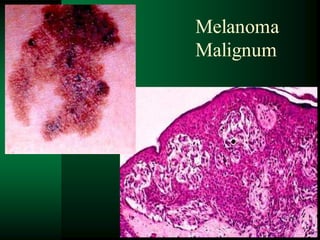
106
Melanoma
Malignum
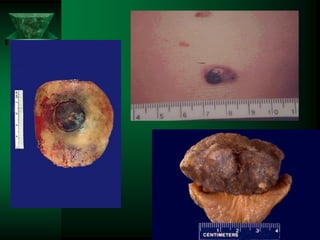
107
108
109
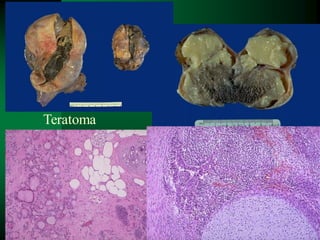
Teratoma
110
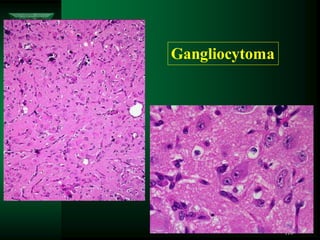
Gangliocytoma
111
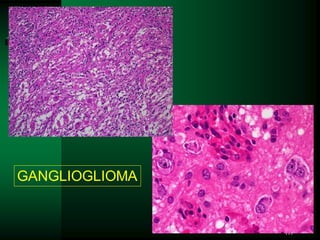
GANGLIOGLIOMA
112
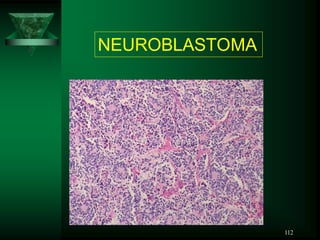
NEUROBLASTOMA
113
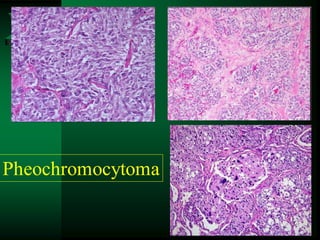
Pheochromocytoma
114
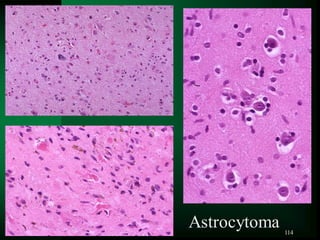
Astrocytoma
115
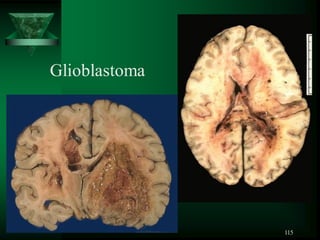
Glioblastoma
116
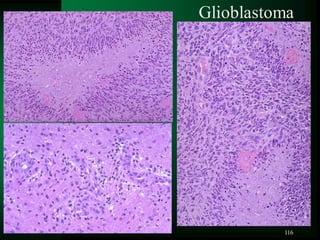
Glioblastoma
117
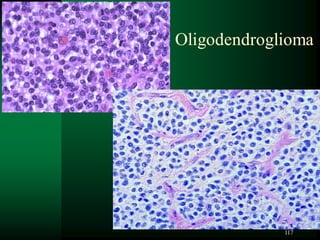
Oligodendroglioma
118
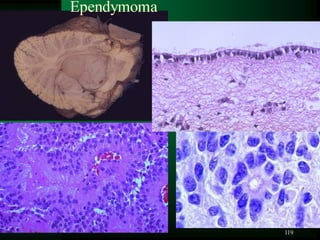
Епендимом /Ependymoma/ и тумори от плексус
хориоидеус
- 5%-10% от туморите до 20 г. - в съседство на епендима на
вентрикулите /най-често IV/
- При възрастни – гръбначния мозък
- Солиден или папиларни маси
- Трудно се екстирпират – близо до понса и продълговатия
мозък
- образува розетки /наподобява ембрионален епендимален
канал/ и периваскуларни розетки /около съдове/ - добре
диференциран епендимом /II степен/
- Анапластичен/ епендимом /III степен/
119
Ependymoma
120
Епендимни тумори и тумори от плексус
хориоидеус
 Папилом на Plexus chorioideus
 при деца латералните вентрикули; при
възрастни - IV вентрикул
 папили /съединителнотъканна сърцевина
покрита с кубичен или цилиндричен
епител
 Хориоиден карцином !!!
121
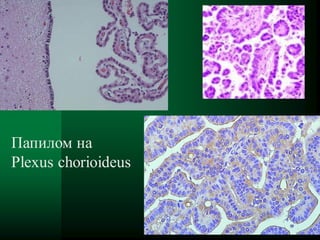
Папилом на
Plexus chorioideus
122
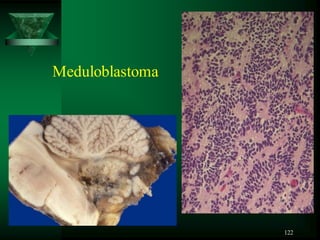
Meduloblastoma
123
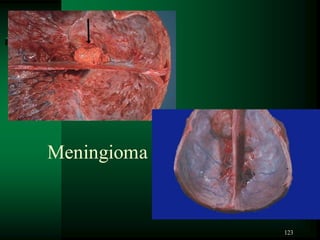
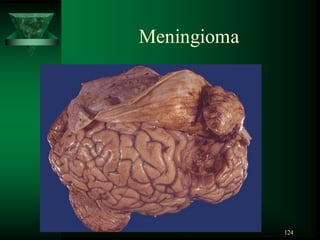
Meningioma
124
Meningioma
125
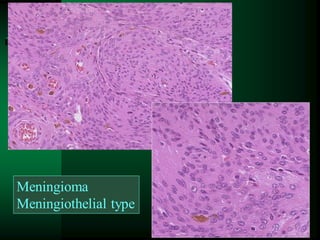
Meningioma
Meningiothelial type
126
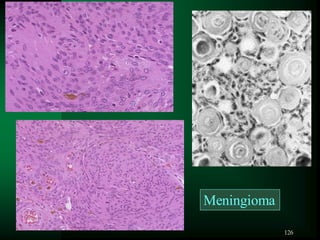
Meningioma
127
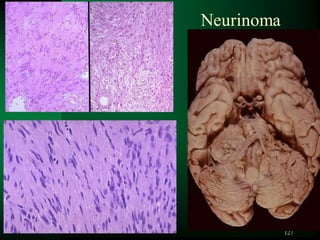
Neurinoma
128
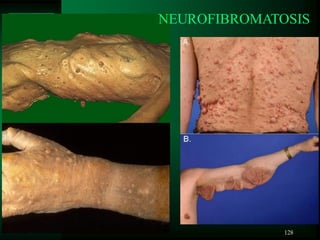
NEUROFIBROMATOSIS
129
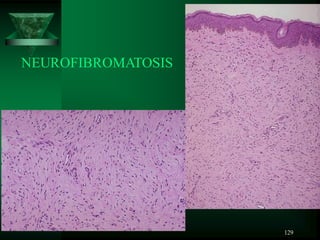
NEUROFIBROMATOSIS
130
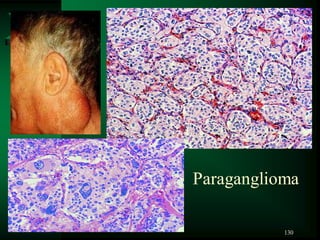
Paraganglioma
131
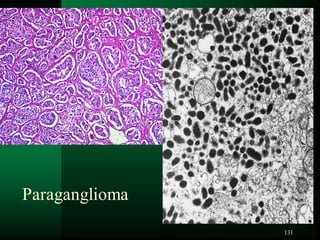
Paraganglioma
132
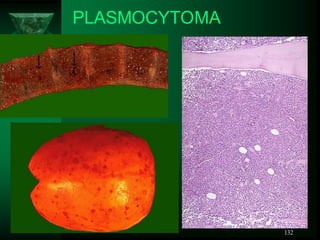
PLASMOCYTOMA
133
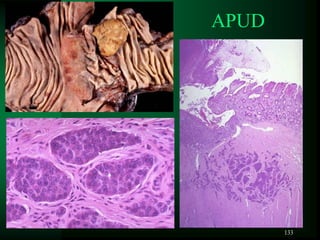
APUD
134
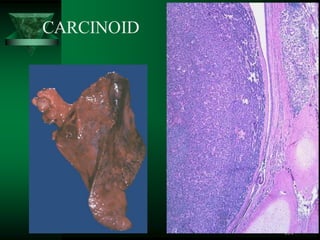
CARCINOID
135
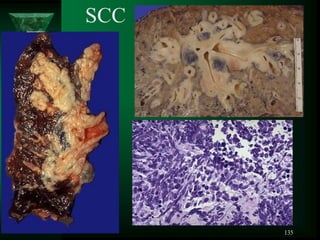
SCC

ELGP 22-23_Neoplastic growth.pdf