Space
• It’s one of elements of design of
architecture.
• creating space out of space, and
designing spaces by dividing this
space using various tools
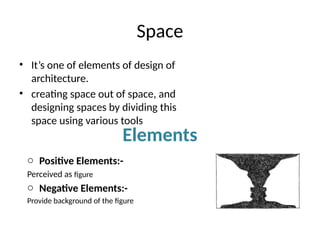
o Positive Elements:-
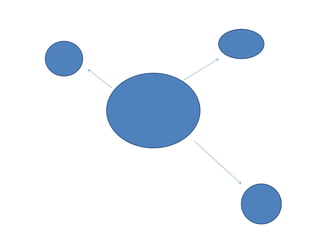
Perceived as figure
o Negative Elements:-
Provide background of the figure
Elements
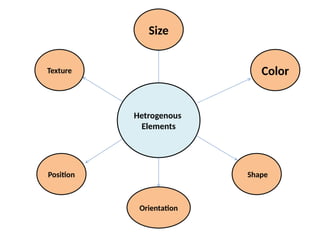
Hetrogenous
Elements
Color
Size
Texture
Position
Orientation
Shape
Type of space :-
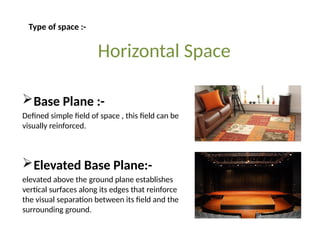
Base Plane :-
Defined simple field of space , this field can be
visually reinforced.
Elevated Base Plane:-
elevated above the ground plane establishes
vertical surfaces along its edges that reinforce
the visual separation between its field and the
surrounding ground.
Horizontal Space
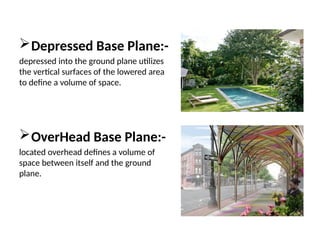
Depressed Base Plane:-
depressed into the ground plane utilizes
the vertical surfaces of the lowered area
to define a volume of space.
OverHead Base Plane:-
located overhead defines a volume of
space between itself and the ground
plane.
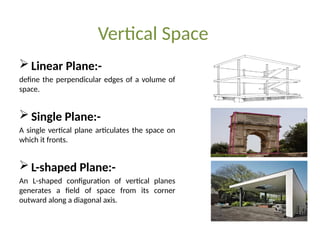
 Linear Plane:-
define the perpendicular edges of a volume of
space.
 Single Plane:-
A single vertical plane articulates the space on
which it fronts.
 L-shaped Plane:-
An L-shaped configuration of vertical planes
generates a field of space from its corner
outward along a diagonal axis.
Vertical Space
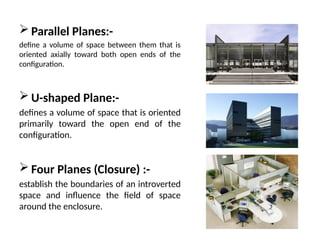
 Parallel Planes:-
define a volume of space between them that is
oriented axially toward both open ends of the
configuration.
 U-shaped Plane:-
defines a volume of space that is oriented
primarily toward the open end of the
configuration.
 Four Planes (Closure) :-
establish the boundaries of an introverted
space and influence the field of space
around the enclosure.
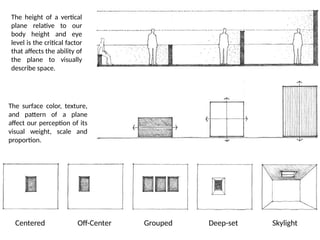
The height of a vertical
plane relative to our
body height and eye
level is the critical factor
that affects the ability of
the plane to visually
describe space.
The surface color, texture,
and pattern of a plane
affect our perception of its
visual weight, scale and
proportion.
Centered Off-Center Grouped Deep-set Skylight
Introduction to building technology 3.pptx

Introduction to building technology 3.pptx

  • 1.
    Space • It’s oneof elements of design of architecture. • creating space out of space, and designing spaces by dividing this space using various tools o Positive Elements:- Perceived as figure o Negative Elements:- Provide background of the figure Elements
  • 2.
  • 3.
    Type of space:- Base Plane :- Defined simple field of space , this field can be visually reinforced. Elevated Base Plane:- elevated above the ground plane establishes vertical surfaces along its edges that reinforce the visual separation between its field and the surrounding ground. Horizontal Space
  • 4.
    Depressed Base Plane:- depressedinto the ground plane utilizes the vertical surfaces of the lowered area to define a volume of space. OverHead Base Plane:- located overhead defines a volume of space between itself and the ground plane.
  • 7.
     Linear Plane:- definethe perpendicular edges of a volume of space.  Single Plane:- A single vertical plane articulates the space on which it fronts.  L-shaped Plane:- An L-shaped configuration of vertical planes generates a field of space from its corner outward along a diagonal axis. Vertical Space
  • 8.
     Parallel Planes:- definea volume of space between them that is oriented axially toward both open ends of the configuration.  U-shaped Plane:- defines a volume of space that is oriented primarily toward the open end of the configuration.  Four Planes (Closure) :- establish the boundaries of an introverted space and influence the field of space around the enclosure.
  • 9.
    The height ofa vertical plane relative to our body height and eye level is the critical factor that affects the ability of the plane to visually describe space. The surface color, texture, and pattern of a plane affect our perception of its visual weight, scale and proportion. Centered Off-Center Grouped Deep-set Skylight