Elements, Compounds and Mixtures
LEARNING
OUTCOMES
STUDENTS WILL BE ABLE TO:
•Define what elements, compounds and
mixtures are.
•Use their understanding to identify some
common elements, compounds and
mixtures.
•Compare compounds and mixtures based
02/01/2025
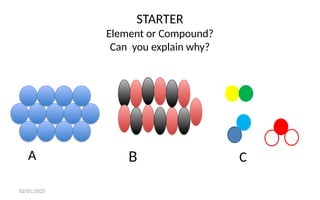
STARTER
Element or Compound?
Can you explain why?
A B C
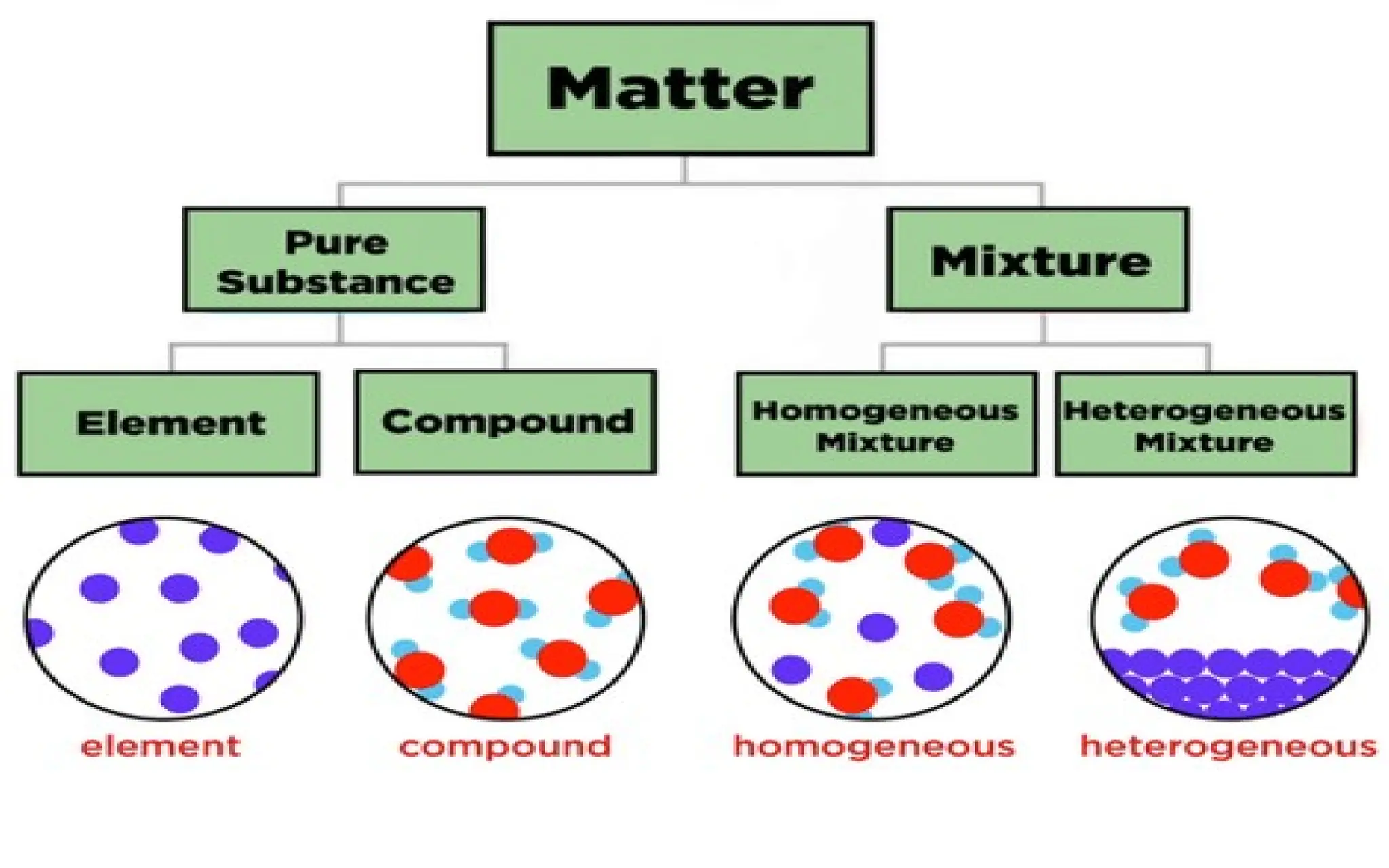
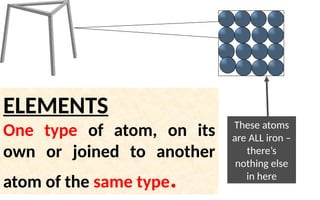
ELEMENTS
One type of atom, on its
own or joined to another
atom of the same type.
These atoms
are ALL iron –
there’s
nothing else
in here
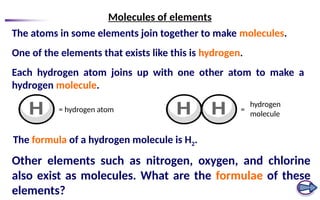
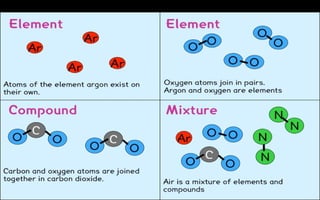
The atoms in some elements join together to make molecules.
Molecules of elements
One of the elements that exists like this is hydrogen.
Each hydrogen atom joins up with one other atom to make a
hydrogen molecule.
The formula of a hydrogen molecule is H2.
Other elements such as nitrogen, oxygen, and chlorine
also exist as molecules. What are the formulae of these
elements?
= hydrogen atom
hydrogen
molecule
=
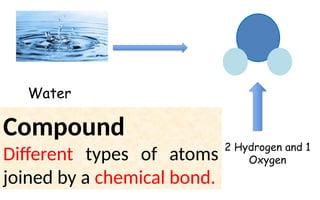
Compound
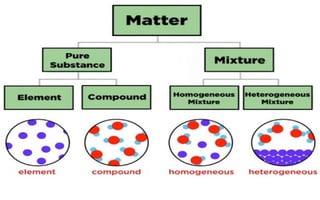
Different types of atoms
joined by a chemical bond.
2 Hydrogen and 1
Oxygen
Water
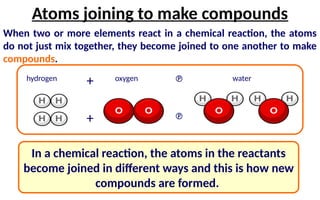
When two or more elements react in a chemical reaction, the atoms
do not just mix together, they become joined to one another to make
compounds.
Atoms joining to make compounds
In a chemical reaction, the atoms in the reactants
become joined in different ways and this is how new
compounds are formed.
hydrogen oxygen water
+ 
+ 
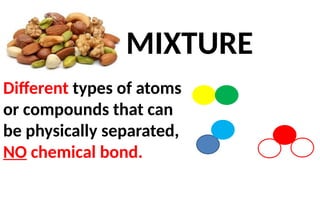
MIXTURE
Different types of atoms
or compounds that can
be physically separated,
NO chemical bond.
02/01/2025
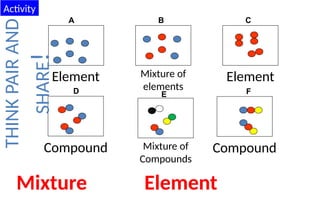
Mixture Element
A B C
D F
Element Element
Mixture of
elements
Compound Compound
E
Mixture of
Compounds
THINK
PAIR
AND
SHARE
!
Activity
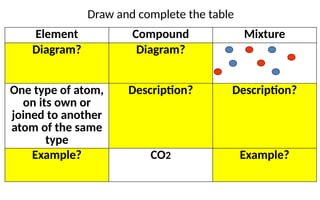
Element Compound Mixture
Diagram? Diagram?
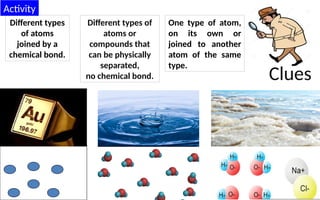
One type of atom,
on its own or
joined to another
atom of the same
type
Description? Description?
Example? CO2 Example?
Draw and complete the table
Different types
of atoms
joined by a
chemical bond.
Clues
Different types of
atoms or
compounds that
can be physically
separated,
no chemical bond.
Activity
One type of atom,
on its own or
joined to another
atom of the same
type.
02/01/2025
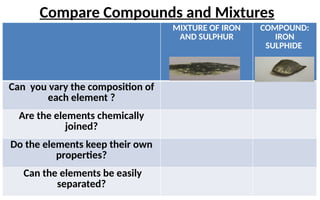
Compare Compounds and Mixtures
MIXTURE OF IRON
AND SULPHUR
COMPOUND:
IRON
SULPHIDE
Can you vary the composition of
each element ?
Are the elements chemically
joined?
Do the elements keep their own
properties?
Can the elements be easily
separated?
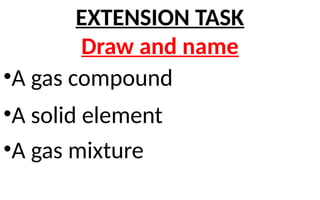
•A gas compound
•A solid element
•A gas mixture
EXTENSION TASK
Draw and name
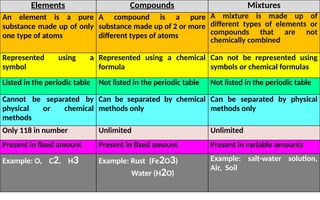
Elements Compounds Mixtures
An element is a pure
substance made up of only
one type of atoms
A compound is a pure
substance made up of 2 or more
different types of atoms
A mixture is made up of
different types of elements or
compounds that are not
chemically combined
Represented using a
symbol
Represented using a chemical
formula
Can not be represented using
symbols or chemical formulas
Listed in the periodic table Not listed in the periodic table Not listed in the periodic table
Cannot be separated by
physical or chemical
methods
Can be separated by chemical
methods only
Can be separated by physical
methods only
Only 118 in number Unlimited Unlimited
Present in fixed amount Present in fixed amount Present in variable amounts
Example: O, C2, H3 Example: Rust (Fe2O3)
Water (H2O)
Example: salt-water solution,
Air, Soil

Elements, Compounds and Mixtures, along with examples.pptx

  • 2.
    Elements, Compounds andMixtures LEARNING OUTCOMES STUDENTS WILL BE ABLE TO: •Define what elements, compounds and mixtures are. •Use their understanding to identify some common elements, compounds and mixtures. •Compare compounds and mixtures based
  • 3.
  • 4.
    ELEMENTS One type ofatom, on its own or joined to another atom of the same type. These atoms are ALL iron – there’s nothing else in here
  • 5.
    The atoms insome elements join together to make molecules. Molecules of elements One of the elements that exists like this is hydrogen. Each hydrogen atom joins up with one other atom to make a hydrogen molecule. The formula of a hydrogen molecule is H2. Other elements such as nitrogen, oxygen, and chlorine also exist as molecules. What are the formulae of these elements? = hydrogen atom hydrogen molecule =
  • 6.
    Compound Different types ofatoms joined by a chemical bond. 2 Hydrogen and 1 Oxygen Water
  • 7.
    When two ormore elements react in a chemical reaction, the atoms do not just mix together, they become joined to one another to make compounds. Atoms joining to make compounds In a chemical reaction, the atoms in the reactants become joined in different ways and this is how new compounds are formed. hydrogen oxygen water +  + 
  • 8.
    MIXTURE Different types ofatoms or compounds that can be physically separated, NO chemical bond.
  • 9.
  • 10.
    Mixture Element A BC D F Element Element Mixture of elements Compound Compound E Mixture of Compounds THINK PAIR AND SHARE ! Activity
  • 11.
    Element Compound Mixture Diagram?Diagram? One type of atom, on its own or joined to another atom of the same type Description? Description? Example? CO2 Example? Draw and complete the table
  • 12.
    Different types of atoms joinedby a chemical bond. Clues Different types of atoms or compounds that can be physically separated, no chemical bond. Activity One type of atom, on its own or joined to another atom of the same type.
  • 13.
    02/01/2025 Compare Compounds andMixtures MIXTURE OF IRON AND SULPHUR COMPOUND: IRON SULPHIDE Can you vary the composition of each element ? Are the elements chemically joined? Do the elements keep their own properties? Can the elements be easily separated?
  • 14.
    •A gas compound •Asolid element •A gas mixture EXTENSION TASK Draw and name
  • 15.
    Elements Compounds Mixtures Anelement is a pure substance made up of only one type of atoms A compound is a pure substance made up of 2 or more different types of atoms A mixture is made up of different types of elements or compounds that are not chemically combined Represented using a symbol Represented using a chemical formula Can not be represented using symbols or chemical formulas Listed in the periodic table Not listed in the periodic table Not listed in the periodic table Cannot be separated by physical or chemical methods Can be separated by chemical methods only Can be separated by physical methods only Only 118 in number Unlimited Unlimited Present in fixed amount Present in fixed amount Present in variable amounts Example: O, C2, H3 Example: Rust (Fe2O3) Water (H2O) Example: salt-water solution, Air, Soil