Electronic Power Plants


Helena Gijón Jiménez y Marina Martín Mora, 3ºA
Index
●
    Conventional Electric Power Plants
●
    -Nuclear Power Plants
●
    -Fossil Fuel Thermal Power Plants
●
    -Hydroelectric Power Plants
●
    Non-Conventional Electric Power Plants
●
    -Wind Power Plants and Wind Farms
●
    -Solar Power Plants
●
    -Geothermal Power Plants
●
    -Biomass Thermal Power Plant
●
    -Ocean Power Plants
What is the electricity?
●
    Electricity is the most widely used form of
    energy in idustrialised societies for two
    reasons: 1.It can be easily transformed into
                   others forms of energy.
●
            2. It can be tranported long distances
                 with very little energy being lost.
How an Electric Power Plant works?

●
    They used an external source of energy to
    produce electricty. To do this, they rely on a
    turbine-alternator system:
●
    -The turbine converts mechanical energy into
    the rotating movements of a shaft.
●
    -An alternator has a fixed part, called a stator
    and a moving part called a rotor, connected to
    the turbine shaft.
●
    This produce the alternating electrical current.
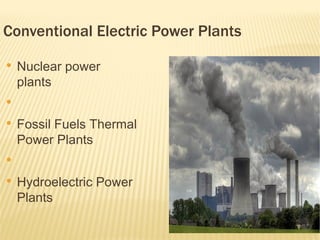
Conventional Electric Power Plants
●
    Nuclear power
    plants
●


●
    Fossil Fuels Thermal
    Power Plants
●


●
    Hydroelectric Power
    Plants
●
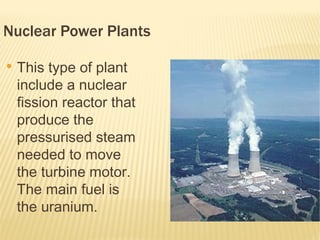
Nuclear Power Plants

●
    This type of plant
    include a nuclear
    fission reactor that
    produce the
    pressurised steam
    needed to move
    the turbine motor.
    The main fuel is
    the uranium.
Working of Nuclear Power Plants


Basically, all power stations adopt the same
 method to produce electricity. A turbine is
 caused to rotate. A generator is attached to
 the shaft of the turbine. As the turbine turns,
 electricity is produced in the generator. This
 electricity is sent out through transmission
 lines to a distribution station of the Electricity
 Board.
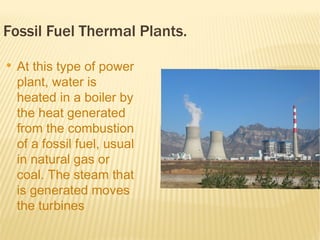
Fossil Fuel Thermal Plants.
●
    At this type of power
    plant, water is
    heated in a boiler by
    the heat generated
    from the combustion
    of a fossil fuel, usual
    in natural gas or
    coal. The steam that
    is generated moves
    the turbines
    connected to the
Working of Fossils Fuel Power Plant
The first conversion of energy takes place in the boiler. Coal is burnt in the boiler
  furnace to produce heat. Carbon in the coal and Oxygen in the air combine to
  produce Carbon Dioxide and heat.

The second stage is the thermodynamic process.
 1.The heat from combustion of the coal boils water in the boiler
  to produce steam. In modern power plant, boilers produce
  steam at a high pressure and temperature.
 2.The steam is then piped to a turbine.
 3.The high pressure steam impinges and expands across a
  number of sets of blades in   the turbine.
 4.The impulse and the thrust created rotates the turbine.
 5.The steam is then condensed and pumped back into the
  boiler to repeat the cycle.
In the third stage, rotation of the turbine rotates the generator
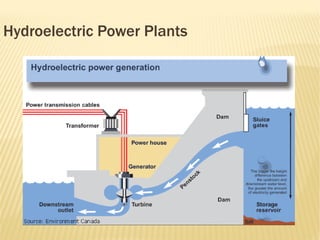
Hydroelectric Power Plants
●
    This type of power plant     ●
                                     Gravity-driven: Water
    uses the potencial               used follows the
    energy provide by the            curse of the river
    height of the store
    water in a dam,
                                     and will not be
    converting it into kinetic
                                 ●
                                     reused.
                                     Pump-driven: Water
    energy. This energy              descends into a
    moves the blades of the          reservoir located at
    turbine.                         a lower height, then
●
    There're two                     pumped to a higher
    types:                           reservoir to reused.
Hydroelectric Power Plants
Non-conventional electric power plants

●
    The main disadvantage of this power plants is
    that they generates much less energy, since
    they use diffuse energy sources.
●
    Their advantages are that the contaminate
    much less than conventional power plants,
    they use renewable sources and they reduce
    the energy dependent of petroleum and
    natural gas.
●
    There're five types: Wind power plants and
    wind farms; Solar power plants; Geothermal
    power plants; Biomass Thermal power plant
Wind Power Plants and Wind Farms

●
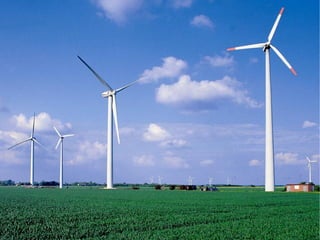
    They use the kinetic energy of the wind to
    move the plates of a rotor at the top of a
    tower; this is referred to as the wind turbine.
●
    Wind Farms are a clean form of generated
    electricity. However, they can only be installed
    in places with appropiated wind conditions.
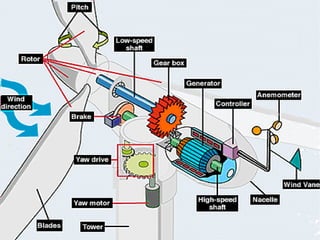
How does wind power plant works?

●
    By turning the axis of the generator quickly
    we produce energy. The axes transmit the
    movement of the rotor to the generator. The
    electricity produced by the generator is
    extracted through cables that run down
    through the tower.
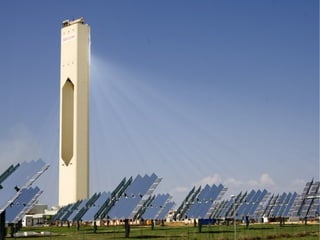
Solar power plant
These systems produce electricity on a large scale. They are unique
  among solar technologies because they can store energy
  efficiently and cost effectively. They can operate whenever the
  customer needs power, even after dark or during cloudy weather.
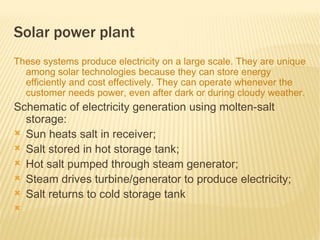
Schematic of electricity generation using molten-salt
  storage:
 Sun heats salt in receiver;
 Salt stored in hot storage tank;
 Hot salt pumped through steam generator;
 Steam drives turbine/generator to produce electricity;
 Salt returns to cold storage tank

How does solar power plant works
   Solar radiation produces electrical energy. There
    are two types: Thermal solar and Photovoltaic.
    Thermal solar uses colectors to capture thee
    sun’s heat and make water hot. The hot water
    then flows through tubes in the collector, and can
    be stored in tanks. Photovoltaic uses solar panels
    to produce electricity directly from sun light. Solar
    energy can be produced and used in homes.
geothermal power plant
   A g e o t h e r m a l p o w e r p l a n t  uses
    its geothermal activity to generate power.
    This type of natural energy production is
    extremely environmentally friendly and used
    in many geothermal hot spots around the
    globe.To harness the energy, deep holes are
    drilled into the earth (much like when drilling
    for oil) until a significant geothermal hot spot
    is found.

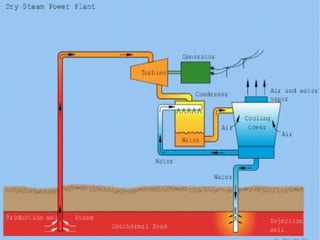
How geothermal power plant works?

   When the heat source has been discovered,
    a pipe is attached deep down inside the hole
    which allows hot steam from deep within the
    earths crust to rise up to the surface.The
    pressurized steam is then channeled into a
    turbine which begins to turn under the large
    force of the steam. This turbine is linked to
    the generator and so the generator also
    begins to turn, generating electricity. We then
    pump cold water down a new pipe which is
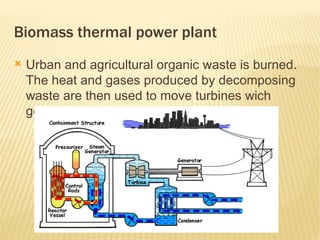
Biomass thermal power plant
   Urban and agricultural organic waste is burned.
    The heat and gases produced by decomposing
    waste are then used to move turbines wich
    generate electricity
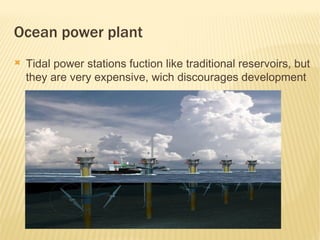
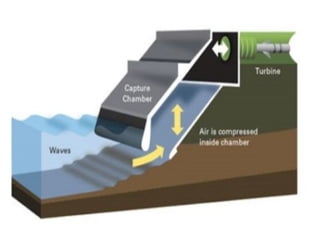
Ocean power plant
   Tidal power stations fuction like traditional reservoirs, but
    they are very expensive, wich discourages development
Do you think wind turbine can produce
fresh water?
Wind turbines have long produced renewable energy but a
  French engineering firm has discovered another eco-
  purpose for the towering structures. This technology
  could enable rural areas to become self-sufficient in
  terms of water supply. As the design and capabilities
  develop, the next step will be to create turbines that can
  provide water for small cities or areas with denser
  populations. The technology works by first generating
  electricity in the traditional manner of a wind turbine. This
  power enables the entire water generating system to
  function.

Electronic Power Plants.

  • 1.
    Electronic Power Plants HelenaGijón Jiménez y Marina Martín Mora, 3ºA
  • 2.
    Index ● Conventional Electric Power Plants ● -Nuclear Power Plants ● -Fossil Fuel Thermal Power Plants ● -Hydroelectric Power Plants ● Non-Conventional Electric Power Plants ● -Wind Power Plants and Wind Farms ● -Solar Power Plants ● -Geothermal Power Plants ● -Biomass Thermal Power Plant ● -Ocean Power Plants
  • 3.
    What is theelectricity? ● Electricity is the most widely used form of energy in idustrialised societies for two reasons: 1.It can be easily transformed into others forms of energy. ● 2. It can be tranported long distances with very little energy being lost.
  • 4.
    How an ElectricPower Plant works? ● They used an external source of energy to produce electricty. To do this, they rely on a turbine-alternator system: ● -The turbine converts mechanical energy into the rotating movements of a shaft. ● -An alternator has a fixed part, called a stator and a moving part called a rotor, connected to the turbine shaft. ● This produce the alternating electrical current.
  • 5.
    Conventional Electric PowerPlants ● Nuclear power plants ● ● Fossil Fuels Thermal Power Plants ● ● Hydroelectric Power Plants ●
  • 6.
    Nuclear Power Plants ● This type of plant include a nuclear fission reactor that produce the pressurised steam needed to move the turbine motor. The main fuel is the uranium.
  • 7.
    Working of NuclearPower Plants Basically, all power stations adopt the same method to produce electricity. A turbine is caused to rotate. A generator is attached to the shaft of the turbine. As the turbine turns, electricity is produced in the generator. This electricity is sent out through transmission lines to a distribution station of the Electricity Board.
  • 8.
    Fossil Fuel ThermalPlants. ● At this type of power plant, water is heated in a boiler by the heat generated from the combustion of a fossil fuel, usual in natural gas or coal. The steam that is generated moves the turbines connected to the
  • 9.
    Working of FossilsFuel Power Plant The first conversion of energy takes place in the boiler. Coal is burnt in the boiler furnace to produce heat. Carbon in the coal and Oxygen in the air combine to produce Carbon Dioxide and heat. The second stage is the thermodynamic process. 1.The heat from combustion of the coal boils water in the boiler to produce steam. In modern power plant, boilers produce steam at a high pressure and temperature. 2.The steam is then piped to a turbine. 3.The high pressure steam impinges and expands across a number of sets of blades in the turbine. 4.The impulse and the thrust created rotates the turbine. 5.The steam is then condensed and pumped back into the boiler to repeat the cycle. In the third stage, rotation of the turbine rotates the generator
  • 10.
    Hydroelectric Power Plants ● This type of power plant ● Gravity-driven: Water uses the potencial used follows the energy provide by the curse of the river height of the store water in a dam, and will not be converting it into kinetic ● reused. Pump-driven: Water energy. This energy descends into a moves the blades of the reservoir located at turbine. a lower height, then ● There're two pumped to a higher types: reservoir to reused.
  • 11.
  • 12.
    Non-conventional electric powerplants ● The main disadvantage of this power plants is that they generates much less energy, since they use diffuse energy sources. ● Their advantages are that the contaminate much less than conventional power plants, they use renewable sources and they reduce the energy dependent of petroleum and natural gas. ● There're five types: Wind power plants and wind farms; Solar power plants; Geothermal power plants; Biomass Thermal power plant
  • 13.
    Wind Power Plantsand Wind Farms ● They use the kinetic energy of the wind to move the plates of a rotor at the top of a tower; this is referred to as the wind turbine. ● Wind Farms are a clean form of generated electricity. However, they can only be installed in places with appropiated wind conditions.
  • 15.
    How does windpower plant works? ● By turning the axis of the generator quickly we produce energy. The axes transmit the movement of the rotor to the generator. The electricity produced by the generator is extracted through cables that run down through the tower.
  • 17.
    Solar power plant Thesesystems produce electricity on a large scale. They are unique among solar technologies because they can store energy efficiently and cost effectively. They can operate whenever the customer needs power, even after dark or during cloudy weather. Schematic of electricity generation using molten-salt storage:  Sun heats salt in receiver;  Salt stored in hot storage tank;  Hot salt pumped through steam generator;  Steam drives turbine/generator to produce electricity;  Salt returns to cold storage tank 
  • 18.
    How does solarpower plant works  Solar radiation produces electrical energy. There are two types: Thermal solar and Photovoltaic. Thermal solar uses colectors to capture thee sun’s heat and make water hot. The hot water then flows through tubes in the collector, and can be stored in tanks. Photovoltaic uses solar panels to produce electricity directly from sun light. Solar energy can be produced and used in homes.
  • 20.
    geothermal power plant  A g e o t h e r m a l p o w e r p l a n t  uses its geothermal activity to generate power. This type of natural energy production is extremely environmentally friendly and used in many geothermal hot spots around the globe.To harness the energy, deep holes are drilled into the earth (much like when drilling for oil) until a significant geothermal hot spot is found. 
  • 21.
    How geothermal powerplant works?  When the heat source has been discovered, a pipe is attached deep down inside the hole which allows hot steam from deep within the earths crust to rise up to the surface.The pressurized steam is then channeled into a turbine which begins to turn under the large force of the steam. This turbine is linked to the generator and so the generator also begins to turn, generating electricity. We then pump cold water down a new pipe which is
  • 23.
    Biomass thermal powerplant  Urban and agricultural organic waste is burned. The heat and gases produced by decomposing waste are then used to move turbines wich generate electricity
  • 24.
    Ocean power plant  Tidal power stations fuction like traditional reservoirs, but they are very expensive, wich discourages development
  • 26.
    Do you thinkwind turbine can produce fresh water? Wind turbines have long produced renewable energy but a French engineering firm has discovered another eco- purpose for the towering structures. This technology could enable rural areas to become self-sufficient in terms of water supply. As the design and capabilities develop, the next step will be to create turbines that can provide water for small cities or areas with denser populations. The technology works by first generating electricity in the traditional manner of a wind turbine. This power enables the entire water generating system to function.