Electromagnetic
Pulse Nuclear
Weapons
An electromagnetic pulse (EMP),
characterized as an energy weapon
potentially threatening to national security,
usually is created by two methods.
EMP methods
1.   High-Altitude Electromagnetic Pulse
     (HEMP)

2.   High-Power Microwave (HPM)
High-Altitude
Electromagnetic Pulse (HEMP)
  HEMP is an electromagnetic energy field
 produced in the atmosphere by the power
 and radiation of a nuclear explosion, and
 that is damaging to electronic equipment
 over a very wide area, depending on the
 design of the nuclear device and altitude
 of the burst.
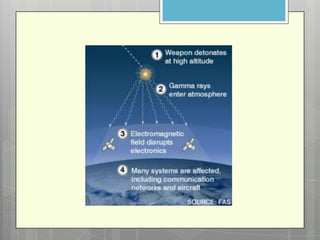
HEMP is produced when a nuclear weapon
is detonated high above the Earth’s surface,
creating gamma-radiation that interacts
with the atmosphere to create an intense
electromagnetic energy field that is harmless
to people as it radiates outward, but which
can overload computer circuitry with
effects similar to, but causing damage much
more swiftly than a lightning strike.
The HEMP effect can span thousands of
miles, depending on the altitude and the
design and power of the nuclear burst.
and can be picked up by metallic
conductors such as wires or power cables,
acting as antennas to conduct the energy
shockwave into the electronic systems of
cars, airplanes, and communications
equipment.
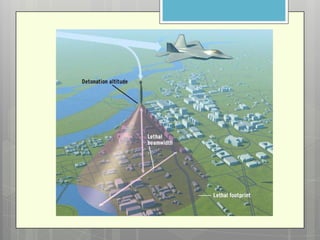
High-Power Microwave (HPM)
(HPM) is an electromagnetic pulse
produced with special equipment that
transforms power from batteries, or from a
chemical explosion, into intense microwaves
that are very damaging to electronics within
a much smaller area.
while HEMP weapons are large in scale and
require a nuclear capability along with
technology to launch high altitude missiles,
HPM weapons are smaller in scale, involve a
much lower level of technology, and may
be within the capability of many non-state
organizations. HPM can cause damage to
computers similar to HEMP, although the
effects are limited to a much smaller area.
HPM is a non-nuclear radio frequency
energy field. It can be produced as a
weapon when a powerful chemical
detonation is instantly transformed by a
special coil device, called a flux compression
generator, into a strong electromagnetic
field of microwave energy. Other methods,
such as powerful batteries, can also be used
to create a reusable HPM weapon. HPM
energy can be focused using a specially-
shaped antenna, or emitter, to produce
effects similar to HEMP, but only within a very
limited range.
Unlike HEMP, however, HPM radiation is
comprised of shorter wave forms at higher-
frequencies, which make it highly effective
against electronic equipment and more
difficult to harden against.
A mechanically simple, suitcase- sized
device, using a chemical explosive and
special focusing antenna, might
theoretically produce a one-time,
instantaneous HPM shockwave that could
disrupt many computers within a 1-mile
range.
 technical accessibility
 lower cost
 the apparent vulnerability
 could cause physical harm to persons
  near the source emitter, or possibly in the
  path of a narrowly focused energy beam
  at higher power levels (megawatts).

Electromagnetic pulse weapons

  • 1.
  • 2.
    An electromagnetic pulse(EMP), characterized as an energy weapon potentially threatening to national security, usually is created by two methods.
  • 3.
    EMP methods 1. High-Altitude Electromagnetic Pulse (HEMP) 2. High-Power Microwave (HPM)
  • 4.
    High-Altitude Electromagnetic Pulse (HEMP) HEMP is an electromagnetic energy field produced in the atmosphere by the power and radiation of a nuclear explosion, and that is damaging to electronic equipment over a very wide area, depending on the design of the nuclear device and altitude of the burst.
  • 5.
    HEMP is producedwhen a nuclear weapon is detonated high above the Earth’s surface, creating gamma-radiation that interacts with the atmosphere to create an intense electromagnetic energy field that is harmless to people as it radiates outward, but which can overload computer circuitry with effects similar to, but causing damage much more swiftly than a lightning strike.
  • 7.
    The HEMP effectcan span thousands of miles, depending on the altitude and the design and power of the nuclear burst. and can be picked up by metallic conductors such as wires or power cables, acting as antennas to conduct the energy shockwave into the electronic systems of cars, airplanes, and communications equipment.
  • 9.
    High-Power Microwave (HPM) (HPM)is an electromagnetic pulse produced with special equipment that transforms power from batteries, or from a chemical explosion, into intense microwaves that are very damaging to electronics within a much smaller area.
  • 10.
    while HEMP weaponsare large in scale and require a nuclear capability along with technology to launch high altitude missiles, HPM weapons are smaller in scale, involve a much lower level of technology, and may be within the capability of many non-state organizations. HPM can cause damage to computers similar to HEMP, although the effects are limited to a much smaller area.
  • 11.
    HPM is anon-nuclear radio frequency energy field. It can be produced as a weapon when a powerful chemical detonation is instantly transformed by a special coil device, called a flux compression generator, into a strong electromagnetic field of microwave energy. Other methods, such as powerful batteries, can also be used to create a reusable HPM weapon. HPM energy can be focused using a specially- shaped antenna, or emitter, to produce effects similar to HEMP, but only within a very limited range.
  • 12.
    Unlike HEMP, however,HPM radiation is comprised of shorter wave forms at higher- frequencies, which make it highly effective against electronic equipment and more difficult to harden against.
  • 13.
    A mechanically simple,suitcase- sized device, using a chemical explosive and special focusing antenna, might theoretically produce a one-time, instantaneous HPM shockwave that could disrupt many computers within a 1-mile range.
  • 14.
     technical accessibility lower cost  the apparent vulnerability  could cause physical harm to persons near the source emitter, or possibly in the path of a narrowly focused energy beam at higher power levels (megawatts).