Electric Motor
SlideMake.com
1
Introduction
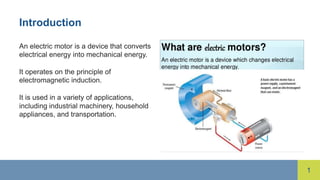
An electric motor is a device that converts
electrical energy into mechanical energy.
It operates on the principle of
electromagnetic induction.
It is used in a variety of applications,
including industrial machinery, household
appliances, and transportation.
2
Parts of an Electric Motor
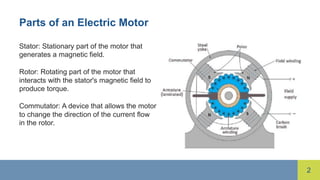
Stator: Stationary part of the motor that
generates a magnetic field.
Rotor: Rotating part of the motor that
interacts with the stator's magnetic field to
produce torque.
Commutator: A device that allows the motor
to change the direction of the current flow
in the rotor.
3
Types of Electric Motors
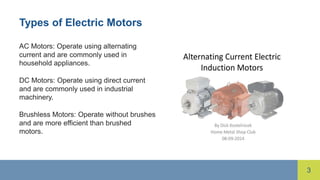
AC Motors: Operate using alternating
current and are commonly used in
household appliances.
DC Motors: Operate using direct current
and are commonly used in industrial
machinery.
Brushless Motors: Operate without brushes
and are more efficient than brushed
motors.
4
Advantages of Electric Motors
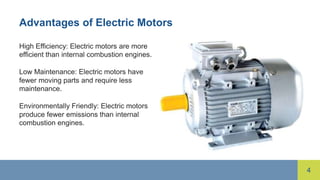
High Efficiency: Electric motors are more
efficient than internal combustion engines.
Low Maintenance: Electric motors have
fewer moving parts and require less
maintenance.
Environmentally Friendly: Electric motors
produce fewer emissions than internal
combustion engines.
5
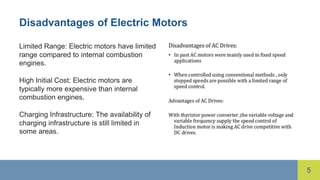
Disadvantages of Electric Motors
Limited Range: Electric motors have limited
range compared to internal combustion
engines.
High Initial Cost: Electric motors are
typically more expensive than internal
combustion engines.
Charging Infrastructure: The availability of
charging infrastructure is still limited in
some areas.
6
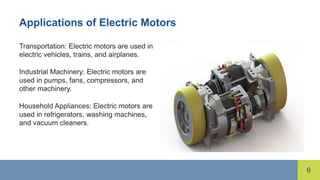
Applications of Electric Motors
Transportation: Electric motors are used in
electric vehicles, trains, and airplanes.
Industrial Machinery: Electric motors are
used in pumps, fans, compressors, and
other machinery.
Household Appliances: Electric motors are
used in refrigerators, washing machines,
and vacuum cleaners.
7
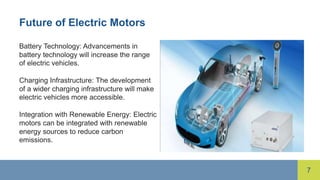
Future of Electric Motors
Battery Technology: Advancements in
battery technology will increase the range
of electric vehicles.
Charging Infrastructure: The development
of a wider charging infrastructure will make
electric vehicles more accessible.
Integration with Renewable Energy: Electric
motors can be integrated with renewable
energy sources to reduce carbon
emissions.
8
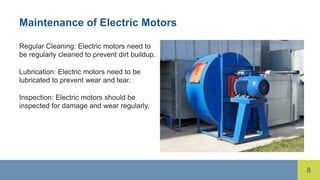
Maintenance of Electric Motors
Regular Cleaning: Electric motors need to
be regularly cleaned to prevent dirt buildup.
Lubrication: Electric motors need to be
lubricated to prevent wear and tear.
Inspection: Electric motors should be
inspected for damage and wear regularly.
9
Safety Precautions for Electric Motors
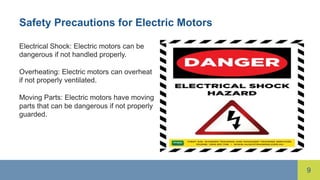
Electrical Shock: Electric motors can be
dangerous if not handled properly.
Overheating: Electric motors can overheat
if not properly ventilated.
Moving Parts: Electric motors have moving
parts that can be dangerous if not properly
guarded.
10
Conclusion
Electric motors are an important part of
modern technology.
They offer many advantages over internal
combustion engines.
As battery technology and charging
infrastructure continue to develop, electric
motors will become even more important in
the future.
11
References
"Electric Motor." Encyclopædia Britannica.
Encyclopædia Britannica, Inc., n.d. Web.
12 July 2021.
"Electric Motors." Energy.gov. U.S.
Department of Energy, n.d. Web. 12 July
2021.
"How Electric Motors Work."
HowStuffWorks. HowStuffWorks, a division
of InfoSpace Holdings LLC, n.d. Web. 12
July 2021.

Electric Motor.pptx

  • 1.
  • 2.
    1 Introduction An electric motoris a device that converts electrical energy into mechanical energy. It operates on the principle of electromagnetic induction. It is used in a variety of applications, including industrial machinery, household appliances, and transportation.
  • 3.
    2 Parts of anElectric Motor Stator: Stationary part of the motor that generates a magnetic field. Rotor: Rotating part of the motor that interacts with the stator's magnetic field to produce torque. Commutator: A device that allows the motor to change the direction of the current flow in the rotor.
  • 4.
    3 Types of ElectricMotors AC Motors: Operate using alternating current and are commonly used in household appliances. DC Motors: Operate using direct current and are commonly used in industrial machinery. Brushless Motors: Operate without brushes and are more efficient than brushed motors.
  • 5.
    4 Advantages of ElectricMotors High Efficiency: Electric motors are more efficient than internal combustion engines. Low Maintenance: Electric motors have fewer moving parts and require less maintenance. Environmentally Friendly: Electric motors produce fewer emissions than internal combustion engines.
  • 6.
    5 Disadvantages of ElectricMotors Limited Range: Electric motors have limited range compared to internal combustion engines. High Initial Cost: Electric motors are typically more expensive than internal combustion engines. Charging Infrastructure: The availability of charging infrastructure is still limited in some areas.
  • 7.
    6 Applications of ElectricMotors Transportation: Electric motors are used in electric vehicles, trains, and airplanes. Industrial Machinery: Electric motors are used in pumps, fans, compressors, and other machinery. Household Appliances: Electric motors are used in refrigerators, washing machines, and vacuum cleaners.
  • 8.
    7 Future of ElectricMotors Battery Technology: Advancements in battery technology will increase the range of electric vehicles. Charging Infrastructure: The development of a wider charging infrastructure will make electric vehicles more accessible. Integration with Renewable Energy: Electric motors can be integrated with renewable energy sources to reduce carbon emissions.
  • 9.
    8 Maintenance of ElectricMotors Regular Cleaning: Electric motors need to be regularly cleaned to prevent dirt buildup. Lubrication: Electric motors need to be lubricated to prevent wear and tear. Inspection: Electric motors should be inspected for damage and wear regularly.
  • 10.
    9 Safety Precautions forElectric Motors Electrical Shock: Electric motors can be dangerous if not handled properly. Overheating: Electric motors can overheat if not properly ventilated. Moving Parts: Electric motors have moving parts that can be dangerous if not properly guarded.
  • 11.
    10 Conclusion Electric motors arean important part of modern technology. They offer many advantages over internal combustion engines. As battery technology and charging infrastructure continue to develop, electric motors will become even more important in the future.
  • 12.
    11 References "Electric Motor." EncyclopædiaBritannica. Encyclopædia Britannica, Inc., n.d. Web. 12 July 2021. "Electric Motors." Energy.gov. U.S. Department of Energy, n.d. Web. 12 July 2021. "How Electric Motors Work." HowStuffWorks. HowStuffWorks, a division of InfoSpace Holdings LLC, n.d. Web. 12 July 2021.