Lara Danise & Giulia Greco 4°D
   1830s       growing discontent

   Old electoral system
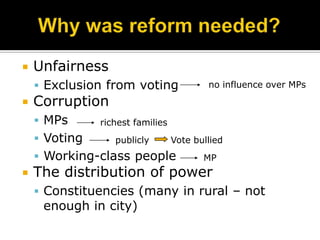
   Unfairness
     Exclusion from voting               no influence over MPs

   Corruption
     MPs      richest families
     Voting      publicly        Vote bullied
     Working-class people               MP
   The distribution of power
     Constituencies (many in rural – not
     enough in city)
   Revolution
     1832       political groups
     Working-class people          Bad condition
     MPs scared for revolution
      ▪ Vote to people
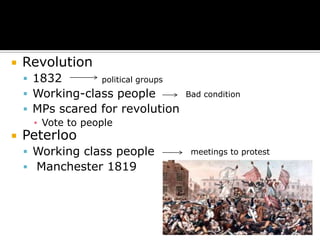
   Peterloo
     Working class people           meetings to protest
     Manchester 1819
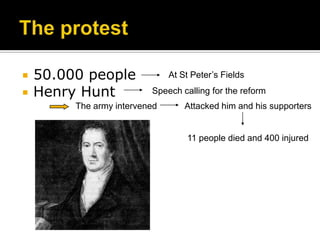
   50.000 people              At St Peter’s Fields

   Henry Hunt            Speech calling for the reform
         The army intervened       Attacked him and his supporters


                                   11 people died and 400 injured
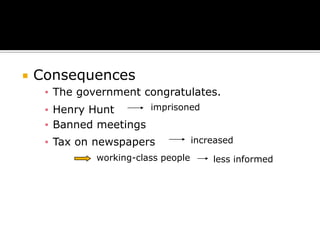
   Consequences
     ▪ The government congratulates.
     ▪ Henry Hunt      imprisoned

     ▪ Banned meetings
     ▪ Tax on newspapers             increased
              working-class people       less informed
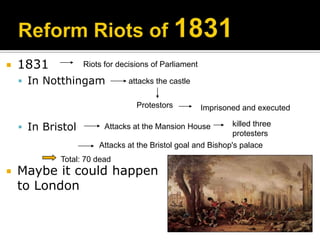
   1831           Riots for decisions of Parliament

     In Notthingam             attacks the castle


                                  Protestors           Imprisoned and executed

     In Bristol         Attacks at the Mansion House         killed three
                                                              protesters
                       Attacks at the Bristol goal and Bishop's palace
            Total: 70 dead
   Maybe it could happen
    to London
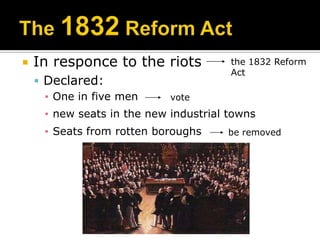
   In responce to the riots           the 1832 Reform
                                       Act
     Declared:
      ▪ One in five men     vote
     ▪ new seats in the new industrial towns
     ▪ Seats from rotten boroughs     be removed
   Middle class      happy

   Working class       no vote
   Elections corrupted
    Country      rich

   Power MPs
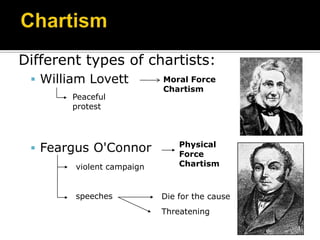
Different types of chartists:
  William Lovett          Moral Force
                           Chartism
       Peaceful
       protest


                               Physical
  Feargus O'Connor            Force
        violent campaign       Chartism


        speeches           Die for the cause
                           Threatening
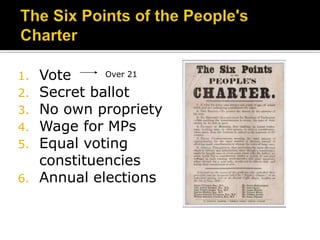
1.   Vote     Over 21

2.   Secret ballot
3.   No own propriety
4.   Wage for MPs
5.   Equal voting
     constituencies
6.   Annual elections
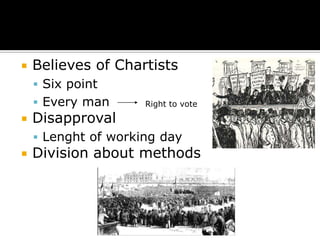
   Believes of Chartists
     Six point
     Every man      Right to vote

   Disapproval
     Lenght of working day
   Division about methods
   Disappointment                  Reform Act (1832)

                                    Factory Act (1833)
   Bitterness             Poor Law Amendment Act
                           (1834)
     poverty = crime
     building of workhouses
     depression and unemployment
                 Chartism only
                 solution
   Stopping trade unions
   Problems with trade
         1838-1848   high unemployment
   Improvment         social and economic situation

     Employment
     Prices    down

     Higher wages


   New moviments
     Anti-Corn Law
      League
     Ten Hour Movement
   Lack of single leadership
   Poor coordination
          Groups all over the       Difficulties in communication
          country                   and meetings
   Different aims
           Six Points but also…

   Different classes and poor funding
           Middle Class supporters withdrew
                       less money         collapse

Electoral reform

  • 1.
    Lara Danise &Giulia Greco 4°D
  • 2.
    1830s growing discontent  Old electoral system
  • 3.
    Unfairness  Exclusion from voting no influence over MPs  Corruption  MPs richest families  Voting publicly Vote bullied  Working-class people MP  The distribution of power  Constituencies (many in rural – not enough in city)
  • 4.
    Revolution  1832 political groups  Working-class people Bad condition  MPs scared for revolution ▪ Vote to people  Peterloo  Working class people meetings to protest  Manchester 1819
  • 5.
    50.000 people At St Peter’s Fields  Henry Hunt Speech calling for the reform The army intervened Attacked him and his supporters 11 people died and 400 injured
  • 6.
    Consequences ▪ The government congratulates. ▪ Henry Hunt imprisoned ▪ Banned meetings ▪ Tax on newspapers increased working-class people less informed
  • 7.
    1831 Riots for decisions of Parliament  In Notthingam attacks the castle Protestors Imprisoned and executed  In Bristol Attacks at the Mansion House killed three protesters Attacks at the Bristol goal and Bishop's palace Total: 70 dead  Maybe it could happen to London
  • 8.
    In responce to the riots the 1832 Reform Act  Declared: ▪ One in five men vote ▪ new seats in the new industrial towns ▪ Seats from rotten boroughs be removed
  • 9.
    Middle class happy  Working class no vote  Elections corrupted Country rich  Power MPs
  • 10.
    Different types ofchartists:  William Lovett Moral Force Chartism Peaceful protest Physical  Feargus O'Connor Force violent campaign Chartism speeches Die for the cause Threatening
  • 11.
    1. Vote Over 21 2. Secret ballot 3. No own propriety 4. Wage for MPs 5. Equal voting constituencies 6. Annual elections
  • 12.
    Believes of Chartists  Six point  Every man Right to vote  Disapproval  Lenght of working day  Division about methods
  • 13.
    Disappointment Reform Act (1832) Factory Act (1833)  Bitterness Poor Law Amendment Act (1834)  poverty = crime  building of workhouses  depression and unemployment Chartism only solution
  • 14.
    Stopping trade unions  Problems with trade 1838-1848 high unemployment
  • 15.
    Improvment social and economic situation  Employment  Prices down  Higher wages  New moviments  Anti-Corn Law League  Ten Hour Movement
  • 16.
    Lack of single leadership  Poor coordination Groups all over the Difficulties in communication country and meetings  Different aims Six Points but also…  Different classes and poor funding Middle Class supporters withdrew less money collapse