Me, My Spouse and the Internet:  Reconfiguring Partners and Relationships  Bill Dutton & Nai Li
eHarmony and the OIILos Angeles British ConsulModel for DatingBusiness OpportunitiesGrowing into UK MarketMatching with OIIeHarmonyLocal, cultural sensitivityBrandingData Protection IssuesOII Online Dating? Reconfiguring AccessInteresting CaseCapacity Building
Supported by eHarmony (2008—2013)
Phase I (Feb 2008—Feb 2009): Project design and pre-testing
Phase II (Feb 2009—Mar 2011): Main fieldwork
Phase III (Mar 2011 – Feb 2013): Worldwide
36 country, Pan-European surveyMe, My Spouse and the Internet Study
Questionnaire development: cognitive interview & focus group interviews -- qualitative studyOnline survey : sample recruited by SSI & Toluna
 Fieldwork: two phases
Phase I: Australia, Spain, UK and USA -- SSI
Phase II: three waves -- TolunaWave 1: Mar - May 2010 (16 countries, 9 Languages) Wave 2: June - July 2010 ( Brazil and Japan )Wave 3: Nov 2010 - Feb 2011 ( Eastern Europe and Asia)Research Design and Method
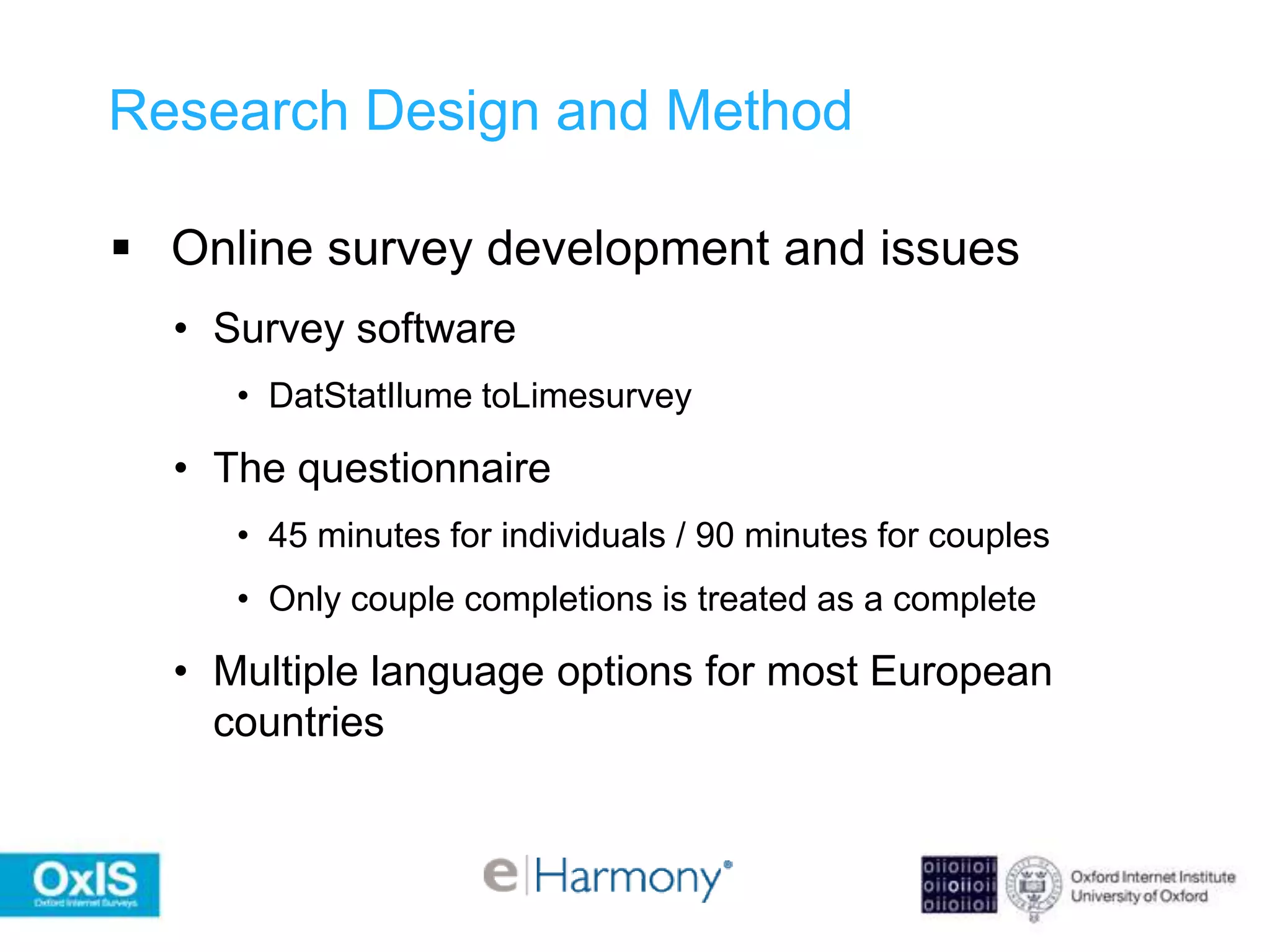
 Online survey development and issues
Survey software
DatStatIlume toLimesurvey
The questionnaire
45 minutes for individuals / 90 minutes for couples
Only couple completions is treated as a complete
Multiple language options for most European countriesResearch Design and Method
Role of the Internet in romantic relationships

e-Harmony Study

  • 1.
    Me, My Spouseand the Internet: Reconfiguring Partners and Relationships Bill Dutton & Nai Li
  • 2.
    eHarmony and theOIILos Angeles British ConsulModel for DatingBusiness OpportunitiesGrowing into UK MarketMatching with OIIeHarmonyLocal, cultural sensitivityBrandingData Protection IssuesOII Online Dating? Reconfiguring AccessInteresting CaseCapacity Building
  • 3.
  • 4.
    Phase I (Feb2008—Feb 2009): Project design and pre-testing
  • 5.
    Phase II (Feb2009—Mar 2011): Main fieldwork
  • 6.
    Phase III (Mar2011 – Feb 2013): Worldwide
  • 7.
    36 country, Pan-EuropeansurveyMe, My Spouse and the Internet Study
  • 8.
    Questionnaire development: cognitiveinterview & focus group interviews -- qualitative studyOnline survey : sample recruited by SSI & Toluna
  • 9.
  • 10.
    Phase I: Australia,Spain, UK and USA -- SSI
  • 11.
    Phase II: threewaves -- TolunaWave 1: Mar - May 2010 (16 countries, 9 Languages) Wave 2: June - July 2010 ( Brazil and Japan )Wave 3: Nov 2010 - Feb 2011 ( Eastern Europe and Asia)Research Design and Method
  • 12.
    Online surveydevelopment and issues
  • 13.
  • 14.
  • 15.
  • 16.
    45 minutes forindividuals / 90 minutes for couples
  • 17.
    Only couple completionsis treated as a complete
  • 18.
    Multiple language optionsfor most European countriesResearch Design and Method
  • 19.
    Role of theInternet in romantic relationships
  • 20.
  • 21.
  • 22.
  • 23.
  • 24.
  • 25.
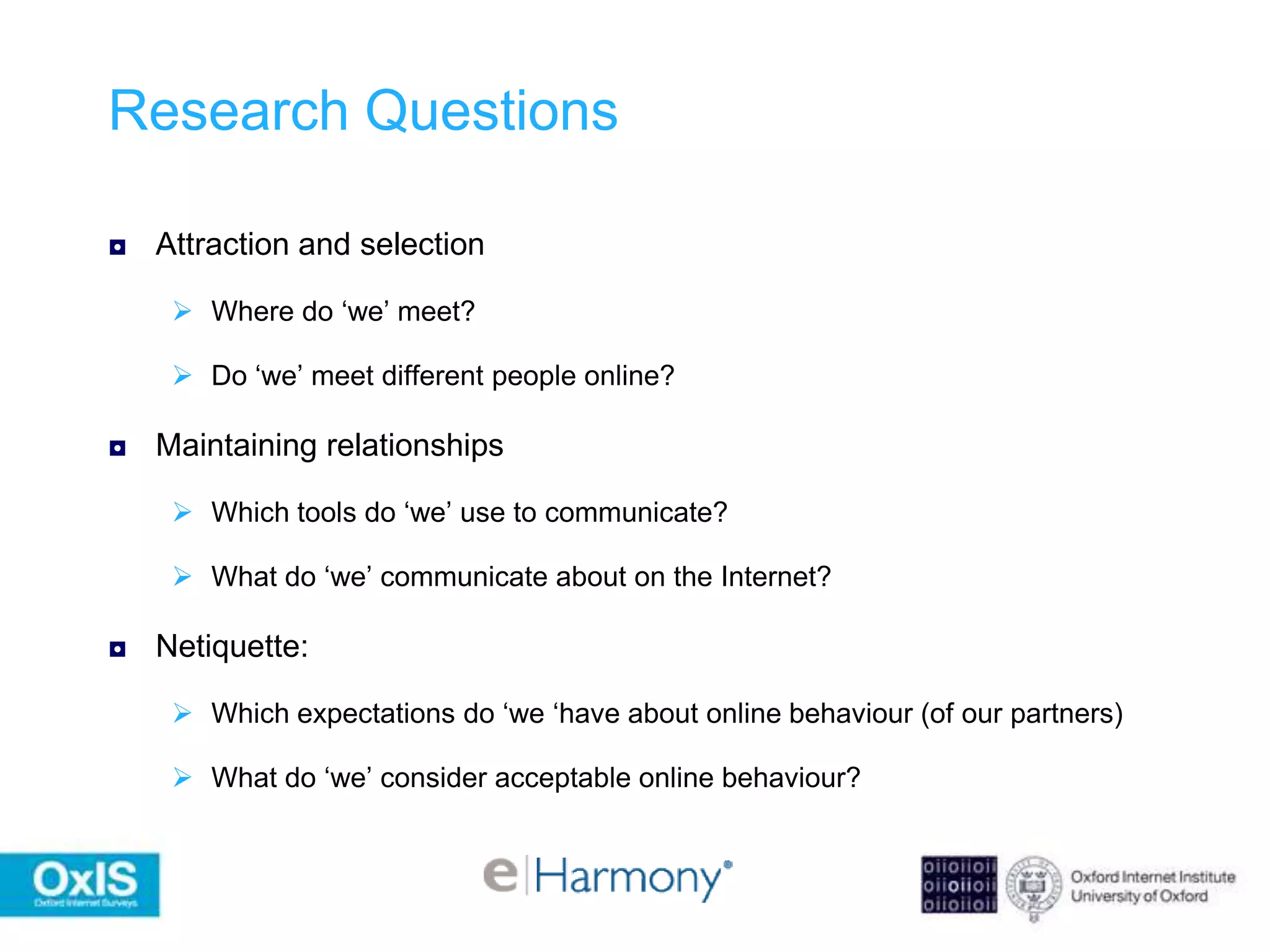
    Do ‘we’ meetdifferent people online?
  • 26.
  • 27.
    Which tools do‘we’ use to communicate?
  • 28.
    What do ‘we’communicate about on the Internet?
  • 29.
  • 30.
    Which expectations do‘we ‘have about online behaviour (of our partners)
  • 31.
    What do ‘we’consider acceptable online behaviour?Research Questions
  • 32.
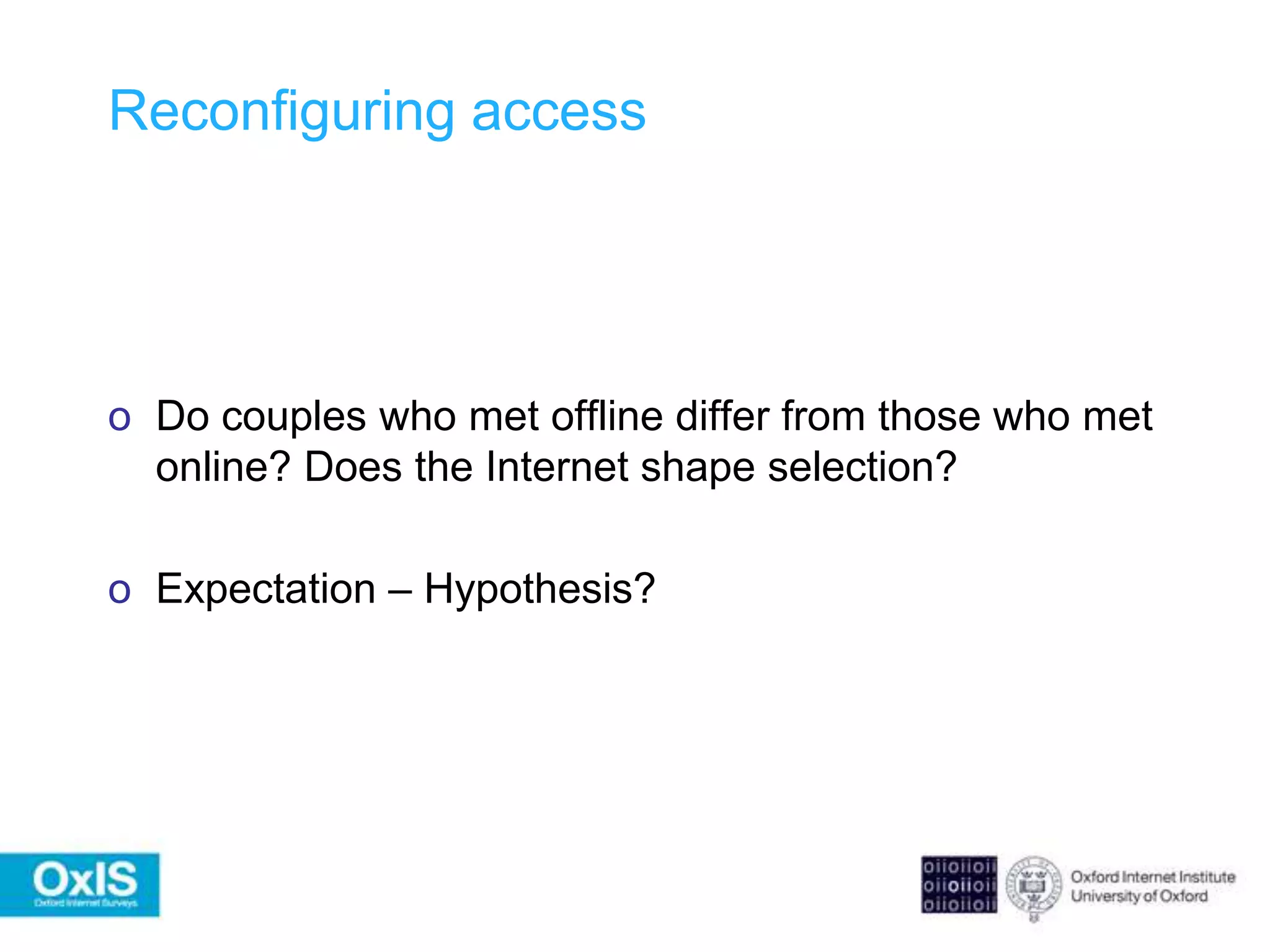
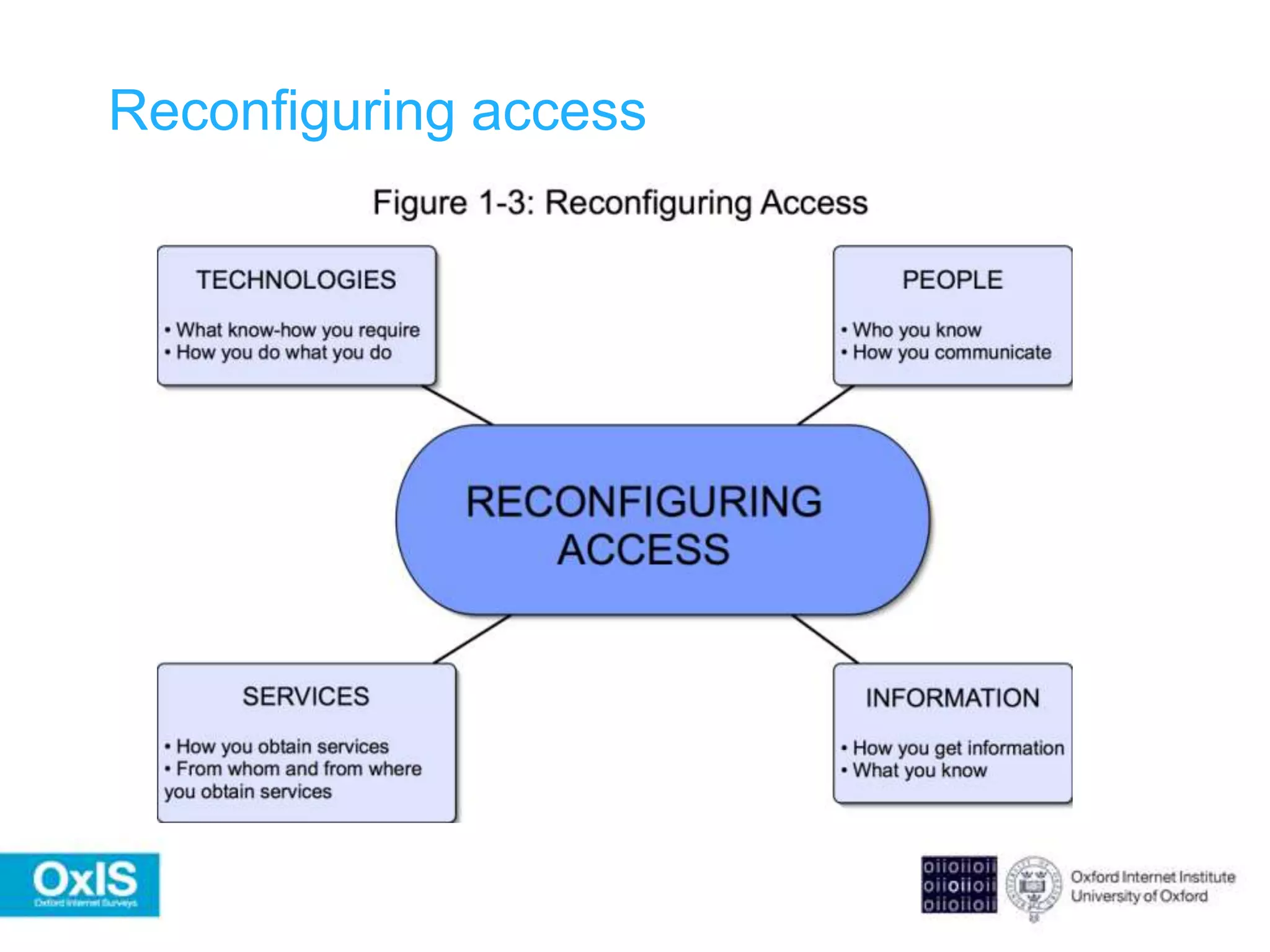
    Reconfiguring accessDo coupleswho met offline differ from those who met online? Does the Internet shape selection?
  • 33.
  • 34.
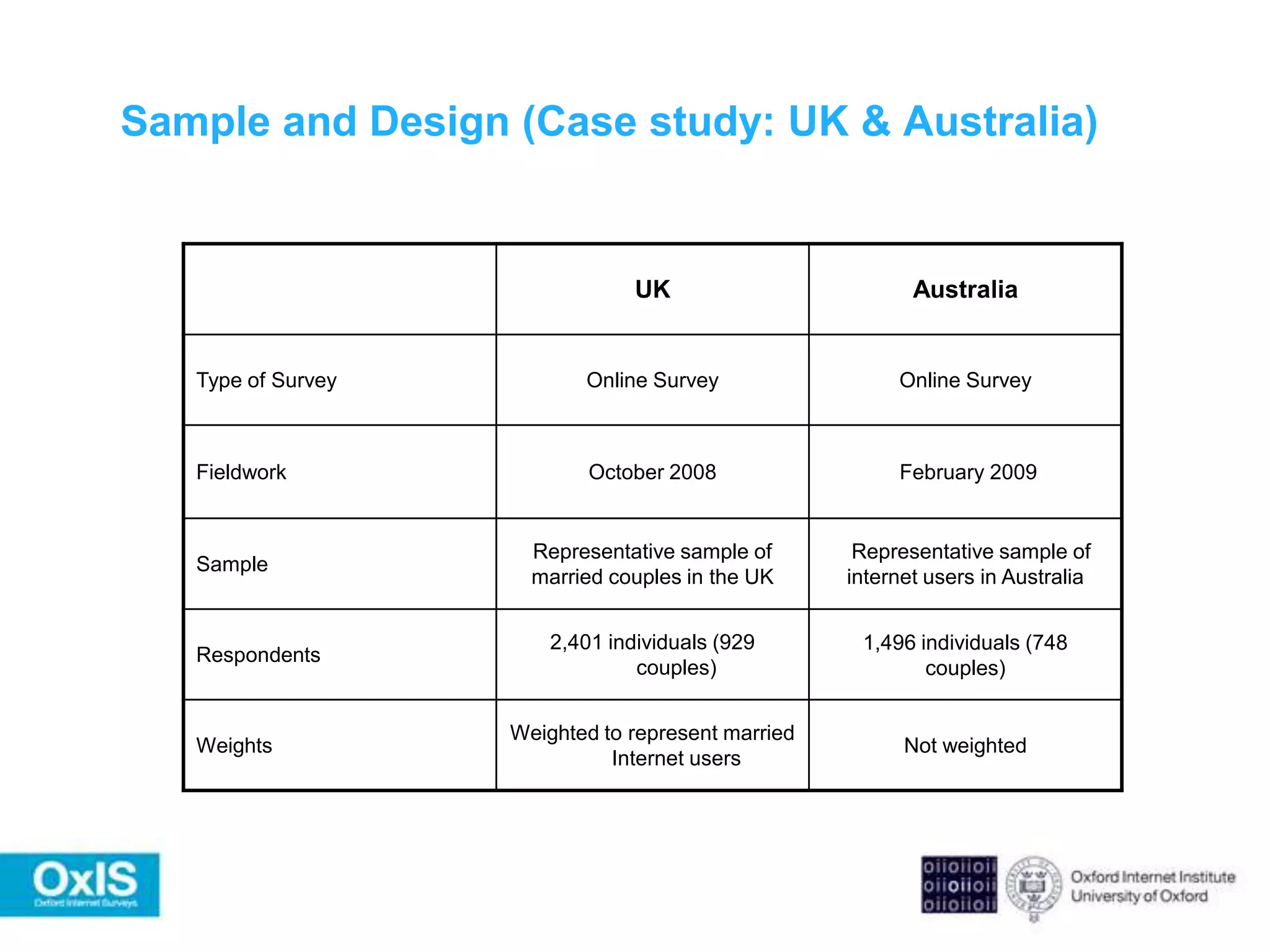
    Sample and Design(Case study: UK & Australia)
  • 35.
  • 36.
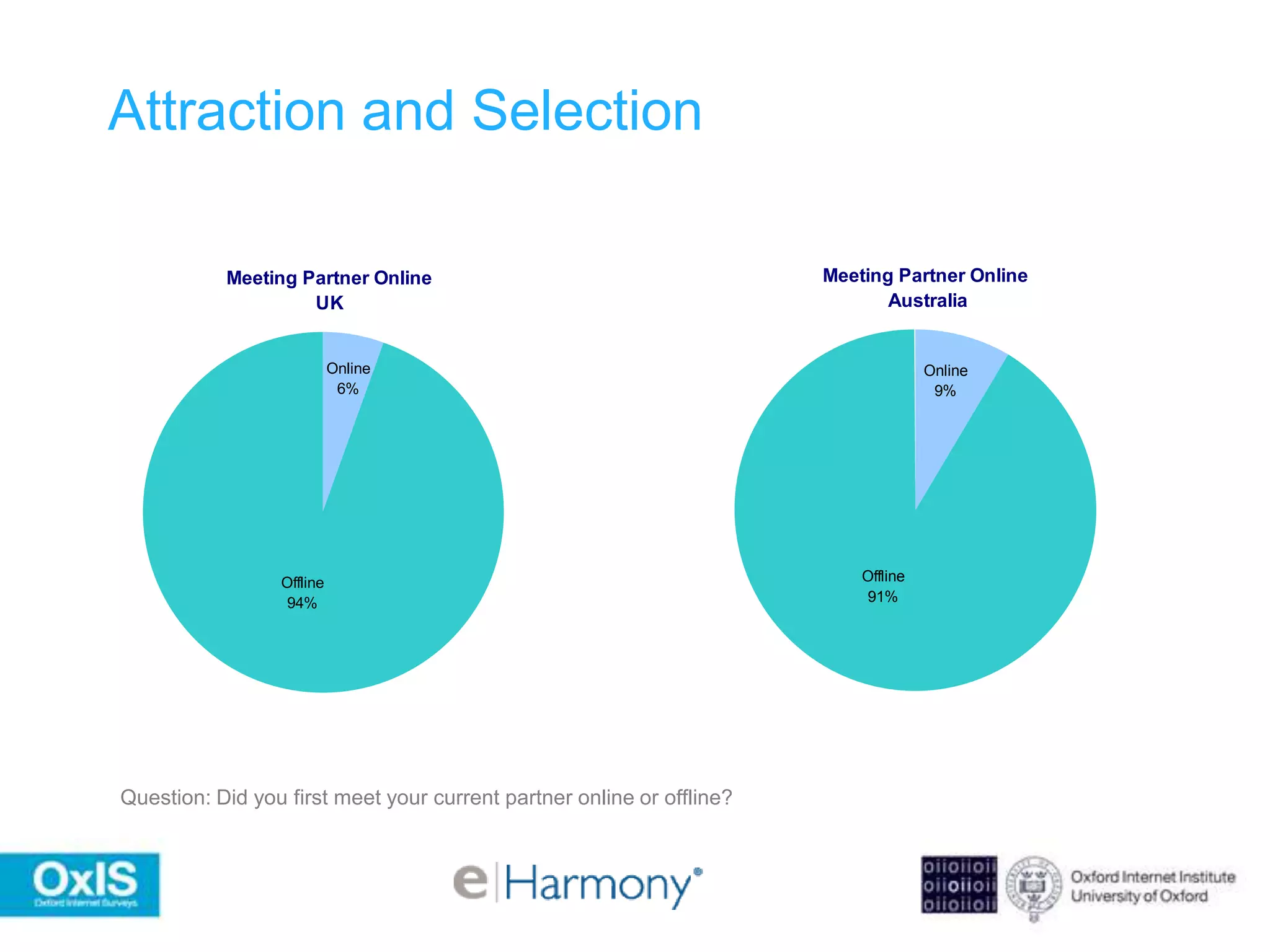
    Attraction and SelectionQuestion:Did you first meet your current partner online or offline?
  • 37.
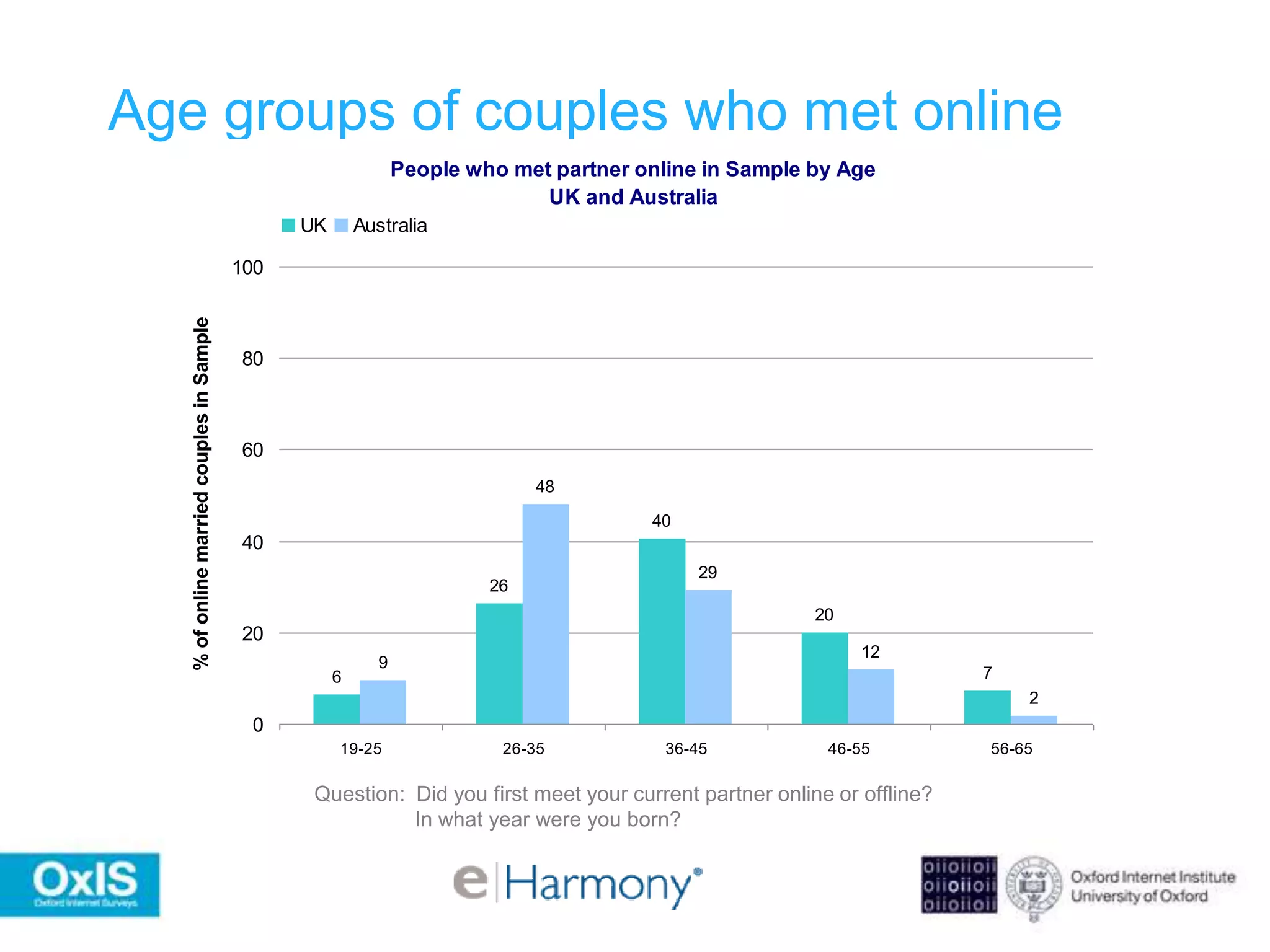
    Age groups ofcouples who met onlineQuestion: Did you first meet your current partner online or offline? In what year were you born?
  • 38.
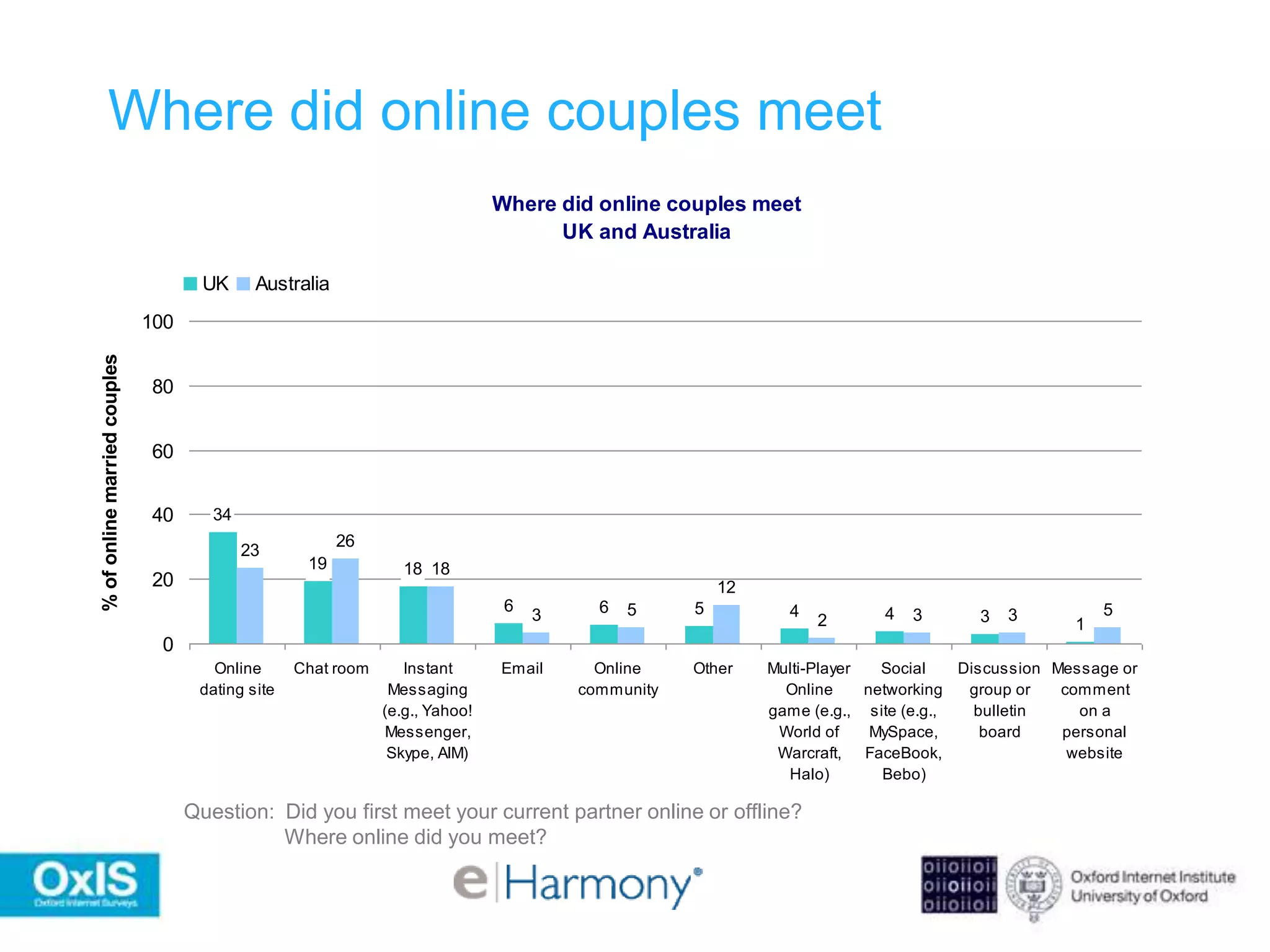
    Where did onlinecouples meetQuestion: Did you first meet your current partner online or offline? Where online did you meet?
  • 39.
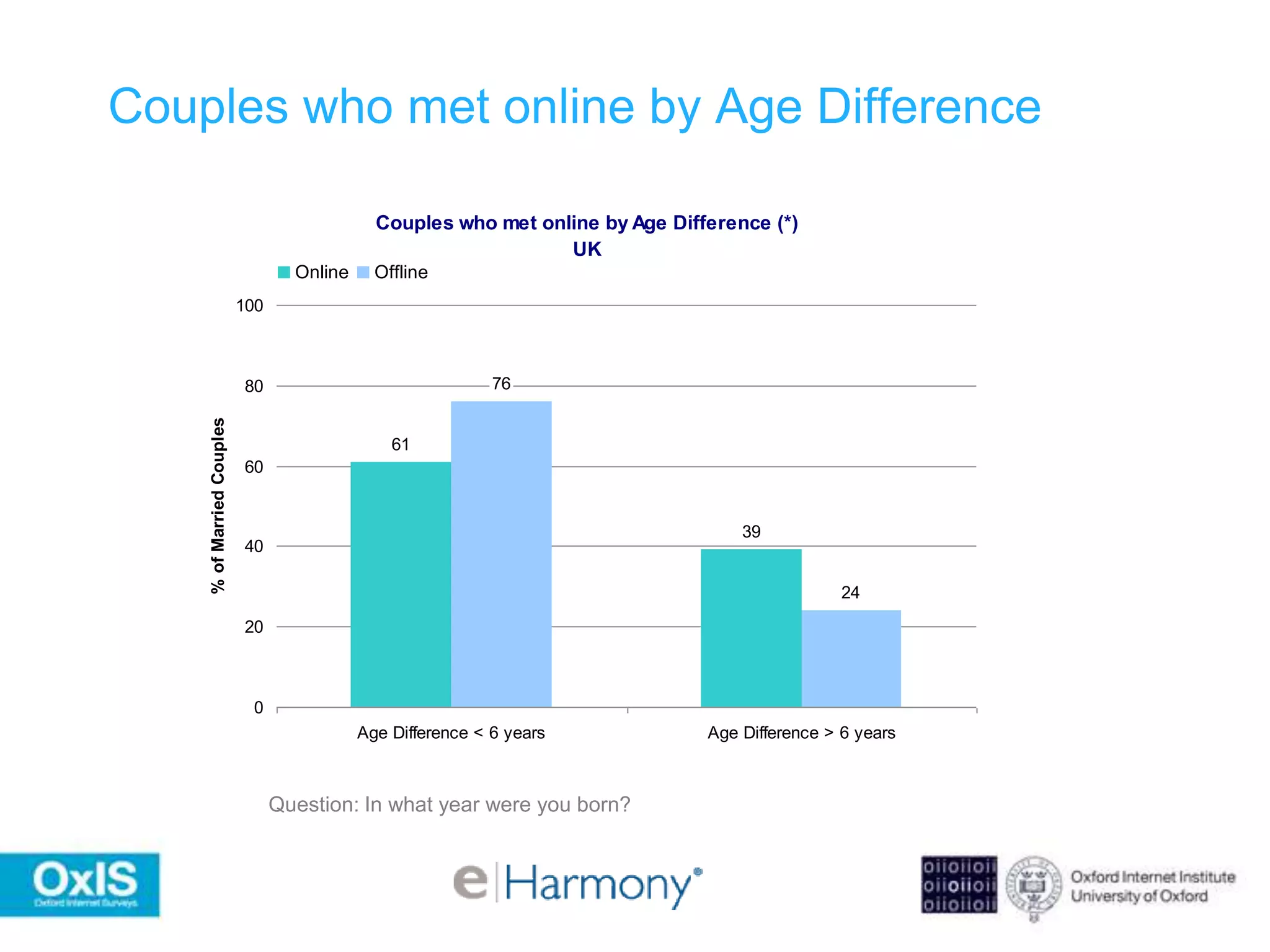
    Couples who metonline by Age DifferenceQuestion: In what year were you born?
  • 40.
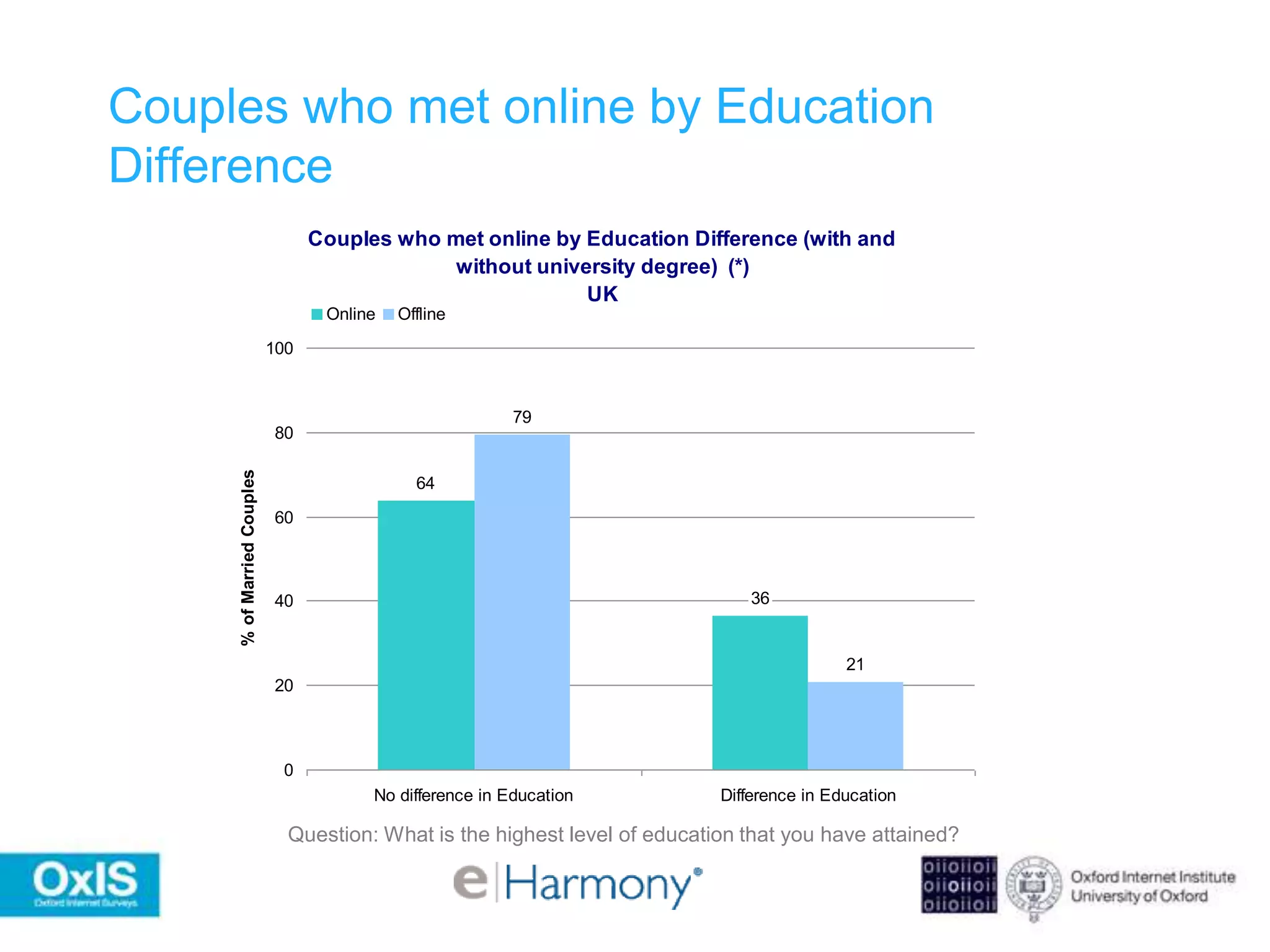
    Couples who metonline by Education DifferenceQuestion: What is the highest level of education that you have attained?
  • 41.
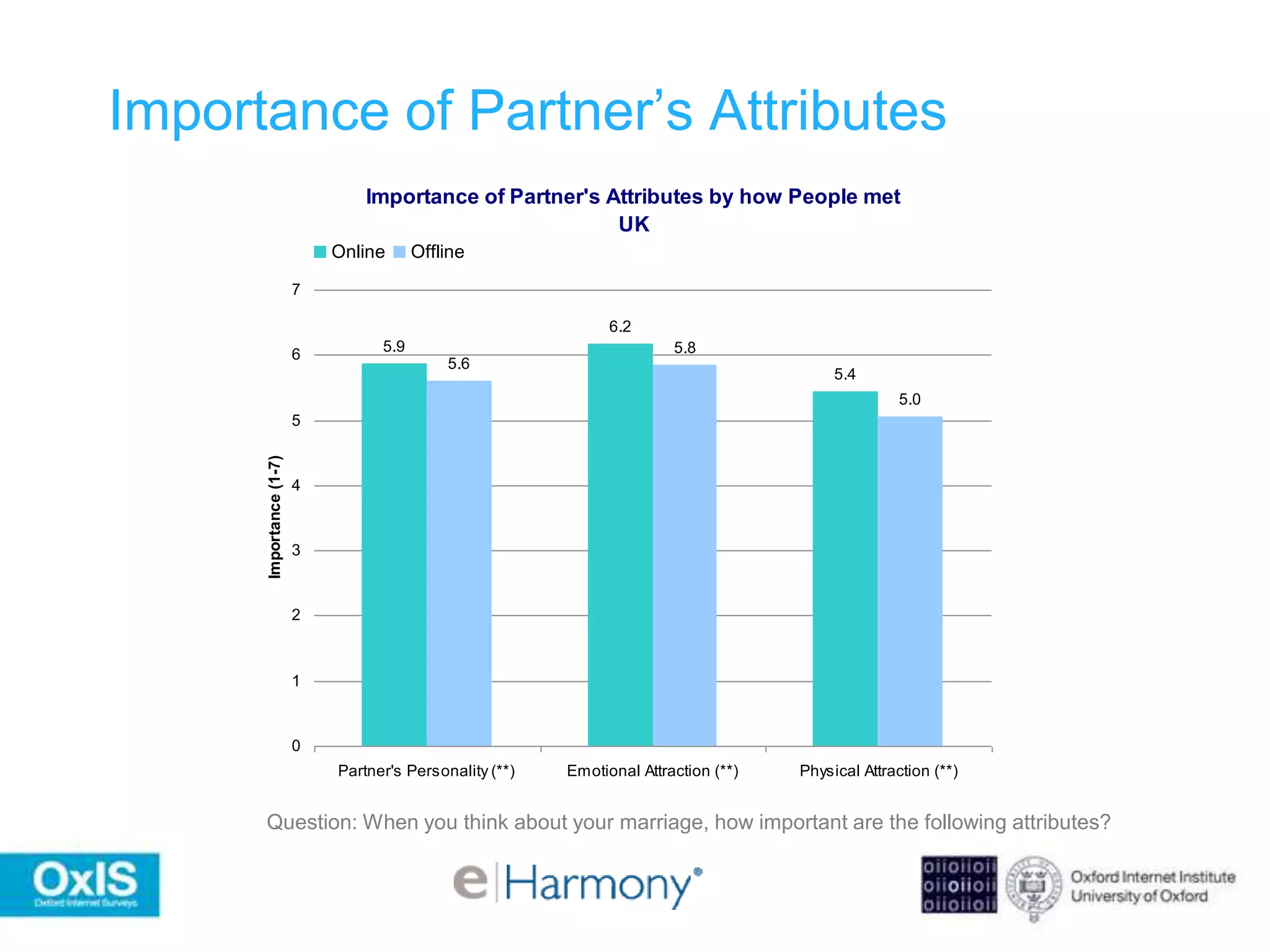
    Importance of Partner’sAttributesQuestion: When you think about your marriage, how important are the following attributes?
  • 42.
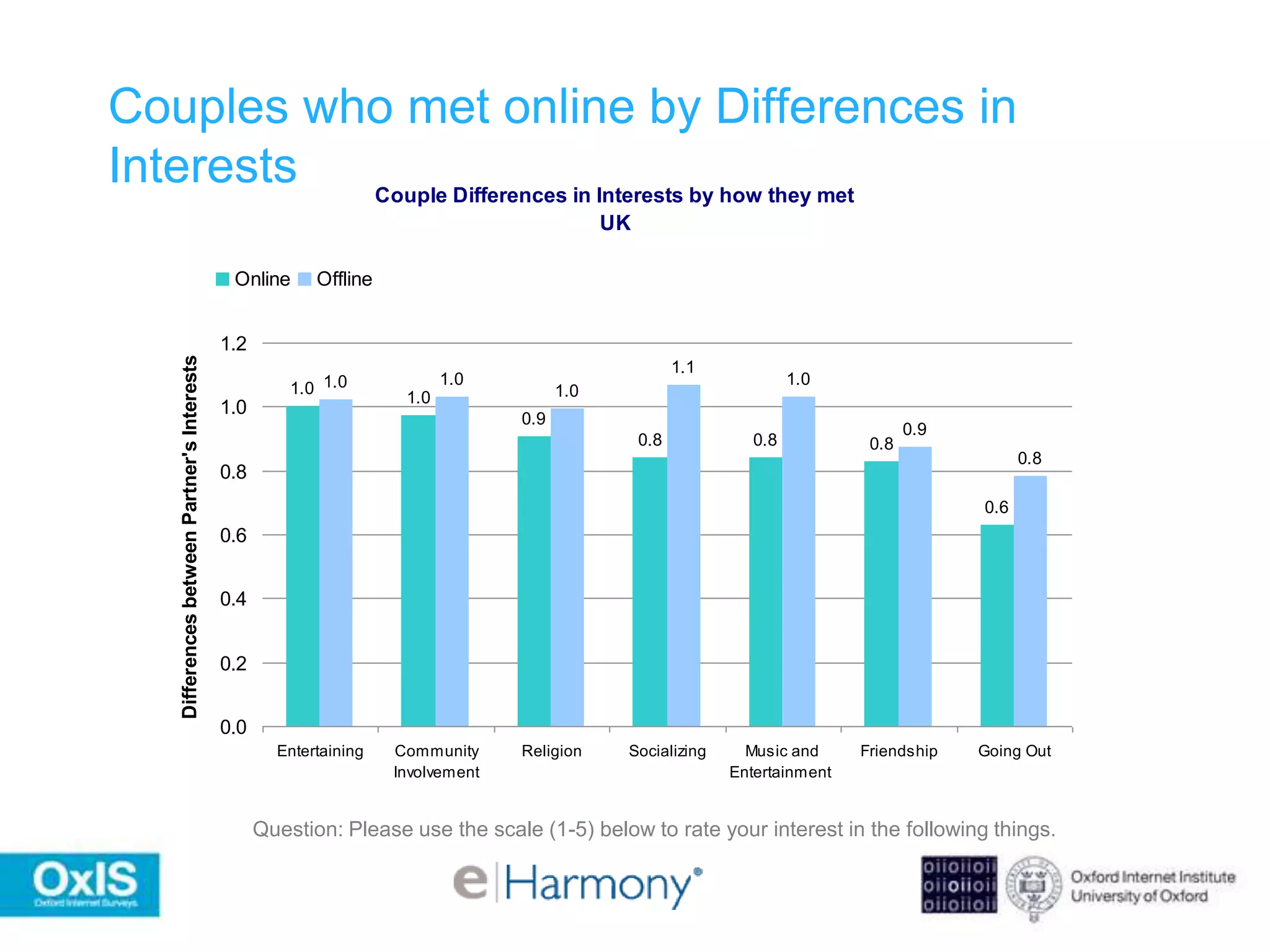
    Couples who metonline by Differences in InterestsQuestion: Please use the scale (1-5) below to rate your interest in the following things.
  • 43.
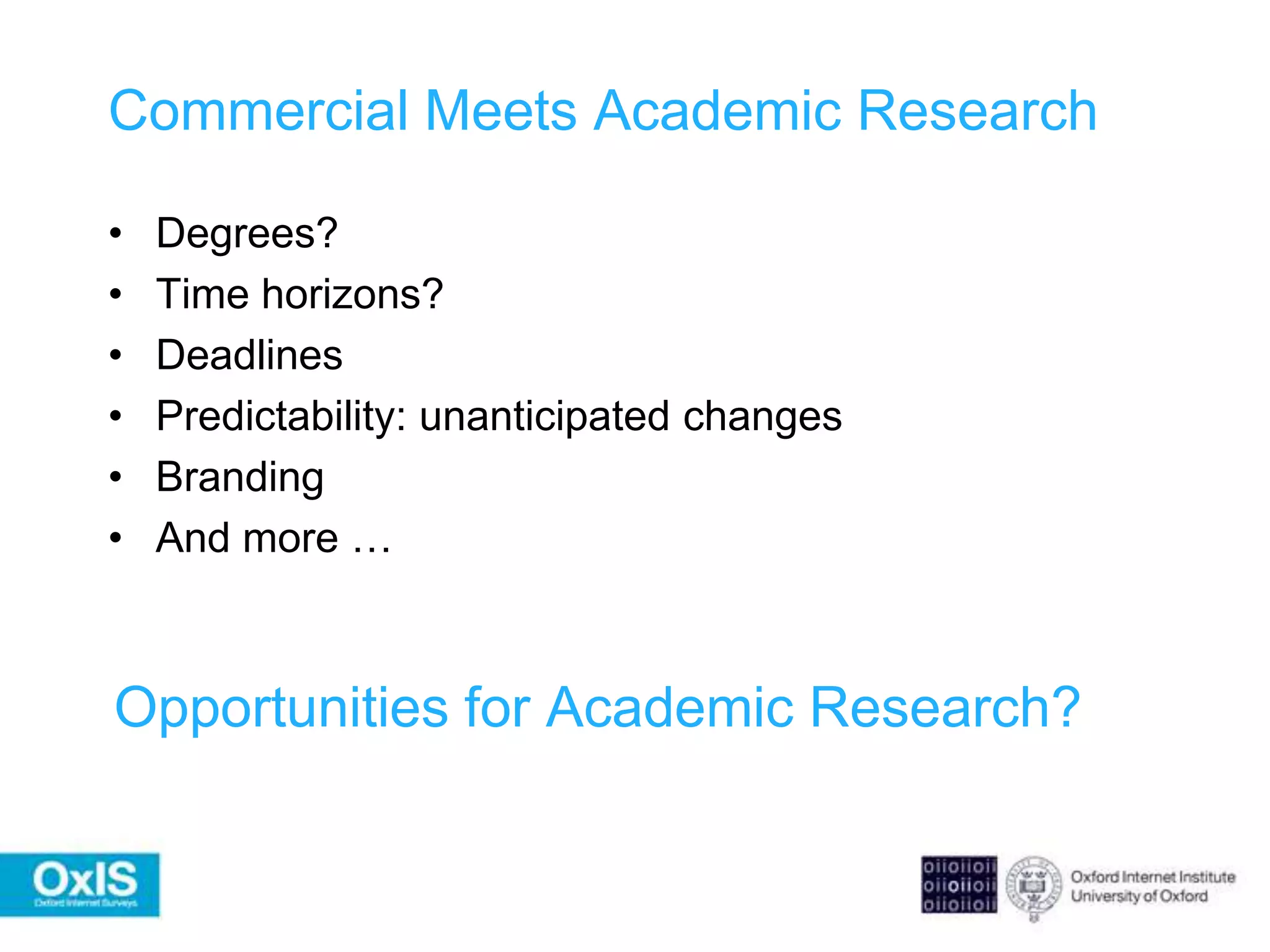
    Commercial Meets AcademicResearchDegrees?Time horizons?DeadlinesPredictability: unanticipated changesBrandingAnd more …Opportunities for Academic Research?
  • 44.
  • 45.
  • 46.
    Social Scripts forrelationshipsMaintaining relationships
  • 47.
    Managing relationshipsWhat explainswhich media people use to discuss problemsPeople with more digital skills are more likely to use technologies to discuss problems in the relationship (independent of how long they’ve used the Internet)Younger people discuss problems more frequently face to face than older people, but there is no difference in their use of email or instant messaging (IM) for communicating about problemsCouples with higher marital satisfaction are more likely to discuss problems when they can get instant feedback (face to face or through IM, but not through email)Increases in marital conflict and avoidance behaviour increases communication through email and instant messaging but not face to face communicationDiscussing problems face to face is linked to less frequent discussion of problems through email and IMA tendency to discuss problems through one ICT (Phone, SMS) is linked to discussing problems through other ICTs as well and is related to less frequent discussion of problems face to face.
  • 48.
    Netiquette: General useDoyou ever spend too much time online?The majority couples have similar perceptions of the time they spent online
  • 49.
    43% of coupleshas dissimilar time use patterns – Cause for conflict?
  • 50.
    Does it matterwhether husband or wife is evaluated?Base. All couples who completed more than 90% of survey (N=929)
  • 51.
    Netiquette: Differences inuseBase. All couples who completed more than 90% of survey (N=929)It seems that women are more worried about the time they and their husbands spend onlineDo you ever feel that you spend too much time on the Internet?Do you feel that your partner spends too much time on the Internet?
  • 52.
    Netiquette: Different activities(OxIS)Activities in the last year. Internet Users: OxIS 2007 N=1,578
  • 53.
    Netiquette: Acceptability infidelityHowwould you feel if your partner engaged in the following activities on the Internet?(Unhappy/Don’t care/Happy) emotional infidelity
  • 54.
    physicalinfidelityNetiquette: Acceptability InfidelityHow would you feel if your partner engaged in the following activities on the Internet?Physical infidelityEmotional infidelityBase. All couples who completed more than 90% of survey (N=929)
  • 55.
    Netiquette: Specific activities- differencesWhen partners in a couple disagree it is more likely that the husband finds a certain behaviour acceptable in his wife than that the wife finds it acceptable in her husband This is especially true for viewing of ‘adult’ sitesBase. All couples who completed more than 90% of survey (N=929)
  • 56.
    Netiquette: MonitoringHave youever checked up on your partner’s activities without them knowing, by doing the following?‘Reading their emails’ (20%), ‘Reading their SMS’(20%), ‘Checking their browser history’ (13%), ‘Reading their IM logs’(5%), ‘Using monitoring software’(2%), and ‘By pretending to be another person’(1%)
  • 57.
    Monitoring: SimilaritiesIn 73%of couples there is similar surveillance behaviour between partners
  • 58.
    In 44% ofcouples at least one of the partners monitors the other partner’s behaviourHusband only monitorWife only monitorNo surveillanceBase. All couples who completed more than 90% of survey (N=929)Both monitor
  • 59.
    Monitoring: DifferencesThe wifeis for all these behaviours more likely to monitor her husbands behaviour than her husband is to monitor hers.Base. All couples who completed more than 90% of survey (N=929)
  • 60.
  • 61.
    Conclusions Gender hugely importantin relation to surveillance and netiquette – women are more (have more reason to be) concerned than men about online behaviour
  • 62.
    Age is relatedto decrease in monitoring (directly and through higher satisfaction with relationship) – This cannot be explained by experience with the internet
  • 63.
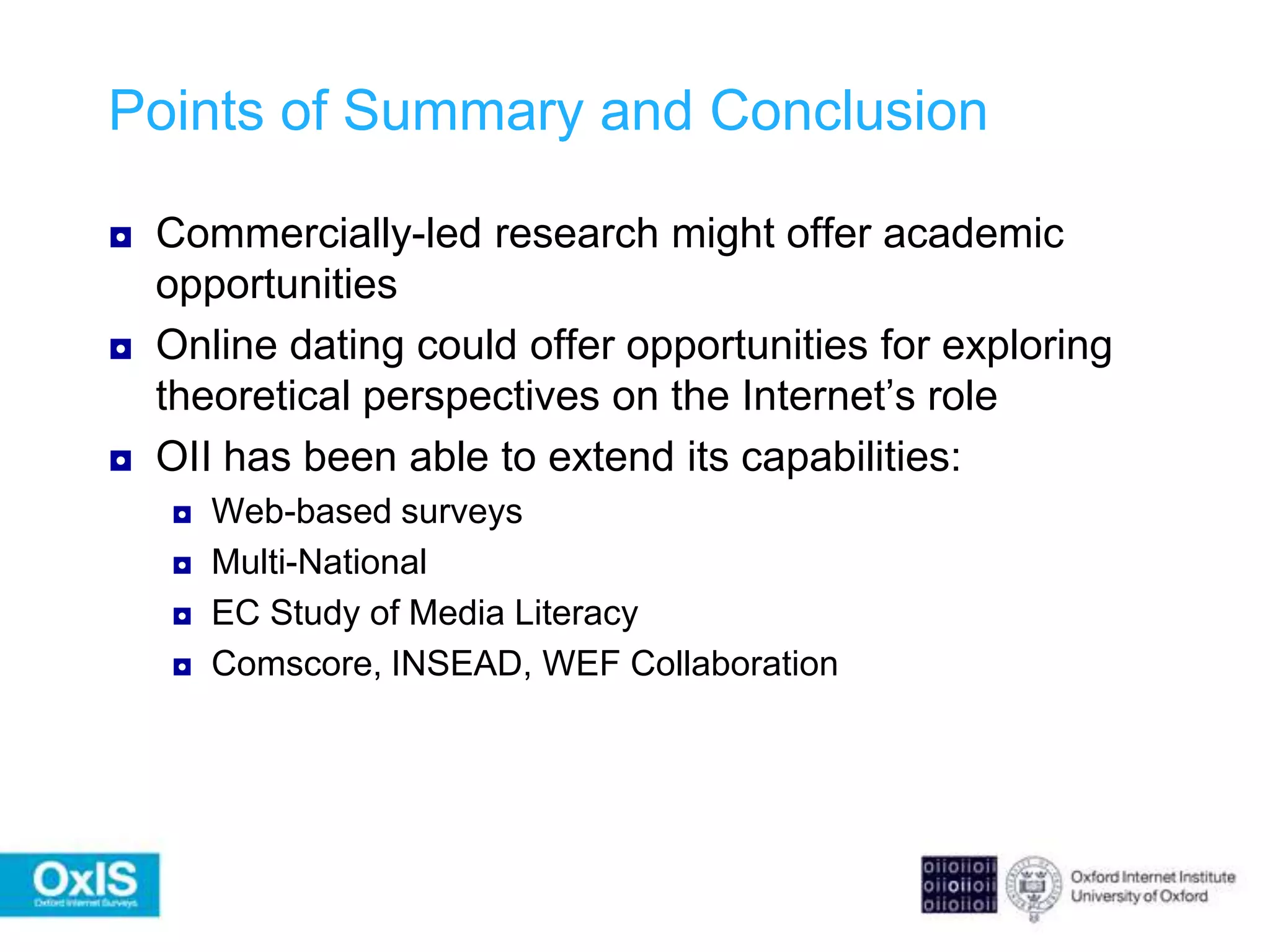
    Both personality andrelationship characteristics are importantPoints of Summary and Conclusion Commercially-led research might offer academic opportunities
  • 64.
    Online dating couldoffer opportunities for exploring theoretical perspectives on the Internet’s role
  • 65.
    OII has beenable to extend its capabilities:
  • 66.
  • 67.
  • 68.
    EC Study ofMedia Literacy
  • 69.