EDUCATIONAL
PSYCHOLOGIST
What is
educational
psychology?
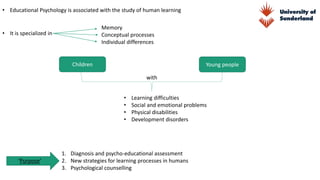
• Educational Psychology is associated with the study of human learning
Memory
Conceptual processes
Individual differences
Children Young people
with
• Learning difficulties
• Social and emotional problems
• Physical disabilities
• Development disorders
‘Purpose’
1. Diagnosis and psycho-educational assessment
2. New strategies for learning processes in humans
3. Psychological counselling
• It is specialized in
What does an educational psychologist do?
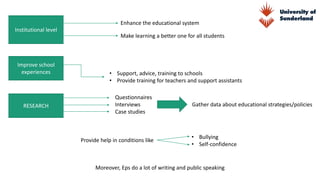
Institutional level
Enhance the educational system
Make learning a better one for all students
Improve school
experiences • Support, advice, training to schools
• Provide training for teachers and support assistants
RESEARCH
Questionnaires
Interviews
Case studies
Gather data about educational strategies/policies
Provide help in conditions like
• Bullying
• Self-confidence
Moreover, Eps do a lot of writing and public speaking
How do you become an educational
psychologist?
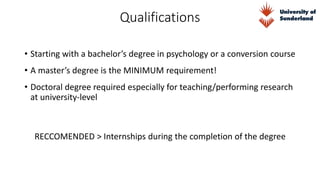
Qualifications
• Starting with a bachelor’s degree in psychology or a conversion course
RECCOMENDED > Internships during the completion of the degree
• A master’s degree is the MINIMUM requirement!
• Doctoral degree required especially for teaching/performing research
at university-level
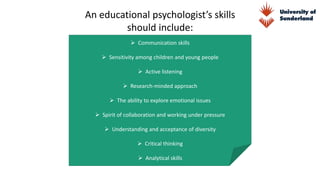
An educational psychologist’s skills
should include:
 Communication skills
 Sensitivity among children and young people
 Active listening
 Research-minded approach
 The ability to explore emotional issues
 Spirit of collaboration and working under pressure
 Understanding and acceptance of diversity
 Critical thinking
 Analytical skills
Where do an educational psychologist
work?
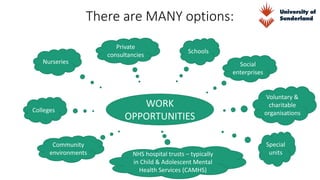
There are MANY options:
Nurseries
Schools
Voluntary &
charitable
organisations
Private
consultancies
NHS hospital trusts – typically
in Child & Adolescent Mental
Health Services (CAMHS)
Community
environments
Special
units
Colleges
Social
enterprises
WORK
OPPORTUNITIES
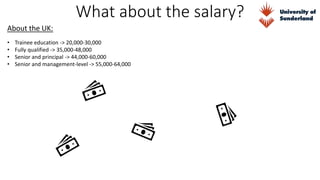
What about the salary?
About the UK:
• Trainee education -> 20,000-30,000
• Fully qualified -> 35,000-48,000
• Senior and principal -> 44,000-60,000
• Senior and management-level -> 55,000-64,000

Educational psychologist presentation xxx

  • 1.
  • 2.
  • 3.
    • Educational Psychologyis associated with the study of human learning Memory Conceptual processes Individual differences Children Young people with • Learning difficulties • Social and emotional problems • Physical disabilities • Development disorders ‘Purpose’ 1. Diagnosis and psycho-educational assessment 2. New strategies for learning processes in humans 3. Psychological counselling • It is specialized in
  • 4.
    What does aneducational psychologist do?
  • 5.
    Institutional level Enhance theeducational system Make learning a better one for all students Improve school experiences • Support, advice, training to schools • Provide training for teachers and support assistants RESEARCH Questionnaires Interviews Case studies Gather data about educational strategies/policies Provide help in conditions like • Bullying • Self-confidence Moreover, Eps do a lot of writing and public speaking
  • 6.
    How do youbecome an educational psychologist?
  • 7.
    Qualifications • Starting witha bachelor’s degree in psychology or a conversion course RECCOMENDED > Internships during the completion of the degree • A master’s degree is the MINIMUM requirement! • Doctoral degree required especially for teaching/performing research at university-level
  • 8.
    An educational psychologist’sskills should include:  Communication skills  Sensitivity among children and young people  Active listening  Research-minded approach  The ability to explore emotional issues  Spirit of collaboration and working under pressure  Understanding and acceptance of diversity  Critical thinking  Analytical skills
  • 9.
    Where do aneducational psychologist work?
  • 10.
    There are MANYoptions: Nurseries Schools Voluntary & charitable organisations Private consultancies NHS hospital trusts – typically in Child & Adolescent Mental Health Services (CAMHS) Community environments Special units Colleges Social enterprises WORK OPPORTUNITIES
  • 11.
    What about thesalary? About the UK: • Trainee education -> 20,000-30,000 • Fully qualified -> 35,000-48,000 • Senior and principal -> 44,000-60,000 • Senior and management-level -> 55,000-64,000