-ed and -ing adjectives
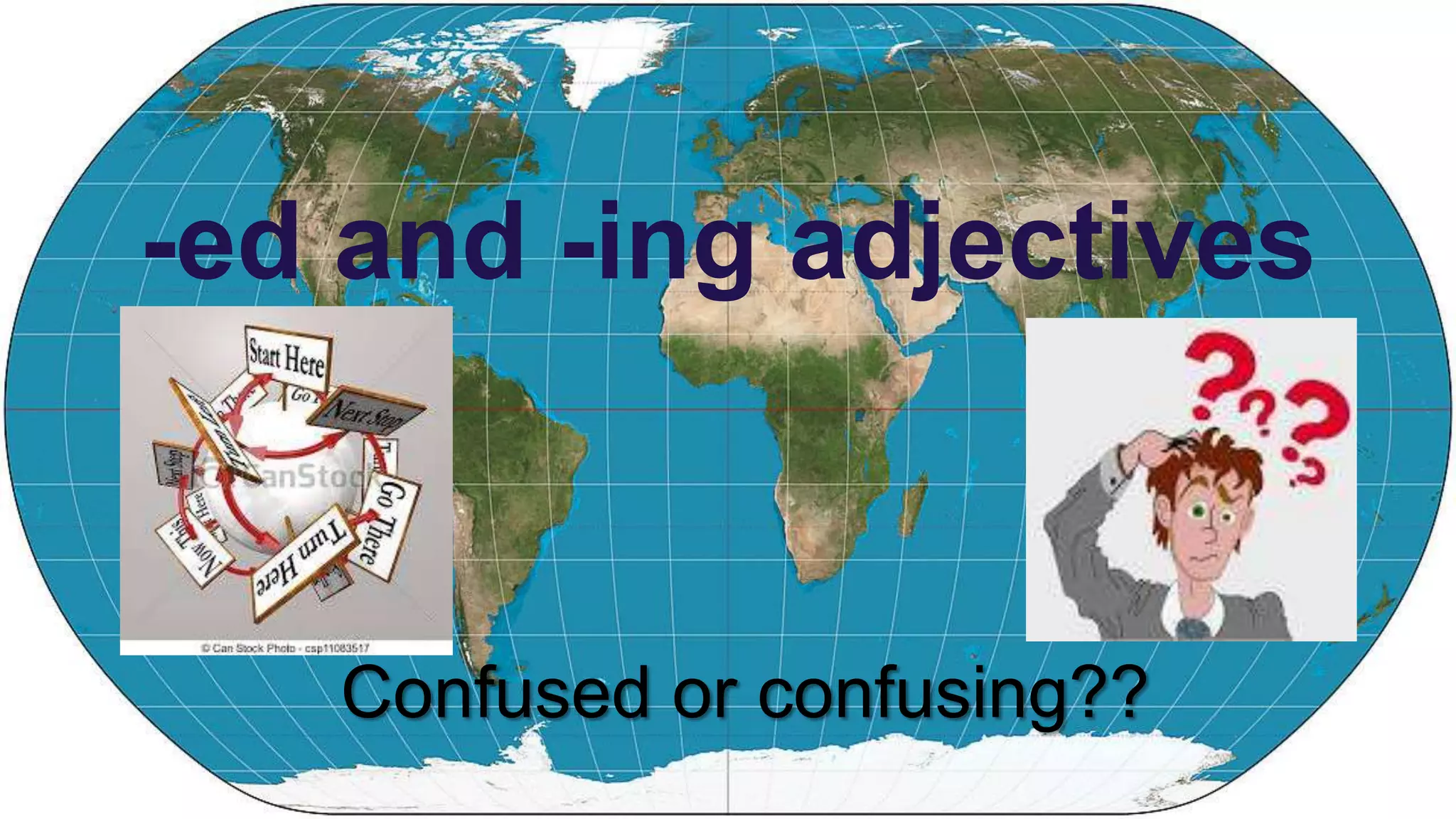
Confused or confusing??
-ing adjectives
Some of the commonest -ing adjectives are:
If you call something interesting you mean it interests you.
If you call something frightening you mean it frightens you.
The water is a safe and comforting environment. (It comforts you)
Being with people and helping them to overcome fear that they may have had
for their whole lives is a rewarding and humbling experience. (It rewards you)
amusing shocking surprising
interesting disappointing exciting
worrying boring terrifying
Speaking About The Things Around You
In English we often use ‘ing’
adjectives to describe how
the things around us make
us feel:
“Walking along the Great Wall of
China was tiring but its long
history is fascinating.”
“I come from a charming little town.”
-ed adjectives
Some of the commonest -ed adjectives are:
If something annoys you, you can say you feel annoyed. If something interests
you, you can say you are interested.
Her daughter was so moved to see her swimming that she cried.
People are often embarrassed, even ashamed, of the fact that they can't
swim.
annoyed bored frightened
tired closed excited
disappointed surprised confused
Speaking About Yourself
In English we often use ‘ed’
adjectives to describe how
we feel.
“I was tired after walking along the
Great Wall of China but I was also
fascinated with its long history.”
“I always feel
relaxed when I
go back to my
home town.”
“Going back
to my home
town is always
relaxing.”
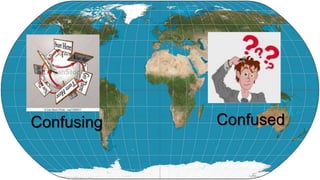
ConfusedConfusing

Ed and ing adjectives

  • 1.
    -ed and -ingadjectives Confused or confusing??
  • 2.
    -ing adjectives Some ofthe commonest -ing adjectives are: If you call something interesting you mean it interests you. If you call something frightening you mean it frightens you. The water is a safe and comforting environment. (It comforts you) Being with people and helping them to overcome fear that they may have had for their whole lives is a rewarding and humbling experience. (It rewards you) amusing shocking surprising interesting disappointing exciting worrying boring terrifying
  • 3.
    Speaking About TheThings Around You In English we often use ‘ing’ adjectives to describe how the things around us make us feel: “Walking along the Great Wall of China was tiring but its long history is fascinating.”
  • 4.
    “I come froma charming little town.”
  • 5.
    -ed adjectives Some ofthe commonest -ed adjectives are: If something annoys you, you can say you feel annoyed. If something interests you, you can say you are interested. Her daughter was so moved to see her swimming that she cried. People are often embarrassed, even ashamed, of the fact that they can't swim. annoyed bored frightened tired closed excited disappointed surprised confused
  • 6.
    Speaking About Yourself InEnglish we often use ‘ed’ adjectives to describe how we feel. “I was tired after walking along the Great Wall of China but I was also fascinated with its long history.”
  • 7.
    “I always feel relaxedwhen I go back to my home town.” “Going back to my home town is always relaxing.”
  • 8.