Abiotic and Biotic Factors
Module 1 Review
IRE: 201
What is an Ecosystem?
• An ecosystem is a specific area of land that has specific
characteristics associated with it.
• For example, would you see a crocodile in a desert?
• There are two broad categories of ecosystems: aquatic and
terrestrial.
Working Together
• Living and nonliving things work together to make an
ecosystem flourish.
• Ecosystems are important to our human lives because they
offer…
• Supporting services
• Provision services
• Regulating services
• Cultural services
Biotic Factors
• ”Bio” means life.
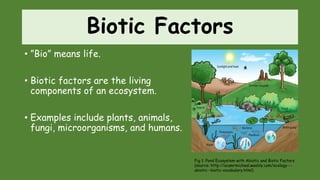
• Biotic factors are the living
components of an ecosystem.
• Examples include plants, animals,
fungi, microorganisms, and humans.
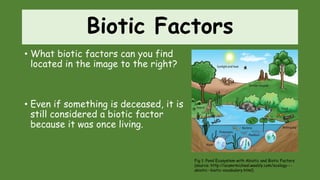
Fig 1: Pond Ecosystem with Abiotic and Biotic Factors
(source: http://acamrmicheal.weebly.com/ecology---
abiotic--biotic-vocabulary.html)
Biotic Factors
• What biotic factors can you find
located in the image to the right?
• Even if something is deceased, it is
still considered a biotic factor
because it was once living.
Fig 1: Pond Ecosystem with Abiotic and Biotic Factors
(source: http://acamrmicheal.weebly.com/ecology---
abiotic--biotic-vocabulary.html)
Breaking It Down
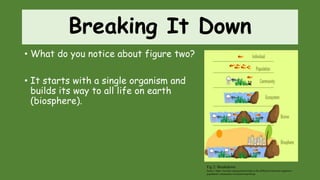
• What do you notice about figure two?
• It starts with a single organism and
builds its way to all life on earth
(biosphere).
Fig 2: Breakdown
Source: https://socratic.org/questions/what-is-the-difference-between-organism-
population- community-ecosystem-and-biosp
Breaking It Down
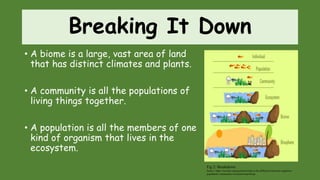
• A biome is a large, vast area of land
that has distinct climates and plants.
• A community is all the populations of
living things together.
• A population is all the members of one
kind of organism that lives in the
ecosystem.
Fig 2: Breakdown
Source: https://socratic.org/questions/what-is-the-difference-between-organism-
population- community-ecosystem-and-biosp
Abiotic Factors
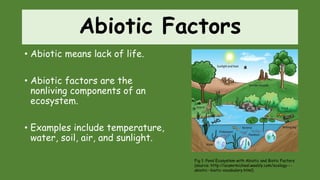
• Abiotic means lack of life.
• Abiotic factors are the
nonliving components of an
ecosystem.
• Examples include temperature,
water, soil, air, and sunlight.
Fig 1: Pond Ecosystem with Abiotic and Biotic Factors
(source: http://acamrmicheal.weebly.com/ecology---
abiotic--biotic-vocabulary.html)
Abiotic Factors: Soil
• Soil is at the bottom of an ecosystem.
• Plants are provided with the nutrients they need to grow
here.
• Soil also helps anchor plants and store water.
Abiotic Factors: Water
• Without water, life in the ecosystem would disappear.
• In aquatic ecosystems, water is considered home to
organisms.
• Water can either be freshwater or saltwater.
Abiotic Factors:
Temperature & Sunlight
• Some organisms like warm weather and some prefer the
cold.
• For example, organisms housed in the tundra would not be
expected to be seen in a desert.
• Organisms adapt to the temperature of their habitat.
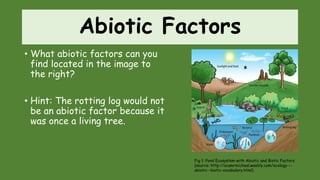
Abiotic Factors
• What abiotic factors can you
find located in the image to
the right?
• Hint: The rotting log would not
be an abiotic factor because it
was once a living tree.
Fig 1: Pond Ecosystem with Abiotic and Biotic Factors
(source: http://acamrmicheal.weebly.com/ecology---
abiotic--biotic-vocabulary.html)
Types of Ecosystems
• Abiotic and biotic factors present help determine which
ecosystem is present.
• There are two broad categories of ecosystems:
1. Terrestrial: Land-based
2. Aquatic: Water-based
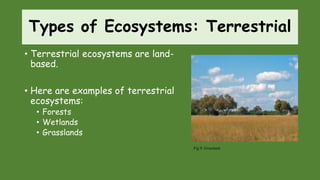
Types of Ecosystems: Terrestrial
• Terrestrial ecosystems are land-
based.
• Here are examples of terrestrial
ecosystems:
• Forests
• Wetlands
• Grasslands
Fig 9: Grassland
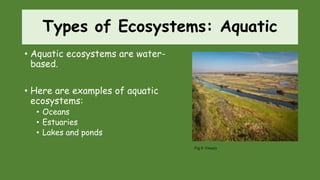
Types of Ecosystems: Aquatic
• Aquatic ecosystems are water-
based.
• Here are examples of aquatic
ecosystems:
• Oceans
• Estuaries
• Lakes and ponds
Fig 8: Estuary
Summary of Concepts
• An ecosystem contains all the organisms (biotic factors) and
their nonliving surrounding environments (abiotic factors).
• Biotic factors are living.
• Abiotic factors are nonliving.

Ecosystems Module 1: Abiotic & Biotic Factors

  • 1.
    Abiotic and BioticFactors Module 1 Review IRE: 201
  • 2.
    What is anEcosystem? • An ecosystem is a specific area of land that has specific characteristics associated with it. • For example, would you see a crocodile in a desert? • There are two broad categories of ecosystems: aquatic and terrestrial.
  • 3.
    Working Together • Livingand nonliving things work together to make an ecosystem flourish. • Ecosystems are important to our human lives because they offer… • Supporting services • Provision services • Regulating services • Cultural services
  • 4.
    Biotic Factors • ”Bio”means life. • Biotic factors are the living components of an ecosystem. • Examples include plants, animals, fungi, microorganisms, and humans. Fig 1: Pond Ecosystem with Abiotic and Biotic Factors (source: http://acamrmicheal.weebly.com/ecology--- abiotic--biotic-vocabulary.html)
  • 5.
    Biotic Factors • Whatbiotic factors can you find located in the image to the right? • Even if something is deceased, it is still considered a biotic factor because it was once living. Fig 1: Pond Ecosystem with Abiotic and Biotic Factors (source: http://acamrmicheal.weebly.com/ecology--- abiotic--biotic-vocabulary.html)
  • 6.
    Breaking It Down •What do you notice about figure two? • It starts with a single organism and builds its way to all life on earth (biosphere). Fig 2: Breakdown Source: https://socratic.org/questions/what-is-the-difference-between-organism- population- community-ecosystem-and-biosp
  • 7.
    Breaking It Down •A biome is a large, vast area of land that has distinct climates and plants. • A community is all the populations of living things together. • A population is all the members of one kind of organism that lives in the ecosystem. Fig 2: Breakdown Source: https://socratic.org/questions/what-is-the-difference-between-organism- population- community-ecosystem-and-biosp
  • 8.
    Abiotic Factors • Abioticmeans lack of life. • Abiotic factors are the nonliving components of an ecosystem. • Examples include temperature, water, soil, air, and sunlight. Fig 1: Pond Ecosystem with Abiotic and Biotic Factors (source: http://acamrmicheal.weebly.com/ecology--- abiotic--biotic-vocabulary.html)
  • 9.
    Abiotic Factors: Soil •Soil is at the bottom of an ecosystem. • Plants are provided with the nutrients they need to grow here. • Soil also helps anchor plants and store water.
  • 10.
    Abiotic Factors: Water •Without water, life in the ecosystem would disappear. • In aquatic ecosystems, water is considered home to organisms. • Water can either be freshwater or saltwater.
  • 11.
    Abiotic Factors: Temperature &Sunlight • Some organisms like warm weather and some prefer the cold. • For example, organisms housed in the tundra would not be expected to be seen in a desert. • Organisms adapt to the temperature of their habitat.
  • 12.
    Abiotic Factors • Whatabiotic factors can you find located in the image to the right? • Hint: The rotting log would not be an abiotic factor because it was once a living tree. Fig 1: Pond Ecosystem with Abiotic and Biotic Factors (source: http://acamrmicheal.weebly.com/ecology--- abiotic--biotic-vocabulary.html)
  • 13.
    Types of Ecosystems •Abiotic and biotic factors present help determine which ecosystem is present. • There are two broad categories of ecosystems: 1. Terrestrial: Land-based 2. Aquatic: Water-based
  • 14.
    Types of Ecosystems:Terrestrial • Terrestrial ecosystems are land- based. • Here are examples of terrestrial ecosystems: • Forests • Wetlands • Grasslands Fig 9: Grassland
  • 15.
    Types of Ecosystems:Aquatic • Aquatic ecosystems are water- based. • Here are examples of aquatic ecosystems: • Oceans • Estuaries • Lakes and ponds Fig 8: Estuary
  • 16.
    Summary of Concepts •An ecosystem contains all the organisms (biotic factors) and their nonliving surrounding environments (abiotic factors). • Biotic factors are living. • Abiotic factors are nonliving.