Ecosystem
Learner Expectations
• Content Standard: Interactions Between
  Living Things and Their Environment.
• The student will investigate how living things
  interact with one another and with non-living
  elements of their environment.
• Learning Expectations:
• 2.1 Investigate the relationships among
  organisms in a specific ecosystem.
In this activity you will:
• Learn how living things interact
  with one another and with non-
  living elements of their
  environment.
• Write a paragraph using three
  facts you learned from this
  presentation.
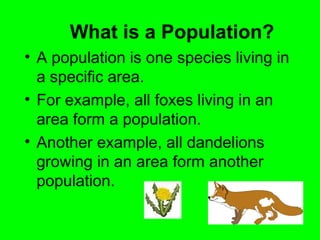
What is a Population?
• A population is one species living in
  a specific area.
• For example, all foxes living in an
  area form a population.
• Another example, all dandelions
  growing in an area form another
  population.
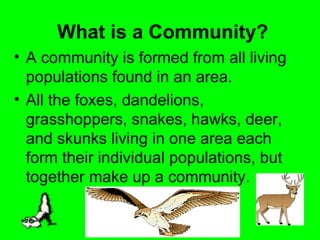
What is a Community?
• A community is formed from all living
  populations found in an area.
• All the foxes, dandelions,
  grasshoppers, snakes, hawks, deer,
  and skunks living in one area each
  form their individual populations, but
  together make up a community.
What is a Ecosystem?
• An ecosystem is formed by the
  interactions between all living
  and non-living things
• How do living and non-living
  things interact in an
  environment?
What is Ecology?
• Ecology is how living and non-living
  things affect each other in their
  environment.
• We have already named several
  living things found in a community.
  Can you name non-living things in
  your community?
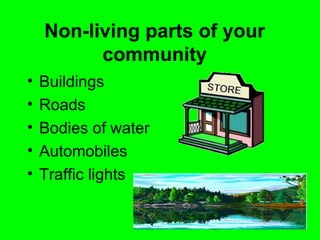
Non-living parts of your
          community
•   Buildings
•   Roads
•   Bodies of water
•   Automobiles
•   Traffic lights
How non-living and living
      things affect each other
• Building more homes drives many animals
  out of their natural habitats or communities.
• Littering can destroy an animals habitat.
• Air pollution from automobiles and factories
  will affect the quality of life for all living
  things in a community, including people.
Writing Activity
• Write a paragraph about the
  effects that living and non-living
  things have on each other.
  Include three facts from this
  presentation and one fact that
  you discovered on your own.

Ecosystems

  • 1.
  • 2.
    Learner Expectations • ContentStandard: Interactions Between Living Things and Their Environment. • The student will investigate how living things interact with one another and with non-living elements of their environment. • Learning Expectations: • 2.1 Investigate the relationships among organisms in a specific ecosystem.
  • 3.
    In this activityyou will: • Learn how living things interact with one another and with non- living elements of their environment. • Write a paragraph using three facts you learned from this presentation.
  • 4.
    What is aPopulation? • A population is one species living in a specific area. • For example, all foxes living in an area form a population. • Another example, all dandelions growing in an area form another population.
  • 5.
    What is aCommunity? • A community is formed from all living populations found in an area. • All the foxes, dandelions, grasshoppers, snakes, hawks, deer, and skunks living in one area each form their individual populations, but together make up a community.
  • 6.
    What is aEcosystem? • An ecosystem is formed by the interactions between all living and non-living things • How do living and non-living things interact in an environment?
  • 7.
    What is Ecology? •Ecology is how living and non-living things affect each other in their environment. • We have already named several living things found in a community. Can you name non-living things in your community?
  • 8.
    Non-living parts ofyour community • Buildings • Roads • Bodies of water • Automobiles • Traffic lights
  • 9.
    How non-living andliving things affect each other • Building more homes drives many animals out of their natural habitats or communities. • Littering can destroy an animals habitat. • Air pollution from automobiles and factories will affect the quality of life for all living things in a community, including people.
  • 10.
    Writing Activity • Writea paragraph about the effects that living and non-living things have on each other. Include three facts from this presentation and one fact that you discovered on your own.