Dr R K Upadhyay
Ecosystem
- It is Functional unit of nature where living
organisms interact among themselves and
also with abiotic components.
- Term is coined by Tansley (1935)
- Types-
1- terrestrial ecosystem- forest, grass land,
desert
2- aquatic ecosystem-
a) Fresh water- pond, lake , streams
b) Salt water- marine, estuaries
Structure and function of ecosystem
1- Species composition- flora and fauna
2- Stratification- vertical distribution of different spp
eg- tree at top strata and herbs at bottom
____________________________________________
______ components of ecosystem ____________
1- Productivity
2- Decomposition
3- Energy flow
4- Nutrient cycling
GPP (GROSS PRIMARY
PRODUCTIVITY)
-IT IS THE RATE OF
PRODUCTION OF ORGANIC
MATTER DURING
PHOTOSYNTHESIS
NPP (NET PRIMARY
PRODUCTIVITY)
IT IS THE AMMOUNT OF
ENERGY LEFT IN THE
PRODUCERS AFTER
UTILIZATION OF SOME
ENERGY FOR RESPIRATION
NPP = GPP –
PRODUCTIVITY - THE RATE OF BIOMASSS PRODUCTION IS
CALLED PRIMARY PRODUCTIVITY
UNIT- g -2 yr -1
PRIMARY PRODUCTIVITY- IT IS THE AMOUNT OF BIOMASS
OR ORGANIC MATTER PRODUCED PER UNIT AREA OVVER A
TIME PERIOD BY PLANT DURING PHOTOSYNTHESIS
FACTORS AFFECTING PRIMARY PRODUCTIVITY
1- ENVIRONMENTAL FACTOR-
A) LIGHT- sun light is ultimate source of energy.
poles receive less light than tropics therefore has
less productivity.
B) TEMPERATURE- affect enzyme activity
C) MOISTURE- deserts have lower primary
productivity due to less moisture
D) NUTRIENT AVAILABILTY- essential for growth
E) PHOTOSYNTHETIC EFFICIENCY OF PLANTS- C4
plants are more productive than C 3 plants
Secondary productivity
It is rate of assimilation and formation of new
organic matter by consumers.
- It decreases with the increase in the trophic level
Decomposition
“ process of breaking of complex organic matter in to
inorganic substances”
Steps of decomposition-
 fragmentation
Leaching
Catabolism
Humification
Mineralization
DETRITUS – RAW MATERIAL FOR DEOMPOSITION
1- FRAGMENTATION- BREAKING DOWN OF DETRITUS INTO SMALL PIECES
-------------------------------------------------------------------------------------------------------------------
2- LEACHING- WATER SOLUBLE INORGANIC NUTRIENTS GO DOWN IN TO THE SOIL
HORIZON (PRECIPITATED AS AVAILABLE SALTS)
-------------------------------------------------------------------------------------------------------------------
3- CATABOLISM- DEGRADATION OF DETRITUS INTO SIMPLE ORGANIC MATERIAL BY
MICROBIAL ACTION AND LATER THEIR CONVERSION INTO INORGANIC COMPD
-------------------------------------------------------------------------------------------------------------------
4- HUMIFICATION- FORMATION OF HUMUS. HUMUS IS DARK COLOURED
AMORPHOUS COLLOIDAL SUBSTANCE, HIGHLY RESISTANCE TO MICROBIAL
ACTION AND DECOMPOSE AT VERY SLOW RATE. IT IS RESERVOIR OF NUTRIENTS.
-------------------------------------------------------------------------------------------------------------------
5- MINERALIZATION- DEGRADATION OF HUMUS BY MICROBIAL ACTION AND
RELEASE OF INORGANIC NUTRIENTS
FACTORS AFFECTING RATE OF DECOMPOSITION
1- CHEMICAL COMPOSITION OF DETRITUS-
i) Decomposition is low if detritus is rich in lignin,
chitin
ii) Decomposition id fast if detritus is rich in N2 and
water soluble substance like sugar
2- CLIMATIC FACTORS-
i) favorable- moist warm environment
ii) Un favourable- low temp, anaerobic condition
Components of ecosystem
1- producers- plants
2- consumers –
i) primary- herbivores
ii) Secondary- eat herbivores
iii) tertiary- feed on secondary consumers
3- carnivores-
i) primary- feed on herbivores
ii) Secondary- feed on primary carnivores
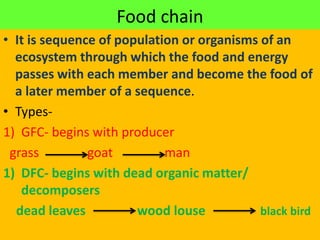
Food chain
• It is sequence of population or organisms of an
ecosystem through which the food and energy
passes with each member and become the food of
a later member of a sequence.
• Types-
1) GFC- begins with producer
grass goat man
1) DFC- begins with dead organic matter/
decomposers
dead leaves wood louse black bird
Food web
It is a specific position of an organism in the
food chain.

Ecosystem

  • 1.
    Dr R KUpadhyay
  • 2.
    Ecosystem - It isFunctional unit of nature where living organisms interact among themselves and also with abiotic components. - Term is coined by Tansley (1935) - Types- 1- terrestrial ecosystem- forest, grass land, desert 2- aquatic ecosystem- a) Fresh water- pond, lake , streams b) Salt water- marine, estuaries
  • 3.
    Structure and functionof ecosystem 1- Species composition- flora and fauna 2- Stratification- vertical distribution of different spp eg- tree at top strata and herbs at bottom ____________________________________________ ______ components of ecosystem ____________ 1- Productivity 2- Decomposition 3- Energy flow 4- Nutrient cycling
  • 4.
    GPP (GROSS PRIMARY PRODUCTIVITY) -ITIS THE RATE OF PRODUCTION OF ORGANIC MATTER DURING PHOTOSYNTHESIS NPP (NET PRIMARY PRODUCTIVITY) IT IS THE AMMOUNT OF ENERGY LEFT IN THE PRODUCERS AFTER UTILIZATION OF SOME ENERGY FOR RESPIRATION NPP = GPP – PRODUCTIVITY - THE RATE OF BIOMASSS PRODUCTION IS CALLED PRIMARY PRODUCTIVITY UNIT- g -2 yr -1 PRIMARY PRODUCTIVITY- IT IS THE AMOUNT OF BIOMASS OR ORGANIC MATTER PRODUCED PER UNIT AREA OVVER A TIME PERIOD BY PLANT DURING PHOTOSYNTHESIS
  • 5.
    FACTORS AFFECTING PRIMARYPRODUCTIVITY 1- ENVIRONMENTAL FACTOR- A) LIGHT- sun light is ultimate source of energy. poles receive less light than tropics therefore has less productivity. B) TEMPERATURE- affect enzyme activity C) MOISTURE- deserts have lower primary productivity due to less moisture D) NUTRIENT AVAILABILTY- essential for growth E) PHOTOSYNTHETIC EFFICIENCY OF PLANTS- C4 plants are more productive than C 3 plants
  • 6.
    Secondary productivity It israte of assimilation and formation of new organic matter by consumers. - It decreases with the increase in the trophic level
  • 7.
    Decomposition “ process ofbreaking of complex organic matter in to inorganic substances” Steps of decomposition-  fragmentation Leaching Catabolism Humification Mineralization DETRITUS – RAW MATERIAL FOR DEOMPOSITION
  • 8.
    1- FRAGMENTATION- BREAKINGDOWN OF DETRITUS INTO SMALL PIECES ------------------------------------------------------------------------------------------------------------------- 2- LEACHING- WATER SOLUBLE INORGANIC NUTRIENTS GO DOWN IN TO THE SOIL HORIZON (PRECIPITATED AS AVAILABLE SALTS) ------------------------------------------------------------------------------------------------------------------- 3- CATABOLISM- DEGRADATION OF DETRITUS INTO SIMPLE ORGANIC MATERIAL BY MICROBIAL ACTION AND LATER THEIR CONVERSION INTO INORGANIC COMPD ------------------------------------------------------------------------------------------------------------------- 4- HUMIFICATION- FORMATION OF HUMUS. HUMUS IS DARK COLOURED AMORPHOUS COLLOIDAL SUBSTANCE, HIGHLY RESISTANCE TO MICROBIAL ACTION AND DECOMPOSE AT VERY SLOW RATE. IT IS RESERVOIR OF NUTRIENTS. ------------------------------------------------------------------------------------------------------------------- 5- MINERALIZATION- DEGRADATION OF HUMUS BY MICROBIAL ACTION AND RELEASE OF INORGANIC NUTRIENTS
  • 9.
    FACTORS AFFECTING RATEOF DECOMPOSITION 1- CHEMICAL COMPOSITION OF DETRITUS- i) Decomposition is low if detritus is rich in lignin, chitin ii) Decomposition id fast if detritus is rich in N2 and water soluble substance like sugar 2- CLIMATIC FACTORS- i) favorable- moist warm environment ii) Un favourable- low temp, anaerobic condition
  • 10.
    Components of ecosystem 1-producers- plants 2- consumers – i) primary- herbivores ii) Secondary- eat herbivores iii) tertiary- feed on secondary consumers 3- carnivores- i) primary- feed on herbivores ii) Secondary- feed on primary carnivores
  • 11.
    Food chain • Itis sequence of population or organisms of an ecosystem through which the food and energy passes with each member and become the food of a later member of a sequence. • Types- 1) GFC- begins with producer grass goat man 1) DFC- begins with dead organic matter/ decomposers dead leaves wood louse black bird
  • 12.
    Food web It isa specific position of an organism in the food chain.