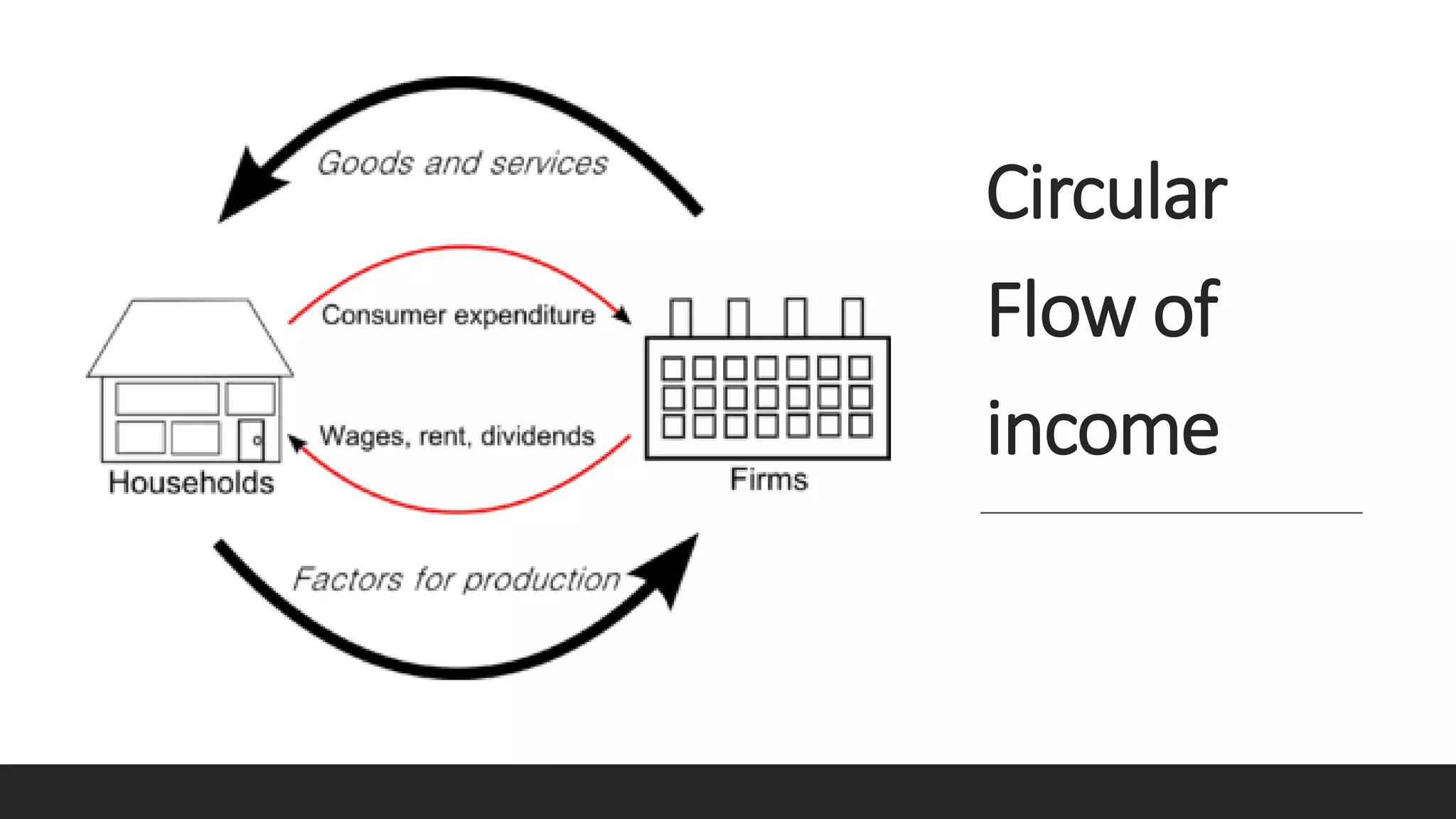
Circular
Flow of
income
Meaning of Circular Flow of Income:
The circular flow of income or circular flow is a model of the economy in which the
major exchanges are represented as flows of money, goods and services, etc.
between economic agents. The flows of money and goods exchanged in a closed circuit
correspond in value, but run in the opposite direction. The circular flow analysis is the
basis of national accounts and hence of macroeconomics.
Phases of Circular Flow of Income:
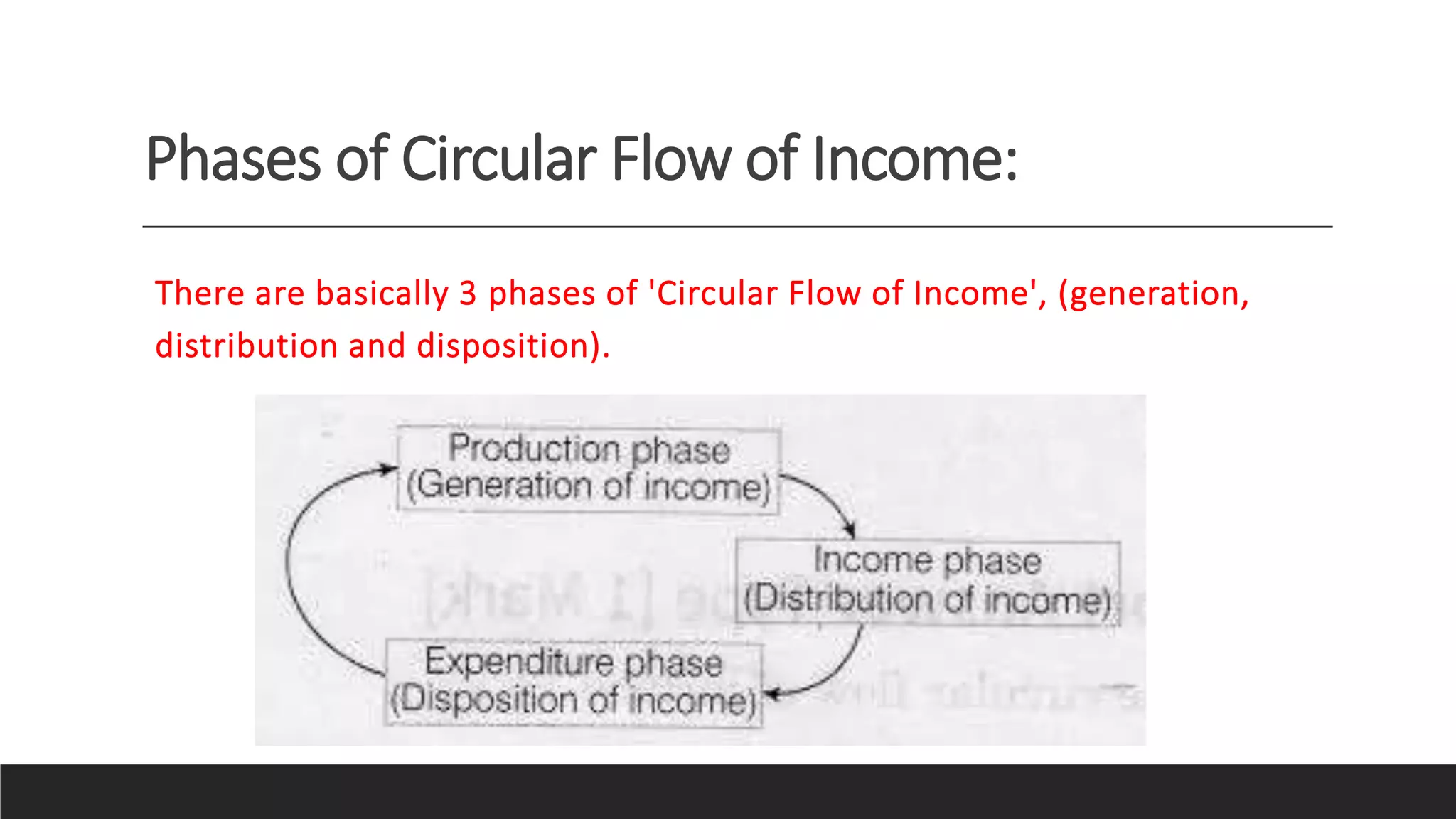
There are basically 3 phases of 'Circular Flow of Income', (generation,
distribution and disposition).
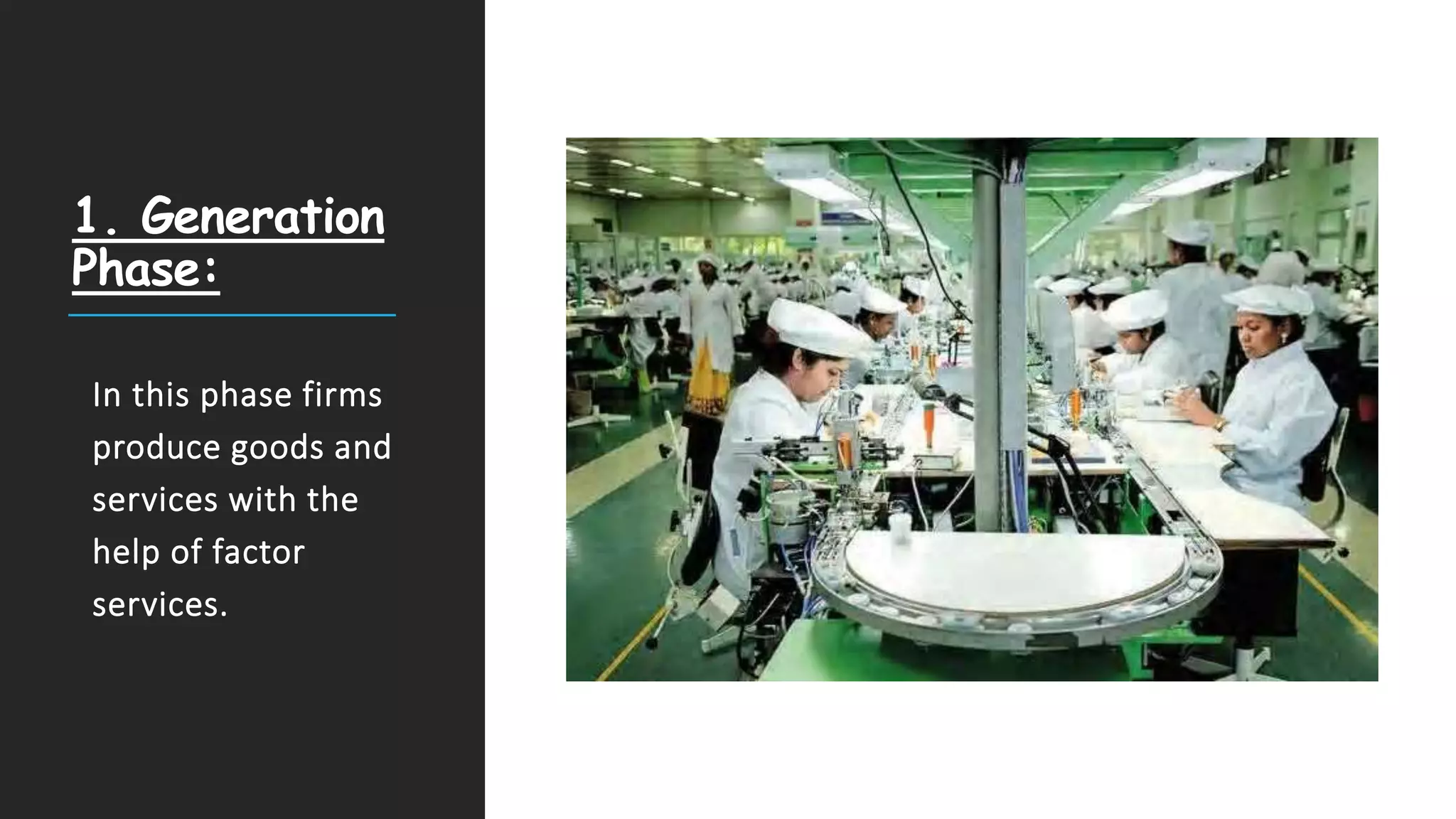
1. Generation
Phase:
In this phase firms
produce goods and
services with the
help of factor
services.
2. Distribution
Phase:
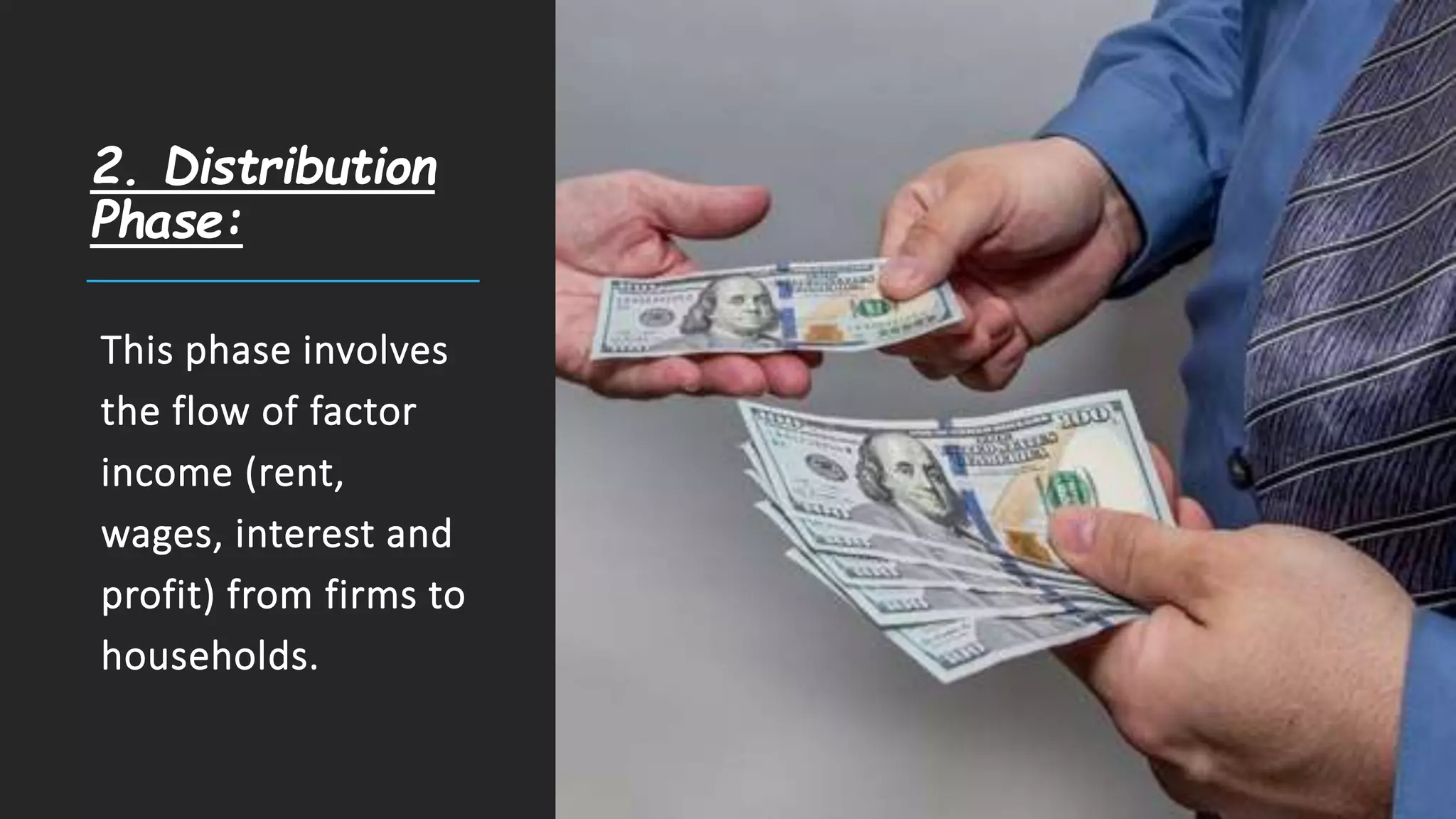
This phase involves
the flow of factor
income (rent,
wages, interest and
profit) from firms to
households.
3. Disposition
Phase:
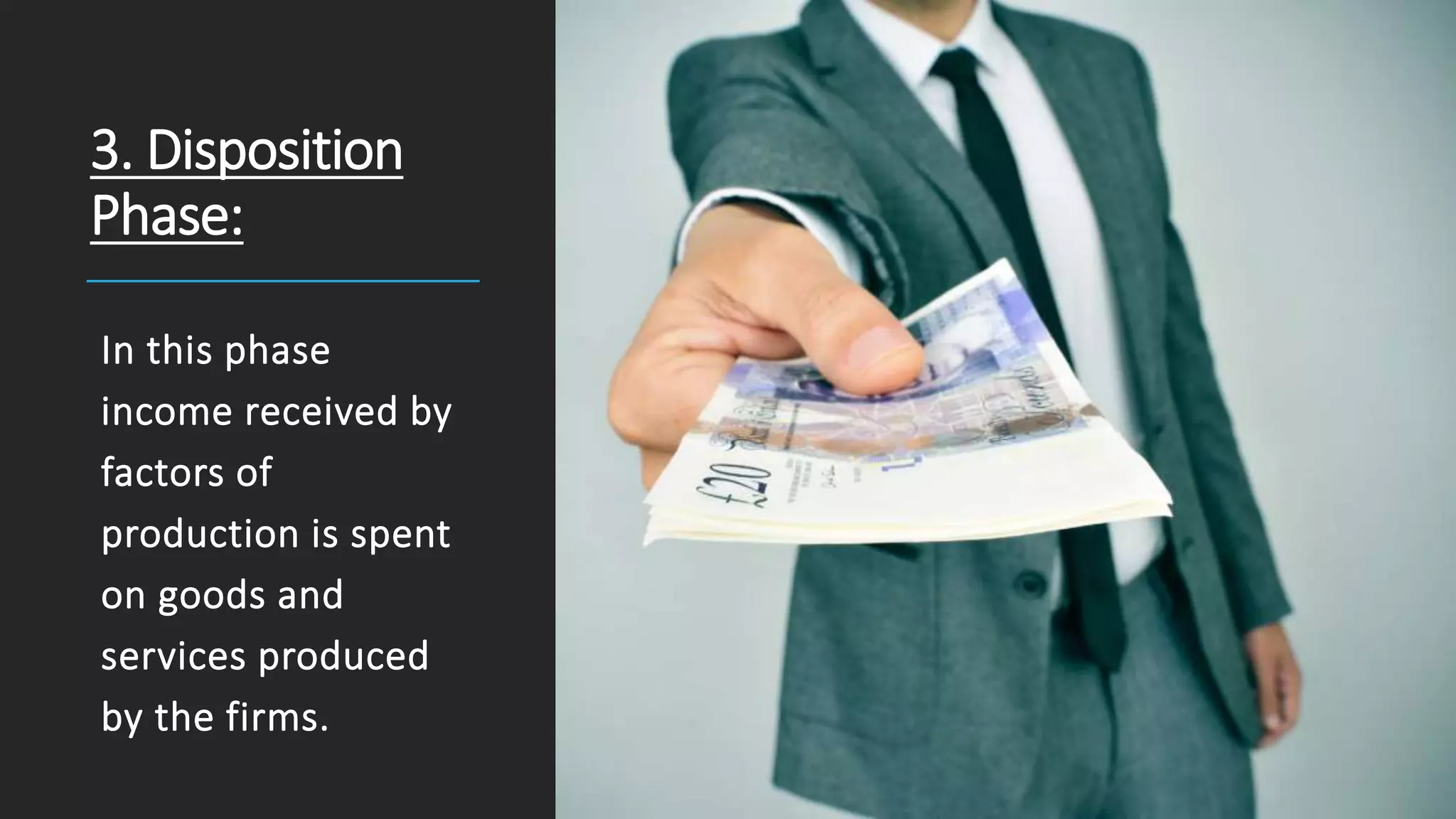
In this phase
income received by
factors of
production is spent
on goods and
services produced
by the firms.
Stock:
A stock is measured at one specific time, and represents a
quantity existing at that point in time (say, December 31, 2004),
which may have accumulated in the past.
Flow:
A flow variable is measured over an interval of time. Therefore,
a flow would be measured per unit of time (say a year). Flow is
roughly analogous to rate or speed in this sense.
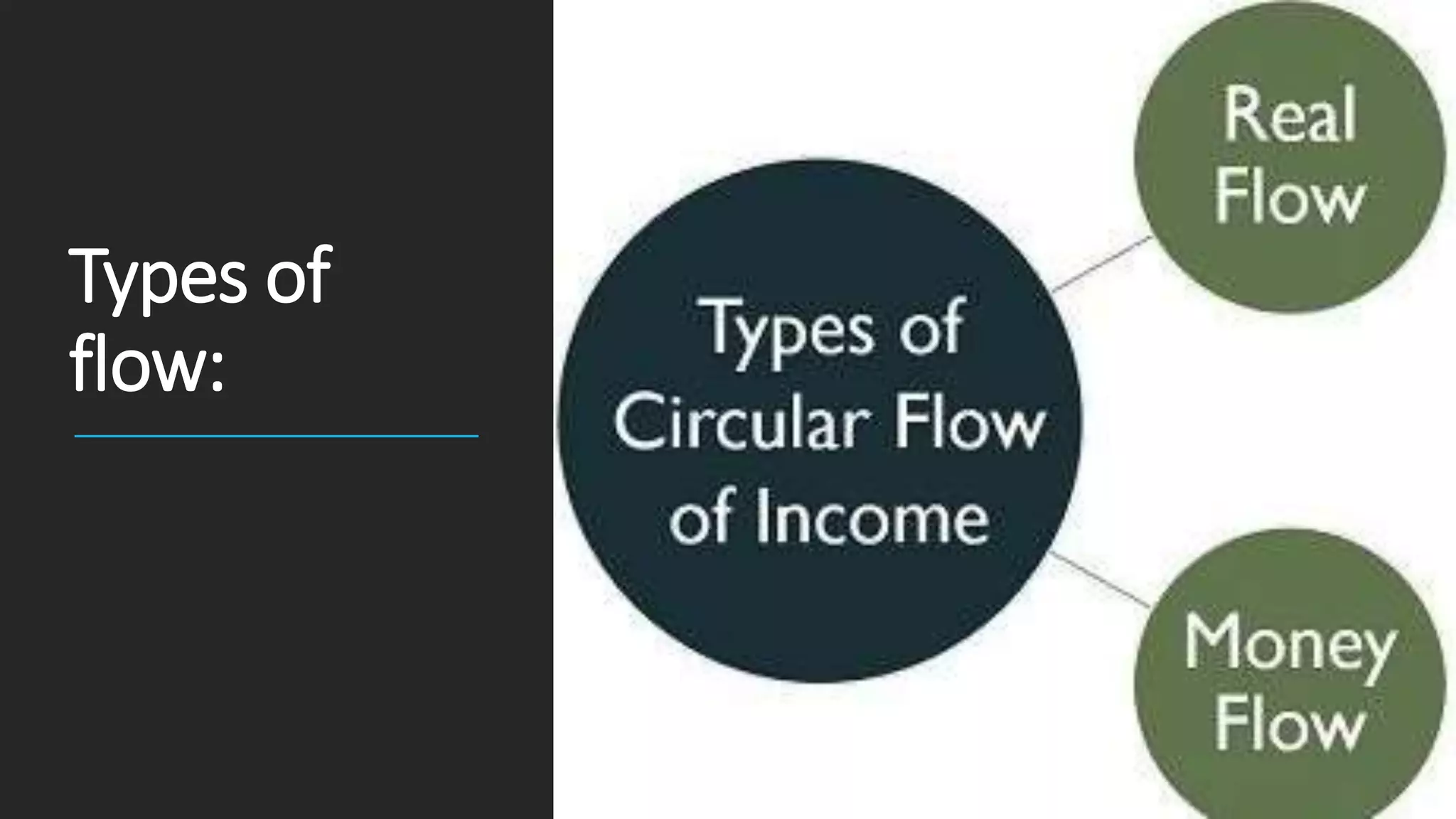
Types of
flow:
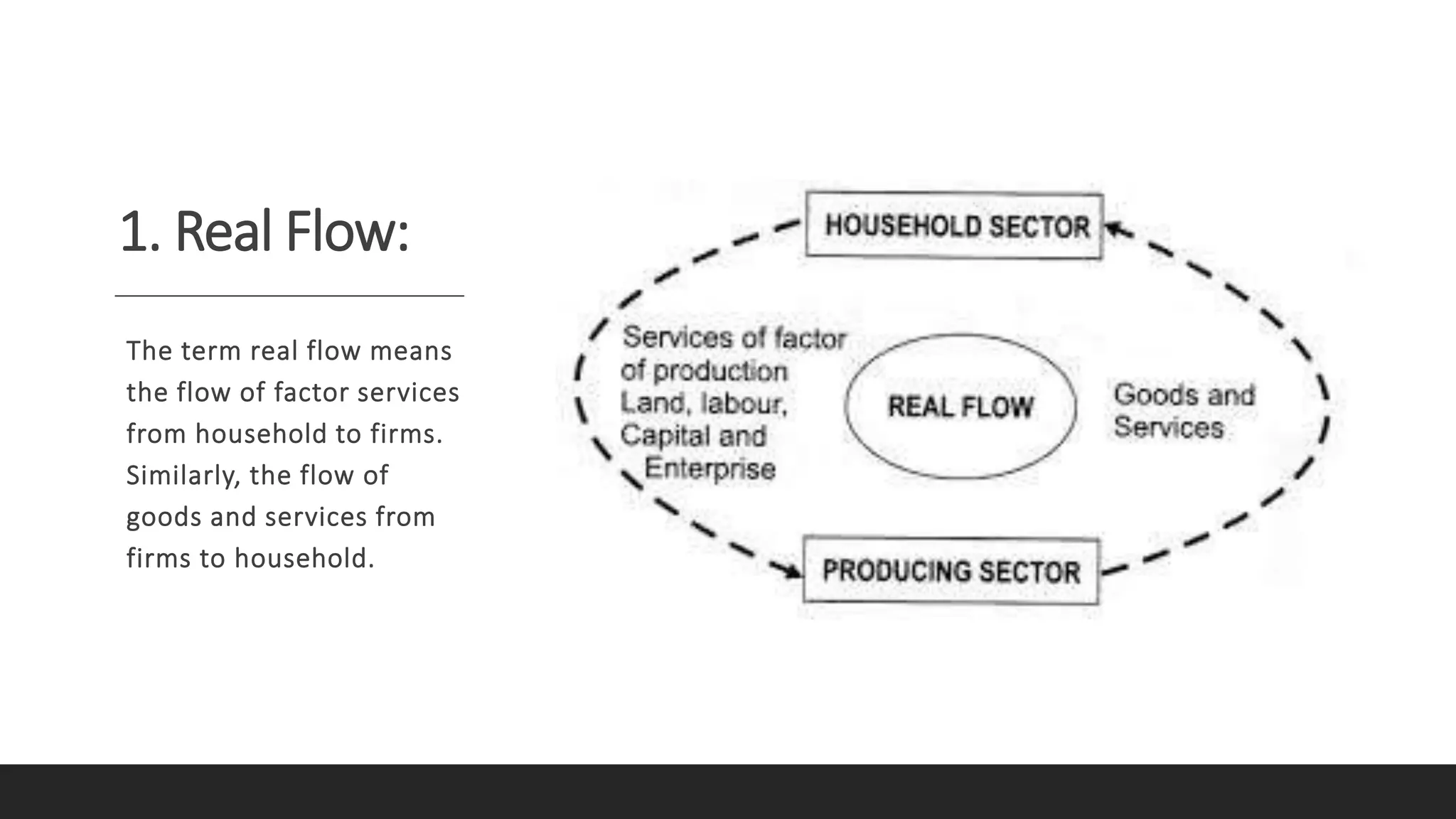
1. Real Flow:
The term real flow means
the flow of factor services
from household to firms.
Similarly, the flow of
goods and services from
firms to household.
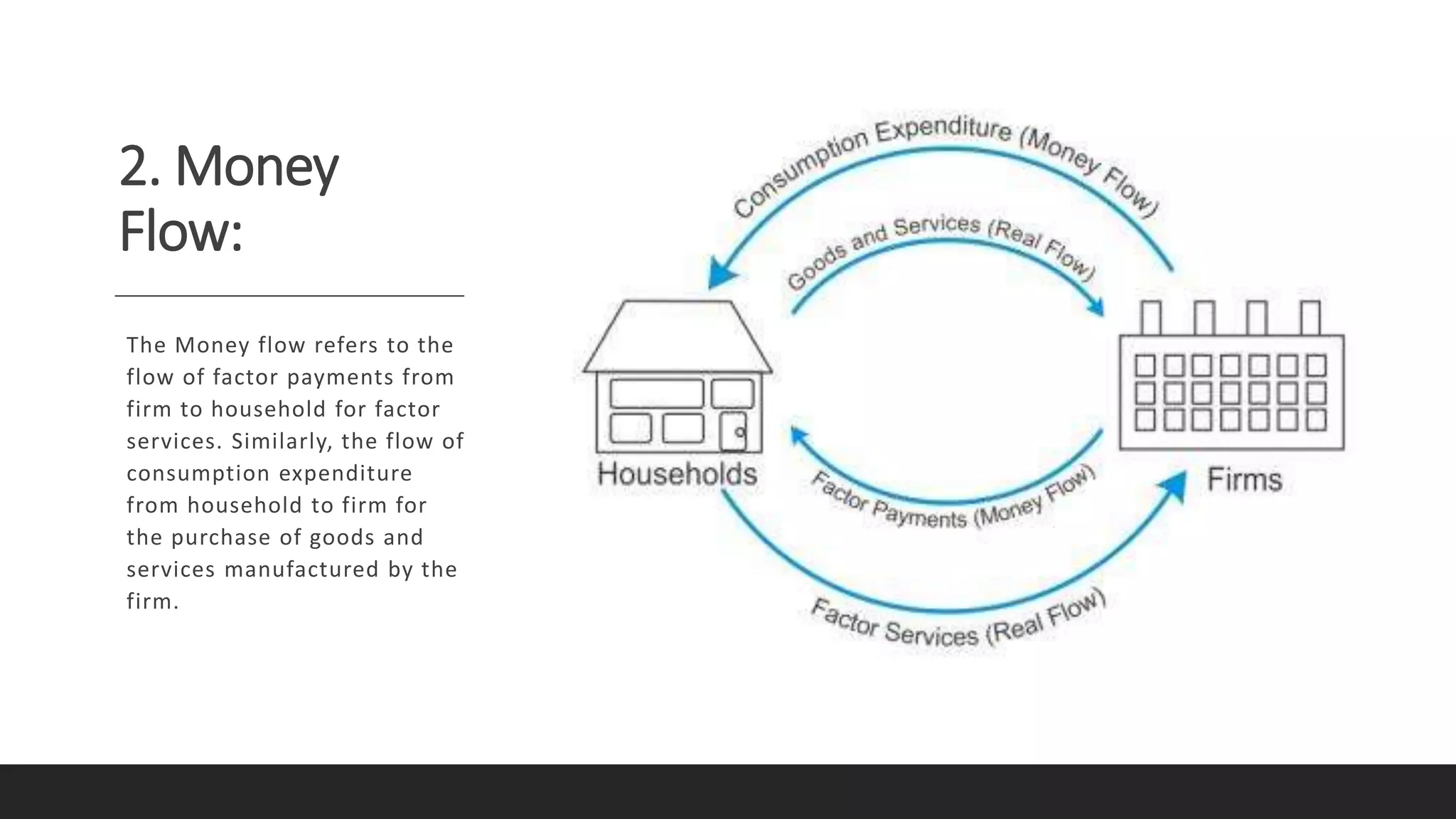
2. Money
Flow:
The Money flow refers to the
flow of factor payments from
firm to household for factor
services. Similarly, the flow of
consumption expenditure
from household to firm for
the purchase of goods and
services manufactured by the
firm.
Circular Flow in
a Simple
Economy (Two-
sector
economy):
Simple economy assumes that there are only two
sectors, i.e., Firms and Households.
Households are the owners of factors of
production and consumers of goods and services.
Firms produce goods and services and sell them
to households.]
It is the simplest form of economy, where there is
no government and foreign trade.
Some assumptions to understand this more
easily:
I. There are only two sectors, households and firms, i.e., no government or foreign trade
exist.
II. Households supplies factor services to firms and firms hire factor services only from
households.
III. Firms produce goods and services and sell their entire output to the households.
IV. Households receive factor income for their services and spend entire amount on
consumption of goods and services.
V. There are no savings in the economy, i.e. neither the households save from their
incomes nor the firms from their profit.
This Photo by Unknown author is licensed under CC BY.

Eco slideshare Chapter=Circular Flow of Income

  • 1.
  • 2.
    Meaning of CircularFlow of Income: The circular flow of income or circular flow is a model of the economy in which the major exchanges are represented as flows of money, goods and services, etc. between economic agents. The flows of money and goods exchanged in a closed circuit correspond in value, but run in the opposite direction. The circular flow analysis is the basis of national accounts and hence of macroeconomics.
  • 3.
    Phases of CircularFlow of Income: There are basically 3 phases of 'Circular Flow of Income', (generation, distribution and disposition).
  • 4.
    1. Generation Phase: In thisphase firms produce goods and services with the help of factor services.
  • 5.
    2. Distribution Phase: This phaseinvolves the flow of factor income (rent, wages, interest and profit) from firms to households.
  • 6.
    3. Disposition Phase: In thisphase income received by factors of production is spent on goods and services produced by the firms.
  • 7.
    Stock: A stock ismeasured at one specific time, and represents a quantity existing at that point in time (say, December 31, 2004), which may have accumulated in the past.
  • 8.
    Flow: A flow variableis measured over an interval of time. Therefore, a flow would be measured per unit of time (say a year). Flow is roughly analogous to rate or speed in this sense.
  • 9.
  • 10.
    1. Real Flow: Theterm real flow means the flow of factor services from household to firms. Similarly, the flow of goods and services from firms to household.
  • 11.
    2. Money Flow: The Moneyflow refers to the flow of factor payments from firm to household for factor services. Similarly, the flow of consumption expenditure from household to firm for the purchase of goods and services manufactured by the firm.
  • 12.
    Circular Flow in aSimple Economy (Two- sector economy): Simple economy assumes that there are only two sectors, i.e., Firms and Households. Households are the owners of factors of production and consumers of goods and services. Firms produce goods and services and sell them to households.] It is the simplest form of economy, where there is no government and foreign trade.
  • 13.
    Some assumptions tounderstand this more easily: I. There are only two sectors, households and firms, i.e., no government or foreign trade exist. II. Households supplies factor services to firms and firms hire factor services only from households. III. Firms produce goods and services and sell their entire output to the households. IV. Households receive factor income for their services and spend entire amount on consumption of goods and services. V. There are no savings in the economy, i.e. neither the households save from their incomes nor the firms from their profit. This Photo by Unknown author is licensed under CC BY.