TOPIC-CIRCULAR FLOW OF INCOME
YEAR- FIRST SEMESTER- 2 SESSION- 2020-2021
PAPER NAME – MACROECONOMICS-I
PREPARED BY
DR. KAMALIKA CHAKRABORTY
ASSISTANT PROFESSOR (DEPARTMENT OF ECONOMICS)
KHATRA ADIBASI MAHAVIDYALAYA, BANKURA,WEST BENGAL
DATE OF LECTURE : 11/05/2021
COURSE: B.Sc. (PROGRAMME) IN ECONOMICS
What is Circular Flow of Income?
The circular flow means the unending flow of production of goods and services, income, and
expenditure in an economy. It shows the redistribution of income in a circular manner between
the production unit and households.
These are land, labour, capital, and entrepreneurship.
• The payment for the contribution made by fixed natural resources (called land) is known as
rent.
• The payment for the contribution made by a human worker is known as wage.
• The payment for the contribution made by capital is known as interest.
• The payment for the contribution made by entrepreneurship is known as profit.
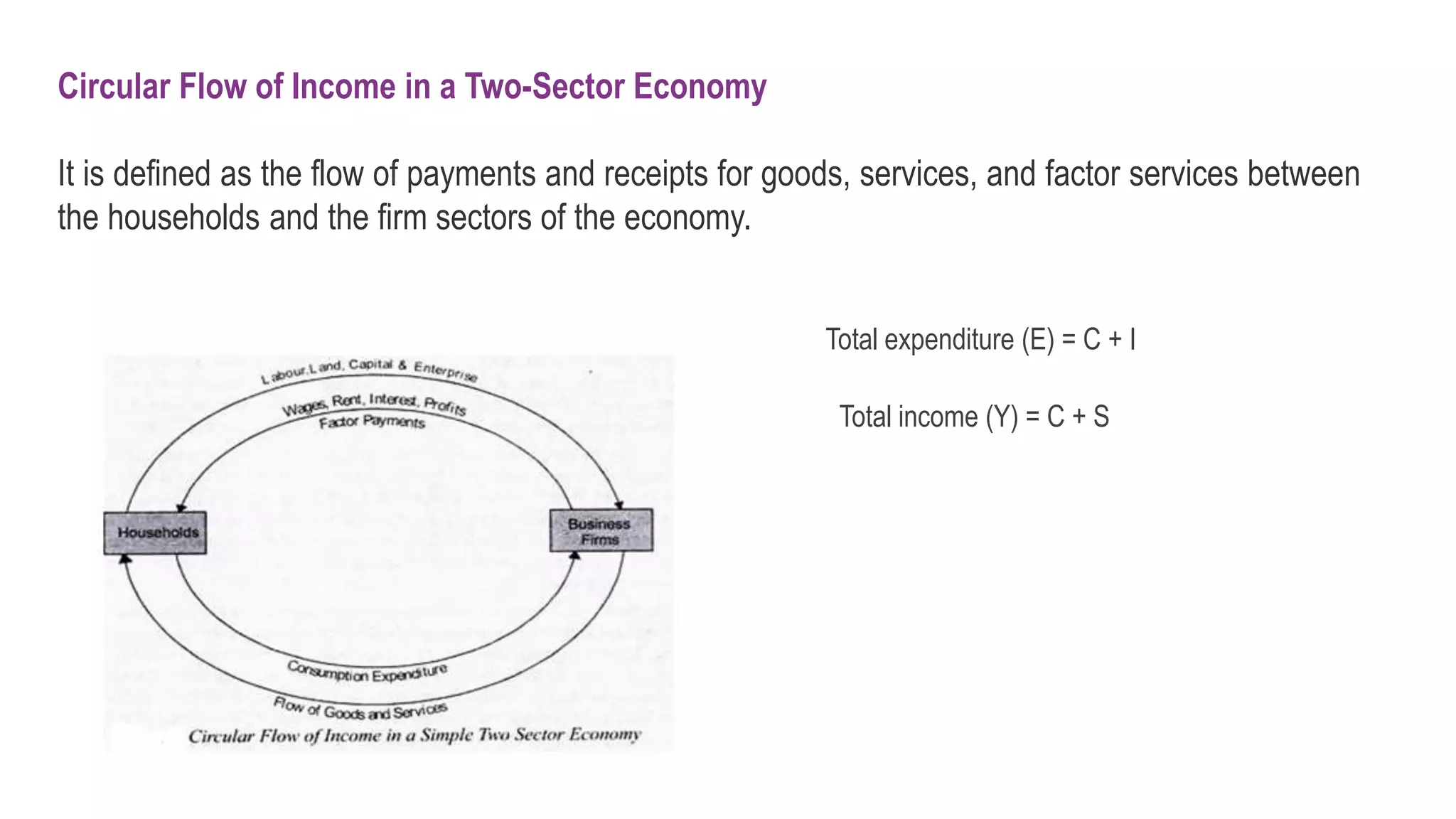
Circular Flow of Income in a Two-Sector Economy
It is defined as the flow of payments and receipts for goods, services, and factor services between
the households and the firm sectors of the economy.
Total expenditure (E) = C + I
Total income (Y) = C + S
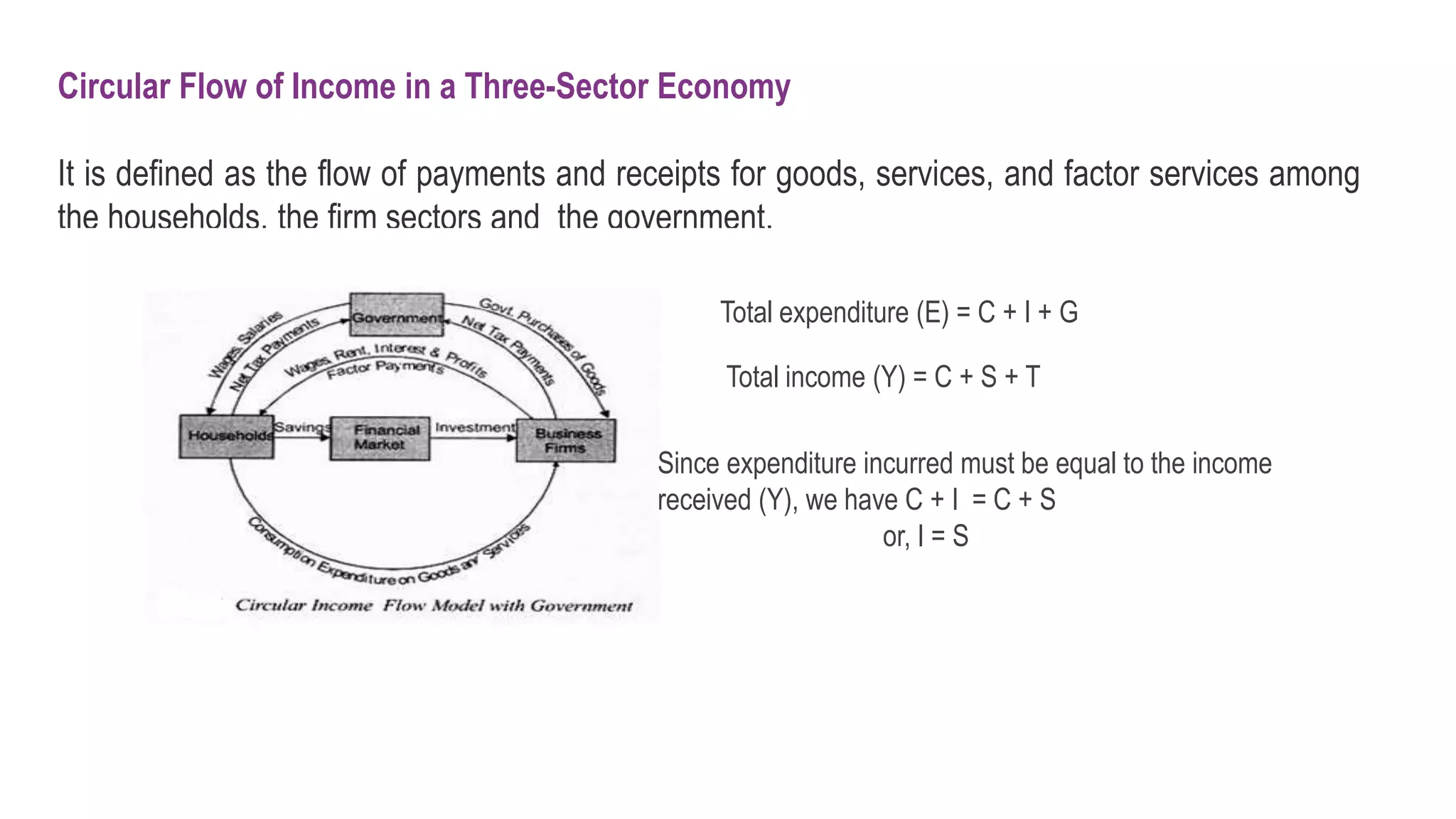
Circular Flow of Income in a Three-Sector Economy
It is defined as the flow of payments and receipts for goods, services, and factor services among
the households, the firm sectors and the government.
Total expenditure (E) = C + I + G
Total income (Y) = C + S + T
Since expenditure incurred must be equal to the income
received (Y), we have C + I = C + S
or, I = S
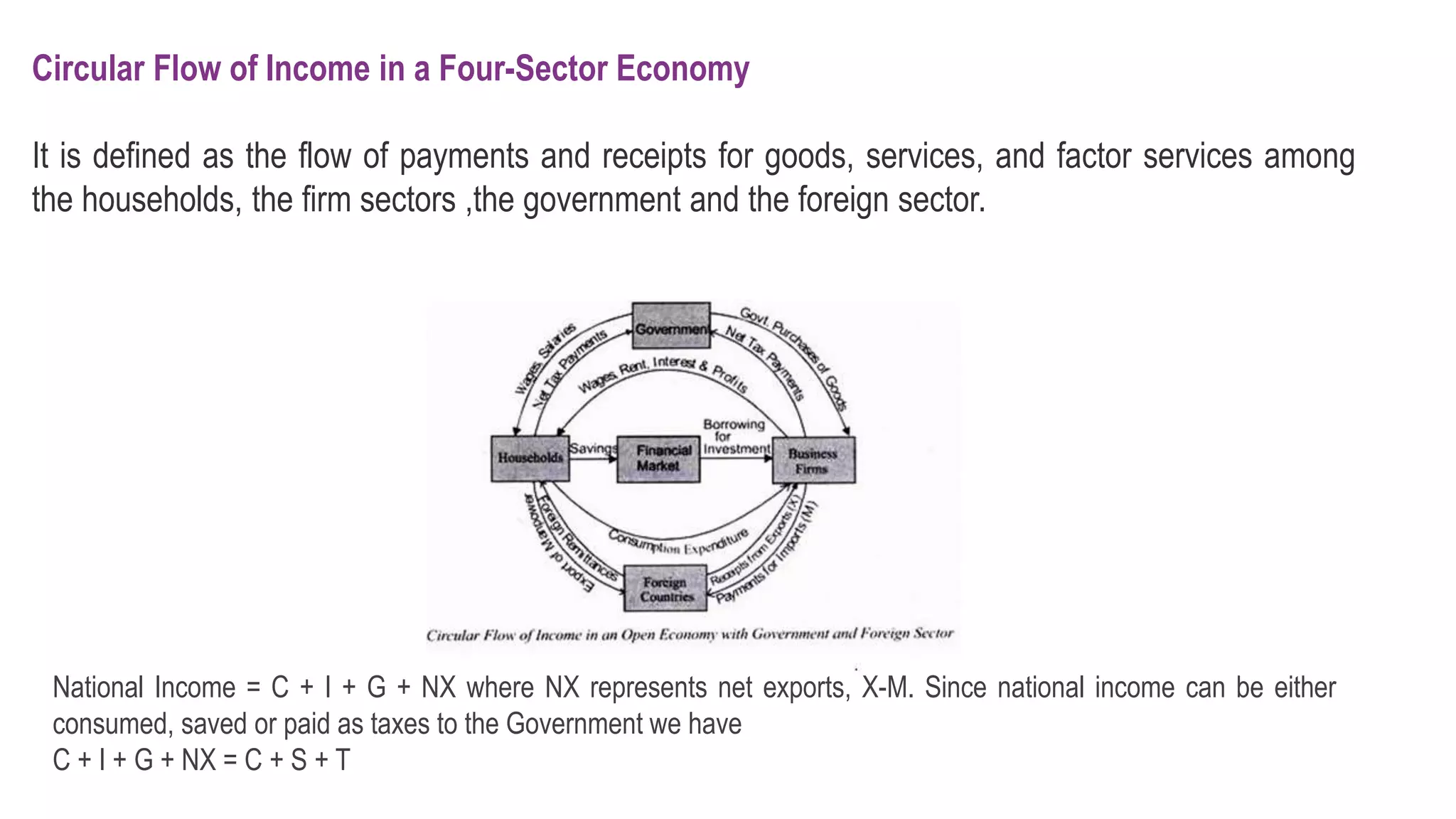
Circular Flow of Income in a Four-Sector Economy
It is defined as the flow of payments and receipts for goods, services, and factor services among
the households, the firm sectors ,the government and the foreign sector.
National Income = C + I + G + NX where NX represents net exports, X-M. Since national income can be either
consumed, saved or paid as taxes to the Government we have
C + I + G + NX = C + S + T
THANK YOU

1673416575_Circular Flow of Income.pptx

  • 1.
    TOPIC-CIRCULAR FLOW OFINCOME YEAR- FIRST SEMESTER- 2 SESSION- 2020-2021 PAPER NAME – MACROECONOMICS-I PREPARED BY DR. KAMALIKA CHAKRABORTY ASSISTANT PROFESSOR (DEPARTMENT OF ECONOMICS) KHATRA ADIBASI MAHAVIDYALAYA, BANKURA,WEST BENGAL DATE OF LECTURE : 11/05/2021 COURSE: B.Sc. (PROGRAMME) IN ECONOMICS
  • 2.
    What is CircularFlow of Income? The circular flow means the unending flow of production of goods and services, income, and expenditure in an economy. It shows the redistribution of income in a circular manner between the production unit and households. These are land, labour, capital, and entrepreneurship. • The payment for the contribution made by fixed natural resources (called land) is known as rent. • The payment for the contribution made by a human worker is known as wage. • The payment for the contribution made by capital is known as interest. • The payment for the contribution made by entrepreneurship is known as profit.
  • 3.
    Circular Flow ofIncome in a Two-Sector Economy It is defined as the flow of payments and receipts for goods, services, and factor services between the households and the firm sectors of the economy. Total expenditure (E) = C + I Total income (Y) = C + S
  • 4.
    Circular Flow ofIncome in a Three-Sector Economy It is defined as the flow of payments and receipts for goods, services, and factor services among the households, the firm sectors and the government. Total expenditure (E) = C + I + G Total income (Y) = C + S + T Since expenditure incurred must be equal to the income received (Y), we have C + I = C + S or, I = S
  • 5.
    Circular Flow ofIncome in a Four-Sector Economy It is defined as the flow of payments and receipts for goods, services, and factor services among the households, the firm sectors ,the government and the foreign sector. National Income = C + I + G + NX where NX represents net exports, X-M. Since national income can be either consumed, saved or paid as taxes to the Government we have C + I + G + NX = C + S + T
  • 6.