Easter festival
https://www.youtube.com/watch?v=apmMRyAdWV4
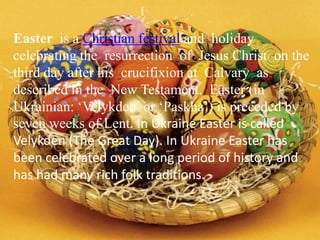
Easter is a Christian festival and holiday
celebrating the resurrection of Jesus Christ on the
third day after his crucifixion at Calvary as
described in the New Testament. Easter (in
Ukrainian: ‘Velykden’ or ‘Paskha’) is preceded by
seven weeks of Lent. In Ukraine Easter is called
Velykden (The Great Day). In Ukraine Easter has
been celebrated over a long period of history and
has had many rich folk traditions.
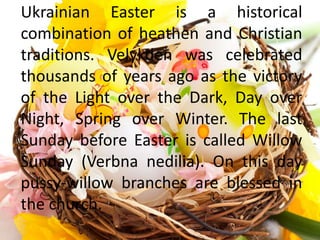
Ukrainian Easter is a historical
combination of heathen and Christian
traditions. Velykden was celebrated
thousands of years ago as the victory
of the Light over the Dark, Day over
Night, Spring over Winter. The last
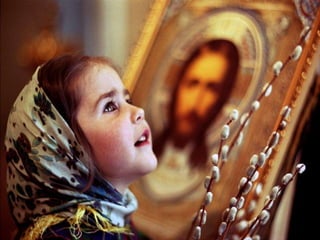
Sunday before Easter is called Willow
Sunday (Verbna nedilia). On this day
pussy-willow branches are blessed in
the church.
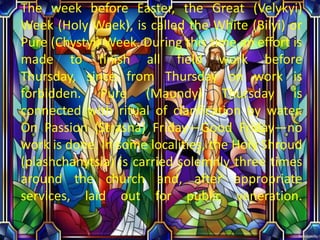
The week before Easter, the Great (Velykyi)
Week (Holy Week), is called the White (Bilyi) or
Pure (Chystyi) Week. During this time an effort is
made to finish all field work before
Thursday, since from Thursday on work is
forbidden. Pure (Maundy) Thursday is
connected with ritual of clarification by water.
On Passion (Strasna) Friday—Good Friday—no
work is done. In some localities, the Holy Shroud
(plashchanytsia) is carried solemnly three times
around the church and, after appropriate
services, laid out for public veneration.
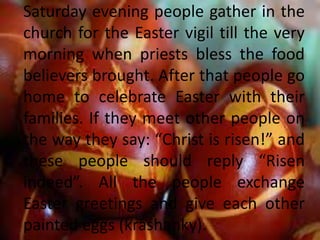
Saturday evening people gather in the
church for the Easter vigil till the very
morning when priests bless the food
believers brought. After that people go
home to celebrate Easter with their
families. If they meet other people on
the way they say: “Christ is risen!” and
these people should reply “Risen
indeed”. All the people exchange
Easter greetings and give each other
painted eggs (krashanky).
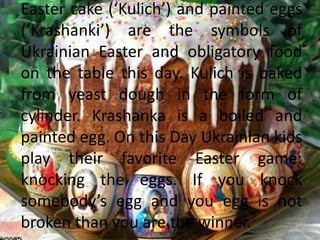
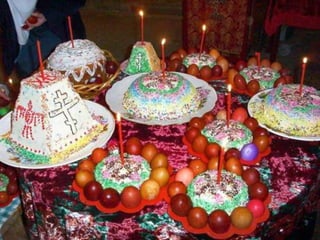
Easter cake (‘Kulich’) and painted eggs
(‘Krashanki’) are the symbols of
Ukrainian Easter and obligatory food
on the table this day. Kulich is baked
from yeast dough in the form of
cylinder. Krashanka is a boiled and
painted egg. On this Day Ukrainian kids
play their favorite Easter game:
knocking the eggs. If you knock
somebody’s egg and you egg is not
broken than you are the winner.
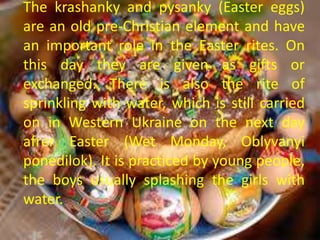
The krashanky and pysanky (Easter eggs)
are an old pre-Christian element and have
an important role in the Easter rites. On
this day they are given as gifts or
exchanged. There is also the rite of
sprinkling with water, which is still carried
on in Western Ukraine on the next day
afrer Easter (Wet Monday, Oblyvanyi
ponedilok). It is practiced by young people,
the boys usually splashing the girls with
water.
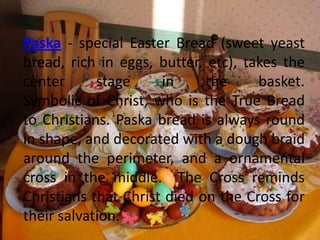
Paska - special Easter Bread (sweet yeast
bread, rich in eggs, butter, etc), takes the
center stage in the basket.
Symbolic of Christ, who is the True Bread
to Christians. Paska bread is always round
in shape, and decorated with a dough braid
around the perimeter, and a ornamental
cross in the middle. The Cross reminds
Christians that Christ died on the Cross for
their salvation.
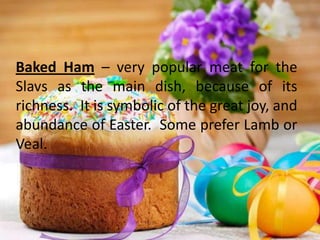
Baked Ham – very popular meat for the
Slavs as the main dish, because of its
richness. It is symbolic of the great joy, and
abundance of Easter. Some prefer Lamb or
Veal.
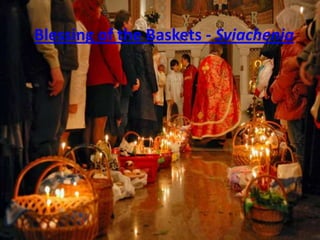
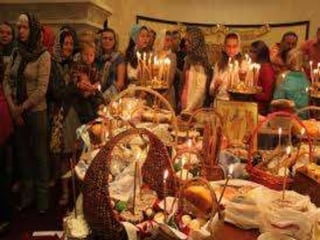
Blessing of the Baskets - Sviachenia
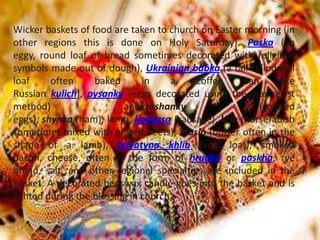
Wicker baskets of food are taken to church on Easter morning (in
other regions this is done on Holy Saturday). Paska (an
eggy, round loaf of bread sometimes decorated with religious
symbols made out of dough), Ukrainian babka (a tall cylindrical
loaf often baked in a coffee can like
Russian kulich), pysanky (eggs decorated using the wax-resist
method) andkrashanky (colored
eggs), shynka (ham), lamb, kovbasa (sausage), krin (horseradish
sometimes mixed with grated beets), maslo (butter often in the
shape of a lamb), telyatyna khlib (veal loaf), smoked
bacon, cheese, often in the form of hrudka or paskha, rye
bread, salt, and other regional specialties are included in the
basket. A decorated beeswax candle goes into the basket and is
lighted during the blessing in church.
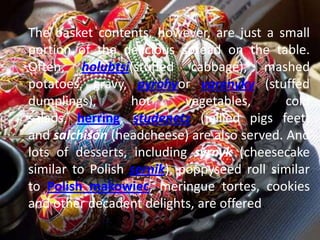
The basket contents, however, are just a small
portion of the delicious spread on the table.
Often, holubtsi(stuffed cabbage), mashed
potatoes, gravy, pyrohyor varenyky (stuffed
dumplings), hot vegetables, cold
salads, herring, studenetz (jellied pigs feet)
and salchison (headcheese) are also served. And
lots of desserts, including syrnyk (cheesecake
similar to Polish sernik), poppyseed roll similar
to Polish makowiec, meringue tortes, cookies
and other decadent delights, are offered.
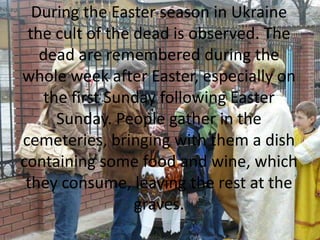
During the Easter season in Ukraine
the cult of the dead is observed. The
dead are remembered during the
whole week after Easter, especially on
the first Sunday following Easter
Sunday. People gather in the
cemeteries, bringing with them a dish
containing some food and wine, which
they consume, leaving the rest at the
graves.
Easter in Ukraine
Easter in Ukraine

Easter in Ukraine

  • 1.
  • 2.
    Easter is aChristian festival and holiday celebrating the resurrection of Jesus Christ on the third day after his crucifixion at Calvary as described in the New Testament. Easter (in Ukrainian: ‘Velykden’ or ‘Paskha’) is preceded by seven weeks of Lent. In Ukraine Easter is called Velykden (The Great Day). In Ukraine Easter has been celebrated over a long period of history and has had many rich folk traditions.
  • 3.
    Ukrainian Easter isa historical combination of heathen and Christian traditions. Velykden was celebrated thousands of years ago as the victory of the Light over the Dark, Day over Night, Spring over Winter. The last Sunday before Easter is called Willow Sunday (Verbna nedilia). On this day pussy-willow branches are blessed in the church.
  • 4.
    The week beforeEaster, the Great (Velykyi) Week (Holy Week), is called the White (Bilyi) or Pure (Chystyi) Week. During this time an effort is made to finish all field work before Thursday, since from Thursday on work is forbidden. Pure (Maundy) Thursday is connected with ritual of clarification by water. On Passion (Strasna) Friday—Good Friday—no work is done. In some localities, the Holy Shroud (plashchanytsia) is carried solemnly three times around the church and, after appropriate services, laid out for public veneration.
  • 5.
    Saturday evening peoplegather in the church for the Easter vigil till the very morning when priests bless the food believers brought. After that people go home to celebrate Easter with their families. If they meet other people on the way they say: “Christ is risen!” and these people should reply “Risen indeed”. All the people exchange Easter greetings and give each other painted eggs (krashanky).
  • 6.
    Easter cake (‘Kulich’)and painted eggs (‘Krashanki’) are the symbols of Ukrainian Easter and obligatory food on the table this day. Kulich is baked from yeast dough in the form of cylinder. Krashanka is a boiled and painted egg. On this Day Ukrainian kids play their favorite Easter game: knocking the eggs. If you knock somebody’s egg and you egg is not broken than you are the winner.
  • 7.
    The krashanky andpysanky (Easter eggs) are an old pre-Christian element and have an important role in the Easter rites. On this day they are given as gifts or exchanged. There is also the rite of sprinkling with water, which is still carried on in Western Ukraine on the next day afrer Easter (Wet Monday, Oblyvanyi ponedilok). It is practiced by young people, the boys usually splashing the girls with water.
  • 8.
    Paska - specialEaster Bread (sweet yeast bread, rich in eggs, butter, etc), takes the center stage in the basket. Symbolic of Christ, who is the True Bread to Christians. Paska bread is always round in shape, and decorated with a dough braid around the perimeter, and a ornamental cross in the middle. The Cross reminds Christians that Christ died on the Cross for their salvation.
  • 9.
    Baked Ham –very popular meat for the Slavs as the main dish, because of its richness. It is symbolic of the great joy, and abundance of Easter. Some prefer Lamb or Veal.
  • 10.
    Blessing of theBaskets - Sviachenia
  • 11.
    Wicker baskets offood are taken to church on Easter morning (in other regions this is done on Holy Saturday). Paska (an eggy, round loaf of bread sometimes decorated with religious symbols made out of dough), Ukrainian babka (a tall cylindrical loaf often baked in a coffee can like Russian kulich), pysanky (eggs decorated using the wax-resist method) andkrashanky (colored eggs), shynka (ham), lamb, kovbasa (sausage), krin (horseradish sometimes mixed with grated beets), maslo (butter often in the shape of a lamb), telyatyna khlib (veal loaf), smoked bacon, cheese, often in the form of hrudka or paskha, rye bread, salt, and other regional specialties are included in the basket. A decorated beeswax candle goes into the basket and is lighted during the blessing in church.
  • 12.
    The basket contents,however, are just a small portion of the delicious spread on the table. Often, holubtsi(stuffed cabbage), mashed potatoes, gravy, pyrohyor varenyky (stuffed dumplings), hot vegetables, cold salads, herring, studenetz (jellied pigs feet) and salchison (headcheese) are also served. And lots of desserts, including syrnyk (cheesecake similar to Polish sernik), poppyseed roll similar to Polish makowiec, meringue tortes, cookies and other decadent delights, are offered.
  • 14.
    During the Easterseason in Ukraine the cult of the dead is observed. The dead are remembered during the whole week after Easter, especially on the first Sunday following Easter Sunday. People gather in the cemeteries, bringing with them a dish containing some food and wine, which they consume, leaving the rest at the graves.