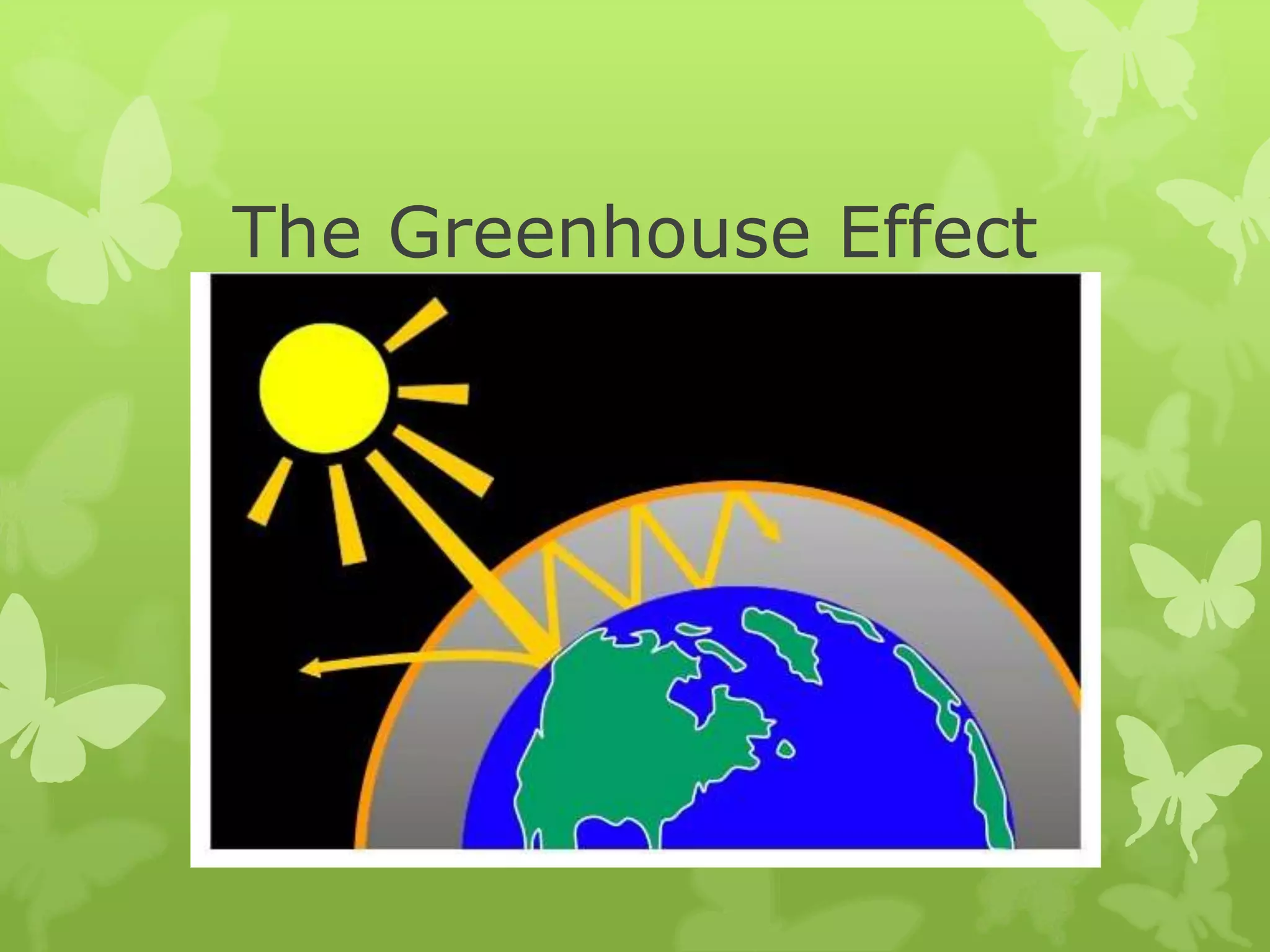
The Greenhouse Effect
Introduction
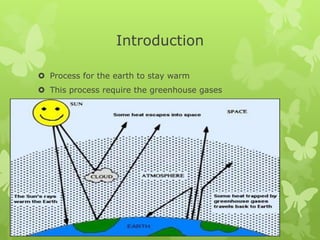
 Process for the earth to stay warm
 This process require the greenhouse gases
How does it works?
 Greenhouse gases such as:
 carbon dioxide
 Methane
 Nitrous oxide
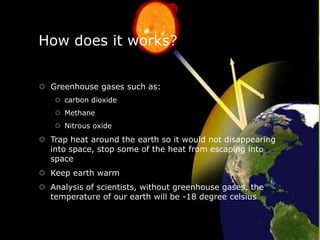
 Trap heat around the earth so it would not disappearing
into space, stop some of the heat from escaping into
space
 Keep earth warm
 Analysis of scientists, without greenhouse gases, the
temperature of our earth will be -18 degree celsius
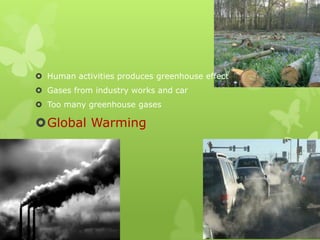
 Human activities produces greenhouse effect
 Gases from industry works and car
 Too many greenhouse gases
Global Warming
THE GREENHOUSE EFFECTS
 With more heat trapped on Earth, the planet
will become warmer, which means the
weather all over Earth will change.
 For example, summers will get hotter, and
winters will get cooler.
 During the entire 20th century, the average
global temperature increased by about 0.6
degrees Celsius.
The Weather
 In Britain, winter and summer temperatures
will increase and the weather will be
warmer. In winter it may also rain
more but in summer it may become drier.
 Some places will become drier and others will
be wetter. Although most areas will be
warmer, some areas will become cooler.
 All over the world, these weather changes will
affect the kind of crop that can be grown.
Plants, animals and even people may find it
difficult to survive in different conditions.
Sea Levels
 Higher temperatures will make the water of
the seas and oceans expand. Ice melting in
the Antarctic and Greenland will flow into the
sea.
 All over the world, sea levels may rise, perhaps
by as much as 20 to 40 cm, by the beginning of
the next century.
 Higher sea levels will threaten the low-lying
coastal areas of the world, such as the
Bangladesh. Many people will have to leave their
homes and large areas of farmland will be ruined
because of floods.
 Farming
 The changes in the weather will affect the
types of crops grown in different parts of the
world.
 Some crops, such as wheat and rice grow
better in higher temperatures, but other
plants, such as maize and sugarcane do not.
 Changes in the amount of rainfall will also
affect how many plants grow.
 The effect of a change in the weather on
plant growth may lead to some countries not
having enough food. Brazil, south-east Asia
and China will be affected the most and
many people could suffer from hunger.
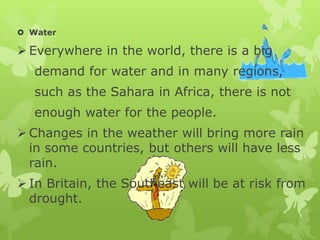
 Water
 Everywhere in the world, there is a big
demand for water and in many regions,
such as the Sahara in Africa, there is not
enough water for the people.
 Changes in the weather will bring more rain
in some countries, but others will have less
rain.
 In Britain, the Southeast will be at risk from
drought.
IN DANGER!
 Plants & Animals
 It has taken million of years for life to
become used to the conditions on Earth. As
weather and temperature changes, the
homes of plants and animals will be affected
all over the world.
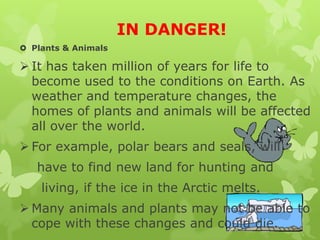
 For example, polar bears and seals, will
have to find new land for hunting and
living, if the ice in the Arctic melts.
 Many animals and plants may not be able to
cope with these changes and could die.
 People
 The changes in climate will affect everyone,
but some populations will be at greater risk.
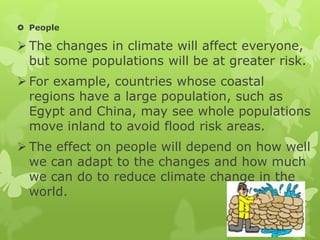
 For example, countries whose coastal
regions have a large population, such as
Egypt and China, may see whole populations
move inland to avoid flood risk areas.
 The effect on people will depend on how well
we can adapt to the changes and how much
we can do to reduce climate change in the
world.

Greenhouseeffect

  • 1.
  • 2.
    Introduction  Process forthe earth to stay warm  This process require the greenhouse gases
  • 3.
    How does itworks?  Greenhouse gases such as:  carbon dioxide  Methane  Nitrous oxide  Trap heat around the earth so it would not disappearing into space, stop some of the heat from escaping into space  Keep earth warm  Analysis of scientists, without greenhouse gases, the temperature of our earth will be -18 degree celsius
  • 4.
     Human activitiesproduces greenhouse effect  Gases from industry works and car  Too many greenhouse gases Global Warming
  • 5.
    THE GREENHOUSE EFFECTS With more heat trapped on Earth, the planet will become warmer, which means the weather all over Earth will change.  For example, summers will get hotter, and winters will get cooler.  During the entire 20th century, the average global temperature increased by about 0.6 degrees Celsius.
  • 6.
    The Weather  InBritain, winter and summer temperatures will increase and the weather will be warmer. In winter it may also rain more but in summer it may become drier.  Some places will become drier and others will be wetter. Although most areas will be warmer, some areas will become cooler.  All over the world, these weather changes will affect the kind of crop that can be grown. Plants, animals and even people may find it difficult to survive in different conditions.
  • 7.
    Sea Levels  Highertemperatures will make the water of the seas and oceans expand. Ice melting in the Antarctic and Greenland will flow into the sea.  All over the world, sea levels may rise, perhaps by as much as 20 to 40 cm, by the beginning of the next century.  Higher sea levels will threaten the low-lying coastal areas of the world, such as the Bangladesh. Many people will have to leave their homes and large areas of farmland will be ruined because of floods.
  • 8.
     Farming  Thechanges in the weather will affect the types of crops grown in different parts of the world.  Some crops, such as wheat and rice grow better in higher temperatures, but other plants, such as maize and sugarcane do not.  Changes in the amount of rainfall will also affect how many plants grow.  The effect of a change in the weather on plant growth may lead to some countries not having enough food. Brazil, south-east Asia and China will be affected the most and many people could suffer from hunger.
  • 9.
     Water  Everywherein the world, there is a big demand for water and in many regions, such as the Sahara in Africa, there is not enough water for the people.  Changes in the weather will bring more rain in some countries, but others will have less rain.  In Britain, the Southeast will be at risk from drought.
  • 10.
    IN DANGER!  Plants& Animals  It has taken million of years for life to become used to the conditions on Earth. As weather and temperature changes, the homes of plants and animals will be affected all over the world.  For example, polar bears and seals, will have to find new land for hunting and living, if the ice in the Arctic melts.  Many animals and plants may not be able to cope with these changes and could die.
  • 11.
     People  Thechanges in climate will affect everyone, but some populations will be at greater risk.  For example, countries whose coastal regions have a large population, such as Egypt and China, may see whole populations move inland to avoid flood risk areas.  The effect on people will depend on how well we can adapt to the changes and how much we can do to reduce climate change in the world.