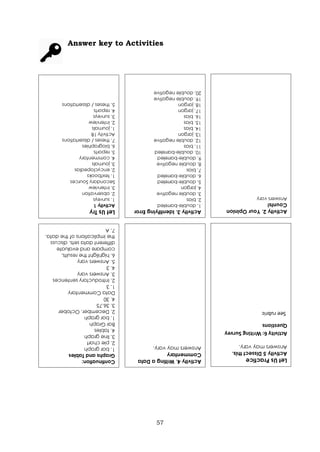
English for Academic and
Professional Purposes
Quarter 2 – Module 5:
Writing a Research Report
11
Grade 11 – English for Academic and Professional Purposes
Alternative Delivery Mode
Quarter 2 – Module 5: Writing a Research Report
First Edition, 2020
Republic Act 8293, section 176 states that: No copyright shall subsist in any
work of the Government of the Philippines. However, prior approval of the
government agency or office wherein the work is created shall be necessary for
exploitation of such work for profit. Such agency or office may, among other things,
impose as a condition the payment of royalties.
Borrowed materials (i.e., songs, stories, poems, pictures, photos, brand names,
trademarks, etc.) included in this module are owned by their respective copyright
holders. Every effort has been exerted to locate and seek permission to use these
materials from their respective copyright owners. The publisher and authors do not
represent nor claim ownership over them.
Published by the Department of Education
Secretary: Leonor Magtolis Briones
Undersecretary: Diosdado M. San Antonio
Printed in the Philippines by Davao City Division Learning Resources Management
Development System (LRMDS)
Department of Education – Davao City Division, Region XI
Office Address: Elpidio Quirino Ave., Poblacion District, Davao City, 8000 Davao del Sur
Telefax: (082) 224-3274, (082) 222-1672
E-mail Address: davao.city@deped.gov.ph
Development Team of the Module
Writers: Carla Rica B. San Luis
Editor: Marilyn C. Braganza
Reviewer: Divilyn M. Rodriguez
Illustrator: Ranie D. Villanueva
Layout Artist:
Template Developer: Neil Edward D. Diaz
Management Team: Reynaldo M. Guillena
Jinky B. Firman
Marilyn V. Deduyo
Alma C. Cifra
Aris B. Juanillo
May Ann M. Jumuad
English for Academic
and Professional
Purposes
Quarter 2 – Module 5:
Writing a Research Report
11
1
Introductory Message
For the facilitator:
Welcome to English for Academic and Professional Purposes
Alternative Delivery Mode (ADM) module on Writing a Research Report.
The activities in this module are arranged sequentially to help the
learners understand the topic and develop the desired skill or learning
competency.
As a facilitator, you are expected to orient the learners on how to use
this module. You also need to keep track of the learners' progress while
allowing them to manage their own learning.
Remind the learner that if there are things he/she doesn’t
understand, he/she must not hesitate to call for your help and assistance.
For the learner:
Welcome to English for Academic and Professional Purposes
Alternative Delivery Mode (ADM) module on Writing a Research Report.
The activities in this module are arranged sequentially to help you
understand the topic and develop the desired skill or learning competency.
As a learner, you must learn to become responsible of your own
learning. Take time to read, understand, and perform the different activities
in the module. If there are things you don’t understand, do not hesitate to
call your facilitator / teacher for assistance.
The following are some reminders in using this module:
1. Use the module with care. Use a separate sheet of paper in
answering the exercises.
2. Do not forget to answer Let us Try before moving on to the other
activities in the module.
3. Read the instructions carefully before doing each task.
4. Observe honesty and integrity in doing the tasks and checking
your answers.
5. Finish the task at hand before proceeding to the next.
6. Return this module to your teacher/facilitator once you are
through with it.
We hope that you will find meaningful learning as you go through the
different activities in this module.
2
Let Us Learn
In the English language, writing is one of the essential skills that you need to
learn and hone. As you climb the ladder from your Junior High School years to Senior
High School, the level of your ability to write is likely to increase. This is also true with
the content of your writing specifically in academic papers. You just don’t write off
the top of your head rather you are expected to create better content. That is, you
do thorough research about a certain topic in order to support your stock
knowledge by finding the right sources and citing them. So, what is this module all
about?
After going through this module, you are expected to:
1. formulate a survey questionnaire;
2. summarize survey results or findings through visual/graphic and narrative
forms; and
3. write a research report.
Let Us Try
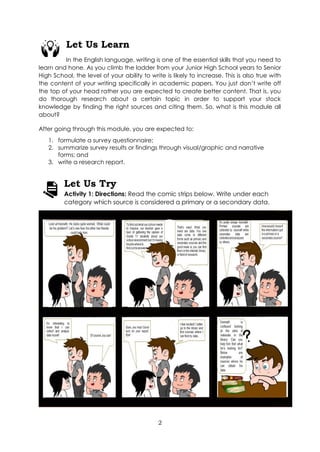
Activity 1: Directions: Read the comic strips below. Write under each
category which source is considered a primary or a secondary data.
3
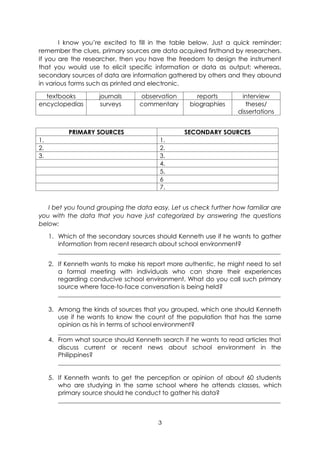
I know you’re excited to fill in the table below. Just a quick reminder;
remember the clues, primary sources are data acquired firsthand by researchers.
If you are the researcher, then you have the freedom to design the instrument
that you would use to elicit specific information or data as output; whereas,
secondary sources of data are information gathered by others and they abound
in various forms such as printed and electronic.
textbooks journals observation reports interview
encyclopedias surveys commentary biographies theses/
dissertations
PRIMARY SOURCES SECONDARY SOURCES
1. 1.
2. 2.
3. 3.
4.
5.
6
7.
I bet you found grouping the data easy. Let us check further how familiar are
you with the data that you have just categorized by answering the questions
below:
1. Which of the secondary sources should Kenneth use if he wants to gather
information from recent research about school environment?
________________________________________________________________________
2. If Kenneth wants to make his report more authentic, he might need to set
a formal meeting with individuals who can share their experiences
regarding conducive school environment. What do you call such primary
source where face-to-face conversation is being held?
________________________________________________________________________
3. Among the kinds of sources that you grouped, which one should Kenneth
use if he wants to know the count of the population that has the same
opinion as his in terms of school environment?
________________________________________________________________________
4. From what source should Kenneth search if he wants to read articles that
discuss current or recent news about school environment in the
Philippines?
________________________________________________________________________
5. If Kenneth wants to get the perception or opinion of about 60 students
who are studying in the same school where he attends classes, which
primary source should he conduct to gather his data?
________________________________________________________________________
4
Lesson
1 Sources of Data
Did you fare effortlessly in this activity? Great! I am absolutely sure that you will
find the next section of this module more interesting as you will come to know
the distinctions among the sources you have grouped. Are you ready?
Let Us Study
As a student, you will have to learn and write various kinds of papers.
Usually, it starts with an essay where you simply share your opinions. Then,
you will be introduced to research report writing where you will collect
information through exploration of a topic in different sources and materials
which afterwards you will summarize in a well-thought manner. As you continue
your academic journey, your skills in forming opinion and finding reliable sources
are now fused in creating a research paper. This is when the selection of
information becomes crucial in an academic writing. Let us now distinguish each
one from the other.
Data can be collected in two ways:
(1) Primary Sources are results of firsthand knowledge which means they are
created by a person who actually witnessed an event such as written accounts
of an individual’s thoughts or observations. This kind of data directly came from
the data source which made it more reliable, accurate, and unbiased. Below
are the most commonly used primary sources in research:
a. Surveys are “conducted to get the pulse, perception, perspective, and
preferences of a particular group of people” (Dapat, 2016). It usually
consists of a set of questions about a particular topic directed to specific
participants. The data collected from surveys aim to provide a forecast,
statistical analysis, or discovery of trends and behavior. A survey is a
common instrument preferred in research projects since its cost-efficient,
entails unbiased responses, and protects respondents’ identity (Cristobal &
Cristobal, 2017).
b. Interview is a formal meeting between two or more persons where
exchange of information occurs thru an in depth conversation. An
interview schedule or topic guide, a list of questions or topic areas, is
prepared by the interviewer (Amorado, Boholano, & Talili, 2017). It may be
conducted individually or by group. Interviews done in groups are also
called a focus group discussion.
5
c. Observation is another way of collecting data systematically, where
researchers can partake in the conduct of research (Cristobal & Cristobal,
2017). In a non-participant observation, there is a limited interaction
between the researcher and the people one observes; whereas,
participant observation allows the researcher to engage in the activities of
the research participants. Either way, the researcher needs to prepare an
observation checklist or observation guide where observable events in
relationship to the topic of interest are recorded.
Primary sources are not limited in the abovementioned data sources. Primary
sources for the different fields of research vary.
Research field Primary Sources
History • Letters and diaries
• Photographs and video
footage
• Official documents and records
• Physical objects
Art and literature • Novels and poems
• Paintings and art installations
• Films and performances
Communication and social studies • Interview transcripts
• Recordings of speeches
• Social media posts
Law and politics • Court records
• Legal texts
• Government documents
Sciences • Empirical studies
• Statistical data
Source: https://www.scribbr.com/citing-sources/primary-and-secondary-
sources/
(2) Secondary Sources are data that someone has already done on a subject.
When a researcher uses a secondary source, he/she relies on the expert’s
conclusion about the topic. Secondary sources are usually utilized to provide
description or explanation of the primary data since it often involves
“generalization, synthesis, interpretation, commentary or evaluation in an
attempt to convince the reader of the creator's argument” (“Primary and
secondary sources,” 2020). Examples of secondary sources are:
a. Biographies are detailed description of a person's life written by someone
else.
b. Commentaries are “spoken or written discussion in which people express
opinions about someone or something” (Commentary, 2020). Moreover, it
6
also focuses in providing a complete analysis and detailed description of
a specific text. Commentaries serve as a medium where a variety of
perspectives can be discussed (“How to,” 2019).
c. Encyclopedias are set of books that contain facts about various subjects.
It is comparable to a database where articles on all branches of
knowledge can be located and arranged alphabetically (Encyclopedia,
2020).
d. Journals are collection of articles such as research that are published all
year round. These articles are written by experts and are published either
on printed or online format. The different types of articles that are
published in a journal are original research, review articles, short reports or
letters, case studies, methodologies (“Types of journal,” 2020).
e. Reports are information presented in an organized format either in
narrative, graphic, or tabular form. Its primary purpose is to inform
particular audience about events, occurrences, or specific subjects
(Report, 2020). Although reports can be presented verbally,
comprehensive reports in a form of written documents are more preferred.
(Nordquist, 2020).
f. Theses / dissertations are both academic research paper but they have
distinctions, too. A thesis is done by someone who is graduating from a
master’s program to prove that he/she has mastered the knowledge
required by his/her degree while a dissertation is done by someone in the
doctoral program with the aim to contribute new knowledge, introduce
concepts, and develop theories to his/her field of study. In both cases, a
researcher needs to defend the worth of his/her paper.
g. Textbooks are the most common resources there is either in the classroom,
library, or resource room. A textbook is “a collection of the knowledge,
concepts, and principles of a selected topic or course” (Teacher Vision
Staff, 2020). These learning materials are meticulously created by
authorities in a specific field such as teacher and college professors.
Now that you already learn the kinds of primary and secondary sources,
kindly go back to the previous activity and see if you answered it correctly. If yes,
good job! It means you have probably been using these sources in your Junior
High School years. If you got a few incorrect answers, don’t worry; you still have a
lot of opportunities to get yourself acquainted with those different sources in the
near future.
7
Lesson
2
Survey Questionnaire
Activity 2. Your Opinion Counts
What is your answer for question no. 5 in the
previous activity? If you agree that Kenneth needs to
create and use a survey to gather the perception of the
students in his school regarding their school environment,
then you are right! Survey is the perfect tool that he needs
to accomplish his data gathering.
If you have ever wondered what a survey is, let me
give you a firsthand experience of answering a survey
questionnaire. Below is a sample survey questionnaire that
Kenneth may use to gather relevant data for his report.
Imagine that you and Kenneth are in the same grade
level and attend the same school. He asked you to
participate in the survey. Your task is to evaluate your school environment based
on the survey questions indicated.
Directions: Express your level of agreement or disagreement to the following
survey questions by checking the appropriate rating scale.
SURVEY QUESTIONNAIRE
SCHOOL ENVIRONMENT AND STUDENT LEARNING
Name (optional): _____________________________________ Section: _____________
Directions: Please imply your level of understanding as you assess your knowledge
and awareness of the subject under study by putting check mark on the column
that corresponds to your rating.
5- Strongly Agree 4- Agree 3- Neutral 2- Disagree 1- Strongly Disagree
Survey Questions 5 4 3 2 1
1. The curriculum / program has encouraged
me to be more refined, educated,
respectful, involves, and disciplined in
school and to be serious about my studies.
2. I get along with my teachers.
3. My teachers know how to draw the line
between what is being taught and how it
could apply to my life.
4. I feel comfortable asking the teacher s
8
question when do not understand.
5. My teachers attend to our needs
individually during the class period.
6. When I encounter difficulty in answering
exercises or understanding the lesson, I do
not mind because I know I will eventually
get it.
7. My teachers will make sure that the rules
are followed every day.
8. My classes are not hampered too often by
student behavior.
9. My teachers follow a particular routine in
the classroom for smooth run of things.
10. My teachers explain comprehensively and
patiently on how to use some learning
materials.
11. My teachers explain what I need to know
and be able to apply it practically.
12. My teachers provide us with opportunities
to participate in class activities.
13. My teachers use various ways for us to
learn through the materials aside form
lecture.
14. We learn because school laboratories are
updated and conducive to use.
15. School personnel are friendly to us.
1. How do you feel answering the survey questionnaire?
____________________________________________________________________
2. Based on your answers, can you provide some recommendations on
how the school administration can improve the academic experiences
of their students?
____________________________________________________________________
3. In what way do you think your answers have contributed to the success
of Kenneth’s data gathering?
____________________________________________________________________
I’m glad you’re able to answer the survey questionnaire honestly and
objectively. You definitely were able to help Kenneth in his school task. Kudos to
you!
9
Surveys and polls could be seen anywhere. It is shown in commercials to
make the public aware how effective a particular product is, compared to its
competitor. Polls are made to easily view public votes on issues that they agree
or disagree on. But have you ever thought when did surveys start? If you think
that survey was invented just some years ago,
well, let me give you a bit of a trivia. It is actually
hard to determine when the first survey was
conducted, but several accounts in the Bible
would attest that survey has already existed a
long time ago. It started with a census when the
congregation of the Israelites were counted at Mt.
Sinai in 1446B where the recorded number of
population of adult Israelite men reached 603,550
(“The Israelites, 2020).
Yes, that’s how old it is. But surveys
nowadays are used in various ways other than
census. The goals of surveys according to
Weisberg, Krosnick, and Bowen (1996) are to be
able to answer the following questions: “(a) the
prevalence of attitudes, beliefs, and behavior; (b)
changes in them over time; (c) differences between groups of people in their
attitudes, beliefs, and behavior; and (d) causal propositions about these
attitudes, beliefs, and behaviors.”
Surveys play a significant role in acquiring essential data for different fields.
In Journalism, survey aims to measure public opinion for newspapers and
magazines. In the field of politics, perceptions and insights of people are
measured during election campaigns. Preferences and interest of consumers are
also studied in the field of market research so they could determine which
product to manufacture and what features of the product will most likely attract
buyers and the list goes on from survey reports of crime rates to economic
forecasting, from service satisfaction to change of social trends, and so on. No
wonder why survey has become a part of the contemporary life.
Now that you already know the uses of survey, let’s get you ready to write
your own survey questions.
Types of Survey Questions
1. Open-ended questions. Researchers use open response questions when
they do not have an idea how the respondents will answer an inquiry or
when answers cannot be listed to a set of options or possible responses.
In this case, the respondents are given the freedom to express their
knowledge, emotions, and understanding. Hence, it is also known as the
“free-form survey questions” (“Open ended questions,” 2020) or “essay
5- Strong agree
4 – Agree
3 – Neither agree or
disagree
2 – Disagree
1- Strongly disagree
10
questions” since it usually starts with ‘how’, ‘tell’, and ‘why’ (“Open
ended questions,” 2020).
Example:
Now that you are enrolled in K-12, I wonder if you will tell me how you feel
about it.
1. What do you like most about this new system?
2. What do you dislike most about it?
3. Are you satisfied with this new program? Why or why not?
4. Is there any possibility that this might be changed? Why or why not?
Source: Dapat, J.O. (2016). Applied English for Academic and Professional
Purposes. Philippines: JFS Publishing Services.
2. Closed-ended questions. These survey questions are precise and
focused since it only provides the respondents with a limited number of
options to select from (Developing and writing, 2013). Closed-ended
questions are also known as fixed alternative questions.
Types of Closed-ended questions
a. Dichotomous Questions. These questions are consist of two answer
options such as true and false, yes and no, and agree and
disagree.
Example:
1. What is your gender?
Male Female
2. Have you played video games on your smartphone?
Yes No
3. Do you like playing video games on your smartphone?
Yes No
4. Which platform do you prefer for playing video games?
Online Computer
Source: Clow, K.E. & James, K.E. (2014). Essentials of marketing
research: Putting research into practice. USA: Sage
Publications, Inc. Retrieved from
https://methods.sagepub.com/Book/essentials-of-
marketing-research/n11.xml
b. Demographic Questions. Researchers may include these questions
if they want to ascertain personal information from the
respondents. By asking these questions, researchers are provided
with the factors that may have influenced a survey-takers’
responses, belief, or judgment. Basically, demographic questions
11
ask the following information: “age, gender, professions, incomes,
education level, and ethnicity” (“Make asking, n.d.).
Example:
What is your age?
Under 18 years
_____18 to 24 years
_____25 – 34 years
_____35 – 44 years
_____55 – 64 years
_____Age 65 or older
What is your marital status?
_____Single
_____Married
_____Separated
_____Widowed
What is your educational qualification?
_____Elementary graduate
_____High school graduate
_____College graduate
_____Others (please specify): _____________________
c. Ranked Responses. This type of question response format allows
the researchers to establish prioritization among a set of options
(Lavrakas, 2008). These options will be ranked by the respondents
by numbering them from 1 to a certain maximum number as
indicated in the instruction.
Example:
Rank the following factors that you see in choosing a course. Write 1 for
that you consider as the most important, 2 for the second most
important, 3 for the third most important and so on.
_____interest
_____family decision
_____chance to leave the country
_____career opportunities
Source: Dapat, J.O. (2016). Applied English for Academic and
Professional Purposes. Philippines: JFS Publishing Services.
d. Rating Scale. This question type requires the survey-takers to share
their opinions or feedback by “assigning a value to a particular
object or subject” (“Rating scale, 2020). This means that
researchers can measure the respondent’s attitude or evaluation
toward something. Scale is usually used to appraise product
12
performance, skills of employees, processes, or services among
others.
The most common rating scale that is used in conducting surveys is
the Likert Scale. This kind of survey is composed of declarative
statements that allow the respondents to express their agreement
or disagreement with a particular statement (Cristobal & Cristobal,
2017). It usually uses a five- or seven-point scale.
Example:
Likert scale to measure attitudes towards Mathematics
ITEMS
1. I am interested in solving numbers and equations. SA A D SD
2. I enjoy using calculators.
3. I am so engrossed in reading too many instructions.
4. Symbols and numbers are visibly catchy.
5. I find it easy to memorize formulas.
Legend: SA – Strongly Agree A – Agree D – Disagree SD – Strongly
Disagree
Are some of the question types familiar to you? Probably you have already
encountered them when you were invited for an interview or you may have
answered demographic questions if you have participated in a poll or a survey.
Now that you have already acquainted yourselves with the different types of
questions that are used in a survey, it is time for you to understand how
construction of survey questions should be made.
Since surveys are usually self-administered, it very essential that you take
into consideration the wording of a question. It is said that “slight changes in the
way questions are worded can have a significant impact on how people
respond” even if it’s just a minor change (“Question Wording,” 2017). The
possibility of acquiring accurate and reliable data may be compromised if
proper wording of survey questions is overlooked. To avoid this from happening,
you should consider the following points when making your questions:
1. Avoid ambiguity. Ambiguity refers to a word or a sentence that has unclear
intention or meaning (Ambiguity, 2020). If a question is ambiguous, respondents
have the chance to interpret it in different ways. When conducting a survey,
you, as the researcher, would like to observe the accuracy of responses you will
receive from the survey-takers; therefore, your questions should be clear and
specific.
Example:
Do you attend mass regularly?
Source: Cristobal, A.P. & Cristobal, M. D. (2017). Practical research 2 for
senior high school. Quezon City: C&E Publishing, Inc.
13
How you define “regularly?” Perhaps you would say everyday, right?
However, terms that involve time may have varying interpretations to different
people. In this case, the survey question could be revised like this:
How many times have you attended mass in the past month?
The time element “regularly” may be remarked by others as often or
frequently. It can also be that they attend church at least once monthly or they
always attend church only during Easter Sunday. To prevent this, state your
intention clearly. Remember, asking more specific question will yield exact
answer from the respondents.
Source: https://web.ma.utexas.edu/users/mks/statmistakes/morewording.html
2. Avoid jargon. A jargon is a “specialized term or technical language that is only
understood by those who are members of a group or who perform a specific
trade” (“Jargon examples”, 2020). What do we mean by specialized term or
technical language? Let’s take the example below:
1. I need a script in order to pick up the medicine
2. I need a nurse to room 12 stat.
What does “script” mean to you? In literature, this is a piece of writing that
contains a character’s dialogue in a drama or play while in computer
programming; it refers to a “list of operating system commands” (Script, 2020).
How about “stat”? You may have thought of it as a school subject – statistics,
right? However, surprisingly, both “script” and “stat” are medical terms, too.
Script refers to prescription where stat means rush or urgent.
In writing survey questions, the use of jargons should be avoided or at least
use to a minimum. Questions can be easily understood if they are written in the
language that the target audience understand. If the use of specialized
language cannot be prevented, the term can be defined in the question.
Acronyms can also be considered a jargon so it should be spelled out
completely when first used (Developing and writing, 2013).
3. Avoid compound questions. As someone who inquires, it is inevitable that you
combine two questions in one statement; thus, making an inquiry complex since
the two ideas are expressed at the same time. This act of combining two
questions in one questionnaire item is called double-barreled or double-direct
question. Let’s take a look at the statement below:
Example:
Do you think that people suffering from obesity should eat less and exercise
more?
14
What is your answer? Did you answer “yes” to both questions or you
answered “no” to the former and “yes” to the latter? If you opt for the second
one, then you are thinking just the same as the rest of respondents who would be
asked the same question. However, in the real scenario of taking survey, you will
be given just one option for your answer since these two inquiries are fused into
one statement. So how do we avoid constructing double questions in order to
get two exact answers? Let’s see the revised version of the example.
1. Do you think that people suffering from obesity should eat less?
2. Do you think that people suffering from obesity should exercise more?
If you answered that two questions should be constructed; then, you are
correct. You separate the two questions by creating one statement for each.
Furthermore, to check if you have included a compound question on your
survey, look for the conjunctions “and” or “or” (Delighted team, 2019). If you do
find them, chances are you may be seeking answers about several things. In this
way, you will be able to discover the real intention of the respondents which will
render useful data for your analysis later on.
4. Avoid double negative. According to Lavrakas (2008) double negatives refers
to “the use of two negatives in one statement or question.” In writing survey
questions, the inclusion of double negatives is a no-no. Let’s have an example:
Was the facility not unclean?
What does the question mean? Does it mean that the facility is messy or
that it is clean? If you answered that the facility is clean, you got it right.
However, if the survey-taker will not give enough attention to the two negatives
used in the statement, – not and un-, the question item adds confusion to the
respondents. According to Johnson (2011), “disagreement with the negatively
worded statement means a positive response on the part of the respondent
while agreement with the statement means a negative response to the
statement (p. 77).” This means that double negatives can easily trick the
respondents to give an answer contrary in meaning to the one they really
intended to give. To avoid this, any statement containing double negatives
should be rephrased or removed. The example above should be reworded this
way:
How would you rate the cleanliness of the facility?
15
Source: https://delighted.com/blog/biased-questions-examples-bad-survey-
questions
On the part of the respondents, they should be mindful of the following:
Check for double negatives by looking for instances of “no” or “not” paired
with the following types of words:
• No/not with “un-” prefix words (also in-, non-, and mis-)
• No/not with negative adverbs (scarcely, barely, or hardly)
• No/not with exceptions (unless + except)
Source: https://delighted.com/blog/biased-questions-examples-bad-survey-
questions
5. Avoid biased questions. Biased questions, also known as leading questions, are
questions items that “may cause a respondent to answer in a biased particular
way” (Allen, 2017). This happens when the phrasing of the statement suggests
and makes the respondent feel that a certain answer is better and more
acceptable than others. Thus, instead of going to the other direction, leading
questions make the respondents hold an opinion just like what most other people
have. Let’s see the example below:
How great is our hard-working customer service team?
Source: https://delighted.com/blog/biased-questions-examples-bad-survey-
questions
How would you answer the question if it describes the team as great and
hardworking? You can no longer disagree, right? If that is the case, then, you
have just responded to a leading question. Leading questions are usually
accompanied by “subjective adjectives and context-laden words” (Delighted
team, 2019). Framing a question in this way gives a positive or negative
impression to the respondents. To avoid this, the question item should be
rephrased this way:
How would you describe your experience with the customer service team?
Source: https://delighted.com/blog/biased-questions-examples-bad-survey-
questions
16
With the revised question, the statement is objective. There were no
insinuations that the team is “great” or “hard-working.” It provides avenue for the
respondents to give think critically before giving their own judgment.
How did you find your new learning? I hope you found it interesting and
useful. Now, let’s test how well you learn. Please proceed to the next activity.
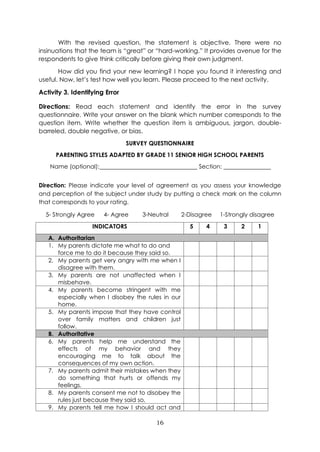
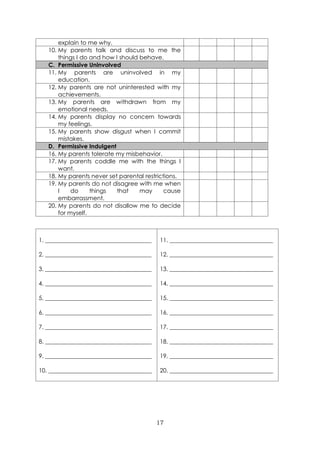
Activity 3. Identifying Error
Directions: Read each statement and identify the error in the survey
questionnaire. Write your answer on the blank which number corresponds to the
question item. Write whether the question item is ambiguous, jargon, double-
barreled, double negative, or bias.
SURVEY QUESTIONNAIRE
PARENTING STYLES ADAPTED BY GRADE 11 SENIOR HIGH SCHOOL PARENTS
Name (optional): Section:
Direction: Please indicate your level of agreement as you assess your knowledge
and perception of the subject under study by putting a check mark on the column
that corresponds to your rating.
5- Strongly Agree 4- Agree 3-Neutral 2-Disagree 1-Strongly disagree
INDICATORS 5 4 3 2 1
A. Authoritarian
1. My parents dictate me what to do and
force me to do it because they said so.
2. My parents get very angry with me when I
disagree with them.
3. My parents are not unaffected when I
misbehave.
4. My parents become stringent with me
especially when I disobey the rules in our
home.
5. My parents impose that they have control
over family matters and children just
follow.
B. Authoritative
6. My parents help me understand the
effects of my behavior and they
encouraging me to talk about the
consequences of my own action.
7. My parents admit their mistakes when they
do something that hurts or offends my
feelings.
8. My parents consent me not to disobey the
rules just because they said so,
9. My parents tell me how I should act and
17
1. ____________________________________
2. ____________________________________
3. ____________________________________
4. ____________________________________
5. ____________________________________
6. ____________________________________
7. ____________________________________
8. ____________________________________
9. ____________________________________
10. ___________________________________
11. ___________________________________
12. ___________________________________
13. ___________________________________
14. ___________________________________
15. ___________________________________
16. ___________________________________
17. ___________________________________
18. ___________________________________
19. ___________________________________
20. ___________________________________
explain to me why.
10. My parents talk and discuss to me the
things I do and how I should behave.
C. Permissive Uninvolved
11. My parents are uninvolved in my
education.
12. My parents are not uninterested with my
achievements.
13. My parents are withdrawn from my
emotional needs.
14. My parents display no concern towards
my feelings.
15. My parents show disgust when I commit
mistakes.
D. Permissive Indulgent
16. My parents tolerate my misbehavior.
17. My parents coddle me with the things I
want.
18. My parents never set parental restrictions.
19. My parents do not disagree with me when
I do things that may cause
embarrassment.
20. My parents do not disallow me to decide
for myself.
18
Was the activity easy? If you answered it effortlessly, that’s great! If not,
don’t worry you have more chances to practice in our succeeding activities. But
for now, we will go to the next process of obtaining and analyzing our data.
For you to utilize the results of your data source such as the survey
questionnaire, you need to collect the responses of your survey-takers and treat
the gathered data using appropriate statistical formulas. The easiest is to count
the responses, tabulate it, and get its percentages. Later on, the results may be
presented through visual forms such as graphs and table or through narrative
form.
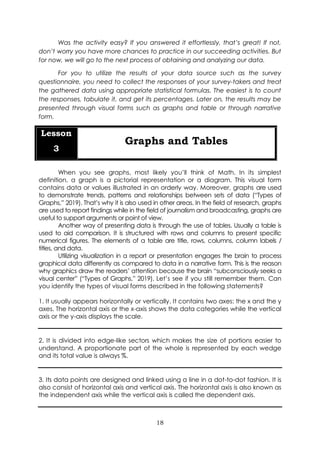
Lesson
3
Graphs and Tables
When you see graphs, most likely you’ll think of Math. In its simplest
definition, a graph is a pictorial representation or a diagram. This visual form
contains data or values illustrated in an orderly way. Moreover, graphs are used
to demonstrate trends, patterns and relationships between sets of data (“Types of
Graphs,” 2019). That’s why it is also used in other areas. In the field of research, graphs
are used to report findings while in the field of journalism and broadcasting, graphs are
useful to support arguments or point of view.
Another way of presenting data is through the use of tables. Usually a table is
used to aid comparison. It is structured with rows and columns to present specific
numerical figures. The elements of a table are title, rows, columns, column labels /
titles, and data.
Utilizing visualization in a report or presentation engages the brain to process
graphical data differently as compared to data in a narrative form. This is the reason
why graphics draw the readers’ attention because the brain “subconsciously seeks a
visual center” (“Types of Graphs,” 2019). Let’s see if you still remember them. Can
you identify the types of visual forms described in the following statements?
1. It usually appears horizontally or vertically. It contains two axes: the x and the y
axes. The horizontal axis or the x-axis shows the data categories while the vertical
axis or the y-axis displays the scale.
2. It is divided into edge-like sectors which makes the size of portions easier to
understand. A proportionate part of the whole is represented by each wedge
and its total value is always %.
3. Its data points are designed and linked using a line in a dot-to-dot fashion. It is
also consist of horizontal axis and vertical axis. The horizontal axis is also known as
the independent axis while the vertical axis is called the dependent axis.
19
4. It usually presents numbers to compare with other numbers. It also summarizes
or defines concepts, terms, other details of a study.
Were you able to identify the visual representations described above?
Great! Now, check out the example below how data are presented in a visual
form and answer the questions that follow.
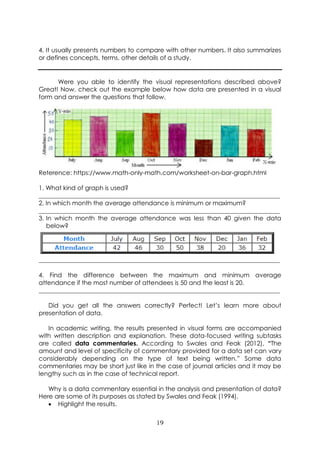
Reference: https://www.math-only-math.com/worksheet-on-bar-graph.html
1. What kind of graph is used?
______________________________________________________________________________
2. In which month the average attendance is minimum or maximum?
______________________________________________________________________________
3. In which month the average attendance was less than 40 given the data
below?
______________________________________________________________________________
4. Find the difference between the maximum and minimum average
attendance if the most number of attendees is 50 and the least is 20.
______________________________________________________________________________
Did you get all the answers correctly? Perfect! Let’s learn more about
presentation of data.
In academic writing, the results presented in visual forms are accompanied
with written description and explanation. These data-focused writing subtasks
are called data commentaries. According to Swales and Feak (2012), “The
amount and level of specificity of commentary provided for a data set can vary
considerably depending on the type of text being written.” Some data
commentaries may be short just like in the case of journal articles and it may be
lengthy such as in the case of technical report.
Why is a data commentary essential in the analysis and presentation of data?
Here are some of its purposes as stated by Swales and Feak (1994).
• Highlight the results.
20
• Assess standard theory, common beliefs, or general practice in the light of
the given data.
• Compare and evaluate different data sets.
• Assess the reliability of the data in terms of the methodology that
produced it.
• Discuss the implications of the data.
•
Here is an example of a data represented using a table. Below it is a data
commentary. Read the through it and answer the questions that follow:
Table 5 Source of Computer Virus Infections
Source of Virus Percentage
E-mail attachments
Disks from home
Disk (other)
Unknown
Download (from internal or external sources)
Distribution CD
Disk (sales demo)
Automated software distribution
Disk (shrink-wrapped)
Disk (from LAN manager)
Malicious person
Browsing WWW
Disk (from repair person)
Total survey respondents
299
87%
4%
2%
2%
2%
1%
< 1%
< 1%
< 1%
< 1%
< 1%
0%
0%
1) A computer virus is a program that is specifically and maliciously designed
to attack a computer system, destroying data. 2) As businesses have become
increasingly dependent on computers, email, and the internet, concern over
the potential destructiveness of such viruses have also grown. 3) Table 5 shows
the most common sources of infection for U.S. businesses. 4) As can be seen, in
a great majority of cases, the entry point of the virus infection can be
detected, with e-mail attachments being responsible for nearly 9 out of 10
viruses. 5) This very high percentage is increasingly alarming, especially since
with a certain amount of caution such infections are largely preventable. 6) In
consequence, e-mail users should be wary of al attachments, even those from
a trusted colleague or a known sender. 7) In addition, all computers used for
e-mail need to have a current version of a good antivirus program whose virus
definitions are updated regularly. 8) While it may be possible to lessen the
likelihood of downloading an infected file, businesses are still vulnerable to
computer virus problems because of human error and the threat of new,
quickly spreading viruses that cannot be identified by antivirus software.
1. Where does the data commentary actually start? State the number of the
sentence.
__________________________________________________________________________________
21
2. What are the purposes of sentences 1 and 2?
__________________________________________________________________________________
3. What are some of the features of this text that make it an example of written
academic text?
__________________________________________________________________________________
4. Which sentence contains the author’s key point? State the number of the
sentence.
__________________________________________________________________________________
5. The author has chosen to comment only on e-mail attachments. Do you think
this is enough? Why? If not, what else should be discussed?
__________________________________________________________________________________
6. Based on the purposes in writing a data commentary, list three categories the
sample data commentary fall?
__________________________________________________________________________________
7. E-mail attachments constitute 87% of the total. In sentence 4, this is expressed
as “nearly 9 out of 10.” Which do you think is the best alternative for the phrase?
Circle the letter of your answer.
a. about 90%
b. just under 90%
c. as much as 87% of all
d. nearly all
Structure of Data Commentary
Elements of a data commentary usually follow this order:
1. Location elements and/or summary statements. This part of the data
commentary points out to the reader the important information illustrated in a
graph or in a table. The highlighted portion of the data commentary below
consists of the location element and summary statement.
3) Table 5 shows the most common sources of infection for U.S. businesses. 4) As
can be seen, in a great majority of cases, the entry point of the virus infection can
be detected, with e-mail attachments being responsible for nearly 9 out of 10
viruses. 5) This very high percentage is increasingly alarming, especially since with
a certain amount of caution such infections are largely preventable. 6) In
consequence, e-mail users should be wary of al attachments, even those from a
trusted colleague or a known sender. 7) In addition, all computers used for e-mail
need to have a current version of a good antivirus program whose virus definitions
are updated regularly. 8) While it may be possible to lessen the likelihood of
downloading an infected file, businesses are still vulnerable to computer virus
problems because of human error and the threat of new, quickly spreading viruses
22
that cannot be identified by antivirus software.
To start a data commentary, the location element and summary statement can
be written in two ways: active or passive form.
Starting a Data Commentary using Active Form
Location Element Summary
a. Table 5 shows
b. Table 2 provides
c. Table 2 plots
the points of entry of computer viruses for U.S. businesses.
details of the fertilizer used.
the two series for the last five year.
Starting a Data Commentary using Passive Form
Summary Location Element
a. The most common modes of computer infection for
U.S. businesses
b. The details of the fertilizer used
c. The two series for the last five year
are shown in Table 5.
are provided in Table
2.
are plotted in Table 2.
Here is a list of verbs that you may use in reference to a visual
Active Passive
shows
presents
illustrates
summarizes
demonstrates
contains
provides
depicts
lists
reports
shown in
illustrated in
presented in
given in
listed in
seen in
provided in
summarized in
seen from
2. Highlighting statements (making a claim). This section provides the essential
components of details of the data. Note that the common structure in
introducing informative statements is the linking as-clause.
3) Table 5 shows the most common sources of infection for U.S. businesses. 4) As
can be seen, in a great majority of cases, the entry point of the virus infection can
be detected, with e-mail attachments being responsible for nearly 9 out of 10
viruses. 5) This very high percentage is increasingly alarming, especially since with
a certain amount of caution such infections are largely preventable. 6) In
consequence, e-mail users should be wary of al attachments, even those from a
trusted colleague or a known sender. 7) In addition, all computers used for e-mail
need to have a current version of a good antivirus program whose virus definitions
are updated regularly. 8) While it may be possible to lessen the likelihood of
downloading an infected file, businesses are still vulnerable to computer virus
problems because of human error and the threat of new, quickly spreading viruses
that cannot be identified by antivirus software.
23
Generalizations drawn from the data are presented in the highlighting
statements. Hence, this is the part where you should demonstrate the following:
• identifying trends or consistency in the data,
• separating more salient findings from less important ones, and
• making claims of appropriate strength.
With those mentioned, you should avoid the following pitfalls when writing your
highlighting statements:
• simply repeat all the details in words,
• attempt to cover all the information, or
• claim more than is reasonable or defensible.
Swales and Feak (2004) focuses on two important elements in writing highlighting
statements. These are the qualifications and strength of claim and qualifying
comparisons.
Qualifications and Strength of Claim
a. Probability. The term probability refers to the degree to which something is
feasible or apparent. Thus, in academic writing, it is essential that writers use
cautious language which is often referred to as “hedging.” By using hedging
devices, it helps the writers strengthen or weaken their stance about a particular
topic. Let’s see the examples below. These sentences have the same concept
but by utilizing modal auxiliaries as hedging devices, the claim gradually
weakens.
Sleeping 7-9 hours each day will result in better performance.
Sleeping 7-9 hours each day may result in better performance.
Sleeping 7-9 hours each day might/could result in better performance.
Here are other sample phrases that you may use to weaken the strength of your
claim.
Stronger
Weaker
It is certain that . . .
It is almost certain that . . .
It is very probable / highly likely that . . .
It is probable / likely that . . .
It is unlikely that . . .
It is very / highly unlikely that . . .
sleeping 7-9 hours each
day will result in better
academic performance.
Stronger
Weaker
There is a definite possibility that . . .
There is a strong possibility that . . .
There is a good possibility that . . .
There is a slight possibility that . . .
There is a little possibility that . . .
b. Distance. Another way to soften a claim is to observe distance from the data.
Here are a few examples:
24
Based on the limited data available,
In the view of some experts,
According to this preliminary study,
Based on an informal survey of nine department
managers,
different employees react
to the same situations
differently.
c. Generalization. The conventional way of qualifying a generalization is to use
the verb tense.
Children living in poverty have a history of health problems.
Children living in poverty tend to have a history of health problems.
Another way of defending a generalization is to qualify the subject.
Many children living in poverty have a history of health problems.
A majority of children living in poverty have a history of health problems.
In most parts of the world children living in poverty have a history of health
problems.
An alternative to the first two strategies is to include exceptions.
With the exception of
Apart
Except for
a small number of countries such as Japan,
Sweden, and Thailand, student loan schemes are
almost exclusively reserved for higher education.
d. Weaker verbs. The strength of a claim can also reduce its strength by
employing a weaker verb.
Stronger Unsound policies of the IMF led to the financial crisis.
Weaker Unsound policies of the IMF contributed to the financial crisis.
e. Combined Qualifications. In academic writing, are being combined to create
a logical highlighting statement. Here is an example of a big claim:
The use of seat belts prevents physical injuries in car accidents.
Let’s use one of these qualifications and see what happens.
prevents
reduces
+ in some circumstances
+ certain types of injury
+ according to simulation
studies
reduces
may reduce
weaker verb
adding probability
weakening the
generalization
weakening the
generalization
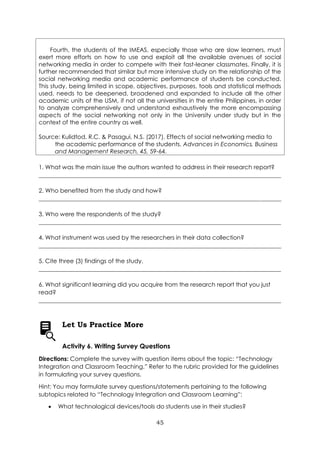
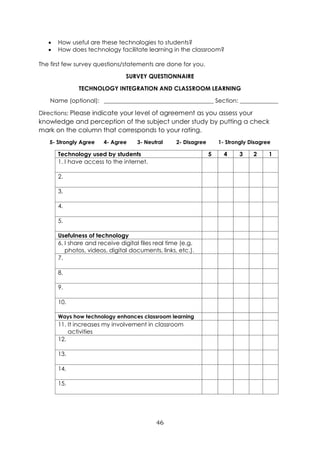
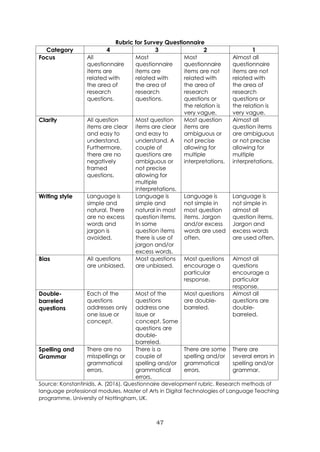
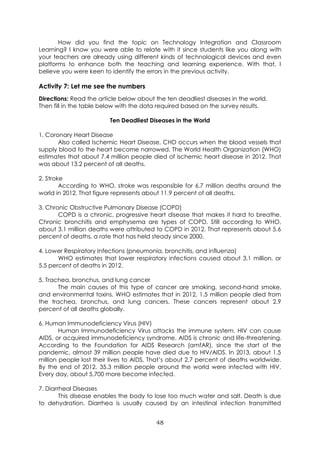
adding distance
25
So our highlighting statement will turn into this:
According to simulation studies, in some circumstances the use of seat belts may
reduce certain types of physical injuries in car accidents.
Observe that in the example above, the writer exhibits being “confidently
uncertain”; thus, making his claim less assertive by only expressing possibility.
f. Organization. Highlighting statements are usually arranged from general to
specific. Hence, major claims are stated first followed by minor claims.
Qualifying Comparisons
As mentioned in the earlier part of this section, information seen in a table should
not be simply repeated in words. As alternative, you may use the following
phrases:
Almost exactly twice . . .
A marginally smaller . . .
Slightly over twice . . .
Close to three times . . .
. . . exceeded . . .
3. Concluding a Data Commentary or Results Section
3) Table 5 shows the most common sources of infection for U.S. businesses. 4)
As can be seen, in a great majority of cases, the entry point of the virus
infection can be detected, with e-mail attachments being responsible for
nearly 9 out of 10 viruses. 5) This very high percentage is increasingly alarming,
especially since with a certain amount of caution such infections are largely
preventable. 6) In consequence, e-mail users should be wary of all
attachments, even those from a trusted colleague or a known sender. 7) In
addition, all computers used for e-mail need to have a current version of a
good antivirus program whose virus definitions are updated regularly. 8) While
it may be possible to lessen the likelihood of downloading an infected file,
businesses are still vulnerable to computer virus problems because of human
error and the threat of new, quickly spreading viruses that cannot be identified
by antivirus software.
These are the typical elements that comprise the content of a conclusion. They
generally appear in this order:
Explanations and/or implications
Expected results or unsatisfactory data
Possible further research or possible future
predictions
Usually required
If necessary
If appropriate
26
Activity 4. What Does It Say?
Directions: Below is a pie chart that shows the devices used by people ages 16
and above in accessing the internet both at home and in other places. Your task
is to write a data commentary based on the information presented in the chart.
This graph shows ___________________________________________________________
_________________________________________________________________________________.
The participants mentioned four main devices _____________________________________
__________________________________________________________________________________
As can be seen in the pie chart, it is clear that the majority of the participants prefer
to use ___________________________________________________________________________
__________________________________________________________________________________
__________________________________________________________________________________
__________________________________________________________________________________
In conclusion, ____________________________________________________________________
__________________________________________________________________________________
__________________________________________________________________________________
_________________________________________________________________________________.
27
Lesson
4
Parts of a Research Report
You may be wondering where you would use your knowledge of writing
survey questions and data commentary. Well, these concepts are part of a bigger
picture which is the research report writing. A research report is a kind of academic
writing that presents and provides findings, analysis, interpretation, and argument
about a phenomenon based on in-depth experiments as well as previous
conducted studies. Furthermore, it is a scholarly work as it gives detailed
explanations and discussed the findings of a study and not just a collection or series
of unsubstantiated opinions or quotation / notes lifted from various sources that are
threaded or looped together. The content that a research report contains is a
product of formal investigation and scientific inquiry (Barot, 2016).
Parts of a Research Report
1. Title Page
This portion contains the title of the research paper, the name of the author/s
and their affiliations, and the date of submission.
2. Abstract
An abstract is a short summary of a research work either a published or
unpublished dissertation or thesis. A good abstract aims to provide the readers the
gist or essence of a paper. It should spark the interest of the readers to decide
whether to read the full paper or not. Moreover, the summary gives detailed
information, analysis, and arguments in a research work. Usually an abstract is consist
of 6 – 7 sentences or 150 – 250 words. It may seem short but it should contain these
parts: (1) rationale / objectives; (2) research problems; 3) methodology; (4) results /
major findings; and (5) conclusions and implications.
The Effects of Teenage Pregnancy on the Educational Attainment of Girls at
Chorkor, a Suburb of Accra
Recently, the incidence of teenage pregnancy has been very high in Ghana. The
study therefore was designed to explore the effects of teenage pregnancy on the
educational attainment of the girl-child at Chorkor. A total sample size of fifty-five
(55) respondents was used for the study. Questionnaire, in-depth interview, focus
group discussions and observation were used to collect data for the study. With
respect to factors that lead to teenage pregnancy, it was evident that poor
parenting, poverty and peer influence are the major causes of teenage
pregnancy. The study also revealed that most of the teenage mothers drop out of
school. The study therefore recommended that teenage mothers should be
helped in their psychosocial development and job skills development.
Reference:
https://www.researchgate.net/publication/256482306_Effects_of_teenage_pregna
ncy_on_the_educational_attainment_of_girls_at_Chorkor_a_suburb_of_Accra
28
3. Introduction
This section primarily provides the description of the problem as well as
discussions about the practical and or theoretical significance of the issue or topic
being studied. Usually it presents the global, national, and local status of the
problem. Furthermore, it presents contributions the study could make to address the
research gaps. Another sub-part of the introduction is the statement of the problem.
Often these are statements or questions depicting how the variables are associated
or related to each other. Lastly, this section also includes definition of terms.
Remember that various terms used in a study may have uncommon meaning or
may have several meanings that are only used particularly for the said study.
Bullying all over the world is becoming a primary concern among children,
adolescence and even adults. According to Abe (2012), it can occur in any
context in which human beings interact with each other. This includes school,
church, family, workplace, home, and neighborhoods. It is even a common push
factor in migration and it can exist between social groups, social classes and even
between countries.
In Safe Schools/Healthy Students Albemarle/Charlottesville Project
conducted in 2012 among 3,387 grades 6-8 students in Virginia, USA, up to 9% of
them reported that they are bullied at least once a week, with verbal bullying
frequently occurring. In 2011, about 28 % of students between the age of 12-18
reported having been bullied at school during the school year and 9% reported
having been cyber-bullied (American Institutes for Research). Most of them are
males and had experienced name calling, hitting and intimidation. What is more
critical is it is not confined to a one time occurrence or for a short time but can be
going on for months (41%) and years (11%) and it is confounded by short and long
term effects (Stop ABully School Reports from 2011-2012).
In the countryside, despite the passing of the Republic Act 10627 or the Anti-
Bullying Act and the Department of Education (DepEd) Child’s Protection Policy,
the DepEd documented more than 1,700 cases of child abuse and bullying in
school year 2013-2014. Of these, 60 percent were only resolved (Flores, 2014).
Furthermore, in 2012- 2013 DepEd report, 80% (1,165 out of 1,456) of the child
abuse cases involved acts of bullying (Malipot, 2013). Among the psychological
and verbal violence experienced in school in elementary and high school in 2009,
ridiculing, cursing and humiliating were the most rampant incidences (Dinopol,
2013).
In Binakayan National High School, Kawit, Cavite, there is a reported 36
bullying cases for SY 2013-2014 which emanate from name calling, playing
offensive jokes, hiding or getting someone’s personal belongings, and inflicting
physical injury. These had turned into physical bullying where kicking, slapping and
beating up another person in the school are the most common cases. Based on
interview and teachers’ records; however, verbal bullying such as name calling,
mocking, and hurtful teasing happen frequently inside and outside the classroom
which are not usually reported to school authorities and resolved immediately
instead.
Hence, this descriptive study is aimed at investigating the bullying
experiences of students and classroom discipline techniques employed by the
teachers towards the crafting of an anti-bullying program in the school. It has the
following objectives: determine students and teachers’ profile relevant to main
variables; assess the occurrences of direct and indirect bullying incidences among
29
students and the classroom discipline techniques employed by teachers; test the
independence of the profile variables from bullying incidences; create a model
localized to the concerned school that adequately explains classroom discipline
techniques employed by the teachers; and propose an anti-bullying program of
the school.
Source: Cardona, R.S., Reyes, A.S., & Tangalin, M.M. (2015). The bullying
experiences and classroom discipline techniques in an urban national
high school in the Philippines: A basis for anti-bullying program.
American International Journal of Contemporary Research, 5(2), 49-52.
4. Literature Review
Writing a research report entails a lot time reading a variety of materials and
references. This section includes a summary and synthesis of the said sources related
to your study. In research report, the literature review is divided into parts: related
literature and related studies.
For readers to have a better understanding of the study; related literature
provide definition, description, and explanation of the concepts and theories
related to the topic. You can find useful information for your related literature by
reading published books, textbooks, manuals, and other materials (Cristobal &
Cristobal, 2013).
Clinical Supervision and Level of Performance of Elementary Teachers (Lisud, 2013)
On Supervision. The redefinition of supervision, according to Sergiovanni
and Starratt (1998) necessitates the disconnection of supervision from hierarchical
roles. It is viewed as a more democratic and profession process, involving multiple
skills that are equally available to teachers and supervisors. This new supervision
embraces different configurations of teachers as colleagues working together to
increase the understanding of their practice. It establishes new connection with
developmental roles. “Staff development and supervision are not joined in such a
way that they are often undistinguishable (Sergiovanni & Starratt, 1998, p. 106.)”
One of the most critical problems facing the profession is how to improve
the development of teachers. Novice teachers find their first few years of teaching
a trying and often defeating experience (Glatthorn, 1990). Entrance into the
teacher profession is marked by an initial period of challenges and opportunities.
Teachers begin their careers facing the most difficult assignments with a lack of
time for planning supervision, and interaction with colleagues (Odell & Ferrano,
1992).
On Teacher’s Needs. Educational leaders in schools must “support
successful teacher induction in the ways they respond to these beginning
teachers’ needs” (Reiman & Thies-Sprinthall, 1998). As Robinson (1998) pointed out,
to be successful, beginning teachers must meet their challenges with
perseverance, hard work, and quality assistance from experiences teachers and
administrators who are willing to provide and recognize extensive support for
teachers during the first year or two of their teaching careers. Effective supervision
and coaching programs at the induction level have been found to ameliorate
beginning teacher concerns, and to increase beginning teacher focus on
instruction (Huling-Austin, 1990).
30
The problems experienced by teachers should not lead supervisors to
conclude that all induction programs should focus solely on survival issues.
Professional development, as a desired outcome of supervision, must be a key
issue in induction, given that novice teachers are future educational leaders.
On Preferences of Supervision. Teachers differ in their preference and
choices for supervision (Beach & Reinhartz, 2000). While there are teachers who
like to be left alone to do their job, other teachers appreciate comments about
their teaching (Augustyn, 2001). According to Glatthorn (1990), beginning
teachers can also be characterized in terms of their preferences for certain kinds
of supervisory practices. There is general agreement that most beginning teachers
require the intensive assistance of clinical supervision. To improve their instructional
performance, the supervisor should also work with them using two other styles – a
direct supervisory style and flexible collaborative style.
Stemming from the need for improved supervision of teachers is an urgency
to develop a connection between supervision and professional development. The
route taken in professional development should parallel teacher needs (Jonasson,
1993). Professionalism of beginning teachers depends on how their particular
needs are satisfied.
It is the purpose of administrators as supervisors to provide necessary and
effective models of supervisory practice for professional development. Teachers
need to have a choice among supervisory styles available for their academic
growth. Thus, personal and professional development is the outcome of the
effective supervision.
Source: Cristobal, A.P. & Cristobal M.D. (2017). Practical research for senior high
school 2. Quezon City: C&E Publishing, Inc.
Related studies, on the other hand, present a synthesis of a collection of
studies similar to the present study. This means that the previous studies and the
present study use the same variables, indicators, concepts, and they even have the
same subjects or topic of the study.
Remedial, Reinforcement, and Enhancement Modular Learning Activities in
Science and Health in Elementary Schools: An Action Research (Jamin, 2015)
Various studies have been conducted on different instruction and
problems. They are the following:
A study was done by Labro who developed self-instructional materials to
meet the selected deficiencies in Physics, in the bachelor’s degree of Science
and Information Technology curriculum at the Samar Polytechnic College. The
findings revealed that the developed instructional materials were more effective
in attainment and remediation purposes. He recommended that instructional
materials should be developed further based on the difficulties or deficiencies of
the leaners.
31
Labro’s study is parallel with the present study since both focused on
development of instructional materials to address the problem of unmastered skills
among learners.
The study of Cabidog on Modular Skills-Focused Curriculum in Physical
Education for Intermediate grades pupils showed that the majority of the teachers
have inadequate preparation in Physical Education. The degree of compliance
on teaching a modular lesson in arm-up activities, health-related fitness concepts,
teaching skills development, as well as skills activities fairly developed or
undertaken signals that a modular focused curriculum on Physical Education
should be aligned and implemented. This present study is related to the work of
Cabidog in the sense that they both gave importance or value to the modular
approach in teaching for skills development. However, these studies differ on the
subject focus. The present study is on Science and Health. On the other hand,
Cabidog’s study was on Physical Education. Meanwhile, Talua developed
instructional modules in Health Education for first year high school. Her study
revealed that teachers were wanting and waiting for this type of instructional
modules to improve the students’ performance in Health Education. Her study
concluded that learning components on areas in Health Education were failrly
developed. This implies the necessity for the researcher to develop and construct
instructional modules in Health Education for first year high school students.
Calapre, on her study on the effect of modular instruction on the
achievement of the Grade VI pupils on rational numbers, indicated that the result
was significant to the aforementioned pupils. She improved the modules by using
the language of the children. Directions of the modules were reworded to ensure
readability. The study conducted by Calapre bear significance on the present
study because it recognizes the importance of modules as instructional materials
to improve learner’s performance.
The study conducted by Valeriano which aimed to develop action game-
type modules oral language skills for Grade I is related to the present study since
both aim to develop instructional materials in modular form for pupils’ skills
development and for teachers’ use to sustain for the entire school year in
teaching. The difference lies in the respondents of study since Valeriano’s study
had Grade 1 pupils as respondents while the present study had Grade IV pupils as
respondents. Meanwhile, Valeriano’s study focused on language development
while the present study is on Science and Health skills.
Globio conducted another study which attempted to determine the
development of modules for remedial instruction in Science and Health for Grade
IV pupils in Maydolong District, Division of Eastern Samar. To find out the
effectiveness of the instructional material, she first conducted a pre-rest before
administering the module to the respondents. She found out that those who
utilized the instructional modules have a fast concept development.
In the study of Costibolo, which employed the descriptive research method
through a survey questionnaire and reading proficiency test to gather data, it was
revealed that fourteen (14) out of eighteen (18) complete elementary schools in
Dagami North District got a qualitative description as “Needs Remediation.” One
of the recommendations, in order to improve the academic performance of the
32
children in English language, is that teachers should be creative and innovative in
using different teaching aides or materials and various manipulative activities to
make learning more effective. In addition, the use of English Language for Grade
IV is recommended in Dagami North and South districts. The study of Costibolo is
the same as the present since the utilization of modules as instructional materials is
important in improving or developing the skills of pupils. The only difference is in the
learning domain and the level of learners. Costibolo focused in improving the
English language skills of Grade UV pupils. N the other hand, the present study
emphasizes the development of Science and Health skills of Grade IV pupils.
Source: Cristobal, A.P. & Cristobal M.D. (2017). Practical research for senior high
school 2. Quezon City: C&E Publishing, Inc.
It is worthy to note that in some instances, the literature review is incorporated
in the introduction section of a research report.
5. Methodology
The methodology section of a research report contains a description of how
tests or experiments were conducted. It is comprised of several subcategories. These
are the locale and participants, the instruments used such as survey questionnaire,
the data gathering procedure, and data analysis. Let us understand each concept
by reading the examples below.
Participants and Locale
The participants or respondents are the primary sources of information during
data gathering. It is them by which the interventions or process are applied
(Cristobal, A. & Cristobal, M., 2017). The participants in a study can be individuals or
groups. On the hand, the research locale is the environment by which the research
is conducted. In describing the research locale, the research should take into
consideration the significant characteristics of the place that have relationship to
the research (Bueno, 2016).
Correlates of the Financial Literacy Profile and Work Performance among
Elementary Teacher (David, 2014)
The respondents of this study were the public elementary school teachers in
the First Congressional District based on the Personal Service Itemizatio – DepEd
Bataan (2012). When it comes to the population of teachers per district, Abucay
has 148, Samal has 127, Orani has 223, Hermosa has 207, Morong has 114,
Dinalupihan East has 175 and Dinalupihan West has 210 with a total of 1204
permanent teachers. Out of the total number, 300 were taken as samples of the
study. The teachers were selected randomly from each district through cluster
sampling using the Slovin’s formula.
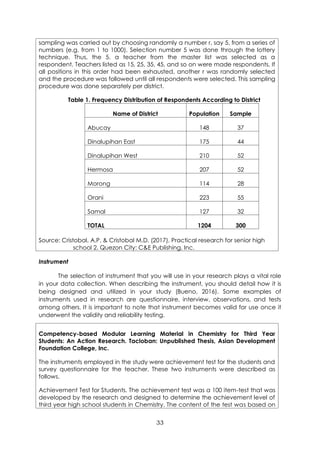
The sample is presented in Table 1.
After determining the desired sample size for each district, systematic
sampling was used to get the actual respondents of the study. Systematic
33
sampling was carried out by choosing randomly a number r, say 5, from a series of
numbers (e.g. from 1 to 1000). Selection number 5 was done through the lottery
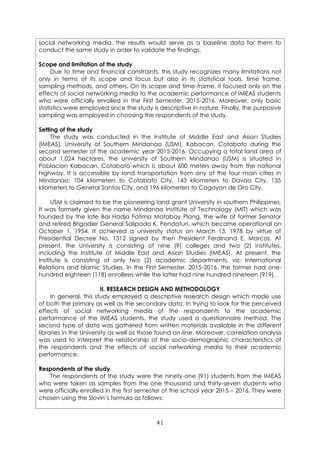
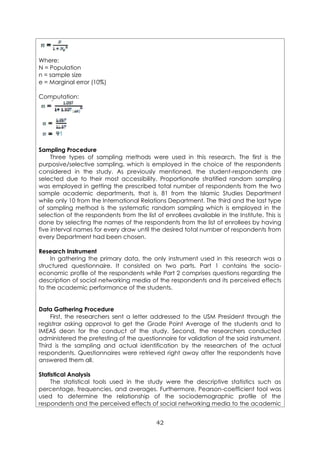
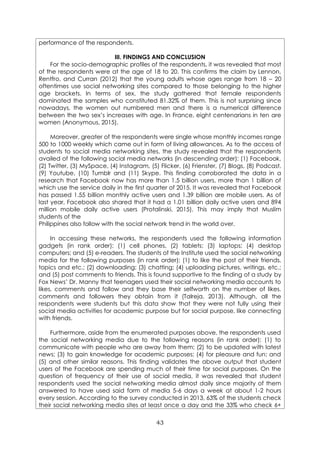
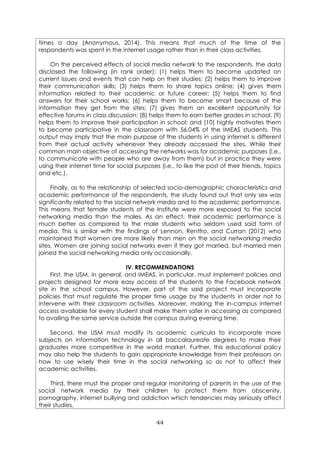
technique. Thus, the 5, a teacher from the master list was selected as a
respondent. Teachers listed as 15, 25, 35, 45, and so on were made respondents. If
all positions in this order had been exhausted, another r was randomly selected
and the procedure was followed until all respondents were selected. This sampling
procedure was done separately per district.
Table 1. Frequency Distribution of Respondents According to District
Name of District Population Sample
Abucay 148 37
Dinalupihan East 175 44
Dinalupihan West 210 52
Hermosa 207 52
Morong 114 28
Orani 223 55
Samal 127 32
TOTAL 1204 300
Source: Cristobal, A.P. & Cristobal M.D. (2017). Practical research for senior high
school 2. Quezon City: C&E Publishing, Inc.
Instrument
The selection of instrument that you will use in your research plays a vital role
in your data collection. When describing the instrument, you should detail how it is
being designed and utilized in your study (Bueno, 2016). Some examples of
instruments used in research are questionnaire, interview, observations, and tests
among others. It is important to note that instrument becomes valid for use once it
underwent the validity and reliability testing.
Competency-based Modular Learning Material in Chemistry for Third Year
Students: An Action Research. Tacloban: Unpublished Thesis, Asian Development
Foundation College, Inc.
The instruments employed in the study were achievement test for the students and
survey questionnaire for the teacher. These two instruments were described as
follows.
Achievement Test for Students. The achievement test was a 100 item-test that was
developed by the research and designed to determine the achievement level of
third year high school students in Chemistry. The content of the test was based on
34
the Philippine Secondary School Competencies.
The Survey Questionnaire for the Teacher. The survey questionnaire for the teacher
is composed of three parts. It elicited to what extent the skills in Chemistry were
developed among third year high school students, the technique used by the
teacher in teaching the subject, and the problems encountered in teaching
concepts relative to the subject.
Source: Cristobal, A.P. & Cristobal M.D. (2017). Practical research for senior high
school 2. Quezon City: C&E Publishing, Inc.
Data Gathering Procedure
This part of the research report describes the processes that the researcher
has undergone to conduct his study. It usually starts with obtaining permission and
approval from the head of the institution or agency where the participants are
employed. Once the researcher acquired permission, he can administer the
research tool or instrument to the participants. It is also in this section where the
schedule or date of the administration and retrieval are stated.
Competency-based Modular Learning Material in Chemistry for Third Year
Students: An Action Research. Tacloban: Unpublished Thesis, Asian Development
Foundation College, Inc.
Gathering of necessary data for the study was done through a survey
questionnaire. This questionnaire elicited the following pertinent information:
teacher’s profile, financial attitudes, behaviors, and knowledge of teachers.
Data on the work performance of teachers in relation to their instruction
competence, their school, home and community linkages, and their personal
circumstances, social growth and professional characteristics were gathered
through their CB-PAST or Competency-based Performance Appraisal Systems for
Teachers in the Division of the Department of Education.
In addition, data on the number of elementary teachers per district in the
Division of Bataan were also gathered from Personal Services Itemization –
Teaching and Non-teaching Personnel – Public Elementary Schools – Department
of Education, Division of Bataan.
Permission to administer the survey questionnaire was requested from the
Division Superintendent through channels. The researcher personally administered
the survey throughout the district. This was done so the proper instructions were
given to the teachers. The survey questionnaires were retrieved as soon as the
teachers had completed answering the questionnaires.
Source: Cristobal, A.P. & Cristobal M.D. (2017). Practical research for senior high
school 2. Quezon City: C&E Publishing, Inc.
35
6. Results and Discussion
This section serves as the heart of the research report. It is where pertinent findings
are presented, interpreted, analyzed, and discussed. The Results and Discussion can
also appear under the header of “Presentation and Discussion” or “Analysis of
Findings. The Results and Discussion includes four major elements as mentioned by
Cristobal, A. and Cristobal, M. (2017).
• Presentation of data – This part uses charts, tables, or figures accompanied by
textual interpretation for easier comprehension of the data by the readers.
• Analysis – Essential data are emphasized in this part which will be used as
basis of the findings.
• Interpretation – After statistical data have been translated, the researcher
can create logical and coherent statements.
• Discussion – This part provides the principles, relationship and generalization
reflected by the results. Moreover, it is in the discussion part where results are
compared and interpreted against previous studies that have already been
published (Bueno, 2016). Note that the discussion of findings follows the
sequence of the research questions.
Figure 21.2 Sample Level of Performance (%) of Senior High School (grade 11)
Students in Various Subjects
Since this study is conducted in the Accountancy and Business Management
track, it is projected that senior high school (Grade 11) students will perform highly
in the specialization subjects. The table shows graph shows increasing grades 75%
to 90%. The lowest performance is noted in the English subject at 75% is a proof
that senior high school students lack competencies in English which is one of the
most needed skills in business. Meanwhile these students perform on the average
in other subject areas such as Social Science and Mathematics.
0
10
20
30
40
50
60
70
80
90
100
English Mathematics Social Sciences Management
36
The results of this study negate the findings of Jaytee (2012) whose study
revealed that secondary students got the lowest performance rating in
specialization subjects. The presented figure and data of Magno (2012) in the
SEAMEO INOTECH report the K to 12 Program agrees with findings of the study that
Filipino students compared to the ASEAN counterparts perform poorly in English
and Mathematics.
Source: Cristobal, A.P. & Cristobal M.D. (2017). Practical research for senior high
school 2. Quezon City: C&E Publishing, Inc.
7. Conclusion
Enclosed in the conclusion are “insights drawn from the findings per sub-
problem” (Cristobal, A. & Cristobal, M., 2017). These insights are stated in a straight-
forward manner providing answers to the stated problem. Explanations or
elaborations are unnecessary.
Based on the findings of the study, the following conclusions were drawn:
Intrapersonal and interpersonal competencies are highly related to each
other. The home management styles, hobbies, involvement to civic and cultural
organizations, self-esteem, self-monitor, and intrapersonal competency are
positively but negligibly related to school effectiveness, while age, educational
attainment, training, home atmosphere, locus of control, risk-taker, all specific
variables of interpersonal competency are negatively and lowly related to school
effectiveness.
Human virtues and Machiavellianism are positively slightly related t school
effectiveness while administrative experience is negatively slightly related to
school effectiveness. The factors of school effectiveness are human relation skills,
professionalism, and management capability.
The proposed human relation intervention program is strongly agreed to be
implemented.
Source: Cristobal, A.P. & Cristobal M.D. (2017). Practical research for senior high
school 2. Quezon City: C&E Publishing, Inc.
8. References
This part contains the different primary and secondary sources you used in
your study. The referencing style varies among institution, teachers, or field of study.
37
Let Us Practice
Activity 5. Dissect this.
Directions: Read the research report below and answer the questions that follow.
Effects of Social Networking Media to the Academic Performance of the Students
I. INTRODUCTION
Social networking media is about sharing or communicating with other people. It
has spread its wings to various other fields and education is one of the new sectors
where the concept of social media is making a great role (Anonymous, 2014). They
are communication channels or tools used to store, aggregate, share, discuss or
deliver information with friends and colleagues using the internet (Reynolds, 2015).
They involve the use of web-based technologies to transform one-way
communication into an interactive online dialogue (Dixon, 2012). It is a creation and
exchange of user-made content. At school or in any office, social media is used by
students and teachers to share original content the articles or the publications.
Students, in particular, use it and provide an opportunity to seek to questions they
may have related to their course. Thus, the use of social media has extended
throughout the community (Roblyer, et al., 2010).
In the previous years, social media websites have become common. It gives
young people a new way to interact with each other and communicate with the
world. Social media networking became popular between 2004 and 2006, after
Facebook and MySpace were created. Facebook, for example has over 500 million
members and it is still growing and approximately 85% of undergraduate students
are Facebook users (Schneider, 2009). During the second quarter of 2008, 75% of
Internet surfers used “Social Media” by joining social networks, reading blogs, or
contributing reviews to shopping sites. This represents a significant rise from 56% in
2007. The unlimited growth is not only limited to teenagers or to one of the members
of Generation X. Today, 35 – 44 years old people have increasingly joined the
population and counted as joiners, spectators, and critics. Therefore, it over the past
years. They have helped many people feel as if they belong to a community and
make connection not only on campus but with friends outside of school.Due to the
increased popularity of social networking media, economists and professors are
requesting the clientele to go to different websites for efficient paper works ignoring
how much time spent on these different sites (Choney, 2010).
Moreover, college students nowadays (which consist of Baby Boomers,
Generation Xers, and Millenials) are exposed to all types of technologies in many
aspects of their live and form of large proportion of users on social media networks
such as Facebook, Twitter, Instagram, MySpace and many more (Guy, 2012). In
particular, in the University of New Hampshire, the students use Facebook and
YouTube than any other social media platform. Blogs, Twitter, MySpace, and
Linkedln had significantly lower amounts of student users. The students from the
38
business school had the highest percentage of users of blogs, Twitter, and Linkedln
while Liberal Arts students were the highest percentage of My Space users (Martin,
2013).
With the above data, one could say that social networking media sites have
become a habit for some students and it was found out that it is difficult for them to
study for one hour without logging in to one network site. They become very smart
because of the information they get from these sites and it easy to get almost any
materials for school assignment. But some students become very poor academically
(Egedegbe, 2014). According to the research of Brubaker (2013),
the current generation of college students has been exposed to a technology which
led them to rely on social media such as Facebook and Twitter. It has an impact on
the academic performance when students overuse or multitask while doing their
school work.
A study found out that 90% of college students visit social media networking sites
in a regular basis using desktop computers, laptops, e-readers, tablets, and cell
phones to actively engage in social networking, text messaging, blogging, content
sharing, online learning, and much more daily (Guy, 2012). As an effect, most of the
users have the good quality of communication skills through the use of social
networking media over the computer [Sponcil and Gitimu (n.d.)]. They were able to
communicate with friends and family by posting information and they spent much
of the time viewing information. The face-to-face interactions via the computer
facilitate communication which allows users to keep in touch with family and friends
in a convenient way and to learn about social events and issues.
Said finding was corroborated by the work of Anonymous (2014) who
maintained that creating Facebook Group has good effects to the students. They
can share topics online. Study groups and students can use it to connect with each
other outside of the classroom while the bad effect is that students may want to add
as friends to make trouble or some personal reasons. Also, the students can also
access to a world of knowledge through the use of social networking media and
other forms of digital communication. Slaughter (2007) said that social networking
media have deeply transformed the learning. When students are connected to
social networking media it will helps them to earn better grades at school (Skiera,
Hinz & Spann, 2015).
In studying the total number of hours spent by the users, Wang, Chen and Liang
(2011) disclosed that 45% of their samples admitted that they spent 6 – 8 hours per
day checking social media sites, while 23% spent more 8 hours; 20% spent 2 – 4 hours
and only 12% spent less than 2 hours on this task. Results showed that social media is
a college interest in the Wales University. Students consume a lot of time on social
networking sites especially the adolescents. They are involved in
uploading/downloading, getting information related to their academic or future
career, chatting with friends and watching online movies (Kanagarathinam, 2014).
Twitter is one of the most important media companies in the world. It is now one of
the top 10 most visited sites. With more than 500 million users, the students can find
teachers, schools, and perhaps more important professionals, lead publications in
their areas of interest (Anonymous, 2013).
39
Blogs can be used in classroom environment for diary entry; it also can be a
useful tool to link communication between study groups within a class or other
classes or even schools. Blogs can highly motivate the students, especially those who
otherwise might not become participants in the classrooms. It gives excellent
opportunities for students to read and write effective forums for collaboration and
discussion, and powerful tools to enable scaffolding learning or mentoring to occur
(Nguyen, 2015). According to the study of Head and Eisenberg conducted in 2009,
Wikipedia provides the students with a summary about a topic, the meaning of
related terms, and also got students started on their research and offered a usable
interface and one of the expectable workarounds that many students use,
especially during the first stages of their research process. In University of
Washington’s Information School, most of the college students use Wikipedia and
they know its limitation. Because of its quick way to get started, they use Wikipedia
just as most of people do but not deep and credible.
In other words, knowledge on the social networking media is a basic asset that a
college student nowadays must possesses in order to survive in his chosen volition. In
this regard, a question may be asked: Is any use of social networking media
beneficial to students? Unfortunately, studies revealed different results. Accordingly,
the use of technology such as internet is one of the most important factors that can
influence educational performance of students positively or adversely. The effect of
SNS usage will depend on the type of SNS the student is using, if student uses the
internet for the purpose of leisure activity that interferes with academic, it will affect
the student academic performance negatively (Egedegbe, 2014). According to the
study of Tayseer, et al., (2014), result showed that most of the students who spend
many hours in using social networks have a high GPA at the Petroleum University.
In short, social media has several effects on academic work, some are more
positive than others. But with around 96% of all college students on Facebook, only
the most dedicated academics would consider giving up social media for a slightly
better GPA. Also, social media may have a positive impact on students’ sense of
themselves in the community. Social media-using students were twice as likely as
other students to feel well-liked by their peers and to participate in extracurricular
activities. However, negative effects abound.
Students who use social networking media sites and hit the books simultaneously
found their multitasking led to 20% lower grades that those of their more focused
peers. It also made less money during school from part-time work, putting in around
five hours per week as opposed to 16 hours per week for a typical, unplugged
counterpart (O’dell, 2011). According to the research of Ferrer conducted in 2013 at
the University of Southern Mindanao, 93.8% of Bachelor of Arts in English was a
member of social media networking and 48.94% got an excellence General Point
Average.
A particular study by Kumar (2014) revealed that social networking media gave
a sense of belonging to an academic community, as the students online with their
friends were mostly they met in college. Two step flow interactions, student to
student and teacher to student favored academic learning through social networks.
The use of these networks has to be disciplined as it can lead to distraction from
education. The social networks used for educational tutoring and social networking
sites that students used for academic purposes are the YouTube, WhatsApp and
40
Facebook. Meanwhile, not only the students are benefiting. For example, the
National Association for College Admission Counseling (NACAC) discovered that
85% of college admission offices reported using at least one form of social media to
recruit prospective students in 2008 and increase from 61% last 2007 (Anonymous,
2014)
In sum, we can say that there are benefits and risks associated with using any
social network even though there have been reports regarding its effect on
students’ academic performance. Accordingly, some researchers found a poor
effect and influence when the media is overuse in such a way that do not
academically improve learning or its process. There are still other researchers who
examined this same problem but have found no conclusive data affirming the
significant relationship between using social networking and student academic
performance (Al- Rahmi and Othman, 2013).
Since available research data are inconclusive of the effects of social
networking media on the academic performance of students, it is timely and an
imperative necessity to study on whether or not the exposure to social networking
media of the students of the Institute of Middle East and Asian Studies (IMEAS) of the
University of Southern Mindanao (hereinafter referred to as USM), Kabacan,
Cotabato can explain their high academic performance.
Statement of the problem
This study was conducted to determine the effects of social networking media
to the academic performance of IMEAS students. Specifically, it sought to answer
the following questions: (1) What are the different types of social networking media
subscribed by the scholar students of the IMEAS?; (2) What are the different types of
IT gadgets commonly used by the respondents in accessing social networking
media?; (3) What are the perceived effects of social networking media to the
academic performance of the IMEAS students?; and (4) What is the relationship of
the social networking media and the respondents’ academic performance?
Significance of the study
The results of this study shall be beneficial to the school administration, the
faculty, the students, and the public in general. To the University of Southern
Mindanao (USM) officials, the results would guide them empirical bases in the
improvement of the existing educational policies, curriculum and strategies, or the
formulation new ones, towards a more effective delivery of learning in this
information age.
To the curriculum committee and the academic affairs office, output of this
research would provide them a first-hand information on how social networking
media affects the academic performance of the students in the University, in
general, and in the institute of Middle East and Asian Studies (IMEAS), in particular, so
that they would design measures to further improve, upgrade and expand the
coverage of the internet service in the school campus. Further, for the guidance
counselors, this study also gives them clear perspective on how the specific behavior
of students is affected by social networking media. To the IMEAS students, findings of
this work shall guide them on how to properly design their study habits thereby
improving their scholastic achievements. This will provide them information on how
to exploit the use social media to improve their studies. To the future researchers on
41
social networking media, the results would serve as a baseline data for them to
conduct the same study in order to validate the findings.
Scope and limitation of the study
Due to time and financial constraints, this study recognizes many limitations not
only in terms of its scope and focus but also in its statistical tools, time frame,
sampling methods, and others. On its scope and time-frame, it focused only on the
effects of social networking media to the academic performance of IMEAS students
who were officially enrolled in the First Semester, 2015-2016. Moreover, only basic
statistics were employed since the study is descriptive in nature. Finally, the purposive
sampling was employed in choosing the respondents of the study.
Setting of the study
The study was conducted in the Institute of Middle East and Asian Studies
(IMEAS), University of Southern Mindanao (USM), Kabacan, Cotabato during the
second semester of the academic year 2015-2016. Occupying a total land area of
about 1,024 hectares, the University of Southern Mindanao (USM) is situated in
Poblacion Kabacan, Cotabato which is about 600 meters away from the national
highway. It is accessible by land transportation from any of the four main cities in
Mindanao: 104 kilometers to Cotabato City, 143 kilometers to Davao City, 135
kilometers to General Santos City, and 196 kilometers to Cagayan de Oro City.
USM is claimed to be the pioneering land grant University in southern Philippines.
It was formerly given the name Mindanao Institute of Technology (MIT) which was
founded by the late Bai Hadja Fatima Matabay Plang, the wife of former Senator
and retired Brigadier General Salipada K. Pendatun, which became operational on
October 1, 1954. It achieved a university status on March 13, 1978 by virtue of
Presidential Decree No. 1312 signed by then President Ferdinand E. Marcos. At
present, the University is consisting of nine (9) colleges and two (2) institutes,
including the Institute of Middle East and Asian Studies (IMEAS). At present, the
Institute is consisting of only two (2) academic departments, viz: International
Relations and Islamic Studies. In the First Semester, 2015-2016, the former had one-
hundred eighteen (118) enrollees while the latter had nine hundred nineteen (919).
II. RESEARCH DESIGN AND METHODOLOGY
In general, this study employed a descriptive research design which made use
of both the primary as well as the secondary data. In trying to look for the perceived
effects of social networking media of the respondents to the academic
performance of the IMEAS students, the study used a questionnaire method. The
second type of data was gathered from written materials available in the different
libraries in the University as well as those found on-line. Moreover, correlation analysis
was used to interpret the relationship of the socio-demographic characteristics of
the respondents and the effects of social networking media to their academic
performance.
Respondents of the study
The respondents of the study were the ninety-one (91) students from the IMEAS
who were taken as samples from the one thousand and thirty-seven students who
were officially enrolled in the first semester of the school year 2015 – 2016. They were
chosen using the Slovin’s formula as follows:
42
Where:
N = Population
n = sample size
e = Marginal error (10%)
Computation:
Sampling Procedure
Three types of sampling methods were used in this research. The first is the
purposive/selective sampling, which is employed in the choice of the respondents
considered in the study. As previously mentioned, the student-respondents are
selected due to their most accessibility. Proportionate stratified random sampling
was employed in getting the prescribed total number of respondents from the two
sample academic departments, that is, 81 from the Islamic Studies Department
while only 10 from the International Relations Department. The third and the last type
of sampling method is the systematic random sampling which is employed in the
selection of the respondents from the list of enrollees available in the Institute. This is
done by selecting the names of the respondents from the list of enrollees by having
five interval names for every draw until the desired total number of respondents from
every Department had been chosen.
Research Instrument
In gathering the primary data, the only instrument used in this research was a
structured questionnaire. It consisted on two parts. Part 1 contains the socio-
economic profile of the respondents while Part 2 comprises questions regarding the
description of social networking media of the respondents and its perceived effects
to the academic performance of the students.
Data Gathering Procedure
First, the researchers sent a letter addressed to the USM President through the
registrar asking approval to get the Grade Point Average of the students and to
IMEAS dean for the conduct of the study. Second, the researchers conducted
administered the pretesting of the questionnaire for validation of the said instrument.
Third is the sampling and actual identification by the researchers of the actual
respondents. Questionnaires were retrieved right away after the respondents have
answered them all.
Statistical Analysis
The statistical tools used in the study were the descriptive statistics such as
percentage, frequencies, and averages. Furthermore, Pearson-coefficient tool was
used to determine the relationship of the sociodemographic profile of the
respondents and the perceived effects of social networking media to the academic
43
performance of the respondents.
III. FINDINGS AND CONCLUSION
For the socio-demographic profiles of the respondents, it was revealed that most
of the respondents were at the age of 18 to 20. This confirms the claim by Lennon,
Rentfro, and Curran (2012) that the young adults whose ages range from 18 – 20
oftentimes use social networking sites compared to those belonging to the higher
age brackets. In terms of sex, the study gathered that female respondents
dominated the samples who constituted 81.32% of them. This is not surprising since
nowadays, the women out numbered men and there is a numerical difference
between the two sex’s increases with age. In France, eight centenarians in ten are
women (Anonymous, 2015).
Moreover, greater of the respondents were single whose monthly incomes range
500 to 1000 weekly which came out in form of living allowances. As to the access of
students to social media networking sites, the study revealed that the respondents
availed of the following social media networks (in descending order): (1) Facebook,
(2) Twitter, (3) MySpace, (4) Instagram, (5) Flicker, (6) Frienster, (7) Blogs, (8) Podcast,
(9) Youtube, (10) Tumblr and (11) Skype. This finding corroborated the data in a
research that Facebook now has more than 1.5 billion users, more than 1 billion of
which use the service daily in the first quarter of 2015. It was revealed that Facebook
has passed 1.55 billion monthly active users and 1.39 billion are mobile users. As of
last year, Facebook also shared that it had a 1.01 billion daily active users and 894
million mobile daily active users (Protalinski, 2015). This may imply that Muslim
students of the
Philippines also follow with the social network trend in the world over.
In accessing these networks, the respondents used the following information
gadgets (in rank order): (1) cell phones, (2) tablets; (3) laptops; (4) desktop
computers; and (5) e-readers. The students of the Institute used the social networking
media for the following purposes (in rank order): (1) to like the post of their friends,
topics and etc.; (2) downloading; (3) chatting; (4) uploading pictures, writings, etc.;
and (5) post comments to friends. This is found supportive to the finding of a study by
Fox News’ Dr. Manny that teenagers used their social networking media accounts to
likes, comments and follow and they base their selfworth on the number of likes,
comments and followers they obtain from it (Talreja, 2013). Although, all the
respondents were students but this data show that they were not fully using their
social media activities for academic purpose but for social purpose, like connecting
with friends.
Furthermore, aside from the enumerated purposes above, the respondents used
the social networking media due to the following reasons (in rank order): (1) to
communicate with people who are away from them; (2) to be updated with latest
news; (3) to gain knowledge for academic purposes; (4) for pleasure and fun; and
(5) and other similar reasons. This finding validates the above output that student
users of the Facebook are spending much of their time for social purposes. On the
question of frequency of their use of social media, it was revealed that student
respondents used the social networking media almost daily since majority of them
answered to have used said form of media 5-6 days a week at about 1-2 hours
every session. According to the survey conducted in 2013, 63% of the students check
their social networking media sites at least once a day and the 33% who check 6+
44
times a day (Anonymous, 2014). This means that much of the time of the
respondents was spent in the internet usage rather than in their class activities.
On the perceived effects of social media network to the respondents, the data
disclosed the following (in rank order): (1) helps them to become updated on
current issues and events that can help on their studies; (2) helps them to improve
their communication skills; (3) helps them to share topics online; (4) gives them
information related to their academic or future career; (5) helps them to find
answers for their school works; (6) helps them to become smart because of the
information they get from the sites; (7) gives them an excellent opportunity for
effective forums in class discussion; (8) helps them to earn better grades in school, (9)
helps them to improve their participation in school; and (10) highly motivates them
to become participative in the classroom with 56.04% of the IMEAS students. This
output may imply that the main purpose of the students in using internet is different
from their actual activity whenever they already accessed the sites. While their
common main objective of accessing the networks was for academic purposes (i.e.,
to communicate with people who are away from them) but in practice they were
using their internet time for social purposes (i.e., to like the post of their friends, topics
and etc.).
Finally, as to the relationship of selected socio-demographic characteristics and
academic performance of the respondents, the study found out that only sex was
significantly related to the social network media and to the academic performance.
This means that female students of the Institute were more exposed to the social
networking media than the males. As an effect, their academic performance is
much better as compared to the male students who seldom used said form of
media. This is similar with the findings of Lennon, Rentfro, and Curran (2012) who
maintained that women are more likely than men on the social networking media
sites. Women are joining social networks even if they got married, but married men
joined the social networking media only occasionally.
IV. RECOMMENDATIONS
First, the USM, in general, and IMEAS, in particular, must implement policies and
projects designed for more easy access of the students to the Facebook network
site in the school campus. However, part of the said project must incorporate
policies that must regulate the proper time usage by the students in order not to
intervene with their classroom activities. Moreover, making the in-campus internet
access available for every student shall make them safer in accessing as compared
to availing the same service outside the campus during evening time.
Second, the USM must modify its academic curricula to incorporate more
subjects on information technology in all baccalaureate degrees to make their
graduates more competitive in the world market. Further, this educational policy
may also help the students to gain appropriate knowledge from their professors on
how to use wisely their time in the social networking so as not to affect their
academic activities.
Third, there must the proper and regular monitoring of parents in the use of the
social network media by their children to protect them from obscenity,
pornography, internet bullying and addiction which tendencies may seriously affect
their studies.
45
Fourth, the students of the IMEAS, especially those who are slow learners, must
exert more efforts on how to use and exploit all the available avenues of social
networking media in order to compete with their fast-leaner classmates. Finally, it is
further recommended that similar but more intensive study on the relationship of the
social networking media and academic performance of students be conducted.
This study, being limited in scope, objectives, purposes, tools and statistical methods
used, needs to be deepened, broadened and expanded to include all the other
academic units of the USM, if not all the universities in the entire Philippines, in order
to analyze comprehensively and understand exhaustively the more encompassing
aspects of the social networking not only in the University under study but in the
context of the entire country as well.
Source: Kulidtod, R.C. & Pasagui, N.S. (2017). Effects of social networking media to
the academic performance of the students. Advances in Economics, Business
and Management Research, 45, 59-64.
1. What was the main issue the authors wanted to address in their research report?
__________________________________________________________________________________
2. Who benefited from the study and how?
__________________________________________________________________________________
3. Who were the respondents of the study?
__________________________________________________________________________________
4. What instrument was used by the researchers in their data collection?
__________________________________________________________________________________
5. Cite three (3) findings of the study.
__________________________________________________________________________________
6. What significant learning did you acquire from the research report that you just
read?
__________________________________________________________________________________
Let Us Practice More
Activity 6. Writing Survey Questions
Directions: Complete the survey with question items about the topic: “Technology
Integration and Classroom Teaching.” Refer to the rubric provided for the guidelines
in formulating your survey questions.
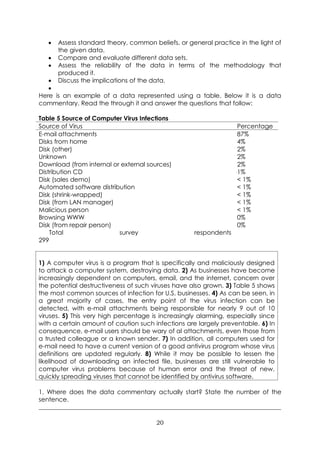
Hint: You may formulate survey questions/statements pertaining to the following
subtopics related to “Technology Integration and Classroom Learning”:
• What technological devices/tools do students use in their studies?
46
• How useful are these technologies to students?
• How does technology facilitate learning in the classroom?
The first few survey questions/statements are done for you.
SURVEY QUESTIONNAIRE
TECHNOLOGY INTEGRATION AND CLASSROOM LEARNING
Name (optional): _____________________________________ Section: _____________
Directions: Please indicate your level of agreement as you assess your
knowledge and perception of the subject under study by putting a check
mark on the column that corresponds to your rating.
5- Strongly Agree 4- Agree 3- Neutral 2- Disagree 1- Strongly Disagree
Technology used by students 5 4 3 2 1
1. I have access to the internet.
2.
3.
4.
5.
Usefulness of technology
6. I share and receive digital files real time (e.g.
photos, videos, digital documents, links, etc.).
7.
8.
9.
10.
Ways how technology enhances classroom learning
11. It increases my involvement in classroom
activities
12.
13.
14.
15.
47
Rubric for Survey Questionnaire
Category 4 3 2 1
Focus All
questionnaire
items are
related with
the area of
research
questions.
Most
questionnaire
items are
related with
the area of
research
questions.
Most
questionnaire
items are not
related with
the area of
research
questions or
the relation is
very vague.
Almost all
questionnaire
items are not
related with
the area of
research
questions or
the relation is
very vague.
Clarity All question
items are clear
and easy to
understand.
Furthermore,
there are no
negatively
framed
questions.
Most question
items are clear
and easy to
understand. A
couple of
questions are
ambiguous or
not precise
allowing for
multiple
interpretations.
Most question
items are
ambiguous or
not precise
allowing for
multiple
interpretations.
Almost all
question items
are ambiguous
or not precise
allowing for
multiple
interpretations.
Writing style Language is
simple and
natural. There
are no excess
words and
jargon is
avoided.
Language is
simple and
natural in most
question items.
In some
question items
there is use of
jargon and/or
excess words.
Language is
not simple in
most question
items. Jargon
and/or excess
words are used
often.
Language is
not simple in
almost all
question items.
Jargon and
excess words
are used often.
Bias All questions
are unbiased.
Most questions
are unbiased.
Most questions
encourage a
particular
response.
Almost all
questions
encourage a
particular
response.
Double-
barreled
questions
Each of the
questions
addresses only
one issue or
concept.
Most of the
questions
address one
issue or
concept. Some
questions are
double-
barreled.
Most questions
are double-
barreled.
Almost all
questions are
double-
barreled.
Spelling and
Grammar
There are no
misspellings or
grammatical
errors.
There is a
couple of
spelling and/or
grammatical
errors.
There are some
spelling and/or
grammatical
errors.
There are
several errors in
spelling and/or
grammar.
Source: Konstantinidis, A. (2016). Questionnaire development rubric. Research methods of
language professional modules, Master of Arts in Digital Technologies of Language Teaching
programme, University of Nottingham, UK.
48
How did you find the topic on Technology Integration and Classroom
Learning? I know you were able to relate with it since students like you along with
your teachers are already using different kinds of technological devices and even
platforms to enhance both the teaching and learning experience. With that, I
believe you were keen to identify the errors in the previous activity.
Activity 7: Let me see the numbers
Directions: Read the article below about the ten deadliest diseases in the world.
Then fill in the table below with the data required based on the survey results.
Ten Deadliest Diseases in the World
1. Coronary Heart Disease
Also called Ischemic Heart Disease, CHD occurs when the blood vessels that
supply blood to the heart become narrowed. The World Health Organization (WHO)
estimates that about 7.4 million people died of ischemic heart disease in 2012. That
was about 13.2 percent of all deaths.
2. Stroke
According to WHO, stroke was responsible for 6.7 million deaths around the
world in 2012. That figure represents about 11.9 percent of all deaths.
3. Chronic Obstructive Pulmonary Disease (COPD)
COPD is a chronic, progressive heart disease that makes it hard to breathe.
Chronic bronchitis and emphysema are types of COPD. Still according to WHO,
about 3.1 million deaths were attributed to COPD in 2012. That represents about 5.6
percent of deaths, a rate that has held steady since 2000.
4. Lower Respiratory Infections (pneumonia, bronchitis, and influenza)
WHO estimates that lower respiratory infections caused about 3.1 million, or
5.5 percent of deaths in 2012.
5. Trachea, bronchus, and lung cancer
The main causes of this type of cancer are smoking, second-hand smoke,
and environmental toxins. WHO estimates that in 2012, 1.5 million people died from
the trachea, bronchus, and lung cancers. These cancers represent about 2.9
percent of all deaths globally.
6. Human Immunodeficiency Virus (HIV)
Human Immunodeficiency Virus attacks the immune system. HIV can cause
AIDS, or acquired immunodeficiency syndrome. AIDS is chronic and life-threatening.
According to the Foundation for AIDS Research (amfAR), since the start of the
pandemic, almost 39 million people have died due to HIV/AIDS. In 2013, about 1.5
million people lost their lives to AIDS. That’s about 2.7 percent of deaths worldwide.
By the end of 2012, 35.3 million people around the world were infected with HIV.
Every day, about 5,700 more become infected.
7. Diarrheal Diseases
This disease enables the body to lose too much water and salt. Death is due
to dehydration. Diarrhea is usually caused by an intestinal infection transmitted
49
through viruses, bacteria, or even parasites. This type of infection can easily spread
through contaminated water or food. It’s particularly widespread in developing
nations that have poor sanitary conditions. WHO estimates that 1.5 million people
died from diarrheal diseases in 2012, which comprises about 2.7 percent of deaths.
Fortunately, that’s down from 2.2 million in 2000. Diarrheal disease is the second top
killer of children under age five. Tragically, about 760,000 children die from diarrheal
diseases each year.
8. Diabetes Mellitus
Diabetes is a group of diseases that affect insulin production and use. In type
1 diabetes, the pancreas can no longer produce insulin. The case is not known. In
type 2 diabetes, the pancreas doesn’t produce enough insulin, or it can’t be used
effectively. Type 2 Diabetes can be caused by some factors, including poor diet,
lack of exercise, and carrying too much weight. In 2012, about 1.5 million died from
diabetes-related causes, according to WHO. People In low to middle-income
countries are more likely to die from complications of diabetes.
9. Preterm Birth Complications
According to WHO, in 2012, as many as 1.1 million deaths were due to
prematurity and complications due to low birth weight. Three-quarters of these
deaths happen within the first week of life. Lack of skilled medical care makes this a
huge problem in developing countries. Many newborn deaths could be avoided
with good prenatal and postnatal care.
10. Tuberculosis (TB)
TB is an airborne disease that is often successfully treated. Some strains of TB
are resistant to conventional treatments. Second-line drugs used to treat these
patients are in limited supply. Some strains fail to respond to second-line treatment
as well. In 2012, about 900,000 people lost their lives to TB, according to WHO
estimates. The majority of TB-related deaths happen in poorer countries. It is one of
the top causes of death for people who have HIV.
Table 1 The Deadliest Diseases in the World
Disease Number of deaths Percentage
1. Coronary heart disease 7,400,000 13.2%
2.
3.
4.
5.
6.
7.
8.
9.
10.
50
Let Us Remember
You have finally reached the end of module 5. I know you have acquired
so many ideas which you can use and incorporate with your other subjects. Now it’s
time to recall the concepts that you learned by competing the statements below.
1. Data or information can come from two sources. These are the ________________
and ________________.
2. A ________________ is an example of a primary source that is often used as an
instrument in writing research papers.
3. In writing survey questions, the following pitfall should be avoided:
_________________, _________________, _________________, _________________, and
_________________.
4. Aside from narrative form, survey results can be reflected through
_________________.
5. The structure of a data commentary is usually consists of _________________,
_________________, and _________________.
6. Writing research report is essential in various disciplines because _________________
_________________________________________________________________________________.
Let Us Assess
Directions: Read each question carefully. Write the letter of your answer in your
answer sheet.
_____1. Which of the following is a double-barreled question?
A. Do you think your family members would like product X?
B. Do you agree that boys who play football is not uncommon?
C. Would you be for or against not allowing the sale of alcohol in schools?
D. Should the government spend less money on the military and more on
education?
The studies on the correlation of academic achievement have paved way for control
and manipulation of related variables for quality results in schools. In spite of the facts
that schools impart uniform classroom instructions to all students, wide range of
difference is observed in their academic achievement. The study sought to determine
the relationship between study habits and academic achievement of students. A
survey design was employed in this descriptive correlation study. The target population
included the 9th standard students at Spicer Higher Secondary School. Stratified
random sampling was used to select the respondents, study habits inventory by N.M.
Palsane and school examinations records was the main instrument for data collection.
Quantitative method was used to analyze field data collected. Interpretation and
recommendations of the findings was made accordingly as per computed Pearson’s
product moment coefficient of correlation. Results of this study revealed a positive
relationship of 0.66 between study habits and academic achievement. The results
implied that the study habits need a significant attention if we are to improve
performance. There was a clear finding that the teachers and students seem not to
take effort in developing good study habits.
51
_____2. Which part of a research paper does the paragraph belong?
A. abstract
B. summary
C. conclusion
D. introduction
For items 3 -5
_____3. On which day the maximum and minimum students were absent?
A. Friday and Saturday
B. Monday and Tuesday
C. Tuesday and Sunday
D. Wednesday and Thursday
_____4. How many students were absent on Wednesday and Friday?
A. 140 and 165
B. 125 and 160
C. 130 and 155
D. 135 and 150
_____5. On which days the same number of student was absent?
A. Friday and Saturday
B. Tuesday and Sunday
C. Monday and Thursday
D. Wednesday and Friday
_____6. Which of the following questions contains jargon?
A. Do you like fruits and vegetables?
B. Do you worry that you may have halitosis?
C. Do you like our product to be cheaper and more value for money?
D. Do you agree with most people that capital punishment should be
restored?
0
20
40
60
80
100
120
140
160
Monday Tuesday Wednesday Thursday Friday Saturday Sunday
Days
Number
of
Absentees
52
The studies on the correlation of academic achievement have paved way for control
and manipulation of related variables for quality results in schools. In spite of the facts
that schools impart uniform classroom instructions to all students, wide range of
difference is observed in their academic achievement. The study sought to determine
the relationship between study habits and academic achievement of students. A
survey design was employed in this descriptive correlation study. The target population
included the 9th standard students at Spicer Higher Secondary School. Stratified
random sampling was used to select the respondents, study habits inventory by N.M.
Palsane and school examinations records was the main instrument for data collection.
Quantitative method was used to analyze field data collected. Interpretation and
recommendations of the findings was made accordingly as per computed Pearson’s
product moment coefficient of correlation. Results of this study revealed a positive
relationship of 0.66 between study habits and academic achievement. The results
implied that the study habits need a significant attention if we are to improve
performance. There was a clear finding that the teachers and students seem not to
take effort in developing good study habits.
_____7. Which part of a research paper does the paragraph belong?
A. abstract
B. summary
C. conclusion
D. introduction
_____8. Which visual form is often used to illustrate relationships and trends in data
that are usually seen in research articles, scientific reports, and textbooks?
A. table
B. pie chart
C. bar graph
D. line graph
Therefore, the ratings on the level of performance of instructors of the Accountancy
Department and School of Law by their academic heads are not significantly different
to the ratings of their students. This means that their ratings are unanimous, that is, the
perception of the academic heads about the level of performance of instructors is
affirmed by their students. Meanwhile, the ratings on the level of performance of
instructors of the Business and General Education Departments by their academic
heads are significantly different from the ratings of their students. Comparing the
grand weighted means of the academic heads (WM – 3.67) to that of the students
(WM – 4.18), the students gave a higher rating.
_____9. Which part of a research study the abovementioned statements could be
found?
A. conclusion
B. summary
C. recommendation
D. interpretation
_____10. Which of the following questions is a double negative?
A. I enjoyed the amazing product your company has offered.
B. Please rate the timeliness and quality of service you received from out
53
staff.
C. I usually do not have one or more outfits that are not of the very latest
fashion.
D. Please agree or disagree with the following statement: Cars should be
faster and safer.
In this study, researcher-made questionnaire was used to gather the needed data
for the student’s profile. The draft of the questionnaire was drawn out based on the
researcher’s readings, previous studies, professional literature, published and
unpublished thesis relevant to the study. The requirements in the designing of good
questionnaire were considered. Open-ended options were provided to accommodate
to free formatted views related to the topics or issues. In this way, valid responses can
be obtained from the students.
_____11. Which visual form is divided into segments to display relative magnitude or
frequency of the categories?
A. table
B. pie chart
C. bar graph
D. line graph
_____12. The paragraph above is an example of _____.
A. research locale
B. research design
C. research instrument
D. research procedure
In this study, data were collected at two well baby clinics in the Piet Retief
(Mkhondo) area. Although the name Piet Retief was changed to Mkhondo during the
course of this study, the name Piet Retief was retained for the purposes of this study, as
it was mentioned in the title approved for the study by the University of South Africa
and all the documentation in the study referred to Piet Retief.
_____13. Which part of a research study does the paragraph contain?
A. research design
B. research environment
C. data gathering procedure
D. respondents of the study
All Grade VI pupils currently enrolled this Academic Year 2016 in Barretto-II
Elementary School were taken as the population for the study. The researcher decided
to consider the total of pupils to maintain the reliability and validity of the data
gathered through the questionnaire.
The distribution of respondents per section is shown in Table 1. The distribution shows
equal percentages per section. With this number of pupils per class, the teacher can
be able to easily identify the learning modalities of her pupils; thus, easier to facilitate
the class.
54
_____14. Which part of a research study does the text belong?
A. background of the study
B. review of related literature
C. participant of the study
D. significance of the study
_____15. What are the two ways to display data?
A. letters and images
B. number and shapes
C. poetic and narrative style
D. graphical representation and tabulation
Let Us Enhance
Activity 8: Interpret this.
Directions: Review the tabulation below and create a data commentary. Write your
composition in your answer sheet.
Table 13 Percentage of Adolescents Reporting the Following Parental Restrictions
on Their Lives (N = 200)
Girls Boys
Limitations on
Opportunities to go out at night
Uses the family car
Time of expected return
56%
15%
30%
35%
40%
61%
Interference in
Choice of friends
Future education choices
Spending of self-earned money
19%
18%
12%
23%
52%
27%
___________________________________________________________________________
__________________________________________________________________________________
__________________________________________________________________________________
55
Rubric for Data Commentary
Category VGE
5 pts.
GE
4 pts.
LE
2 pt.
NE
1 pt.
Does my data commentary follow the
proper structure?
Does my data commentary overview
the meaning the figures presented on
the table?
Does my data commentary explain likely
reasons for the data communicated by
the figures?
Does my data commentary clearly
communicate what I want to say?
Does my data commentary avoid errors
in grammar such as verb tenses, subject-
verb agreement, and article agreement
among others?
Does my data commentary use proper
mechanics in capitalization,
punctuation, and spelling?
Legend: VGE - To a very great extent; GE - To a great extent; LE – To a little extent;
N - Not at all
Rating: VGE: 23 – 30 ; GE: 16 – 22; LE: 8 – 15; N:1 - 7
Let Us Reflect
The last task will be an easy breezy one. Below is an evaluation of how well
you have gone so far in our first lesson. The Self-Assessment Tool will help you
reflect which areas you still need to improve and which ones you have already
mastered.
Activity 9: How much did I learn?
Directions: Answer this section as objectively as possible. Tick the column that you
best describe your ability in understanding and formulating survey questions.
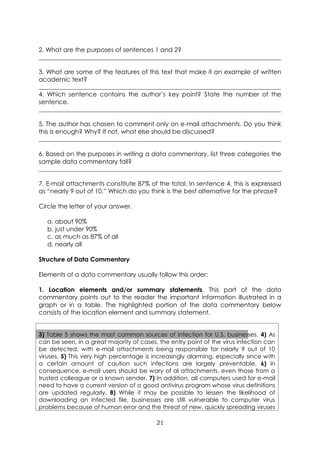
Usually
5 pts.
Sometimes
3 pts.
Seldom
1 pt.
Never
0 pt.
1. I understand the different
question types used in a survey.
2. I can distinguish between and
among question types.
3. I can write survey questions
correctly.
4. I construct survey questions
congruent to the objective/s of
my topic.
5. I reflect the weaknesses of
the question item before
56
including it in the survey.
6. I realize the significance of
producing quality survey
questions to obtain reliable
data.
7. I can present data using
various visual / graphical forms.
8. I appreciate the use of visual
/ graphical forms in presenting
gathered data.
9. I can identify the different
parts of a data commentary.
10. I can confidently construct
highlighting statements using
different phrases to strengthen
or soften my claims.
11. I ensure that my data
commentary is free from
misspelling and grammatical
error.
12. I am able to identify the
parts of a research report.
13. I understand what content
each part should contain.
14. I can construct a good
content for each part.
15. I value the important role of
research report in various fields.
Scoring: Usually – 3 points, Sometimes – 2 points, Seldom – 1 point, Never – 0 point
Score Level of Proficiency
66 – 75
56 – 65
46 – 55
Advanced
Proficient
Approaching
Proficiency
36 – 45
35 and below
Developing
Beginning
57
Answer key to Activities
Let
Us
Try
Activity
1
1.
surveys
2.
observation
3.
interview
Secondary
Sources
1.
textbooks
2.
encyclopedias
3.
journals
4.
commentary
5.
reports
6.
biographies
7.
theses
/
dissertations
Activity
1B
1.
journals
2.
interview
3.
surveys
4.
reports
5.
theses
/
dissertations
Activity
3.
Identifying
Error
1.
double-barreled
2.
bias
3.
double
negative
4.
jargon
5.
double-barreled
6.
double-barreled
7.
bias
8.
double
negative
9.
double-barreled
10.
double-barreled
11.
bias
12.
double
negative
13.
jargon
14.
bias
15.
bias
16.
bias
17.
jargon
18.
jargon
19.
double
negative
20.
double
negative
Continuation:
Graphs
and
Tables
1.
bar
graph
2.
pie
chart
3.
line
graph
4.
tables
Bar
Graph
1.
bar
graph
2.
December,
October
3.
36.75
4.
30
Data
Commentary
1.
3
2.
Introductory
sentences
3.
Answers
vary
4.
3
5.
Answers
vary
6.
highlight
the
results,
compare
and
evaluate
different
data
sets,
discuss
the
implications
of
the
data.
7.
A
Activity
4.
Writing
a
Data
Commentary
Answers
may
vary.
Let
Us
Practice
Activity
5
Dissect
this.
Answers
may
vary.
Activity
6:
Writing
Survey
Questions
See
rubric
Activity
2.
Your
Opinion
Counts!
Answers
vary
58
Let
Us
Reflect
Activity
8.
How
much
did
I
learn?
Answers
may
vary.
Activity
7.
Let
me
see
the
numbers.
Let
us
Enhance
Activity
8.
Interpret
this
Answers
may
vary.
References
Allen, M. (2017). The SAGE encyclopedia of communication research methods. USA:
Sage Publications, Inc.
Ambiquity (2020). In yourdictionary.com. Retrieved from
https://www.yourdictionary.com/ambiguity
Barrot, J.S. (2016). Academic reading & writing for senior high schoo. Quezon City:
C&E Publishing, Inc.
Barrot, J.S. & Sipacio, P.F. (2016). Academic reading & writing for senior high schoo.
Quezon City: C&E Publishing, Inc.
Bueno, D.C. (2016). Educational research writing made easy. Quezon City: Great
Books Trading.
Cardona, R.S., Reyes, A.S., & Tangalin, M.M. (2015). The bullying experiences and
classroom discipline techniques in an urban national high school in the
Philippines: A basis for anti-bullying program. American International Journal of
Contemporary Research, 5(2), 49-52. Retrieved from
http://www.aijcrnet.com/journals/Vol_5_No_2_April_2015/7.pdf
Commentary. (2020). In learnersdictionary.com. Retrieved from
https://learnersdictionary.com/definition/commentary)
Cristobal, A.P. & Cristobal M.D. (2017). Practical research for senior high school 2.
Quezon City: C&E Publishing, Inc.
Dapat, J.O. (2016). Applied English for academic and professional services. Pasay
City: JFS Publishing Services.
Delighted team (2019, May 24). Avoiding biased questions: 7 examples of
bad survey questions. Retrieved from https://delighted.com/blog/biased-
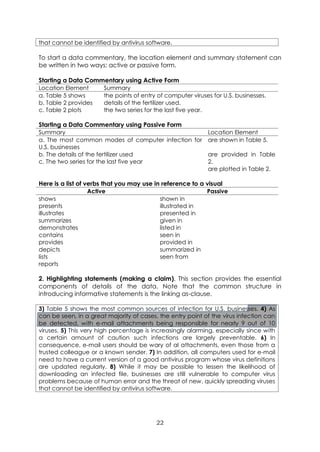
questions-examples-bad-survey-questions
Developing and writing structured survey questions. [PDF File]. (2013). Ignet.gov.
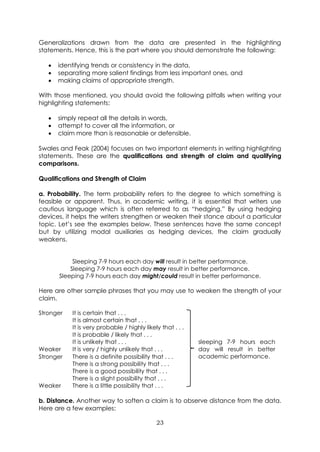
Retrieved from https://www.ignet.gov/sites/default/files/files/03_Developing_
and_Writing_Structured_Survey_Questions.pdf
Edwards, E.J., Thomas, M.D., Rosenfeld, P., & Kewley, S.B. (1997). How to conduct
organizational surveys: A step-by-step guide. USA: Sage Publications, Inc.
Retrieved form
https://books.google.com.ph/books?id=BPJyAwAAQBAJ&pg=PA33&dq=wha
t+is+double+negative+in+writing+survey+question&hl=en&sa=X&ved=2ahUKE
wis25qUjf7qAhXT62EKHdCNB40Q6AEwCHoECAUQAg#v=onepage&q=what%
20is%20double%20negative%20in%20writing%20survey%20question&f=false
Encyclopedia. (2020). In merriam-webster.com. Retried from https://www.merriam-
webster.com/dictionary/encyclopedia
How to write a commentary. (2019). aresearchguide,com. Retrieved from
https://www.aresearchguide.com/write-commentary.html
Jargon examples (2020). softschools.com. Retrieved from
https://www.softschools.com/examples/grammar/jargon_examples/142/#:~:t
ext=Jargon%20is%20the%20term%20for,lawyers%20and%20judges%20use%20fr
equently
Johnson, J.M. (2011). Did you not understand the question or not? An investigation of
negatively worded questions in survey research. Journal of Applied Business
Research. 20(1), p. 77. Retrieved from
https://www.researchgate.net/publication/237557490_Did_You_Not_Understa
nd_The_Question_Or_Not_An_Investigation_Of_Negatively_Worded_Questions
_In_Survey_Research
Konstantinidis, A. (2016). Questionnaire development rubric. Research methods of
language professionals module, Master of Arts in Digital Technologies of
Language Teaching programme, University of Nottingham, UK. Retrieved from
https://www.google.com/search?q=rubric+for+survey+questionnaire&sxsrf=A
LeKk03z2ukTEIl3s7rMwwLm8ciRSraC0g:1596690603360&tbm=isch&source=iu&i
ctx=1&fir=SE11tae8LKK35M%252Co5j1IEyJvRGmIM%252C_&vet=1&usg=AI4_-
kScr5WRsSrwbU78215kprOqoA58Sw&sa=X&ved=2ahUKEwiyx-
qB6IXrAhXR62EKHSrBCiAQ9QEwAHoECAoQBA&biw=823&bih=635#imgrc=5cH
v8F1GGx5NaM
Kulidtod, R.C. & Pasagui, N.S. (2017). Effects of social networking media to the
academic performance of the students. Advances in Economics, Business and
Management Research, 45, 59-64.
Lavrakas, P.J. (2008). Encyclopedia of Survey Research Methods. USA: Sage
Publications. Retried from
https://methods.sagepub.com/reference/encyclopedia-of-survey-research-
methods/n443.xml
Make asking demographic survey questions less awkward (n.d.). typeform.com.
Retrieved from https://www.typeform.com/surveys/demographic-survey-
questions/
More on wording questions (2012). web.ma.utexas.edu. Retrieved from
https://web.ma.utexas.edu/users/mks/statmistakes/morewording.html
Nordquist, R. (2020, June 12). What are business and technical reports. Retrieved
from https://www.thoughtco.com/report-writing-1692046
Open ended questions: Definitions, characteristics, examples, and advantages.
(2020). questionpro.com. Retrieved from
https://www.questionpro.com/blog/what-are-open-ended-questions/
Open ended questions: Definitions, examples, and tips. (2020). kwiksurveys.com.
Retrieved from https://kwiksurveys.com/blog/survey-design/open-ended-
questions
Question wording (2017). statpac.com. Retrieved from
https://www.statpac.com/surveys/question-wording.htm
Primary and secondary sources. (2020). unsw.edu.au. Retrieved from
https://www.library.unsw.edu.au/study/information-resources/primary-and-
secondary-sources
Ranking scales vs. rating scales: Which works for you? (2020). suzy.com. Retrieved
from https://suzy.com/blog/rating-vs-ranking-scales
Ranking scales vs. rating scales: Which works for you? (2020). suzy.com. Retrieved
from https://suzy.com/blog/rating-vs-ranking-scales
Report. (2020). In businessdictionary.com. Retrieved from
http://www.businessdictionary.com/definition/report.html
Script (2020). Whatls.techtarget.com. com. Retrieved from
https://whatis.techtarget.com/definition/script
Swales, J.M. & Feak, C.B. (2004). Academic writing for graduate students: Essential
tasks and skills 2nd ed. USA: The University of Michigan Press.
TeacherVision Staff. (2007, January 5). Textbooks: Advantages and disadvantages.
Retried from https://www.teachervision.com/curriculum-planning/textbooks-
advantages-disadvantages
The Israelites are counted. (2020). Thebibilejourney.org. Retrieved from
https://www.thebiblejourney.org/biblejourney2/25-the-israelites-journey-from-
egypt-to-mt-sinai/the-israelites-are-counted/
Types of Graphs and Charts (2019). Indeed.com. Retrieved from
https://www.indeed.com/career-advice/career-development/types-of-
graphs-and-charts
Types of journal articles. (2020). Springer.com. Retrieved from
https://www.springer.com/gp/authors-
editors/authorandreviewertutorials/writing-a-journal-manuscript/types-of-
journal-articles/10285504
For inquiries or feedback, please write or call:
Department of Education – Davao City Division
Elpidio Quirino Ave., Poblacion District, Davao City, 8000 Davao del Sur
Telefax: (082) 224-3274, (082) 222-1672
E-mail Address: davao.city@deped.gov.ph

EAPP Quarter2 - Module5_ Writing a Research Report.pdf

  • 1.
    English for Academicand Professional Purposes Quarter 2 – Module 5: Writing a Research Report 11
  • 2.
    Grade 11 –English for Academic and Professional Purposes Alternative Delivery Mode Quarter 2 – Module 5: Writing a Research Report First Edition, 2020 Republic Act 8293, section 176 states that: No copyright shall subsist in any work of the Government of the Philippines. However, prior approval of the government agency or office wherein the work is created shall be necessary for exploitation of such work for profit. Such agency or office may, among other things, impose as a condition the payment of royalties. Borrowed materials (i.e., songs, stories, poems, pictures, photos, brand names, trademarks, etc.) included in this module are owned by their respective copyright holders. Every effort has been exerted to locate and seek permission to use these materials from their respective copyright owners. The publisher and authors do not represent nor claim ownership over them. Published by the Department of Education Secretary: Leonor Magtolis Briones Undersecretary: Diosdado M. San Antonio Printed in the Philippines by Davao City Division Learning Resources Management Development System (LRMDS) Department of Education – Davao City Division, Region XI Office Address: Elpidio Quirino Ave., Poblacion District, Davao City, 8000 Davao del Sur Telefax: (082) 224-3274, (082) 222-1672 E-mail Address: davao.city@deped.gov.ph Development Team of the Module Writers: Carla Rica B. San Luis Editor: Marilyn C. Braganza Reviewer: Divilyn M. Rodriguez Illustrator: Ranie D. Villanueva Layout Artist: Template Developer: Neil Edward D. Diaz Management Team: Reynaldo M. Guillena Jinky B. Firman Marilyn V. Deduyo Alma C. Cifra Aris B. Juanillo May Ann M. Jumuad
  • 3.
    English for Academic andProfessional Purposes Quarter 2 – Module 5: Writing a Research Report 11
  • 4.
    1 Introductory Message For thefacilitator: Welcome to English for Academic and Professional Purposes Alternative Delivery Mode (ADM) module on Writing a Research Report. The activities in this module are arranged sequentially to help the learners understand the topic and develop the desired skill or learning competency. As a facilitator, you are expected to orient the learners on how to use this module. You also need to keep track of the learners' progress while allowing them to manage their own learning. Remind the learner that if there are things he/she doesn’t understand, he/she must not hesitate to call for your help and assistance. For the learner: Welcome to English for Academic and Professional Purposes Alternative Delivery Mode (ADM) module on Writing a Research Report. The activities in this module are arranged sequentially to help you understand the topic and develop the desired skill or learning competency. As a learner, you must learn to become responsible of your own learning. Take time to read, understand, and perform the different activities in the module. If there are things you don’t understand, do not hesitate to call your facilitator / teacher for assistance. The following are some reminders in using this module: 1. Use the module with care. Use a separate sheet of paper in answering the exercises. 2. Do not forget to answer Let us Try before moving on to the other activities in the module. 3. Read the instructions carefully before doing each task. 4. Observe honesty and integrity in doing the tasks and checking your answers. 5. Finish the task at hand before proceeding to the next. 6. Return this module to your teacher/facilitator once you are through with it. We hope that you will find meaningful learning as you go through the different activities in this module.
  • 5.
    2 Let Us Learn Inthe English language, writing is one of the essential skills that you need to learn and hone. As you climb the ladder from your Junior High School years to Senior High School, the level of your ability to write is likely to increase. This is also true with the content of your writing specifically in academic papers. You just don’t write off the top of your head rather you are expected to create better content. That is, you do thorough research about a certain topic in order to support your stock knowledge by finding the right sources and citing them. So, what is this module all about? After going through this module, you are expected to: 1. formulate a survey questionnaire; 2. summarize survey results or findings through visual/graphic and narrative forms; and 3. write a research report. Let Us Try Activity 1: Directions: Read the comic strips below. Write under each category which source is considered a primary or a secondary data.
  • 6.
    3 I know you’reexcited to fill in the table below. Just a quick reminder; remember the clues, primary sources are data acquired firsthand by researchers. If you are the researcher, then you have the freedom to design the instrument that you would use to elicit specific information or data as output; whereas, secondary sources of data are information gathered by others and they abound in various forms such as printed and electronic. textbooks journals observation reports interview encyclopedias surveys commentary biographies theses/ dissertations PRIMARY SOURCES SECONDARY SOURCES 1. 1. 2. 2. 3. 3. 4. 5. 6 7. I bet you found grouping the data easy. Let us check further how familiar are you with the data that you have just categorized by answering the questions below: 1. Which of the secondary sources should Kenneth use if he wants to gather information from recent research about school environment? ________________________________________________________________________ 2. If Kenneth wants to make his report more authentic, he might need to set a formal meeting with individuals who can share their experiences regarding conducive school environment. What do you call such primary source where face-to-face conversation is being held? ________________________________________________________________________ 3. Among the kinds of sources that you grouped, which one should Kenneth use if he wants to know the count of the population that has the same opinion as his in terms of school environment? ________________________________________________________________________ 4. From what source should Kenneth search if he wants to read articles that discuss current or recent news about school environment in the Philippines? ________________________________________________________________________ 5. If Kenneth wants to get the perception or opinion of about 60 students who are studying in the same school where he attends classes, which primary source should he conduct to gather his data? ________________________________________________________________________
  • 7.
    4 Lesson 1 Sources ofData Did you fare effortlessly in this activity? Great! I am absolutely sure that you will find the next section of this module more interesting as you will come to know the distinctions among the sources you have grouped. Are you ready? Let Us Study As a student, you will have to learn and write various kinds of papers. Usually, it starts with an essay where you simply share your opinions. Then, you will be introduced to research report writing where you will collect information through exploration of a topic in different sources and materials which afterwards you will summarize in a well-thought manner. As you continue your academic journey, your skills in forming opinion and finding reliable sources are now fused in creating a research paper. This is when the selection of information becomes crucial in an academic writing. Let us now distinguish each one from the other. Data can be collected in two ways: (1) Primary Sources are results of firsthand knowledge which means they are created by a person who actually witnessed an event such as written accounts of an individual’s thoughts or observations. This kind of data directly came from the data source which made it more reliable, accurate, and unbiased. Below are the most commonly used primary sources in research: a. Surveys are “conducted to get the pulse, perception, perspective, and preferences of a particular group of people” (Dapat, 2016). It usually consists of a set of questions about a particular topic directed to specific participants. The data collected from surveys aim to provide a forecast, statistical analysis, or discovery of trends and behavior. A survey is a common instrument preferred in research projects since its cost-efficient, entails unbiased responses, and protects respondents’ identity (Cristobal & Cristobal, 2017). b. Interview is a formal meeting between two or more persons where exchange of information occurs thru an in depth conversation. An interview schedule or topic guide, a list of questions or topic areas, is prepared by the interviewer (Amorado, Boholano, & Talili, 2017). It may be conducted individually or by group. Interviews done in groups are also called a focus group discussion.
  • 8.
    5 c. Observation isanother way of collecting data systematically, where researchers can partake in the conduct of research (Cristobal & Cristobal, 2017). In a non-participant observation, there is a limited interaction between the researcher and the people one observes; whereas, participant observation allows the researcher to engage in the activities of the research participants. Either way, the researcher needs to prepare an observation checklist or observation guide where observable events in relationship to the topic of interest are recorded. Primary sources are not limited in the abovementioned data sources. Primary sources for the different fields of research vary. Research field Primary Sources History • Letters and diaries • Photographs and video footage • Official documents and records • Physical objects Art and literature • Novels and poems • Paintings and art installations • Films and performances Communication and social studies • Interview transcripts • Recordings of speeches • Social media posts Law and politics • Court records • Legal texts • Government documents Sciences • Empirical studies • Statistical data Source: https://www.scribbr.com/citing-sources/primary-and-secondary- sources/ (2) Secondary Sources are data that someone has already done on a subject. When a researcher uses a secondary source, he/she relies on the expert’s conclusion about the topic. Secondary sources are usually utilized to provide description or explanation of the primary data since it often involves “generalization, synthesis, interpretation, commentary or evaluation in an attempt to convince the reader of the creator's argument” (“Primary and secondary sources,” 2020). Examples of secondary sources are: a. Biographies are detailed description of a person's life written by someone else. b. Commentaries are “spoken or written discussion in which people express opinions about someone or something” (Commentary, 2020). Moreover, it
  • 9.
    6 also focuses inproviding a complete analysis and detailed description of a specific text. Commentaries serve as a medium where a variety of perspectives can be discussed (“How to,” 2019). c. Encyclopedias are set of books that contain facts about various subjects. It is comparable to a database where articles on all branches of knowledge can be located and arranged alphabetically (Encyclopedia, 2020). d. Journals are collection of articles such as research that are published all year round. These articles are written by experts and are published either on printed or online format. The different types of articles that are published in a journal are original research, review articles, short reports or letters, case studies, methodologies (“Types of journal,” 2020). e. Reports are information presented in an organized format either in narrative, graphic, or tabular form. Its primary purpose is to inform particular audience about events, occurrences, or specific subjects (Report, 2020). Although reports can be presented verbally, comprehensive reports in a form of written documents are more preferred. (Nordquist, 2020). f. Theses / dissertations are both academic research paper but they have distinctions, too. A thesis is done by someone who is graduating from a master’s program to prove that he/she has mastered the knowledge required by his/her degree while a dissertation is done by someone in the doctoral program with the aim to contribute new knowledge, introduce concepts, and develop theories to his/her field of study. In both cases, a researcher needs to defend the worth of his/her paper. g. Textbooks are the most common resources there is either in the classroom, library, or resource room. A textbook is “a collection of the knowledge, concepts, and principles of a selected topic or course” (Teacher Vision Staff, 2020). These learning materials are meticulously created by authorities in a specific field such as teacher and college professors. Now that you already learn the kinds of primary and secondary sources, kindly go back to the previous activity and see if you answered it correctly. If yes, good job! It means you have probably been using these sources in your Junior High School years. If you got a few incorrect answers, don’t worry; you still have a lot of opportunities to get yourself acquainted with those different sources in the near future.
  • 10.
    7 Lesson 2 Survey Questionnaire Activity 2.Your Opinion Counts What is your answer for question no. 5 in the previous activity? If you agree that Kenneth needs to create and use a survey to gather the perception of the students in his school regarding their school environment, then you are right! Survey is the perfect tool that he needs to accomplish his data gathering. If you have ever wondered what a survey is, let me give you a firsthand experience of answering a survey questionnaire. Below is a sample survey questionnaire that Kenneth may use to gather relevant data for his report. Imagine that you and Kenneth are in the same grade level and attend the same school. He asked you to participate in the survey. Your task is to evaluate your school environment based on the survey questions indicated. Directions: Express your level of agreement or disagreement to the following survey questions by checking the appropriate rating scale. SURVEY QUESTIONNAIRE SCHOOL ENVIRONMENT AND STUDENT LEARNING Name (optional): _____________________________________ Section: _____________ Directions: Please imply your level of understanding as you assess your knowledge and awareness of the subject under study by putting check mark on the column that corresponds to your rating. 5- Strongly Agree 4- Agree 3- Neutral 2- Disagree 1- Strongly Disagree Survey Questions 5 4 3 2 1 1. The curriculum / program has encouraged me to be more refined, educated, respectful, involves, and disciplined in school and to be serious about my studies. 2. I get along with my teachers. 3. My teachers know how to draw the line between what is being taught and how it could apply to my life. 4. I feel comfortable asking the teacher s
  • 11.
    8 question when donot understand. 5. My teachers attend to our needs individually during the class period. 6. When I encounter difficulty in answering exercises or understanding the lesson, I do not mind because I know I will eventually get it. 7. My teachers will make sure that the rules are followed every day. 8. My classes are not hampered too often by student behavior. 9. My teachers follow a particular routine in the classroom for smooth run of things. 10. My teachers explain comprehensively and patiently on how to use some learning materials. 11. My teachers explain what I need to know and be able to apply it practically. 12. My teachers provide us with opportunities to participate in class activities. 13. My teachers use various ways for us to learn through the materials aside form lecture. 14. We learn because school laboratories are updated and conducive to use. 15. School personnel are friendly to us. 1. How do you feel answering the survey questionnaire? ____________________________________________________________________ 2. Based on your answers, can you provide some recommendations on how the school administration can improve the academic experiences of their students? ____________________________________________________________________ 3. In what way do you think your answers have contributed to the success of Kenneth’s data gathering? ____________________________________________________________________ I’m glad you’re able to answer the survey questionnaire honestly and objectively. You definitely were able to help Kenneth in his school task. Kudos to you!
  • 12.
    9 Surveys and pollscould be seen anywhere. It is shown in commercials to make the public aware how effective a particular product is, compared to its competitor. Polls are made to easily view public votes on issues that they agree or disagree on. But have you ever thought when did surveys start? If you think that survey was invented just some years ago, well, let me give you a bit of a trivia. It is actually hard to determine when the first survey was conducted, but several accounts in the Bible would attest that survey has already existed a long time ago. It started with a census when the congregation of the Israelites were counted at Mt. Sinai in 1446B where the recorded number of population of adult Israelite men reached 603,550 (“The Israelites, 2020). Yes, that’s how old it is. But surveys nowadays are used in various ways other than census. The goals of surveys according to Weisberg, Krosnick, and Bowen (1996) are to be able to answer the following questions: “(a) the prevalence of attitudes, beliefs, and behavior; (b) changes in them over time; (c) differences between groups of people in their attitudes, beliefs, and behavior; and (d) causal propositions about these attitudes, beliefs, and behaviors.” Surveys play a significant role in acquiring essential data for different fields. In Journalism, survey aims to measure public opinion for newspapers and magazines. In the field of politics, perceptions and insights of people are measured during election campaigns. Preferences and interest of consumers are also studied in the field of market research so they could determine which product to manufacture and what features of the product will most likely attract buyers and the list goes on from survey reports of crime rates to economic forecasting, from service satisfaction to change of social trends, and so on. No wonder why survey has become a part of the contemporary life. Now that you already know the uses of survey, let’s get you ready to write your own survey questions. Types of Survey Questions 1. Open-ended questions. Researchers use open response questions when they do not have an idea how the respondents will answer an inquiry or when answers cannot be listed to a set of options or possible responses. In this case, the respondents are given the freedom to express their knowledge, emotions, and understanding. Hence, it is also known as the “free-form survey questions” (“Open ended questions,” 2020) or “essay 5- Strong agree 4 – Agree 3 – Neither agree or disagree 2 – Disagree 1- Strongly disagree
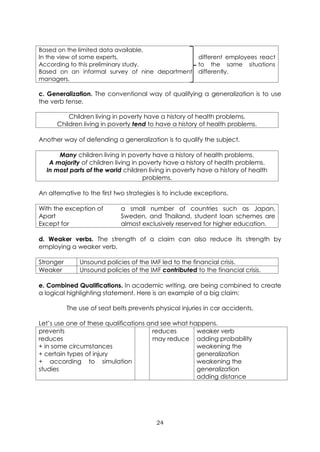
  • 13.
    10 questions” since itusually starts with ‘how’, ‘tell’, and ‘why’ (“Open ended questions,” 2020). Example: Now that you are enrolled in K-12, I wonder if you will tell me how you feel about it. 1. What do you like most about this new system? 2. What do you dislike most about it? 3. Are you satisfied with this new program? Why or why not? 4. Is there any possibility that this might be changed? Why or why not? Source: Dapat, J.O. (2016). Applied English for Academic and Professional Purposes. Philippines: JFS Publishing Services. 2. Closed-ended questions. These survey questions are precise and focused since it only provides the respondents with a limited number of options to select from (Developing and writing, 2013). Closed-ended questions are also known as fixed alternative questions. Types of Closed-ended questions a. Dichotomous Questions. These questions are consist of two answer options such as true and false, yes and no, and agree and disagree. Example: 1. What is your gender? Male Female 2. Have you played video games on your smartphone? Yes No 3. Do you like playing video games on your smartphone? Yes No 4. Which platform do you prefer for playing video games? Online Computer Source: Clow, K.E. & James, K.E. (2014). Essentials of marketing research: Putting research into practice. USA: Sage Publications, Inc. Retrieved from https://methods.sagepub.com/Book/essentials-of- marketing-research/n11.xml b. Demographic Questions. Researchers may include these questions if they want to ascertain personal information from the respondents. By asking these questions, researchers are provided with the factors that may have influenced a survey-takers’ responses, belief, or judgment. Basically, demographic questions
  • 14.
    11 ask the followinginformation: “age, gender, professions, incomes, education level, and ethnicity” (“Make asking, n.d.). Example: What is your age? Under 18 years _____18 to 24 years _____25 – 34 years _____35 – 44 years _____55 – 64 years _____Age 65 or older What is your marital status? _____Single _____Married _____Separated _____Widowed What is your educational qualification? _____Elementary graduate _____High school graduate _____College graduate _____Others (please specify): _____________________ c. Ranked Responses. This type of question response format allows the researchers to establish prioritization among a set of options (Lavrakas, 2008). These options will be ranked by the respondents by numbering them from 1 to a certain maximum number as indicated in the instruction. Example: Rank the following factors that you see in choosing a course. Write 1 for that you consider as the most important, 2 for the second most important, 3 for the third most important and so on. _____interest _____family decision _____chance to leave the country _____career opportunities Source: Dapat, J.O. (2016). Applied English for Academic and Professional Purposes. Philippines: JFS Publishing Services. d. Rating Scale. This question type requires the survey-takers to share their opinions or feedback by “assigning a value to a particular object or subject” (“Rating scale, 2020). This means that researchers can measure the respondent’s attitude or evaluation toward something. Scale is usually used to appraise product
  • 15.
    12 performance, skills ofemployees, processes, or services among others. The most common rating scale that is used in conducting surveys is the Likert Scale. This kind of survey is composed of declarative statements that allow the respondents to express their agreement or disagreement with a particular statement (Cristobal & Cristobal, 2017). It usually uses a five- or seven-point scale. Example: Likert scale to measure attitudes towards Mathematics ITEMS 1. I am interested in solving numbers and equations. SA A D SD 2. I enjoy using calculators. 3. I am so engrossed in reading too many instructions. 4. Symbols and numbers are visibly catchy. 5. I find it easy to memorize formulas. Legend: SA – Strongly Agree A – Agree D – Disagree SD – Strongly Disagree Are some of the question types familiar to you? Probably you have already encountered them when you were invited for an interview or you may have answered demographic questions if you have participated in a poll or a survey. Now that you have already acquainted yourselves with the different types of questions that are used in a survey, it is time for you to understand how construction of survey questions should be made. Since surveys are usually self-administered, it very essential that you take into consideration the wording of a question. It is said that “slight changes in the way questions are worded can have a significant impact on how people respond” even if it’s just a minor change (“Question Wording,” 2017). The possibility of acquiring accurate and reliable data may be compromised if proper wording of survey questions is overlooked. To avoid this from happening, you should consider the following points when making your questions: 1. Avoid ambiguity. Ambiguity refers to a word or a sentence that has unclear intention or meaning (Ambiguity, 2020). If a question is ambiguous, respondents have the chance to interpret it in different ways. When conducting a survey, you, as the researcher, would like to observe the accuracy of responses you will receive from the survey-takers; therefore, your questions should be clear and specific. Example: Do you attend mass regularly? Source: Cristobal, A.P. & Cristobal, M. D. (2017). Practical research 2 for senior high school. Quezon City: C&E Publishing, Inc.
  • 16.
    13 How you define“regularly?” Perhaps you would say everyday, right? However, terms that involve time may have varying interpretations to different people. In this case, the survey question could be revised like this: How many times have you attended mass in the past month? The time element “regularly” may be remarked by others as often or frequently. It can also be that they attend church at least once monthly or they always attend church only during Easter Sunday. To prevent this, state your intention clearly. Remember, asking more specific question will yield exact answer from the respondents. Source: https://web.ma.utexas.edu/users/mks/statmistakes/morewording.html 2. Avoid jargon. A jargon is a “specialized term or technical language that is only understood by those who are members of a group or who perform a specific trade” (“Jargon examples”, 2020). What do we mean by specialized term or technical language? Let’s take the example below: 1. I need a script in order to pick up the medicine 2. I need a nurse to room 12 stat. What does “script” mean to you? In literature, this is a piece of writing that contains a character’s dialogue in a drama or play while in computer programming; it refers to a “list of operating system commands” (Script, 2020). How about “stat”? You may have thought of it as a school subject – statistics, right? However, surprisingly, both “script” and “stat” are medical terms, too. Script refers to prescription where stat means rush or urgent. In writing survey questions, the use of jargons should be avoided or at least use to a minimum. Questions can be easily understood if they are written in the language that the target audience understand. If the use of specialized language cannot be prevented, the term can be defined in the question. Acronyms can also be considered a jargon so it should be spelled out completely when first used (Developing and writing, 2013). 3. Avoid compound questions. As someone who inquires, it is inevitable that you combine two questions in one statement; thus, making an inquiry complex since the two ideas are expressed at the same time. This act of combining two questions in one questionnaire item is called double-barreled or double-direct question. Let’s take a look at the statement below: Example: Do you think that people suffering from obesity should eat less and exercise more?
  • 17.
    14 What is youranswer? Did you answer “yes” to both questions or you answered “no” to the former and “yes” to the latter? If you opt for the second one, then you are thinking just the same as the rest of respondents who would be asked the same question. However, in the real scenario of taking survey, you will be given just one option for your answer since these two inquiries are fused into one statement. So how do we avoid constructing double questions in order to get two exact answers? Let’s see the revised version of the example. 1. Do you think that people suffering from obesity should eat less? 2. Do you think that people suffering from obesity should exercise more? If you answered that two questions should be constructed; then, you are correct. You separate the two questions by creating one statement for each. Furthermore, to check if you have included a compound question on your survey, look for the conjunctions “and” or “or” (Delighted team, 2019). If you do find them, chances are you may be seeking answers about several things. In this way, you will be able to discover the real intention of the respondents which will render useful data for your analysis later on. 4. Avoid double negative. According to Lavrakas (2008) double negatives refers to “the use of two negatives in one statement or question.” In writing survey questions, the inclusion of double negatives is a no-no. Let’s have an example: Was the facility not unclean? What does the question mean? Does it mean that the facility is messy or that it is clean? If you answered that the facility is clean, you got it right. However, if the survey-taker will not give enough attention to the two negatives used in the statement, – not and un-, the question item adds confusion to the respondents. According to Johnson (2011), “disagreement with the negatively worded statement means a positive response on the part of the respondent while agreement with the statement means a negative response to the statement (p. 77).” This means that double negatives can easily trick the respondents to give an answer contrary in meaning to the one they really intended to give. To avoid this, any statement containing double negatives should be rephrased or removed. The example above should be reworded this way: How would you rate the cleanliness of the facility?
  • 18.
    15 Source: https://delighted.com/blog/biased-questions-examples-bad-survey- questions On thepart of the respondents, they should be mindful of the following: Check for double negatives by looking for instances of “no” or “not” paired with the following types of words: • No/not with “un-” prefix words (also in-, non-, and mis-) • No/not with negative adverbs (scarcely, barely, or hardly) • No/not with exceptions (unless + except) Source: https://delighted.com/blog/biased-questions-examples-bad-survey- questions 5. Avoid biased questions. Biased questions, also known as leading questions, are questions items that “may cause a respondent to answer in a biased particular way” (Allen, 2017). This happens when the phrasing of the statement suggests and makes the respondent feel that a certain answer is better and more acceptable than others. Thus, instead of going to the other direction, leading questions make the respondents hold an opinion just like what most other people have. Let’s see the example below: How great is our hard-working customer service team? Source: https://delighted.com/blog/biased-questions-examples-bad-survey- questions How would you answer the question if it describes the team as great and hardworking? You can no longer disagree, right? If that is the case, then, you have just responded to a leading question. Leading questions are usually accompanied by “subjective adjectives and context-laden words” (Delighted team, 2019). Framing a question in this way gives a positive or negative impression to the respondents. To avoid this, the question item should be rephrased this way: How would you describe your experience with the customer service team? Source: https://delighted.com/blog/biased-questions-examples-bad-survey- questions
  • 19.
    16 With the revisedquestion, the statement is objective. There were no insinuations that the team is “great” or “hard-working.” It provides avenue for the respondents to give think critically before giving their own judgment. How did you find your new learning? I hope you found it interesting and useful. Now, let’s test how well you learn. Please proceed to the next activity. Activity 3. Identifying Error Directions: Read each statement and identify the error in the survey questionnaire. Write your answer on the blank which number corresponds to the question item. Write whether the question item is ambiguous, jargon, double- barreled, double negative, or bias. SURVEY QUESTIONNAIRE PARENTING STYLES ADAPTED BY GRADE 11 SENIOR HIGH SCHOOL PARENTS Name (optional): Section: Direction: Please indicate your level of agreement as you assess your knowledge and perception of the subject under study by putting a check mark on the column that corresponds to your rating. 5- Strongly Agree 4- Agree 3-Neutral 2-Disagree 1-Strongly disagree INDICATORS 5 4 3 2 1 A. Authoritarian 1. My parents dictate me what to do and force me to do it because they said so. 2. My parents get very angry with me when I disagree with them. 3. My parents are not unaffected when I misbehave. 4. My parents become stringent with me especially when I disobey the rules in our home. 5. My parents impose that they have control over family matters and children just follow. B. Authoritative 6. My parents help me understand the effects of my behavior and they encouraging me to talk about the consequences of my own action. 7. My parents admit their mistakes when they do something that hurts or offends my feelings. 8. My parents consent me not to disobey the rules just because they said so, 9. My parents tell me how I should act and
  • 20.
    17 1. ____________________________________ 2. ____________________________________ 3.____________________________________ 4. ____________________________________ 5. ____________________________________ 6. ____________________________________ 7. ____________________________________ 8. ____________________________________ 9. ____________________________________ 10. ___________________________________ 11. ___________________________________ 12. ___________________________________ 13. ___________________________________ 14. ___________________________________ 15. ___________________________________ 16. ___________________________________ 17. ___________________________________ 18. ___________________________________ 19. ___________________________________ 20. ___________________________________ explain to me why. 10. My parents talk and discuss to me the things I do and how I should behave. C. Permissive Uninvolved 11. My parents are uninvolved in my education. 12. My parents are not uninterested with my achievements. 13. My parents are withdrawn from my emotional needs. 14. My parents display no concern towards my feelings. 15. My parents show disgust when I commit mistakes. D. Permissive Indulgent 16. My parents tolerate my misbehavior. 17. My parents coddle me with the things I want. 18. My parents never set parental restrictions. 19. My parents do not disagree with me when I do things that may cause embarrassment. 20. My parents do not disallow me to decide for myself.
  • 21.
    18 Was the activityeasy? If you answered it effortlessly, that’s great! If not, don’t worry you have more chances to practice in our succeeding activities. But for now, we will go to the next process of obtaining and analyzing our data. For you to utilize the results of your data source such as the survey questionnaire, you need to collect the responses of your survey-takers and treat the gathered data using appropriate statistical formulas. The easiest is to count the responses, tabulate it, and get its percentages. Later on, the results may be presented through visual forms such as graphs and table or through narrative form. Lesson 3 Graphs and Tables When you see graphs, most likely you’ll think of Math. In its simplest definition, a graph is a pictorial representation or a diagram. This visual form contains data or values illustrated in an orderly way. Moreover, graphs are used to demonstrate trends, patterns and relationships between sets of data (“Types of Graphs,” 2019). That’s why it is also used in other areas. In the field of research, graphs are used to report findings while in the field of journalism and broadcasting, graphs are useful to support arguments or point of view. Another way of presenting data is through the use of tables. Usually a table is used to aid comparison. It is structured with rows and columns to present specific numerical figures. The elements of a table are title, rows, columns, column labels / titles, and data. Utilizing visualization in a report or presentation engages the brain to process graphical data differently as compared to data in a narrative form. This is the reason why graphics draw the readers’ attention because the brain “subconsciously seeks a visual center” (“Types of Graphs,” 2019). Let’s see if you still remember them. Can you identify the types of visual forms described in the following statements? 1. It usually appears horizontally or vertically. It contains two axes: the x and the y axes. The horizontal axis or the x-axis shows the data categories while the vertical axis or the y-axis displays the scale. 2. It is divided into edge-like sectors which makes the size of portions easier to understand. A proportionate part of the whole is represented by each wedge and its total value is always %. 3. Its data points are designed and linked using a line in a dot-to-dot fashion. It is also consist of horizontal axis and vertical axis. The horizontal axis is also known as the independent axis while the vertical axis is called the dependent axis.
  • 22.
    19 4. It usuallypresents numbers to compare with other numbers. It also summarizes or defines concepts, terms, other details of a study. Were you able to identify the visual representations described above? Great! Now, check out the example below how data are presented in a visual form and answer the questions that follow. Reference: https://www.math-only-math.com/worksheet-on-bar-graph.html 1. What kind of graph is used? ______________________________________________________________________________ 2. In which month the average attendance is minimum or maximum? ______________________________________________________________________________ 3. In which month the average attendance was less than 40 given the data below? ______________________________________________________________________________ 4. Find the difference between the maximum and minimum average attendance if the most number of attendees is 50 and the least is 20. ______________________________________________________________________________ Did you get all the answers correctly? Perfect! Let’s learn more about presentation of data. In academic writing, the results presented in visual forms are accompanied with written description and explanation. These data-focused writing subtasks are called data commentaries. According to Swales and Feak (2012), “The amount and level of specificity of commentary provided for a data set can vary considerably depending on the type of text being written.” Some data commentaries may be short just like in the case of journal articles and it may be lengthy such as in the case of technical report. Why is a data commentary essential in the analysis and presentation of data? Here are some of its purposes as stated by Swales and Feak (1994). • Highlight the results.
  • 23.
    20 • Assess standardtheory, common beliefs, or general practice in the light of the given data. • Compare and evaluate different data sets. • Assess the reliability of the data in terms of the methodology that produced it. • Discuss the implications of the data. • Here is an example of a data represented using a table. Below it is a data commentary. Read the through it and answer the questions that follow: Table 5 Source of Computer Virus Infections Source of Virus Percentage E-mail attachments Disks from home Disk (other) Unknown Download (from internal or external sources) Distribution CD Disk (sales demo) Automated software distribution Disk (shrink-wrapped) Disk (from LAN manager) Malicious person Browsing WWW Disk (from repair person) Total survey respondents 299 87% 4% 2% 2% 2% 1% < 1% < 1% < 1% < 1% < 1% 0% 0% 1) A computer virus is a program that is specifically and maliciously designed to attack a computer system, destroying data. 2) As businesses have become increasingly dependent on computers, email, and the internet, concern over the potential destructiveness of such viruses have also grown. 3) Table 5 shows the most common sources of infection for U.S. businesses. 4) As can be seen, in a great majority of cases, the entry point of the virus infection can be detected, with e-mail attachments being responsible for nearly 9 out of 10 viruses. 5) This very high percentage is increasingly alarming, especially since with a certain amount of caution such infections are largely preventable. 6) In consequence, e-mail users should be wary of al attachments, even those from a trusted colleague or a known sender. 7) In addition, all computers used for e-mail need to have a current version of a good antivirus program whose virus definitions are updated regularly. 8) While it may be possible to lessen the likelihood of downloading an infected file, businesses are still vulnerable to computer virus problems because of human error and the threat of new, quickly spreading viruses that cannot be identified by antivirus software. 1. Where does the data commentary actually start? State the number of the sentence. __________________________________________________________________________________
  • 24.
    21 2. What arethe purposes of sentences 1 and 2? __________________________________________________________________________________ 3. What are some of the features of this text that make it an example of written academic text? __________________________________________________________________________________ 4. Which sentence contains the author’s key point? State the number of the sentence. __________________________________________________________________________________ 5. The author has chosen to comment only on e-mail attachments. Do you think this is enough? Why? If not, what else should be discussed? __________________________________________________________________________________ 6. Based on the purposes in writing a data commentary, list three categories the sample data commentary fall? __________________________________________________________________________________ 7. E-mail attachments constitute 87% of the total. In sentence 4, this is expressed as “nearly 9 out of 10.” Which do you think is the best alternative for the phrase? Circle the letter of your answer. a. about 90% b. just under 90% c. as much as 87% of all d. nearly all Structure of Data Commentary Elements of a data commentary usually follow this order: 1. Location elements and/or summary statements. This part of the data commentary points out to the reader the important information illustrated in a graph or in a table. The highlighted portion of the data commentary below consists of the location element and summary statement. 3) Table 5 shows the most common sources of infection for U.S. businesses. 4) As can be seen, in a great majority of cases, the entry point of the virus infection can be detected, with e-mail attachments being responsible for nearly 9 out of 10 viruses. 5) This very high percentage is increasingly alarming, especially since with a certain amount of caution such infections are largely preventable. 6) In consequence, e-mail users should be wary of al attachments, even those from a trusted colleague or a known sender. 7) In addition, all computers used for e-mail need to have a current version of a good antivirus program whose virus definitions are updated regularly. 8) While it may be possible to lessen the likelihood of downloading an infected file, businesses are still vulnerable to computer virus problems because of human error and the threat of new, quickly spreading viruses
  • 25.
    22 that cannot beidentified by antivirus software. To start a data commentary, the location element and summary statement can be written in two ways: active or passive form. Starting a Data Commentary using Active Form Location Element Summary a. Table 5 shows b. Table 2 provides c. Table 2 plots the points of entry of computer viruses for U.S. businesses. details of the fertilizer used. the two series for the last five year. Starting a Data Commentary using Passive Form Summary Location Element a. The most common modes of computer infection for U.S. businesses b. The details of the fertilizer used c. The two series for the last five year are shown in Table 5. are provided in Table 2. are plotted in Table 2. Here is a list of verbs that you may use in reference to a visual Active Passive shows presents illustrates summarizes demonstrates contains provides depicts lists reports shown in illustrated in presented in given in listed in seen in provided in summarized in seen from 2. Highlighting statements (making a claim). This section provides the essential components of details of the data. Note that the common structure in introducing informative statements is the linking as-clause. 3) Table 5 shows the most common sources of infection for U.S. businesses. 4) As can be seen, in a great majority of cases, the entry point of the virus infection can be detected, with e-mail attachments being responsible for nearly 9 out of 10 viruses. 5) This very high percentage is increasingly alarming, especially since with a certain amount of caution such infections are largely preventable. 6) In consequence, e-mail users should be wary of al attachments, even those from a trusted colleague or a known sender. 7) In addition, all computers used for e-mail need to have a current version of a good antivirus program whose virus definitions are updated regularly. 8) While it may be possible to lessen the likelihood of downloading an infected file, businesses are still vulnerable to computer virus problems because of human error and the threat of new, quickly spreading viruses that cannot be identified by antivirus software.
  • 26.
    23 Generalizations drawn fromthe data are presented in the highlighting statements. Hence, this is the part where you should demonstrate the following: • identifying trends or consistency in the data, • separating more salient findings from less important ones, and • making claims of appropriate strength. With those mentioned, you should avoid the following pitfalls when writing your highlighting statements: • simply repeat all the details in words, • attempt to cover all the information, or • claim more than is reasonable or defensible. Swales and Feak (2004) focuses on two important elements in writing highlighting statements. These are the qualifications and strength of claim and qualifying comparisons. Qualifications and Strength of Claim a. Probability. The term probability refers to the degree to which something is feasible or apparent. Thus, in academic writing, it is essential that writers use cautious language which is often referred to as “hedging.” By using hedging devices, it helps the writers strengthen or weaken their stance about a particular topic. Let’s see the examples below. These sentences have the same concept but by utilizing modal auxiliaries as hedging devices, the claim gradually weakens. Sleeping 7-9 hours each day will result in better performance. Sleeping 7-9 hours each day may result in better performance. Sleeping 7-9 hours each day might/could result in better performance. Here are other sample phrases that you may use to weaken the strength of your claim. Stronger Weaker It is certain that . . . It is almost certain that . . . It is very probable / highly likely that . . . It is probable / likely that . . . It is unlikely that . . . It is very / highly unlikely that . . . sleeping 7-9 hours each day will result in better academic performance. Stronger Weaker There is a definite possibility that . . . There is a strong possibility that . . . There is a good possibility that . . . There is a slight possibility that . . . There is a little possibility that . . . b. Distance. Another way to soften a claim is to observe distance from the data. Here are a few examples:
  • 27.
    24 Based on thelimited data available, In the view of some experts, According to this preliminary study, Based on an informal survey of nine department managers, different employees react to the same situations differently. c. Generalization. The conventional way of qualifying a generalization is to use the verb tense. Children living in poverty have a history of health problems. Children living in poverty tend to have a history of health problems. Another way of defending a generalization is to qualify the subject. Many children living in poverty have a history of health problems. A majority of children living in poverty have a history of health problems. In most parts of the world children living in poverty have a history of health problems. An alternative to the first two strategies is to include exceptions. With the exception of Apart Except for a small number of countries such as Japan, Sweden, and Thailand, student loan schemes are almost exclusively reserved for higher education. d. Weaker verbs. The strength of a claim can also reduce its strength by employing a weaker verb. Stronger Unsound policies of the IMF led to the financial crisis. Weaker Unsound policies of the IMF contributed to the financial crisis. e. Combined Qualifications. In academic writing, are being combined to create a logical highlighting statement. Here is an example of a big claim: The use of seat belts prevents physical injuries in car accidents. Let’s use one of these qualifications and see what happens. prevents reduces + in some circumstances + certain types of injury + according to simulation studies reduces may reduce weaker verb adding probability weakening the generalization weakening the generalization adding distance
  • 28.
    25 So our highlightingstatement will turn into this: According to simulation studies, in some circumstances the use of seat belts may reduce certain types of physical injuries in car accidents. Observe that in the example above, the writer exhibits being “confidently uncertain”; thus, making his claim less assertive by only expressing possibility. f. Organization. Highlighting statements are usually arranged from general to specific. Hence, major claims are stated first followed by minor claims. Qualifying Comparisons As mentioned in the earlier part of this section, information seen in a table should not be simply repeated in words. As alternative, you may use the following phrases: Almost exactly twice . . . A marginally smaller . . . Slightly over twice . . . Close to three times . . . . . . exceeded . . . 3. Concluding a Data Commentary or Results Section 3) Table 5 shows the most common sources of infection for U.S. businesses. 4) As can be seen, in a great majority of cases, the entry point of the virus infection can be detected, with e-mail attachments being responsible for nearly 9 out of 10 viruses. 5) This very high percentage is increasingly alarming, especially since with a certain amount of caution such infections are largely preventable. 6) In consequence, e-mail users should be wary of all attachments, even those from a trusted colleague or a known sender. 7) In addition, all computers used for e-mail need to have a current version of a good antivirus program whose virus definitions are updated regularly. 8) While it may be possible to lessen the likelihood of downloading an infected file, businesses are still vulnerable to computer virus problems because of human error and the threat of new, quickly spreading viruses that cannot be identified by antivirus software. These are the typical elements that comprise the content of a conclusion. They generally appear in this order: Explanations and/or implications Expected results or unsatisfactory data Possible further research or possible future predictions Usually required If necessary If appropriate
  • 29.
    26 Activity 4. WhatDoes It Say? Directions: Below is a pie chart that shows the devices used by people ages 16 and above in accessing the internet both at home and in other places. Your task is to write a data commentary based on the information presented in the chart. This graph shows ___________________________________________________________ _________________________________________________________________________________. The participants mentioned four main devices _____________________________________ __________________________________________________________________________________ As can be seen in the pie chart, it is clear that the majority of the participants prefer to use ___________________________________________________________________________ __________________________________________________________________________________ __________________________________________________________________________________ __________________________________________________________________________________ In conclusion, ____________________________________________________________________ __________________________________________________________________________________ __________________________________________________________________________________ _________________________________________________________________________________.
  • 30.
    27 Lesson 4 Parts of aResearch Report You may be wondering where you would use your knowledge of writing survey questions and data commentary. Well, these concepts are part of a bigger picture which is the research report writing. A research report is a kind of academic writing that presents and provides findings, analysis, interpretation, and argument about a phenomenon based on in-depth experiments as well as previous conducted studies. Furthermore, it is a scholarly work as it gives detailed explanations and discussed the findings of a study and not just a collection or series of unsubstantiated opinions or quotation / notes lifted from various sources that are threaded or looped together. The content that a research report contains is a product of formal investigation and scientific inquiry (Barot, 2016). Parts of a Research Report 1. Title Page This portion contains the title of the research paper, the name of the author/s and their affiliations, and the date of submission. 2. Abstract An abstract is a short summary of a research work either a published or unpublished dissertation or thesis. A good abstract aims to provide the readers the gist or essence of a paper. It should spark the interest of the readers to decide whether to read the full paper or not. Moreover, the summary gives detailed information, analysis, and arguments in a research work. Usually an abstract is consist of 6 – 7 sentences or 150 – 250 words. It may seem short but it should contain these parts: (1) rationale / objectives; (2) research problems; 3) methodology; (4) results / major findings; and (5) conclusions and implications. The Effects of Teenage Pregnancy on the Educational Attainment of Girls at Chorkor, a Suburb of Accra Recently, the incidence of teenage pregnancy has been very high in Ghana. The study therefore was designed to explore the effects of teenage pregnancy on the educational attainment of the girl-child at Chorkor. A total sample size of fifty-five (55) respondents was used for the study. Questionnaire, in-depth interview, focus group discussions and observation were used to collect data for the study. With respect to factors that lead to teenage pregnancy, it was evident that poor parenting, poverty and peer influence are the major causes of teenage pregnancy. The study also revealed that most of the teenage mothers drop out of school. The study therefore recommended that teenage mothers should be helped in their psychosocial development and job skills development. Reference: https://www.researchgate.net/publication/256482306_Effects_of_teenage_pregna ncy_on_the_educational_attainment_of_girls_at_Chorkor_a_suburb_of_Accra
  • 31.
    28 3. Introduction This sectionprimarily provides the description of the problem as well as discussions about the practical and or theoretical significance of the issue or topic being studied. Usually it presents the global, national, and local status of the problem. Furthermore, it presents contributions the study could make to address the research gaps. Another sub-part of the introduction is the statement of the problem. Often these are statements or questions depicting how the variables are associated or related to each other. Lastly, this section also includes definition of terms. Remember that various terms used in a study may have uncommon meaning or may have several meanings that are only used particularly for the said study. Bullying all over the world is becoming a primary concern among children, adolescence and even adults. According to Abe (2012), it can occur in any context in which human beings interact with each other. This includes school, church, family, workplace, home, and neighborhoods. It is even a common push factor in migration and it can exist between social groups, social classes and even between countries. In Safe Schools/Healthy Students Albemarle/Charlottesville Project conducted in 2012 among 3,387 grades 6-8 students in Virginia, USA, up to 9% of them reported that they are bullied at least once a week, with verbal bullying frequently occurring. In 2011, about 28 % of students between the age of 12-18 reported having been bullied at school during the school year and 9% reported having been cyber-bullied (American Institutes for Research). Most of them are males and had experienced name calling, hitting and intimidation. What is more critical is it is not confined to a one time occurrence or for a short time but can be going on for months (41%) and years (11%) and it is confounded by short and long term effects (Stop ABully School Reports from 2011-2012). In the countryside, despite the passing of the Republic Act 10627 or the Anti- Bullying Act and the Department of Education (DepEd) Child’s Protection Policy, the DepEd documented more than 1,700 cases of child abuse and bullying in school year 2013-2014. Of these, 60 percent were only resolved (Flores, 2014). Furthermore, in 2012- 2013 DepEd report, 80% (1,165 out of 1,456) of the child abuse cases involved acts of bullying (Malipot, 2013). Among the psychological and verbal violence experienced in school in elementary and high school in 2009, ridiculing, cursing and humiliating were the most rampant incidences (Dinopol, 2013). In Binakayan National High School, Kawit, Cavite, there is a reported 36 bullying cases for SY 2013-2014 which emanate from name calling, playing offensive jokes, hiding or getting someone’s personal belongings, and inflicting physical injury. These had turned into physical bullying where kicking, slapping and beating up another person in the school are the most common cases. Based on interview and teachers’ records; however, verbal bullying such as name calling, mocking, and hurtful teasing happen frequently inside and outside the classroom which are not usually reported to school authorities and resolved immediately instead. Hence, this descriptive study is aimed at investigating the bullying experiences of students and classroom discipline techniques employed by the teachers towards the crafting of an anti-bullying program in the school. It has the following objectives: determine students and teachers’ profile relevant to main variables; assess the occurrences of direct and indirect bullying incidences among
  • 32.
    29 students and theclassroom discipline techniques employed by teachers; test the independence of the profile variables from bullying incidences; create a model localized to the concerned school that adequately explains classroom discipline techniques employed by the teachers; and propose an anti-bullying program of the school. Source: Cardona, R.S., Reyes, A.S., & Tangalin, M.M. (2015). The bullying experiences and classroom discipline techniques in an urban national high school in the Philippines: A basis for anti-bullying program. American International Journal of Contemporary Research, 5(2), 49-52. 4. Literature Review Writing a research report entails a lot time reading a variety of materials and references. This section includes a summary and synthesis of the said sources related to your study. In research report, the literature review is divided into parts: related literature and related studies. For readers to have a better understanding of the study; related literature provide definition, description, and explanation of the concepts and theories related to the topic. You can find useful information for your related literature by reading published books, textbooks, manuals, and other materials (Cristobal & Cristobal, 2013). Clinical Supervision and Level of Performance of Elementary Teachers (Lisud, 2013) On Supervision. The redefinition of supervision, according to Sergiovanni and Starratt (1998) necessitates the disconnection of supervision from hierarchical roles. It is viewed as a more democratic and profession process, involving multiple skills that are equally available to teachers and supervisors. This new supervision embraces different configurations of teachers as colleagues working together to increase the understanding of their practice. It establishes new connection with developmental roles. “Staff development and supervision are not joined in such a way that they are often undistinguishable (Sergiovanni & Starratt, 1998, p. 106.)” One of the most critical problems facing the profession is how to improve the development of teachers. Novice teachers find their first few years of teaching a trying and often defeating experience (Glatthorn, 1990). Entrance into the teacher profession is marked by an initial period of challenges and opportunities. Teachers begin their careers facing the most difficult assignments with a lack of time for planning supervision, and interaction with colleagues (Odell & Ferrano, 1992). On Teacher’s Needs. Educational leaders in schools must “support successful teacher induction in the ways they respond to these beginning teachers’ needs” (Reiman & Thies-Sprinthall, 1998). As Robinson (1998) pointed out, to be successful, beginning teachers must meet their challenges with perseverance, hard work, and quality assistance from experiences teachers and administrators who are willing to provide and recognize extensive support for teachers during the first year or two of their teaching careers. Effective supervision and coaching programs at the induction level have been found to ameliorate beginning teacher concerns, and to increase beginning teacher focus on instruction (Huling-Austin, 1990).
  • 33.
    30 The problems experiencedby teachers should not lead supervisors to conclude that all induction programs should focus solely on survival issues. Professional development, as a desired outcome of supervision, must be a key issue in induction, given that novice teachers are future educational leaders. On Preferences of Supervision. Teachers differ in their preference and choices for supervision (Beach & Reinhartz, 2000). While there are teachers who like to be left alone to do their job, other teachers appreciate comments about their teaching (Augustyn, 2001). According to Glatthorn (1990), beginning teachers can also be characterized in terms of their preferences for certain kinds of supervisory practices. There is general agreement that most beginning teachers require the intensive assistance of clinical supervision. To improve their instructional performance, the supervisor should also work with them using two other styles – a direct supervisory style and flexible collaborative style. Stemming from the need for improved supervision of teachers is an urgency to develop a connection between supervision and professional development. The route taken in professional development should parallel teacher needs (Jonasson, 1993). Professionalism of beginning teachers depends on how their particular needs are satisfied. It is the purpose of administrators as supervisors to provide necessary and effective models of supervisory practice for professional development. Teachers need to have a choice among supervisory styles available for their academic growth. Thus, personal and professional development is the outcome of the effective supervision. Source: Cristobal, A.P. & Cristobal M.D. (2017). Practical research for senior high school 2. Quezon City: C&E Publishing, Inc. Related studies, on the other hand, present a synthesis of a collection of studies similar to the present study. This means that the previous studies and the present study use the same variables, indicators, concepts, and they even have the same subjects or topic of the study. Remedial, Reinforcement, and Enhancement Modular Learning Activities in Science and Health in Elementary Schools: An Action Research (Jamin, 2015) Various studies have been conducted on different instruction and problems. They are the following: A study was done by Labro who developed self-instructional materials to meet the selected deficiencies in Physics, in the bachelor’s degree of Science and Information Technology curriculum at the Samar Polytechnic College. The findings revealed that the developed instructional materials were more effective in attainment and remediation purposes. He recommended that instructional materials should be developed further based on the difficulties or deficiencies of the leaners.
  • 34.
    31 Labro’s study isparallel with the present study since both focused on development of instructional materials to address the problem of unmastered skills among learners. The study of Cabidog on Modular Skills-Focused Curriculum in Physical Education for Intermediate grades pupils showed that the majority of the teachers have inadequate preparation in Physical Education. The degree of compliance on teaching a modular lesson in arm-up activities, health-related fitness concepts, teaching skills development, as well as skills activities fairly developed or undertaken signals that a modular focused curriculum on Physical Education should be aligned and implemented. This present study is related to the work of Cabidog in the sense that they both gave importance or value to the modular approach in teaching for skills development. However, these studies differ on the subject focus. The present study is on Science and Health. On the other hand, Cabidog’s study was on Physical Education. Meanwhile, Talua developed instructional modules in Health Education for first year high school. Her study revealed that teachers were wanting and waiting for this type of instructional modules to improve the students’ performance in Health Education. Her study concluded that learning components on areas in Health Education were failrly developed. This implies the necessity for the researcher to develop and construct instructional modules in Health Education for first year high school students. Calapre, on her study on the effect of modular instruction on the achievement of the Grade VI pupils on rational numbers, indicated that the result was significant to the aforementioned pupils. She improved the modules by using the language of the children. Directions of the modules were reworded to ensure readability. The study conducted by Calapre bear significance on the present study because it recognizes the importance of modules as instructional materials to improve learner’s performance. The study conducted by Valeriano which aimed to develop action game- type modules oral language skills for Grade I is related to the present study since both aim to develop instructional materials in modular form for pupils’ skills development and for teachers’ use to sustain for the entire school year in teaching. The difference lies in the respondents of study since Valeriano’s study had Grade 1 pupils as respondents while the present study had Grade IV pupils as respondents. Meanwhile, Valeriano’s study focused on language development while the present study is on Science and Health skills. Globio conducted another study which attempted to determine the development of modules for remedial instruction in Science and Health for Grade IV pupils in Maydolong District, Division of Eastern Samar. To find out the effectiveness of the instructional material, she first conducted a pre-rest before administering the module to the respondents. She found out that those who utilized the instructional modules have a fast concept development. In the study of Costibolo, which employed the descriptive research method through a survey questionnaire and reading proficiency test to gather data, it was revealed that fourteen (14) out of eighteen (18) complete elementary schools in Dagami North District got a qualitative description as “Needs Remediation.” One of the recommendations, in order to improve the academic performance of the
  • 35.
    32 children in Englishlanguage, is that teachers should be creative and innovative in using different teaching aides or materials and various manipulative activities to make learning more effective. In addition, the use of English Language for Grade IV is recommended in Dagami North and South districts. The study of Costibolo is the same as the present since the utilization of modules as instructional materials is important in improving or developing the skills of pupils. The only difference is in the learning domain and the level of learners. Costibolo focused in improving the English language skills of Grade UV pupils. N the other hand, the present study emphasizes the development of Science and Health skills of Grade IV pupils. Source: Cristobal, A.P. & Cristobal M.D. (2017). Practical research for senior high school 2. Quezon City: C&E Publishing, Inc. It is worthy to note that in some instances, the literature review is incorporated in the introduction section of a research report. 5. Methodology The methodology section of a research report contains a description of how tests or experiments were conducted. It is comprised of several subcategories. These are the locale and participants, the instruments used such as survey questionnaire, the data gathering procedure, and data analysis. Let us understand each concept by reading the examples below. Participants and Locale The participants or respondents are the primary sources of information during data gathering. It is them by which the interventions or process are applied (Cristobal, A. & Cristobal, M., 2017). The participants in a study can be individuals or groups. On the hand, the research locale is the environment by which the research is conducted. In describing the research locale, the research should take into consideration the significant characteristics of the place that have relationship to the research (Bueno, 2016). Correlates of the Financial Literacy Profile and Work Performance among Elementary Teacher (David, 2014) The respondents of this study were the public elementary school teachers in the First Congressional District based on the Personal Service Itemizatio – DepEd Bataan (2012). When it comes to the population of teachers per district, Abucay has 148, Samal has 127, Orani has 223, Hermosa has 207, Morong has 114, Dinalupihan East has 175 and Dinalupihan West has 210 with a total of 1204 permanent teachers. Out of the total number, 300 were taken as samples of the study. The teachers were selected randomly from each district through cluster sampling using the Slovin’s formula. The sample is presented in Table 1. After determining the desired sample size for each district, systematic sampling was used to get the actual respondents of the study. Systematic
  • 36.
    33 sampling was carriedout by choosing randomly a number r, say 5, from a series of numbers (e.g. from 1 to 1000). Selection number 5 was done through the lottery technique. Thus, the 5, a teacher from the master list was selected as a respondent. Teachers listed as 15, 25, 35, 45, and so on were made respondents. If all positions in this order had been exhausted, another r was randomly selected and the procedure was followed until all respondents were selected. This sampling procedure was done separately per district. Table 1. Frequency Distribution of Respondents According to District Name of District Population Sample Abucay 148 37 Dinalupihan East 175 44 Dinalupihan West 210 52 Hermosa 207 52 Morong 114 28 Orani 223 55 Samal 127 32 TOTAL 1204 300 Source: Cristobal, A.P. & Cristobal M.D. (2017). Practical research for senior high school 2. Quezon City: C&E Publishing, Inc. Instrument The selection of instrument that you will use in your research plays a vital role in your data collection. When describing the instrument, you should detail how it is being designed and utilized in your study (Bueno, 2016). Some examples of instruments used in research are questionnaire, interview, observations, and tests among others. It is important to note that instrument becomes valid for use once it underwent the validity and reliability testing. Competency-based Modular Learning Material in Chemistry for Third Year Students: An Action Research. Tacloban: Unpublished Thesis, Asian Development Foundation College, Inc. The instruments employed in the study were achievement test for the students and survey questionnaire for the teacher. These two instruments were described as follows. Achievement Test for Students. The achievement test was a 100 item-test that was developed by the research and designed to determine the achievement level of third year high school students in Chemistry. The content of the test was based on
  • 37.
    34 the Philippine SecondarySchool Competencies. The Survey Questionnaire for the Teacher. The survey questionnaire for the teacher is composed of three parts. It elicited to what extent the skills in Chemistry were developed among third year high school students, the technique used by the teacher in teaching the subject, and the problems encountered in teaching concepts relative to the subject. Source: Cristobal, A.P. & Cristobal M.D. (2017). Practical research for senior high school 2. Quezon City: C&E Publishing, Inc. Data Gathering Procedure This part of the research report describes the processes that the researcher has undergone to conduct his study. It usually starts with obtaining permission and approval from the head of the institution or agency where the participants are employed. Once the researcher acquired permission, he can administer the research tool or instrument to the participants. It is also in this section where the schedule or date of the administration and retrieval are stated. Competency-based Modular Learning Material in Chemistry for Third Year Students: An Action Research. Tacloban: Unpublished Thesis, Asian Development Foundation College, Inc. Gathering of necessary data for the study was done through a survey questionnaire. This questionnaire elicited the following pertinent information: teacher’s profile, financial attitudes, behaviors, and knowledge of teachers. Data on the work performance of teachers in relation to their instruction competence, their school, home and community linkages, and their personal circumstances, social growth and professional characteristics were gathered through their CB-PAST or Competency-based Performance Appraisal Systems for Teachers in the Division of the Department of Education. In addition, data on the number of elementary teachers per district in the Division of Bataan were also gathered from Personal Services Itemization – Teaching and Non-teaching Personnel – Public Elementary Schools – Department of Education, Division of Bataan. Permission to administer the survey questionnaire was requested from the Division Superintendent through channels. The researcher personally administered the survey throughout the district. This was done so the proper instructions were given to the teachers. The survey questionnaires were retrieved as soon as the teachers had completed answering the questionnaires. Source: Cristobal, A.P. & Cristobal M.D. (2017). Practical research for senior high school 2. Quezon City: C&E Publishing, Inc.
  • 38.
    35 6. Results andDiscussion This section serves as the heart of the research report. It is where pertinent findings are presented, interpreted, analyzed, and discussed. The Results and Discussion can also appear under the header of “Presentation and Discussion” or “Analysis of Findings. The Results and Discussion includes four major elements as mentioned by Cristobal, A. and Cristobal, M. (2017). • Presentation of data – This part uses charts, tables, or figures accompanied by textual interpretation for easier comprehension of the data by the readers. • Analysis – Essential data are emphasized in this part which will be used as basis of the findings. • Interpretation – After statistical data have been translated, the researcher can create logical and coherent statements. • Discussion – This part provides the principles, relationship and generalization reflected by the results. Moreover, it is in the discussion part where results are compared and interpreted against previous studies that have already been published (Bueno, 2016). Note that the discussion of findings follows the sequence of the research questions. Figure 21.2 Sample Level of Performance (%) of Senior High School (grade 11) Students in Various Subjects Since this study is conducted in the Accountancy and Business Management track, it is projected that senior high school (Grade 11) students will perform highly in the specialization subjects. The table shows graph shows increasing grades 75% to 90%. The lowest performance is noted in the English subject at 75% is a proof that senior high school students lack competencies in English which is one of the most needed skills in business. Meanwhile these students perform on the average in other subject areas such as Social Science and Mathematics. 0 10 20 30 40 50 60 70 80 90 100 English Mathematics Social Sciences Management
  • 39.
    36 The results ofthis study negate the findings of Jaytee (2012) whose study revealed that secondary students got the lowest performance rating in specialization subjects. The presented figure and data of Magno (2012) in the SEAMEO INOTECH report the K to 12 Program agrees with findings of the study that Filipino students compared to the ASEAN counterparts perform poorly in English and Mathematics. Source: Cristobal, A.P. & Cristobal M.D. (2017). Practical research for senior high school 2. Quezon City: C&E Publishing, Inc. 7. Conclusion Enclosed in the conclusion are “insights drawn from the findings per sub- problem” (Cristobal, A. & Cristobal, M., 2017). These insights are stated in a straight- forward manner providing answers to the stated problem. Explanations or elaborations are unnecessary. Based on the findings of the study, the following conclusions were drawn: Intrapersonal and interpersonal competencies are highly related to each other. The home management styles, hobbies, involvement to civic and cultural organizations, self-esteem, self-monitor, and intrapersonal competency are positively but negligibly related to school effectiveness, while age, educational attainment, training, home atmosphere, locus of control, risk-taker, all specific variables of interpersonal competency are negatively and lowly related to school effectiveness. Human virtues and Machiavellianism are positively slightly related t school effectiveness while administrative experience is negatively slightly related to school effectiveness. The factors of school effectiveness are human relation skills, professionalism, and management capability. The proposed human relation intervention program is strongly agreed to be implemented. Source: Cristobal, A.P. & Cristobal M.D. (2017). Practical research for senior high school 2. Quezon City: C&E Publishing, Inc. 8. References This part contains the different primary and secondary sources you used in your study. The referencing style varies among institution, teachers, or field of study.
  • 40.
    37 Let Us Practice Activity5. Dissect this. Directions: Read the research report below and answer the questions that follow. Effects of Social Networking Media to the Academic Performance of the Students I. INTRODUCTION Social networking media is about sharing or communicating with other people. It has spread its wings to various other fields and education is one of the new sectors where the concept of social media is making a great role (Anonymous, 2014). They are communication channels or tools used to store, aggregate, share, discuss or deliver information with friends and colleagues using the internet (Reynolds, 2015). They involve the use of web-based technologies to transform one-way communication into an interactive online dialogue (Dixon, 2012). It is a creation and exchange of user-made content. At school or in any office, social media is used by students and teachers to share original content the articles or the publications. Students, in particular, use it and provide an opportunity to seek to questions they may have related to their course. Thus, the use of social media has extended throughout the community (Roblyer, et al., 2010). In the previous years, social media websites have become common. It gives young people a new way to interact with each other and communicate with the world. Social media networking became popular between 2004 and 2006, after Facebook and MySpace were created. Facebook, for example has over 500 million members and it is still growing and approximately 85% of undergraduate students are Facebook users (Schneider, 2009). During the second quarter of 2008, 75% of Internet surfers used “Social Media” by joining social networks, reading blogs, or contributing reviews to shopping sites. This represents a significant rise from 56% in 2007. The unlimited growth is not only limited to teenagers or to one of the members of Generation X. Today, 35 – 44 years old people have increasingly joined the population and counted as joiners, spectators, and critics. Therefore, it over the past years. They have helped many people feel as if they belong to a community and make connection not only on campus but with friends outside of school.Due to the increased popularity of social networking media, economists and professors are requesting the clientele to go to different websites for efficient paper works ignoring how much time spent on these different sites (Choney, 2010). Moreover, college students nowadays (which consist of Baby Boomers, Generation Xers, and Millenials) are exposed to all types of technologies in many aspects of their live and form of large proportion of users on social media networks such as Facebook, Twitter, Instagram, MySpace and many more (Guy, 2012). In particular, in the University of New Hampshire, the students use Facebook and YouTube than any other social media platform. Blogs, Twitter, MySpace, and Linkedln had significantly lower amounts of student users. The students from the
  • 41.
    38 business school hadthe highest percentage of users of blogs, Twitter, and Linkedln while Liberal Arts students were the highest percentage of My Space users (Martin, 2013). With the above data, one could say that social networking media sites have become a habit for some students and it was found out that it is difficult for them to study for one hour without logging in to one network site. They become very smart because of the information they get from these sites and it easy to get almost any materials for school assignment. But some students become very poor academically (Egedegbe, 2014). According to the research of Brubaker (2013), the current generation of college students has been exposed to a technology which led them to rely on social media such as Facebook and Twitter. It has an impact on the academic performance when students overuse or multitask while doing their school work. A study found out that 90% of college students visit social media networking sites in a regular basis using desktop computers, laptops, e-readers, tablets, and cell phones to actively engage in social networking, text messaging, blogging, content sharing, online learning, and much more daily (Guy, 2012). As an effect, most of the users have the good quality of communication skills through the use of social networking media over the computer [Sponcil and Gitimu (n.d.)]. They were able to communicate with friends and family by posting information and they spent much of the time viewing information. The face-to-face interactions via the computer facilitate communication which allows users to keep in touch with family and friends in a convenient way and to learn about social events and issues. Said finding was corroborated by the work of Anonymous (2014) who maintained that creating Facebook Group has good effects to the students. They can share topics online. Study groups and students can use it to connect with each other outside of the classroom while the bad effect is that students may want to add as friends to make trouble or some personal reasons. Also, the students can also access to a world of knowledge through the use of social networking media and other forms of digital communication. Slaughter (2007) said that social networking media have deeply transformed the learning. When students are connected to social networking media it will helps them to earn better grades at school (Skiera, Hinz & Spann, 2015). In studying the total number of hours spent by the users, Wang, Chen and Liang (2011) disclosed that 45% of their samples admitted that they spent 6 – 8 hours per day checking social media sites, while 23% spent more 8 hours; 20% spent 2 – 4 hours and only 12% spent less than 2 hours on this task. Results showed that social media is a college interest in the Wales University. Students consume a lot of time on social networking sites especially the adolescents. They are involved in uploading/downloading, getting information related to their academic or future career, chatting with friends and watching online movies (Kanagarathinam, 2014). Twitter is one of the most important media companies in the world. It is now one of the top 10 most visited sites. With more than 500 million users, the students can find teachers, schools, and perhaps more important professionals, lead publications in their areas of interest (Anonymous, 2013).
  • 42.
    39 Blogs can beused in classroom environment for diary entry; it also can be a useful tool to link communication between study groups within a class or other classes or even schools. Blogs can highly motivate the students, especially those who otherwise might not become participants in the classrooms. It gives excellent opportunities for students to read and write effective forums for collaboration and discussion, and powerful tools to enable scaffolding learning or mentoring to occur (Nguyen, 2015). According to the study of Head and Eisenberg conducted in 2009, Wikipedia provides the students with a summary about a topic, the meaning of related terms, and also got students started on their research and offered a usable interface and one of the expectable workarounds that many students use, especially during the first stages of their research process. In University of Washington’s Information School, most of the college students use Wikipedia and they know its limitation. Because of its quick way to get started, they use Wikipedia just as most of people do but not deep and credible. In other words, knowledge on the social networking media is a basic asset that a college student nowadays must possesses in order to survive in his chosen volition. In this regard, a question may be asked: Is any use of social networking media beneficial to students? Unfortunately, studies revealed different results. Accordingly, the use of technology such as internet is one of the most important factors that can influence educational performance of students positively or adversely. The effect of SNS usage will depend on the type of SNS the student is using, if student uses the internet for the purpose of leisure activity that interferes with academic, it will affect the student academic performance negatively (Egedegbe, 2014). According to the study of Tayseer, et al., (2014), result showed that most of the students who spend many hours in using social networks have a high GPA at the Petroleum University. In short, social media has several effects on academic work, some are more positive than others. But with around 96% of all college students on Facebook, only the most dedicated academics would consider giving up social media for a slightly better GPA. Also, social media may have a positive impact on students’ sense of themselves in the community. Social media-using students were twice as likely as other students to feel well-liked by their peers and to participate in extracurricular activities. However, negative effects abound. Students who use social networking media sites and hit the books simultaneously found their multitasking led to 20% lower grades that those of their more focused peers. It also made less money during school from part-time work, putting in around five hours per week as opposed to 16 hours per week for a typical, unplugged counterpart (O’dell, 2011). According to the research of Ferrer conducted in 2013 at the University of Southern Mindanao, 93.8% of Bachelor of Arts in English was a member of social media networking and 48.94% got an excellence General Point Average. A particular study by Kumar (2014) revealed that social networking media gave a sense of belonging to an academic community, as the students online with their friends were mostly they met in college. Two step flow interactions, student to student and teacher to student favored academic learning through social networks. The use of these networks has to be disciplined as it can lead to distraction from education. The social networks used for educational tutoring and social networking sites that students used for academic purposes are the YouTube, WhatsApp and
  • 43.
    40 Facebook. Meanwhile, notonly the students are benefiting. For example, the National Association for College Admission Counseling (NACAC) discovered that 85% of college admission offices reported using at least one form of social media to recruit prospective students in 2008 and increase from 61% last 2007 (Anonymous, 2014) In sum, we can say that there are benefits and risks associated with using any social network even though there have been reports regarding its effect on students’ academic performance. Accordingly, some researchers found a poor effect and influence when the media is overuse in such a way that do not academically improve learning or its process. There are still other researchers who examined this same problem but have found no conclusive data affirming the significant relationship between using social networking and student academic performance (Al- Rahmi and Othman, 2013). Since available research data are inconclusive of the effects of social networking media on the academic performance of students, it is timely and an imperative necessity to study on whether or not the exposure to social networking media of the students of the Institute of Middle East and Asian Studies (IMEAS) of the University of Southern Mindanao (hereinafter referred to as USM), Kabacan, Cotabato can explain their high academic performance. Statement of the problem This study was conducted to determine the effects of social networking media to the academic performance of IMEAS students. Specifically, it sought to answer the following questions: (1) What are the different types of social networking media subscribed by the scholar students of the IMEAS?; (2) What are the different types of IT gadgets commonly used by the respondents in accessing social networking media?; (3) What are the perceived effects of social networking media to the academic performance of the IMEAS students?; and (4) What is the relationship of the social networking media and the respondents’ academic performance? Significance of the study The results of this study shall be beneficial to the school administration, the faculty, the students, and the public in general. To the University of Southern Mindanao (USM) officials, the results would guide them empirical bases in the improvement of the existing educational policies, curriculum and strategies, or the formulation new ones, towards a more effective delivery of learning in this information age. To the curriculum committee and the academic affairs office, output of this research would provide them a first-hand information on how social networking media affects the academic performance of the students in the University, in general, and in the institute of Middle East and Asian Studies (IMEAS), in particular, so that they would design measures to further improve, upgrade and expand the coverage of the internet service in the school campus. Further, for the guidance counselors, this study also gives them clear perspective on how the specific behavior of students is affected by social networking media. To the IMEAS students, findings of this work shall guide them on how to properly design their study habits thereby improving their scholastic achievements. This will provide them information on how to exploit the use social media to improve their studies. To the future researchers on
  • 44.
    41 social networking media,the results would serve as a baseline data for them to conduct the same study in order to validate the findings. Scope and limitation of the study Due to time and financial constraints, this study recognizes many limitations not only in terms of its scope and focus but also in its statistical tools, time frame, sampling methods, and others. On its scope and time-frame, it focused only on the effects of social networking media to the academic performance of IMEAS students who were officially enrolled in the First Semester, 2015-2016. Moreover, only basic statistics were employed since the study is descriptive in nature. Finally, the purposive sampling was employed in choosing the respondents of the study. Setting of the study The study was conducted in the Institute of Middle East and Asian Studies (IMEAS), University of Southern Mindanao (USM), Kabacan, Cotabato during the second semester of the academic year 2015-2016. Occupying a total land area of about 1,024 hectares, the University of Southern Mindanao (USM) is situated in Poblacion Kabacan, Cotabato which is about 600 meters away from the national highway. It is accessible by land transportation from any of the four main cities in Mindanao: 104 kilometers to Cotabato City, 143 kilometers to Davao City, 135 kilometers to General Santos City, and 196 kilometers to Cagayan de Oro City. USM is claimed to be the pioneering land grant University in southern Philippines. It was formerly given the name Mindanao Institute of Technology (MIT) which was founded by the late Bai Hadja Fatima Matabay Plang, the wife of former Senator and retired Brigadier General Salipada K. Pendatun, which became operational on October 1, 1954. It achieved a university status on March 13, 1978 by virtue of Presidential Decree No. 1312 signed by then President Ferdinand E. Marcos. At present, the University is consisting of nine (9) colleges and two (2) institutes, including the Institute of Middle East and Asian Studies (IMEAS). At present, the Institute is consisting of only two (2) academic departments, viz: International Relations and Islamic Studies. In the First Semester, 2015-2016, the former had one- hundred eighteen (118) enrollees while the latter had nine hundred nineteen (919). II. RESEARCH DESIGN AND METHODOLOGY In general, this study employed a descriptive research design which made use of both the primary as well as the secondary data. In trying to look for the perceived effects of social networking media of the respondents to the academic performance of the IMEAS students, the study used a questionnaire method. The second type of data was gathered from written materials available in the different libraries in the University as well as those found on-line. Moreover, correlation analysis was used to interpret the relationship of the socio-demographic characteristics of the respondents and the effects of social networking media to their academic performance. Respondents of the study The respondents of the study were the ninety-one (91) students from the IMEAS who were taken as samples from the one thousand and thirty-seven students who were officially enrolled in the first semester of the school year 2015 – 2016. They were chosen using the Slovin’s formula as follows:
  • 45.
    42 Where: N = Population n= sample size e = Marginal error (10%) Computation: Sampling Procedure Three types of sampling methods were used in this research. The first is the purposive/selective sampling, which is employed in the choice of the respondents considered in the study. As previously mentioned, the student-respondents are selected due to their most accessibility. Proportionate stratified random sampling was employed in getting the prescribed total number of respondents from the two sample academic departments, that is, 81 from the Islamic Studies Department while only 10 from the International Relations Department. The third and the last type of sampling method is the systematic random sampling which is employed in the selection of the respondents from the list of enrollees available in the Institute. This is done by selecting the names of the respondents from the list of enrollees by having five interval names for every draw until the desired total number of respondents from every Department had been chosen. Research Instrument In gathering the primary data, the only instrument used in this research was a structured questionnaire. It consisted on two parts. Part 1 contains the socio- economic profile of the respondents while Part 2 comprises questions regarding the description of social networking media of the respondents and its perceived effects to the academic performance of the students. Data Gathering Procedure First, the researchers sent a letter addressed to the USM President through the registrar asking approval to get the Grade Point Average of the students and to IMEAS dean for the conduct of the study. Second, the researchers conducted administered the pretesting of the questionnaire for validation of the said instrument. Third is the sampling and actual identification by the researchers of the actual respondents. Questionnaires were retrieved right away after the respondents have answered them all. Statistical Analysis The statistical tools used in the study were the descriptive statistics such as percentage, frequencies, and averages. Furthermore, Pearson-coefficient tool was used to determine the relationship of the sociodemographic profile of the respondents and the perceived effects of social networking media to the academic
  • 46.
    43 performance of therespondents. III. FINDINGS AND CONCLUSION For the socio-demographic profiles of the respondents, it was revealed that most of the respondents were at the age of 18 to 20. This confirms the claim by Lennon, Rentfro, and Curran (2012) that the young adults whose ages range from 18 – 20 oftentimes use social networking sites compared to those belonging to the higher age brackets. In terms of sex, the study gathered that female respondents dominated the samples who constituted 81.32% of them. This is not surprising since nowadays, the women out numbered men and there is a numerical difference between the two sex’s increases with age. In France, eight centenarians in ten are women (Anonymous, 2015). Moreover, greater of the respondents were single whose monthly incomes range 500 to 1000 weekly which came out in form of living allowances. As to the access of students to social media networking sites, the study revealed that the respondents availed of the following social media networks (in descending order): (1) Facebook, (2) Twitter, (3) MySpace, (4) Instagram, (5) Flicker, (6) Frienster, (7) Blogs, (8) Podcast, (9) Youtube, (10) Tumblr and (11) Skype. This finding corroborated the data in a research that Facebook now has more than 1.5 billion users, more than 1 billion of which use the service daily in the first quarter of 2015. It was revealed that Facebook has passed 1.55 billion monthly active users and 1.39 billion are mobile users. As of last year, Facebook also shared that it had a 1.01 billion daily active users and 894 million mobile daily active users (Protalinski, 2015). This may imply that Muslim students of the Philippines also follow with the social network trend in the world over. In accessing these networks, the respondents used the following information gadgets (in rank order): (1) cell phones, (2) tablets; (3) laptops; (4) desktop computers; and (5) e-readers. The students of the Institute used the social networking media for the following purposes (in rank order): (1) to like the post of their friends, topics and etc.; (2) downloading; (3) chatting; (4) uploading pictures, writings, etc.; and (5) post comments to friends. This is found supportive to the finding of a study by Fox News’ Dr. Manny that teenagers used their social networking media accounts to likes, comments and follow and they base their selfworth on the number of likes, comments and followers they obtain from it (Talreja, 2013). Although, all the respondents were students but this data show that they were not fully using their social media activities for academic purpose but for social purpose, like connecting with friends. Furthermore, aside from the enumerated purposes above, the respondents used the social networking media due to the following reasons (in rank order): (1) to communicate with people who are away from them; (2) to be updated with latest news; (3) to gain knowledge for academic purposes; (4) for pleasure and fun; and (5) and other similar reasons. This finding validates the above output that student users of the Facebook are spending much of their time for social purposes. On the question of frequency of their use of social media, it was revealed that student respondents used the social networking media almost daily since majority of them answered to have used said form of media 5-6 days a week at about 1-2 hours every session. According to the survey conducted in 2013, 63% of the students check their social networking media sites at least once a day and the 33% who check 6+
  • 47.
    44 times a day(Anonymous, 2014). This means that much of the time of the respondents was spent in the internet usage rather than in their class activities. On the perceived effects of social media network to the respondents, the data disclosed the following (in rank order): (1) helps them to become updated on current issues and events that can help on their studies; (2) helps them to improve their communication skills; (3) helps them to share topics online; (4) gives them information related to their academic or future career; (5) helps them to find answers for their school works; (6) helps them to become smart because of the information they get from the sites; (7) gives them an excellent opportunity for effective forums in class discussion; (8) helps them to earn better grades in school, (9) helps them to improve their participation in school; and (10) highly motivates them to become participative in the classroom with 56.04% of the IMEAS students. This output may imply that the main purpose of the students in using internet is different from their actual activity whenever they already accessed the sites. While their common main objective of accessing the networks was for academic purposes (i.e., to communicate with people who are away from them) but in practice they were using their internet time for social purposes (i.e., to like the post of their friends, topics and etc.). Finally, as to the relationship of selected socio-demographic characteristics and academic performance of the respondents, the study found out that only sex was significantly related to the social network media and to the academic performance. This means that female students of the Institute were more exposed to the social networking media than the males. As an effect, their academic performance is much better as compared to the male students who seldom used said form of media. This is similar with the findings of Lennon, Rentfro, and Curran (2012) who maintained that women are more likely than men on the social networking media sites. Women are joining social networks even if they got married, but married men joined the social networking media only occasionally. IV. RECOMMENDATIONS First, the USM, in general, and IMEAS, in particular, must implement policies and projects designed for more easy access of the students to the Facebook network site in the school campus. However, part of the said project must incorporate policies that must regulate the proper time usage by the students in order not to intervene with their classroom activities. Moreover, making the in-campus internet access available for every student shall make them safer in accessing as compared to availing the same service outside the campus during evening time. Second, the USM must modify its academic curricula to incorporate more subjects on information technology in all baccalaureate degrees to make their graduates more competitive in the world market. Further, this educational policy may also help the students to gain appropriate knowledge from their professors on how to use wisely their time in the social networking so as not to affect their academic activities. Third, there must the proper and regular monitoring of parents in the use of the social network media by their children to protect them from obscenity, pornography, internet bullying and addiction which tendencies may seriously affect their studies.
  • 48.
    45 Fourth, the studentsof the IMEAS, especially those who are slow learners, must exert more efforts on how to use and exploit all the available avenues of social networking media in order to compete with their fast-leaner classmates. Finally, it is further recommended that similar but more intensive study on the relationship of the social networking media and academic performance of students be conducted. This study, being limited in scope, objectives, purposes, tools and statistical methods used, needs to be deepened, broadened and expanded to include all the other academic units of the USM, if not all the universities in the entire Philippines, in order to analyze comprehensively and understand exhaustively the more encompassing aspects of the social networking not only in the University under study but in the context of the entire country as well. Source: Kulidtod, R.C. & Pasagui, N.S. (2017). Effects of social networking media to the academic performance of the students. Advances in Economics, Business and Management Research, 45, 59-64. 1. What was the main issue the authors wanted to address in their research report? __________________________________________________________________________________ 2. Who benefited from the study and how? __________________________________________________________________________________ 3. Who were the respondents of the study? __________________________________________________________________________________ 4. What instrument was used by the researchers in their data collection? __________________________________________________________________________________ 5. Cite three (3) findings of the study. __________________________________________________________________________________ 6. What significant learning did you acquire from the research report that you just read? __________________________________________________________________________________ Let Us Practice More Activity 6. Writing Survey Questions Directions: Complete the survey with question items about the topic: “Technology Integration and Classroom Teaching.” Refer to the rubric provided for the guidelines in formulating your survey questions. Hint: You may formulate survey questions/statements pertaining to the following subtopics related to “Technology Integration and Classroom Learning”: • What technological devices/tools do students use in their studies?
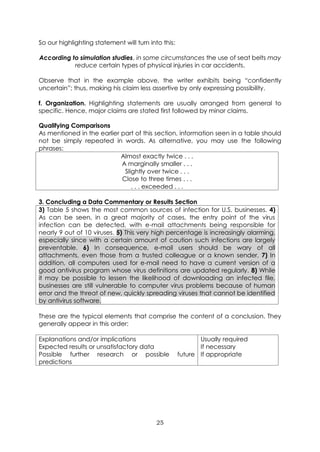
  • 49.
    46 • How usefulare these technologies to students? • How does technology facilitate learning in the classroom? The first few survey questions/statements are done for you. SURVEY QUESTIONNAIRE TECHNOLOGY INTEGRATION AND CLASSROOM LEARNING Name (optional): _____________________________________ Section: _____________ Directions: Please indicate your level of agreement as you assess your knowledge and perception of the subject under study by putting a check mark on the column that corresponds to your rating. 5- Strongly Agree 4- Agree 3- Neutral 2- Disagree 1- Strongly Disagree Technology used by students 5 4 3 2 1 1. I have access to the internet. 2. 3. 4. 5. Usefulness of technology 6. I share and receive digital files real time (e.g. photos, videos, digital documents, links, etc.). 7. 8. 9. 10. Ways how technology enhances classroom learning 11. It increases my involvement in classroom activities 12. 13. 14. 15.
  • 50.
    47 Rubric for SurveyQuestionnaire Category 4 3 2 1 Focus All questionnaire items are related with the area of research questions. Most questionnaire items are related with the area of research questions. Most questionnaire items are not related with the area of research questions or the relation is very vague. Almost all questionnaire items are not related with the area of research questions or the relation is very vague. Clarity All question items are clear and easy to understand. Furthermore, there are no negatively framed questions. Most question items are clear and easy to understand. A couple of questions are ambiguous or not precise allowing for multiple interpretations. Most question items are ambiguous or not precise allowing for multiple interpretations. Almost all question items are ambiguous or not precise allowing for multiple interpretations. Writing style Language is simple and natural. There are no excess words and jargon is avoided. Language is simple and natural in most question items. In some question items there is use of jargon and/or excess words. Language is not simple in most question items. Jargon and/or excess words are used often. Language is not simple in almost all question items. Jargon and excess words are used often. Bias All questions are unbiased. Most questions are unbiased. Most questions encourage a particular response. Almost all questions encourage a particular response. Double- barreled questions Each of the questions addresses only one issue or concept. Most of the questions address one issue or concept. Some questions are double- barreled. Most questions are double- barreled. Almost all questions are double- barreled. Spelling and Grammar There are no misspellings or grammatical errors. There is a couple of spelling and/or grammatical errors. There are some spelling and/or grammatical errors. There are several errors in spelling and/or grammar. Source: Konstantinidis, A. (2016). Questionnaire development rubric. Research methods of language professional modules, Master of Arts in Digital Technologies of Language Teaching programme, University of Nottingham, UK.
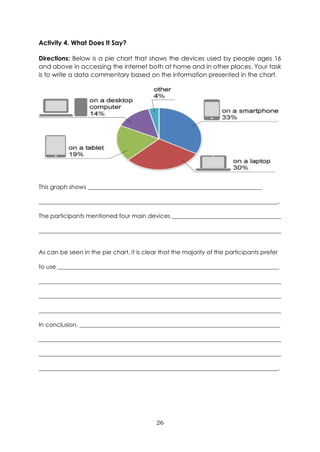
  • 51.
    48 How did youfind the topic on Technology Integration and Classroom Learning? I know you were able to relate with it since students like you along with your teachers are already using different kinds of technological devices and even platforms to enhance both the teaching and learning experience. With that, I believe you were keen to identify the errors in the previous activity. Activity 7: Let me see the numbers Directions: Read the article below about the ten deadliest diseases in the world. Then fill in the table below with the data required based on the survey results. Ten Deadliest Diseases in the World 1. Coronary Heart Disease Also called Ischemic Heart Disease, CHD occurs when the blood vessels that supply blood to the heart become narrowed. The World Health Organization (WHO) estimates that about 7.4 million people died of ischemic heart disease in 2012. That was about 13.2 percent of all deaths. 2. Stroke According to WHO, stroke was responsible for 6.7 million deaths around the world in 2012. That figure represents about 11.9 percent of all deaths. 3. Chronic Obstructive Pulmonary Disease (COPD) COPD is a chronic, progressive heart disease that makes it hard to breathe. Chronic bronchitis and emphysema are types of COPD. Still according to WHO, about 3.1 million deaths were attributed to COPD in 2012. That represents about 5.6 percent of deaths, a rate that has held steady since 2000. 4. Lower Respiratory Infections (pneumonia, bronchitis, and influenza) WHO estimates that lower respiratory infections caused about 3.1 million, or 5.5 percent of deaths in 2012. 5. Trachea, bronchus, and lung cancer The main causes of this type of cancer are smoking, second-hand smoke, and environmental toxins. WHO estimates that in 2012, 1.5 million people died from the trachea, bronchus, and lung cancers. These cancers represent about 2.9 percent of all deaths globally. 6. Human Immunodeficiency Virus (HIV) Human Immunodeficiency Virus attacks the immune system. HIV can cause AIDS, or acquired immunodeficiency syndrome. AIDS is chronic and life-threatening. According to the Foundation for AIDS Research (amfAR), since the start of the pandemic, almost 39 million people have died due to HIV/AIDS. In 2013, about 1.5 million people lost their lives to AIDS. That’s about 2.7 percent of deaths worldwide. By the end of 2012, 35.3 million people around the world were infected with HIV. Every day, about 5,700 more become infected. 7. Diarrheal Diseases This disease enables the body to lose too much water and salt. Death is due to dehydration. Diarrhea is usually caused by an intestinal infection transmitted
  • 52.
    49 through viruses, bacteria,or even parasites. This type of infection can easily spread through contaminated water or food. It’s particularly widespread in developing nations that have poor sanitary conditions. WHO estimates that 1.5 million people died from diarrheal diseases in 2012, which comprises about 2.7 percent of deaths. Fortunately, that’s down from 2.2 million in 2000. Diarrheal disease is the second top killer of children under age five. Tragically, about 760,000 children die from diarrheal diseases each year. 8. Diabetes Mellitus Diabetes is a group of diseases that affect insulin production and use. In type 1 diabetes, the pancreas can no longer produce insulin. The case is not known. In type 2 diabetes, the pancreas doesn’t produce enough insulin, or it can’t be used effectively. Type 2 Diabetes can be caused by some factors, including poor diet, lack of exercise, and carrying too much weight. In 2012, about 1.5 million died from diabetes-related causes, according to WHO. People In low to middle-income countries are more likely to die from complications of diabetes. 9. Preterm Birth Complications According to WHO, in 2012, as many as 1.1 million deaths were due to prematurity and complications due to low birth weight. Three-quarters of these deaths happen within the first week of life. Lack of skilled medical care makes this a huge problem in developing countries. Many newborn deaths could be avoided with good prenatal and postnatal care. 10. Tuberculosis (TB) TB is an airborne disease that is often successfully treated. Some strains of TB are resistant to conventional treatments. Second-line drugs used to treat these patients are in limited supply. Some strains fail to respond to second-line treatment as well. In 2012, about 900,000 people lost their lives to TB, according to WHO estimates. The majority of TB-related deaths happen in poorer countries. It is one of the top causes of death for people who have HIV. Table 1 The Deadliest Diseases in the World Disease Number of deaths Percentage 1. Coronary heart disease 7,400,000 13.2% 2. 3. 4. 5. 6. 7. 8. 9. 10.
  • 53.
    50 Let Us Remember Youhave finally reached the end of module 5. I know you have acquired so many ideas which you can use and incorporate with your other subjects. Now it’s time to recall the concepts that you learned by competing the statements below. 1. Data or information can come from two sources. These are the ________________ and ________________. 2. A ________________ is an example of a primary source that is often used as an instrument in writing research papers. 3. In writing survey questions, the following pitfall should be avoided: _________________, _________________, _________________, _________________, and _________________. 4. Aside from narrative form, survey results can be reflected through _________________. 5. The structure of a data commentary is usually consists of _________________, _________________, and _________________. 6. Writing research report is essential in various disciplines because _________________ _________________________________________________________________________________. Let Us Assess Directions: Read each question carefully. Write the letter of your answer in your answer sheet. _____1. Which of the following is a double-barreled question? A. Do you think your family members would like product X? B. Do you agree that boys who play football is not uncommon? C. Would you be for or against not allowing the sale of alcohol in schools? D. Should the government spend less money on the military and more on education? The studies on the correlation of academic achievement have paved way for control and manipulation of related variables for quality results in schools. In spite of the facts that schools impart uniform classroom instructions to all students, wide range of difference is observed in their academic achievement. The study sought to determine the relationship between study habits and academic achievement of students. A survey design was employed in this descriptive correlation study. The target population included the 9th standard students at Spicer Higher Secondary School. Stratified random sampling was used to select the respondents, study habits inventory by N.M. Palsane and school examinations records was the main instrument for data collection. Quantitative method was used to analyze field data collected. Interpretation and recommendations of the findings was made accordingly as per computed Pearson’s product moment coefficient of correlation. Results of this study revealed a positive relationship of 0.66 between study habits and academic achievement. The results implied that the study habits need a significant attention if we are to improve performance. There was a clear finding that the teachers and students seem not to take effort in developing good study habits.
  • 54.
    51 _____2. Which partof a research paper does the paragraph belong? A. abstract B. summary C. conclusion D. introduction For items 3 -5 _____3. On which day the maximum and minimum students were absent? A. Friday and Saturday B. Monday and Tuesday C. Tuesday and Sunday D. Wednesday and Thursday _____4. How many students were absent on Wednesday and Friday? A. 140 and 165 B. 125 and 160 C. 130 and 155 D. 135 and 150 _____5. On which days the same number of student was absent? A. Friday and Saturday B. Tuesday and Sunday C. Monday and Thursday D. Wednesday and Friday _____6. Which of the following questions contains jargon? A. Do you like fruits and vegetables? B. Do you worry that you may have halitosis? C. Do you like our product to be cheaper and more value for money? D. Do you agree with most people that capital punishment should be restored? 0 20 40 60 80 100 120 140 160 Monday Tuesday Wednesday Thursday Friday Saturday Sunday Days Number of Absentees
  • 55.
    52 The studies onthe correlation of academic achievement have paved way for control and manipulation of related variables for quality results in schools. In spite of the facts that schools impart uniform classroom instructions to all students, wide range of difference is observed in their academic achievement. The study sought to determine the relationship between study habits and academic achievement of students. A survey design was employed in this descriptive correlation study. The target population included the 9th standard students at Spicer Higher Secondary School. Stratified random sampling was used to select the respondents, study habits inventory by N.M. Palsane and school examinations records was the main instrument for data collection. Quantitative method was used to analyze field data collected. Interpretation and recommendations of the findings was made accordingly as per computed Pearson’s product moment coefficient of correlation. Results of this study revealed a positive relationship of 0.66 between study habits and academic achievement. The results implied that the study habits need a significant attention if we are to improve performance. There was a clear finding that the teachers and students seem not to take effort in developing good study habits. _____7. Which part of a research paper does the paragraph belong? A. abstract B. summary C. conclusion D. introduction _____8. Which visual form is often used to illustrate relationships and trends in data that are usually seen in research articles, scientific reports, and textbooks? A. table B. pie chart C. bar graph D. line graph Therefore, the ratings on the level of performance of instructors of the Accountancy Department and School of Law by their academic heads are not significantly different to the ratings of their students. This means that their ratings are unanimous, that is, the perception of the academic heads about the level of performance of instructors is affirmed by their students. Meanwhile, the ratings on the level of performance of instructors of the Business and General Education Departments by their academic heads are significantly different from the ratings of their students. Comparing the grand weighted means of the academic heads (WM – 3.67) to that of the students (WM – 4.18), the students gave a higher rating. _____9. Which part of a research study the abovementioned statements could be found? A. conclusion B. summary C. recommendation D. interpretation _____10. Which of the following questions is a double negative? A. I enjoyed the amazing product your company has offered. B. Please rate the timeliness and quality of service you received from out
  • 56.
    53 staff. C. I usuallydo not have one or more outfits that are not of the very latest fashion. D. Please agree or disagree with the following statement: Cars should be faster and safer. In this study, researcher-made questionnaire was used to gather the needed data for the student’s profile. The draft of the questionnaire was drawn out based on the researcher’s readings, previous studies, professional literature, published and unpublished thesis relevant to the study. The requirements in the designing of good questionnaire were considered. Open-ended options were provided to accommodate to free formatted views related to the topics or issues. In this way, valid responses can be obtained from the students. _____11. Which visual form is divided into segments to display relative magnitude or frequency of the categories? A. table B. pie chart C. bar graph D. line graph _____12. The paragraph above is an example of _____. A. research locale B. research design C. research instrument D. research procedure In this study, data were collected at two well baby clinics in the Piet Retief (Mkhondo) area. Although the name Piet Retief was changed to Mkhondo during the course of this study, the name Piet Retief was retained for the purposes of this study, as it was mentioned in the title approved for the study by the University of South Africa and all the documentation in the study referred to Piet Retief. _____13. Which part of a research study does the paragraph contain? A. research design B. research environment C. data gathering procedure D. respondents of the study All Grade VI pupils currently enrolled this Academic Year 2016 in Barretto-II Elementary School were taken as the population for the study. The researcher decided to consider the total of pupils to maintain the reliability and validity of the data gathered through the questionnaire. The distribution of respondents per section is shown in Table 1. The distribution shows equal percentages per section. With this number of pupils per class, the teacher can be able to easily identify the learning modalities of her pupils; thus, easier to facilitate the class.
  • 57.
    54 _____14. Which partof a research study does the text belong? A. background of the study B. review of related literature C. participant of the study D. significance of the study _____15. What are the two ways to display data? A. letters and images B. number and shapes C. poetic and narrative style D. graphical representation and tabulation Let Us Enhance Activity 8: Interpret this. Directions: Review the tabulation below and create a data commentary. Write your composition in your answer sheet. Table 13 Percentage of Adolescents Reporting the Following Parental Restrictions on Their Lives (N = 200) Girls Boys Limitations on Opportunities to go out at night Uses the family car Time of expected return 56% 15% 30% 35% 40% 61% Interference in Choice of friends Future education choices Spending of self-earned money 19% 18% 12% 23% 52% 27% ___________________________________________________________________________ __________________________________________________________________________________ __________________________________________________________________________________
  • 58.
    55 Rubric for DataCommentary Category VGE 5 pts. GE 4 pts. LE 2 pt. NE 1 pt. Does my data commentary follow the proper structure? Does my data commentary overview the meaning the figures presented on the table? Does my data commentary explain likely reasons for the data communicated by the figures? Does my data commentary clearly communicate what I want to say? Does my data commentary avoid errors in grammar such as verb tenses, subject- verb agreement, and article agreement among others? Does my data commentary use proper mechanics in capitalization, punctuation, and spelling? Legend: VGE - To a very great extent; GE - To a great extent; LE – To a little extent; N - Not at all Rating: VGE: 23 – 30 ; GE: 16 – 22; LE: 8 – 15; N:1 - 7 Let Us Reflect The last task will be an easy breezy one. Below is an evaluation of how well you have gone so far in our first lesson. The Self-Assessment Tool will help you reflect which areas you still need to improve and which ones you have already mastered. Activity 9: How much did I learn? Directions: Answer this section as objectively as possible. Tick the column that you best describe your ability in understanding and formulating survey questions. Usually 5 pts. Sometimes 3 pts. Seldom 1 pt. Never 0 pt. 1. I understand the different question types used in a survey. 2. I can distinguish between and among question types. 3. I can write survey questions correctly. 4. I construct survey questions congruent to the objective/s of my topic. 5. I reflect the weaknesses of the question item before
  • 59.
    56 including it inthe survey. 6. I realize the significance of producing quality survey questions to obtain reliable data. 7. I can present data using various visual / graphical forms. 8. I appreciate the use of visual / graphical forms in presenting gathered data. 9. I can identify the different parts of a data commentary. 10. I can confidently construct highlighting statements using different phrases to strengthen or soften my claims. 11. I ensure that my data commentary is free from misspelling and grammatical error. 12. I am able to identify the parts of a research report. 13. I understand what content each part should contain. 14. I can construct a good content for each part. 15. I value the important role of research report in various fields. Scoring: Usually – 3 points, Sometimes – 2 points, Seldom – 1 point, Never – 0 point Score Level of Proficiency 66 – 75 56 – 65 46 – 55 Advanced Proficient Approaching Proficiency 36 – 45 35 and below Developing Beginning
  • 60.
    57 Answer key toActivities Let Us Try Activity 1 1. surveys 2. observation 3. interview Secondary Sources 1. textbooks 2. encyclopedias 3. journals 4. commentary 5. reports 6. biographies 7. theses / dissertations Activity 1B 1. journals 2. interview 3. surveys 4. reports 5. theses / dissertations Activity 3. Identifying Error 1. double-barreled 2. bias 3. double negative 4. jargon 5. double-barreled 6. double-barreled 7. bias 8. double negative 9. double-barreled 10. double-barreled 11. bias 12. double negative 13. jargon 14. bias 15. bias 16. bias 17. jargon 18. jargon 19. double negative 20. double negative Continuation: Graphs and Tables 1. bar graph 2. pie chart 3. line graph 4. tables Bar Graph 1. bar graph 2. December, October 3. 36.75 4. 30 Data Commentary 1. 3 2. Introductory sentences 3. Answers vary 4. 3 5. Answers vary 6. highlight the results, compare and evaluate different data sets, discuss the implications of the data. 7. A Activity 4. Writing a Data Commentary Answers may vary. Let Us Practice Activity 5 Dissect this. Answers may vary. Activity 6: Writing Survey Questions See rubric Activity 2. Your Opinion Counts! Answers vary
  • 61.
  • 62.
    References Allen, M. (2017).The SAGE encyclopedia of communication research methods. USA: Sage Publications, Inc. Ambiquity (2020). In yourdictionary.com. Retrieved from https://www.yourdictionary.com/ambiguity Barrot, J.S. (2016). Academic reading & writing for senior high schoo. Quezon City: C&E Publishing, Inc. Barrot, J.S. & Sipacio, P.F. (2016). Academic reading & writing for senior high schoo. Quezon City: C&E Publishing, Inc. Bueno, D.C. (2016). Educational research writing made easy. Quezon City: Great Books Trading. Cardona, R.S., Reyes, A.S., & Tangalin, M.M. (2015). The bullying experiences and classroom discipline techniques in an urban national high school in the Philippines: A basis for anti-bullying program. American International Journal of Contemporary Research, 5(2), 49-52. Retrieved from http://www.aijcrnet.com/journals/Vol_5_No_2_April_2015/7.pdf Commentary. (2020). In learnersdictionary.com. Retrieved from https://learnersdictionary.com/definition/commentary) Cristobal, A.P. & Cristobal M.D. (2017). Practical research for senior high school 2. Quezon City: C&E Publishing, Inc. Dapat, J.O. (2016). Applied English for academic and professional services. Pasay City: JFS Publishing Services. Delighted team (2019, May 24). Avoiding biased questions: 7 examples of bad survey questions. Retrieved from https://delighted.com/blog/biased- questions-examples-bad-survey-questions Developing and writing structured survey questions. [PDF File]. (2013). Ignet.gov. Retrieved from https://www.ignet.gov/sites/default/files/files/03_Developing_ and_Writing_Structured_Survey_Questions.pdf Edwards, E.J., Thomas, M.D., Rosenfeld, P., & Kewley, S.B. (1997). How to conduct organizational surveys: A step-by-step guide. USA: Sage Publications, Inc. Retrieved form https://books.google.com.ph/books?id=BPJyAwAAQBAJ&pg=PA33&dq=wha t+is+double+negative+in+writing+survey+question&hl=en&sa=X&ved=2ahUKE wis25qUjf7qAhXT62EKHdCNB40Q6AEwCHoECAUQAg#v=onepage&q=what% 20is%20double%20negative%20in%20writing%20survey%20question&f=false
  • 63.
    Encyclopedia. (2020). Inmerriam-webster.com. Retried from https://www.merriam- webster.com/dictionary/encyclopedia How to write a commentary. (2019). aresearchguide,com. Retrieved from https://www.aresearchguide.com/write-commentary.html Jargon examples (2020). softschools.com. Retrieved from https://www.softschools.com/examples/grammar/jargon_examples/142/#:~:t ext=Jargon%20is%20the%20term%20for,lawyers%20and%20judges%20use%20fr equently Johnson, J.M. (2011). Did you not understand the question or not? An investigation of negatively worded questions in survey research. Journal of Applied Business Research. 20(1), p. 77. Retrieved from https://www.researchgate.net/publication/237557490_Did_You_Not_Understa nd_The_Question_Or_Not_An_Investigation_Of_Negatively_Worded_Questions _In_Survey_Research Konstantinidis, A. (2016). Questionnaire development rubric. Research methods of language professionals module, Master of Arts in Digital Technologies of Language Teaching programme, University of Nottingham, UK. Retrieved from https://www.google.com/search?q=rubric+for+survey+questionnaire&sxsrf=A LeKk03z2ukTEIl3s7rMwwLm8ciRSraC0g:1596690603360&tbm=isch&source=iu&i ctx=1&fir=SE11tae8LKK35M%252Co5j1IEyJvRGmIM%252C_&vet=1&usg=AI4_- kScr5WRsSrwbU78215kprOqoA58Sw&sa=X&ved=2ahUKEwiyx- qB6IXrAhXR62EKHSrBCiAQ9QEwAHoECAoQBA&biw=823&bih=635#imgrc=5cH v8F1GGx5NaM Kulidtod, R.C. & Pasagui, N.S. (2017). Effects of social networking media to the academic performance of the students. Advances in Economics, Business and Management Research, 45, 59-64. Lavrakas, P.J. (2008). Encyclopedia of Survey Research Methods. USA: Sage Publications. Retried from https://methods.sagepub.com/reference/encyclopedia-of-survey-research- methods/n443.xml Make asking demographic survey questions less awkward (n.d.). typeform.com. Retrieved from https://www.typeform.com/surveys/demographic-survey- questions/ More on wording questions (2012). web.ma.utexas.edu. Retrieved from https://web.ma.utexas.edu/users/mks/statmistakes/morewording.html Nordquist, R. (2020, June 12). What are business and technical reports. Retrieved from https://www.thoughtco.com/report-writing-1692046 Open ended questions: Definitions, characteristics, examples, and advantages.
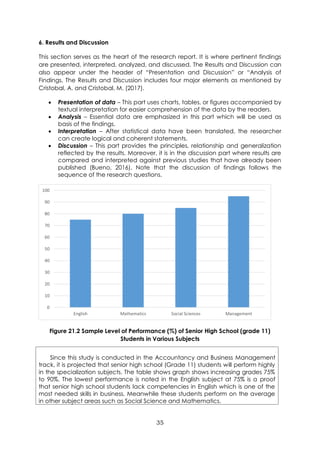
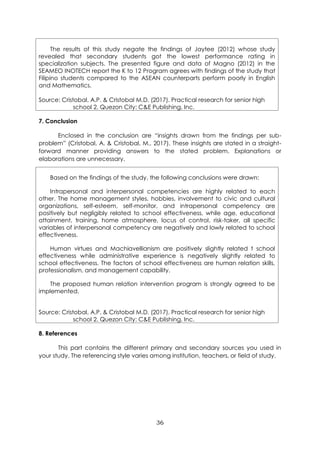
  • 64.
    (2020). questionpro.com. Retrievedfrom https://www.questionpro.com/blog/what-are-open-ended-questions/ Open ended questions: Definitions, examples, and tips. (2020). kwiksurveys.com. Retrieved from https://kwiksurveys.com/blog/survey-design/open-ended- questions Question wording (2017). statpac.com. Retrieved from https://www.statpac.com/surveys/question-wording.htm Primary and secondary sources. (2020). unsw.edu.au. Retrieved from https://www.library.unsw.edu.au/study/information-resources/primary-and- secondary-sources Ranking scales vs. rating scales: Which works for you? (2020). suzy.com. Retrieved from https://suzy.com/blog/rating-vs-ranking-scales Ranking scales vs. rating scales: Which works for you? (2020). suzy.com. Retrieved from https://suzy.com/blog/rating-vs-ranking-scales Report. (2020). In businessdictionary.com. Retrieved from http://www.businessdictionary.com/definition/report.html Script (2020). Whatls.techtarget.com. com. Retrieved from https://whatis.techtarget.com/definition/script Swales, J.M. & Feak, C.B. (2004). Academic writing for graduate students: Essential tasks and skills 2nd ed. USA: The University of Michigan Press. TeacherVision Staff. (2007, January 5). Textbooks: Advantages and disadvantages. Retried from https://www.teachervision.com/curriculum-planning/textbooks- advantages-disadvantages The Israelites are counted. (2020). Thebibilejourney.org. Retrieved from https://www.thebiblejourney.org/biblejourney2/25-the-israelites-journey-from- egypt-to-mt-sinai/the-israelites-are-counted/ Types of Graphs and Charts (2019). Indeed.com. Retrieved from https://www.indeed.com/career-advice/career-development/types-of- graphs-and-charts Types of journal articles. (2020). Springer.com. Retrieved from https://www.springer.com/gp/authors- editors/authorandreviewertutorials/writing-a-journal-manuscript/types-of- journal-articles/10285504
  • 65.
    For inquiries orfeedback, please write or call: Department of Education – Davao City Division Elpidio Quirino Ave., Poblacion District, Davao City, 8000 Davao del Sur Telefax: (082) 224-3274, (082) 222-1672 E-mail Address: davao.city@deped.gov.ph