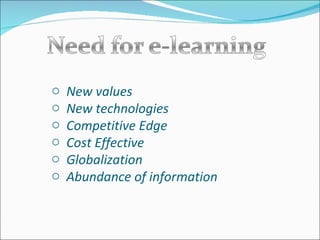
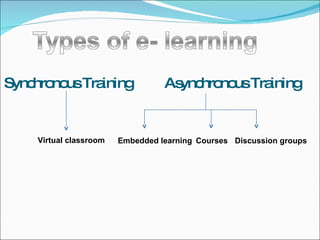
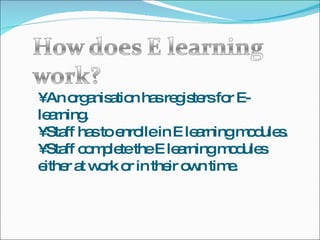
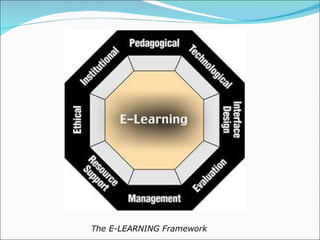
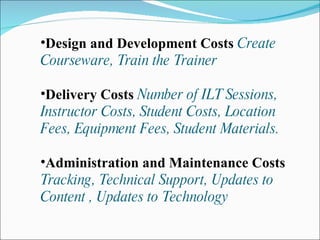
E-learning involves facilitating training through electronic means like computers and the Internet. It offers many benefits like being cost-effective, allowing global access, and providing up-to-date information easily. E-learning can be synchronous, asynchronous, or embedded and includes online courses, discussions, and virtual classrooms. Learners enroll in e-learning modules and complete assessments to move through the modules, which require minimal computer skills. E-learning has lower costs than other training methods since learners can access it anywhere with an Internet connection using different devices. Calculating the return on investment of e-learning involves gathering data on costs of design, delivery, administration, and potential reductions from e-learning.