Pablo Durán Puente
We can use conditionals to talk about
situations and their consecuences wether
these are real or not.
Conditionals are formed by two clauses, the
if clause and the main clause.
We use the coma if the first
clause is the if clause
IF + Present Simple + Present Simple
Used to talk abaut something that is
allways true
Used to give instructions
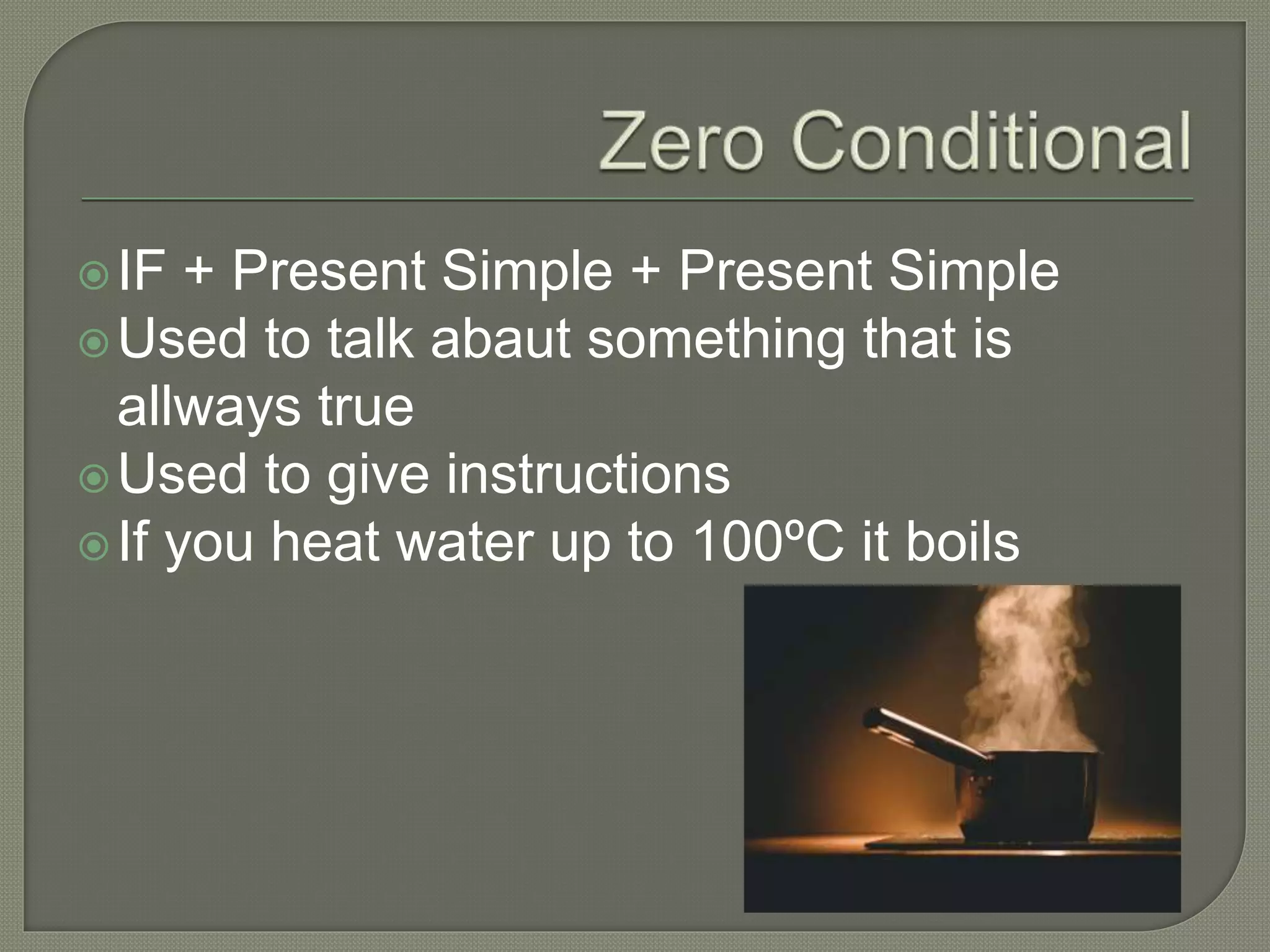
If you heat water up to 100ºC it boils
If +Present Simple, + Will+ Infinitive
Used to talk about situations that are likely
to happen
Used to give advice and warnings
If you study, you will pass the exam
If+ Present Simple + Modal verb
If you finish your food, you can leave
If+ Present Simple + be going to
If you don’t eat, you are going to get sick
If+ Present Simple + imperative
If you don’t understand anything, ask me.
If + Present Perfect + Modal verb
If you ‘ve finished your test, you can leave.
If + Present Perfect + Will + Infinitve
If + Past Simple, + Would + Infinitive
Used to talk about unrealistic situations
and its result
Used to give advice
If I were stronger, I would run a spartan
race
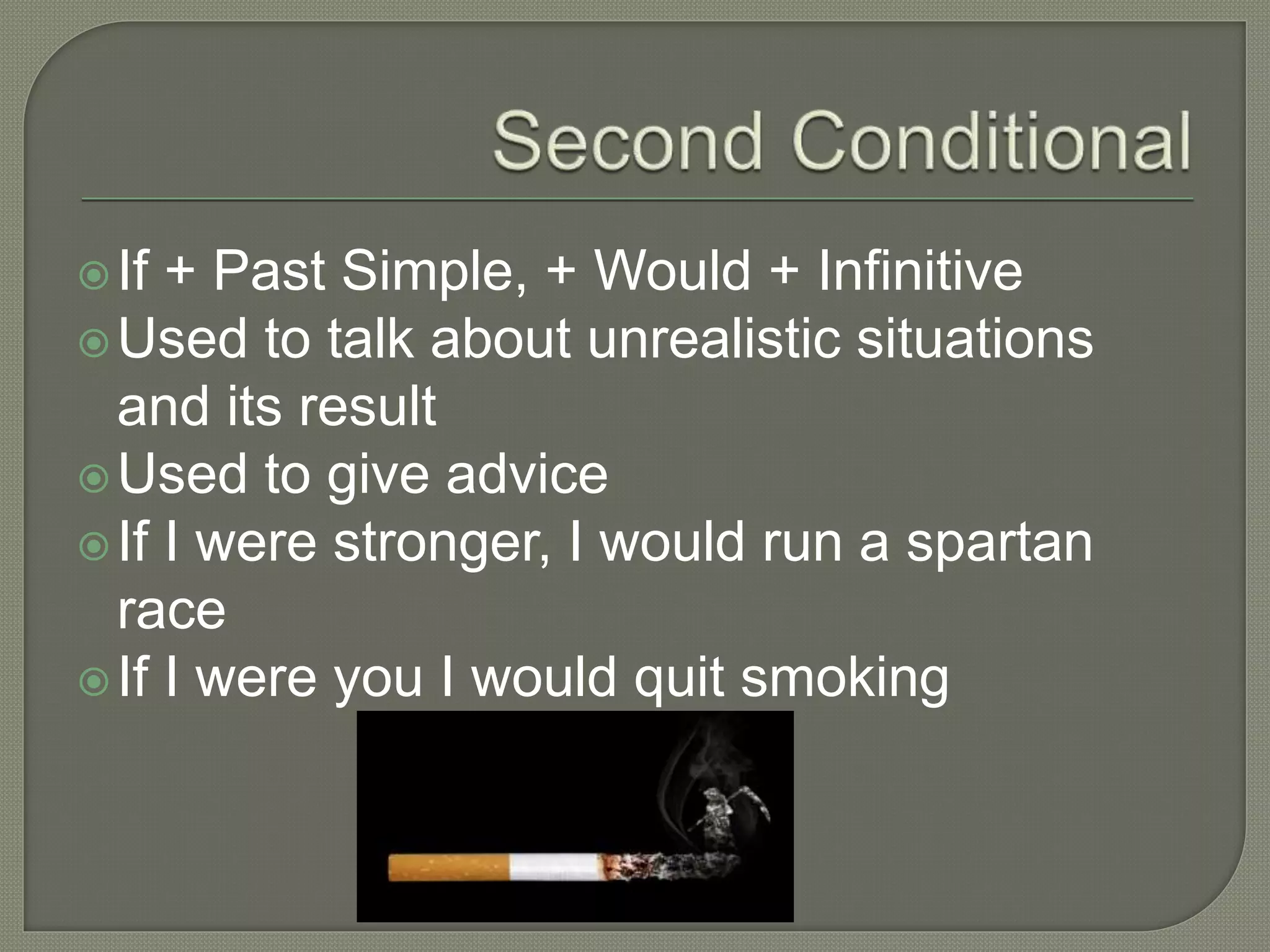
If I were you I would quit smoking
If+ Past Perfect, +would +have+past
participle
Used to talk about possible situations in
the past which didn’t happen
If i had studied, i would have passed the
exam
If + Past Perfect, +Would + Infinitive
Used to connect past events with the
present or the future
If i had worked harder i would have a
better job now
 Zero Conditional https://www.perfect-english-
grammar.com/zero-conditional-exercise-
1.html
 First Conditional https://www.perfect-english-
grammar.com/first-conditional-exercise-1.html
 Second Conditional https://www.perfect-
english-grammar.com/second-conditional-
exercise-1.html
 Third Conditional https://www.perfect-english-
grammar.com/third-conditional-exercise-
1.html

Duran pablo pp

  • 1.
  • 2.
    We can useconditionals to talk about situations and their consecuences wether these are real or not. Conditionals are formed by two clauses, the if clause and the main clause. We use the coma if the first clause is the if clause
  • 3.
    IF + PresentSimple + Present Simple Used to talk abaut something that is allways true Used to give instructions If you heat water up to 100ºC it boils
  • 4.
    If +Present Simple,+ Will+ Infinitive Used to talk about situations that are likely to happen Used to give advice and warnings If you study, you will pass the exam
  • 5.
    If+ Present Simple+ Modal verb If you finish your food, you can leave If+ Present Simple + be going to If you don’t eat, you are going to get sick If+ Present Simple + imperative If you don’t understand anything, ask me. If + Present Perfect + Modal verb If you ‘ve finished your test, you can leave. If + Present Perfect + Will + Infinitve
  • 6.
    If + PastSimple, + Would + Infinitive Used to talk about unrealistic situations and its result Used to give advice If I were stronger, I would run a spartan race If I were you I would quit smoking
  • 7.
    If+ Past Perfect,+would +have+past participle Used to talk about possible situations in the past which didn’t happen If i had studied, i would have passed the exam
  • 8.
    If + PastPerfect, +Would + Infinitive Used to connect past events with the present or the future If i had worked harder i would have a better job now
  • 9.
     Zero Conditionalhttps://www.perfect-english- grammar.com/zero-conditional-exercise- 1.html  First Conditional https://www.perfect-english- grammar.com/first-conditional-exercise-1.html  Second Conditional https://www.perfect- english-grammar.com/second-conditional- exercise-1.html  Third Conditional https://www.perfect-english- grammar.com/third-conditional-exercise- 1.html