DUE DILIGENCE: HOW BUYERS CAN PROTECT
THEMSELVES IN PURCHASING A COMPANY
Neil DeBoer
ndeboer@dbccpa.com
P. Haans Mulder
phmulder@holland-law.com
Agenda
Overview of Process
Defining Due Diligence
Due Diligence Process
• Pre-Letter of Intent
• Post-Letter of Intent
• Post Definitive
Agreement and Closing
Questions
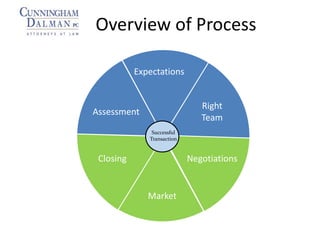
Successful
Transaction
Expectations
Right
Team
Negotiations
Market
Closing
Assessment
Overview of Process
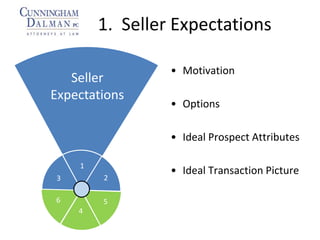
1. Seller Expectations
Seller
Expectations
• Summary
• Same Page
Seller
Expectations
2
1
3
4
56
• Motivation
• Options
• Ideal Prospect Attributes
• Ideal Transaction Picture
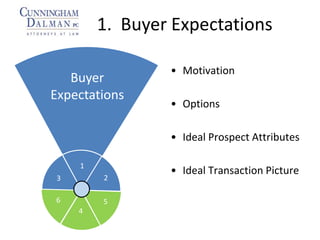
1. Buyer Expectations
Seller
Expectations
• Summary
• Same Page
Buyer
Expectations
2
1
3
4
56
• Motivation
• Options
• Ideal Prospect Attributes
• Ideal Transaction Picture
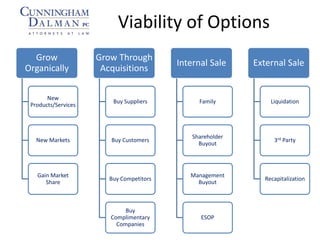
Viability of Options
Grow
Organically
New
Products/Services
New Markets
Gain Market
Share
Grow Through
Acquisitions
Buy Suppliers
Buy Customers
Buy Competitors
Buy
Complimentary
Companies
Internal Sale
Family
Shareholder
Buyout
Management
Buyout
ESOP
External Sale
Liquidation
3rd Party
Recapitalization
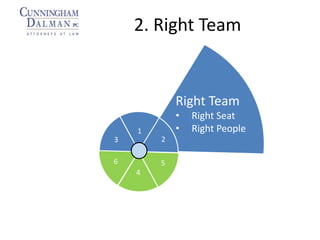
Right Team
• Right Seat
• Right People
2
1
3
4
56
2. Right Team
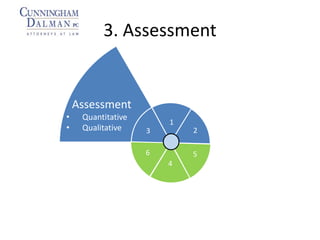
3. Assessment
Assessment
• Quantitative
• Qualitative 2
1
3
4
56
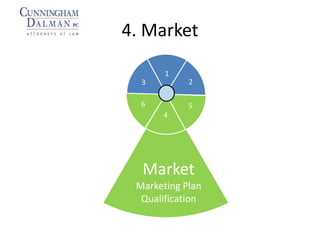
4. Market
Market
Marketing Plan
Qualification
2
1
3
4
56
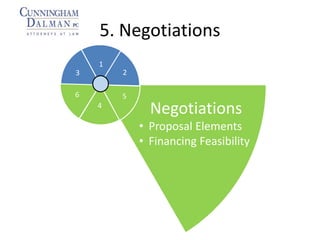
5. Negotiations
2
1
3
4
56
Negotiations
• Proposal Elements
• Financing Feasibility
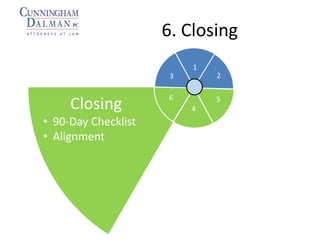
6. Closing
Closing
• 90-Day Checklist
• Alignment
2
1
3
4
56
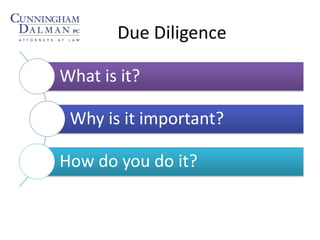
Due Diligence
What is it?
Why is it important?
How do you do it?
• Do further due diligence
• Schedule disclosures
• Negotiate a lower purchase price
• Abandon the deal
The result may be to:
Due Diligence
Due Diligence
Create a system for managing the process
Bank underwriting
Reps, warranties, and indemnification
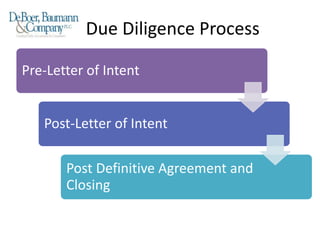
Due Diligence Process
Pre-Letter of Intent
Post-Letter of Intent
Post Definitive Agreement and
Closing
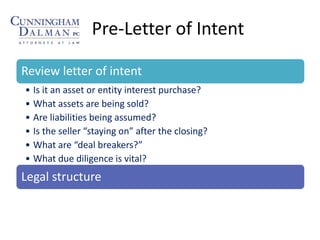
Pre-Letter of Intent
Background Information
Tax issues for transaction structure-asset v. entity purchase
Analyze sales, income/profit, cash flow, and growth potential
Pre-Letter of Intent
Confidentiality
Legal structure
• Is it an asset or entity interest purchase?
• What assets are being sold?
• Are liabilities being assumed?
• Is the seller “staying on” after the closing?
• What are “deal breakers?”
• What due diligence is vital?
Review letter of intent
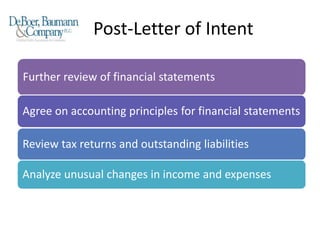
Post-Letter of Intent
Further review of financial statements
Agree on accounting principles for financial statements
Review tax returns and outstanding liabilities
Analyze unusual changes in income and expenses
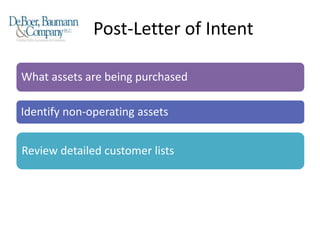
Post-Letter of Intent
What assets are being purchased
Identify non-operating assets
Review detailed customer lists
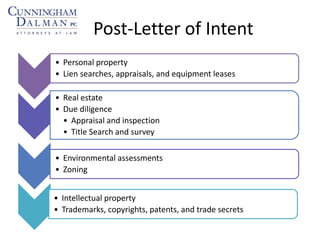
• Personal property
• Lien searches, appraisals, and equipment leases
• Environmental assessments
• Zoning
• Real estate
• Due diligence
• Appraisal and inspection
• Title Search and survey
• Intellectual property
• Trademarks, copyrights, patents, and trade secrets
Post-Letter of Intent
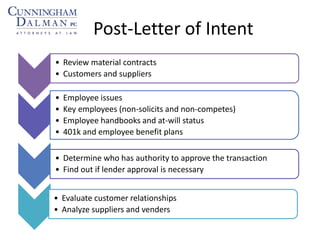
• Review material contracts
• Customers and suppliers
• Determine who has authority to approve the transaction
• Find out if lender approval is necessary
• Employee issues
• Key employees (non-solicits and non-competes)
• Employee handbooks and at-will status
• 401k and employee benefit plans
• Evaluate customer relationships
• Analyze suppliers and venders
Post-Letter of Intent
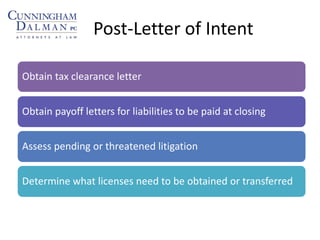
Obtain tax clearance letter
Obtain payoff letters for liabilities to be paid at closing
Assess pending or threatened litigation
Determine what licenses need to be obtained or transferred
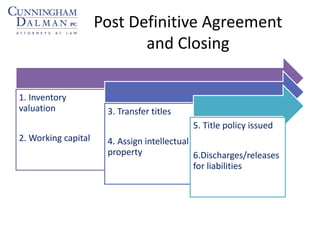
Post Definitive Agreement
and Closing
1. Inventory
valuation
2. Working capital
3. Transfer titles
4. Assign intellectual
property
5. Title policy issued
6.Discharges/releases
for liabilities
Questions?
Neil DeBoer
ndeboer@dbccpa.com
P. Haans Mulder
phmulder@Holland-law.com

Due Diligence: How Buyers Can Protect Themselves in Purchasing a Company