Mithileysh Sathiyanarayanan and Babangida Abubakar
University of Brighton, UK
{M.Sathiyanarayanan, B.Abubakar}@brighton.ac.uk
ICNSC 2014
Andhra Pradesh, India
Dual MCDRR Scheduler for Hybrid
TDM/WDM
Optical Networks
MOTIVATION
• The existing single MCDRR scheduler is used for
multiple channels with tunable transmitters and
fixed receivers in hybrid TDM/WDM optical
networks.
• Though fairness achieved was almost equal to one,
still there were small issues with ill-behaved flows.
This motivated us to use dual MCDRR scheduler to
effectively enhance throughput performance.
D-MCDRR Scheduler
• We proposed and investigated the performance of
a dual multi-channel deficit round-robin (D-
MCDRR) scheduler based on the existing single
MCDRR scheduler in hybrid TDM/WDM optical
networks.
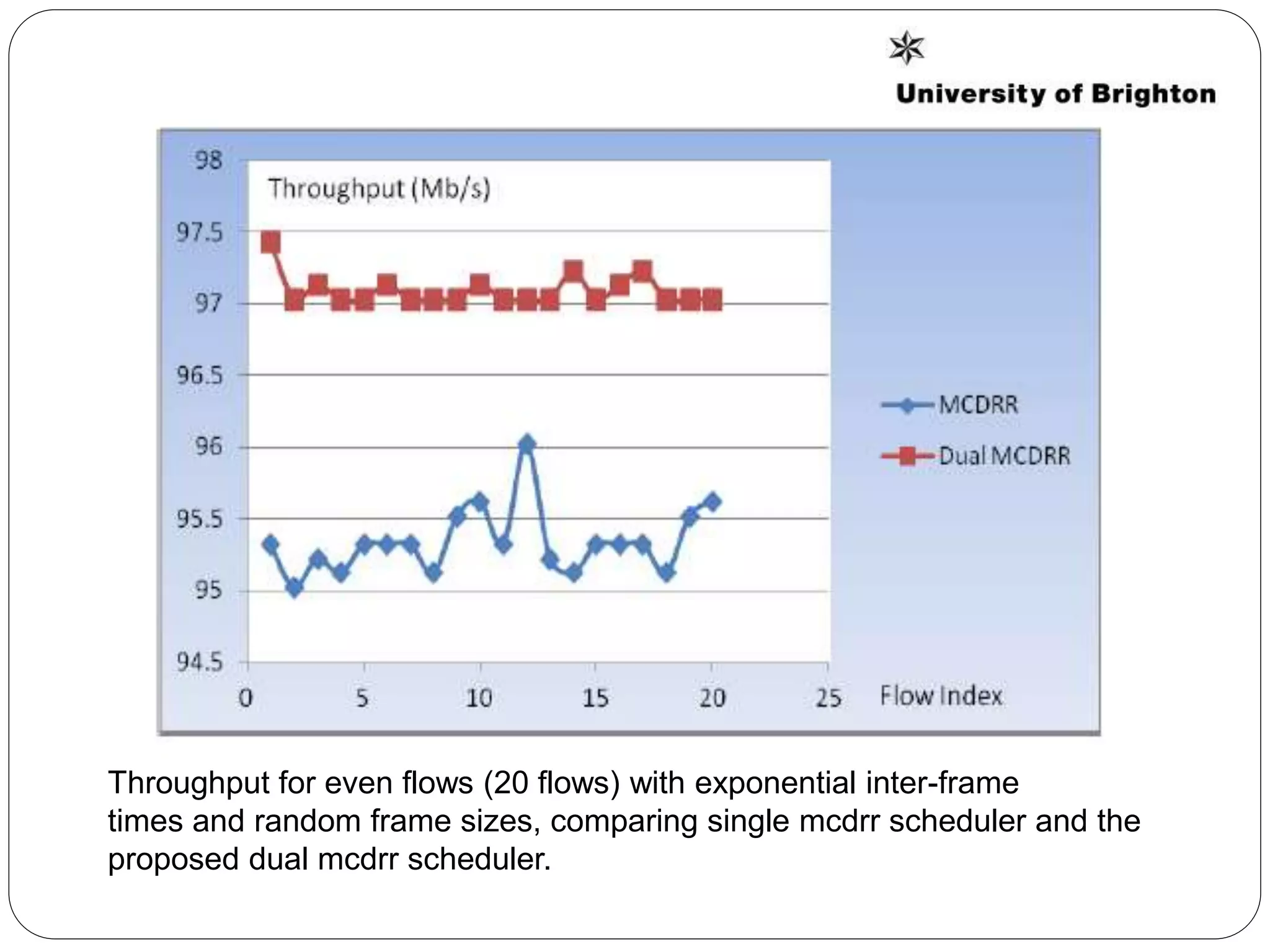
• Simulation results show that the proposed dual
MCDRR (D-MCDRR) scheduler can provide better
throughput when compared to the existing single
MCDRR scheduler.
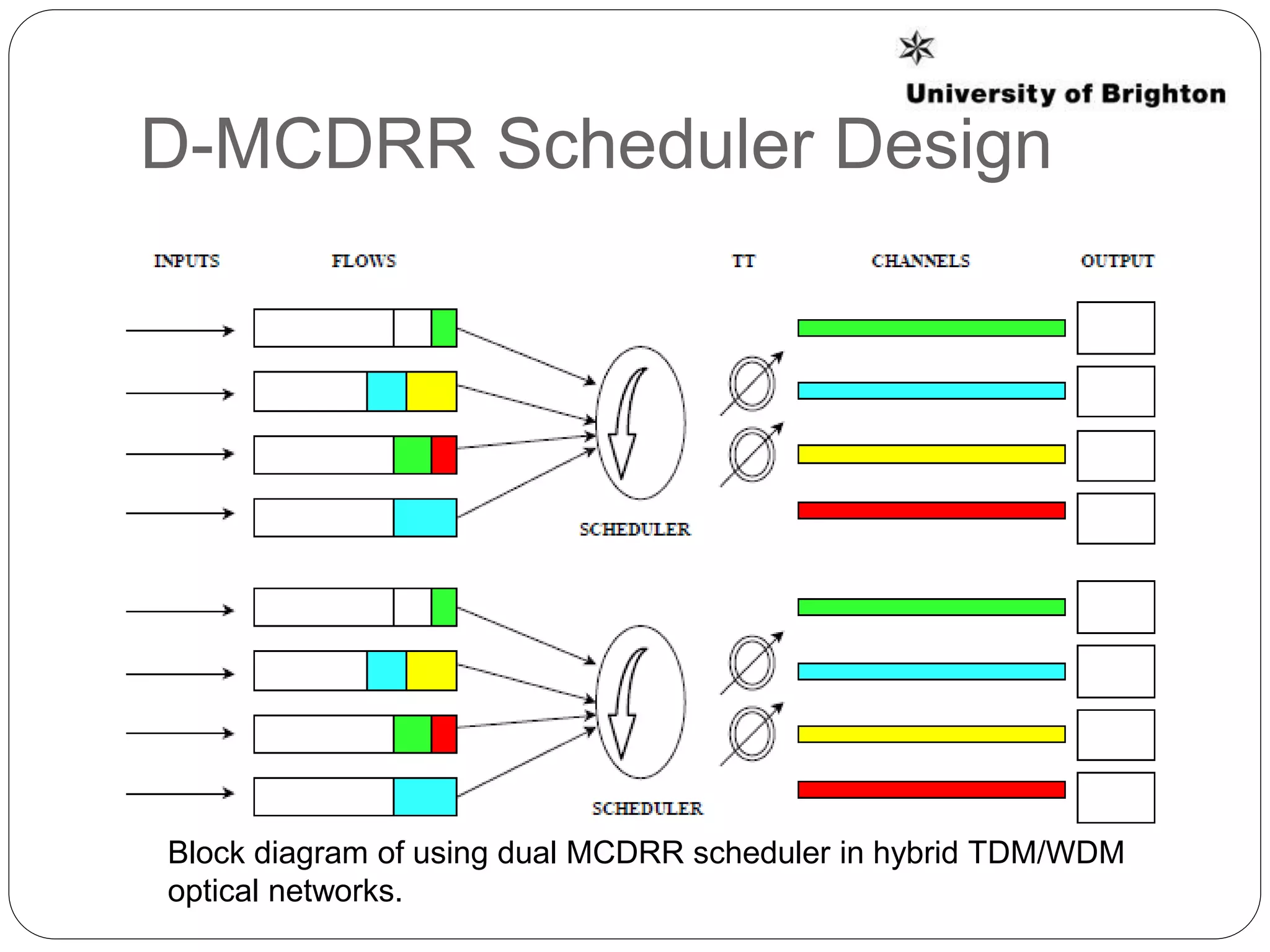
D-MCDRR Scheduler Design
Block diagram of using dual MCDRR scheduler in hybrid TDM/WDM
optical networks.
General D-MCDRR Algorithm Design
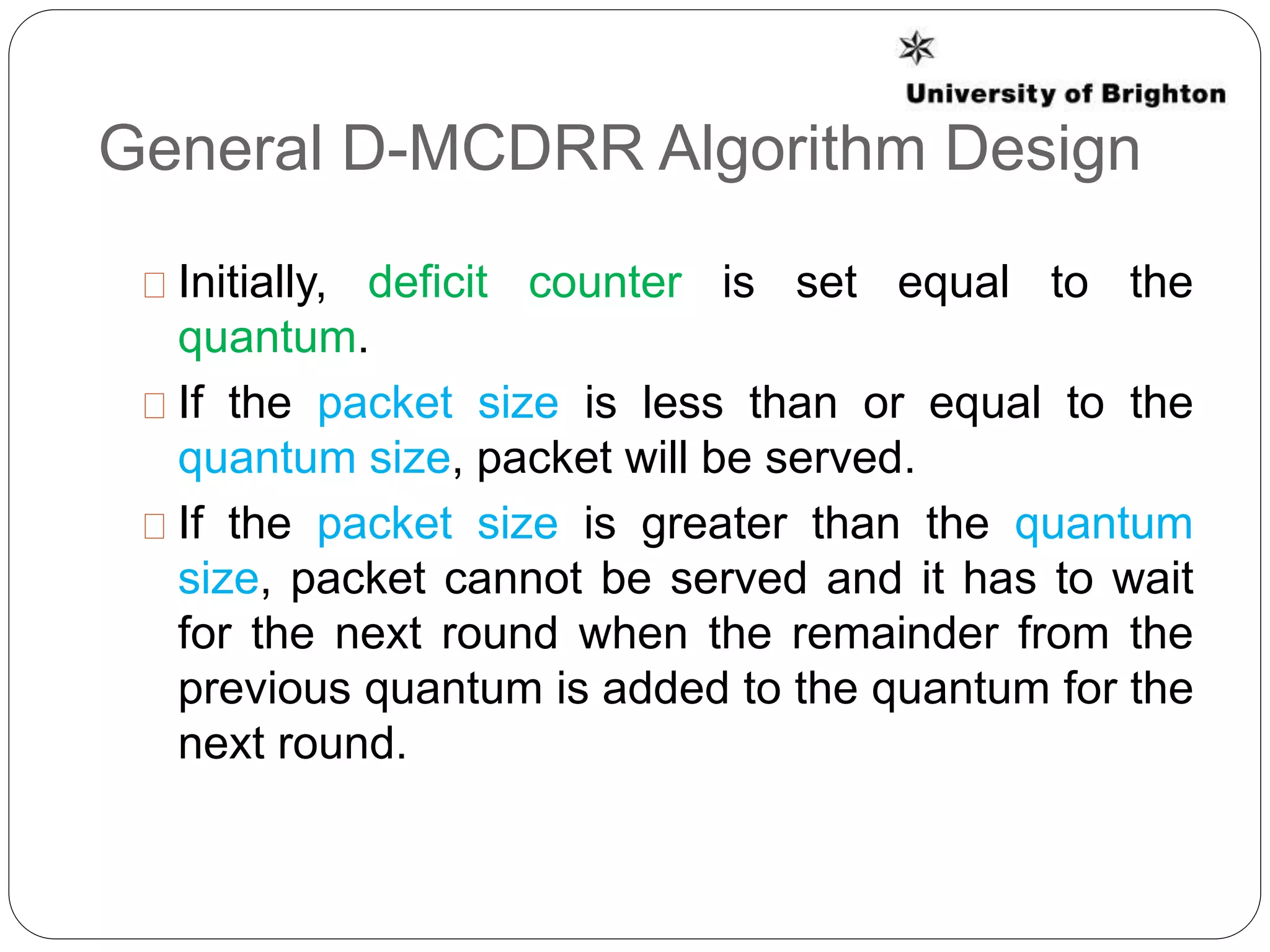
For each flow, two variables called quantum and
deficit counter are maintained.
Quantum is a variable in bytes set to a scheduling
operation dispensed to a flow for a period of one
round.
Deficit counter is also a variable in bytes set for
each of the flow in the scheduling operation.
General D-MCDRR Algorithm Design
Initially, deficit counter is set equal to the
quantum.
If the packet size is less than or equal to the
quantum size, packet will be served.
If the packet size is greater than the quantum
size, packet cannot be served and it has to wait
for the next round when the remainder from the
previous quantum is added to the quantum for the
next round.
D-MCDRR Operation
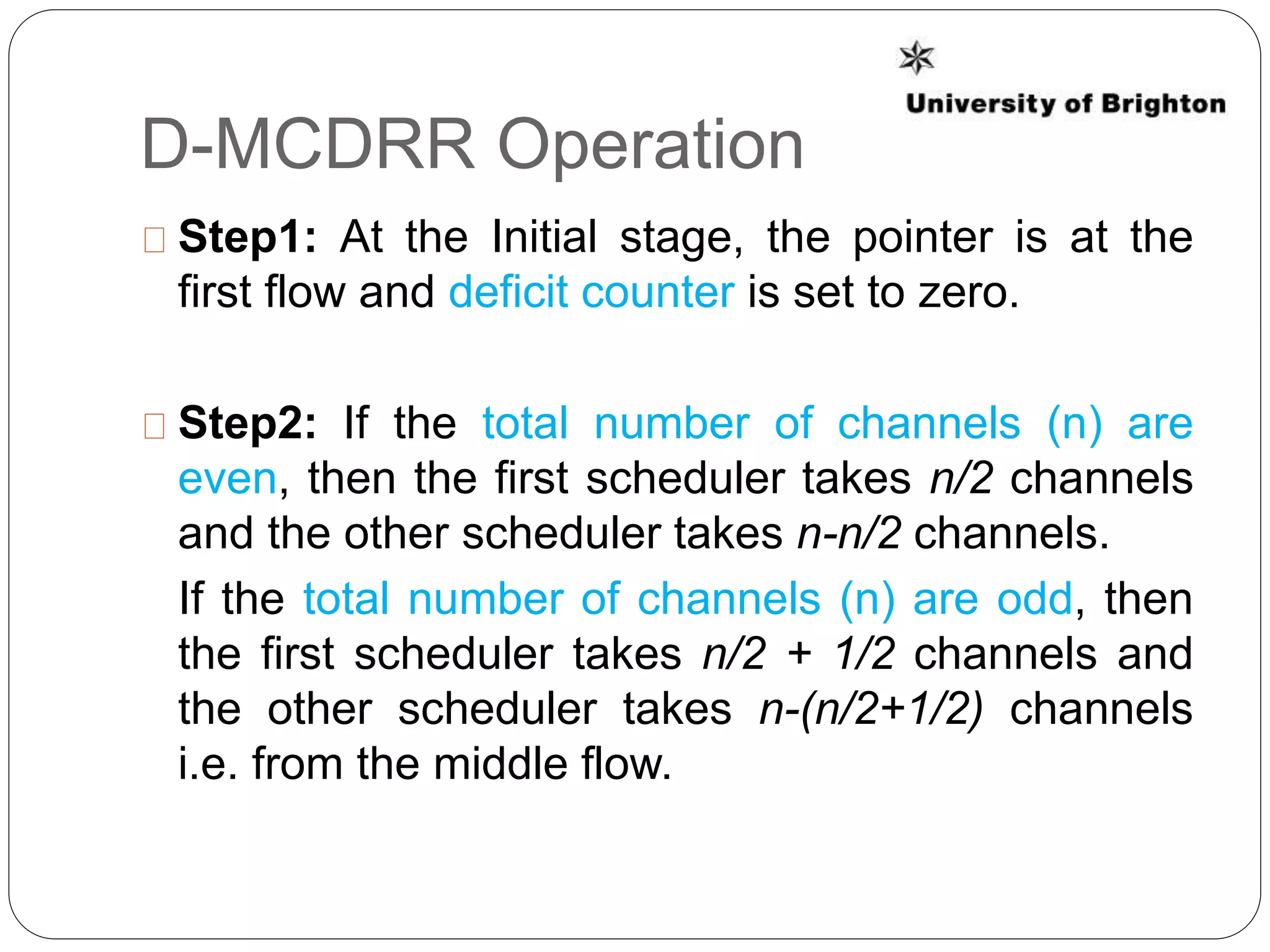
Step1: At the Initial stage, the pointer is at the
first flow and deficit counter is set to zero.
Step2: If the total number of channels (n) are
even, then the first scheduler takes n/2 channels
and the other scheduler takes n-n/2 channels.
If the total number of channels (n) are odd, then
the first scheduler takes n/2 + 1/2 channels and
the other scheduler takes n-(n/2+1/2) channels
i.e. from the middle flow.
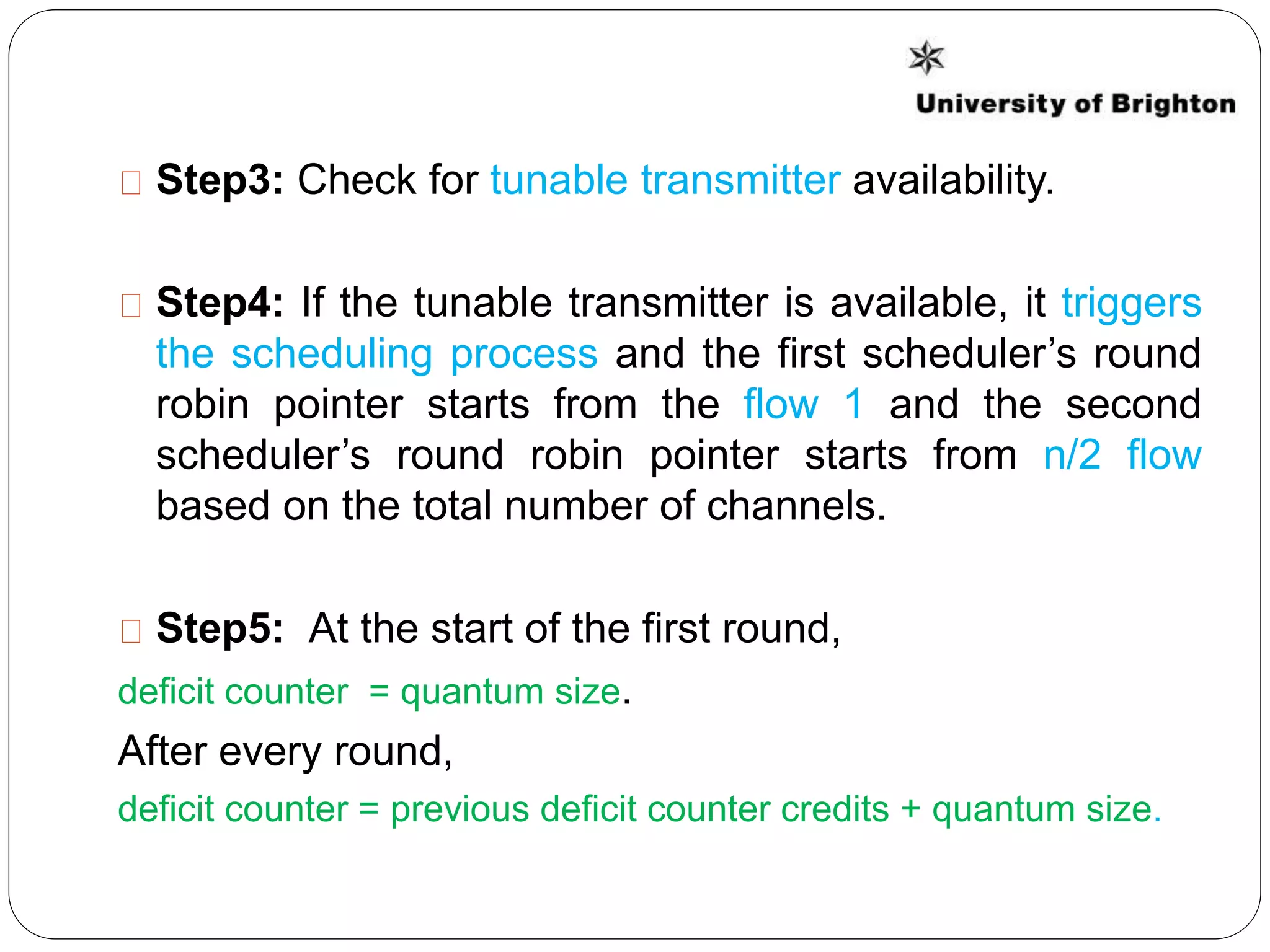
Step3: Check for tunable transmitter availability.
Step4: If the tunable transmitter is available, it triggers
the scheduling process and the first scheduler’s round
robin pointer starts from the flow 1 and the second
scheduler’s round robin pointer starts from n/2 flow
based on the total number of channels.
Step5: At the start of the first round,
deficit counter = quantum size.
After every round,
deficit counter = previous deficit counter credits + quantum size.
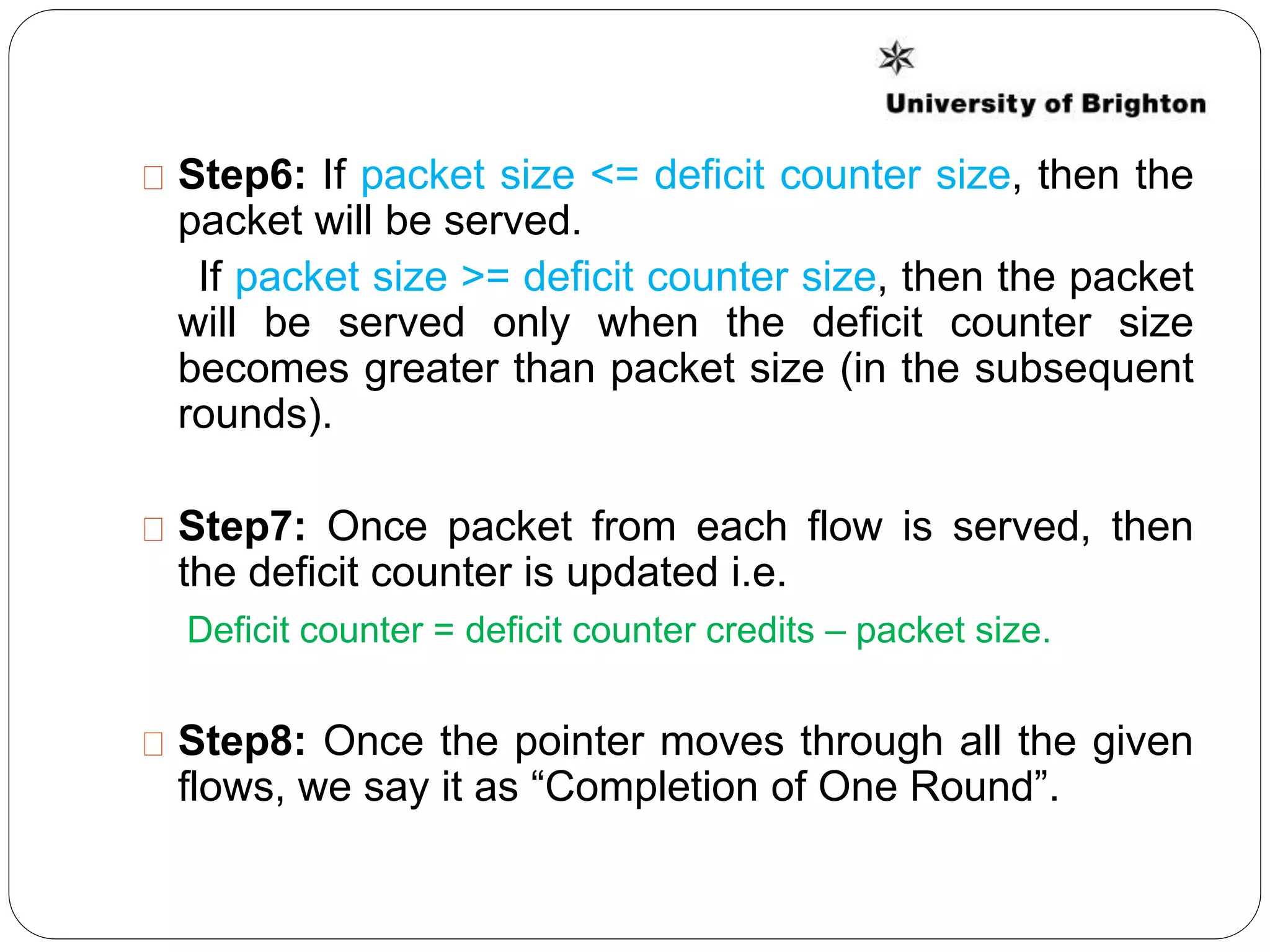
Step6: If packet size <= deficit counter size, then the
packet will be served.
If packet size >= deficit counter size, then the packet
will be served only when the deficit counter size
becomes greater than packet size (in the subsequent
rounds).
Step7: Once packet from each flow is served, then
the deficit counter is updated i.e.
Deficit counter = deficit counter credits – packet size.
Step8: Once the pointer moves through all the given
flows, we say it as “Completion of One Round”.
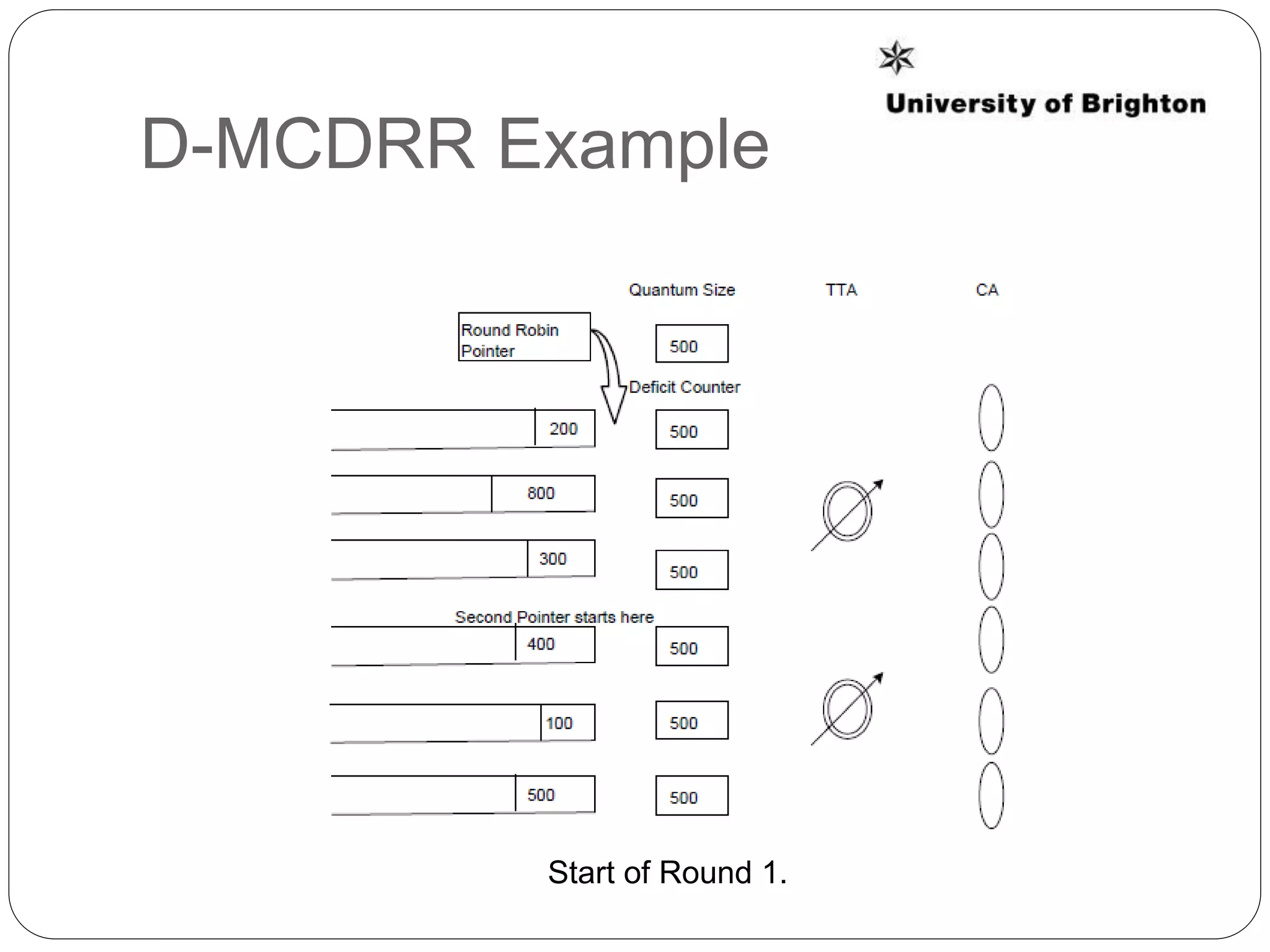
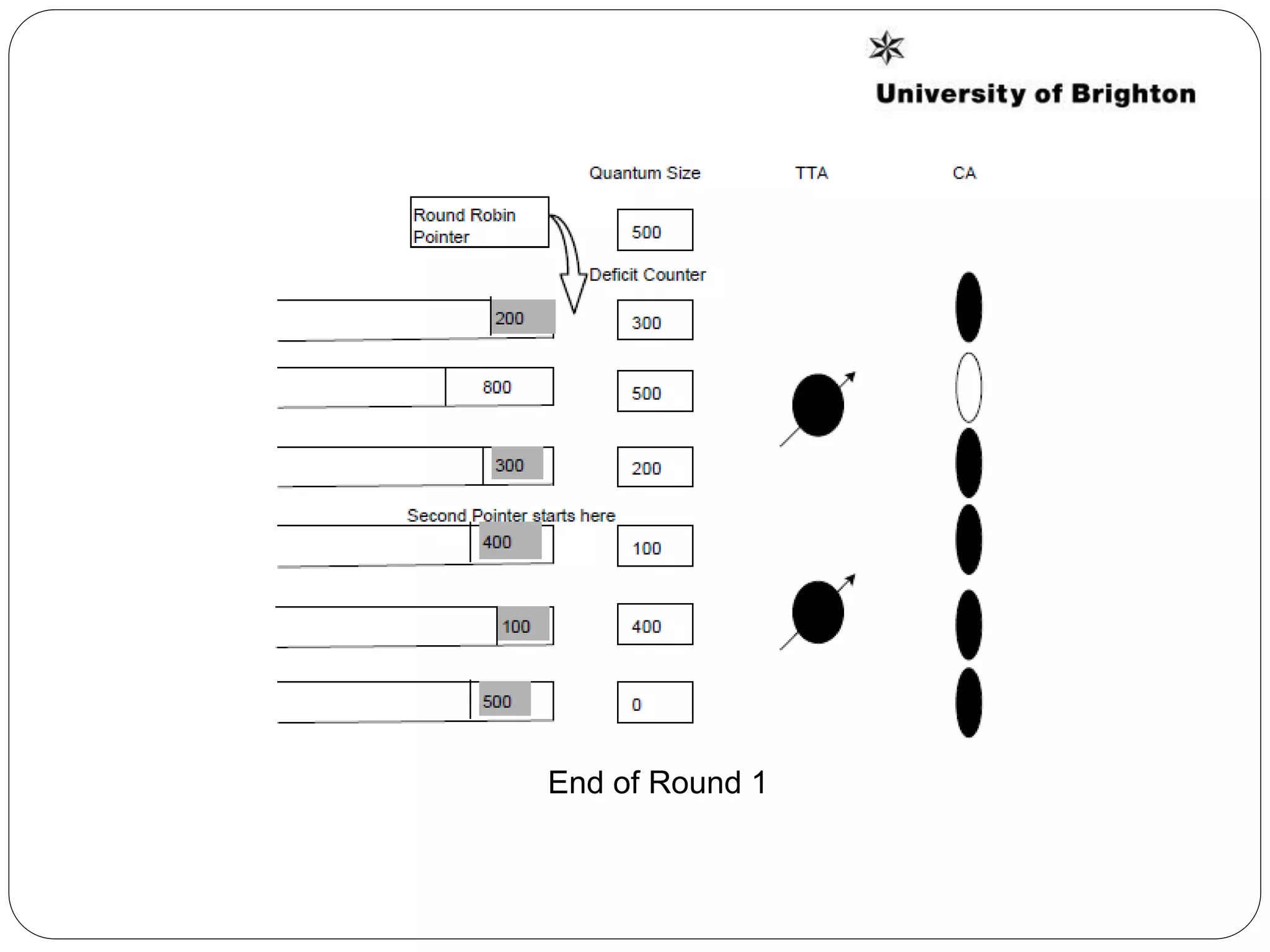
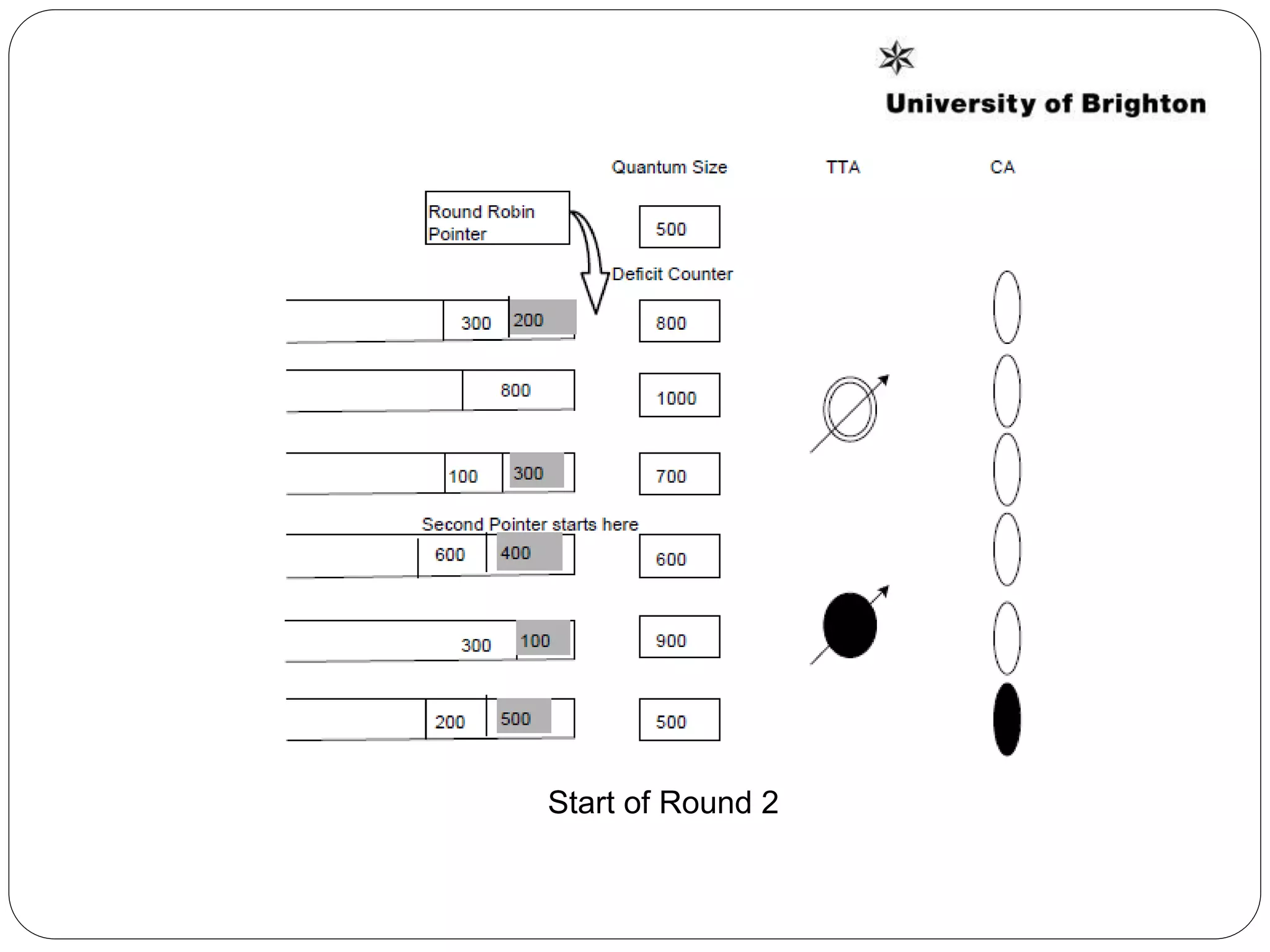
D-MCDRR Example
Start of Round 1.
End of Round 1
Start of Round 2
Simulation Results
Case 1: We set the values in the model for even
number of flows as:
• Number of wavelengths/channels (W) = 20
• Line rate of each channel = 1 Gb/s, and
• Number of tunable transmitters (M) = 2.
Throughput for even flows (20 flows) with exponential inter-frame
times and random frame sizes, comparing single mcdrr scheduler and the
proposed dual mcdrr scheduler.
Case 2: We set the values in the model for odd
number of flows as:
Number of wavelengths/channels (W) = 25
Line rate of each channel = 1 Gb/s, and
Number of tunable transmitters (M) = 2.
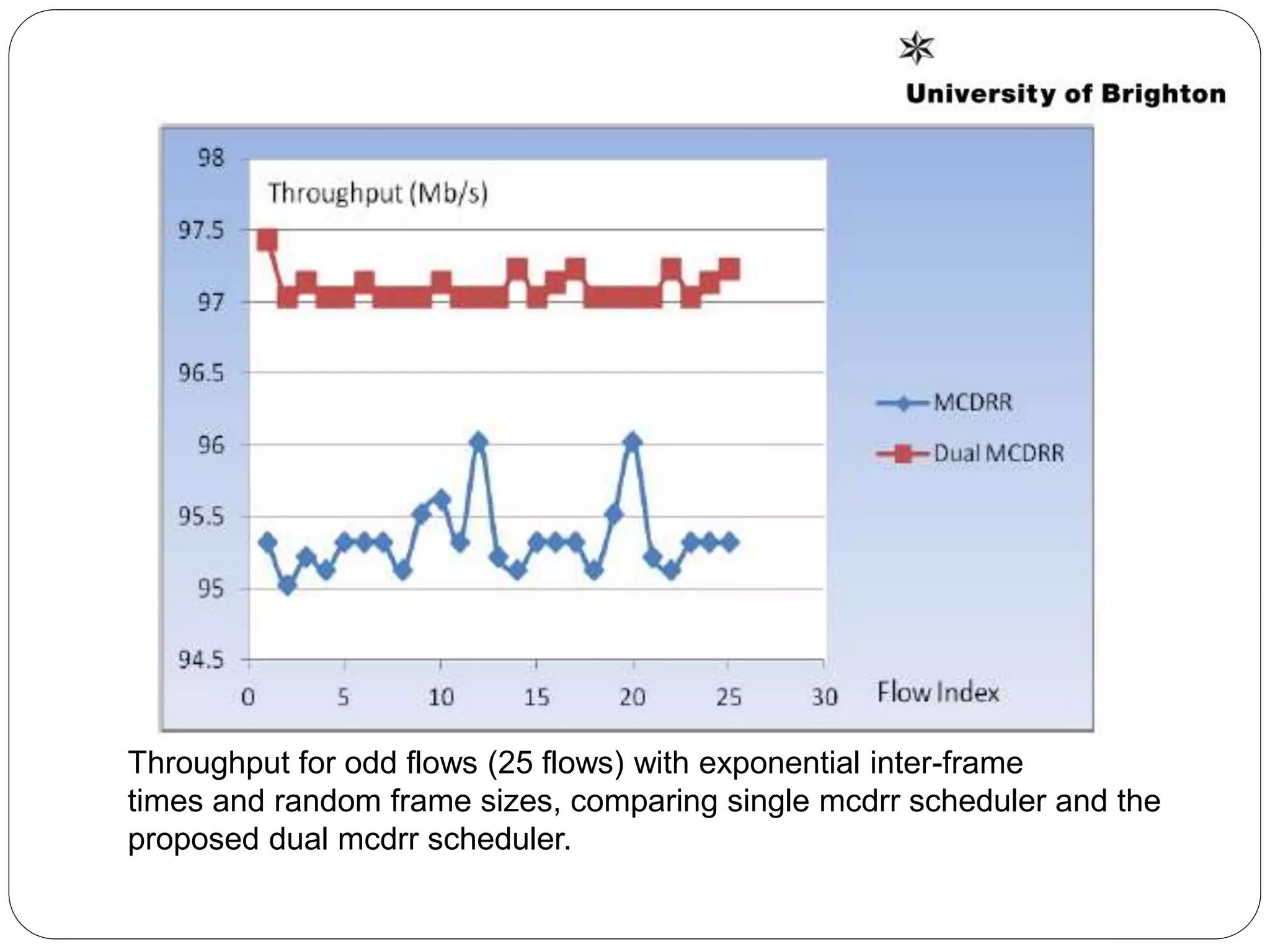
Throughput for odd flows (25 flows) with exponential inter-frame
times and random frame sizes, comparing single mcdrr scheduler and the
proposed dual mcdrr scheduler.
Conclusion
• We extended the existing MCDRR scheduling
algorithm for n channels to the case of
considering two schedulers for the same n
channels.
• Simulation results show that the proposed dual
MCDRR (D-MCDRR) scheduler can provide
better throughput and fairness when compared to
the existing single MCDRR scheduler.
In extending the MCDRR to DMCDRR, we try to
efficiently utilize the network resources (i.e.,
channels and tunable transmitters) by
overlapping rounds, while maintaining its low
complexity (i.e., O(1)).
Future Directions
More simulation results can be produced
considering delay and latency.
Performance test can be implemented
considering wide range of parameters in the
simulation model.
The current study is on comparing different multi-
channel scheduling algorithms and establishing
mathematical bounds for the fairness and latency.
Thank You
and
Any Questions?

Dual MCDRR Scheduler for Hybrid TDM/WDM Optical Networks

  • 1.
    Mithileysh Sathiyanarayanan andBabangida Abubakar University of Brighton, UK {M.Sathiyanarayanan, B.Abubakar}@brighton.ac.uk ICNSC 2014 Andhra Pradesh, India Dual MCDRR Scheduler for Hybrid TDM/WDM Optical Networks
  • 2.
    MOTIVATION • The existingsingle MCDRR scheduler is used for multiple channels with tunable transmitters and fixed receivers in hybrid TDM/WDM optical networks. • Though fairness achieved was almost equal to one, still there were small issues with ill-behaved flows. This motivated us to use dual MCDRR scheduler to effectively enhance throughput performance.
  • 3.
    D-MCDRR Scheduler • Weproposed and investigated the performance of a dual multi-channel deficit round-robin (D- MCDRR) scheduler based on the existing single MCDRR scheduler in hybrid TDM/WDM optical networks. • Simulation results show that the proposed dual MCDRR (D-MCDRR) scheduler can provide better throughput when compared to the existing single MCDRR scheduler.
  • 4.
    D-MCDRR Scheduler Design Blockdiagram of using dual MCDRR scheduler in hybrid TDM/WDM optical networks.
  • 5.
    General D-MCDRR AlgorithmDesign For each flow, two variables called quantum and deficit counter are maintained. Quantum is a variable in bytes set to a scheduling operation dispensed to a flow for a period of one round. Deficit counter is also a variable in bytes set for each of the flow in the scheduling operation.
  • 6.
    General D-MCDRR AlgorithmDesign Initially, deficit counter is set equal to the quantum. If the packet size is less than or equal to the quantum size, packet will be served. If the packet size is greater than the quantum size, packet cannot be served and it has to wait for the next round when the remainder from the previous quantum is added to the quantum for the next round.
  • 7.
    D-MCDRR Operation Step1: Atthe Initial stage, the pointer is at the first flow and deficit counter is set to zero. Step2: If the total number of channels (n) are even, then the first scheduler takes n/2 channels and the other scheduler takes n-n/2 channels. If the total number of channels (n) are odd, then the first scheduler takes n/2 + 1/2 channels and the other scheduler takes n-(n/2+1/2) channels i.e. from the middle flow.
  • 8.
    Step3: Check fortunable transmitter availability. Step4: If the tunable transmitter is available, it triggers the scheduling process and the first scheduler’s round robin pointer starts from the flow 1 and the second scheduler’s round robin pointer starts from n/2 flow based on the total number of channels. Step5: At the start of the first round, deficit counter = quantum size. After every round, deficit counter = previous deficit counter credits + quantum size.
  • 9.
    Step6: If packetsize <= deficit counter size, then the packet will be served. If packet size >= deficit counter size, then the packet will be served only when the deficit counter size becomes greater than packet size (in the subsequent rounds). Step7: Once packet from each flow is served, then the deficit counter is updated i.e. Deficit counter = deficit counter credits – packet size. Step8: Once the pointer moves through all the given flows, we say it as “Completion of One Round”.
  • 10.
  • 11.
  • 12.
  • 13.
    Simulation Results Case 1:We set the values in the model for even number of flows as: • Number of wavelengths/channels (W) = 20 • Line rate of each channel = 1 Gb/s, and • Number of tunable transmitters (M) = 2.
  • 14.
    Throughput for evenflows (20 flows) with exponential inter-frame times and random frame sizes, comparing single mcdrr scheduler and the proposed dual mcdrr scheduler.
  • 15.
    Case 2: Weset the values in the model for odd number of flows as: Number of wavelengths/channels (W) = 25 Line rate of each channel = 1 Gb/s, and Number of tunable transmitters (M) = 2.
  • 16.
    Throughput for oddflows (25 flows) with exponential inter-frame times and random frame sizes, comparing single mcdrr scheduler and the proposed dual mcdrr scheduler.
  • 17.
    Conclusion • We extendedthe existing MCDRR scheduling algorithm for n channels to the case of considering two schedulers for the same n channels. • Simulation results show that the proposed dual MCDRR (D-MCDRR) scheduler can provide better throughput and fairness when compared to the existing single MCDRR scheduler.
  • 18.
    In extending theMCDRR to DMCDRR, we try to efficiently utilize the network resources (i.e., channels and tunable transmitters) by overlapping rounds, while maintaining its low complexity (i.e., O(1)).
  • 19.
    Future Directions More simulationresults can be produced considering delay and latency. Performance test can be implemented considering wide range of parameters in the simulation model. The current study is on comparing different multi- channel scheduling algorithms and establishing mathematical bounds for the fairness and latency.
  • 20.

Editor's Notes

  • #4 We extend the existing MCDRR scheduling algorithm for n channels to the case of considering two schedulers for the same n channels.