DRUG INTERACTIONSDRUG INTERACTIONS
1
Ciciliya VJ
 Drug interaction can be defined as the modifications of the
effects of one drug by the prior, concomitant or subsequently
administered another drug .
 Drug interactions can be either Harmful or Beneficial.
 6.5% of adverse drug reactions in USA were attributed to
drug interactions (0.2% of these patients may have life-
treatening interactions)
 The potential drug interactions has been observed to be 17%
in surgical patients, 22% in patients in medical wards, 23% in
out patients clinics.
2
 Today the potential for “DI” is high due to the availability of
complex therapeutic agents and wide spread poly pharmacy.
 Pharmacist play a valuable role in screening of interaction
and advising on management when interactions occur.
 This may be at the patient bed side, as part of the dispensing
process or during the sale of non-prescription medicine.
 A role of current emerging importance is the detection of
interactions between medicines and other pharmacologically
active therapies,such as herbal and alternative remedies.
3
Drug interactions represent 3–5% of preventable
in-hospital ADRs
Drug interactions are also an important cause of
patient visits to physicians and emergency
departments.
Contribution of Drug Interactions to theContribution of Drug Interactions to the
Overall Burden of Preventable ADRsOverall Burden of Preventable ADRs
4
Pharmacokinetic interactions
-Absorption
-Distribution
-Metabolism
-Excretion
Pharmacodynamic interactions
-Pharmacological Synergism
-Pharmacological antagonism
Physiological interactions
Pharmaceutical interactions
Mechanism of drug interactionMechanism of drug interaction
5
One drug alters the rate or extent of absorption,
distribution, metabolism or excretion of another
drug.
A change in blood concentration causes a change
in the drug’s effect.
Pharmacokinetic DrugPharmacokinetic Drug
InteractionsInteractions
6
Important interactions that lead to the modification
of drug absorption are largely associated with the
GIT.
Interactions in the GIT significantly reduce or
increase the amount of drug that absorbed into the
body.
Some interactions have been used
adventageously with parenteral formulations
eg:- adrenaline (vasoconstrictor)- used to slow
the absorption of local anaesthetic to prolong
anaesthesia.
Drug AbsorptionDrug Absorption
7
Change in gastrointestinal pH
-Ketoconazole needs acidic conditions in gut
Drug binding in GI tract
-E.g. tetracycline and calcium
Change in gastrointestinal flora
-Antibiotics with OCs         
Change in gastrointestinal motility
-Metoclopramide and digoxin
Malabsorption caused by other drugs
-Orlistat (Xenical) and fat soluble vitamins
Altered AbsorptionAltered Absorption
8
CHELATION
 Heavy metal ions such as iron,calcium ,magnesium and zinc
can bind to anionic medicines like ciprofloxacin and
tetracycline. This produce a poorly soluble salt form that does
not dissolve quickly.
 Ion exchange resins can also bind medicines and prevent
absorption.
For example:cholestyramine bind to bile salts and lower
serum cholesterol,can bind drugs such as thyroxine,digoxin
and warfarin and reduces their absorption.
 Therapeutic failure has been reported with these medicines.
9
CHANGES IN GI MOTILITY
 Some drugs alter the rate of passage of drugs through the GIT.
 This commonly changes the rate of absorption.
eg: 1)metoclopromide increases the gastro intestinal motility and
more importantly for medicines absorbed under the basic
conditions of the duodenum and jejunum,opens pyloric sphincter at
the stomach outlet.
Eg : Metoclopromide and paracetamol
2)Metoclopromide and digoxin-by metoclopromide less time for
digoxin to dissolve less will be absorbed therapeutic
failure can occur
10
BOWEL FLORA EFFECT
 Some medicines can alter the normal microorganism population in
the large intestines;these organism plays important role in the
kinetics and action of some drugs
 Eg:The modification of bowel bacteria by broad spectrum antibiotics
can also indirectly affect the activity of coumarin anticoagulants.
 These antibiotic can reduce the population of bowel bacteria that
synthesise vit K reduce drug absorbed into the body.
 Vit K antagonise the action of coumarin anti coagulants
 Reducing vit k absorption increase the action of warfarin,will
increase bleeding.
11
PROTEIN – BINDING
DISPLACEMENT
Interactions altering drug distribution commonly
associated with drugs that bound to plasma proteins
being displaced by another drug .
concentration of free drug in plasma will increase
exposing the drug to the normal
elimination,also the levels are rapidly reduced.
 eg:displacement of methotrexate or warfarin from
protein binding by aspirin or other
NSAIDs(phenybutazone).
DRUG DISTRIBUTIONDRUG DISTRIBUTION
12
Interaction occurs through the induction or
inhibition of drug metabolism.
METABOLIC INDUCTION
One drug increases the metabolism of
another,will decrease the level of substrate in the
body and increase the levels of metabolite.
Eg:- phenytoin phenobarbitone and
carbamazepine are potent inducers of cytochrome
CYP3A4.
-rifampicin-potent inducer of CYP3A4
METABOLISMMETABOLISM
13
METABOLIC INHIBITION
 Inhibition of drug will increase its plasma levels
with the potential for toxicity or enhanced risk of
side effects,if the parent drug is the active
species.
decreased metabolism of concomitant drug
therefore decreased drug excretion and increased
drug effect.
eg:diltiazem inhibit CYP3A4 has been used with
cyclosporin.
14
DRUG TRANSPORTER INTERACTION
 Drug transporter which carry drug across cell membrane into
cell and or out of cell.
 Eg:1.digoxin erythromycin interaction(P-
GLYCOPROTEIN,Inhibition by erythromycin occurs)
2.colchicine is transported by Pgp and verapamil can inhibit
the transporter.
GENETIC POLYMORPHISM AND DRUG INTERACTION
 Genetic polymorphism occurs with CYP2D6,2C19 but not
CYP3A4 or 1A2.
15
Drug A increases or reduces the excretion (usually
renal) of Drug B.
Blood levels of B fall below or rise above normal
therapeutic range.
Becomes either ineffective or toxic.
EXCRETIONEXCRETION
16
Drugs eliminated by kidneys – alteration in urinary
pH, tubular secretion and rate of glomerular flow
can alter the amount of drug that is excreted
Lithium + Thiazide diuretics
Excretion InteractionsExcretion Interactions
17
PHARMACOLOGICAL SYNERGISM
Synergism occurs when two drugs with a similar
pharmacological or side effects are given together
produce an additive effect.
Combination of drugs given for therapeutic advantage
eg:opiates and TCAs-pain control
PHARMACODYNAMICPHARMACODYNAMIC
INTERACTION MECHANISMINTERACTION MECHANISM
18
Some combination results in side effects
eg:ACE inhibitor with aldosterone
antagonist,spironolactone cause hyperkalemia.
Serious and life threatening is non reversible MAO
inhibitor(phenelzine) with SSRI(Sertaline) results
in increased neurotransmitter serotonin and
precipitate serotonin syndrome.
19
PHARMACOLOGICAL
ANTAGONISM
 One drug prevents the pharmacological action of
another
eg: 1)thiazide diuretics+NSAIDs reduce
diuretic activity.
2)TCA+Antiepileptics lower the
seizure threshold.
3)metoclopromide+levodopa block the
beneficial effect of dopamine precursor 20
Substrate:
Drug is metabolised by the enzyme system
Inducer:
Drug that will increase the synthesis of CYP450
enzymes
Inhibitor
Drug that will decrease the metabolism of a
substrate
CYP 450 SystemCYP 450 System
DefinitionsDefinitions
21
CYP2D6
CYP450 NomenclatureCYP450 Nomenclature
Family
Sub-
Family
Individual
Gene
22
CYP = cytochrome P450
 2 = genetic family
 D = genetic sub-family
 6 = specific gene
Example : CYP2D6Example : CYP2D6
23
Responsible for metabolism of:
-Most calcium channel blockers
-Most benzodiazepines
-Most HIV protease inhibitors
-Most HMG-CoA-reductase inhibitors
-Most non-sedating antihistamines
-Cyclosporine
Present in GI tract and liver
Cytochrome P450 3ACytochrome P450 3A
24
 Absent in 7-9% of Caucasians,
1–2% of non-Caucasians
 Over-expressed in up to 30% of East Africans
 Catalyzes primary metabolism of:
Codeine Many β-blockers
Many tricyclic antidepressants
 Inhibited by:
Fluoxetine Haloperidol
Paroxetine Quinidine
Cytochrome P450 2D6Cytochrome P450 2D6
25
 Absent in 1% of Caucasians and
African-Americans
 Primary metabolism of:
- Most NSAIDs (including COX-2)
- S-warfarin (the active isomer)
- Phenytoin
 Inhibited by fluconazole
Cytochrome P450 2C9Cytochrome P450 2C9
26
Absent in 20–30% of Asians,
3–5% of Caucasians
Primary metabolism of:
Diazepam Phenytoin
Omeprazole Clopidogrel
Inhibited by:
Omeprazole Isoniazid
Ketoconazole
Cytochrome P450 2C19Cytochrome P450 2C19
27
Induced by smoking tobacco
Catalyzes primary metabolism of:
Theophylline Imipramine
Propranolol Clozapine
Inhibited by:
Many fluoroquinolone antibiotics
Fluvoxamine Cimetidine
Cytochrome P450 1A2Cytochrome P450 1A2
28
1. Take a medication history
(AVOID Mistakes mnemonic)
2. Remember high-risk patients
- Any patient taking ≥ 2 medications
- Patients treated with anticonvulsants,
antibiotics, digoxin,warfarin, amiodarone, etc.
3. Check pocket reference or PDA
4. Consult pharmacists or drug info specialists
5. Check up-to-date computer program
-Medical Letter Drug Interaction Program*
- www.epocrates.com* and others
Drug-Drug Interaction Prevention:Drug-Drug Interaction Prevention:
A Stepwise ApproachA Stepwise Approach
29
Allergies?
Vitamins and herbs?
Old drugs and OTC? (as well as current)
Interactions?
Dependence? Do you need a contract?
Mendel: Family Hx of benefits or problems with
any drugs?
A Good Medication History:A Good Medication History:
AVOID MAVOID Mistakesistakes
30
Evaluate drug interaction risk on a patient specific
basis.
Offer non interacting alternatives to victim or
precipitator drugs wherever possible.
If non interacting alternatives are unavailable, use
low risk precipitator drugs and/or find a victim drug
with parallel metabolic path ways.
If interacting drug must be used concomitantly
take steps to mitigate the interaction such as
staggering administration times or changing
dosage forms.
31
Monitor the patient if it appears that the chance of
interaction is high and the out come is likely to be
clinically meaningful
Look at any sudden change in patient status as a
potential result of a drug interaction and
investigate. Remember that starting or stopping a
precipitator drug can affect a victim drug and
patient status.
Educate all health care professionals about the
potential risks of drug interactions.
32
Drug A and Drug B bind to different receptors on the
same tissue but give opposite or similar effect
Aspirin (anti-platelet)
+Warfarin/Coumarin (anticoagulant)
Increase bleeding
Physiological InteractionsPhysiological Interactions
33
Adrenaline constricts the blood vessels but
histamine dilates it
Adrenergics decrease GI motility but cholinergics
increases the motility
34
Phenytoin precipitates in IV dextrose solutions
(e.g., D5W)
AmphotericinB precipitates in IV saline
Gentamicin is physically/chemically incompatible
when mixed with most beta-lactam antibiotics,
resulting in loss of both antibiotics’ effects
Pharmaceutical InteractionsPharmaceutical Interactions
35
Use of wrong vehicle for infusion-no drug addition
to blood,plasma,amino acid,
fat,emulsions,mannitol,heparin, sod.bicarbonate.
Higly acidic solns.like dextrose,fructose are
unsuitable for sod. Or pot. Salts of weakly acidic
drugs.
 Isotonic saline is suitable for most drugs except
NA
36
Drug-Food interactionsDrug-Food interactions
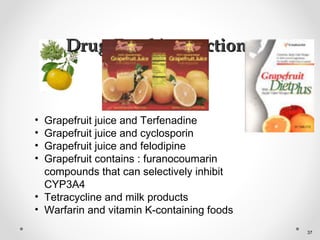
• Grapefruit juice and Terfenadine
• Grapefruit juice and cyclosporin
• Grapefruit juice and felodipine
• Grapefruit contains : furanocoumarin
compounds that can selectively inhibit
CYP3A4
• Tetracycline and milk products
• Warfarin and vitamin K-containing foods
37
Potentially dangerous interaction between drug
and food.
eg:MAO inhibitors (phenelzine)with tyramine
containing foods results metabolic blockade by
phenelzine can precipitate potentially fatal
hypertensive crisis.
Some results therapeutic failure
eg:phenytoin with enteral feeding
mixture.,decrease GI absorption.
High diet fibre increase warfarin activity by
impairing absorption of vit K
Grape fruit inhibit GI metabolism of medicines
handled by CYP3A4 isoenzyme.
Chilli inhibit substance P and is reported to
increase the incidence of coughing in patients on 38
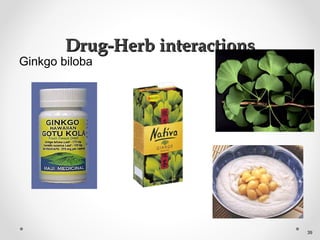
Ginkgo biloba
Drug-Herb interactionsDrug-Herb interactions
39
St. John’s wort: CYP3A4 inducerSt. John’s wort: CYP3A4 inducer
40
St. John’s Wort with:
Indinavir
Cyclosporine
Digoxin
Tacrolimus
Possibly many others
Drug-Herbal InteractionsDrug-Herbal Interactions
41
List of the most common interacting
drug
-Antacids
-Cimetidine
-Digoxin
-Warfarin
-Theophylline
-Ketoconazole
42
Liver disease
Renal disease
Cardiac disease
Acute myocardial infarction
Drug-Disease InteractionsDrug-Disease Interactions
43
Combination of antihypertensives for the treatment
of hypertention.
Combination of antibiotics to treat an infection.
Combination of epinephrine with lidocaine to
prolong anesthetic effects.
Combination of statins with ezetimibe to treat
dislipidemia.
Antidotes like naloxone and flumazenil .
Combination of hypoglycemic agents to treat
diabetes.
Beneficial Effects of Drug InteractionsBeneficial Effects of Drug Interactions
44
Beneficial pharmacokinetic interactions are much
less compared to pharmacodynamic interactions.
Probenecid with penicillin to elevate pencillin level
in serum.
Ketoconazole and diltiazem with cyclosporine or
tarcolimus to elevate serum levels of these
immunosupresants.
P-glycoprotein inhibitors like
clarithromycin,ketoconazole etc may improve the
response of protease inhibitors in HIV treatment;
improve response to anticonvulsants in refractory
epilepsy
45
The role of pharmacist in preventing
and detecting interaction and
providing reliable advice on
interaction management can greately
add to patient’s safety and wellbeing.
46

Drug interactions

  • 1.
  • 2.
     Drug interactioncan be defined as the modifications of the effects of one drug by the prior, concomitant or subsequently administered another drug .  Drug interactions can be either Harmful or Beneficial.  6.5% of adverse drug reactions in USA were attributed to drug interactions (0.2% of these patients may have life- treatening interactions)  The potential drug interactions has been observed to be 17% in surgical patients, 22% in patients in medical wards, 23% in out patients clinics. 2
  • 3.
     Today thepotential for “DI” is high due to the availability of complex therapeutic agents and wide spread poly pharmacy.  Pharmacist play a valuable role in screening of interaction and advising on management when interactions occur.  This may be at the patient bed side, as part of the dispensing process or during the sale of non-prescription medicine.  A role of current emerging importance is the detection of interactions between medicines and other pharmacologically active therapies,such as herbal and alternative remedies. 3
  • 4.
    Drug interactions represent3–5% of preventable in-hospital ADRs Drug interactions are also an important cause of patient visits to physicians and emergency departments. Contribution of Drug Interactions to theContribution of Drug Interactions to the Overall Burden of Preventable ADRsOverall Burden of Preventable ADRs 4
  • 5.
    Pharmacokinetic interactions -Absorption -Distribution -Metabolism -Excretion Pharmacodynamic interactions -PharmacologicalSynergism -Pharmacological antagonism Physiological interactions Pharmaceutical interactions Mechanism of drug interactionMechanism of drug interaction 5
  • 6.
    One drug altersthe rate or extent of absorption, distribution, metabolism or excretion of another drug. A change in blood concentration causes a change in the drug’s effect. Pharmacokinetic DrugPharmacokinetic Drug InteractionsInteractions 6
  • 7.
    Important interactions thatlead to the modification of drug absorption are largely associated with the GIT. Interactions in the GIT significantly reduce or increase the amount of drug that absorbed into the body. Some interactions have been used adventageously with parenteral formulations eg:- adrenaline (vasoconstrictor)- used to slow the absorption of local anaesthetic to prolong anaesthesia. Drug AbsorptionDrug Absorption 7
  • 8.
    Change in gastrointestinalpH -Ketoconazole needs acidic conditions in gut Drug binding in GI tract -E.g. tetracycline and calcium Change in gastrointestinal flora -Antibiotics with OCs          Change in gastrointestinal motility -Metoclopramide and digoxin Malabsorption caused by other drugs -Orlistat (Xenical) and fat soluble vitamins Altered AbsorptionAltered Absorption 8
  • 9.
    CHELATION  Heavy metalions such as iron,calcium ,magnesium and zinc can bind to anionic medicines like ciprofloxacin and tetracycline. This produce a poorly soluble salt form that does not dissolve quickly.  Ion exchange resins can also bind medicines and prevent absorption. For example:cholestyramine bind to bile salts and lower serum cholesterol,can bind drugs such as thyroxine,digoxin and warfarin and reduces their absorption.  Therapeutic failure has been reported with these medicines. 9
  • 10.
    CHANGES IN GIMOTILITY  Some drugs alter the rate of passage of drugs through the GIT.  This commonly changes the rate of absorption. eg: 1)metoclopromide increases the gastro intestinal motility and more importantly for medicines absorbed under the basic conditions of the duodenum and jejunum,opens pyloric sphincter at the stomach outlet. Eg : Metoclopromide and paracetamol 2)Metoclopromide and digoxin-by metoclopromide less time for digoxin to dissolve less will be absorbed therapeutic failure can occur 10
  • 11.
    BOWEL FLORA EFFECT Some medicines can alter the normal microorganism population in the large intestines;these organism plays important role in the kinetics and action of some drugs  Eg:The modification of bowel bacteria by broad spectrum antibiotics can also indirectly affect the activity of coumarin anticoagulants.  These antibiotic can reduce the population of bowel bacteria that synthesise vit K reduce drug absorbed into the body.  Vit K antagonise the action of coumarin anti coagulants  Reducing vit k absorption increase the action of warfarin,will increase bleeding. 11
  • 12.
    PROTEIN – BINDING DISPLACEMENT Interactionsaltering drug distribution commonly associated with drugs that bound to plasma proteins being displaced by another drug . concentration of free drug in plasma will increase exposing the drug to the normal elimination,also the levels are rapidly reduced.  eg:displacement of methotrexate or warfarin from protein binding by aspirin or other NSAIDs(phenybutazone). DRUG DISTRIBUTIONDRUG DISTRIBUTION 12
  • 13.
    Interaction occurs throughthe induction or inhibition of drug metabolism. METABOLIC INDUCTION One drug increases the metabolism of another,will decrease the level of substrate in the body and increase the levels of metabolite. Eg:- phenytoin phenobarbitone and carbamazepine are potent inducers of cytochrome CYP3A4. -rifampicin-potent inducer of CYP3A4 METABOLISMMETABOLISM 13
  • 14.
    METABOLIC INHIBITION  Inhibitionof drug will increase its plasma levels with the potential for toxicity or enhanced risk of side effects,if the parent drug is the active species. decreased metabolism of concomitant drug therefore decreased drug excretion and increased drug effect. eg:diltiazem inhibit CYP3A4 has been used with cyclosporin. 14
  • 15.
    DRUG TRANSPORTER INTERACTION Drug transporter which carry drug across cell membrane into cell and or out of cell.  Eg:1.digoxin erythromycin interaction(P- GLYCOPROTEIN,Inhibition by erythromycin occurs) 2.colchicine is transported by Pgp and verapamil can inhibit the transporter. GENETIC POLYMORPHISM AND DRUG INTERACTION  Genetic polymorphism occurs with CYP2D6,2C19 but not CYP3A4 or 1A2. 15
  • 16.
    Drug A increasesor reduces the excretion (usually renal) of Drug B. Blood levels of B fall below or rise above normal therapeutic range. Becomes either ineffective or toxic. EXCRETIONEXCRETION 16
  • 17.
    Drugs eliminated bykidneys – alteration in urinary pH, tubular secretion and rate of glomerular flow can alter the amount of drug that is excreted Lithium + Thiazide diuretics Excretion InteractionsExcretion Interactions 17
  • 18.
    PHARMACOLOGICAL SYNERGISM Synergism occurswhen two drugs with a similar pharmacological or side effects are given together produce an additive effect. Combination of drugs given for therapeutic advantage eg:opiates and TCAs-pain control PHARMACODYNAMICPHARMACODYNAMIC INTERACTION MECHANISMINTERACTION MECHANISM 18
  • 19.
    Some combination resultsin side effects eg:ACE inhibitor with aldosterone antagonist,spironolactone cause hyperkalemia. Serious and life threatening is non reversible MAO inhibitor(phenelzine) with SSRI(Sertaline) results in increased neurotransmitter serotonin and precipitate serotonin syndrome. 19
  • 20.
    PHARMACOLOGICAL ANTAGONISM  One drugprevents the pharmacological action of another eg: 1)thiazide diuretics+NSAIDs reduce diuretic activity. 2)TCA+Antiepileptics lower the seizure threshold. 3)metoclopromide+levodopa block the beneficial effect of dopamine precursor 20
  • 21.
    Substrate: Drug is metabolisedby the enzyme system Inducer: Drug that will increase the synthesis of CYP450 enzymes Inhibitor Drug that will decrease the metabolism of a substrate CYP 450 SystemCYP 450 System DefinitionsDefinitions 21
  • 22.
  • 23.
    CYP = cytochromeP450  2 = genetic family  D = genetic sub-family  6 = specific gene Example : CYP2D6Example : CYP2D6 23
  • 24.
    Responsible for metabolismof: -Most calcium channel blockers -Most benzodiazepines -Most HIV protease inhibitors -Most HMG-CoA-reductase inhibitors -Most non-sedating antihistamines -Cyclosporine Present in GI tract and liver Cytochrome P450 3ACytochrome P450 3A 24
  • 25.
     Absent in7-9% of Caucasians, 1–2% of non-Caucasians  Over-expressed in up to 30% of East Africans  Catalyzes primary metabolism of: Codeine Many β-blockers Many tricyclic antidepressants  Inhibited by: Fluoxetine Haloperidol Paroxetine Quinidine Cytochrome P450 2D6Cytochrome P450 2D6 25
  • 26.
     Absent in1% of Caucasians and African-Americans  Primary metabolism of: - Most NSAIDs (including COX-2) - S-warfarin (the active isomer) - Phenytoin  Inhibited by fluconazole Cytochrome P450 2C9Cytochrome P450 2C9 26
  • 27.
    Absent in 20–30%of Asians, 3–5% of Caucasians Primary metabolism of: Diazepam Phenytoin Omeprazole Clopidogrel Inhibited by: Omeprazole Isoniazid Ketoconazole Cytochrome P450 2C19Cytochrome P450 2C19 27
  • 28.
    Induced by smokingtobacco Catalyzes primary metabolism of: Theophylline Imipramine Propranolol Clozapine Inhibited by: Many fluoroquinolone antibiotics Fluvoxamine Cimetidine Cytochrome P450 1A2Cytochrome P450 1A2 28
  • 29.
    1. Take amedication history (AVOID Mistakes mnemonic) 2. Remember high-risk patients - Any patient taking ≥ 2 medications - Patients treated with anticonvulsants, antibiotics, digoxin,warfarin, amiodarone, etc. 3. Check pocket reference or PDA 4. Consult pharmacists or drug info specialists 5. Check up-to-date computer program -Medical Letter Drug Interaction Program* - www.epocrates.com* and others Drug-Drug Interaction Prevention:Drug-Drug Interaction Prevention: A Stepwise ApproachA Stepwise Approach 29
  • 30.
    Allergies? Vitamins and herbs? Olddrugs and OTC? (as well as current) Interactions? Dependence? Do you need a contract? Mendel: Family Hx of benefits or problems with any drugs? A Good Medication History:A Good Medication History: AVOID MAVOID Mistakesistakes 30
  • 31.
    Evaluate drug interactionrisk on a patient specific basis. Offer non interacting alternatives to victim or precipitator drugs wherever possible. If non interacting alternatives are unavailable, use low risk precipitator drugs and/or find a victim drug with parallel metabolic path ways. If interacting drug must be used concomitantly take steps to mitigate the interaction such as staggering administration times or changing dosage forms. 31
  • 32.
    Monitor the patientif it appears that the chance of interaction is high and the out come is likely to be clinically meaningful Look at any sudden change in patient status as a potential result of a drug interaction and investigate. Remember that starting or stopping a precipitator drug can affect a victim drug and patient status. Educate all health care professionals about the potential risks of drug interactions. 32
  • 33.
    Drug A andDrug B bind to different receptors on the same tissue but give opposite or similar effect Aspirin (anti-platelet) +Warfarin/Coumarin (anticoagulant) Increase bleeding Physiological InteractionsPhysiological Interactions 33
  • 34.
    Adrenaline constricts theblood vessels but histamine dilates it Adrenergics decrease GI motility but cholinergics increases the motility 34
  • 35.
    Phenytoin precipitates inIV dextrose solutions (e.g., D5W) AmphotericinB precipitates in IV saline Gentamicin is physically/chemically incompatible when mixed with most beta-lactam antibiotics, resulting in loss of both antibiotics’ effects Pharmaceutical InteractionsPharmaceutical Interactions 35
  • 36.
    Use of wrongvehicle for infusion-no drug addition to blood,plasma,amino acid, fat,emulsions,mannitol,heparin, sod.bicarbonate. Higly acidic solns.like dextrose,fructose are unsuitable for sod. Or pot. Salts of weakly acidic drugs.  Isotonic saline is suitable for most drugs except NA 36
  • 37.
    Drug-Food interactionsDrug-Food interactions •Grapefruit juice and Terfenadine • Grapefruit juice and cyclosporin • Grapefruit juice and felodipine • Grapefruit contains : furanocoumarin compounds that can selectively inhibit CYP3A4 • Tetracycline and milk products • Warfarin and vitamin K-containing foods 37
  • 38.
    Potentially dangerous interactionbetween drug and food. eg:MAO inhibitors (phenelzine)with tyramine containing foods results metabolic blockade by phenelzine can precipitate potentially fatal hypertensive crisis. Some results therapeutic failure eg:phenytoin with enteral feeding mixture.,decrease GI absorption. High diet fibre increase warfarin activity by impairing absorption of vit K Grape fruit inhibit GI metabolism of medicines handled by CYP3A4 isoenzyme. Chilli inhibit substance P and is reported to increase the incidence of coughing in patients on 38
  • 39.
  • 40.
    St. John’s wort:CYP3A4 inducerSt. John’s wort: CYP3A4 inducer 40
  • 41.
    St. John’s Wortwith: Indinavir Cyclosporine Digoxin Tacrolimus Possibly many others Drug-Herbal InteractionsDrug-Herbal Interactions 41
  • 42.
    List of themost common interacting drug -Antacids -Cimetidine -Digoxin -Warfarin -Theophylline -Ketoconazole 42
  • 43.
    Liver disease Renal disease Cardiacdisease Acute myocardial infarction Drug-Disease InteractionsDrug-Disease Interactions 43
  • 44.
    Combination of antihypertensivesfor the treatment of hypertention. Combination of antibiotics to treat an infection. Combination of epinephrine with lidocaine to prolong anesthetic effects. Combination of statins with ezetimibe to treat dislipidemia. Antidotes like naloxone and flumazenil . Combination of hypoglycemic agents to treat diabetes. Beneficial Effects of Drug InteractionsBeneficial Effects of Drug Interactions 44
  • 45.
    Beneficial pharmacokinetic interactionsare much less compared to pharmacodynamic interactions. Probenecid with penicillin to elevate pencillin level in serum. Ketoconazole and diltiazem with cyclosporine or tarcolimus to elevate serum levels of these immunosupresants. P-glycoprotein inhibitors like clarithromycin,ketoconazole etc may improve the response of protease inhibitors in HIV treatment; improve response to anticonvulsants in refractory epilepsy 45
  • 46.
    The role ofpharmacist in preventing and detecting interaction and providing reliable advice on interaction management can greately add to patient’s safety and wellbeing. 46