
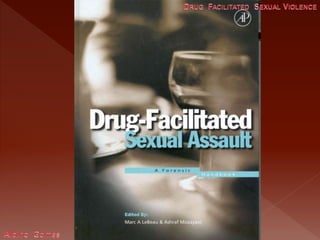

 Sexual assault facilitated by the offender’s
use of an anesthesia type drug which when
administered to the victim rendered the
victim physically incapacitated or helpless
and thus incapable of giving or not giving
consent
Most common symptom in alleged
drug facilitated sexual assault is
anterograde amnesia
The victim remembers events up to but
not after the drink
 The victim’s lack of resistance
 Inconsistent or untrue statements
 Delayed reporting
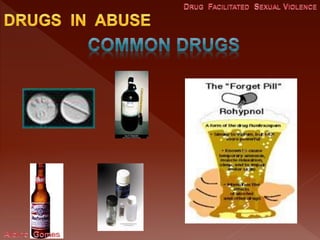
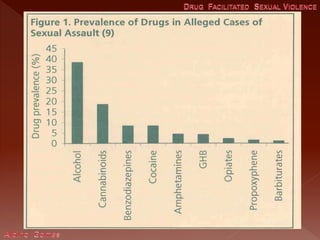
 Ethanol
 Marijuana
 GHB (liquid ecstasy)
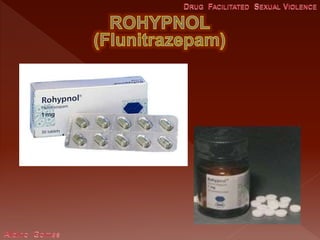
 Flunitrazepam
(rohypnol)
 Ecstasy
 Ketamine
 Hypnotics
 Cocaine
 Amphetamines
 When mixed with alcohol can incapacitate a
victim
 Increased use in U.S.
 Abuse started in Europe in 1970’s, in U.S.
the 1990’s
 Rapidly dissolved in liquid
 Ingested with alcohol and other drugs,
especially heroin, causes muscle and mental
relaxation and amnesia
 Drugs effects begin within 30 minutes and
persist for 8 hours or more
 Can be detected in blood for 24 hours and in
urine for 48 hours
 Seizures, hypotension, memory impairment,
dizziness and confusion, amnesia
 Can cause excitability and aggressive
behavior
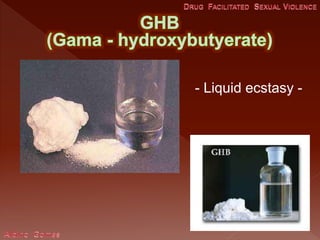
- Liquid ecstasy -
 Used since 1990 in Europe for euphoria,
sedative, and anabolic effects
 Found in liquid or white powder-tasteless
and odorless
 Frequently combined with alcohol in doses of
75-100mg/kg
 Causes loss of inhibition within 10-15
minutes
 Effects last 3 hours, with alcohol 20-30 hours
 GHB can cause drowsiness, hypothermia,
dizziness, seizures especially with
methamphetamine, severe respiratory
depression and coma
 Powerful anesthetic
 Similar to PCP and LSD
 Common at teenage rave parties
 Separates perception from sensation
 Can be snorted, ingested, or laced with
marijuana
 Onset of effects within 4 to 20 minutes
 Effects last from 30 minutes to 2 hours
 At high doses ketamine causes delirium,
amnesia, impaired motor function,
hypertension, depression, and respiratory
failure.
 Emergency room reports have risen 300
times in the last six years (England).
 Analog of amphetamine
 Developed and synthesized by Merck in
1912 as an appetite suppressant
 Became popular in 1970’s as adjunct to
psychotherapy
 Tablets, capsule, white powder
 Tablets are most common, can be any color
with any logo on them
 Can contain many other substances due to
illegal manufacture-caffeine, ephedrine,
cocaine, ketamine, dextromethorphan
 Psychologically addictive-abusers feel
irritable, sick and crave more.
 Hyperthermia common
 Neurotoxic to the serotoninergic system-
occurs with the first dose, most likely from
metabolites
 Also causes kidney failure and liver damage
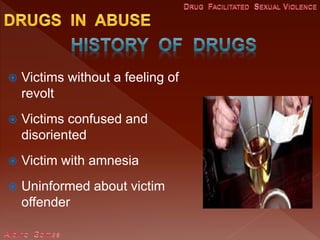
 Victims without a feeling of
revolt
 Victims confused and
disoriented
 Victim with amnesia
 Uninformed about victim
offender
 She tells you she took the drug
 The victim reports symptoms of amnesia
 She recalls feeling “strange” or “very drunk”
 Physical trauma (vaginal, anal), unexplained
 Waking up in an unknown location
 Evidences of semen in the body or clothing
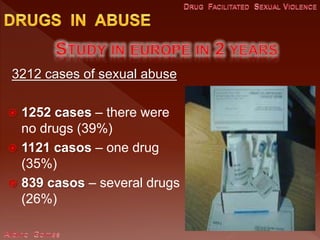
3212 cases of sexual abuse
 1252 cases – there were
no drugs (39%)
 1121 casos – one drug
(35%)
 839 casos – several drugs
(26%)
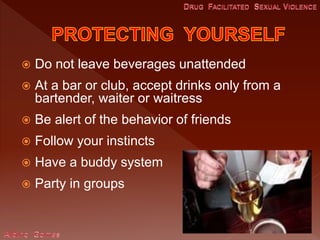
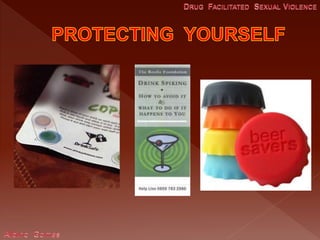
 Do not leave beverages unattended
 At a bar or club, accept drinks only from a
bartender, waiter or waitress
 Be alert of the behavior of friends
 Follow your instincts
 Have a buddy system
 Party in groups
 The victim
 The suspect
 The witness
 The crime scene
 Informed consent
 Inform all medications taken will be found
 Describe: probable time of exposure, time of
collection of blood and urine
 If the patient believes that something was
put in her drink or does not remember
everything that happened
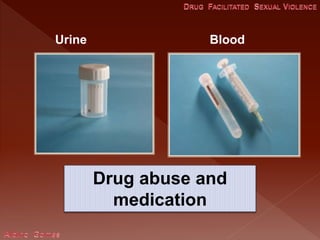
› Urine specimen (100 ml)
› 2 gray topped tubes of serum
Urine
Drug abuse and
medication
Blood
 Victim may not remember what happened
 Victim may be groggy for a long period after
waking up
 Drugs eliminate from the body
very quickly (As quickly as 4 hours)
 Juries may have trouble knowing just how
helpless the victim was without evidence
 Victim’s drug/alcohol use may make the
victim seem to lack credibility to the system
and/or to juries
 Juries may blame the victim
 Prosecutor may not be able to prove details
of the case necessary for a conviction
Grazie !!!

Drogas no abuso

  • 3.
     Sexual assaultfacilitated by the offender’s use of an anesthesia type drug which when administered to the victim rendered the victim physically incapacitated or helpless and thus incapable of giving or not giving consent
  • 4.
    Most common symptomin alleged drug facilitated sexual assault is anterograde amnesia The victim remembers events up to but not after the drink
  • 5.
     The victim’slack of resistance  Inconsistent or untrue statements  Delayed reporting
  • 7.
     Ethanol  Marijuana GHB (liquid ecstasy)  Flunitrazepam (rohypnol)  Ecstasy  Ketamine  Hypnotics  Cocaine  Amphetamines
  • 9.
     When mixedwith alcohol can incapacitate a victim  Increased use in U.S.  Abuse started in Europe in 1970’s, in U.S. the 1990’s  Rapidly dissolved in liquid
  • 10.
     Ingested withalcohol and other drugs, especially heroin, causes muscle and mental relaxation and amnesia  Drugs effects begin within 30 minutes and persist for 8 hours or more  Can be detected in blood for 24 hours and in urine for 48 hours
  • 11.
     Seizures, hypotension,memory impairment, dizziness and confusion, amnesia  Can cause excitability and aggressive behavior
  • 12.
  • 13.
     Used since1990 in Europe for euphoria, sedative, and anabolic effects  Found in liquid or white powder-tasteless and odorless  Frequently combined with alcohol in doses of 75-100mg/kg  Causes loss of inhibition within 10-15 minutes  Effects last 3 hours, with alcohol 20-30 hours
  • 14.
     GHB cancause drowsiness, hypothermia, dizziness, seizures especially with methamphetamine, severe respiratory depression and coma
  • 15.
     Powerful anesthetic Similar to PCP and LSD  Common at teenage rave parties  Separates perception from sensation  Can be snorted, ingested, or laced with marijuana  Onset of effects within 4 to 20 minutes  Effects last from 30 minutes to 2 hours
  • 16.
     At highdoses ketamine causes delirium, amnesia, impaired motor function, hypertension, depression, and respiratory failure.  Emergency room reports have risen 300 times in the last six years (England).
  • 17.
     Analog ofamphetamine  Developed and synthesized by Merck in 1912 as an appetite suppressant  Became popular in 1970’s as adjunct to psychotherapy
  • 18.
     Tablets, capsule,white powder  Tablets are most common, can be any color with any logo on them  Can contain many other substances due to illegal manufacture-caffeine, ephedrine, cocaine, ketamine, dextromethorphan
  • 19.
     Psychologically addictive-abusersfeel irritable, sick and crave more.  Hyperthermia common  Neurotoxic to the serotoninergic system- occurs with the first dose, most likely from metabolites  Also causes kidney failure and liver damage
  • 20.
     Victims withouta feeling of revolt  Victims confused and disoriented  Victim with amnesia  Uninformed about victim offender
  • 21.
     She tellsyou she took the drug  The victim reports symptoms of amnesia  She recalls feeling “strange” or “very drunk”
  • 22.
     Physical trauma(vaginal, anal), unexplained  Waking up in an unknown location  Evidences of semen in the body or clothing
  • 23.
    3212 cases ofsexual abuse  1252 cases – there were no drugs (39%)  1121 casos – one drug (35%)  839 casos – several drugs (26%)
  • 25.
     Do notleave beverages unattended  At a bar or club, accept drinks only from a bartender, waiter or waitress  Be alert of the behavior of friends  Follow your instincts  Have a buddy system  Party in groups
  • 27.
     The victim The suspect  The witness  The crime scene
  • 28.
     Informed consent Inform all medications taken will be found  Describe: probable time of exposure, time of collection of blood and urine
  • 29.
     If thepatient believes that something was put in her drink or does not remember everything that happened › Urine specimen (100 ml) › 2 gray topped tubes of serum
  • 30.
  • 31.
     Victim maynot remember what happened  Victim may be groggy for a long period after waking up  Drugs eliminate from the body very quickly (As quickly as 4 hours)  Juries may have trouble knowing just how helpless the victim was without evidence
  • 32.
     Victim’s drug/alcoholuse may make the victim seem to lack credibility to the system and/or to juries  Juries may blame the victim  Prosecutor may not be able to prove details of the case necessary for a conviction
  • 34.