DRAMATIC 
STRUCTU 
RE
CLIMACTIC EPISODIC 
Plot begins late in 
the story, toward the 
very end or climax. 
Plot begins relatively 
early n the story ad 
moves through a series 
of episodes. 
Covers a short space 
of time, perhaps a few 
hours or at most a few 
days. 
Covers a longer period 
of time: weeks, months, 
and sometimes many 
years. 
Contains a few solid, 
extended scenes such 
as three acts with each 
act comprising one 
long scene. 
Has many short 
fragmented scenes; 
sometimes any alteration 
of short and long scene.
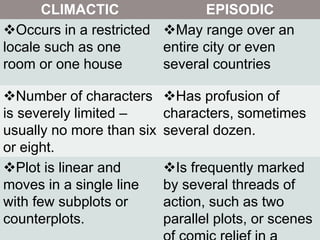
CLIMACTIC EPISODIC 
Occurs in a restricted 
locale such as one 
room or one house 
May range over an 
entire city or even 
several countries 
Number of characters 
is severely limited – 
usually no more than six 
or eight. 
Has profusion of 
characters, sometimes 
several dozen. 
Plot is linear and 
moves in a single line 
with few subplots or 
counterplots. 
Is frequently marked 
by several threads of 
action, such as two 
parallel plots, or scenes 
of comic relief in a
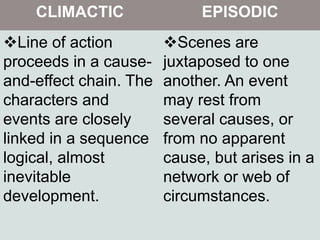
CLIMACTIC EPISODIC 
Line of action 
proceeds in a cause-and- 
effect chain. The 
characters and 
events are closely 
linked in a sequence 
logical, almost 
inevitable 
development. 
Scenes are 
juxtaposed to one 
another. An event 
may rest from 
several causes, or 
from no apparent 
cause, but arises in a 
network or web of 
circumstances.
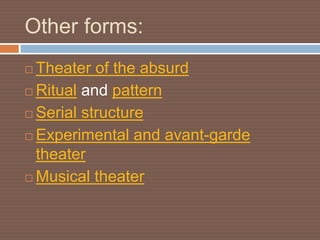
Other forms: 
 Theater of the absurd 
 Ritual and pattern 
 Serial structure 
 Experimental and avant-garde 
theater 
 Musical theater
 Emerged in Europe and United 
States after the World War II. 
 In one way or another they convey 
humanity’s sense of alienation and its 
loss of bearings in an illogical, unjust, 
and ridiculous world. Although 
serious, this point of view is generally 
depicted in plays with considerable 
humor.
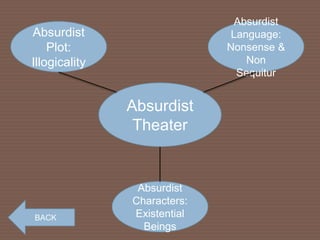
Absurdist 
Theater 
Absurdist 
Plot: 
Illogicality 
Absurdist 
Characters: 
Existential 
Beings 
Absurdist 
Language: 
Nonsense & 
Non 
Sequitur 
BACK
Ritual..... 
 Is a repetition or reenactmet of some 
proceeding or transaction which has 
acquired special meaning. 
 Give us continuity, security, and 
comfort. 
 In theater, ritual is an area where the 
old and new one come together. 
 Ritual has structures. Actions are 
repeated; these actions have a 
beginning, a middle and an end; and 
there is a natural progression of
 Ritual has structures. Actions are 
repeated; these actions have a 
beginning, a middle and an end; and 
there is a natural progression of 
events. 
 Rituals has special powers; it carries 
with it the magic or mystery of a 
meaningful, almost holy act. This can 
BACK 
be its source of energy in theater as 
in life.
Patterns... 
 Are repeated sequence of events 
containing its own order and logic. 
A series of incidents is duplicated, but 
there are important differences 
between the acts – differences that 
give the play meaning and 
resonance. 
BACK
Serial structure 
 Refers to series of acts or episodes. 
 Individual segments are strung 
together like beads on necklace. 
 Sometimes a central theme or 
common thread holds the various 
part together; sometimes there is little 
or no connection between the parts 
(revue). 
BACK
Experimental and Avant-garde 
Theater 
 Experiments done by radical theater 
movements, thus several significant 
departures from traditional theater practice 
were developed. Among them were: 
- emphasis on nonverbal theater 
- reliance in a improvisation 
- interest in ritual and ceremonies 
- stress on physical environment of the 
theater
 The theater groups that developed 
these ideas is what we call avant-garde 
theater, a French term literally 
means “advance guard of the military 
formation” 
 The term has come to mean an 
intellectual or artistic movement in 
any age that breaks with tradition and 
therefore seems ahead of is time.
Segments and Tableaux 
 Like other types of avant-garde 
theater, often stress nonverbal 
elements and at times include non 
sequitar as well. In spite of these, 
their work does have structures. 
BACK
Musical theater 
 Consists of different elements put 
together. 
 Follows the principle of alternation 
and juxtaposition. 
BACK

Dramatic structure

  • 1.
  • 2.
    CLIMACTIC EPISODIC Plotbegins late in the story, toward the very end or climax. Plot begins relatively early n the story ad moves through a series of episodes. Covers a short space of time, perhaps a few hours or at most a few days. Covers a longer period of time: weeks, months, and sometimes many years. Contains a few solid, extended scenes such as three acts with each act comprising one long scene. Has many short fragmented scenes; sometimes any alteration of short and long scene.
  • 3.
    CLIMACTIC EPISODIC Occursin a restricted locale such as one room or one house May range over an entire city or even several countries Number of characters is severely limited – usually no more than six or eight. Has profusion of characters, sometimes several dozen. Plot is linear and moves in a single line with few subplots or counterplots. Is frequently marked by several threads of action, such as two parallel plots, or scenes of comic relief in a
  • 4.
    CLIMACTIC EPISODIC Lineof action proceeds in a cause-and- effect chain. The characters and events are closely linked in a sequence logical, almost inevitable development. Scenes are juxtaposed to one another. An event may rest from several causes, or from no apparent cause, but arises in a network or web of circumstances.
  • 5.
    Other forms: Theater of the absurd  Ritual and pattern  Serial structure  Experimental and avant-garde theater  Musical theater
  • 6.
     Emerged inEurope and United States after the World War II.  In one way or another they convey humanity’s sense of alienation and its loss of bearings in an illogical, unjust, and ridiculous world. Although serious, this point of view is generally depicted in plays with considerable humor.
  • 7.
    Absurdist Theater Absurdist Plot: Illogicality Absurdist Characters: Existential Beings Absurdist Language: Nonsense & Non Sequitur BACK
  • 8.
    Ritual.....  Isa repetition or reenactmet of some proceeding or transaction which has acquired special meaning.  Give us continuity, security, and comfort.  In theater, ritual is an area where the old and new one come together.  Ritual has structures. Actions are repeated; these actions have a beginning, a middle and an end; and there is a natural progression of
  • 9.
     Ritual hasstructures. Actions are repeated; these actions have a beginning, a middle and an end; and there is a natural progression of events.  Rituals has special powers; it carries with it the magic or mystery of a meaningful, almost holy act. This can BACK be its source of energy in theater as in life.
  • 10.
    Patterns...  Arerepeated sequence of events containing its own order and logic. A series of incidents is duplicated, but there are important differences between the acts – differences that give the play meaning and resonance. BACK
  • 11.
    Serial structure Refers to series of acts or episodes.  Individual segments are strung together like beads on necklace.  Sometimes a central theme or common thread holds the various part together; sometimes there is little or no connection between the parts (revue). BACK
  • 12.
    Experimental and Avant-garde Theater  Experiments done by radical theater movements, thus several significant departures from traditional theater practice were developed. Among them were: - emphasis on nonverbal theater - reliance in a improvisation - interest in ritual and ceremonies - stress on physical environment of the theater
  • 13.
     The theatergroups that developed these ideas is what we call avant-garde theater, a French term literally means “advance guard of the military formation”  The term has come to mean an intellectual or artistic movement in any age that breaks with tradition and therefore seems ahead of is time.
  • 14.
    Segments and Tableaux  Like other types of avant-garde theater, often stress nonverbal elements and at times include non sequitar as well. In spite of these, their work does have structures. BACK
  • 15.
    Musical theater Consists of different elements put together.  Follows the principle of alternation and juxtaposition. BACK