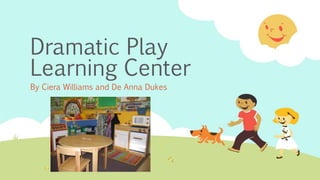
Dramatic Play
Learning Center
By Ciera Williams and De Anna Dukes
To start, a dramatic play center should have ample
space and be available to children for one third of
the preschool’s operating hours.
This center must have barriers separating it from
other centers. These barriers can be made using
shelves or other furniture.
(1) In addition, in order to have a good dramatic
play learning center, you must have these four
things:
 Dress-up items, with two to three being gender specific
 Props for at least two themes
 Props for outdoor dramatic play
 Pictures, stories, and trips to enhance dramatic play
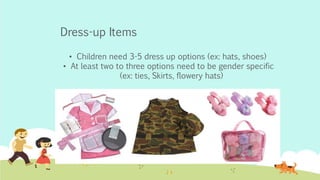
Dress-up Items
• Children need 3-5 dress up options (ex: hats, shoes)
• At least two to three options need to be gender specific
(ex: ties, Skirts, flowery hats)
Props must be provided daily for at least two
of the following themes:
• Housekeeping (dolls, doll furniture, child-sized furniture, kitchen utensils,
play food)
• Different Kinds of Work (hard hat, tools, shopping cart and register, play
food, office supplies, desk, tickets, rows of chairs for bus or plane
seating)
• Fantasy (simple masks or face paint, wands, fairy wings, crowns)
• Leisure (picnic basket, play food, blanket, animals)
Outdoor Dramatic Play
 If outdoor space is not available, a large indoor space like a gymnasium can be
used.
 Dress-up clothes are not required for outdoor dramatic play because they can
be dangerous.
 Props must be able to permit meaningful play (ex: playhouses
must have furniture, riding toys resembling cars or trucks must have a gas
station, doll strollers must have dolls or animals to transport, and toy trucks
and cars must have people or things to transport.
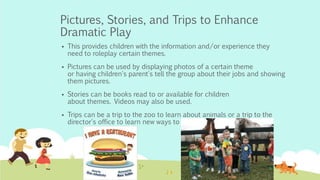
Pictures, Stories, and Trips to Enhance
Dramatic Play
 This provides children with the information and/or experience they
need to roleplay certain themes.
 Pictures can be used by displaying photos of a certain theme
or having children's parent's tell the group about their jobs and showing
them pictures.
 Stories can be books read to or available for children
about themes. Videos may also be used.
 Trips can be a trip to the zoo to learn about animals or a trip to the
director's office to learn new ways to play office.
Infants and Toddlers
Infants need three to five of
each of these items:
• Dolls
• Soft animals
• Plastic pots and pans
• Toy telephones
Toddlers need two or more of each of
these things:
• Dress-up clothes
• Child-sized furniture
• Plastic pots and pans
• Play food
• Dolls
• Doll furniture
• Soft animals
• Small play buildings
• Toy telephones
Adults are encouraged to play with children in this center
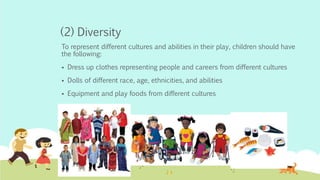
(2) Diversity
To represent different cultures and abilities in their play, children should have
the following:
 Dress up clothes representing people and careers from different cultures
 Dolls of different race, age, ethnicities, and abilities
 Equipment and play foods from different cultures
(3) By having access to a dramatic play center,
children practice these things:
 Language skills (All About the ECERS-R, pg. 237)
 Cooperate with one another (All About the ECERS-R, pg. 237)
 Practice language in different context (Activities PowerPoint 2, slide 24)
 Resolve emotional issues (All About the ECERS-R, pg. 237)
(5) Two different developmental domains that are
supported by the materials and interactions:
 Fine Arts
 Approaches to Learning
Fine Arts
Theatre Arts
• Children ages birth to 18 months are learning to imitate sounds, facial
expressions, and gestures of another person.
• Children ages 18 months to 36 months are learning to engage in pretend
play.
• Children ages 36 months to 48 months are learning to understand that
objects, pictures, or illustrations can stand for real things.
• Children ages 48 months and older are learning to tell about and/or role-
play characters from familiar stories or known people and own
imagination
Fine Arts
Theatre Arts
Strategies for teachers to use to support learning and development in fine
arts/theatre arts are:
• Playing with children in creative ways.
• Allowing children time to observe real experiences for them to imitate.
• Providing less realistic materials that challenge children to use their
imagination and reenact a scene.
• Engage in pretend play to extend a favorite story or field trip.
These strategies can be found in the Milestones of Development document
on page 38.
Approaches to Learning
Creativity and Inventiveness
• Children ages 18 months to 36 months are learning to pretend and use
imagination during play.
• Children ages 36 months to 48 months are learning to imitate action
observed in another situation.
• Children ages 48 months and older are learning to make changes to a
familiar story.
• Children ages 48 months and older are learning to represent reality in a
variety of ways.
Approaches to Learning
Creativity and Inventiveness
Strategies for teachers to use to support learning and development in
approaches to learning/creativity and inventiveness are:
• Providing dress-up and dramatic play materials from children’s daily life
and cultural background.
• Providing props for them to play pretend roles.
• Change the plot of a familiar story.
• Play-act the role of an adult (parents, teachers, etc.)
These strategies can be found in the Milestones of Development document
on page 10.
Dramatic Play
Dramatic Play
Dramatic Play

Dramatic Play

  • 1.
    Dramatic Play Learning Center ByCiera Williams and De Anna Dukes
  • 2.
    To start, adramatic play center should have ample space and be available to children for one third of the preschool’s operating hours. This center must have barriers separating it from other centers. These barriers can be made using shelves or other furniture.
  • 3.
    (1) In addition,in order to have a good dramatic play learning center, you must have these four things:  Dress-up items, with two to three being gender specific  Props for at least two themes  Props for outdoor dramatic play  Pictures, stories, and trips to enhance dramatic play
  • 4.
    Dress-up Items • Childrenneed 3-5 dress up options (ex: hats, shoes) • At least two to three options need to be gender specific (ex: ties, Skirts, flowery hats)
  • 5.
    Props must beprovided daily for at least two of the following themes: • Housekeeping (dolls, doll furniture, child-sized furniture, kitchen utensils, play food) • Different Kinds of Work (hard hat, tools, shopping cart and register, play food, office supplies, desk, tickets, rows of chairs for bus or plane seating) • Fantasy (simple masks or face paint, wands, fairy wings, crowns) • Leisure (picnic basket, play food, blanket, animals)
  • 6.
    Outdoor Dramatic Play If outdoor space is not available, a large indoor space like a gymnasium can be used.  Dress-up clothes are not required for outdoor dramatic play because they can be dangerous.  Props must be able to permit meaningful play (ex: playhouses must have furniture, riding toys resembling cars or trucks must have a gas station, doll strollers must have dolls or animals to transport, and toy trucks and cars must have people or things to transport.
  • 7.
    Pictures, Stories, andTrips to Enhance Dramatic Play  This provides children with the information and/or experience they need to roleplay certain themes.  Pictures can be used by displaying photos of a certain theme or having children's parent's tell the group about their jobs and showing them pictures.  Stories can be books read to or available for children about themes. Videos may also be used.  Trips can be a trip to the zoo to learn about animals or a trip to the director's office to learn new ways to play office.
  • 8.
    Infants and Toddlers Infantsneed three to five of each of these items: • Dolls • Soft animals • Plastic pots and pans • Toy telephones Toddlers need two or more of each of these things: • Dress-up clothes • Child-sized furniture • Plastic pots and pans • Play food • Dolls • Doll furniture • Soft animals • Small play buildings • Toy telephones Adults are encouraged to play with children in this center
  • 9.
    (2) Diversity To representdifferent cultures and abilities in their play, children should have the following:  Dress up clothes representing people and careers from different cultures  Dolls of different race, age, ethnicities, and abilities  Equipment and play foods from different cultures
  • 10.
    (3) By havingaccess to a dramatic play center, children practice these things:  Language skills (All About the ECERS-R, pg. 237)  Cooperate with one another (All About the ECERS-R, pg. 237)  Practice language in different context (Activities PowerPoint 2, slide 24)  Resolve emotional issues (All About the ECERS-R, pg. 237)
  • 11.
    (5) Two differentdevelopmental domains that are supported by the materials and interactions:  Fine Arts  Approaches to Learning
  • 12.
    Fine Arts Theatre Arts •Children ages birth to 18 months are learning to imitate sounds, facial expressions, and gestures of another person. • Children ages 18 months to 36 months are learning to engage in pretend play. • Children ages 36 months to 48 months are learning to understand that objects, pictures, or illustrations can stand for real things. • Children ages 48 months and older are learning to tell about and/or role- play characters from familiar stories or known people and own imagination
  • 13.
    Fine Arts Theatre Arts Strategiesfor teachers to use to support learning and development in fine arts/theatre arts are: • Playing with children in creative ways. • Allowing children time to observe real experiences for them to imitate. • Providing less realistic materials that challenge children to use their imagination and reenact a scene. • Engage in pretend play to extend a favorite story or field trip. These strategies can be found in the Milestones of Development document on page 38.
  • 14.
    Approaches to Learning Creativityand Inventiveness • Children ages 18 months to 36 months are learning to pretend and use imagination during play. • Children ages 36 months to 48 months are learning to imitate action observed in another situation. • Children ages 48 months and older are learning to make changes to a familiar story. • Children ages 48 months and older are learning to represent reality in a variety of ways.
  • 15.
    Approaches to Learning Creativityand Inventiveness Strategies for teachers to use to support learning and development in approaches to learning/creativity and inventiveness are: • Providing dress-up and dramatic play materials from children’s daily life and cultural background. • Providing props for them to play pretend roles. • Change the plot of a familiar story. • Play-act the role of an adult (parents, teachers, etc.) These strategies can be found in the Milestones of Development document on page 10.